Tag: regional languages

  • Prime Volleyball League adds Kannada feed as regional push gathers pace

    Prime Volleyball League adds Kannada feed as regional push gathers pace

    HYDERABAD: The RR Kabel Prime Volleyball League powered by Scapia is betting big on regional languages. From Saturday, matches will be available in Kannada—the sixth tongue added to a lineup that already includes English, Hindi, Telugu, Tamil and Malayalam. The move targets Karnataka’s volleyball-mad fanbase, particularly supporters of the Bengaluru Torpedoes.

    The tournament, now in its fourth year, is underway at Gachibowli Indoor Stadium in Hyderabad. First-day viewership on YouTube was robust, with reach spread across all regional feeds. The Kannada addition comes as the league chases deeper penetration in southern markets.

    “The support we receive from Karnataka is immense,” says Bengaluru Torpedoes co-owner and director Yashwanth Biyyala. “Providing the livestream in our local language is a sincere effort to engage more deeply with our loyal fans.”

    Prime Volleyball League  chief executive Joy Bhattacharjya frames the expansion as nation-building. “Our large viewership on the opening day demonstrates the massive, multilingual appetite for volleyball across India,” he says. “This is about more than just numbers—it’s about creating a model for deep, inclusive fan engagement.”

    The 2025 season is being broadcast live on Sony Sports Network and streamed globally via YouTube. The channel offers match highlights, recaps, behind-the-scenes footage and other content designed to hook armchair fans. Four teams clash on Saturday: Kochi Blue Spikers face Bengaluru Torpedoes, whilst Chennai Blitz take on Kolkata Thunderbolts.

    The tournament runs until 26 October. By then, the league will know whether its multilingual gambit has scored the breakthrough it so craves.

  • TV Today Network expands digital offering with news app ‘TAK’

    TV Today Network expands digital offering with news app ‘TAK’

    Mumbai: Expanding its presence in the digital video space, TV Today Network has launched the TAK news app on the Google Play Store on Android and App Store on iOS.

    The app will feature content in Hindi, Marathi, Gujarati. and Punjabi, and offer personalised content to users across 18 brand channels under categories such as news, crime, as well as regional. According to the network, a separate content studio will create exclusively digital video content for the TAK news app.

    The app also has a short video feature called ‘Phatak’ to showcase shareable 30-second video bytes of the latest news stories. The feature is unique to the TAK app and will not be accessible on their YouTube channels. The network currently has a cumulative subscriber base of 45 million on its YouTube channels that garner nine billion video views annually. Users can access the content on the app without logging in as it tracks the device ID to create a profile of the user. The more content the user watches on the platform, the more customised his/her feed will become over time.

    “Through this effort, we are trying to bring digital audiences to our own destination,” said TV Today Network chief operating officer (Tak channels) Vivek Gaur. “We believe there has to be a clear differentiation on what we do on our social platforms versus our presence on the TAK app. A differentiated content and engagement strategy is what will drive people to our platform.”

    The ‘TAK’ app logo which used to look similar to Hindi news channel Aaj Tak was relaunched under the new umbrella to come across a unique digital offering. There is a lot of effort going into our content to make it relevant and give it longer shelf life,” said TV Today Network managing editor – Tak channels Milind Khandekar. This means we’re not just reporting the news but also explaining it. Our big differentiator is the ‘Phatak’ which is news in 30 seconds. These are well shot and well-produced videos which are not available on social media.”

    Creativeland Asia’s design division CLA Design Lab created the master brand design and overall design architecture for the brand. “It is always exciting to build a brand from the ground up,” said Creativeland Asia founder and chairman Sajan Raj Kurup. “I personally worked closely with Vivek and his wonderful team on the conceptualisation and direction of this brand. After months of extensive collaborations between our design, strategy, communications and production team, I am excited to see the brand out there ready to take off.”

    The recommendations under the ‘Phatak’ short video feature will be decided on the basis of recency and cohort-based recommendation much like other players in the short video space. When a user visits the website, he or she will only see new stories populating the page as content that has already been watched is deprioritised to keep the user experience on the app fresh.

    TV Today Network has decided to go outside the Google Ad network and monetise the users on the TAK news app through bespoke advertising solutions to clients. Gaur noted, “If you show ads in a mundane and intrusive manner then people will think you’re like everyone else. Our advantage to advertisers is that we can offer them sharper audience segmentation based on audience cohorts like region, language. and preferences. That will allow us to scale and achieve profitability.”

    According to a report by KPMG, digital video ad spend is expected to grow at 39 per cent CAGR between 2019-24. It accounts for a 30 per cent share of the total digital advertising spends and is expected to increase its share to 50 per cent by 2024.

  • TV9 Network appoints Anshuman Tiwari as editor, Money9

    TV9 Network appoints Anshuman Tiwari as editor, Money9

    Mumbai: TV9 Network has strengthened the leadership of TV9 Digital and appointed Anshuman Tiwari as editor of Money9. Veteran journalist Rakesh Khar will assume a larger role as business and economy editor of the network.

    Tiwari is a recipient of the Ramnath Goenka Award, the WAN-INFRA international award for investigative journalism, and, most recently, the ENBA award for the best economic show on digital platforms. He is a Chevening fellow and has had brief stints with global media brands like Financial Times, London, Dayton News Chronicle, Ohio, USA.

    He is known for his innovative and simple style of explaining complex issues of personal finance, public finance economy, and capital market.

    “While language audiences have always been under-served in terms of personal finance, that need gap has only widened with rapid financialisation and digitisation of semi-urban and rural India,” said TV9 Network chief executive officer Barun Das. “Money9 will serve the finest personal finance content in simple, easy-to-consume formats, accessible in multiple languages. I am confident we will deliver on this promise with Anshuman leading the Money9 editorial team.”

    Money9 is a multilingual personal finance platform. The platform is currently available in Hindi and English and will soon be available in five other languages – Telugu, Kannada, Marathi, Gujarati, and Bengali.

    “After seven fantastic years at India Today, I am excited at the prospect of creating something new in the area of personal finance which has always been a matter of passion for me,” said Tiwari. “I am delighted that I will be able to pursue my profession and passion at the TV9 Network which is a leading platform in the industry.’’

  • Twitter launches multilingual initiatives ahead of assembly polls 2021

    Twitter launches multilingual initiatives ahead of assembly polls 2021

    KOLKATA: With the #AssemblyElections2021 taking place in Assam, Kerala, Tamil Nadu, West Bengal, and Puducherry, Twitter has unveiled a series of initiatives focused on encouraging informed and healthy conversations between candidates, political parties, citizens, media, and society.  

    The initiatives include an information search prompt with the Election Commission of India (@ECISVEEP) and state election commissions to provide reliable information around the elections; a custom emoji to encourage participation; a series of pre-bunks and de-bunks to tackle election-related misinformation; and a youth discussion series titled #DemocracyAdda aimed at voter literacy and civic participation among young Indians for the #AssemblyElections2021. These will be activated across six languages including English, Hindi, Tamil, Bengali, Assamese and Malayalam, in order to cater to audiences across India. Additionally, to put a spotlight on women in Indian politics, the service will be bringing back #HerPoliticalJourney, a video series where  women political leaders talk about their personal stories  with leading women news journalists.

    Twitter India public policy & government manager Payal Kamat said, "Public conversation is critical during elections, and Twitter is where this unfolds. With digital penetration accelerating in India, more people now have access to credible, authoritative and timely information – crucial tools for exercising their civic rights. By leveraging the power of the Open Internet, we are encouraging people across India to be a part of the #AssemblyElections2021 conversation. None of this would be possible without support from the Election Commission of India, the State Election Commissions, and hope our efforts contribute to healthy and vibrant civic dialogue.”

    Election information prompt

    Twitter’s new information search prompt  will make it easy to find credible and authoritative information about candidate lists, voting dates, polling booths, and EVM voter registration, among other election-related topics. 

    The ‘Election information prompt’ will be active in six languages including Bengali, Tamil, Malayalam, Assamese, Hindi, and English, supporting more than 20 hashtags. Some of the hashtags include: #विधानसभाचुनाव2021, #বাংলার ভোট 2021, #കേരളാതെരഞ്ഞെടുപ്പ്2021, #অসমনিৰ্বাচন২০২১, #தமிழ்நாடுதேர்தல்2021, #புதுச்சேரிவாக்கெடுப்பு2021

    Custom emoji 

    Twitter has launched a custom emoji for the #AssemblyElections2021 to stimulate participation in election-related discussions. Featuring an inked finger to represent a citizen who has exercised their right to vote, the emoji is available now until 10 May 2021. People can Tweet in English, Hindi, Bengali, Malayalam, Assamese and Tamil to activate the emoji. 

    Pre-Bunks and De-Bunks

    Staying ahead of potentially misleading information about how and where to vote, Twitter is publishing a series of pre-bunk prompts across languages including English, Hindi, Tamil and Bengali based on content by the national and state election commissions and civil society partners such as Youth Ki Awaz, Association of Democratic Reforms. The prompts will appear on people’s home timelines and in Search, including information about how to register to vote, and details on EVMs and VVPATs. The prompts will also serve the public with relevant voting information about booths, postal ballots, Covid2019 restrictions and accessibility, among other topics. Additionally, the service will focus on de-bunking critical issues as they arise with a curated Twitter Moment. These Moments are created based on high standards of accuracy, impartiality and fairness and are designed to feature compelling, original, and diverse content.

    #DemocracyAdda 

    With the youth of the nation engaging in high quality discussions on the service, Twitter, in partnership with Youth Ki Awaaz (@YouthKiAwaaz), is bringing back its multilingual youth discussion series #DemocracyAdda, aimed at voter literacy and civic participation among young Indians for #AssemblyElections2021. The series will be available in English, Hindi, Tamil, Malayalam and Bengali. Twitter will be hosting live video sessions and Tweet chats with young citizens, civil society groups, changemakers and representative candidates to talk about key issues including gender equality, employment, education, health, among others. 

    #HerPoliticalJourney

    While women leaders are making their presence felt in Indian politics, election coverage continues to be largely male-dominated. With this in mind, Twitter is launching the second season of #HerPoliticalJourney, a video series to put the spotlight on women in Indian politics and their personal stories of challenges and triumph. The series aims to raise awareness about the systemic challenges women face when pursuing political careers. The series will feature women leaders such in conversation with leading women news journalists. The videos will be recorded in English, Tamil, Bengali, Malayalam and Assamese. 

  • Tata Sky launches new set of regional packs

    Tata Sky launches new set of regional packs

    MUMBAI: DTH provider, Tata Sky, has now launched another set of regional channel packs – Tata Sky Smart Packs after unveiling a unique Flexi Annual Plan. The new list of smart plans includes 10 Indian languages that starts at Rs 206 per month.

    The packs consist of Hindi, Punjabi and Gujarati Smart plan of Rs 249. Bengali smart plan costs Rs 220, Odia comes under the bracket of Rs 211 and Marathi plan costs Rs 206. In case of Tamil, Telugu, Kannada and Malayalam, the company has priced these language packs for Rs 249 each respectively. The prices listed are inclusive of DRP, NCF and taxes, according to the report.

    The channel has also planned to launch two new broadcaster packs that will allow the subscribers to make flexible choices regarding their channel selections. From the list of this new packs, the first pack is the Sony Happy India South B pack for Rs 29.5 and the other one is Turner Family HD pack for Rs 14.75.

  • Deloitte: Indian film industry to touch Rs 23,800 crore by 2020

    Deloitte: Indian film industry to touch Rs 23,800 crore by 2020

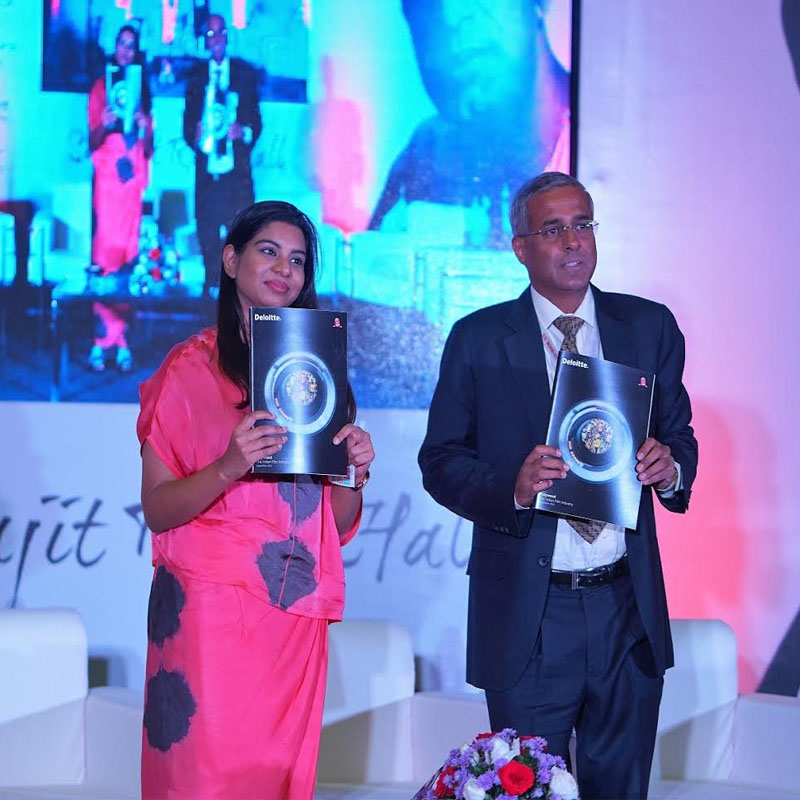
    MUMBAI: Can the Indian film industry come up to scale and rival the US and Canadian box offices? Yes, it can. The potential is huge, says a new report on the Indian cinema industry released by Deloitte Touche Tohmatsu India at the Indywood Film Carnival taking place during 24-27 September in Ramoji Film City, Hyderabad.

    Both, the US and Canada, have a box office of $11 billion annually though they produce less films (700). India, with 1,500 to 2,000 films in more than 20 languages, is the world’s largest film producer and it also has the second highest footfalls at 2.1 billion, just behind China (2.2 billion).

    It is growing at a rapid clip of 10 per cent and its gross realisations are at Rs 13,800 crore ($2.1 billion). “This is mainly due to low ticket realizations and occupancy levels, lack of quality content, and rampant piracy,” says the report titled “IndyWood: The Indian Film Industry.”

    This growth is set to accelerate further to 11.5 per cent CAGR and by 2020 the Indian film industry will gross revenues of Rs 23,800 crore ($3.7 billion). Yes, that’s still not measuring up to the US and Canadian revenues, but given time, the Indian film industry will grow even further.

    Says the Deloitte report: “The key growth drivers are rising income levels and a swelling middle class, expansion of multiplexes in smaller cities, investments by foreign studios in domestic and regional productions, growing popularity of niche movies, and the emergence of digital and ancillary revenue streams.”

    The report points out that “By 2020, the Indian average household income is expected to reach $18,500 from $8,000 currently with a corresponding middle class of over 90 million people. This level of median household income will drive discretionary spending on leisure and entertainment. The proliferation of internet and smart phone usage has opened up a new platform for film distribution and viewing.”

    In all, 43 per cent of revenues for Indian cinema are accounted for by the Hindi film industry with regional and international cinema contributing 50 and seven per cent respectively. Tamil and Telugu movies account for 36 per cent, with other regional languages contributing 14 per cent. The south Indian film industry accounts for Rs 4200 crore, and is growing at 12 per cent CAGR. The Marathi film industry has ballooned to gross revenues of Rs 150 crore and it grew at 40-45 per cent in 2015, even as the Gujarati film business expanded to Rs 55 crore in 2015.

    The report says that “cable and satellite rights and online/ digital aggregation revenues are the fastest growing segments, and are expected to grow at a CAGR of about 15 per cent over the period FY6-FY20, driven by rising demand for movies on TV and increasing smartphone penetration across the country respectively. On the other hand, home videos have been shrinking due to increasing piracy and growing popularity of digital platforms. Home video has lost share to video on demand (VOD) through direct-to-home (DTH) operators and over-the-top (OTT) platforms.”

    What’s helping contribute to the Indian film industry’s revenues is in-cinema advertising which stood at Rs 630 crore in 2015 and is expected to grow 18-20 per cent annually over the next four years. Demand is expected to rise from Tier 2 and Tier 3 cities where retail malls and multiplexes are slated to come up — which obviously will lead to more screens.

    Says the report: “Multiplexes have shown a growth rate of 15 per cent in Indian cities, increasing from 925 in 2009 to 2,100 in 2015. Over 2,000 single screen cinemas have been shut down or converted to multiplexes in the last year mainly due to greater cost of operations (higher entertainment taxes, increase in distributors’ share, and lower ticket prices), non-viability of running on a standalone basis and low occupancy rate. Multiplexes currently account for approximately 26 per cent market share of the screens; however, they contribute more than 40 per cent of box office collections. Wider content and programming flexibility result in higher occupancy and hence profitability of multiplexes. With comparison to growing economies, India has a low penetration of multiplexes with a potential to have almost 7,500-10,000 multiplex screens across the nation.”

    Also, film studios will have to start looking at international markets for revenues. Only 15 per cent of Indian cinema makers revenues comes from outside India, while Hollywood earns two-thirds of its revenues outside the US. The report also states that the producers and distributors should start looking at the potential of merchandising, licensing for mobile and games, delivering movies directly to the consumers via the internet or on their smart phones.

    Piracy if controlled could also help the Indian film industry which loses nearly Rs 19,000 crore annually to pirate sites. “Over 150 sites thrive on piracy where content is stolen from Indian movies, quick copies are made and distributed globally. Nearly half of the 150 are from the US, followed by 11 from Canada, nine from Panama and six from Pakistan. The top 100 sites make Rs 35 billion ($510 million) highlighting the extent of the issue,” the report highlights.

  • Deloitte: Indian film industry to touch Rs 23,800 crore by 2020

    Deloitte: Indian film industry to touch Rs 23,800 crore by 2020

    MUMBAI: Can the Indian film industry come up to scale and rival the US and Canadian box offices? Yes, it can. The potential is huge, says a new report on the Indian cinema industry released by Deloitte Touche Tohmatsu India at the Indywood Film Carnival taking place during 24-27 September in Ramoji Film City, Hyderabad.

    Both, the US and Canada, have a box office of $11 billion annually though they produce less films (700). India, with 1,500 to 2,000 films in more than 20 languages, is the world’s largest film producer and it also has the second highest footfalls at 2.1 billion, just behind China (2.2 billion).

    It is growing at a rapid clip of 10 per cent and its gross realisations are at Rs 13,800 crore ($2.1 billion). “This is mainly due to low ticket realizations and occupancy levels, lack of quality content, and rampant piracy,” says the report titled “IndyWood: The Indian Film Industry.”

    This growth is set to accelerate further to 11.5 per cent CAGR and by 2020 the Indian film industry will gross revenues of Rs 23,800 crore ($3.7 billion). Yes, that’s still not measuring up to the US and Canadian revenues, but given time, the Indian film industry will grow even further.

    Says the Deloitte report: “The key growth drivers are rising income levels and a swelling middle class, expansion of multiplexes in smaller cities, investments by foreign studios in domestic and regional productions, growing popularity of niche movies, and the emergence of digital and ancillary revenue streams.”

    The report points out that “By 2020, the Indian average household income is expected to reach $18,500 from $8,000 currently with a corresponding middle class of over 90 million people. This level of median household income will drive discretionary spending on leisure and entertainment. The proliferation of internet and smart phone usage has opened up a new platform for film distribution and viewing.”

    In all, 43 per cent of revenues for Indian cinema are accounted for by the Hindi film industry with regional and international cinema contributing 50 and seven per cent respectively. Tamil and Telugu movies account for 36 per cent, with other regional languages contributing 14 per cent. The south Indian film industry accounts for Rs 4200 crore, and is growing at 12 per cent CAGR. The Marathi film industry has ballooned to gross revenues of Rs 150 crore and it grew at 40-45 per cent in 2015, even as the Gujarati film business expanded to Rs 55 crore in 2015.

    The report says that “cable and satellite rights and online/ digital aggregation revenues are the fastest growing segments, and are expected to grow at a CAGR of about 15 per cent over the period FY6-FY20, driven by rising demand for movies on TV and increasing smartphone penetration across the country respectively. On the other hand, home videos have been shrinking due to increasing piracy and growing popularity of digital platforms. Home video has lost share to video on demand (VOD) through direct-to-home (DTH) operators and over-the-top (OTT) platforms.”

    What’s helping contribute to the Indian film industry’s revenues is in-cinema advertising which stood at Rs 630 crore in 2015 and is expected to grow 18-20 per cent annually over the next four years. Demand is expected to rise from Tier 2 and Tier 3 cities where retail malls and multiplexes are slated to come up — which obviously will lead to more screens.

    Says the report: “Multiplexes have shown a growth rate of 15 per cent in Indian cities, increasing from 925 in 2009 to 2,100 in 2015. Over 2,000 single screen cinemas have been shut down or converted to multiplexes in the last year mainly due to greater cost of operations (higher entertainment taxes, increase in distributors’ share, and lower ticket prices), non-viability of running on a standalone basis and low occupancy rate. Multiplexes currently account for approximately 26 per cent market share of the screens; however, they contribute more than 40 per cent of box office collections. Wider content and programming flexibility result in higher occupancy and hence profitability of multiplexes. With comparison to growing economies, India has a low penetration of multiplexes with a potential to have almost 7,500-10,000 multiplex screens across the nation.”

    Also, film studios will have to start looking at international markets for revenues. Only 15 per cent of Indian cinema makers revenues comes from outside India, while Hollywood earns two-thirds of its revenues outside the US. The report also states that the producers and distributors should start looking at the potential of merchandising, licensing for mobile and games, delivering movies directly to the consumers via the internet or on their smart phones.

    Piracy if controlled could also help the Indian film industry which loses nearly Rs 19,000 crore annually to pirate sites. “Over 150 sites thrive on piracy where content is stolen from Indian movies, quick copies are made and distributed globally. Nearly half of the 150 are from the US, followed by 11 from Canada, nine from Panama and six from Pakistan. The top 100 sites make Rs 35 billion ($510 million) highlighting the extent of the issue,” the report highlights.

  • IBF, AAAI, ISA and TAM reach consensus on TV audience measurement

    IBF, AAAI, ISA and TAM reach consensus on TV audience measurement

    MUMBAI: Advertisers, agencies and broadcasters have worked closely and diligently over the last couple of weeks with TAM and are pleased to jointly announce their agreement.

    In layman terms, the media and public will now get to know television viewership in thousands, colloquially referred to as TVT. TVT captures and reflects growth in TV audiences in the country in absolute numbers. TVT will be the sole rating available in the public domain.
    For internal evaluation including planning and buying, %TVR weekly and all other data will be available to advertisers and advertising agencies as in the past. Broadcasters will also have access to this information, should they so desire.

    In addition an option of TVT as a four-week rolling average will be provided every week. The rolling average is statistically more stable data on viewership, especially for smaller audiences in niche channels, regional languages, English language programs and news.

    The three constituents have also agreed that TAM will make all future audience measurement changes based on inputs from the joint-industry BARC Technical Committee.

    Commenting on the changes IBF President Man Jit Singh said, “We are delighted to have reached this agreement. We believe it is important for the industry, and from the perspective of our social responsibility, we must reflect both the growing television audience and the data in a more stable and useful manner. We want to thank AAAI and ISA in collaborating and working out a solution acceptable to all constituents”.

    “As three concerned constituents who believe in working together, we have decided to refer all future currency related changes to the BARC technical committee. I am glad we will now have an effective guide and monitor for ratings in the country”, said Hemant Bakshi, Chairman of Media Committee and Managing Committee of the Indian Society of Advertisers.

    “Getting weekly TVR% is important for media planners and buyers to effectively plan and buy ad-spots and do mid-plan course corrections and post-facto analysis. We are glad that we have been able to agree that the agencies and advertisers will have access to this data as in the past. From tomorrow, we look forward to being able to focus back on our clients’ businesses and effective planning and buying for their brands”, said Arvind Sharma, President of the Advertising Agencies Association of India.

    The Indian Society of Advertisers represents advertisers. The Advertising Agencies Association of India represents advertising agencies and the Indian Broadcasting Foundation represents television broadcasters. The three sector representatives have jointly agreed to take this forward.
    ISA

    The Indian Society of Advertisers, ISA, has been the peak national body for advertisers for 60 years and represents the interests of organisations involved in Indian advertising, marketing and media industry. It aims to protect consumers by ensuring advertising and marketing communications are conducted responsibly.
    AAAI

    The Advertising Agencies Association of India, AAAI, is the official national organisation of advertising agencies. It has a very large number of small, medium and large-sized agencies as its members, who together account for almost 80% of the advertising business in the country. It is recognised as the apex spokesperson for the advertising sector.
    IBF

    The Indian Broadcasting Foundation, IBF, represents television broadcasters. It promotes and safeguards the interests of television broadcasters in an unbiased, non-partisan and relentless manner. It represents more than 85% of the total television broadcast viewership and revenues and in this responsible position, engages in meaningful dialogue toward consensus on contentious issues involving different stakeholders and providing incisive direction.