Tag: Regional channels

  • Regional channels viewership watch: TAM week 49

    Regional channels viewership watch: TAM week 49

    MUMBAI: In the week 49 of TAM TV ratings, let’s take a look at how the regional channels have fared across the country.

    In the CS4+ market, in Bihar and Jharkhand, Big Magic Ganga led the chart with 1177 GVTs, followed by Mahuaa Plus at the second position with 1065 GVTs and Anjan at number three with 726 GVTs.

    In the Marathi general entertainment channel (GEC) space, Z Marathi topped the chart with 133704 GVTs. Star Pravah stood second with 52717 GVTs and ETV Marathi ranked number three with 50524 GVTs.

    In the West Bengal market, Star Jalsha continued to hold its number one position with 115403 GVTs, followed by Z Bangla with 91645 GVTs and ETV Bangla with 22849 GVTs at number three.

    In the Tamil GEC space, Sun TV continued its reign at top with 246332 GVTs followed by Star Vijay with 69329 GVTs and Polimer ranking number three with 20684 GVTs.

    Talking about the Karnataka region, Udaya stood at number one spot with 59098 GVTs. ETV Kannada ranked second with 50567 GVTs and Suvarna at number three scored 40838 GVTs.

    In the Telugu GEC space, Gemini topped with 134276 GVTs followed by Maa TV with 98671 GVTs and Z Telugu with 94417 GVTs.

    Lastly, in the Kerala region; Asianet continued its strong hold and scored 50769 GVTs. Surya TV stood at number two with 15518 GVTs while Mazhavil Manorama with 14430 GVTs was third and Asianet Plus with 4577 GVTs was fourth. 


  • Regional channels viewership watch: TAM week 48

    Regional channels viewership watch: TAM week 48

    MUMBAI: In the week 48 of TAM TV ratings, let’s take a look at how the regional channels have fared across the country.

    In the Bihar + Jharkhand region in the CS4+ market, Big Magic Ganga led the chart with 902 GVTs, followed by Mahuaa at the second position with 892 GVTs and Mahuaa Plus at number three with 454 GVTs.

    In the Marathi general entertainment channel (GEC) space, Z Marathi topped the chart with 151,328 GVTs across Maharashtra. ETV Marathi stood second with 53,571 GVTs and Star Pravah ranked number three with 52,723 GVTs.

    In the West Bengal market, Star Jalsha continued to hold its number one position with 112,002 GVTs, followed by Z Bangla with 91,652 GVTs and ETV Bangla with 22,645 GVTs at number three.

    In the Tamil GEC space, Sun TV topped the chart with 234,573 GVTs followed by Star Vijay with 68,954 GVTs and Kalaignar TV ranked number three with 20,696 GVTs.

    Talking about the Karnataka region, Udaya stood at number one spot in the Kannada GEC space with 70,048 GVTs. ETV Kannada ranked second with 51,555 GVTs and Suvarna at number three scored 43,846 GVTs.

    In the Telugu GEC space, Maa TV topped with 113,552 GVTs followed by Z Telegu with 99,005 GVTs and Gemini with 87,783 GVTs. Lastly, in the Kerala region; Asianet scored the highest in the Malayalam category with 54,740 GVTs. Surya TV stood at number two with 15,427 GVTs and Asianet Plus ranked number three with 4,745 GVTs.


  • Regional channels viewership watch: TAM week 47

    Regional channels viewership watch: TAM week 47

    MUMBAI: In the week 47 of TAM TV ratings, let’s take a look at how the regional channels have fared across the country. In the Bihar + Jharkhand region in the CS4+ market, Big Magic Ganga leads the chart with 940 GVTs, followed by Mahuaa at the second position with 849 GVTs and Mahuaa Plus at number three with 830 GVTs.  


    In the Marathi general entertainment channel (GEC) space, Z Marathi topped the chart with 149,664 GVTs across Maharashtra. ETV Marathi stood second with 53,181 GVTs and Star Pravah ranked number three with 49,033 GVTs.


    In the West Bengal market, Star Jalsha continued to hold its number one position with 107,748 GVTs, followed by Z Bangla with 105,354 GVTs and ETV Bangla with 23,445 GVTs at number three.


    In the Tamil GEC space, Sun TV topped the chart with 239,206 GVTs followed by Star Vijay with 67,370 GVTs and Kalaignar TV ranked number three with 22,478 GVTs.


    Talking about the Karnataka region, Udaya stood at number one spot in the Kannada GEC space with 72,409 GVTs. ETV Kannada ranked second with 54,399 GVTs and Suvarna at number three scored 40,362 GVTs.


    In the Telugu GEC space, Maa TV topped with 106,426 GVTs followed by Z Telegu with 98,195 GVTs and Gemini with 86,601 GVTs. Lastly, in the Kerala region; Asianet scored the highest in the Malayalam category with 55,706 GVTs. Surya TV stood at number two with 14,159 GVTs and Asianet Plus ranked number three with 5,594 GVTs.


  • Regional channels viewership watch: TAM week 46

    Regional channels viewership watch: TAM week 46

    MUMBAI: In the week 46 of TAM TV ratings, let’s take a look at how the regional channels have fared in the Bihar + Jharkhand region in the CS4+ market. The channel to top in the category was Big Magic Ganga that registered 991 GVTs. Mahuaa Plus ranked second with 697 GVTs and Anjan at number three tracked 672 GVTs.

    In the Marathi general entertainment channel (GEC) space, Z Marathi topped the chart with 143,455 GVTs across Maharashtra. Star Pravah stood second with 50,409 GVTs and ETV Marathi at number three with 49,458 GVTs.

    In the West Bengal market, Star Jalsha ranked number one with 115,238 GVTs, followed by Z Bangla with 78,636 GVTs and ETV Bangla with 22,960 GVTs at number three. In the Tamil GEC space, Sun TV topped the chart with 230,133 GVTs followed by Star Vijay with 63,558 GVTs and Polimer ranking number three with 20,822 GVTs.

    Talking about the Karnataka region, Udaya stood at number one spot in the Kannada GEC space with 68,991 GVTs. ETV Kannada ranked second with 51,316 GVTs and Suvarna at number three scored 41,041 GVTs.

    In the Telugu GEC space, Maa TV topped with 109,503 GVTs followed by Gemini with 95,293 GVTs and Z Telugu observed number three position with 90,729 GVTs. Lastly, in the Kerala region; Asianet scored the highest in the Malayalam category with 48,912 GVTs. Surya TV stood at number two with 13,835 GVTs and Asianet Plus ranked number three with 4,189 GVTs.


  • Regional channels viewership watch: TAM week 45

    Regional channels viewership watch: TAM week 45

    MUMBAI: In the week 45 of TAM TV ratings, let’s take a look at how the regional channels have fared in the Bihar + Jharkhand region in the CS4+ market. The channel to top in the category was Big Magic Ganga that registered 1,120 GVTs. Mahuaa Plus ranks second with 932 GVTs and Anjan at number three tracked 469 GVTs.

    In the Marathi general entertainment channel (GEC) space, Z Marathi topped the chart with 145,564 GVTs across Maharashtra. Star Pravah stood second with 52,367 GVTs and ETV Marathi at number three with 45,989 GVTs.

    In the West Bengal market, Star Jalsha ranked number one with 115,530 GVTs, followed by Z Bangla with 77,289 GVTs and ETV Bangla with 21,203 GVTs at number three. In the Tamil GEC space, Sun TV toppled the chart with 222,131 GVTs followed by Star Vijay with 63,574 GVTs and Polimer ranking number three with 22,667 GVTs.

    Talking about the Karnataka region, Udaya stood at number one spot in the Kannada GEC space with 79,416 GVTs. ETV Kannada ranked second with 55,148 GVTs and Suvarna at number three scored 40,884 GVTs.

    In the Telugu GEC space, Maa TV topped with 97,017 GVTs followed by Gemini with 95,717 GVTs and Z Telugu observed number three position with 87,426 GVTs. Lastly, in the Kerala region; Asianet scored the highest in the Malayalam category with 57,690 GVTs. Surya TV stood at number two with 16,574 GVTs and Asianet Plus ranked number three with 5,631 GVTs.


  • Regional channels line up special Diwali shows

    Regional channels line up special Diwali shows

    The festive mood has caught up with the regional channels of the country. The five day long Diwali festival is being imitated on the TV screens to keep the audience engaged and in the feel of festive fervour.


    Star Vijay, the Tamil general entertainment channel (GEC) and ETV Marathi, the Marathi GEC have created snippets of their TV celebrities wishing viewers a happy Diwali that will be aired throughout the Diwali week. Suvarna TV will also have clips wishing viewers.


    Primetime shows will have Diwali themes incorporated in them. ETV Marathi is keeping the show stories for the week on a light note with no negativity in it. A special show has been introduced at 6:30 pm with film starts Swapnil Joshi and Sai Tamhankar for six days themed around Diwali. Promoting their upcoming show Pyaar Wali Love Story, the duo will be speaking to industry couples about their love stories.


    The day will begin for Star Vijay viewers with their TV anchors celebrating the festival with fun filled activities with a special song. Naan Sigappu Manitha and Maan Karate will be premiering on the channel. At 6:30pm, the show Mom’s Diwali will see actors Priyamani and Vijaylakshmi take part along with their mother.


    Suvarna is banking on movie premieres to create impact. Every Sunday of October, the channel has been showcasing various impact properties to maximise Diwali viewership. Big Magic Ganga has launched a series of special shows on the sentiment of ‘devotion’. Its popular shows Big Memsaheb, Big Bahuriya and Police Files have special versions on 23 October.


    Advertisers will be keen to tap into this mood with TV being the best audience reaching platform. ETV Marathi has seen a host of new advertisers such as Everest Masala, Ferrero ocher, Berger Paints, Domino’s Pizza, GS Tea, Xrbia and Voylla at a 45 per cent hike than the normal ad rates. Other channels are also glad with the lineup of advertisers that they have got.


    The Marathi GEC has created a ‘Shubh Deepawali’ logo that will stay full time. Big Magic Ganga did a customised logo from September itself for Dassera and Diwali titled ‘Big Magic Ganga Maha Parv’. Star Vijay and Suvarna TV have also changed the look of the channel for Diwali week.


  • “Regional channels with food shows are our competitors” : FOOD FOOD PROMOTER AND DIRECTOR SANJEEV KAPOOR

    “Regional channels with food shows are our competitors” : FOOD FOOD PROMOTER AND DIRECTOR SANJEEV KAPOOR

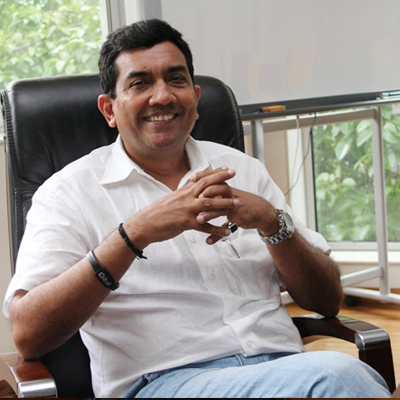
    He’s belied the oft-stated misconception that cooks don’t make great businessmen. And he is someone who feels fortunate enough to have done things he really likes doing. His contended smile describes his success. Well-known celebrity chef Sanjeev Kapoor (remember Khana Khazana?) today has moved from being a famous cooking show host to an entrepreneur and director of India’s first homegrown food related channel FoodFood.

    But the good looking Sanjeev Kapoor, who sees opportunities where others see challenges, dismisses his achievement by saying: “I feel I am still in the kitchen and this is my favourite part.”

    In a conversation with Indiantelevision.com’s Seema Singh, Kapoor speaks his heart out on his journey which started from people laughing at his dreams for a food channel to earning their respect today as an entrepreneur who is building a solid business.

    Excerpts:

    How did Turmeric Vision (TVPL), Astro All Asia Networks (Astro) and Sandeep Goyal’s Mogae Groupa come together to start the channel Food Food? How has the association been?

    The first thought of doing a 24-hour channel on food came to me in 2003. But I was not sure I could do it on my own. And hence, I started pitching the idea to others. People thought I was mad. They thought how can a category, which is a half hour afternoon slot, become a full time channel.

    When I initiated the talks, I didn’t think that I could start a channel. There were channels in all genres, so why not have a 24 hour food channel? But I had decided I would do this with someone else. Sadly, no one thought of it as being an opportunity.I chatted with Scripps Network’s Food Network internationally, but they were not interested. I also approached the BBC, which already was already airing lots of food programming. It did show some interest in the beginning, but after the meeting was fixed in London, BBC cancelled.

    It was then that I decided that I would start the channel on my own. It was out of sheer anger. I thought this was something I really wanted to do and so started thinking, working on and understanding it. At that time, the then Sony Entertainment Television CEO Kunal Dasgupta, was someone who understood what I was envisioning and thought that food as a category will grow, which was very encouraging.

    In 2006, I set up TVPL. I applied to ministry of information & broadcasting for an uplinking licence and started building the channel. At around this time I met up and discussed my plans with Sandeep Goyal who was then the CEO of Zee TV. Being a foodie himself, he was in sync with my thoughts. It was he who suggested the name of Astro Networks as a possible partner for this venture. Sandeep also joined us as a notional partner.

    I had lost about three years in between ideating and finally setting up the company and the channel. I lost ; one because of the unfavourable market scenario from 2007 to 2009 and secondly because we were in active discussion with several media groups in India which didn’t work out.

    But when we launched it, it was at the right time!

    Who is your core target audience? How have you been able to redefine the food content in India? Do you programme the channel based on the time of the day?

    Most people would imagine food content being more women-centric. But, times have changed, and now one can see more men walking in even in a category like food, especially in the evening slot. We are also attracting a lot of younger audiences. When we started, our core target audience (TG) was women 35-years and above. We have been able to bring that down to about 25 years and our TG will continue to get younger.

    In terms of cities, the channel is available in all the HSMs (Hindi speaking markets). North, of course is big in terms of numbers for us. Maharashtra, Gujarat and other bigger cities also have great traction. Most of our numbers comes from the metros, Delhi and Mumbai being the greatest contributors.

    Ours was the first HD ready channel, with all content being HD ready since the channel’s inception. This helped us add good quality households from the top cities to our viewership. Our presence on Tata Sky, Airtel and Videocon has also helped us reach good quality homes.

    It was when I first started doing TV that people started understanding the meaning of food content. With Food Food, people expect good quality content not just boring shows. Our content concentrates on the core Indian market, with our content being 100 per cent relevant to the Indian ethos.

    We have been able to set trends for shows on other channels. They through us understand what is accepted in India. We do not only concentrate on adding numbers to our viewership, but we see it as our responsibility to define the direction of food in Indian. We now have a lot more healthy wholesome content.

    As for the programming, the early morning slot is more vegetarian, the afternoon slot focuses on learning, but not boring learning. As we move to early evening, it’s more of Bollywood and games. And evening and late evenings we have lifestyle. We keep trying and testing with our content.

    If you are a leader, you have to learn, define and teach your viewers what to watch as per the time.

    How does the channel conduct its research?

    Food Food is a specialty channel. We work with research agencies for qualitative and quantitative research. Also we are constantly in touch with our viewers through various viewers connect events. We do close to 90 events, which gives us a fair idea of what people want and what we should do or not do.


    I would say the regional channels, which have started building loyalty on food programmes are some of our closest competitors. The lavish and expensive cooking reality shows on the general entertainment channels are no competition for us; in fact they help us in building a category.

    What is your reach internationally?

    We are currently available in the Gulf and Canada. We are also in the process of finalising our reach in US. We are looking at other markets internationally through Jadoo boxes. We are working on opening up to more markets.

    Who are your competitors? How do you look at handling them?

    I would say the regional channels, which have started building loyalty on food programmes, are some of our closest competitors. The lavish and expensive cooking reality shows on the general entertainment channels are no competition for us; in fact they help us in building a category.

    We are by far the number one lifestyle channel in the country. We don’t have to worry about competitions. Most channels are in fact following us. As long as this trend continues, we are happy. But naturally, we keep a watch on what is happening and ensuring that we stay ahead.

    What are the shows that are being aired on the channel currently? Any plans of launching a new one soon?

    Currently Food Food has shows like Soki, Tea Time, Health Maange More, Style Chef, Mummy ka Magic and several health-based shows. We keep doing new seasons of our popular shows. The How to Cook series, Sanjeev Kapoor’s Kitchen and Maa ki Daal are big hits. We are continuously looking at new concepts for our shows. We do have plans for some exciting new ones. What is good is that even today the early shows, which were launched when the channel was, still interest viewers and advertisers.

    The big challenge is when you have popular shows how do you bring in new shows! For example, if the IPL is a hit and excites and engages audiences, you don’t shut it down; you come with several seasons of the format. Same is the case with us.

    What are the mediums you use for reaching out to audiences? Do you invest in digital as well? How much is your ad spent?

    Marketing and other promotional activities not only to create a recall but also build a bond. One of the good things we have seen for Food Food is that the average time spent by viewers is very high. We want to ensure that people who walk into the channel stay longer, along with getting newer sets of viewers.

    We work in two areas; firstly we market ourselves to the viewers and then to advertisers. You are as good as your shows and numbers are important.

    For our initial marketing campaign, we roped in Madhuri Dixit as the channel’s brand ambassador. This was to create the buzz. Now most of the marketing is done through our shows.

    We use all mediums like outdoor, print, digital, radio and television, but the key marketing tool for us is on-ground activities. Plus we also work as partners with different brands and also with communities such as chefs and hotels.

    Our website www.foodfood.com is very active. Our interaction with viewers on Facebook and Twitter is very helpful. We have started a Food Food channel on Youtube. We are also working on an app for the channel. Digital reach is important and we are constantly working towards making it useful for different sets of generations. Youngsters are glued to our telecasts, so we focus on what will attract them.

    Our marketing budget is as high as 20 per cent of our total budget. But I would say, we give a lot of weightage to consumer connect programmes.

    How large is the food show genre? Does it get enough traction?

    If we look at the GECs, the total contribution to the kitty is significant, and this significance can be translated into something which can have four to five channels. So we understand the consumption pattern, but not all may come in a focused way. At times the usage is too scattered, and that is the case right now.

    But whenever there is maturity in the market, there is consolidation and now we are beginning to see that. If you have a heart problem you will not go to a general physician, but to a heart specialist.

    This is going to happen in media too. Currently advertisers are going to everyone. They just look at the number of viewers, no matter what quality.

    This is not the way it works in mature markets. This maturity is coming into agencies, viewers and brands. Initially there were no solutions, but solutions are there now. Digital has been able to show that solution. TV was more in the air. Whatever agencies said was being accepted. Advertisers never delved into how people were reacting. Consumption was not being tracked. But, now it is beginning to happen. In the next few years, more specialty channels will come in and they will benefit.

    Is there enough bandwidth amongst audiences for so many food shows? What is the channel’s GRP?

    India in some sense has three religions: Bollywood, cricket and food. If we want to entertain ourselves we use these three. While Bollywood and cricket is well represented on TV, food is under-served. Slowly we are getting to see entertainment with food, and this will only grow.

    There is 100 per cent bandwidth for a specialty channel like Food Food. We have to just understand viewers’ needs and then we have to translate that demand and see if this is pan India. If the show is executed well, it is consumed easily.

    We continuously stay at around 10 GRPs. Delhi and Mumbai gives us the maximum numbers.

    It is a food channel with all shows on food, so then how do you decide on the content? What is the difference in the theme of each show? With three partners, how do you come to a consensus on the content of the channel?

    This is our full time job. We constantly keep our ears to the ground. People always tell you what they want, and I realised it when I was writing my book. We are just serving a need. It is a fairly simple task. Just listen to people. We are currently at a stage where we have to just listen and react.

    We continuously have our executive committee and board meetings. The team presents ideas and concepts to the executive committee and they approve or disapprove. It is how you live in a house, you have different members and yet you stay together. We may have our individual preferences, but what finally goes out on TV is something is that the family wants.

    Is it difficult to sustain a channel based only on food?

    If cooking is inherent or food is inherent to Indians, then for a channel like Food Food there is no question of survival. People will consume what they can relate to. And when it comes to us Indians, we can relate to food, made in our style. And this is what Food Food is all about. And so we are the highest rated.

    Even news channels are coming up with food shows, how do you cope with this competition?

    Naturally, when there is something on food which takes away from us, it is a problem, but, if it helps us its good. Larger shows are no competition. I see them as category builders. Smaller shows, if they can take away from us, can pose some competition, but I don’t see that happening.

    For the shows on news channels, the core target is men and also the time slot is different, so they don’t harm us. We see such shows as an opportunity that someone else has created for us.

    Do you want to foray into reality shows as well?

    We did a reality show before Master Chef. We had Maha Challenge with Madhuri Dixit. As and when the time is right, we will do reality shows. But I think the noise that one needs to create need not be through noisy shows. It can be done in a smart way. For instance a comedy show with Kapil Sharma gets more numbers than the bigger shows at one-sixth the cost of a big show. So my belief is that if we are able to get higher GRPs through smarter and smaller shows, we will go with that.

    GECs need to have bigger shows, so a show like Master Chef works perfectly on Star Plus. What is good is that the understanding of Food Food is being used by shows like Master Chef. There is increased understanding of what and how the food genre works.

    For us if it is about reality show it has to be something which is very real. Unfortunately in India, reality shows are associated with big budget shows. For Food Food, a reality show is about real people cooking every day not for only for 13 weeks. It may be a daily contest, which is conducted in six cities having six winners every day. This is bigger and more relevant for Food Food. We are constantly debating, and if you ask us if we will be doing reality shows, of course we will be.

    Will the 12 min ad-cap affect the advertisement in the channel? How will the channel deal with it? There are talks in the industry of increasing ad rates after the ad-cap is implemented? By how much will the ad rates go up? What is the current ad rate?

    It’s something the whole industry is facing. If that has to be followed, the whole industry will follow. This means that someone will have to pay for it. If the broadcast industry has to pay, I don’t think they can afford it. So either the viewers will pay or the brands will. As of now it is tricky and painful and hope there is some resolution.

    As I see it, there could be a 25 per cent increase in either the ad rate or subscription charges. Fortunately for us, it’s not much of a problem because we are a new channel. In a new channel the inventory consumption doesn’t start at 100 per cent utilisation; it builds over time. And we are in the process of building that. So the impact on us will be lower than those players whose inventory consumption may be 100 per cent.

    There were reports of the company breaking even in two years from its launch? How far have you reached as far as this objective is concerned?

    It’s on track. Our understanding of the business is much deeper than what it was. So I don’t see a reason for not achieving it.

  • Assembly polls: Regional channels in overdrive

    Elections are a matter of life and death for politicians and political organisations. Another section of society that approach elections with equal earnestness is the media.

    With five states – Assam, West Bengal, Kerala, Tamil Nadu and Pondicherry – engaged in assembly elections in April – May, the regional television market has entered an exciting phase.

    While Assam has already completed the formalities, West Bengal had the first and second phases of polling on 17 April and 22 April. Three more phases are remaining – 27 April, 3 May and 8 May. Tamil Nadu and Pondicherry have it scheduled for a single date, on 8 May. In Kerala it is three phases: 22 April, 29 April and 3 May.

    Thus we have three important regional television markets of West Bengal, Tamil Nadu and Kerala, which command 50 per cent of the total language television revenues, trying to make the most of this opportunity for market expansion. Understandably, all these three ‘news hungry‘ markets have been witnessing a lot of churn recently, be it with channel launches or expansion of existing operations.

    Tamil Nadu is one market that has been attracting attention for all the wrong reasons. Kalanithi Maran-headed Sun TV is enjoying a superior position in the market and we are not again talking about that viewership dominance. The channel is in an envious position of having no competition at all in the news space; or to put it better, no competitor at all. While Sun TV and its news channel sibling Sun News are making the maximum out of the elections, rivals Jaya TV, Raj TV and Star Vijay don‘t have the necessary permission to telecast news and live programmes.

    Ever since its inception in 1999, Jaya TV has been fighting for a teleport licence, which would enable it to beam live news. This year, as the elections approached, the channel had intensified its efforts with the purpose of launching a separate news channel and the matter had even reached the Madras High Court. But, as per the indications, Jaya‘s plans of launching the news channel to capitalise on the election may not just get materialised. The channel is now concentrating on the election coverage by telecasting delayed news bulletins and current affairs programmes.

    “At this crucial time, we can‘t afford to indulge in court battles. We don‘t want our attention to get diverted. We are making our best efforts possible covering the elections,” states Jaya TV VP News Sunil KP.

    As already reported by indiantelevision.com, Raj TV‘s coverage of the elections is also restricted to delayed news bulletins and other non-live programmes. Star Vijay, meanwhile, sounds very pleased with what is has been doing as a general entertainment channel. “We are presently concentrating on bringing quality entertainment programmes to our viewers. Our audiences turn to us for entertainment and we are doing what we are supposed to do in the best possible manner,” quips a Star Vijay executive.

    Looking west to Kerala, God‘s own country deserves a mention more for broken promises. Keralaites were promised two more news channels ahead of the elections: MM News from print giant Malayala Manorama‘s TV arm MM TV and Jai Hind TV from the state‘s Congress party. While MM News is now targeting a May-June launch for the channel, Jai Hind will be unveiled only by mid-May. However, MM News has already started its dry run partially.

    “It is for sure that the channel launch will happen only after the elections. We want to enter the market fully prepared and we didn‘t want to launch the channel just for the sake of covering the elections. We have now started sending our team of reporters to cover election-related events, but it is not a full-fledged dry run yet,” says MM TV news director Johny Lukose.

    However, unlike Tamil Nadu, Kerala is not short of news channels. The state already has three news channels in Asianet News, People TV and Indiavision. For the youngest of the three Malayalam Communications‘ People TV, the launch timing couldn‘t have got any better. The channel was launched in 2005, ahead of the state local body elections and now in 2006 follows the assembly elections.

    To the up to West Bengal, both local as well as national players are showing equal aggresive intent in this market. Star India made its debut in Bangla last year by launching its news channel Star Ananda, in association with print major Ananda Bazar Patrika (ABP). Again in 2005, Rathikant Basu-promoted Broadcast Worldwide withdrew its GEC Tara Bangla from the market to launch news and music channels, Tara Newz and Tara Muzik. Both launches were timed to coincide with the local body elections.

    Now, in April this year, Zee Telefilms found the time ripe to launch its Bangla news channel Chobbees Ghanta in association with Akash Bangla. Kolkata-based Xenitis Group of Companies also entered the market this year with its news channel Kolkata TV, keeping in mind the elections coming up. The latter has reportedly spent Rs 100 million on the pre-launch outdoor publicity campaign.

    PROGRAMMING STRATEGIES

    As soon as the government declared the polling dates, channels across these three markets had unveiled their special initiatives. The general strategy has been, covering the election in three phases: pre-elections, elections and post-elections.

    In the West Bengal market, where the results are reportedly a foregone conclusion, issue-based programmes have stolen the limelight. “Here, there is no suspense attached to the election results. Hence, the effort has been to do more issue-based programmes. Apart from that, Tara Newz has been doing in-depth constituency analyses, live discussions and debates,” says the channel head Amit Chakraborty.

    Star Ananda has branded its election coverage special as Lalbarir Lorai. “The series empowers the viewer with a ringside view of all the twists, turns, sub-plots and issues on hand with continuous updates, news, views, live on-ground debates, travelogues, interviews with the big names, scorecard of performances, opinion polls, exit polls,” claims an official communiqué from the channel.

    Speaking on the channel‘s election coverage strategy, one Star News executive offers,” Star Ananda‘s election programmes are meant to empower the viewer to make informed choices. As a news channel, we give primary importance to this responsibility.”

    According to Zee News director Laxmi Goel, the new kid on the block Chobbees Ghanta will try to lure viewers by offering unbiased coverage and fast delivery of news. Market leader ETV, meanwhile, has increased the duration of its hourly five minutes news updates to ten minutes. However, there are not many special programmes from the channel. “Being a GEC, we are addressing a larger audience. We will put efforts to cover what matters most, the results,” says ETV chief producer Manvi.

    Speaking about the programming strategy being followed by Malayalam channels, the sub-genres followed are more or less the same as those of Bangla channels.

    According to Malayalam Communications MD and editor John Brittas, the competition has helped the channels to raise the bar in election coverage. “Malayalam Channels are more matured now. The election-related programmes have turned more in-depth and issue-based. The reports are now more objective and the quality has really gone up. Technology upgradation has also improved the quality of delivery. With so many channels out there, channels have been making their best efforts possible,” says Brittas.

    “We are trying our best bring in the quality and effectiveness of reputed national news channels to the regional language. We don‘t want to be here as just another Malayalam channel. Our aim is to deliver Keralites a channel that holds the national standards and we have been making the best use of elections to do that,” says Amrita TV director & CEO Sudhakar Jayaram.

    Asianet managing editor KP Mohanan takes pride in coming out with a series of exclusive interviews when it mattered the most. “We have been doing a lot of exclusive stuff these days. We did a half an hour live interview with the prime minister Manmohan Singh recently and that was the first of its kind in Malayalam television,” says Mohannan.

    INVESTMENTS

    Election is also an occasion that television channels choose to make fresh investments in infrastructure and human resources. According to Zee‘s Goel, the company has earmarked Rs 90 million for the first three months operations of Chobbees Ghanta.

    “Since the channel was launched just ahead of the elections, we have gone for the best of the broadcast technology and infrastructure. And of course, this is a long term investment,” says Goel.

    Tara Newz has made investments to the tune of Rs 10 million to provide best services during the elections. The company recently installed the graphics set up offered by the Beehive Systems for about Rs 2.8 million. However, Chakraborty feels that the investments have been made with long term goals in mind. “We have upgraded our systems keeping in mind the upcoming Bangladesh elections also. Tara Newz is popular in Bangladesh also, and we will be covering the elections extensively,” he says.

    According to Jayaram, Amrita TV has invested about Rs 7.5 million on its election-related initiatives. “The channel was given a facelift recently, as we completed one year of operations. We are now preparing software that will help the anchor to analyse each constituency to the minute details during the results. We are also associating with top election analysts of the country,” says Jayaram.

    Malayalam Communications is spending about Rs 4 million on its election programmes. “This is something like a mega Onam (the most popular regional festival) and we are trying our best to make the most out of it. We have made fresh investments in technology and graphics,” states Brittas.

    Meanwhile, Asianet News, the news channel from Asianet Communications, is gearing up for a major face lift. “We have spent quite a sizable amount on infrastructure. Investments have been made in various segments including graphics and server based production systems. On 11 May, when the assembly elections results will be announced, Asianet News will come out with various noticeable changes. The channel will be given a new look and feel, says Mohannan.

    Rival Indiavision has used the opportunity to acquire new equipments. “We have been renting our equipments but now we have bought our own. We have also increased our live connectivity to 10 districts this time round. Originally we had only one OB van in Delhi, and now we have one for Kerala as well,” says Indiavision executive editor M V Nikesh Kumar.

    However, for Surya TV Thiruvananthapuram bureau chief Anil Nambiar, the trick of the trade lies in using the limited resources and space to its utmost value. “Surya‘s news content duration is limited as we bank on sponsored programmes and other fiction initiatives. Hence, we are a team of 30 reporters, trying our best to come with quality coverage,” says Nambiar.

    Post results, as politicians get busy deciding their future actions and doing the performance analyses, these television channel executives will also be spending a considerable time in the board rooms, analysing their performance.

    After all, for regional channels, there is no business like the news business.