Tag: REELSHORTS

  • Bite-sized drama is eating the internet: Ampere Analysis

    Bite-sized drama is eating the internet: Ampere Analysis

    MUMBAI: The attention span may be shrinking, but the audience for micro-drama is exploding. More than one in ten internet users worldwide now regularly watch drama episodes lasting ten minutes or less on social media—a format that’s turning Hollywood’s traditional playbook on its head and forcing commissioners to rethink everything from episode length to distribution strategy.

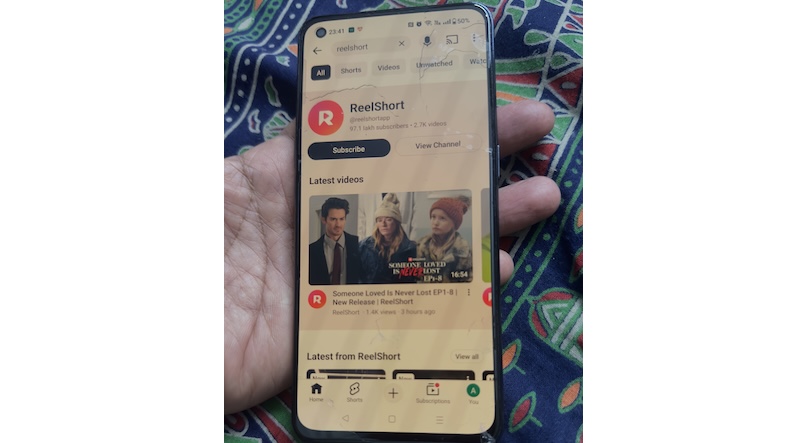
    Ampere Analysis surveyed over 100,000 consumers in two separate waves across 30 global markets, polling 56,000 internet users aged 18–64. The findings reveal that these “mini-dramas” and “micro-dramas”—the shortest clocking in at under two minutes—are thriving on YouTube and TikTok. The platforms have become both primary distribution channels and discovery engines for premium subscription apps like DramaBox and ReelShorts, which are betting big on vertical video optimised for phone viewing.

    The numbers tell a compelling story about changing consumption habits. Average internet users now spend nearly 50 minutes a day watching videos on social media. For younger audiences, that figure jumps dramatically: 18- to 34-year-olds are clocking over an hour daily, creating a captive audience for bite-sized content that fits neatly between scrolls.

    The demographic split is predictable but stark. Viewers aged 18–34 are 21 per cent more likely than average to have watched a mini-drama in the past month. Nearly half of internet users in that age bracket—46 per cent—are already hooked, consuming short-form scripted content as readily as they consume traditional social media posts.

    But the format isn’t exclusively a young person’s game. Among 35- to 44-year-olds, 23 per cent have watched a micro-drama in the past month—the highest proportion of any age group surveyed. Some 19 per cent of 18- to 24-year-olds reported the same, with the 45-to-54 cohort close behind at 18 per cent. Even the 55-to-64 demographic is getting involved, with 13 per cent tuning in. The data suggests mini-dramas are breaking out of their youth-oriented niche and moving into the mainstream.

    AGE OF VIEWERS

    Geography tells an equally revealing story. Engagement is strongest in Thailand, Malaysia and the Philippines, where mobile-first viewing habits dominate and vertical video has become the default mode of content consumption. The Asia-Pacific region leads consumption overall—hardly surprising given that nearly all existing micro-drama platforms hail from China, where the format has already matured into a lucrative industry. The market is soon to be flooded with Western competitors trying to replicate that success. European audiences, by contrast, remain largely unmoved by the format, suggesting cultural preferences or viewing habits that haven’t yet shifted to accommodate ultra-short storytelling.

    YouTube commands 44 per cent of mini-drama viewership, with TikTok capturing 38 per cent. Together, the two platforms account for a commanding 82 per cent of all short-form drama consumption on social media—Instagram picks up the scraps. YouTube’s sheer scale gives it the edge: in September, it accounted for 12.6 per cent of all television usage, according to Nielsen, compared with Netflix’s 8.3 per cent. No other service claimed even five per cent. While vertical video may feel like TikTok’s natural domain, YouTube’s reach makes it nearly impossible to overcome.

    Romance, anime and fantasy are the genres pulling the biggest crowds—commissioners would be wise to treat these as priority areas for future productions. The preference for escapist, emotionally-driven content suggests audiences are using mini-dramas for quick hits of entertainment rather than deep narrative engagement.
    Minal Modha, research director and head of sports media, sponsorship and consumer research at Ampere Analysis, says shorter scripted drama platforms are “capitalising on the increasing use of vertical videos customised for phone viewing, particularly among younger audiences”. The format’s success, she notes, stems from its perfect alignment with existing social media behaviour patterns.

    The industry is pursuing two distinct strategies, both designed to maximise the format’s commercial potential. The first: dump entire series on YouTube and monetise through advertising revenue, treating the platform like traditional broadcast television but with shorter episodes and higher frequency. The second: seed clips and teasers on TikTok or Instagram to build buzz and audience interest, then drive viewers into subscription apps such as DramaBox or ReelShorts for the full experience. It’s a funnel approach that transforms social platforms into massive marketing engines.

    The format may be miniature, but the business model is anything but. Short attention spans, it turns out, can generate long revenue streams—and potentially more reliable ones than traditional hour-long dramas. Production costs are lower, turnaround times are faster, and audiences can consume entire story arcs in a single lunch break. As Hollywood scrambles to jump into mini-drama production, the question is no longer whether bite-sized content works—it’s who can scale it fastest, and whether Western producers can crack the code that’s already minting money in Asia.