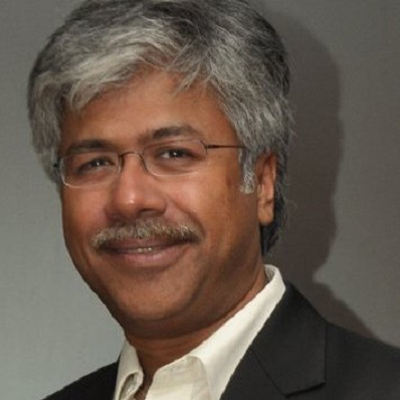
Tag: Reed Hastings

  • Netflix ties up with PTCL as Amazon woos India

    Netflix ties up with PTCL as Amazon woos India

    MUMBAI: As the world’s leading video-streaming network Netflix and e-commerce giant Amazon take different routes to reach out to the Indian audience while they expand globally, the former is partnering with a top-ranking company in India’s neighbourhood Pakistan, thus strengthening its hold in the sub-continent.

    While Amazon is relying on going local with its video streaming service, Netflix is depending on its global programming.Amazon meantime has commissioned “Baahubali: The Lost Legends,” a new animated series in India based on a local blockbuster movie.

    Pakistani telco PTCL has signed a partnership agreement with Netflix. The two companies will use their respective resources for a symbiotic relationship, maximising the viewing experience and penetration of Netflix services in the Islamic state. This pact will serve as the way forward for both Netflix and PTCL to provide digital content. PTCL will promote and aid original Netflix content in Pakistan.

    Amazon Studios chief Roy Price frequents India scouting for locally appealing programming for Amazon’s forthcoming video service.

    Though Netflix made its India debut around 10 months ago, it makes content-buying decisions out of Los Angeles, even for regional shows, to ensure they have global appeal. For example, the deal with Indian producer Phantom Films for its new Indian original series, based on the internationally acclaimed Mumbai crime novel “Sacred Games.”

    In Pakistan however PTCL became the only service provider with advanced caching servers and technical pairing with Netflix to offer the superior viewing experience since Netflix’s global launch in January 2016. The Netflix Pakistan website says users can start using services starting $7.99 a month, with a free month offer.

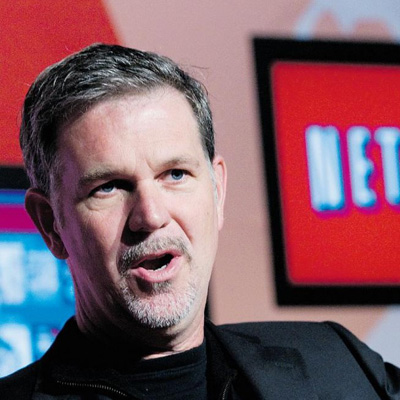
    Netflix made the announcement during a keynote by Co-founder and Chief Executive Reed Hastings: “Today you are witnessing the birth of a new global Internet TV network.” Members with a streaming-only plan will be able to watch instantly through the Netflix service. The movies and TV shows that are available to stream may vary by location, and will change from time to time.

    India, Nigeria, Russia and Saudi Arabia were among the major countries where the service was launched, Hastings said at a Consumer Electronics Show keynote in Las Vegas.

    The company recently said it was exploring options for providing its services in China. The company said in July that plans to enter China in 2016 could be delayed. However, Netflix added simplified and traditional Chinese to the 17 languages it already supports.

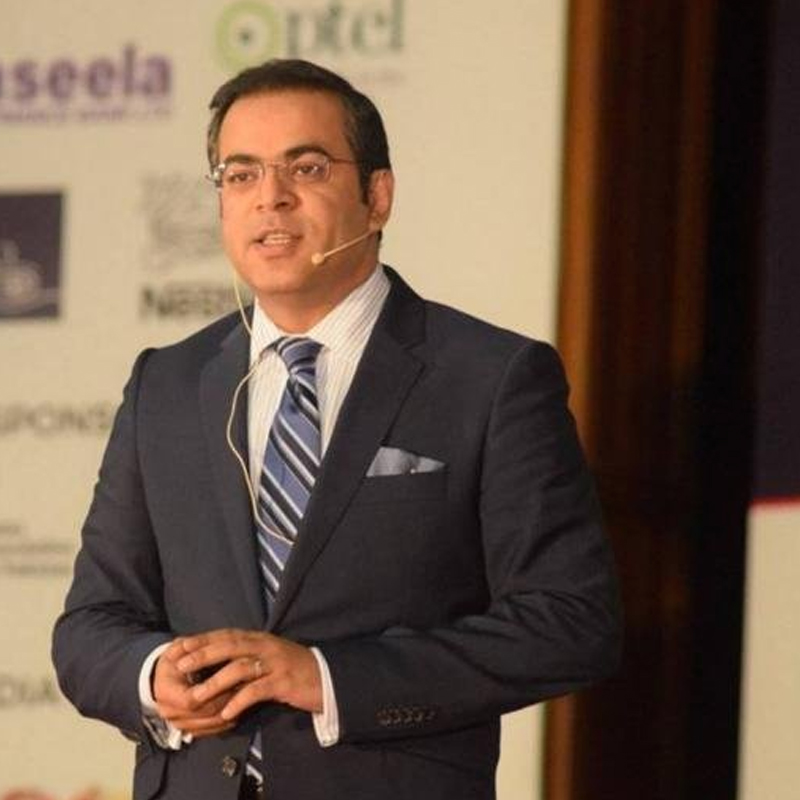
    PTCL’s chief commercial officer Adnan Shahid described digital entertainment as PTCL’s “key priority”. Netflix, which has expanded into some 190 countries following a near-global launch in January, doesn’t believe in a physical presence in every market.

    Amazon has been selective internationally, pushing Prime Video into some European markets, Japan, and now India. Its bet is that homegrown programming will win over Indian audiences, a strategy analysts say could also help increase Amazon shoppers’ loyalty.

    Netflix is generally reviewed as a stand-alone streaming business, with 87 million subscribers, while Amazon’s video operations are part of the giant’s much larger e-commerce business, with 60 million global Prime members, according to Morgan Stanley estimates.

  • Netflix hires Indian origin TV exec Bela Bajaria as content VP

    Netflix hires Indian origin TV exec Bela Bajaria as content VP

    MUMBAI: Even as Netflix has been strengthening its Asia team by hiring locals with Asian and international experience, it has also been bolstering the talent at its HQ.  Last week, the leading global video streaming site, announced that it had roped in former Universal Television (NBCUniversal’s TV unit) president Bela Bajaria as vice-president of content. She is slated to join Netflix from 1 November, replacing Sean Carey, who is leaving the company.

    The London-born-but-raised-in-east-Africa-and-settled-in-Los-Angeles Bajaria is of Indian origin, At Universal Television, Bajaria supervised creative programming for the studio and producing such hit series as Master of None and Unbreakable Kimmy Schmidt for Netflix; Brooklyn Nine-Nine for FOX; The Mindy Project for FOX and Hulu; Superstore for NBC and Bates Motel for A&E, among several others. She developed Gypsy, starring Naomi Watts, for Netflix which will premiere in 2017 as well as Pure Genius for CBS and The Good Place for NBC, which are on the network’s 2016 fall schedules.

    Bajaria has in the past been ranked amongst the top  TV executives in the US when she headed Universal Television.  She left the production outfit  when she had a run-in with executives at NBC Studios for not buying enough content from her company, even though Fox and CBS were.

    At Netflix, Bajaria has been mandated with leading the team focused on TV and film licensing from major U. studios, as well co-production relationships with major US networks. She will also oversee a new team developing original unscripted programs for Netflix.

    Netflix CEO Reed Hastings and chief content officer Ted Sarandos have said time and time again that the company wants to keep showcase the best in class engaging content for its subscribers and a budget of $5 billion has been kept aside for this year to acquire and create content.

    “Bela is a great creative television executive with broad experience and deep industry relationships,” said Sarandos. “Having worked closely with her on Master of None and Unbreakable Kimmy Schmidt, we know we have found the perfect executive to lead this new effort.”

    “I am looking forward to joining Netflix, an innovative company that supports creative vision and fosters risk-taking. Having worked closely with Ted, Cindy and the team, I know they are great creative partners and care deeply about the experience of talent, their partners and their members,” said Bela Bajaria. “They are a dynamic group and I’m looking forward to continue building new partnerships at Netflix with amazing talent and studio and network colleagues.”

  • Netflix hires Indian origin TV exec Bela Bajaria as content VP

    Netflix hires Indian origin TV exec Bela Bajaria as content VP

    MUMBAI: Even as Netflix has been strengthening its Asia team by hiring locals with Asian and international experience, it has also been bolstering the talent at its HQ.  Last week, the leading global video streaming site, announced that it had roped in former Universal Television (NBCUniversal’s TV unit) president Bela Bajaria as vice-president of content. She is slated to join Netflix from 1 November, replacing Sean Carey, who is leaving the company.

    The London-born-but-raised-in-east-Africa-and-settled-in-Los-Angeles Bajaria is of Indian origin, At Universal Television, Bajaria supervised creative programming for the studio and producing such hit series as Master of None and Unbreakable Kimmy Schmidt for Netflix; Brooklyn Nine-Nine for FOX; The Mindy Project for FOX and Hulu; Superstore for NBC and Bates Motel for A&E, among several others. She developed Gypsy, starring Naomi Watts, for Netflix which will premiere in 2017 as well as Pure Genius for CBS and The Good Place for NBC, which are on the network’s 2016 fall schedules.

    Bajaria has in the past been ranked amongst the top  TV executives in the US when she headed Universal Television.  She left the production outfit  when she had a run-in with executives at NBC Studios for not buying enough content from her company, even though Fox and CBS were.

    At Netflix, Bajaria has been mandated with leading the team focused on TV and film licensing from major U. studios, as well co-production relationships with major US networks. She will also oversee a new team developing original unscripted programs for Netflix.

    Netflix CEO Reed Hastings and chief content officer Ted Sarandos have said time and time again that the company wants to keep showcase the best in class engaging content for its subscribers and a budget of $5 billion has been kept aside for this year to acquire and create content.

    “Bela is a great creative television executive with broad experience and deep industry relationships,” said Sarandos. “Having worked closely with her on Master of None and Unbreakable Kimmy Schmidt, we know we have found the perfect executive to lead this new effort.”

    “I am looking forward to joining Netflix, an innovative company that supports creative vision and fosters risk-taking. Having worked closely with Ted, Cindy and the team, I know they are great creative partners and care deeply about the experience of talent, their partners and their members,” said Bela Bajaria. “They are a dynamic group and I’m looking forward to continue building new partnerships at Netflix with amazing talent and studio and network colleagues.”

  • APOS 2016: Netflix’s Hastings and Sarandos talk Asia and India

    APOS 2016: Netflix’s Hastings and Sarandos talk Asia and India

    BALI: How many subscribers has Netflix managed to get in India after its launch a 100 days ago? Netflix co-founder and CEO  Reed Hastings and chief content officer Ted Sarandos were unwilling to give out any numbers during the opening session at APOS in Bali yesterday. “It’s too early in the day,” they said. “But we have had a great start. Out of the new 6.7 million (67 lakh) members in the latest quarter, 4.51  million  (45.1 lakh) are from international. We have a long term strategy for the region.” 

    Estimates are that more than half a million (5 lakh) of that came from India during the free trial period and of that about 50,000 have gone ahead and subscribed to the service.

    Hastings and Sarandos were interviewed by Media Partners Asia executive director Vivek Couto. 

    Hastings admitted the streaming service was just about beginning in its Asian and Indian journey. “Netflix has barely been optimized. It’s an ongoing process of delivery to Asia. We are far below the number of languages we need to support. We support 21 languages; YouTube is over 50. We’re building out partnerships, the network infrastructure and in particular the content. We are just continuing to learn as we go along.”

    He pointed out to how Netflix worked it out in Brazil. “We didn’t do very well in the beginning there. We spoke with our members, corrected the issues one by one. Now we are doing well in Brazil.”

    Sarandos highlighted that Netflix has learned its lessons and “we are doing originals faster in Asia than in earlier markets. We are doing a film in Korea called Okja under director Joon Ho Bong, a film in Cambodia by Angelina Jolie and original TV series in Japan.” The Bong film according to iMDB is slated to be completed by 2017 and stars Jake Gyllenhaal, Tilda Swinton and Lilly Collins, apart from a Korean cast.

    Sarandos added that Netflix was making content for Asia, which would then travel around the world on its various country services. “Bollywood movies is also what we are looking to do, but they are a couple of years down the line,” said Sarandos. “ We will do movies the world watches. We will work with local producers. Imagine the traction it would get with our 81 million and expanding global members.”

    Hastings stressed the way forward for the company was to get global rights to all the originals that Netflix produced and also those it licensed from third party suppliers. “We did that with How to Get away with Murder. And we will do it with what ever we produce from now onwards. I regret not having the global rights to the House of Cards,”

    Great content and its easy delivery with a great user experience was what Netflix was consistently focused on,  both Sarandos and Hastings emphasised. Said Hastings: “We have 1,700 engineers who do nothing but ensure Netflix works. Our goal is that it becomes a must-have purchase just like the iPhone is, ” he explained. “Offer a great service at a consistent price.”

    Regulating or censoring Netflix content was something that both Sarandos and Hastings were not in favour of. “We offer greater freedom for story tellers,” said Sarandos. “The art is finding that balance with local authorities. For the most part the internet is not as highly regulated as broadcast. There’s no passive viewing on Netflix. Regulators have found that to be a differentiating factor between broadcast and Netflix. There are pins in place to ensure that adults are watching. Children are protected. For the most part, governments are okay otherwise they know that viewers will go for pirated content.”

    Hastings pointed that Netflix was going to persist with China where it does not yet have a presence. “Apple took six years to get in there. We are going to continue our attempts and discussions,” he added. “Great rewards can follow great patience.”

    He was pretty confident of Netflix’s continuous march forward, despite competition from Amazon and other local players in various countries it has launched. “Our focus is on streaming perfectly without any buffering, not competition,”  he said. “The loss of  pay TV is understated. Pay TV is steady at 100 million (10 crore) . We are in over half US households and growing. HBO  has grown. What is understated is that consumers are willing to pay for content.”

  • APOS 2016: Netflix’s Hastings and Sarandos talk Asia and India

    APOS 2016: Netflix’s Hastings and Sarandos talk Asia and India

    BALI: How many subscribers has Netflix managed to get in India after its launch a 100 days ago? Netflix co-founder and CEO  Reed Hastings and chief content officer Ted Sarandos were unwilling to give out any numbers during the opening session at APOS in Bali yesterday. “It’s too early in the day,” they said. “But we have had a great start. Out of the new 6.7 million (67 lakh) members in the latest quarter, 4.51  million  (45.1 lakh) are from international. We have a long term strategy for the region.” 

    Estimates are that more than half a million (5 lakh) of that came from India during the free trial period and of that about 50,000 have gone ahead and subscribed to the service.

    Hastings and Sarandos were interviewed by Media Partners Asia executive director Vivek Couto. 

    Hastings admitted the streaming service was just about beginning in its Asian and Indian journey. “Netflix has barely been optimized. It’s an ongoing process of delivery to Asia. We are far below the number of languages we need to support. We support 21 languages; YouTube is over 50. We’re building out partnerships, the network infrastructure and in particular the content. We are just continuing to learn as we go along.”

    He pointed out to how Netflix worked it out in Brazil. “We didn’t do very well in the beginning there. We spoke with our members, corrected the issues one by one. Now we are doing well in Brazil.”

    Sarandos highlighted that Netflix has learned its lessons and “we are doing originals faster in Asia than in earlier markets. We are doing a film in Korea called Okja under director Joon Ho Bong, a film in Cambodia by Angelina Jolie and original TV series in Japan.” The Bong film according to iMDB is slated to be completed by 2017 and stars Jake Gyllenhaal, Tilda Swinton and Lilly Collins, apart from a Korean cast.

    Sarandos added that Netflix was making content for Asia, which would then travel around the world on its various country services. “Bollywood movies is also what we are looking to do, but they are a couple of years down the line,” said Sarandos. “ We will do movies the world watches. We will work with local producers. Imagine the traction it would get with our 81 million and expanding global members.”

    Hastings stressed the way forward for the company was to get global rights to all the originals that Netflix produced and also those it licensed from third party suppliers. “We did that with How to Get away with Murder. And we will do it with what ever we produce from now onwards. I regret not having the global rights to the House of Cards,”

    Great content and its easy delivery with a great user experience was what Netflix was consistently focused on,  both Sarandos and Hastings emphasised. Said Hastings: “We have 1,700 engineers who do nothing but ensure Netflix works. Our goal is that it becomes a must-have purchase just like the iPhone is, ” he explained. “Offer a great service at a consistent price.”

    Regulating or censoring Netflix content was something that both Sarandos and Hastings were not in favour of. “We offer greater freedom for story tellers,” said Sarandos. “The art is finding that balance with local authorities. For the most part the internet is not as highly regulated as broadcast. There’s no passive viewing on Netflix. Regulators have found that to be a differentiating factor between broadcast and Netflix. There are pins in place to ensure that adults are watching. Children are protected. For the most part, governments are okay otherwise they know that viewers will go for pirated content.”

    Hastings pointed that Netflix was going to persist with China where it does not yet have a presence. “Apple took six years to get in there. We are going to continue our attempts and discussions,” he added. “Great rewards can follow great patience.”

    He was pretty confident of Netflix’s continuous march forward, despite competition from Amazon and other local players in various countries it has launched. “Our focus is on streaming perfectly without any buffering, not competition,”  he said. “The loss of  pay TV is understated. Pay TV is steady at 100 million (10 crore) . We are in over half US households and growing. HBO  has grown. What is understated is that consumers are willing to pay for content.”

  • Netflix’s Hastings expects linear TV to diminish like landlines have

    Netflix’s Hastings expects linear TV to diminish like landlines have

    MUMBAI: Do you know what’s driving Netflix as it continues on its mad rapid expansion around the globe? Well, CEO Reed Hastings gave some insights to German TV anchor Claus Keiber in an interview to Digital Life Design (DLD) station recently. Hastings indicated that he believed that linear television is on the brink of extinction.

     “It has been a breakthrough for 50 years and has enabled consumers to watch movies at their own comfort rather than going to a theater,” he said. “However, today people want to watch content on different screens. There used to be a lack of diversity and of different voices during the era when the three major networks dominated the entertainment space in the US. Today, consumers want to make it personalized with updated and improved applications which are the aspects of internet TV. Eventually, these new forms will replace the linear television TV just like fixed lines were by mobile phones.”

    When asked if the linear TV will manage to retain a viewership niche, he agreed, saying that “there is always a tendency to romance the past.”
     

    He rued the fact that internet TV has no authoritative voice, but that shortcoming is more than made up by the fact that it is a platform which offers a broader diversity including more opinions and experimental content.

    “Every technology has its losses and gains. These days, anyone can produce and can also have a television network”, added the IT engineer. “Linear TV networks are adapting and putting their content out on the Internet. The other international networks might also convert themselves into internet networks.”

    Netflix’s big challenges going ahead – after its recent expansion into 130 countries – are producing locally in the markets it has launched, getting the right price points for consumers and finally getting a leg in to China. Hastings revealed that the company is already in talks with local partners as well as government departments to get a license.

    “We need to be patient. Apple took six years from 2005 to 2011 in negotiating and binding relationships in China before launching their I-phone. We are looking forward to a decade where Chinese middle class would want to embrace the content that we provide”, he pointed out.  “Currently, bloggers in China think that House of Cards is a documentary on the US.”

  • Netflix’s Hastings expects linear TV to diminish like landlines have

    Netflix’s Hastings expects linear TV to diminish like landlines have

    MUMBAI: Do you know what’s driving Netflix as it continues on its mad rapid expansion around the globe? Well, CEO Reed Hastings gave some insights to German TV anchor Claus Keiber in an interview to Digital Life Design (DLD) station recently. Hastings indicated that he believed that linear television is on the brink of extinction.

     “It has been a breakthrough for 50 years and has enabled consumers to watch movies at their own comfort rather than going to a theater,” he said. “However, today people want to watch content on different screens. There used to be a lack of diversity and of different voices during the era when the three major networks dominated the entertainment space in the US. Today, consumers want to make it personalized with updated and improved applications which are the aspects of internet TV. Eventually, these new forms will replace the linear television TV just like fixed lines were by mobile phones.”

    When asked if the linear TV will manage to retain a viewership niche, he agreed, saying that “there is always a tendency to romance the past.”
     

    He rued the fact that internet TV has no authoritative voice, but that shortcoming is more than made up by the fact that it is a platform which offers a broader diversity including more opinions and experimental content.

    “Every technology has its losses and gains. These days, anyone can produce and can also have a television network”, added the IT engineer. “Linear TV networks are adapting and putting their content out on the Internet. The other international networks might also convert themselves into internet networks.”

    Netflix’s big challenges going ahead – after its recent expansion into 130 countries – are producing locally in the markets it has launched, getting the right price points for consumers and finally getting a leg in to China. Hastings revealed that the company is already in talks with local partners as well as government departments to get a license.

    “We need to be patient. Apple took six years from 2005 to 2011 in negotiating and binding relationships in China before launching their I-phone. We are looking forward to a decade where Chinese middle class would want to embrace the content that we provide”, he pointed out.  “Currently, bloggers in China think that House of Cards is a documentary on the US.”

  • #NetflixEverywhere: India launch amongst 130 countries; subscription priced at Rs 500-800

    #NetflixEverywhere: India launch amongst 130 countries; subscription priced at Rs 500-800

    #NetflixEverywhere: India launch amongst 130 countries; subscription priced at Rs 500-800

     
    MUMBAI: After months of speculation, over the top (OTT) player Netflix has finally made its big bang launch in India simultaneously with another 129 countries.
     
    In a rapidly crowding Indian OTT space, Netflix will be offering subscribers three monthly subscription plan options. 
     
    The Basic plan is priced at Rs 500, the Standard at Rs 650, whereas the Premium plan is priced at Rs 800. The different subscription plans offer viewers the choice of viewing the content in different formats including HD as well Ultra HD and on multiple screens and devices. What’s more, the first month’s subscription is being offered for free to subscribers.
     
    It may be recalled that the Singtel, Sony Pictures Television and Warner Bros’ JV OTT venture HOOQ, which launched in India last year priced its monthly subscription at Rs 199. On the other hand, ErosNow is planning to adopt the quasi-premium two-tiered subscription service priced at Rs 50 and Rs 100 per month in India. Moreover, with most other players offering content for free on their platforms, Netflix’s entry level subscription might come across as slightly steep, especially for the Indian audience, who is used to watching content for free.
     

    Netflix will offer drama, action, comedy, documentaries and TV shows personalised for viewers. The OTT player will keep adding new movies and TV shows all the time and will also provide options for subtitles or dubbing.

    The much anticipated big announcement was made by Netflix CEO Reed Hastings at the ongoing Consumer Electronics Show (CES) in Las Vegas.
     
    Apart from India some of the other countries where the service was launched are: Vietnam, Saudi Arabia, Singapore, Turkey and Indonesia amongst others. However, a major market that was missing was China.
     
    With Netflix’s entry into the Indian market, it’s game on as existing OTT players like Hotstar, Sony Liv, ErosNow, DittoTV, Spuul and HOOQ gear up to face the competition.
     
    How 2016 will shape up for the OTT players, only time will tell but one thing’s for sure, the ones with the correct content, marketing and revenue generating strategies as well as with deep pockets will survive in the long haul.
     
  • Netflix launches in India; three pricing packages on offer

    Netflix launches in India; three pricing packages on offer

    MUMBAI: In one fell swoop, it is hoping to change the world of audio visual consumption. Netflix co-founder & chief executive Reed Hastings today announced the launch of the Internet TV network or OTT service in 130 countries all over the world at the CES show in Las Vegas. And India figures amongst the list, taking its footprint to 190 nations. 


    The price: Rs 500 for the basic service, Rs 650 for the standard package and Rs 800 for the premium one. The Rs 500 tag allows viewers to watch the content in standard definition on one screen only at one time. For Rs 650 viewers get access to HD content and can watch on two screens simultaneously. The Rs 800 package brings in the full monty with subscribers being able to watch both HD and Ultra HD content on four screens at the same time. 


    However, the first month is being offered free for trial to new subscribers.


    “Today you are witnessing the birth of a new global Internet TV network,” said Hastings in Las Vegas. “With this launch, consumers around the world — from Singapore to St. Petersburg, from San Francisco to Sao Paulo — will be able to enjoy TV shows and movies simultaneously — no more waiting. With the help of the Internet, we are putting power in consumers’ hands to watch whenever, wherever and on whatever device.”


    Viewers in India will get to watch Netflix original series such as Marvel’s Daredevil and Marvel’s Jessica Jones, Narcos, Sense8, Grace and Frankie, and Marco Polo, as well as a catalog of licensed TV shows and movies.


    While largely available in English in most new countries, Netflix has added Arabic, Korean, Simplified and Traditional Chinese to the 17 languages it already supports. He added that newer languages will be added from hereon.


    “From today onwards, we will listen and we will learn, gradually adding more languages, more content and more ways for people to engage with Netflix,” said Hastings. “We’re looking forward to bringing great stories from all over the world to people all over the world.” 


    He emphasised that the consumption on Netflix is on the up. “Our 70 million members consumed 12 billion hours of Netflix in Q4 of this year as compared to 8.5 billion last year,” he said. He also announced that Netflix will be adding high dynamic range (HDR) video delivery later this year, adding to the 4K or Ultra HD, which it produces most of its series in currently.


    Netflix chief content officer Ted Sarandos revealed that 600 hours of original programming will be delivered to its members in 2016. This will include 31 new and returning original series, two dozen original feature films and documentaries, a wide range of stand-up comedy specials and 30 original kids series — available at the same time to members everywhere. 


    Amongst the highlights are The Crown, which is about the young Queen Elizabeth while Baz Luhrmann will be directing a series called The GetDown about New York at a time when its crime scene was crumbling and giving way to the disco,  graffiti and hiphop culture. 


    Sarandos explained that Netflix is making a difference to piracy wherever it goes because it does not trap viewers in frustrating business models and linear viewing experiences in which television operates. 


    “We deliver all episodes at one go so viewers can watch when they want to watch and we are constantly improving our compression technologies to allow for a better viewing experience. We helped create binge viewing,” he said. 


    He stated that peer-to-peer torrent downloading via Bittorrent has dropped by 14 per cent in the first six months of the service’s launch in Australia. 


    A Netflix press release explained that the service is available on virtually any device that has an Internet connection, including personal computers, tablets, smartphones, Smart TVs and game consoles, and automatically provides the best possible streaming quality based on available bandwidth. Many titles, including Netflix original series and films, are available in high-definition with Dolby Digital Plus 5.1 surround sound and some in Ultra HD 4K. Advanced recommendation technologies with up to five user profiles help members discover entertainment they’ll love.

  • “There is a market for “failed” and low-budget films on OTT”

    “There is a market for “failed” and low-budget films on OTT”

    Netflix shook up the cinema establishment in the US when it had the temerity to release Beast of No Nation simultaneously in theaters and on its streaming platform. The movie, acquired at a cost of Rs 78 crore, did not do well at the theatrical box office (less than $100,000 gross), but it got more than 3 million views on the Netflix app.


    However, CEO Reed Hastings are going ahead with their strategy of doing simultaneous releases of future projects like The Ridiculous Six, Crouching Tiger Hidden Dragon II in the coming months.


    Indiantelevision.com got in touch with Essel group OTT player ditto TV CEO Debashish Ghosh on what he thought about Netflix ‘s bold gambit, whether it would be tried in India, and whether it would work with Indian viewers.  Read on to hear his views in one of the more entertaining interviews we have had in some time.


    Excerpts:


    Q: Were you stunned by Netflix’s move to do an OTT release for Beast of  no Nation simultaneous with the theatres like the mainline exhibition community in the US was- so much so that they refused to release the film and it got a limited release?

    “Stunned” may well be too sharp a rhetoric – since its not unnatural for subscription OTT platforms to find ways to showcase content PRIOR to standard and accepted platforms. Otherwise why would a consumer pay?

    That’s one of the reasons we at DittoTV are also looking at driving “content before TV / Anywhere” as a proposition as well. Significantly before!

    But please don’t ask for more details as of now – give me 15 days and then we shall give you an exclusive if you want it.


    India is in the nascent phase of OTT. But it has a strong heritage of filmmaking and is probably the largest producer of films worldwide.

    No doubt about that. But the mindset of film producers understandably is different here – especially the mainline ones – as they prefer making money upfront rather than later.  While we understand why, it is still a limiting factor as well – for most OTT platforms – which are not also producers of films as well.


    How large is your film catalogue for OTT both Bollywood and  international?

    We do not yet have a significant International Catalogue of movies but there are some imminent actions on that soon.  As far as Bollywood is concerned – we can only put up content on our platform – for which we have rights. And we have a library of around 3000 movies – which are already up and running.


    Does films get views? How much of your audience watches catalog films on OTT? How much time? And how often?

    Not really – if you ask me. Especially Bollywood – most of those movies are already available in myriad other platforms – and there is no REAL Uniqueness here. And thanks to Pirates and Torrents there will never really be.  So playing the game with the strengths of Movies alone – is not a viable proposition – at least today. And even platforms like YRF or Eros are struggling on account of that fact.

    Having said that – it’s not as though people don’t watch movies on OTT platforms – but it’s few and infrequent and essentially driven by some sort of unique demand – on the part of the consumer (note: NOT the platform). For example : “ I am having a debate about a particular dialogue with my friend and I want to prove a point about a move when I am outside at a bar!” Such scenarios are so infrequent that they don’t drive business case – frankly.


    OTT players have just begun their run in the space with original content for television shows. Is acquiring films exclusively for premieres the logical next step? How far are the Indian players from doing something like Netflix did?

    This question you have to ask Netflix actually. Are THEY making money for the movies that they are acquiring at huge costs and efforts? Or are they doing it because they today have money to spare? And can using it for drumming up PR mileage like your article will serve to do?

    Though that’s strictly not a bad strategy – if you ask me. But then you need to have international valuation and dollars to burn. Most OTT platforms cannot afford it. So it won’t be commonplace. And Business case will NOT let even Netflix sustain the movie strategy for too long.


    Will there be sufficient views for a movie released on an OTT platform? Will there be enough ROI on big-ticket movies on OTT?

    Well not really. But someone like Netflix can surely show the way and experiment – (Thanks to their success and surplus funds) – so that all other platforms can learn at their expense 😉


    Will the exhibition industry accept film premieres on OTT? Or will they revolt like they did in Kamal Hassan’s case?

    Ask the industry – they are the rich folk! OTT people are poor and struggling anyways – don’t rub salt on their wounds.


    Will premiering films on OTT affect the revenue flows from theaters?

    Not at all – to my mind. Theatres and OTT are not just about content – it’s about their respective experiences – and there is nothing overlapping about those distinct experiences.  I won’t say that the audiences are different – because that’s too passe 🙂

    How can Bollywood use OTT platforms better?

    By synergising and using OTT for its advantages. Theatrical and Satellite releases are all about the movie in itself. So instead of treading that trodden path – OTT platforms and Producers can synergise and think together to bring greater value to the consumer. Like releasing unseen footage, shooting goof-ups, candid reactions of stars (post doing a tough shot for instance) etc. – on OTT platforms – over and above the film – or contextual to the film. Digital OTT platforms have many intrinsic advantages that need to be leveraged – which unfortunately neither the Film Industry understands nor do the OTT platforms innovate sufficiently enough – mostly since they are so fund strapped – thanks to paying huge content rights monies to producers.


    There are 800 films released each year. Many don’t make it to the theaters. Some disappear after day 1. Do you think there is a market for such films on OTT? Would it make sense for smaller budget films to take this route? Will you premiere such niche content on your platform? What would the deals look like: revenue shares, or minimum guarantees (MGs) or outright purchases?

    Too many questions in one!  But yes – there is surely a market (even if that’s not a big one) for theatrically “failed” or smaller budget films on OTT. And yes OTT platforms should premiere such content – but as I said producers (big or small) are looking at quick upfront returns. And if their need can be logically channelised – all of this is possible and even more. But mindsets need to change (for the better) for that – and change is always very difficult.

    Such deals should be revenue share and not MG / outright – as the risk is equal on both sides.


    Will films work in SVOD or T-VOD? Or AVOD?

    TVOD or AVOD is where it works for the consumer as of now. But AVOD does not really pay for its costs.  SVOD for movies has not really worked – even for Netflix (remember Game of Thrones?).