Tag: Reed Hastings

  • Netflix beats earnings forecasts riding on global user additions

    Netflix beats earnings forecasts riding on global user additions

    MUMBAI: Exceeding user addition forecasts, Netflix’s first quarter (Q1) earnings were in line with expectations while revenue bettered estimates.

    Revenue grew by 43 per cent year over year in Q1 due to a 25 per cent increase in average paid streaming memberships and a 14 per cent rise in the average selling price (ASP). Operating margin of 12 per cent rose 232 bps year over year. This was higher than the company’s quarter guidance, due primarily to the timing of content spend.

    Global net user adds totalled a new Q1 record of 7.41 million, up 50 per cent year on year and higher than the forecast of 6.35 million.

    “The variance relative to our guidance was driven by continued strong acquisition trends across the globe which we attribute to the growing breadth of our content and the worldwide adoption of internet entertainment,” Netflix said in its statement.

    In the US, it added 1.96 million memberships (compared with forecast of 1.45 million). Outside of the US, membership grew by 5.46 million (forecast of 4.90 million). Our international segment now accounts for 50 per cent of revenue and 55 per cent of memberships

    Netflix has relied on international growth and heavy investments in original content to drive subscriptions — and Monday’s results provided an update on their effectiveness.

    Netflix’s addition of 7.41 million international subscribers set a new record, marking growth of 50 percent from a year ago.

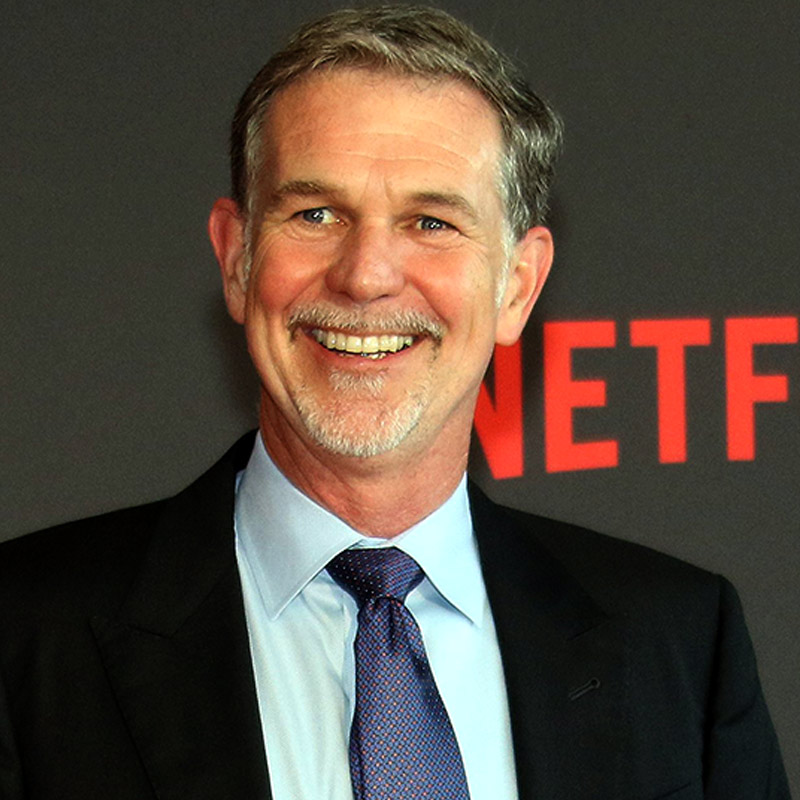
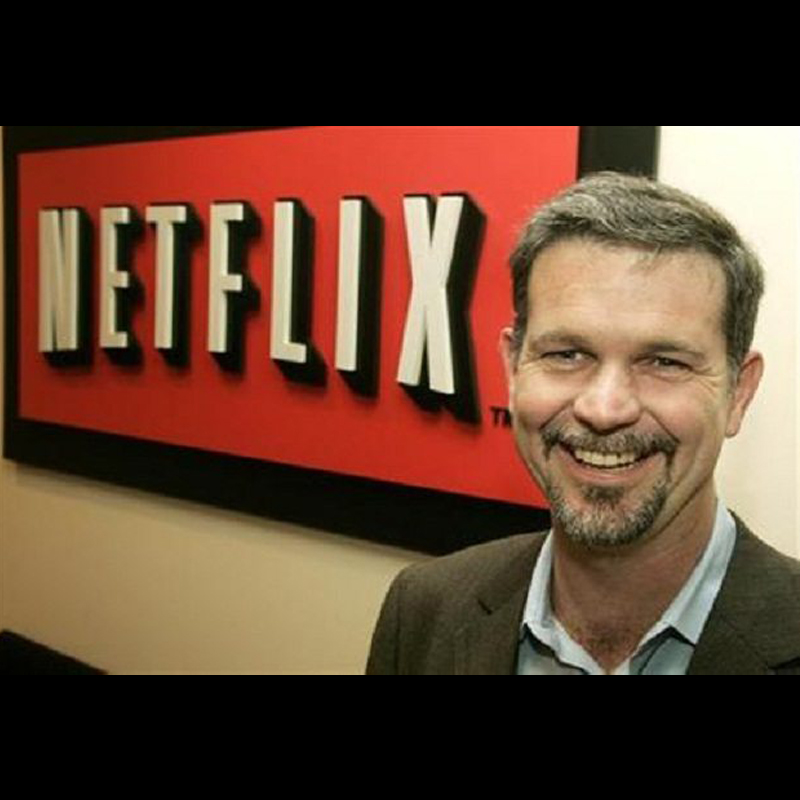
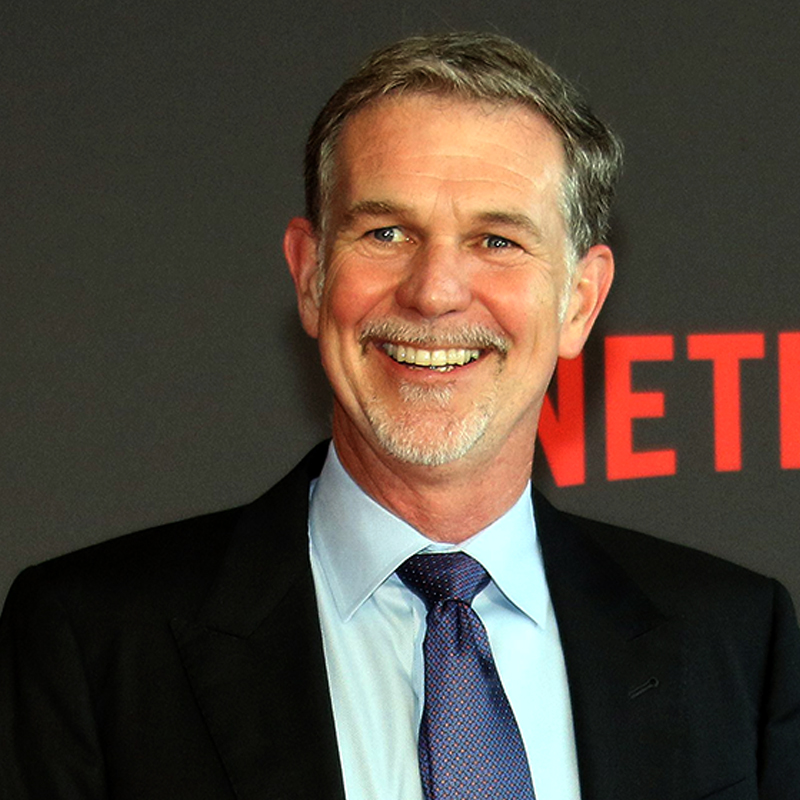
    Chief content officer Ted Sarandos said Netflix has shot original content in 17 countries as it focuses more on local programming, and that many of Netflix’s foreign-language shows would be considered “big hits” on American cable channels, thanks to artful subtitling. CEO Reed Hastings added that Netflix has also seen success on its international mobile app offerings. But Hastings also said that the company hadn’t changed its view on expanding in China, and will continue to license content.

    The company also said it expects to have $7.5 billion to $8 billion of content expenses this year, in line with previous estimates. Netflix had said it expects to grow to 60 million to 90 million members in the U.S. over time and that it would spend $8 billion on content and $2 billion on marketing this year.

    The company highlighted Spanish-language hit La Casa de Papel, unscripted series Queer Eye and franchises such as Marvel’s Jessica Jones, Grace and Frankie, Santa Clarita Diet and A Series of Unfortunate Events. Netflix also credited new talent, such as Shonda Rhimes and Jenji Kohan, for their “proven track record of success” and for allowing Netflix to cut back “reliance on third-party studios.”

    “We’re investing in more marketing of new original titles to create more density of viewing and conversation around each title,” the company said.

    The marketing spending comes after Netflix was barred from competing at the Cannes film festival due to a rule change — a setback the company called unfortunate.

    One thing that’s not on the spending slate, Sarandos said, is news programming.

    “Our move into news has been misreported over and over again. We’re not looking to expand into news beyond the work that we’re doing in long-form and short-form documentary,” Sarandos said. “Topical interview shows, absolutely, but keep in mind, those are entertainment.”

    Netflix faces increasing competition from Amazon and Disney, which have their own offerings, as well as traditional media companies and technology companies such as Apple. Hastings said the company still has a long way to go to compete with the likes of YouTube and noted that Netflix’s ability to raise prices depends on providing more value than competitors.

    At the same time, Netflix is expanding into cable bundles and recently announced a new offering with Comcast, in addition to bundles with Sky, T-Mobile and Altice.

    Netflix said on Monday the bundles allow the company to upsell existing subscribers. Executives said on a conference call that the “new wave” of operator partnerships was a consistent shift across all geographic markets.

    “We remain primarily a direct-to-consumer business, but we see our bundling initiative as an attractive supplemental channel,” the company said.

    public://f_5.jpg

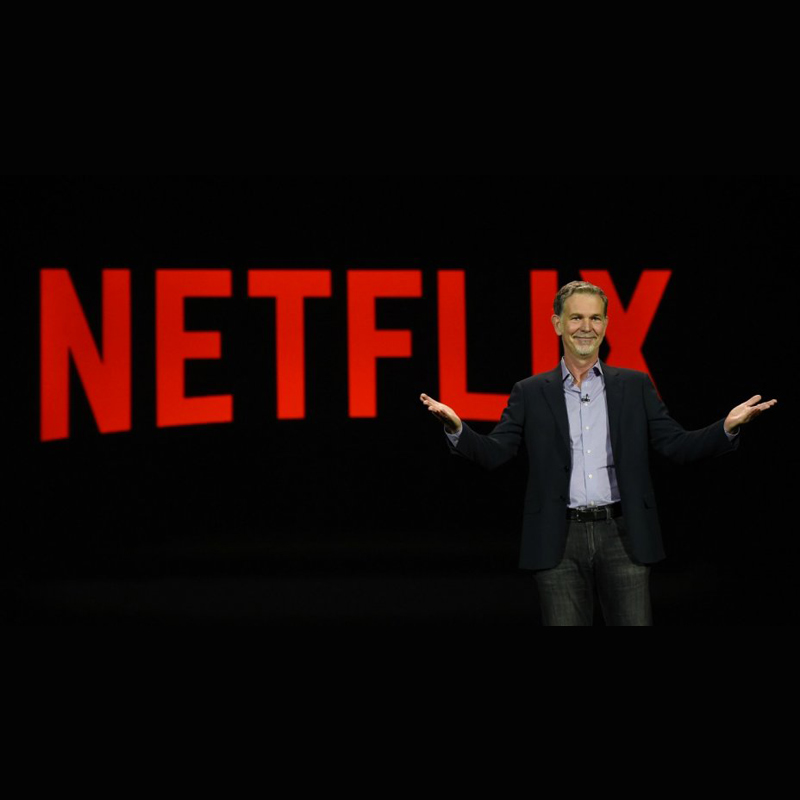
    In February this year, Hastings, at a business summit in India, said that  Netflix saw a potential of adding 100 million customers in India. “It definitely helps to have confidence on the growth of the internet. Even we couldn’t predict the last two years of Indian internet growth,” he had said.

    Also Read :
    Localised content the way forward for Netflix in India

    Netflix announces unscripted series on Mumbai Indians

  • Netflix to boycott Cannes Film Festival 2018?

    Netflix to boycott Cannes Film Festival 2018?

    CANNES: Netflix is known to do things differently. While almost everyone trips over every hurdle to get into the Cannes Film Festival, the world’s largest streamer is mulling over giving it a miss this year.

    The reason: festival director Thierry Fremaux’s announcement last month that he would not open the doors to any producer to enter the Cannes official competition selection if the film does not have a theatrical release in France.  It had enforced the stricter regulations in 2017 and Fremaux reaffirmed that the regulations would stay last month.

    And that seems to have got the Netflix management, led by Reed Hastings and Ted Sarandos, agitated as one of the world’s largest creators of content releases most of its films on its over the top (OTT) platform for consumption by its 117 million paid users.

    The film festival’s team, however, has allowed studios, without a French release for a film, to submit it for screening but not take part in the Palm D’Or competition.

    French law forbids films released theatrically in France to be shown online until a three-year window since the first exhibition is crossed; which does not make for a good business model for Hastings, as subscribers pay anywhere between $9 and $14 for a Netflix subscription, depending on whether pricing plan is basic or premium. And the streaming service is not about to change its biz model for the festival. Last year the Cannes Film Festival competition jury president Pedro Almodovar had raised a stink that having a film win the Palm D’Or without a theatrical release was unthinkable. French theatrical exhibitors have been fuming that Netflix films are not being released in their cinemas, thus cutting them out of potential revenues. 

    Hastings and Sarandos were not available for comment at the time of writing. But Reed unequivocally had stated at the time when the rules were announced last year by the festival that the “establishment” was “closing ranks” on his company.

    Also Read :

    Siddharth Kumar Tewary features among Asian producers to watch at MIPTV

    Cannes Lions awards lifetime achievement to Piyush & Prasoon Pandey  

    TVF’s ImMature first Indian show to reach Canneseries


  • Localised content the way forward for Netflix in India

    Localised content the way forward for Netflix in India

    MUMBAI: Global to local seems to be the key strategy of Netflix to spread its wings in India. ‘Netflix and Chill’ is the popular term across the OTT ecosystem but the number of Indian consumers chilling with Netflix’s high-quality content dwarfs in comparison to users in other markets. However, it is adapting to Indian tastes and modifying its pure international content line-up. Will this shift drive the growth for Netflix?

    Netflix launched in India in January 2016 and has since created a niche for itself for high-quality TV series and Hollywood movie content for the English-speaking audience in the country but it is far behind other OTT players in terms of subscribers. Currently, it is the fifth largest player in India, behind players such as Hotstar, Voot and Amazon, according to the Counterpoint Technology Market Research report.

    With the rollout of 4G internet services by the top telecom providers, especially Reliance Jio, streaming in India has taken a giant leap forward. In the year 2017, Netflix acquired more subscribers than local cable connections in the US (according to data from Statista and Leichtman Research Group). However, even after spending two years in India, things aren’t quite as rosy for the company as in the US. On average, the Indian consumer would spend around $32 dollar (close to Rs 2200) per year on entertainment, whereas in the US, people spend around $2260 (close to Rs 1.5 lakh) annually, according to global entertainment and media outlook 2017-2021 report by PWC.

    How does Netflix aim to take over the minds of India when cable connections give you 100-150 channels at just Rs 1100-200? Netflix subscriptions can vary from Rs 500-800 a month. An annual plan can range from Rs 6000-9600.

    Netflix CEO Reed Hastings believes that the amount that an Indian consumer pays for cable services, on a global level, is very low, which keeps the industry smaller than it should be. Speaking at an event, he had said that Netflix’s strategy is to build up local and global content. Though he admitted that Netflix’s rates were higher than cable TV, they were significantly lower than movie tickets and other entertainment experiences. Hastings is aligning the OTT player as competition to the bigger entertainment options and not the idiot box.

    So far, Netflix has focussed on pushing its global content such as House of Cards, Orange is the New Black, Master of None, Stranger Things, Narcos and Daredevil to Indian subscribers. While it has made significant progress in adding regional content, it still has a lot of ground to make up.

    Now, Netflix sees a potential of adding a massive 100 million Indian customers. According to Hastings, Netflix has around 120 million subscribers in over 190 countries who consume over 140 million hours of TV shows and movies per day, and about 60 million are from the US. However, in the price sensitive market of India, Netflix banks on close to 1.5 million subscribers.

    How does Netflix aim to break the ice? The answer is local content. Hence, instead of price, Hasting suggested that Netflix wants to be sensitive to great local stories and content and be able to invest in them. So, the strategy will be to build up the local content that includes regional stories as well.

    But will producing local content be enough for Netflix to chill in India? Commenting on the same, PwC partner & leader, media & entertainment Frank D’Souza says, “Growing smartphone and internet penetration across the country has created a wide range of opportunities for OTT players. Focus on creating and producing regional content should be of utmost importance considering the fact that India is a multilingual country. A ‘one size fits all’ approach would not work for the country with over 22 official languages.”

    OTT platforms have realised the power that regional content has over the dissected Indian audiences. Amazon Prime was one of the first to take the plunge followed by Zee5, Hotstar, ALTBalaji, Voot, Viu etc.

    Netflix recently announced three Indian original productions Ghoul, Leila and Crocodile apart from four productions already under works which include Sacred Games, Selection Day, Again, and Bard of Blood. On Valentine’s Day, Netflix released its first India original Love Per Square Foot by Ronnie Screwvala.

    Where the platform is likely to get cold feet is in growing in tier II and III cities and the rural audiences. Commenting on the same, D’Souza says, “These are price sensitive segments of the Indian market. Considering the fact that OTT requires one to incur additional costs like that of internet subscription, it is important for players such as Netflix to have value added services or bundled services to penetrate these markets. Tying up with internet service providers and telecom operators in rural markets would give them an early mover advantage.”

    Netflix has one more interesting feature to bet on—sharing the subscription package among people. Many networks limit the number of people who can watch programming at the same time. Netflix allows two to four simultaneous streams per subscription, depending on the plan, and charges more for the higher number of streams. So, the premium plan can be shared among four people or in a family of four.

    By focussing on producing more local content from India, Netflix is betting on product over pricing when it comes to adding the next 100 million users. As a part of its future strategies, it should create movies and TV shows that Indians will be ready to die for while also keeping in mind the various languages.

    Also Read :

    2017: The year OTTs went regional in India

    Regional OTT content more than just catch-up TV    

    Indians among top commute streamers for Netflix

    Amazon strikes the balance between bingeing and episodic with ‘Breathe’

  • Pleased with India progress, says Netflix’s Reed Hastings

    Pleased with India progress, says Netflix’s Reed Hastings

    MUMBAI: Netflix CEO Reed Hastings today announced that he was pleased with the progress his streaming powerhouse was making in India. Speaking to Sanford C Bernstein senior research analyst Todd Michael Juenger during a Q4 2017 earnings interview, Hastings said, “We are very pleased with the progress that we’re making in India, throughout Southeast Asia and Japan. So, really, all across the board, we’re seeing growth penetrations that look like the first couple of years of Latin America, which, as you know, has worked out very well for us.”

    Estimates are that Netflix has anywhere between 700,000 to a million paying subs in India. At that level–with the average subscription being Rs 600–the streaming giant is currently turning over anywhere between Rs 42 crore and Rs 60 crore a month, giving it annual revenue of Rs 504 crore to Rs 720 crore. As compared to that, estimates are that Star Plus alone tots up Rs 2,100 crore in revenue.

    “That’s pretty good going for such a new service,” says a media observer. “You can’t forget that it is an international service offering with very limited localisation so far.”

    The company announced that it had registered net global additions of 8.3 million–the highest quarter growth numbers in its history, up 18 per cent compared to 2016’s high of 7.05 million net adds. Netflix’s average paid streaming memberships rose by 25 per cent year on year in Q4. Combined with a 9 per cent increase in ASP, global streaming revenue growth amounted to 35 per cent. Operating income of $245 million (7.5 per cent margin) vis-a-vis $154 million in the prior year (6.2 per cent margin) was slightly above the firm’s $238 million forecast. Operating margin for FY17 was 7.2 per cent, on target with the firm’s goal at the beginning of this year.

    Internationally, Netflix added 6.36 million memberships (compared with the firm’s earlier guidance of 5.05 million), a new record for quarterly net adds for this segment. Excluding a foreign impact of more than $43 million, international revenue and ASP grew by 59 per cent and 12 per cent year over year, respectively. The increase in ASP reflects price adjustments in a wide variety of Netflix’s markets over the course of 2017. With contribution profit of $227 million in 2017 (4.5 per cent contribution margin), the international segment delivered its first full year of positive contribution profit in the firm’s history.

    For Q1, the firm has projected global net adds of 6.35 million (against 5.0 million in the year ago quarter) with 1.45 million in the US and 4.90 million internationally. On the whole, the company has upped its content budget to $7.5-$8 billion for 2018.

    Its original content slate from India should start rolling out sometime later this year. In the earnings press release, the company said, “We’re finding continued success with international originals. High-quality content can travel globally, irrespective of language…we will expand this initiative with over 30 international original series this year, including projects from France, Poland, India, Korea and Japan.”

    In India, the firm has been striking partnerships with platforms such as Videocon d2h and Airtel wherein the Netflix app has been embedded in an easy-to-view user interface. It has been extending this partnership to cable TV MSOs. Said the company: “We are partnering with a growing number of MVPDs and ISPs across the world to the benefit of our mutual customers. These partnerships make it easier for consumers to sign up, enjoy and pay for Netflix while our service allows our partners to deepen their relationships with these subscribers. “

    Hastings revealed that he did not expect Disney’s proposed acquisition of Fox’s India assets, including Hotstar, to impact it any differently than it used to in the past year. “Not particularly. I mean, YouTube gets the most streaming in India, but Hotstar gets the second most. So it’s not a wildly different landscape. So that wouldn’t particularly change our view in India. Hotstar’s a great competitor, and sometimes collaborator now, and I’m sure they would continue to be under Disney,” he said.

  • Netflix expects rapid content growth from India

    Netflix expects rapid content growth from India

    MUMBAI: When Netflix CEO and president Reed Hastings comes calling—and it was his second visit to India this year—you know it means serious business. On a content partnership and library programming hunt, the video-streaming service’s team met up with several Indian media houses, including Shah Rukh Khan-promoted Red Chillies Entertainment and other independent production houses last week.

    Hastings and the Netflix team had a meeting late last week with the editorial team of Network18, a part of Viacom18, an equal Indian joint venture of the US media giant Viacom and a group company of India’s oil-to-energy-to-telecoms-to-broadcast conglomerate Reliance Industries Limited (RIL).

    Netflix later clarified on Monday to Indiantelevision.com that Hastings met up with the editorial team of Network18 before his interview was conducted on the business news channel last week and that no business was discussed.

    Incidentally, Viacom18 not only sits on a huge library of Indian language programming and the ability to produce fresh shows but is also active in the studio business having produced several Hindi blockbusters. Its latest production Padmavati, though, has run into a history vs. fiction controversy and, according to an official statement from the company, the 1 December 2017 release of the film has been voluntarily deferred.

    Both RIL chief Mukesh Ambani and Hastings believe that digital holds a great future for content distribution. Ambani on Friday at the Viacom18 10th anniversary bash here extolled the “synergies” that can come from the talent in the “Viacom18 family and digital distribution” (of Voot and Reliance Jio) where there’s “no limit to growth”. Hastings, in an interview to CNBC-TV18 channel last week, said Netflix “makes TV watching so easy because it is on the internet.”

    Expect Rapid Content Increase from India, says Hastings

    Excited about the one billion plus Indians who “are just wild about entertainment and television market,” Netflix CEO Reed Hastings is betting big here and wants to source more content—originals and Bollywood related—even as his team hunts for partnerships. 

    “You should expect rapid increase (in Indian content on Netflix), dozens of series a year from now will be underway,” Hastings told business news channel CNBC-TV18 in an interview aired late last week when asked to give a sense of investments being made in content from India for the rest of the world. “Of course, there are the global shows we have like Narcos, filmed in Columbia, popular all around the world. We have got a new German original Dark…and then we are adding more Bollywood films. We are also adding Sacred Games and originals that we are doing here in India.”

    Though he has “never completed a whole Bollywood movie” having sampled several of them, Hastings said he does “get the subtlety” of the content and it was fascinating to see the “breadth of entertainment (in India) and how that works”.

    According to Hastings, Netflix is a comparatively new player in India, being active for just two years, but would be indulging in producing more content for the Indian market and simultaneously the world too.

    He also did not envisage that uneven bandwidth infrastructure in India could pose problems to streaming services. “We launched in Mexico five years ago, which had a relatively slow internet, and it has just accelerated tremendously because people want to watch Netflix, YouTube, other content sourced online and it is moving to the internet life,” he said. “In India, in last two years with Reliance Jio, just the biggest explosion in bandwidth (has happened) that the world has ever seen. It is just incredible what is happening here in India. As we go to other countries, (we are) saying an investment like Reliance Jio is transformative for the society.a”

    Though Netflix globally is spending crazy amounts on content and customer acquisition—its content budget is approximately $8 billion—analysts say the company is also adding to its liabilities.

    Despite reporting an impressive earnings report for Q3 of 2017 in October, analyst Ryan McQueeney of US’ Zacks Investment Research pointed to some shortcomings: “Netflix’s third-quarter report revealed that its long-term debt now totals $4.89 billion. This is up nearly 46 per cent from the $3.36 billion in long-term debt that it started the year with, and it marks a 106 per cent growth in debt from the end of the year-ago period. Investors should also note that Netflix said its total liabilities have reached $13.62 billion, up from $10.91 billion at the end of 2016 and $9.82 billion in the prior-year quarter.”

    However, such criticism hasn’t deterred Netflix or its co-founder yet. “Content is best when it really has a local flavour, but then it is approachable by other people,” Hastings said in the CNBC-TV18 interview, adding, “We have an American comedian, Hasan Minhaj, who does stand-up in California and he is popular all over the world now on the Netflix platform. Same is with Narcos. So you get all these interesting crossovers.”

    Netflix relies a lot on data and technology to source and create content. Pointing out that the 110 million-member global company has reached its position because it was producing content that people were “excited about”, Hastings said that they use artificial intelligence to help them figure out what was best.

    “We call it informed intuition. While we want the creatives to have a lot of data but ultimately, it is a judgment call of a human being with a creative vision and that is the intuition. The intuition is the most important part but we would like it to be informed by how other shows have done,” he explained.

    Like a true champ, Hastings did not shy away from giving credit to his competitors where due. “Hotstar is doing a great job here in India. They are leading in the subscription internet category. There are a lot of other global internet companies, YouTube, Facebook, Amazon and Apple. So there are many competitors – the traditional media companies and the entire internet sector. And what that is doing is everybody is bidding to have the most valuable content. So the prices now for creators are increasing,” he told the TV channel interviewer.

    Netflix-Red Chillies Partner For Multilingual Spy Series

    A new multilingual Netflix original series, based on the book Bard of Blood, in partnership with Shah Rukh Khan’s Red Chillies Entertainment has been announced. Penned by young Indian author Bilal Siddiqi, the book will be brought to life as an eight-episode high-octane political espionage thriller series for more than 109 million Netflix members around the world.

    Khan said in a statement, “We have always tried to create world-class content and entertainment from India. Netflix has shown that Indian stories have a global audience and we would love to use this platform and its reach to tell more stories.”

    Set against the backdrop of the Indian sub-continent, the multilingual series will tell the story of an expelled spy, Kabir Anand, who is recalled from his new life as a Shakespeare professor in Panchgani to save his country and long-lost love. A combination of combat skills, intellectual background and personal circumstances propel Kabir to avenge the past and face his deadliest enemies in a race against time. The series will be shot on location and the characters will interact in Hindi, Urdu, English and other languages.

    “We believe in the global vision of Red Chillies to create groundbreaking content out of India. It’s exciting to deepen our relationship with Red Chillies and expand our slate of originals in India,” Hastings said.

    In a series of tweets, dwelling on the partnership, Khan said “Netflix and Red Chillies chill” and later joked “think will cast Reed Hastings in the series too. He is a natural.”


  • Netflix: DreamWorks’ Cobb to lead kids, family content team, deal with Orange renewed

    Netflix: DreamWorks’ Cobb to lead kids, family content team, deal with Orange renewed

    MUMBAI: Two significant developments have taken place at Netflix, a leading internet entertainment service with 104 million members in over 190 countries, including India, enjoying over 125 million hours of TV shows and movies per day, including originals.

    Orange and Netflix have inked a major agreement and Melissa Cobb will lead Netflix kids and family content team.

    Orange, one of the leading telcos with sales of 40,9 billion euros in 2016, and Netflix have renewed the agreement signed in 2014 for the distribution of Netflix for Orange TV customers in France, and have expanded their partnership to all countries in which the Orange Group is present.

    This strategic partnership will enable the Group’s subsidiaries in Europe, Africa and the Middle East to distribute Netflix in the future, bringing their customers exclusive content of this service to all their screens.

    Netflix will be offered to Orange Poland customers in the coming months as part of its TV offers. Other launches will follow in 2018.

    “We want to offer the best content,” notes Orange CEO Stéphane Richard.

    Netflix CEO Reed Hastings said, “This partnership offers the possibility for millions of our customers to enjoy the leading entertainment service seamlessly, in one place.”

    Cobb has joined Netflix as vice-president, kids and family, overseeing the creation and acquisition of series and films for children and families. Based in the Los Angeles office, Cobb reports to the chief content officer Ted Sarandos.

    In her role, Cobb leads the content team responsible for bringing kids and family titles to Netflix members with an expanded focus on high quality series and event programming across the spectrum of kids and family entertainment, including both animation and live action.

    Cobb joins Netflix from DreamWorks, where most recently she was the chief creative officer and head of studio for Oriental DreamWorks. Based in Shanghai, China, she oversaw all aspects of running the studio and U.S./China collaboration including creative oversight of all projects in development and production, business strategy, production strategy and more for a slate of high quality animated feature films targeted to a global audience.

  • Cricket, movies, TV shows and Amazon, according to Netflix’s Reed Hastings

    MUMBAI: Hotstar, Amazon, and Sony Pictures Networks India can heave a sigh of relief. Netflix CEO Reed Hastings has stated that the global streaming powerhouse is going to continue to focus on entertainment; cricket is not on the table at all. What this means that it will be refraining from participating in the IPL cricket rights tender which will be coming up for bidding soon.

    Speaking with CNBC on Squawk Alley on 31 May from the Code Conference in California, Hastings was pretty emphatic that both, sports and news, are a no-go area for Netflix. He said: “You know, no plans on news and sports. Those are tough businesses and we’ve got a lot of room to grow in movies and TV shows. Expanding into standup comedy. Unscripted. So, we are going to really focus on that on a global basis.”

    He went on to add that Netflix could do movies about sports as the company was focused on video content that has repeat viewing. Said he: “It’s things that you don’t only want to consume once. Whereas the Warriors and the Cavaliers (two NBA teams) are going up again and people will be intense on that and then it won’t – you know, afterwards, there is no after viewing. Whereas our shows, there really is.”

    Hastings agreed that India was definitely a complicated market for a US company “But, for an Indian company, they feel fine about it,” he said. “We still have a lot to learn. Now, we’ve done awfully well in Latin America and in Europe and, of course, in North America. So, we’ve learned some things. But, we have a lot of room to grow in Asia and a lot to figure out still.”

    He is not disturbed by the explosion of OTT players rushing to grab a few cents from the consumer’s wallet. “Around the world, there’s all kinds of new options coming up that give people opportunity. It is like saying there are too many mobile phone apps. You know, there’s 100,000 but you probably only pay attention to 30. But, different people have a different set of them. So, i think it is great,” he said.

    Hastings disclosed that Netflix is more about being consumed on the mobile phone in Asia – as compared to the US where consumers are spending more time on it on traditional widescreen TVs. “About two-thirds of the viewing is on large screen televisions, either from your Xbox or Playstation or directly with the smart TV. When you get used to watching on a mobile phone, you watch all kinds of content and sports on a phone. You adapt to that,” he explained.

    “We are just doing great content and it is available on any screen. You paid $1,000 for a new television, you are going to use it. You look for the shows and the images. With that and with HDR, which has a color intensity. It makes the TV just pop. 4k transforms the in-home experience. That’s one of the big drivers and with mobile on the low end.”

    Hastings said that cord-cutting is not really being driven by the rise of streaming services like Netflix, Hulu and Amazon Prime. “Very few people have cut the cord. We are about 50 million in the US, and we have seen maybe two million or three million of 50 (million) cut the cord,” he elucidated.

    “Don’t think of it as a big overlap that we are driving cord cutting that is probably mostly from pricing. In general, if you look at cord cutting, it is like two to three per cent per year, like broadcast ratings over the last 30 years. It will take a very long, slow, secular decline no big calamity and then they will adjust the economics.”

    According to him, the rapid expansion of Amazon is what is alarming. He said: “Well, they are so scary. I mean, everything Amazon does is just so amazing. I mean, how are they doing so many different business areas so well? It’s like they are trying to repeal the basic laws of business of limited capability. So, we are continuing to watch them and be impressed with them. And they are helping to grow the industry because they are investing in the content.”

    However, he was clear that Netflix is not going to go head to head with the giant. He explained: “If we try to out-amazon Amazon, then that’s a losing battle. So, what we have to do is be the specialty play. We are trying to be Starbucks and they are trying to be Walmart. So, we have to have brand-intense love and focus. And, what they do is incredible at their breadth. So no, we wouldn’t focus on those things. We would focus on how do we be, really, the embodiment of entertainment, and joy, and movies and TV shows.”

    He maintained that Netflix’s content budgets are only going to grow. Its content purse for 2017 has around $6 billion in it, but that is not going to be enough going forward.

    “As we grow the membership base, we want to grow the content budget. There are so many great shows on Netflix but there are so many great shows we don’t yet have. We are going to continue as we grow the membership base to try to get more shows and more movies. (All this has) Been great for talent and writers for everyone. There is so much competition now between all the new players plus the existing players, like HBO, are beginning to grow. It is this new age of television. Nobody is sure where it is going, except for the quality of movies and TV shows is continuing to decline.”

  • Netflix’s Reed Hastings’ compliment pleases Hotstar

    MUMBAI: When the world’s most successful video on demand player Netflix acknowledges you as a rival to watch out for, you obviously are going to be fairly kicked about it. That’s the case at Star India-owned Hotstar.

    Sources reveal that the team – led by Ajit Mohan – inside the domestically originating service is pretty happy about the comment that Netflix CEO Reed Hastings made last week in an interaction with the media.

    Said he: “Here in India, consumers are fortunate because there’s a great battle with Hotstar, Amazon, YouTube and Netflix, and maybe others, all competing for consumer’s time. When you use your mobile phone, laptop, smart TV, there are many services to go to. You can do many things. We’re one of the choices. What’s unique about Netflix is that we have got these international originals, combined with local talent.”

    Hotstar India claims to have around 60 million subscribers in India and is gung-ho about going global. The plan is to target Indians globally and possible other international viewers too: the number is anywhere between 25-50 million worldwide.

    The other two players – Amazon and YouTube – are backed by global super heavyweights, while Hotstar is backed by Star India, which is part of Twenty First Century Corp. The latter is a midget compared to both and Google and Amazon in terms of valuation and market capitalisation.

    Says a media commentator: “Hotstar is targeting a billion minutes a day of watch time. Netflix does multiples of that in a day worldwide. Hence, to be named as a competitor to be watched out for is a stripe on the Hotstar team’s shoulders. As compared to Netflix, Hotstar has a smorgasbord of content offerings which are very local – right from soaps to series to films, primarily in house content created for its television channels. Or there’s the movies and the international shows from good libraries. Of course, in recent times, it has been curating original Indian content. And then, there is the IPL which drives the nation crazy. It’s interesting to see how team Netflix will actually do battle with it in the marketplace as it seeks to scale up the numbers in India.”

  • What the Netflix, Vodafone, Videocon d2h and Airtel tieups mean

    MUMBAI: It clearly is looking at spreading its net far and wide, at least on the availability front. Global video on demand service Netflix has announced the signing of partnerships with three of India’s leading players in the DTH and mobile telephony space: Airtel, Videocon d2h and Vodafone.  

    CEO Reed Hastings was in Delhi yesterday and is expected to be in Mumbai over the next few days to probably make a few more announcements.  Said Hastings at the conference: “India is one of the top 3 markets for Netflix in terms of mobile usage. We’ve had strong growth here; it’s stronger than all of the other Asian nations. It’s a larger market. In terms of investments, we are investing heavily into content. The watch time of our shows has gone up significantly since the launch of Jio.”

    He added: “India is one of the most important and vibrant countries in the world, and we are delighted to be teaming up with three of its leading companies to make it much easier for consumers to enjoy Netflix. In the months and years to come, we look forward to bringing our Indian members more compelling stories from all over the world, and ever-improving viewing experience, and incredible joy.”

    Details of the Videocon d2h tieup were made available through a press release yesterday. It said that Videocon d2h consumers will be able to enjoy Netflix on a large screen by simply clicking a dedicated Netflix button on the remote control of HD Smart Connect set top box (STB).

     Netflix will be available through a dedicated app available on the connected Set top box, HD SMART STB  which converts any existing TV into a Smart TV besides showing more than 600 channels and services in high definition and standard definition. The HD Smart Connect set top box allows viewing in SD and HD, using the satellite feed like any other Videocon d2h set top box. It can be connected to the Internet through any Wifi or Ethernet connection in the home for accessing a curated set of applications available through the Internet. The minimum Internet speed needed is 2 Mbps. These apps, both free and paid cover a range of content genres and utility apps. By connecting the HD Smart Connect STB to any TV, the TV would become smart.

    The Airtel partnership is expected to be in the same vein. Hastings told journalists that “we are focussed on the set top box with them so that the device attached to the television has Netflix on it, so they can stream directly to the television. In case of Vodafone, it is a mobile partnership wherein payment for Netflix will be integrated via mobile billing or through pre-paid schemes.

    With more than 94 million members (read subscribers) worldwide, the tieups will give Netlflix access to  humungous potential audience numbers.

    Says a media observer: “It’s a master stroke of sorts.  Depending on whether the Airtel DTH partnership extends to the mobile parent;  whether the partnership with Videocon d2h extends to Dish TV when they merge, and to Idea when it partners with Vodafone, the potential member base could extend the Netflix service to around 500-600 million potential viewers. And around 300 million smart phone and DTH viewers. Clearly Netflix means business in India.”

    The media observer who was unwilling to be quoted stated that what Netflix will have to look at pricing in India if it wants to become a mass brand.

    “We will get to know over time whether it is playing the volume game or the premium niche game. Currently it is the latter. Rs 550 to Rs 700 per month is limiting its subscriber base. But the advantage of Netflix’s higher pricing is that it can share more with its partners on the other hand, apart from the data consumption revenue that will accrue to the telco,” she said. “Our estimates are that its paid subscriber base in India is sub-500,000. All the other players are priced much lower and are yet to take off. Even Hotstar is struggling despite having a great content offering. And Amazon is almost giving away its content for free with its 499 per year package. Netflix will  have to decide which route it is taking.”

    Hastings acknowledged this to the media saying that Netflix  could come up with other payment plans – like a weeky one or daily, keeping in mind the purchasing power in India. But the current model is working well with the top 10 per cent, he disclosed. ” Our main focus is on adding more content. What we really want to be is a content solution, where you can get almost all you want to view in one place on Netflix.”

    Media observers expect other announcements soon – possibly a partnership with Jio? An office is likely to be set up in Mumbai by 2018. Hastings is slated to meet some production biggies in Mumbai in the coming days apart from following up on the progress of Sacred Games Phanton Films is producing for it.

    Watch this space!

    (Updated on 7 March at 1:15 pm)

    Also Read :

    Netflix: 46% of streaming couples cheat & watch ahead of partners

    Videocon d2h partners Netflix for HD Smart Connect

  • Netflix ties up with PTCL as Amazon woos India

    Netflix ties up with PTCL as Amazon woos India

    MUMBAI: As the world’s leading video-streaming network Netflix and e-commerce giant Amazon take different routes to reach out to the Indian audience while they expand globally, the former is partnering with a top-ranking company in India’s neighbourhood Pakistan, thus strengthening its hold in the sub-continent.

    While Amazon is relying on going local with its video streaming service, Netflix is depending on its global programming.Amazon meantime has commissioned “Baahubali: The Lost Legends,” a new animated series in India based on a local blockbuster movie.

    Pakistani telco PTCL has signed a partnership agreement with Netflix. The two companies will use their respective resources for a symbiotic relationship, maximising the viewing experience and penetration of Netflix services in the Islamic state. This pact will serve as the way forward for both Netflix and PTCL to provide digital content. PTCL will promote and aid original Netflix content in Pakistan.

    Amazon Studios chief Roy Price frequents India scouting for locally appealing programming for Amazon’s forthcoming video service.

    Though Netflix made its India debut around 10 months ago, it makes content-buying decisions out of Los Angeles, even for regional shows, to ensure they have global appeal. For example, the deal with Indian producer Phantom Films for its new Indian original series, based on the internationally acclaimed Mumbai crime novel “Sacred Games.”

    In Pakistan however PTCL became the only service provider with advanced caching servers and technical pairing with Netflix to offer the superior viewing experience since Netflix’s global launch in January 2016. The Netflix Pakistan website says users can start using services starting $7.99 a month, with a free month offer.

    Netflix made the announcement during a keynote by Co-founder and Chief Executive Reed Hastings: “Today you are witnessing the birth of a new global Internet TV network.” Members with a streaming-only plan will be able to watch instantly through the Netflix service. The movies and TV shows that are available to stream may vary by location, and will change from time to time.

    India, Nigeria, Russia and Saudi Arabia were among the major countries where the service was launched, Hastings said at a Consumer Electronics Show keynote in Las Vegas.

    The company recently said it was exploring options for providing its services in China. The company said in July that plans to enter China in 2016 could be delayed. However, Netflix added simplified and traditional Chinese to the 17 languages it already supports.

    PTCL’s chief commercial officer Adnan Shahid described digital entertainment as PTCL’s “key priority”. Netflix, which has expanded into some 190 countries following a near-global launch in January, doesn’t believe in a physical presence in every market.

    Amazon has been selective internationally, pushing Prime Video into some European markets, Japan, and now India. Its bet is that homegrown programming will win over Indian audiences, a strategy analysts say could also help increase Amazon shoppers’ loyalty.

    Netflix is generally reviewed as a stand-alone streaming business, with 87 million subscribers, while Amazon’s video operations are part of the giant’s much larger e-commerce business, with 60 million global Prime members, according to Morgan Stanley estimates.