Tag: Red Planet

  • THE NEW SEASON OF NATIONAL GEOGRAPHIC’s MARS SHOWCASES HOW MANKIND WILL LIVE ON THE RED PLANET

    THE NEW SEASON OF NATIONAL GEOGRAPHIC’s MARS SHOWCASES HOW MANKIND WILL LIVE ON THE RED PLANET

    MUMBAI: The prospect of mankind living on the Red Planet has never been more palpable. The idea once considered science fiction, but today, the future is definitely red for all of us.  

    Season 2 of National Geographic’s acclaimed series MARS – dubbed impressive, inspiring and scientifically honest by critics – returns with a six-episode arc continuing in last season’s unique hybrid format: alternating scripted and documentary sequences to predict what life will be like on the Red Planet forecasted by what’s happening today on Earth. National Geographic partners again with Brian Grazer and Ron Howard to envision what might happen when Earthlings become the planet’s first Martians. The new season premieres on National Geographic & Hotstar on 17th November.

    The first season of the series showcased how mankind will survive one of its greatest adventure -the journey to another planet. Backed by the research and technology available as of today, space pioneers showcased how the journey to Mars will unfold. The new season, picks up after this background, and highlights the actual problems humans will face as they try to survive on a completely new planet. It highlights a very important question – when becoming interplanetary, are humans doomed to repeat the same mistakes they made on Earth?

    On the scripted front, the series tackles seemingly everyday occurrences – pregnancy, break ups, new romances, epidemics, breakdowns, power outages, injuries, exercise, mealtimes and socializing. But when they occur approximately 54.7 million isolated kilometres from Earth –  where there is no escape – they are anything but ordinary.

    On the documentary front, present-day vignettes draw parallels to the future happenings on Mars by looking at some of the dire issues facing Earth’s last frontier – the Arctic. This includes a spectrum of events that currently are compromising life on Earth – and could plague us in the future as we become an interplanetary species: drilling, glacial melting, rising sea level and indigenous health epidemics which surface when the permafrost melts.

    The experts once again navigate the audience through the struggles and opportunities awaiting humans on Mars. This elite group includes some of the biggest names in human exploration, technology, the environment and social science, such as Elon Musk, SpaceX CEO; Ellen Stofan, former NASA Chief; Michio Kaku, theoretical physicist and futurist; Casey Dreier, director of space policy at the Planetary Society; Antonia Juhasz, leading oil and energy expert; and Naomi Klein, bestselling author, activist and award-winning journalist on climate change.

    “In MARS, everything as simple as the quotidian, like personal hygiene and meals, requires greater effort and is exponentially more difficult in this foreign frontier of limited resources where new rules are often written on the fly,” says Stephen Petranek, MARS’ co-executive producer, scientific advisor and award-winning author of How We'll Live on Mars. “Leaving Earth insures long-term human survival, and we have the technology and spirit to get there, but what will it actually take to live there? MARS is a six-to-nine month trip one way…so before we get there, we better make sure we can permanently make it our own.”

  • ISRO successfully launches Astrosat along with six foreign satellites

    ISRO successfully launches Astrosat along with six foreign satellites

    MUMBAI: The Indian Space Research Organisation (ISRO) has been having a swell 2015. Just a few days after its Mars Orbiter completed a successful one year around the Red planet, ISRO has now launched its first dedicated multi wavelength space observatory along with six foreign customer satellites.


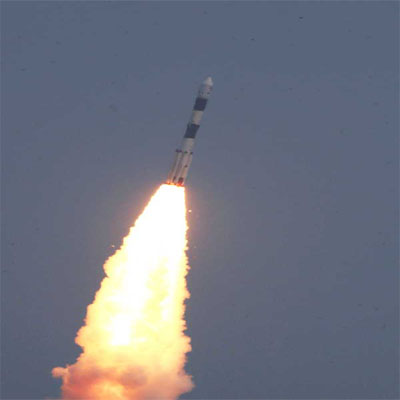
    In its 31st flight (PSLV-C30) conducted today (28 September, 2015), India’s Polar Satellite Launch Vehicle (PSLV) successfully launched Astrosat – multi wavelength space observatory and six foreign customer satellites into a 644.6 X 651.5 km orbit inclined at an angle of 6 deg to the equator. The achieved orbit is very close to the intended one. This was the thirtieth consecutive success for PSLV.


    PSLV was launched in its heaviest ‘XL’ version with six strap-on motors of the first stage. The launch took place from the First Launch Pad at the Satish Dhawan Space Centre SHAR (SDSC SHAR), Sriharikota, the spaceport of India.


    The 320 tonne, 45 m tall PSLV-C30 carrying seven satellites including the 1513 kg Astrosat, lifted off at 10:00 Hrs IST. About 22 minutes after lift-off, Astrosat was successfully placed in orbit and separated from the fourth stage of PSLV-C30. The separation of all the six co-passenger satellites was completed in the subsequent three minutes. The seven satellites carried by PSLV-C30 together weighed about 1631 kg at lift-off. 


    After a 50 hour smooth count down, the 320 ton PSLV-C28 was launched with the ignition of its first stage. The important flight events included the ignition and separation of the strap-ons, separation of the first stage, ignition of the second stage, separation of the payload fairing after the vehicle had cleared the dense atmosphere, second stage separation, third stage ignition and third stage separation, fourth stage ignition and fourth stage cut-off.  


    Through 30 successful flights during 1994-2015 period, PSLV has launched a total of 84 satellites including the seven satellites successfully launched today. The vehicle has repeatedly proved its reliability and versatility by successfully launching satellites into a variety of orbits including polar Sun Synchronous, Geosynchronous Transfer and Low Earth orbits of small inclination thereby emerging as the workhorse launch vehicle of India. 


    So far, 51 satellites have been launched by PSLV for customers from abroad. Today’s launch of six co-passenger satellites by PSLV-C30 was facilitated by Antrix Corporation Limited, the commercial arm of ISRO, a government of India Company under the Department of Space (DOS). 


    Soon after its separation from PSLV-C30, the two solar arrays of Astrosat were automatically deployed and the Spacecraft Control Centre at the Mission Operations Complex of ISRO Telemetry, Tracking and Command Network (ISTRAC) at Bangalore took control of Astrosat.


    Astrosat is India’s first dedicated multi wavelength space observatory. This scientific satellite mission endeavours for a more detailed understanding of our universe. Astrosat is designed to observe the universe in the Visible, Ultraviolet, low and high energy X-ray regions of the electromagnetic spectrum simultaneously with the help of its five payloads. 


    Astrosat was realised by ISRO with the participation of all major astronomy institutions including Inter University Centre for Astronomy and Astrophysics (IUCAA) of Pune, Tata Institute of Fundamental Research (TIFR) at Mumbai, Indian Institute of Astrophysics (IIAP) and Raman Research Institute (RRI) of Bangalore as well as some of the Universities in India and two institutions from Canada and the UK.


    In the coming days, Astrosat will be brought to the final operational configuration and all its five scientific payloads will be thoroughly tested before the commencement of regular operations.

  • Mars Orbiter Spacecraft crosses half way mark of its journey

    Mars Orbiter Spacecraft crosses half way mark of its journey

    MUMBAI: India’s Mars Orbiter Spacecraft crossed the half-way mark of its journey to the ‘Red Planet’ along the designated helio-centric trajectory at 9:50 am on 9 April.


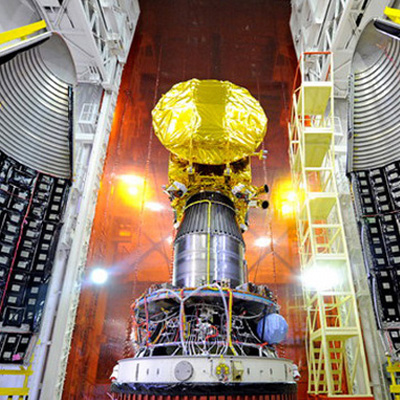
    Mars Orbiter Spacecraft was launched onboard PSLV-C25 on 5 November 2013. On 1 December 2013, Trans Mars Injection manoeuvre was conducted successfully and the Spacecraft was set in its course towards Planet Mars through a helio-centric trajectory. Soon after the Spacecraft crossed the sphere of influence of Earth, a Trajectory Correction Manoeuvre (TCM) was performed successfully on 11 December 2013.


    ISRO has been continuously monitoring the Spacecraft using its Deep Space Network complemented by that of NASA-JPL. As the Spacecraft is on its designated trajectory, the TCM planned for April 2014 is not considered essential. If required, the next TCM is planned to be carried out in June 2014.


    Mars Orbiter Spacecraft and its five scientific instruments are in good health. Periodic tests are being done on the different levels of autonomy built into the Spacecraft for managing contingencies.


    As of 9 April, the radio distance between the Spacecraft and the Earth is 39 million km. A signal from the Earth to the Spacecraft and back to Earth takes 4 minutes and 15 seconds. Soon, the High Gain Antenna of the Spacecraft will be put in service for handling communications with the ground stations.


    The Mars Orbit Insertion (MOI) manoeuvre would be performed on 24 September 2014.

  • DD to telecast live launch of Mangalyaan Mission from Sriharikota

    DD to telecast live launch of Mangalyaan Mission from Sriharikota

    NEW DELHI: Doordarshan will telecast live the launch of the India’s Mars Orbiter Mission (MOM) – which will conduct a detailed study of the Martian atmosphere and is the nation’s first ever mission to the Red Planet.


    The telecast PSLV – C25/Mars Orbiter Mission will be telecast live on DD National from 1410 hrs from Sriharikota today afternoon. Prior to that, there will be a ten-minute curtain-raiser on the mission.


    The countdown commenced on 3 November in the morning at 6.06 hrs, according to an official statement from the Indian Space Research Organization (ISRO).


    India would become only the fourth nation or entity from Earth to survey Mars up close with spacecraft, following the Soviet Union, the United States and the European Space Agency (ESA). Past attempts to reach the Red Planet from both China and Japan have failed.


    MOM is the first of two new Mars orbiter science probes from Earth set to blast off for the Red Planet this November. Half a globe away, NASA’s MAVEN orbiter remains on target to launch barely two weeks after MOM on 18 November from the Florida Space Coast.


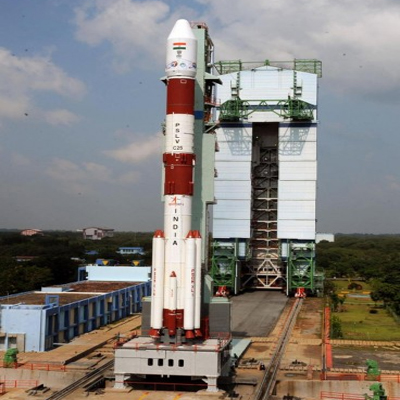
    MOM is on schedule to lift off atop the powerful, extended XL version of India’s highly reliable four stage Polar Satellite Launch Vehicle (PSLV-C25).


    The 44 meter (144 ft) PSLV will launch MOM into an initially elliptical Earth parking orbit of 248 km x 23,500 km. A series of six orbit raising burns will eventually dispatch MOM on a trajectory to Mars around 1 December.


    Following a 300 day interplanetary cruise phase, the do or die Mars orbital insertion engine will fire on 21 September 2014 and place MOM into an 366 km x 80,000 km elliptical orbit.


    MOM arrives about the same time as NASA’s MAVEN orbiter. They will significantly bolster Earth’s armada of five operational orbiters and surface rovers currently investigating the Red Planet.


    MAVEN and MOM will “work together” to help solve the mysteries of Mars atmosphere, the Chief Bruce Jakosky of MAVEN told Universe Today. Although there are no NASA instruments on board MOM, NASA is providing key communications and navigation support to ISRO and MOM through the agency’s trio of huge tracking antennas in the Deep Space Network (DSN).


    The $ 69 million 1,350 kilogram MOM orbiter, also known as ‘Mangalyaan’, is the brainchild of ISRO.


    ‘Mangalyaan’ is outfitted with an array of five indigenous science instruments including a multi colour imager and a methane gas sniffer to study the Red Planet’s atmosphere, morphology, mineralogy and surface features. Methane on Earth originates from both biological and geological sources.