Tag: real money gaming

  • Indian TV advertising takes a beating as FMCG brands tighten purse strings

    Indian TV advertising takes a beating as FMCG brands tighten purse strings

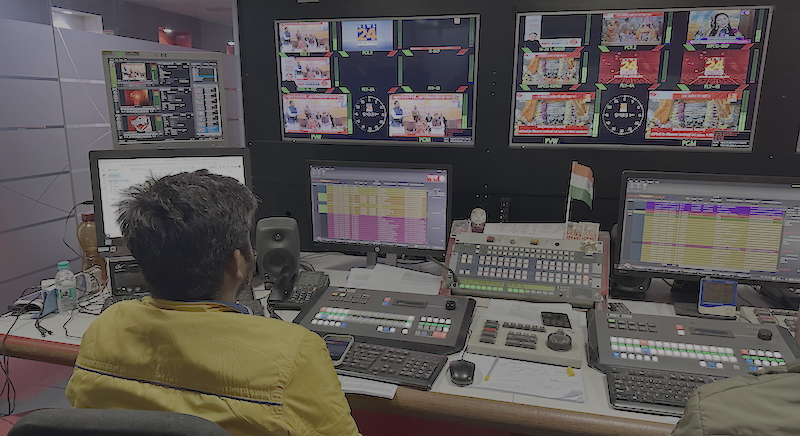
    MUMBAI: India’s television advertising market has hit the skids. The Economic Times reported that ad volumes plummeted 10 per cent year-on-year in the first nine months of 2025, according to TAM AdEx data, as fast-moving consumer goods companies—the industry’s biggest spenders—slashed budgets in response to anaemic consumer demand. Of course, the ban on real money gaming platforms in end-August added to the shrinkage in ad spends too . 
    The carnage shows up in broadcaster balance sheets. Zee Entertainment’s advertising income tumbled 11 per cent to Rs 3,591 crore. Sony Pictures Networks India posted a nine per cent drop to Rs 2,606 crore. Sun TV Network’s advertising and broadcast slot sales fell four per cent to Rs 1,440 crore. Star India, now merged with the erstwhile Viacom18, kept mum on the split between advertising and subscription revenue.
    The culprit is clear: viewers are ditching appointment viewing for on-demand convenience, leaving linear television scrambling for relevance.
    Food and beverages dominated advertising between January and September, claiming 21 per cent of total ad volume. Personal care, services, household products and retail rounded out the top categories. The top ten sectors hoovered up 88 per cent of all TV advertising—proof that consumer brands still see television as the mass-reach medium par excellence.
    TAM Media chief executive LV Krishnan explained that the “drop is largely led by softening of market conditions, whereby consumption had dipped, resulting in a cut in ad budgets. This is a pre-GST reduction period.
    Among individual advertisers, Hindustan Unilever remained the heavyweight champion, followed by Reckitt Benckiser India and Godrej Consumer Products. The top ten advertisers accounted for 42 per cent of total ad volume.
    General entertainment channels and news outlets continued to attract the lion’s share of advertising, together accounting for 57 per cent of total volume. News, movies and music saw a marginal drop compared with 2024, whilst general entertainment gained slightly—a sign that high-reach programming still packs a punch.

    Krishnan reckons the final quarter of 2025 will see year-on-year growth, thanks to GST rate cuts that kicked in on 22 September. He estimates the reforms will spur consumption and inject Rs 5,400 crore into overall advertising during the festive season, on top of organic festive growth. 

    If the green shoots turn into a proper recovery, television may yet claw back some swagger. For now, though, it’s licking its wounds.
  • IPL’s  surging IPL valuation slides back as gambling ban and media merger collide

    IPL’s surging IPL valuation slides back as gambling ban and media merger collide

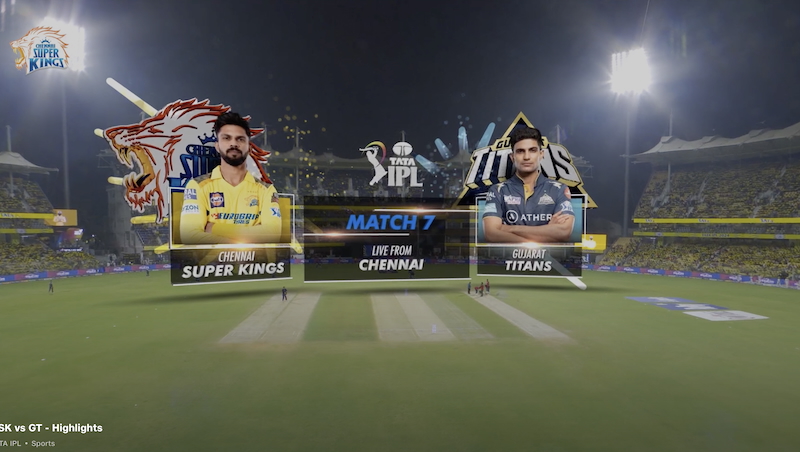
    MUMBAI: The Indian Premier League, the commercial behemoth that has redefined cricket economics, is experiencing something unprecedented: contraction. After years of relentless upward momentum, the IPL’s valuation has plummeted to Rs 76,100 crore in 2025—a staggering Rs 16,400 crore collapse over two years. The league that once seemed destined to become sport’s most valuable franchise now faces an altogether different reality: the era of exponential growth has ended.

    Two seismic forces have conspired to puncture cricket’s golden goose. First, India’s crackdown on real-money gaming has eviscerated the advertising market, stripping an estimated Rs 1,500–2,000 crore from annual sponsorship revenues. Second, the 2024 merger of Disney Star and Viacom18 into JioStar eliminated the competitive media rights bidding war that had inflated valuations for over a decade. Together, these shocks have shattered the financial architecture upon which the IPL’s boom was built.

    Fantasy and gaming platforms were the IPL’s most profligate sponsors, lavishing Rs 1,500–2,000 crore annually across league, franchise, and broadcaster deals. Dream11’s Rs 358 crore national jersey sponsorship exemplified this era: premium pricing underpinned by what amounted to speculative betting cash. Then the Promotion and Regulation of Online Gaming Act descended like a guillotine. The gaming sponsors evaporated overnight, leaving franchises scrambling to replace lost revenue with comparatively cheaper deals from fast-moving consumer goods, banking, and electric vehicle makers.

    The vacuum revealed an uncomfortable truth: gaming sponsorship wasn’t additional revenue flowing into cricket’s ecosystem. It was unsustainable froth, inflating numbers on spreadsheets rather than building durable commercial value. When it disappeared, so did the illusion of inexhaustible growth.

    For years, competing broadcasters—Star Sports, Sony, Amazon, others—bid ferociously for IPL rights, each convinced that exclusive access to India’s cricket audience justified premium prices. In 2023, with two strong bidders and whispers of global tech giants entering the fray, valuations soared to Rs 92,500 crore. But the promised tech invasion never materialised. Netflix, Amazon, and Apple pivoted away from sports streaming. Disney and Viacom18 merged, eliminating one bidder entirely. The competitive tension that had driven rights auctions simply evaporated.

    D&P Advisory managing partner Santosh N summarised the revised reality: media rights will no longer deliver the 40–50 per cent appreciation once confidently projected. The IPL’s “fundamentals remain strong,” he insisted, but “the pricing environment will remain under pressure.” Translation: viewers will watch, advertising inventory will sell, but sponsors will pay less.

    The Women’s Premier League, still in its formative years, has already buckled. Its ecosystem value fell 5.6 per cent to Rs 1,275 crore in a single year. Unlike the IPL’s entrenched commercial machinery, the WPL lacks pricing resilience. Dream11’s sponsorship withdrawal and the gaming ban have left the BCCI scrambling to secure title sponsors before the next season—a predicament that would have been unthinkable two years ago.

    Amidst the financial carnage, audience enthusiasm remains robust. The 2025 IPL season crossed a billion cumulative viewers, with digital viewership surpassing television for the first time. JioStar recorded 1.19 billion unique viewers and 514 billion minutes watched. Stadium attendance remained strong; travel searches spiked across Bengaluru, Mumbai, and Lucknow during matches. In short, Indians remain obsessed with cricket. They’re simply less willing—or able—to pay premium prices for the privilege.

    The road forward demands what the boom years never required: structural innovation. Subscription bundles, regional packages, commerce integrations, and renewed competitive tension from global streaming platforms must replace the twin engines of gaming sponsorship and auction-driven bidding wars. 

    If they don’t materialise, the IPL faces not terminal decline but permanent diminishment: a mature, cash-generative business rather than the exponential growth machine it once promised to be. For a league built on the premise that tomorrow would always dwarf today, that’s a bitter recalibration indeed.
     

  • MyTeam11’s game-changing moves amidst taxation headwinds for real-money gaming: Vinit Godara

    MyTeam11’s game-changing moves amidst taxation headwinds for real-money gaming: Vinit Godara

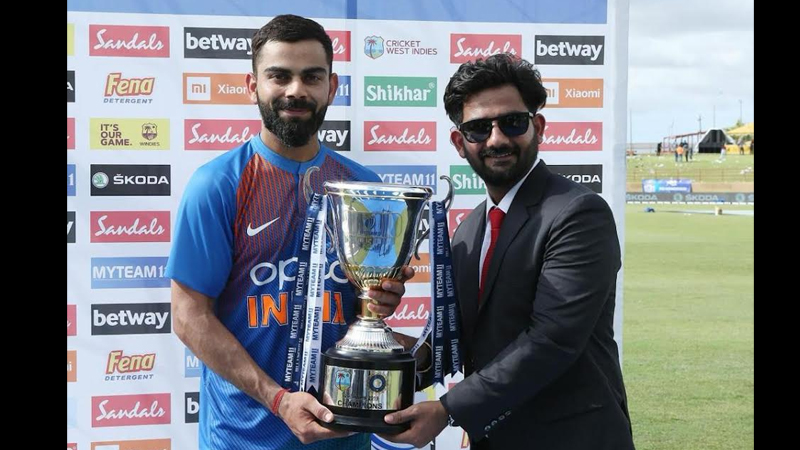
    Mumbai: The Real Money Gaming (RMG) industry in India has brought about a revolutionary transformation in the world of sports. While allowing sports enthusiasts to engage with their favourite teams and athletes like never before, they have also brought in a wide variety of newer audiences, thereby generating huge additional revenue for both the sport and the sportsperson. India’s exhilarating performance at the recently concluded ICC Cricket World Cup 2023 led to a 40 per cent surge in user engagement on the MyTeam11 platform alone.

    A report by Delloite FIFS highlighted the RMG industry’s potential to create over 5,000 direct and 7,000 indirect jobs. Quite the contrary however, as the GST council notification which came into effect on October 01, 2023, imposing the highest 28 per cent Goods and Services Tax (GST) on the deposits, whether one of skill or chance, acted as a huge setback. We believe no industry has ever faced a situation where tax liabilities have headed north to the extent of 400-1000 per cent in one go.

    Be that as it may, MyTeam11 has always believed in thinking innovatively and out of the box to circumvent business challenges. Positive thinking often helps resolve the most difficult of problems.

    The company absorbed the entire tax liability, choosing not to pass it on to the users. This showcased the platform’s dedication to provide an enjoyable and uninterrupted experience to fantasy sports enthusiasts, as also towards contributing to the overall growth of the industry.

    Then from a long-term sustainability perspective, MyTeam11 came up with the real game-changer- the Fantasy Sports Network (FSN). As the industry navigated through challenges such as layoffs and closures, MyTeam11’s FSN emerged as a lifeline, particularly for the smaller players.

    Operating both B2C and B2B models, the FSN provided a robust technology backbone that empowered emerging players to overcome the complexities posed by the new tax regulations. As a result, as many as 10 FSN partners today have experienced a significant reduction in their operational costs and also a remarkable 300 per cent increase in user engagement.

    The true advantage of FSN lies in empowering partners and enabling them to focus extensively on marketing and promotion. This exposure extends to larger leagues, allowing them to operate efficiently with lean teams and effectively navigate challenges brought by the new GST Amendment.

    There is no doubt that the industry is facing huge uncertainties. However, given MyTeam11’s spirit of innovation, the platform remains committed to driving positive change to maintain its leadership position in the RMG industry.