Tag: RD&X Network

  • Twitter needs to be more user friendly, improve its ad targeting, boost content curation efforts

    Twitter needs to be more user friendly, improve its ad targeting, boost content curation efforts

    Mumbai: On 27 October, Elon Musk agreed to buy micro-blogging platform Twitter. In a message to advertisers he wrote, “Twitter aspires to be the most respected advertising platform in the world that strengthens your brand and grows your enterprise.” For advertisers and agencies it is a wait and watch mode. Some feel that things should improve given that Musk is a businessperson. At the same time, who owns it is not as important as making the right moves like ensuring a brand safe environment. It also needs to be more user friendly, improve its ad targeting. There is also room for improvement in the content curation area.

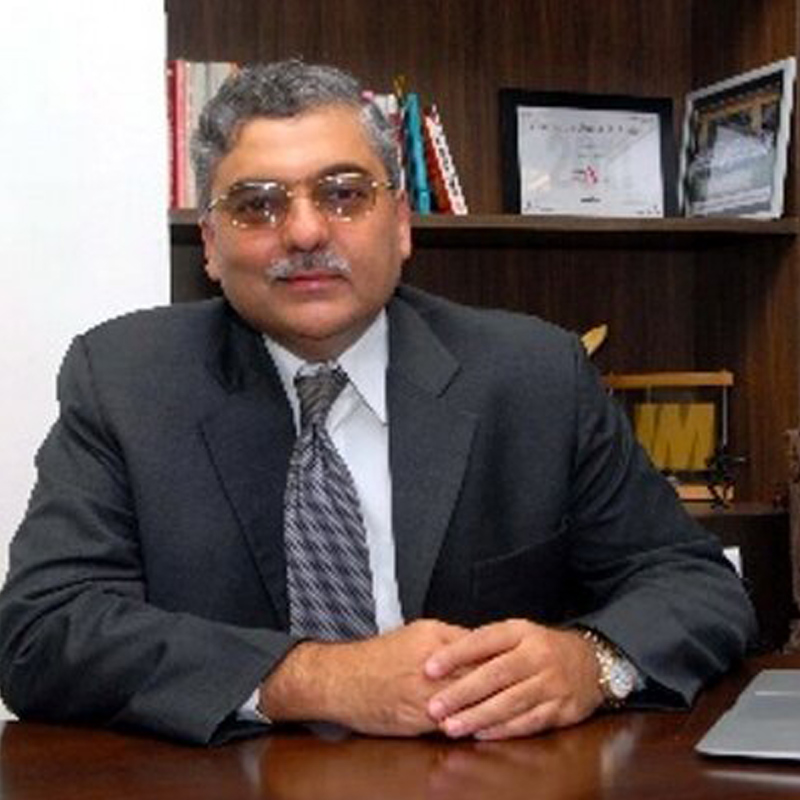
    Talking to Indiantelevision.com RD&X Network co-founder & chairman Ashish Bhasin said that who owns the majority stake in Twitter does not matter. “What matters is the policies and principles that Twitter is going to follow. Who owns it does not mean much to advertisers. What they will watch to see is the policy decisions being taken, the ROI, is the editorial environment conducive to them? Are their ads appearing in the right context? That is going to be far more important than ownership.”

    He goes on to tell that there are some changes proposed and some of them look positive as well. “The proof of the pudding will rest in what happens on the ground and not in statements that are made. Hopefully the changes will keep in mind the interests of brands and advertisers.” He noted that Twitter, if used properly, can lead to superb ROI. He, however, added that the lion’s share of digital advertising goes to Google and Facebook. Twitter is not in that league. “But it is an important medium for certain types of brands or certain objectives that brands may have. It can be a very powerful tool if used properly.

    “But from an advertisers point of view once the noise dies down one has to see the long run ROI as well as brand safety issues around editorial and freedom of speech. This is what brands are waiting to see before taking further long term decisions. But it can be pretty effective if used properly. With a relatively small sum of money you can get very powerful returns. You can reach a certain consumer base very quickly by using top of the mind issues,” Bhasin added.

    He points out that brand safety issues affect other digital platforms also, besides Twitter. Tech, in his opinion, can solve issues like fake news, inappropriate content, trumped up figures pertaining to viewership visibility. “This is an industry wide issue that needs to be tackled. Tech giants have the best of brains, sufficient resources and are cash rich to figure out a way to tackle this in the long run. Only the use of technology will be the solution. It cannot be done manually. The problem is too big and widespread.”

    Bhasin explains that the area of balancing free speech with content moderation has to be navigated very carefully. “You do not want to go too much to one side. Content that is obviously inflammatory or is promoting something illegal is about misuse of media, not about free speech.” He added that recognising diversity of India will be important for platforms like Twitter. It is a matter of how much a priority regional languages will be for Twitter. Mediums that want to exploit the full potential of India cannot restrict themselves to only English. “If they do then they will play only in a niche. Some platforms have adapted better than others to regionalisation,” he notes.

    Since Twitter is instantaneous it will have to be careful to follow all the rules, regulations and laws of the land. “It can go viral in a very short period of time. Therefore it is the responsibility of the platform to make sure that it is not being unfairly exploited by certain people. The government is coming out with more laws for social media platforms and following them will be key,” he brings out.

    Kurate Digital Consulting senior partner Uday Sodhi said that Twitter needs to scale and get in young audiences. It also needs to work on reducing fake profiles. “I’m sure it works as a good platform for brands but in India it is small compared to other social media platforms/ Facebook and Google.” He also noted that with all the politics and hatred in the country, brand safety could be an issue. “Also consumer information is very limited to run anything targeted at a group of consumers.” On whether Elon Musk can bring in Gen Z audiences he said that it is a wait and watch situation.

    Musk had also tweeted, “Twitter obviously cannot become a free-for-all hell-scape, where anything can be said with no consequences!” NOFILTR.Group partner chief marketing officer Hitarth Dadia meanwhile said that he is very excited about Musk owning it. “There are not a lot of billionaires who are relatable. Musk is extremely relatable. Platforms need a good shakeup every now and then for people to care about them. More people will take Twitter seriously.”

    Meanwhile dentsuMB India managing partner Indrajeet Mookerjee said that with the transition of Twitter moving to its new owner, it is certain for the platform to evolve in terms of technology and functionality. “Apart from dismissing key executives, a couple of changes we can expect from this transition are – monetisation, gaming, and a window to innovative advertising avenues. It would be interesting to see how brands leverage these changes innovatively to play it to their advantage.”

    In terms of Twitter’s goal to be the most respected ad platform, he noted that it surely isn’t easy to be so overnight and it would be a long journey for the platform to achieve it. “It is apparent that the platform is currently focusing on preventing the outflow of power users.”

    Shedding light on the role it plays in a digital marketing mix Mookerjee said that an effective way to incorporate this medium into the brand’s marketing plan is by using it as a top of funnel approach.” As a social platform, Twitter lends itself excellently to achieving the first two phases of the funnel that is awareness and consideration for B2B and B2C campaigns.

    “With a whopping 450 million monthly active Twitter users, the platform gives large and small businesses direct reach and avenues to engage with their target audience at their fingertips. Today, brands have capitalized on this by using Twitter as a tool to create interesting content that not only captures the audience’s attention but also draws them into having a conversation,” he states.

    He added that with over 500 million tweets daily, the platform is cluttered with micro-content that’s shared every minute. “However, it is this real-time engagement that continues to keep brands relevant and interact with their online community.”

    Social network for Web 3.0 influencers, educators, and artists Soclly co-founder Prayag Singh noted that some changes in Twitter are already being seen. The first is the cutting down on the workforce. “Sometimes you do not want to do it but it is mandatory for a long term goal. A lot of tech companies are cutting back.” Secondly is the platform’s move to diversify revenue streams beyond advertising. Hence the subscription fee of eight dollars a month for the blue tick verification. Thus there will also be more web 3 adoption. Musk supports Dogecoin.”

    So in the future there could be integration of this cryptocurrency into Twitter. Another move he feels will happen will be a more thorough investigation before an account is suspended. “You will see a more in-depth analysis of things.” He also expects Gen Z and millenials to have a more active presence on Twitter and share their thoughts. He expects challenges and changes to happen in terms of how brands showcase their presence on Twitter moving forward. He also thinks that Twitter Vines may return. This is short form video like Instagram Reels.

    Meanwhile Wing Communications CEO & founder Shiva Bhavani is very clear on what Twitter needs to do to be the most respected digital ad platform. “Twitter needs to provide more value to advertisers than any other platform. This means offering the best targeting options, the most effective ad formats, and the most insightful data. Twitter also needs to continue to invest in its ad product so that it remains at the cutting edge of digital advertising.”

    According to him, Twitter needs to be more user-friendly. “Twitter is notoriously difficult to use for beginners, and even experienced users can find the interface confusing and overwhelming. The platform needs to streamline its design and make it more intuitive to use.”

    Bhavani also feels that the social media company needs to improve its ad targeting: “Twitter’s ad targeting options are currently very basic, which makes it difficult for advertisers to reach their target audience. The platform needs to offer more detailed targeting options so that advertisers can better target their ads.”

    He is of the view that Twitter needs to do a better job of curating content. “Twitter is full of spammy and low-quality content, which can make it hard for users to find the good stuff. The platform needs to do a better job of curating its content so that users can easily find the best tweets.”

    When asked about the impact of a new owner Bhavani noted that one could see a lot of changes happening on Twitter under Musk. “For one, he could bring some much-needed innovation to the platform. He might also make some major changes to the way the content and things are displayed, or even get rid of them altogether”. 

    “And, of course, he could also add some new features that we can’t even imagine right now. Whatever happens, it’s sure to be interesting – and we can’t wait to see what Twitter looks like under Musk’s ownership,” he says further.

    At the same time, though, Bhavani noted that Twitter is a challenging platform for brands due to the amount of noise. The average person is exposed to over 34 GB of data per day, and that number is only increasing. In order to stand out, brands need to be strategic about their content and how they engage with their audience. 

    He suggests a few ways to cut through the noise on Twitter:

    1.      Use hashtags strategically: Hashtags are a great way to help your tweets get seen by more people. But don’t just use any old hashtag – make sure it’s relevant to your brand and your message.

    2.      Engage with influencers: Twitter is all about relationships. If you can build relationships with influencers in your industry, they can help amplify your message and reach a larger audience.

    3.      Be timely: Timing is everything on Twitter. Make sure you’re tweeting when your audience is most active, and you’re more likely to get seen.

    Bhavani pointed out that as more and more brands join Twitter, the question of how effective the platform is for them becomes increasingly relevant. “While there are many potential benefits to using Twitter as a marketing tool, including increased visibility and reach, it’s important to consider how well the platform aligns with your goals and objectives.”

    “For example, if you’re looking to use Twitter to drive website traffic or generate leads, you’ll need to make sure your content is optimised for these goals. The same goes for if you’re hoping to build brand awareness or create a strong connection with your audience – your tweets should be tailored accordingly,” he reveals.

    “Of course, no matter what your goal is, it’s essential to tweet regularly and interact with other users on the platform. The more active you are, the more likely you are to achieve success with Twitter,” he says.

    So, how effective is Twitter as a tool for brands? Bhavani elucidates, “It depends on what your goals are and how well you utilize the platform. With that said, there’s no doubt that Twitter can be a powerful marketing tool – it just takes some strategic planning and execution.”

    He goes on to add that Twitter has become an increasingly popular platform for businesses and individuals alike. As a result, many companies are now using Twitter as part of their digital marketing mix.

    So what role does Twitter play in the digital marketing mix? Bhavani mentions a few key ways that Twitter can be used to help achieve marketing objectives:

    1. Increasing brand awareness and reach: With over 500 million active users, Twitter provides businesses with a massive potential audience. By regularly tweeting interesting and relevant content, businesses can quickly grow their follower base and increase their brand visibility, he explains.

    2  Generating leads and sales: Twitter can also be used as a powerful lead generation tool. By sharing offers, coupons, or other incentives, businesses can encourage users to click through to their website or make a purchase, he noted.

    3. Building relationships and engaging with customers: In today’s digital world, customers expect brands to be responsive and engaged on social media. By actively listening to and responding to customers on Twitter, businesses can build strong relationships with their target audience.

    4. Providing customer service: Customers also increasingly expect brands to provide customer service via social media platforms such as Twitter. “By monitoring mentions of your business, you can quickly respond to any customer queries or concerns, helping in better customer satisfaction and engagement,” he says.

  • Sony-Zee merger marks the start of consolidation in the TV industry: Ashish Bhasin

    Sony-Zee merger marks the start of consolidation in the TV industry: Ashish Bhasin

    Mumbai: Recently, the shareholders of Zee Entertainment Enterprises (ZEEL) gave their approval for the proposed merger with Sony. RD&X Network co-founder & chairman Ashish Bhasin feels that this is the first step of consolidation in the TV industry.

    “I think that in the coming three to five years you will see more major players being born through consolidation with deeper pockets and more muscle. They will join Disney-Star India, Sony-Zee, Warner Bros. Discovery and others. On OTT as well, there will certainly be consolidation. OTT will run through a similar cycle to TV. TV saw lots of smaller players. Now consolidation is happening. In OTT, I expect something similar, though, with a lag in the timeline. Furthermore, as 5G expands and consumers begin to cut the cord, the line between what is TV and what is OTT will blur. I am certain that consolidation will be the rule. All the big players will look for more and more consolidation opportunities.”

    He further pointed out that mediums that do not go in for consolidation will always struggle. He gives the outdoor industry as an example. “The strength to invest is not there. Bettering the quality of the medium will not happen till there are fewer but larger, consolidated players, with a longer-term vision. Not consolidating will be a handicap for the medium. Print is reasonably consolidated in some ways. And print is slightly different as many organisations have a long history. Some were set up before our independence. It plays a role that is beyond commercial. So the journey there will be different. But apart from print, consolidation will be important moving forward in every medium.”

    Talking about the ramifications of the Sony-Zee merger, he noted that this is the beginning of consolidation in the Indian TV industry. “There will be fewer, bigger, consolidated players. The reason for this is that content is becoming more and more expensive in games. Distribution does not come easy and cheap. The Sony-Zee merger is probably the first step towards that. Consolidation will happen across genres and languages.” He added that there are many regional channels and smaller channels that may be acquired. Also, with OTT becoming important, there is scope for better consolidation there and with digital in general.

    A larger player means more content investment, which will have a positive impact on ad revenue growth. “A very strong entity will be created. Between the two of them, excluding sports, they have a market share of closer to 25 per cent. That gives them the opportunity to get better content. This will also result in better distribution. If that happens, viewership will improve and so will ad revenues. Ultimately, ad revenues are a function of supply and demand. If they create stickiness through better content, then ad revenues will also go up. Zee and Sony are very experienced players. So together they will become an even more formidable combination.”

    He agrees that they will get better bargaining power both on the content side and the advertising side. Furthermore, they can engage in more innovations and experiments. “But it is not just about power. There will be a combination of many benefits. They will be able to do better, bigger packages, deals across genres.” He also noted that stronger consolidated players can result in better deals and gave the example of cricket rights being sold for a huge upside (IPL, ICC).

    On the OTT front, he believes that the merger provides the entity with a greater opportunity to acquire better content. “A merger of this size will give clout in multiple areas, not just in one silo.” In terms of cultural synergy, he noted that in any merger and acquisition, one of the key targets is how do you integrate? Culture is a key part. “Acquiring organisations are geared up to make sure that this area is addressed. Each organisation has a different DNA. The challenge of the leadership is retaining the essence of the DNA while at the same time getting them to work in one direction. This is an on-going exercise. I am sure that Sony-Zee have already thought of it and they already have a plan.”

    Speaking about the Warner Bros.-Discovery merger, he said that it is important to measure potential impact not against the universe but within the niche that it is playing within. “Every merger handled well has a positive impact. If an advertiser only targets kids and the merger creates a big leader, say in kids, then it is a very different scenario for both the entity and that advertiser.”

  • RD&X network partners with ADDX to strengthen its global footprint

    RD&X network partners with ADDX to strengthen its global footprint

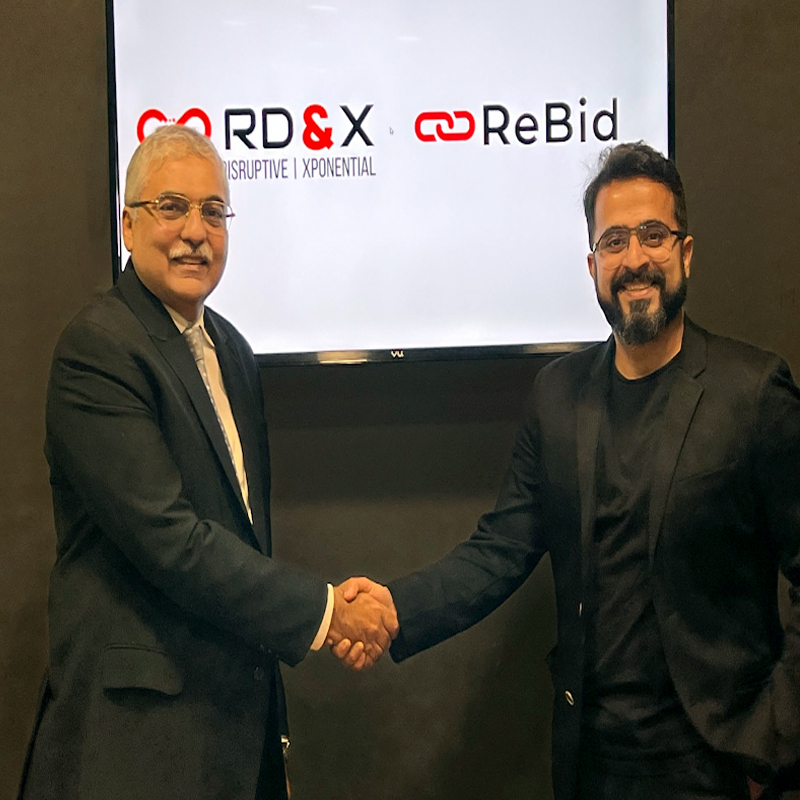
    Mumbai: A global advertising and marketing transformation startup called RD&X network has partnered with Singapore’s ADDX, a provider of financial technology. The collaboration revolves around ReBid, RD&X Network’s unified advertising and marketing AI automation platform.

    The platform is intended to provide a unified, real-time view of all search, social, and programmatic campaigns in order to generate value and maximise returns. The MarTech collaboration with ADDX also marks RD&X’s first foray into Singapore’s financial sector.

    RD&X network founder & CEO Rajiv Dingra said, “The fact that cutting-edge fintech startups like ADDX are trusting our ReBid platform to automate their digital marketing activation, reporting, and insights shows how we have truly created a market-leading platform for advanced marketers. We are excited to partner with ADDX, and together we believe we are building the platform-driven future of advertising and marketing.”

    RD&X network co-founder and chairman Ashish Bhasin added, “We are delighted to welcome ADDX, a forward-looking, future-oriented company, as our client. It is heartening to see progressive clients rapidly adopting ReBid as we together build the future of advertising and marketing, which we believe will be platform-based and tech-supported. We look forward to a long and fruitful partnership with ADDX. We are also pleased that clients across continents and countries are adopting ReBid, encouraging us to get truly global, faster.”

    ReBid is intended to provide ADDX with a comprehensive view of the customer and to scale its growth in a straightforward manner. ADDX intends to integrate its mobile measurement platforms’ tracking attribution with ReBid in order to gain a 360-degree automated view of all of its marketing and advertising efforts.

    ADDX head of digital marketing Ankit Narang said, “We are eager to partner with the RD&X network and look forward to driving data- and insights-driven growth for our digital marketing endeavours. As a fintech company delivering a fully digital experience to our clients, ADDX appreciates the intuitive user interface and experience on ReBid.”

    The ReBid platform will add value to ADDX’s marketing campaigns in three ways: effortless campaign activation across channels; simultaneous tracking of diverse campaigns across social media and programmatic; and optimisation of campaign returns.

    ADDX head of marketing and PR Ata Haftchenary said “With ReBid, we are aiming to gain access to instantaneous data across our marketing and digital campaigns, which will enable us to make key decisions in real time. In a rapidly changing market, responding quickly to investor behaviour will give ADDX a competitive edge and help us achieve our mission of democratising private markets.”

    RD&X network now serves clients in all three regions – MENA, the Americas, and APAC – with engineering and customer excellence teams based in India providing back-end support and product development.

  • RD&X Network onboards Ashish Bhasin as co-founder & chairman

    RD&X Network onboards Ashish Bhasin as co-founder & chairman

    MUMBAI: Global advertising & marketing transformation startup RD&X Network has appointed  Ashish Bhasin as co-founder & chairman. The former CEO APAC of Dentsu, Bhasin is an advertising and media veteran with over 34 years of industry experience which includes 24 successful agency acquisitions, management of 10,000+ people, and over $4 billion of ad spends in the APAC region.

    Founded by Rajiv Dingra, former CEO of WATConsult, RD&X Network is headquartered in Dubai and has technology teams based in Bangalore & Mumbai catering to a global market with special focus on USA, Middle East, and APAC regions.

    Speaking on this occasion, Bhasin said, “MadTech, a combination of MarTech and AdTech, is clearly the future of our industry as digital spends cross 60 per cent globally, reaching over a trillion dollars by 2027. Rajiv and the RD&X Network team have developed a unique AI-based platform that will enable direct clients, clients wanting to in-house, as well as digital, and advertising agencies. With one of the finest technology teams, a committed founder with experience and drive like Rajiv, RD&X Network has the potential to become the first India-Out, platform based global advertising and marketing startup. The opportunity to mentor and guide this process attracted me to join the RD&X Network. It is also my first entrepreneurial venture as a co-founder and I am delighted to partner with Rajiv.”

    Praising Bhasin’s accolades and experience, RD&X Network CEO founder Rajiv Dingra said, “Ashish is an advertising and media legend, who brings with him the unique experience and wisdom of scaling the digital advertising business, both organically and inorganically, across several markets, regions, and with diverse entrepreneurs. We have worked together in the past when WATConsult joined Dentsu, and I have witnessed his amazing zeal and drive first-hand as a leader always seeking to build the future of advertising by inspiring his team. We are extremely excited to have him onboard as our co-founder & chairman. Together, we intend to create the platform-driven future of the advertising industry as we take this step.”

    RD&X Network recently launched the world’s first Unified Marketing & Advertising Automation Platform, ReBid which uses AI-based algorithms to provide end-to-end unified workflow, data harmonisation and real-time reporting, all in one platform, said the company in its statement.

    It covers over 98 per cent of the relevant global digital ad spends, helping marketers regain control and prepare for a cookieless world, according to the company.

  • #Throwback2020: Not letting a crisis go waste

    #Throwback2020: Not letting a crisis go waste

    NEW DELHI: While battling the great recession in 2008, then chief of staff in POTUS Barack Obama’s office Rahm Emanuel had famously stated, “You never want a serious crisis to go to waste. I mean, it’s an opportunity to do things that you think you could not do before.” Emanuel was possibly inspired by Sir Winston Churchill, who’s believed to have said something along those lines in the mid-1940s, when the world was engulfed in the second World War. The thought became an anchor for a number of entrepreneurs in the Indian advertising and marketing industry too,  as they navigated a world turned upside down by the Covid2019 pandemic. The result – we witnessed a number of new agencies and specialist arms popping up throughout the year. 

    ^atom

    It began with the launch of ^atom, an ad agency floated by Ogilvy ex-president – Mumbai and Kolkata Abhik Santara along with Yash Kulshresth and Ananda Sen. While the agency had been in the pipeline for more than five months before it was finally launched in April this year, it was a courageous decision on the team’s part to enter the market during the first phase of the lockdown. Well, the risk paid off, as they quickly won several accounts, including Lifology, Ahimsa Trust and Ezee. 

    Dentsu Marketing Cloud Video+

    Dentsu International’s Indian data science division fielded a unique OTT planner called Dentsu Marketing Cloud Video+ in April 2020. The tool provides an agnostic approach towards planning and buying on over-the-top TV (OTT) platforms. It, reportedly, became the first holistic product catering to planning and buying OTT audiences within the ecosystem. The tool was launched under the umbrella of DMC Explore, the proprietary Audience Intelligence tool of the data sciences division under its suite of products – the Dentsu Marketing Cloud (the overarching platform that houses DAN Data Labs).

    Happyness.me

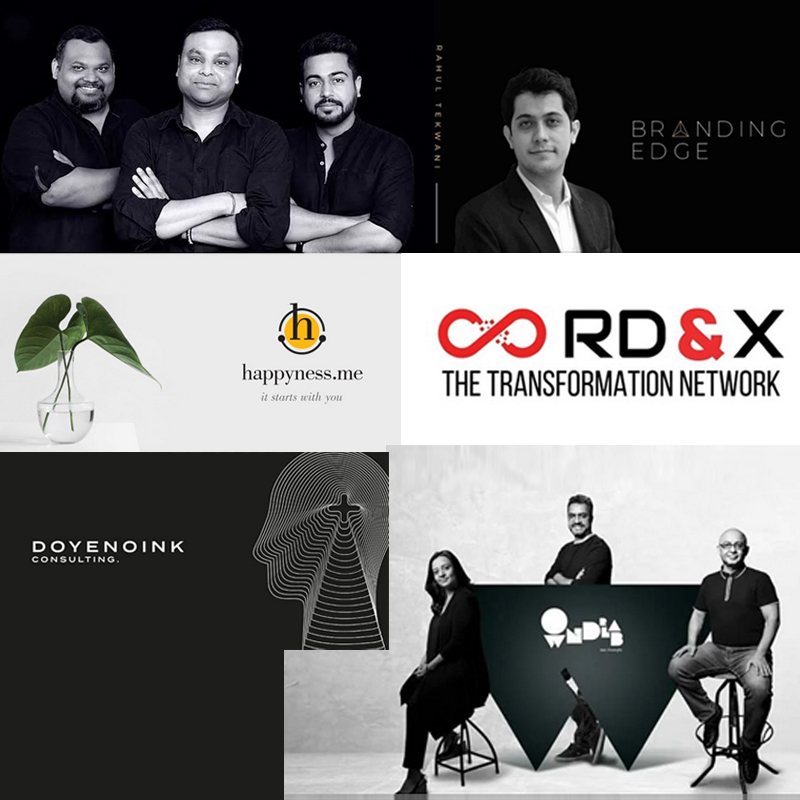
    House of Cheer Pvt Ltd, which was founded by former Viacom18 COO and media personality Raj Nayak in 2019, announced the launch of their new division, Happyness.me in June. Happyness.me is a proprietary tool that measures the happiness quotient of corporations and its people using behavioural psychology, neuroscience, and data analytics, with inputs from experts in the field. 

    Ipsos Digital

    Ipsos India unveiled its platform Ipsos Digital to provide the clients with cutting edge online research tools to aid their decision making. Ipsos India also announced the launch of its first online research offering of Fast Facts, which is a fully automated, DIY, AI-supported express tool to cater to clients’ quick research and advisory needs.

    brandhalō

    After quitting a 12-year-long stint with Volvo Cars, its first Indian director Sudeep Narayan founded the brand advisory firm brandhalō in August 2020. It is a boutique advisory firm providing marcomm and integrated e-commerce solutions to deliver business performance. The firm intends to add the halo-effect to a brand/corporate reputation, thereby turning customers to evangelists and fans.

    DoyenOink Consulting

    Expanding its elaborate portfolio of offerings, Zoo Media kickstarted DoyenOink Consulting in September this year. DoyenOink is a transformation and management consulting firm which leverages data intelligence, technology interventions, inventive strategic thinking and impactful communication to drive systematic solutions for business challenges across the spectrum, be it business and product strategy; operational and process structure; revenue and sales strategy; growth strategy; and consumer outreach. 

    Kombat

    A niche marketing agency for the wellness industry, Kombat was launched in September 2020. The Delhi-based agency will provide services for brands in a variety of areas including social media, PR, events, collaborations, marketing strategy and more. It is founded by Neha Lidder, a specialist in marketing for over 20 years, and includes a team of professionals with backgrounds in design, PR, and digital marketing.

    RD&X Network

    Rajiv Dingra (previously founder and CEO of WATConsult, a digital agency part of Dentsu International), floated his latest entrepreneurial venture, RD&X Network, in October. It is said to be a deep-tech network that will drive brand, business, media and data transformation helping businesses globally become real-time, disruptive, and thereby achieve exponential growth. The company will leverage the impending deep tech and business model disruption across marketing, advertising, media, and business consulting with its offerings.

    Digital Edify

    Former FabIndia head of digital and social advocacy Gauri Awasthi also took the entrepreneurial route this year with the launch of an innovative design thinking and digital transformation enterprise named Digital Edify, DTBU, along with her co-founder Aakash Shrivastava. The agency aims to help build brand awareness, brand salience, desire, generate demand, convert into sales for brands by being advisors, brand advocates, and growth hackers. 

    Wondrlab

    Advertising and brand communication leaders Saurabh Varma, Vandana Verma and Rakesh Hinduja collaborated to launch a platform-first start-up Wondrlab. The unique agency comes with three key verticals – content, experience, and digital business transformation to help clients win in the new marketing landscape. The agency also partnered with Amit Akali’s WYT in its first acquisition. 

    Sensibly Weird

    A former WPP talent, adman Subhas Warrier along with his partner Shyam Musthafa started a multidisciplinary creative solutions platform – Sensibly Weird Company in November this year. Based in Kochi, the company will help brands grow by creating “honest stories, designs, and creatives that break through the noise.”

    Branding Edge

    Former Enormous Brands’ strategist Rahul Tekwani floated his own strategic communication venture Branding Edge Strategic Communications and Advisory in December. It focuses on developing a brand and reputation program to help achieve business goals, build awareness and credibility, and will enhance the long-term enterprise value of the clients.  The company will also be providing 360-degree services, which include branding, design, digital strategy and research and data-driven storytelling, and influencer engagement strategies. 

    Catalysts

    Former president of Mullen Lintas, Syed Amjad Ali announced the launch of his own firm Catalysts in December. The start-up will be a content and brand strategy platform. 
     

  • Transformation is an on-going process, never complete: RD&X Network founder Rajiv Dingra

    Transformation is an on-going process, never complete: RD&X Network founder Rajiv Dingra

    NEW DELHI: Like most people around us, serial entrepreneur Rajiv Dingra counts himself among those who polished their cooking skills during the Covid-2019 lockdown. Now he can now make two mean recipes to perfection: masala paneer and masala chicken. However, unlike most people, that’s not his only achievement. He also happened to work on his new entrepreneurial venture, RD&X Network – a unique deep-tech network to drive brand, business, media, and data transformation that he launched on 27 October 202o. In a recent candid conversation with Indiantelevision.com’s Mansi Sharma, he spilled the beans about his new company, the culture he is expecting to create, and how his creator instincts prompted him to develop something dynamic. 

    On his exit from WatConsult 

    Dingra, who was associated with Dentsu International (then Dentsu Aegis Network) as the chief mentor and advisor for  WATConsult till January 2020, a company that he had founded 13-years back, said that resigning from the agency was certainly not a very easy decision, but he was willing to take the entrepreneur’s seat again. 

    He said, “I had given up my complete stake in WatConsult in December 2019 and within a few days I knew that I did not want to continue as another employee. I do not mean to say that the status of a CEO is anywhere lesser than an entrepreneur but it was more about who I really am. I see myself as a creator, someone who can bring different ideas to life. Also, I was very sure that we had created a brilliant team at WATConsult and nothing would go wrong even if I leave.”

    Another reason that contributed to his exit was the internal transformation that is actively happening across Dentsu offices globally. “I am a person who can’t do three things at a time. I have to disconnect completely from one thing to focus on another and that’s why I preferred to move out.” 

    Read more stories on Rajiv Dingra

    On starting RD&X

    However, when he had put down his papers almost a year ago, he had no idea what his next step would be. But the Covid-2019 pandemic gave him the opportunity to dive deeper into the data and tech space and create RD&X. 

    “I had no idea what I would be doing when I resigned from WATConsult, I just knew that I wanted to create something new, transformative, and disruptive. My last day there was in January this year when Covid-2019 pandemic had just started spreading, but it was nowhere in India. At that time, I realised that deep tech is going to be the next big thing, so I started exploring it. In another era, I would have taken more time to launch something of this stature and vision, but with the pandemic, I knew the time was just right and along with our core team, we worked intensively to put it together.”

    With RD&X, Dingra plans to create a global network of data and technology companies that are aiming to lead the next leg of development. He is already in advanced-level talks with a number of small and mid-sized companies in the US, SEA, and EMEA markets to grow the network and is expecting to make some big announcements in the coming six months. 

    “I'm open to investing in, acquiring, and even buying out some early-stage companies to fit in our larger vision. We are right now investing right now for skill and not for scale, so the core idea right now is to aid our inorganic growth and create strong teams across geographies and then focus on the organic part of it. At the same time, we are creating in-house flagship solutions and looking forward to expanding our India team.” 

    On offerings of RD&X

    For Dingra, the term RD&X is the amalgamation of three things; real-time data, disruptive technologies, and exponential growth and that’s what is on offer at his new entrepreneurial venture. 

    “We bifurcate our core services in four key areas: structured brand transformation, business transformation, media transformation (across buying, planning, and selling spaces), and data transformation. As we go along, we will further fine tune these areas and introduce better tools and technologies to achieve exponential growth for our clients,” he elaborated. 

    “We are going to leverage technology to create and aid new business models. The examples of these are companies like Urban Clap and TikTok. While the former used the latest technology to transform how business is done at salons or home cleaning services, etc., TikTok based on real-time data and technology, did social media in a completely new and unique way.” 

    On the brand identity of RD&X

    While RD&X stands for the exponential growth driven by real-time data and disruptive technologies, the brand name also signifies his own initials, and X stands for the x-factor of all entrepreneurs who are investing in the venture, quipped Dingra. 

    “The brand name signifies an entrepreneurial network which is transformist in nature, which has the attitude of constantly learning, evolving, and making new mistakes,” he explained. 

    The logo, designed by Dingra, hints at the constant juggle between market profits and losses. “If you look at our logo, it has three colours: red, black, and white. Black and red colours have a great significance in the business world; they reflex the profit and loss situations. For me, profit and loss are a unique matrix– for example, Kodak was in the black when it suddenly vanished, and Instagram had been in the red for the longest time but today it is one of the most popular social media platforms. So, it is all very volatile and it comes to the spirit of the team to take none of this seriously. The white stands for the canvas in which these other colours stand; means that no matter where you are today, you will always be on a blank canvas and have the opportunity to transform yourself for better.”

    He continued, “The infinity sign on our logo is not connected completely. It signifies that transformation is never complete, it’s ever going.” 

    On the geo-agnostic, remote-first culture of RD&X

    Dingra is excited to create a unique geo-agnostic work-culture at RD&X, something that has been made immensely easy by the pandemic-induced lockdown and the evolved work-culture. He foresees the firm as a completely employee-first organisation and has created a massive culture and people manifesto for it. “To me, being employee-first means giving up the blanket rules and regulations that we have for all the employees. We need to stop seeing them as another resource but rather as individuals and that is what is going to be our core focus at RD&X,” he said.

    Additionally, he’s willing to create a hybrid work model for the employees. “We will be investing in physical spaces, definitely, so that people have a place to get together and discuss ideas and work together, but we want to be remote-first. That means, people can work from anywhere they want; if they are comfortable at their own homes, they can choose to work from there, but if there are people who are more productive and comfortable in office-spaces, they can come and work from the office. There is going to be no compulsion of any sort for anyone.”