Tag: RC Venkateish

  • Dish TV exploring possibility of setting up domestic STB manufacturing business

    Dish TV exploring possibility of setting up domestic STB manufacturing business

    MUMBAI: The positive thrust that the cable and DTH industry has been receiving from the current Information and Broadcasting (I&B) Minister Prakash Javadekar is getting encouraging response from the industry.


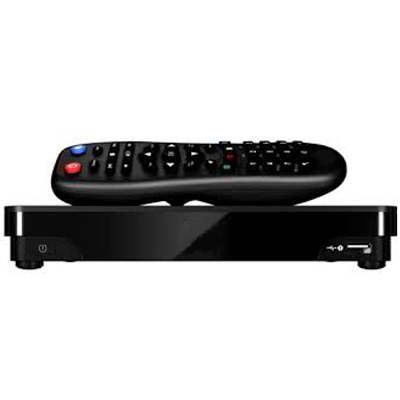
    While the government has classified set top boxes (STBs) as telecom equipment to encourage indigenous manufacturing of STBs, Dish TV has decided to tap into the emerging domestic market.


    Reporting improved results, Dish TV MD Jawahar Goel said that the company is ‘re-evaluating possibilities for domestic manufacturing of STBs’.


    Speaking to indiantelevision.com, Dish TV CEO RC Venkateish said, “We are exploring the idea of domestic STB manufacturing given the incentive and fillip that the government is keen to provide to domestic manufacturers.” He added that there seems to be an overall trust of the government which is the underlying assumption that indigenous manufacturing will save costs as compared to importing boxes.


    Venkateish said that the company is currently evaluating the cost structure for setting up an STB manufacturing unit that will not just provide boxes to Dish TV but to others in the industry as well. Though the company would have to invest in capex and opex for the manufacturing unit, whether this will help them save up the additional cost of custom duties that imported boxes incur, is still a question mark.


    Dish TV has reported an addition of 332,000 subscribers in Q2 2015 with lower losses at Rs 15 crore as compared to the previous quarter.

  • Axe the tax, say DTH ops & MSOs

    Axe the tax, say DTH ops & MSOs

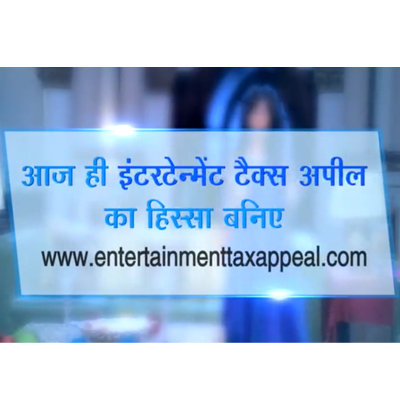
    MUMBAI: In the run up to Budget 2014, the DTH Operators Association and the MSO Alliance have joined hands with broadcasters to embark on an aggressive campaign (in the shape of a television promo or commercials)  to fight the heavy entertainment taxes levied on them by the various state governments.


    The TV commercial which stars Roopal Tyagi (Sapne Suhane Ladakpan Ke) and Surbhi Jyoti (Qubool Hai) has been running across all channels.  It makes an appeal to TV viewers to log on to http://entertainmenttaxappeal.com to pledge against rising entertainment taxes. It says that on an average a viewer spends approximately Rs 3000 on cable TV and DTH recharges annually. Almost half of this goes directly into the government’s kitty by way of taxes. Therefore, there is a need to put an end to it.


    “We will present the appeals from the people to the government and hope that they take note of it,” says newly-appointed DTH Operators Association of India president RC Venkateish. He added that the advertisement was timed to coincide with the upcoming budget session. 


    Entertainment tax is a state subject and hence, varies from state to state. In some, it is a fixed amount while in others the state exchequer carves it out as a percentage of the bill. 


     “The state of Maharashtra charges Rs 45 as entrainment tax. This is ridiculously high,” says an industry professional and adds, “High entertainment tax is one of the reasons why local operators don’t declare the number of viewers they have.”


    The campaign is expected to run for a month in order to build a ground swell of public opinion against the entertainment tax levies.  It seems to have got the Information & Broadcasting Minister Prakash Javadekar’s attention already. Speaking to PTI recently he assured industry that “the government is looking into the demands of the DTH operators and that the issue is with the Ministry of Finance.”


    “Industry has high hopes in the new Modi-led government. For several years, it has been appealing to the previous government to reduce the burden but to no avail.  High and multiple taxes have been crippling. Hopefully, the government will find a solution to this problems,” says a media observer. 


    It’s now over to Mr Arun Jaitley. 


    Click here to watch the commercial

  • DTH ops latch onto the FIFA juggernaut

    DTH ops latch onto the FIFA juggernaut

    MUMBAI: The world is in the grip of football fever and India isn’t far behind, though it is traditionally a cricket-crazy country where an Indian Premiere League would score any day higher than a FIFA in terms of fan frenzy.


    As aficionados prepare to settle down in front of the idiot box, popcorn and coke in tow, DTH operators are doing all they can to woo customers with special services and what not during the World Cup.


    A strategy adopted by almost all DTH operators is to offer Sony Six free for the entire duration of FIFA to all new subscribers taking a connection between June and the FIFA finale. While Tata Sky, Sun Direct and Airtel DTH are offering the channel free-of-charge to all their new subscribers, Dish TV is offering it only to its new subscribers and also to Zing subscribers. “FIFA viewing pockets are West Bengal, Odisha, Kerala and urban cities. So when compared to cricket, it isn’t as big an event in India,” says Dish TV CEO RC Venkateish.


    Additionally, Tata Sky and Videocon d2h have timed the launch of two of their services to coincide with the beginning of FIFA. Tata Sky has launched its TV Everywhere application for desktops and laptops, which was hitherto only available on Android and iOS smartphones. Furthermore, Sony Six is the new addition to the list of channels available on the app that would be available to subscribers at the same cost of Rs 60 per month. Tata Sky COO Vikram Mehra says, “The service launch has been timed just before the football World Cup to ensure that the home laptop doubles as the second TV at home, thus allowing youngsters to watch late night football matches on their laptops and headphones without disturbing their entire family.”


    Whereas, Videocon d2h has recently launched its earphone service through which, viewers can connect to radio frequency remotes and watch TV. “We have been working on this proposition for our consumers for quite some time. As per extensive research done by us, the typical Indian male consumer likes to watch content late night. Mostly consumption is of sports and movies. Given that in a typical Indian household, television is in the bedroom, volume becomes an issue. With a huge following for the World Cup in India and its late night timing, it coincided well with our plans,” says Videocon d2h CEO Anil Khera. Special product offerings will be provided for headphone remote-enabled set top boxes.


    Even Sun Direct’s existing customers, who take a recharge of six months or more, can watch Sony Six free during the FIFA period. Those who don’t have Sony Six in their packs can avail the FIFA add-on for a special price of Rs 39 for the duration of the World Cup or buy Sony Six at Rs 30 per month. A mix of above the line (ATL), below the line (BTL), digital and PR activities have been planned close to the beginning of the World Cup. ATL is through radio, TV and focus on Kerala; BTL is through posters, leaflets and wobblers; while other activities are through SMS, OBD and blogs. The operator has already received nearly 40,000 requests for Sony Six.


    Dish TV and its second brand Zing are banking not just on Sony Six but also on Sony Aath which will be providing commentary in Bangla. Says Dish TV VP marketing Anjali Malhotra, ”Zing caters to a larger language customer base. Sony Aath is already available in all base packs of Zing as well on Dish TV in the north. With Sony Six available to consumers free of any extra fee during FIFA, it will help people buy Zing and watch it.”


    The operator has also rolled out an intense marketing campaign across West Bengal involving print, outdoor and radio mediums.

  • Tata Sky pays license fees of Rs 383 crore, Dish TV prefers to wait for court orders

    Tata Sky pays license fees of Rs 383 crore, Dish TV prefers to wait for court orders

    NEW DELHI: The direct-to-home (DTH) operator Tata Sky today made a payment of Rs 383 crore to the Information and Broadcasting Ministry (I&B) to cover its license fee and other dues.

     
    A demand draft of the amount was submitted to the Ministry, even as a petition to this regard is pending in the Telecom Disputes Settlement and Appellate Tribunal (TDSAT) in this regard.

     
    This amount covers license fee for the year 2013-14 according to the rate specified for license as well as past dues, for which the Ministry had raised a demand note recently.

     
    TataSky MD and CEO Harit Nagpal said in a statement: “We hope that this will end the long standing dispute on the subject and pave the way forward for a constructive rationalisation of taxes with the support of our parent Ministry.”

     
    However, Dish TV CEO R C Venkateish told indiantelevision that the TDSAT in its hearing on 4 April had taken an assurance from the government that it would not pressurise the DTH operators in this regard until the next date of hearing on 6 May.

     
    He said that the government had been asked by TDSAT to respond to the petitions by the operators by the next date of hearing.

     
    Although TDSAT is expected to give time to the operators to file their respective rejoinders to the government’s reply, DTH industry sources said the Tribunal may give a directive with regard to the payment.

  • BECIL to conduct audit of status of IndiaCast channels on Dish TV

    BECIL to conduct audit of status of IndiaCast channels on Dish TV

    NEW DELHI: The Telecom Disputes Settlement and Appellate Tribunal (TDSAT) today directed an independent audit by BECIL of the package of IndiaCast UTV Media Distribution, being carried by Dish TV to ascertain the number of channels being offered to consumers who opted for them.


    Meanwhile, chairman justice Aftab Alam and member Kuldeep Singh directed Dish TV to furnish a bank guarantee of Rs 15 crore to be submitted within 10 days. The case will now be heard on 15 July.


    The petitions by both sides came up today in the context of the earlier order of 19 December 2013, wherein Dish TV had committed that from January 2014, “it shall take all the 22 channels of the petitioner (with regard to which the fixed deal agreement comes to an end on 31.12.2013) out of its packages and put them on a-la-carte basis on its platform. In respect of the remaining 16 channels likewise, the respondent shall put them on a-la-carte basis on its platform, with effect from 1 April 2014 on expiry of the fixed deal agreement on 31 March 2014. No legal objection can be taken to the arrangement proposed to be made by the respondent.”


    Dish TV had then stated that “a scroll running on the TV screens will only say that after 31 December 2013 the 22 channels of the petitioner shall be available only on a-la-carte basis and invite anyone who want to subscribe to any of those channels on a-la-carte basis, to communicate on the SMS number mentioned in that scroll.”


    The dispute before the Tribunal related the number of people who had opted according to the scroll run by Dish TV and whether payment was made in that regard.

  • Industry welcomes reduction of CENVAT on STBs

    Industry welcomes reduction of CENVAT on STBs

    MUMBAI: The Union Finance Minister P. Chidambaram in his Vote on Account speech in Parliament today announced a proposed reduction of excise duty from 12 per cent to 10 per cent on all goods falling under chapter 84 and 85 of the schedule to the Central Excise Tariff Act for the period up to 30 June, 2014. With effect from today, CENVAT on Consumer Premises Equipment (CPE) has been reduced.


    The reduction in excise duty would be a great relief even to the DTH and TV industry. In fact, Dish TV welcomed the announcement as they hope this would give the DTH sector in India some respite from the levy of multiple taxes.


    The Direct to Home operator Dish TV which had been requesting the government to waive 12.36 per cent service tax till the rollout of GST and rationalise other taxes imposed on the DTH industry applauded the duty reduction move as its Set Top Boxes and other Consumer Premises Equipment fall under Chapter 85 of the Schedule.


    “This is a small relief. But any relief is welcome,” says Dish TV CEO RC Venkateish, further adding, “We still need to evaluate the reduction to be able to decide what it translates for the consumer and if they would see any reduction of cost for our services.” 


    Dish TV will evaluate the reduction in the next couple of days. “It is a highly taxed industry with dual taxation of entertainment and service tax. Major relief will be felt only if these two are reduced or one of them is eliminated,” says Venkatesh.


    “This reduction means that we will save some Rs 50-60 per Set Top Box (STB). So for a volume of say 2-2.5 million STB, we will save close to Rs 10-15 crore,” he informs.

  • IndiaCast vs DishTV: The final TDSAT order says it all

    IndiaCast vs DishTV: The final TDSAT order says it all

    MUMBAI: Last week, there was a lot of brouhaha about the IndiaCast vs DishTV round of fisticuffs on the DTH operator’s “on request channel service” and the former’s flurry of ads in newspapers and on TV. Both sides claimed victory, saying the Telecom Disputes Settlement Appellate Tribunal (TDSAT) had ruled in their favour. But there was no order in sight.


    Today the TDSAT posted it on its web site, with he verdict pronounced by its chairman Aftab Alam. And here are the highlights: 


    * The tribunal says that a legal objection cannot be taken to Dish TV’s arrangement of ‘on request channels’ which its counsel said would imply that from1 January 2014, 22 IndiaCast channels will be available only as a-la-carte out of its package. The deal with the other 16 channels shall come to an end on 31 March and from 1 April, they would also be treated similarly.


    * The Dish TV counsel also clarified that the scroll running on IndiaCast channels shall from now on only say that those channels will be available on a-la-carte basis and people shall be asked to communicate through the SMS number mentioned on it in case they want to subscribe to any of them.


    * IndiaCast counsel was requested to give an undertaking to the court that the ads published by its client against Dish TV shall stop. 


    And with these statements, the TDSAT disposed off both the petitions. 


    Who really won? It looks like each got its way, in some way, and the tribunal told them to cease firing.  But is it the last that we have seen of them bashing each other? Will they come together on the table and negotiate a deal? 


    After all, the seven million subs of Dish TV are not to be sniffed away. And the absence of channels such as Colors on Dish TV pack can lead to customer attrition. History has shown that very few Indian customers go for a-la-carte channels. This will continue to be the case unless customers miraculously have a change in their consumption habits. Both IndiaCast and Dish TV might hold out for a while but we at indiantelevision.com  are betting on the duo reaching a settlement – sooner, than later. 


    Click here for the full order

  • Now avail Dish TV on the go

    Now avail Dish TV on the go

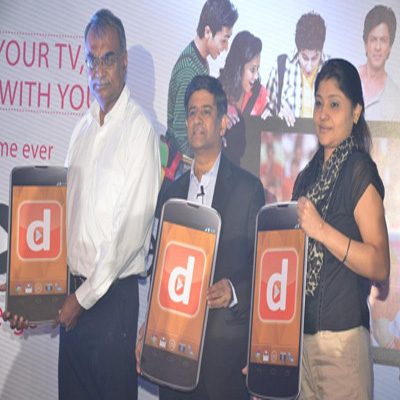
    NEW DELHI: Commemorating completion of 10 years in the business, the country’s oldest DTH platform – Dish TV – today launched its services on laptops, tablets and smart phones, albeit available only to those customers who subscribe to the platform on television.


    Significantly, this is a first for any DTH player to have launched a full-fledged, OTT (Over the top) streaming application that provides unlimited entertainment ‘on the go’.
    The platform expects to add nearly 50,000 subscribers in the same period for its latest innovation


    Dish TV will make available the additional service in two packages: the Jumbo Pack for Rs 129 per month and the Starter Pack for Rs 49 every month. Initially though, these packs will be available for Rs 69 and Rs 29 per month, respectively. However, the platform will offer a free trial for the first two days.So what’s on offer? The packs come with 35 plus live channels, 1000 plus films in their video library, and the capacity to see repeats of TV series episodes within 24 hours. CEO RC Venkateish says he expects the number of live channels to increase further.


    How can the service be accessed? It’s available on Android and Apple app and works wonderfully on 3G or Wifi. Powered by Essel owned Zee’s Ditto TV aided by Siemens, the service will shortly be available on Windows 8. The application can be downloaded from the Google Playstore or Apple App Store.


    Speaking of Dish TV’s versatility as a platform, vice president (marketing) Anjali Malhotra says Dish TV was the first to launch HD TV channels (42 channels presently), Dish on wheels which made it possible to view channels in moving cars/trains/ships, recorders with unlimited capacity, value added services, and now Dish Online – Anywhere, Everywhere.


    Malhotra claims 50,000 recorders have been sold in just six months and the platform expects to add nearly 50,000 subscribers in the same period for its latest innovation, considering 35 per cent mobile consumers use smart phones. Malhotra says Essel is now a Rs 2,200 crore company while COO Salil Kapoor says Dish TV is Asia’s largest and the world’s third largest DTH platform.


    About the films component of the package, Kapoor explains Dish TV subscribers can register simply by sending their account details where expenses would be added to their main bill.


    Apart from print and other media, the service will be mainly marketed on Zee channels and through messages to all Dish TV subscribers through their mobile numbers.


    Fielding queries as to why Dish TV thought of such a service, Kapoor goes on to explain that India is the third largest Internet player in the world with 74 million subscribers; 75 per cent of whom are between 15 and 35 years of age. This demographic is expected to increase five-fold by 2015, of which three-fourth is expected to own mobiles. Currently, an estimated 60,025,000 Indians have watched videos on their personal computers or laptops.

  • ‘We have enough high quality relevant content to provide for each of the three channels’ : RC Venkateishi- ESPN Software India managing director

    ‘We have enough high quality relevant content to provide for each of the three channels’ : RC Venkateishi- ESPN Software India managing director

    Just when everyone was thinking that sports broadcasters might look to “de-risk” the cricket story, ESPN Star Sports has announced the launch of a dedicated cricket channel for Indian audiences. The new channel, christened Star Cricket, will commence transmission in June.


    Star Cricket will be making its bow with a big bang property to showcase because its launch coincides with the India tour of England that involves four Tests and seven One Day Internationals.


    Indiantelevision.com caught up with ESPN Software India managing director RC Venkateish in an attempt to get a feel of what was guiding this decision.


    Excerpts:

    Is this the right time to launch another cricket centric sports channel, particularly considering the disillusionment of the general public with the game in the country?
    Suffice to say that there is still no challenge to cricket as the single sport which has pole position in the Indian market. And I don’t see that changing anytime in the near future. So, from the perspective of timing, we really don’t think that is an issue.


    What is more important is the longer term picture and going forward we continue to believe that cricket will continue to hold its own and in fact strengthen as there is a lot of new talent coming in.

    Nobody’s is arguing that India will not continue to remain cricket-centric. But the fact of the matter is that for something like this to work, it has to be underpinned by high levels of interest in the domestic game as well, which is not the case in India. In fact, this is a problem that Neo Sports seems to be confronting as well.
    Which is a pity actually. In fact, if the local tournaments are properly marketed and properly packaged for the viewers, have the potential. We unfortunately don’t have the rights for that.

    Exactly, and isn’t that what Nimbus is hoping to leverage on Neo Sports. And you don’t have local Indian cricket to showcase, so what is the USP of your channel?
    What we will be showcasing in fact, apart from the international matches, is county cricket in England and domestic cricket in Australia, which also feature some of the best players in the world, including a lot of Indian players. There will also be a substantial effort to market that.


    In many ways we will be doing a parallel to things like English Premier League. Where it was four or five years ago to where it is today, it is really a result of the investments that we have done in promoting that property and making it interesting for the viewer.


    If you just pick up something and put it on the channel, it is not going to work. That is the job of marketing to popularize a particular sport. It has to be exploited and executed properly. Even the domestic Indian tournament, it needs to be put across properly to the viewer. It is not something that will happen automatically.

    There are two strands to the communication that you sent out on your upcoming channel. One is that you will showcase live India and non India cricket. You will also showcase feature programming, including reality reality shows?
    Reality shows are like we had recently Harsha ki Khoj Dream Job. That genre has lot of space. It has a lot of opportunities for us to create programming around that. We will be developing more such shows and putting them across to the viewer.

    Fair enough but the point is that now you have three platforms through which you have to transmute content. Is there enough content to go around?
    On the content side, over the last couple of years, we strengthened our cache, not just in cricket but in all other sports. We just recently renewed the English Premier League. We have the Spanish League, we have Euro 2008. Those are the big soccer properties. In tennis, we added the French Open so we now have it along with Wimbledon and the Australian. In motor sports we have Formula 1 and A1. In golf we have all the major properties.


    So, if you look at each and every sport and the key properties, they are all residing on our channel. Along with this, we have other smaller content also which has come on the network.


    As for cricket, for the next 14-16 months I have India’s tour of England, the Twenty20 World Cup, India’s tour of Australia, the Asia Cup and the Champion’s Trophy. That is five major cricketing events.


    So I don’t believe that we are in anyway falling short of providing high quality relevant content in each of these three channels.

    What about distribution? Right now we are in a very uncertain distribution market, both on analog as well as on digital cable, with Cas only in the beginnings of being rolled out. And in such a time you are launching a 3rd channel?
    I agree with you that there are a lot of people having trouble finding distribution. But ultimately, your bottom line is going to be content. I think we will be in a position to demonstrate it through cable and to the viewer that the content we have to showcase on the channel are of a quality that must be carried.

    Let us accept that you have great content, but today the reality of placement fees cannot be wished away. And it means that slots are booked on tunable bandwidths for one year, two years…
    I think that applies more to other genres. Unless people see your channel how will they get hooked on to it? They will not demand it. For my cricket channel, I don’t have to create a demand.

    There is the recent example of Neo Sports, which had great content but still faced distribution problems?
    The difference is that Neo Sports did not have its own distribution team.

    Well they had Star distributing them, which is as good as it can get?
    I don’t know what Neo Sports needed to do but they didn’t do, or what support they got, I don’t really want to comment on that. But as far as we’re concerned, we have the strongest distribution as well as distribution team in India, and I am completely confident that we will not have any issues with our channel.

    We have been delivering higher and higher reach and we haven’t seen the proper monies for that as yet

    That still doesn’t explain how you’re going to find place in a tunable bandwidth if all the slots are already locked in.
    In case there is a cricket match happening, he (the cable operator has to put it in the prime band. I can’t see a situation where the matches will not be shown.

    There is the option of DD, where the matches are being shown because of must carry.
    Test matches are not going to be shown on DD. I agree with you that channels tend to go up and down, especially the ones who don’t pay money to the cable operator. That is a fact.


    Even then, we have always managed to be there in prime band even when we didn’t have cricket running. And you must understand that in regards to sports channels there has been a certain amount of consolidation. So the other channels which don’t have relevant content tend to be pushed onto the hyper band.


    There will be a little bit of juggling and we will have to manage that. But as a company policy, we will certainly not pay any carriage fee or any placement fee. We are a pay channel and we will get our price.

    What rates have you fixed for the new channel?
    We haven’t announced the final rate but it should be in the region of around Rs 28 to RS 30.

    Let’s talk about the ICC cricket rights. I take you back to a comment you’d made earlier to Indiantelevision.com that the crazy escalation in rights prices will start cooling down a bit. And yet you went and plonked $ 1.1 billion for those rights?
    If you do a bit of math, you’ll see that whatever I said earlier has actually happened. Let’s benchmark it with some of the other rights. The BCCI rights, which the previous version was for $ 50 million for five years, went for $ 612 million for four years. So that’s basically an escalation of 1,400 per cent.


    Now take the ICC, the last ICC went for $ 550 million. So that’s basically a 100 per cent increase. And the last ICC did not have events like the Twenty20 World Cup, which have been added on this property.


    What we have paid over eight years, is basically a 9 per cent per annum escalation in rights fee, as opposed to some of the other properties, which in recent times have gone absolutely berserk. The BCCI, as well as the BCCI offshore cricket rights package sold to Zee for over $ 215 million ($ 219.15 million).


    Even if you look at things like the Sri Lanka board for $ 50 million, or the Bangladesh board, which went for $ 56 million after going for $ 6-7-8 million last time.


    So what we have paid for are not just the World Cups and Champions Trophies, but also what is going to develop into a real cracker of a property – the Twenty20 World Cup. Not once, but thrice.

    From an average per day cost perspective, and if we compare the three properties that went for big bucks, how does such a payout work?
    Zee paid $ 8.71 million, BCCI went for around $ 3-4 million per day and we are around the same ball park.

    There are also the cricket rights that are coming up over the next 12 months for many big territories over the next year and a half. You have already committed $ 1.1 billion for the ICC rights as well as all the other rights you’ve mopped up recently, so where do you stand on that?
    We are quite comfortable with the levels of investment we’ve made thus far and what we have identified as key acquisitions for the future.


    But having the ICC rights provides us a very strong backbone of cricket over the next eight years. Whatever else we add on would be accretive to what we already have so it won’t be necessary to go out and buy everything under the sun.

    What of the territories that ESS currently own – England, Australia, New Zealand, South Africa? Will you be making aggressive bids to retain them?
    We haven’t formalised how we’re going to go about it yet.

    I again come back to the disaster that was the World Cup. Everyone was expecting 2007 to be cricket’s year as far as advertising is concerned due to the sheer volumes of A list properties that are coming up throughout the year. Now will all the calculations have to be reworked?
    On this I have a different take. I think the advertisers have had it pretty good so far. I have an argument we need to push more forcefully and that is something as a broadcasting community we haven’t done enough of. The fact of the matter is all the rates that advertisers have been paying us have been on the basis of CPRP at a time when overall reach has doubled.

    But this is an argument that Star’s Paritosh Joshi has raised, as too Zee’s Joy Chakraborty. Today we are faced with a situation where HLL has pulled out its advertising from Star. And the broadcasting community does not seem to have any unity on this issue so what are we talking here?
    There is unity developing on this issue and you will see a more forceful exposition of the point in the days to come. Certainly at IBF we are all seized of it in terms of a consolidation of our position.

    We have been delivering higher and higher reach and we haven’t seen the proper monies for that as yet.

    Coming back to the development of local sport, you’ve earlier stated that Sports federations need to get their act together. One of the biggest culprits in that sense is the IHF run by KPS Gill with whom you’re a partner. One could say that it is because of the mess the IHF is in that the PHL is not taking off. So doesn’t it make sense to encourage the IHF to get itself sorted out?
    Our experience with the PHL has been very positive. There wasn’t anything in PHL that we needed to do and have not been able to do because of lack of support from IHF. Suffice to say that we are quite happy, both with the way the PHL has performed and with the kind of partnership we have with the IHF.

    But you yourself have said one reason why PHL is not taking of is because they are not performing well internationally. I think it is interlinked. If the federation was being run properly, the teams would be doing better internationally. A follows B, one could argue.
    How federations are run is not something I would like to comment on. We stand ready to help the federation in any way we can but it is not our brief to tell the associations how they are to be run. Because, quite frankly, this is something they need to work out among themselves.

  • ‘Consolidation good for the sports broadcasting business’

    ‘Consolidation good for the sports broadcasting business’

    2006 has been a rocky year for sports broadcasters. Cricket properties were acquired at humungous prices, SET India decided to walk out of bidding wars, Harish Thawani made his entry into the broadcasting arena and Zee bought 50 per cent in Ten Sports.


    ESPN Software India MD RC Venkateish offers his views on the consolidation in sports broadcasting, the challenges broadcasters face in pushing sports other than cricket, the need to come out with sports entertainment programming, and the Cas issue.


    Over the past few years we have seen a proliferation of sports channels but 2006 was a year when we saw consolidation. You had Zee buying a stake in Ten Sports while Sony opted out of sports. Nimbus is also in the process of aligning itself. This happened because earlier you had an unsustainable situation where a lot of people jumped onto the sports bandwagon thinking that it was an easy play.


    People have realised that it is not that easy to run a sports channel. This is because of the kind of skill sets that are required, the capabilities that are required and also the kind of investments that need to be sustained.


    Going forward you will see moderation in the sports business. You will see the crazy escalation in rights prices starting to cool down a bit. People are starting to get more realistic. In terms of overall developments of the business, consolidation is good.


    You earlier had smaller players jumping in and bidding the rights prices to crazy levels. There was a destabilising factor in terms of asset valuations. When asset valuations reach a ridiculous level you are bound to have a correction. This sort of a boom-bust cycle is not good for anybody’s business. People who tried to take acquisition prices up, have realised that it is not an easy game to play. Now the players who are standing are serious and committed. The environment is stable with players who are in it for the long haul and looking to increase their brand equity rather than a quick fire in and out situation.


    Consolidation means that the model of let me set up something sell it and get out is gone. A stable environment will allow the players to invest in broadcast quality, programme content. We can focus on better quality of coverage for the viewer rather than saying,”Hi I am blowing your brains out on the rights acquisition costs.” From a five-player field it has been reduced to three and possible eventually to two.


    Sports Entertainment


    Sports is entertainment. There are wrap around shows around content. What we have sought to bring to the viewers is 360 degree spectrum of sports. We have always had magazine programmes, informative shows. We recently launched a lighthearted programme revolving around sports. The main theme, though, will always be live sports. Around that we try to build properties and shows. Anything that seeks to enhance the understanding of sports and inform the viewer provides a different angle.


    This space needs to surround the live programming. It cannot act as a substitute. As an exclusive standalone as a channel or as a genre I do not think that sports entertainment will have any legs. Recently, one of the players launched a live sports channel and another channel on sports entertainment. Yet if you see the second channel it too has live sports. They probably couldn’t find enough software. That is not to say they will not create software but it is important to find a proper balance. At ESPN we have added concepts like dream job, Full Toss to the live experience.


    Sports federations need to get their act together


    International football is doing well with the soccer World Cup and English Premier League. The World Cup gave ratings that have not been seen for a non cricket sport. We had all India ratings of 2.6 and 3.1 for some of the league games. Unfortunately, the ratings for the rest of the stuff has been middling. That has to do with the lack of performance at the international level by sportspeople. I remember that two years ago when Sania Mirza came to the third round of the Australian Open the ratings shot up to 1.1.


    Unfortunately she has not been able to maintain that sort of form and the ratings have dipped. Premier Hockey League has given us ratings but because the national side has not been performing their matches have not fared well. Unless you perform at an international level it is hard to capture the imagination of the public.


    People want to emulate winners not losers. If you do not do well then there is no new pipeline of young talent who wants to play the sport. Eventually the sport dies out. We are doing our bit to push hockey and soccer. Having said that, sports federations need to have a deep, hard look at themselves. People need to fundamentally overhaul the system. Otherwise it is not going to go anywhere. It has been like this for the last 40 years. It will be like this for the next 40 years. Cricket at the moment does not face challenges. You have a good set of players as well as youngsters who want to take it up. So the pipeline is active.


    Certainly in other sports when it comes to marketing it is a challenge. With hockey we have to fight the dice a little bit as the national team’s performance has been bad. If India had won the Asian Games or even finished as runners up, there would have been a positive groundswell of support for the game. Marketing is a lot easier if the national team is doing well. Hopefully, people will put the bad performance of the Indian hockey team behind them and watch PHL for the love of the game itself and not for the satisfaction of one team beating another. In the UK local soccer league games have more viewership than some international matches.


    2007 A big revenue boost for sports


    Sports is event driven. You have the cricket World Cup coming up. So there will be a boost. Then there is the 20/20 World Cup in September. India goes to England and to Australia. We also tour Pakistan. So there is a fair amount of cricket. It compares favourably to this year when there was the soccer World Cup and the Champions Trophy.


    Distribution


    DTH has been around for quite a while and is a good development. It offers an alternative to the consumer and it is digital telecast. It is good that sports are airing in a format that is clearer to see. We welcome Cas from a technology perspective. The only thing that we are unhappy about is the kind of price regulation that has been forced down our throat. We will get 45 per cent of Rs 5 per subscriber, which is two rupees and forty-five paisa. This is absurdity that defies even basic, cursory logic. It is extremely unfair and we have already appealed to TDSAT. It has always been seen that free market forces are the best even for the consumers eventually.

    To interfere with that is always going to be a recipe for disaster. DTH and Cas address single subscribers and provide content for that subscriber. We are already providing interactive services to both Dish TV
    and Tata Sky. This allows viewers to check out rolling highlights, players statistics, different camera angles. As the transponder capacity goes up, it will afford the opportunity for more data. We have the rights for Euro 2008 and so the DTH service providers will probably come to us to see if we could do something with them.