Tag: RBNL

  • “Reliance’s Big brand is focusing on  the localised content, local IP space:”  Tarun Katial

    “Reliance’s Big brand is focusing on the localised content, local IP space:” Tarun Katial

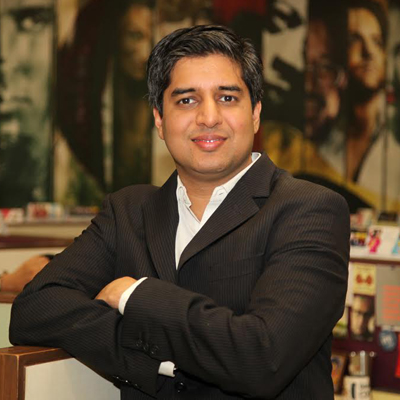
    He is amongst a select lot of advertising professionals who have pole-vaulted over the fence to the broadcast side – and stayed there. In fact, not many recollect that Tarun Katial began his career at Saatchi & Saatchi as a media trainee. More might remember him from his O&M days when he headed TV media buying for the Mumbai office. The then Star India CEO Peter Mukerjea picked him up to work in programming along with Sameer Nair, and the rest, as they say, is history.  From Star, he moved onto head Sony Entertainment programming, before heeding the call from the Anil Ambani-Amitabh Jhujunwala combine to help take the billionaire businessman’s  entertainment ambitions further under the umbrella of  Reliance Broadcast Network Limited (RBNL). 


    It has been quiet a journey. He heads what is considered as India’s most widely spread private FM radio network – Big FM 92.7 which has a footprint of 45 stations. Katial also handles a clutch of TV channels – Big Magic, Big Magic Bihar and Jharkhand, Big Thrill – the TV production wing Big Productions and the group’s activation arm. 


    Despite arriving late in the broadcast TV game, Katial managed to forge alliances with US major CBS and German media megalith RTL. He launched channels in partnership with them quickly from 2010 onwards with the clear intent of building a strong network. The CBS joint venture unravelled end-2013 while the RTL one got unstuck a couple of months ago. Katial – with a sanguine look in his eye says “things happen, then they don’t and the other way round too. But they are all a part of learning and experiences.”


    A firm believer of differentiation and localisation of content, Katial has been at the helm of one of India’s youngest media houses. It was this approach towards business that got him the ‘NewsCorp Achiever for Asia’ award and later led to him being included among the best in ‘India Today 30 on 30’ list. Katial’s much older today and his hair has greyed in parts, but the man has retained his hankering, his drive for innovation and challenges. He got into a conversation with Indiantelevision.com’s Seema Singh and Meghna Sharma, to talk about his experience, his good moments and not so good ones too, and also about his future…


    Excerpts


    How has the journey been so far? The company has seen a lot of ups and downs, what do you have to say about them?


    It has been an interesting journey. When we launched, all our competitors were at least five to seven years ahead of us, well established brands with not only equity, but also ad-consumer connect and legacy of their media house ownership.


    But, we were neither a media house nor a recognisable brand. To add to that, our parent brand Reliance did not allow us to use its brand name, since that is a part of our branding guidelines. We didn’t have any legacy knowledge in the system either. So it was all done from scratch. 


    The team has almost remained the same, since the time we launched. The executive board of the company is also still intact.  Right from deploying CAPEX to building a brand, an identity to positioning the brand, to winning small victories to larger wars, it has been an interesting journey to say the least. 


    In the last two years, the brand has really come of age, We realised that while we fought the marginal differentiation game, we had to be exponentially different to be able to succeed. 


    So we decided to position our brands to recreate every local market and that’s when we decided to go retro for our radio station in Mumbai and Delhi, regional in Bengaluru, melody in Chennai and largely Bengali with Hindi retro in Kolkata. 


    Today, I am quite proud to say that in most markets that we operate, we are either number one or number two, with a huge gap between us and our competitors. 


    You were a late entrant in the game, have you been able to deliver on the challenges? Which have been the areas that you have succeeded and areas which still remain to be tapped?


    The initial challenges were basic understanding of the business to building a consumer brand to building a differentiated positioning and differentiated offering, then to be able to consolidate and work around it. 


    In the brand’s journey you are sometimes able to take risks and sometimes not, sometimes you are able to expand and sometimes you have to consolidate. And in all of that, I think a new brand is not at the same place as an established brand. 


    Radio lacked measurement and we have worked with the industry to introduce RAM. 70-80 per cent of radio spends, today, are in measured markets and advertisers are able to measure the ROI they get from radio. The coming in of measurement rapidly increased the number of brands that had faith in radio. What it also did was, it helped radio move away from being just a frequency medium to being a rich range medium and classic advertisers like the FMCG category started to rely on radio for their communication needs, which has been very good for the category and very good for us. 


    Again in the television business we were laggards. Every business takes time to find its strategy. We started from the English space and then decided to venture in the local language proprietary content space. What we’ve been able to learn and reconcile with this is that we want to be in the local space like we are in the radio business. 


    Television is a much younger business than radio and I think the success we have seen in the TV space in the past six months has been very good. With our Big Magic Bihar and Jharkhand channel, we are clearly the leaders. Whether it’s Big MemsaabBig Bahuriya or Police Files, we have  great content. 


    Also we are the only ones with local production capabilities in Patna and we have been able to build a new community of technicians, actors and producers there.


    On the national front, while we started with Big Magic in UP, it was in April-May this year, with the launch of Akbar Birbal that we decided to take the channel national. 


    There are obviously challenges and we have a great distance to cover but I think the two month report card has been very healthy and positive. We have been able to launch a whole slew of content like:  Uff Yeh Nadaniyaan with Upasana Singh, Raavi Aur Magic Mobile and Ajab Gajab Ghar Jamai with Himani Shivpuri and Sumit Vats. 


    We are going block by block, building on that channel. While today we have about 2.5 hours of original content, we would probably take it up to 3-3.5 hours by the end of this quarter. 


    We believe that regional content is the way forward. It allows you to connect with the audiences and stay centric to consumer’s needs.  Also when you own the intellectual property, you can take it international, deploy it on digital and on various forms and fashions. So I think that’s really our strategy going forward in the television space.


    Why did you think of starting a production unit in Patna? 


    We started our Patna operations four months back, as we believed that local and regional channels should be run from where they belong and a lot of the Bihar channels tend to run from Delhi or Mumbai. But, according to me, this prevents you from building a local connect or local relevance. So we decided to do shows which are locally relevant. 


    Big Bahuriya is a show which surfaces latent issues between mother-in-laws and daughter-in-laws. It has done very well for us and it has all been shot in Bihar and Jharkhand and in the homes of people. Then, Big Memsaab, a studio based game show for women, is also based out of Patna. We built the studio and shot there, giving opportunity to local contestants, local people to come and take part. Similarly, Police Files is a very gritty, in-your-face crime show, where we work with real footage and real issues and crime scenes in Bihar and Jharkhand. 


    These programmes have been produced by local producers like Abhay Sinha, Amitabh Verma and Kamlesh Guthi Singh.  


    Are you looking at rebranding Big Magic Bihar and Jharkhand?


    Yes. We are looking to rebrand and probably call it Big Magic Ganga.  This should be done by mid August. We have already got the approvals for the same. When we rebrand, we will launch in a fairly big way. 


    Your business model earlier looked very lucrative, with TV, Radio, Production and Activation arm, how do you plan to keep up the whole chain to make it look more lucrative? How do you plan to synergize what is under you? What is your current business model?


    Actually we have strengthened our approach a lot now. We have a strong activation business called ‘Big Rural.’ We probably are the only ones who do intellectual property work in the rural space. We have built some very good brands, like ‘Big Disha’, where we do rural career counseling, partnering with Gillette.


    In fact a number of brands partner with us, through which we do hundreds and thousands of activations across schools and colleges. 


    We have also built a new brand called ‘Mele Ka Big Star’ and ‘Hindustan Ka Big Star’ where we cover large melas across UP, MP, Bihar and Jharkhand. Through this, we do a big talent hunt partnering with successful brands like Horlicks, Hero, Godrej and Emami among others.


    We have built a very big property with on-ground activation called Close Up Antakshari. Also on the production side, we have done a lot of proprietary work. Like the Big Star Entertainment Awards and now the monthly Life OK Now Awards.  We do different kinds of work under Big Productions. 


    So your business model still remains the same?


    Yes it continues to be the same. But one of the differences we brought about in the business model is that instead of focusing on client specific activation, events or productions, we are now doing more branded content activation which has attracted   a lot of clients. Through this, a lot of clients can partner and benefit rather than a single client carrying the cost. We have also built some single client properties. For instance, the Hajmola Chatpata No 1, which has a deep penetration in UP, was a success and we plan to do a follow up this year. In short, we have built some long standing properties rather than just activation.


    Are you creating activations for your television channels as well? When will we see the transformation of Thrill? Also will it continue to being male skewed? Will it be in English? 


    We are in no rush to do more in our television space until we attain a critical mass market for  Big Magic and Big Magic Bihar and Jharkhand. For us, the next big thing will be to Indianise Thrill and add local content on it as it is our second priority in the television space. We are currently in the consolidation space. And we also have the phase III of radio rights on our head. So, I think we need to see how much of bandwidth we have for television.


    Thrill will be rebranded by end of this year and while comedy will be on Magic, Thrill will continue to have action. The content on Thrill will be in Hindi only. The whole point of a buyout from RTL was to start doing local content. We are working with some key producers in the space.


    Are you looking at an English channel?


    We won’t do English for some time now. We believe we want to be in the local IP space. We want to have our own IP.


    Was this the reason that the joint ventures ended?


    Our strategy is to be in the local content, local IP space. We want to be centric to the consumer and move around according to the changing trends and tastes. We want to be able to take the channels to different platforms. But in the English space, you are under the rental model. What we do after the license period gets over? What is your legacy in the space?


    Why did you decide to launch the channel with international partners – CBS and RTL?


    You learn with every category you get into. I think when we got ourselves into the English space, there were fewer partners, less competition, but over the three years the space became fragmented and crazy. 


    What is happening with Big Magic and Big Magic Bihar and Jharkhand and Big Magic International, post the breaking of the JV?


    We now own all the content and that’s the reason we launched Big Magic internationally. We are now available in the US, Australia, Canada and are planning to launch in some countries, this year. UK is one of the targets and the talks are already on. 


    If you see the financial statement of this year, the company has done better as compared to 2013. But the network is still incurring certain losses. How are you looking at improving this – especially on the television side?


    RBNL is in its investment phase on TV and it’s on the return phase on radio and that’s how we are balancing it. You need to have some initial losses for any network to grow. You can’t cut the investment short because there are loses in the business, right?


    I will not define them as loses; they are investments. For any business to grow you need investments and we are happy to make investments in the TV business. We are happy to reap the benefits of the radio business. The radio business is close to Rs 200 crore plus, which is not a small number.


    So, will you be pushing radio more?

    Both are different businesses and have different sets of challenges; and we want to grow in both the businesses. And you have seen what we have done with Big Magic. We have been launching a new show almost every week if not every month and the kind of investment that is going behind content, marketing is quite incredible. Last week, we launched the new season of Uff Yeh Nadaniyaan. We have brought in new faces; we have upgraded the look of the show. So, at every step of the way we are investing in the content of the channel.


    What kind of management reshuffle will we be seeing. Are you getting in  more new people?


    We have brought in more people to strengthen the team. On the sales side, we have created a vertical approach, keeping the customer at the centre of it. So we have done a vertical for single customers, a vertical for government sector customers, a vertical for key accounts, a vertical for corporate accounts and new business developments. So, we have a customer centric approach and we have got sales directors on all these verticals. We have got Gurudutt Jakhmola for the government side, Ajit Singh has been roped in for single accounts, Rajesh Mishra for corporate account side and Vijay Koshy on the key account side.


    So, we have got four vertical heads. On the creative side, we have got Manisha Tripathi as the creative and programming head of radio.


    Are you looking at fresh investments coming in to the company?


    Obviously, we will make investments into our radio business as we go into phase III of licensing; we will definitely make investments in current licenses migrating into 15 years and acquiring new licenses.


    And what about television?


    Television is now at the cusp of breakeven, but we will continue investing in Magic.


    What about the licenses of channels like Love? Will you be giving them away? Can we expect more channels in the future?

    We will keep them. Currently, they are in the hibernation stage.  We will be working with our three channels for now. And as and when opportunities come, we will tap into it. 


    How do you plan to get cash flow in the company? Why did you plan to delist?

    For now, we are a delisted company and so we do not need to worry.


    We didn’t want to live quarter to quarter and the promoter believed that he had great value in the business and so he should go behind it and give it all the investment it requires to give it a long term run. 


    For a business in its early stage it is tough to live in a quarter to quarter manner. I can tell you, I have worked at News Corp in my early days at Star and if we were to live on a quarter to quarter basis, we would have never made the kind of investments we did. 


    Also, we didn’t list because we wanted to. We listed because we have a legacy of Adlabs being listed. Our licenses were in the erstwhile Adlabs which demerged into Reliance Media Works which then became Reliance Broadcast Network. We have actually never done an IPO. 


    According to you, which is the most ad revenue generating channel? 


    Big Magic is actually at a 100 per cent inventory fill and it is doing exceedingly well. But I think the one that has real big potential going forward is our Bihar channel. It’s a media dark region and a lot of advertisers want to penetrate that market. Also, it has one of the fastest GDP growth in India. 


    Are you looking at geo-targeting at any stage?


    We had some options at doing geo-targeting with Big Magic because it’s very big in UP. We keep toying with the idea. With a 50 sales offices in the country for our radio business, it will be an easy task.  But we haven’t really tapped into that yet.


    Is distribution a challenge? Is it getting expensive now?


    It’s not very expensive, it is actually getting cheaper. Digitisation has clearly made distribution democratised. Placement is still expensive but distribution is not. And if you have differentiated content then placement is not a key challenge. 


    In fact, we have had a reduction in our carriage fees dramatically over the years across the network and I can tell you that some of the DTH platforms have been very welcoming for our channels.

    What is your budget for marketing on a yearly basis? Does it keep increasing year on year?


     See, we have priority markets, where we invest heavily. Also, we have great advantage of having cross network between radio and TV. So, what people can’t buy, we can buy very easily. Most networks have to buy on radio networks like us, but for us that’s a very big advantage. So between network media and third party media, I think our budget will be close to 20-25 crore. 


    According to me as the channel gains popularity, its marketing spends reduces. 


    I can tell you, our radio market budget has come down substantially from the years we launched it. It’s a set brand. When we launched the show with Annu Kapoor we did not do any marketing because the content was strong. I think good content markets itself after a point. The word of mouth, the advocacy becomes so strong that you don’t have to knock on any ones door.


    What made you change your whole content from recent Bollywood tracks to retro on Big FM? How big is your research team for both television and radio?


    You have to give yourself some serious delta of differentiation, it can’t be marginal differentiation. And you have to take some risks and risks pay off eventually. 


    We have an intense research team, which comprises music experts and even university graduates who have done a post graduation in music. We won’t take such a risk without understanding the consumer’s likes, dislikes and choices. Even within the retro music we have serious segregation on timeless music and time-bound music. 


    Similarly for television, we work closely with Dragon Fly for a lot of research. 


    There seems to be a sudden rise of in-programme advertising? Do you also use this tool to advertise?


    We do a little bit of it, but more in Bihar and Jharkhand because we have a game show on the channel and also because there is a lot of good opportunity there. But I still believe that you can’t make good content into a teleshopping network.


    I think the consumer is becoming extremely discerning so you need to be smart about the way you do these things. What we did with Clinic All-Clear on one of our shows on Big Magic called Raavi was that we spoke about educating the girl child, while soft branding the product with the message.


    Are you looking at doing more events apart from the current slate? 


    I think they need to make sense from a consumer perspective. You can’t just do them because you want to do them. You have to do them because there’s an insight in them. We currently have a slate of 20-30 events, which I don’t think is little by any standard. 


    Does the network make any content for only digital  consumption?


    We are currently not making content for digital only, but we are re-purposing a lot of content for digital. Like we do short stories of Akbar Birbal, only for digital. We have our own YouTube channel, where we condense interesting episodes and put on that channel. The content is such that it can be watched in about nine minutes. 


    Where do you see the network three years down the line?


    The network will be very consumer centric, adapting to changes in consumer trends, very well differentiated and distinct, whether it’s the TV network or the radio network and building on insights continuously. For us consumer-centricity is the key and that’s what we are working on and that’s why we have done what we have done both in TV and in radio. You can’t win by duplicating anybody.
  • RBNL’s Q3-2014 radio business operating profits almost double y-o-y

    RBNL’s Q3-2014 radio business operating profits almost double y-o-y

    BENGALURU:  Reliance Broadcast Network Limited (RBNL) radio segment reported operating profit of Rs 6.58 crore for Q3-2014, which was almost double (1.96 times) the Rs 3.36 crore in Q3-2013 and 32.45 per cent more than the Rs 4.97 crore in the immediate trailing quarter. On YTD basis, operating profit of the radio segment improved more than 167 times to Rs 202.27 crore as compared to the small operating profit of Rs 0.1223 crore in the corresponding nine month period of last year. During FY 2013, RBNL’s radio business reported an operating profit of Rs 8.18 crore. 


    The company’s EBIDTA for Q3-2014 at Rs 16.31 crore was up 7.44 per cent as compared to the Rs 15.18 crore in Q3-2013 and was up 8.62 per cent from the Rs 15.02 crore in Q2-2014. Over the nine month period ended December 31, 2013, RBNL’s EBIDTA at Rs 50.36 crore was almost double (1.96 times more) the Rs 25.8 crore in the corresponding period of last year. EBIDTA for FY 2013 was Rs 43.58 crore. 


    Overall, RBNL reported a loss of Rs (31.08) crore for Q3-2014 as compared to a profit of Rs 0.37 crore in Q3-2013 and a loss of Rs (16.48) crore in Q2-2014. Over the nine month period ended 31 December 2013, RBNL reported a loss of Rs (30.6) crore, which was 16.18 per cent more than the loss of Rs (26.34) crore in the corresponding period of last fiscal. During FY 2013, the company had reported a loss of Rs (-23.51) crore. 


    Note: The company has investments in equity and loans aggregating to Rs 109.4246 crore into its wholly owned subsidiary Reliance Television Private Limited (RTPL) as on 31 December 2013. RTPL has further investments in a step down entity viz. Azalia Distribution and Television Private Limited (Azalia), which was earlier a joint venture entity. During the quarter ended 31 December 2013, the joint venture agreement was mutually terminated and RTPL acquired the remaining 50 per cent stake of the co-venturer on 20 December 2013. Consequent upon this acquisition, Azalia became a wholly owned subsidiary of RTPL on and from the said date. Azalia has scaled down its operations significantly during the quarter, however the management is confident that on a need basis it can scale up the operations. In view of the foregoing, the company on a prudent basis has made a provision for an amount aggregating Rs 30 crore in its accounts during the current quarter for loans and advances granted to RTPL. This has no impact on the consolidated financial results. 


    Let us look at the other figures reported by RBNL 


    RBNL’s Total revenue in Q3-2014 at Rs 69.59 crore was up 3.62 per cent as compared to the Rs 67.16 crore in Q3-2013 and was up 18.19 per cent as compared to the Rs 58.88 crore in the immediate trailing quarter. YTD, the company’s Total revenue at Rs 186.04 crore was up 13.87 per cent from the Rs 163.37 crore in the corresponding nine month period of last year. For FY 2013, RBNL reported Total revenue of Rs 225 crore. 


    Radio; Outdoor; Production; ‘Others’ and ‘Unallocated’ segments contribute to RBNL’s revenue, with Radio contributing the lion’s share between 70-84 per cent of Total revenue. It is the unallocated segment that has contributed a major portion of the loss – Rs (30.54) crore in the current quarter. 


    Revenue from Radio grew 10.2 per cent to Rs 53.01 crore (76.17 per cent of Total revenue for the period) in Q3-2014 from 48.10 crore (71.63 per cent of Total revenue for the period) in Q3-2013 and grew 6.43 per cent from Rs 49.81 crore (84.59 per cent of Total revenue for the period) in Q2-2014. YTD, revenue from this segment grew 25.22 per cent to Rs 150.1 crore (80.68 per cent of Total revenue for the period) from Rs 119.87 crore (73.37 per cent of Total revenue for the period) in the corresponding nine month period of last year. For FY 2013, Radio segment reported revenue of Rs 165.96 crore (73.76 per cent of Total revenue). 


    Production is the other major contributor to RBNL’s revenue, with its contribution ranging from 8 to 20 per cent. 


    Revenue from production in Q3-2014 was up 5.38 per cent to Rs 13.33 crore from Rs 12.65 crore in Q3-2013 and up 160 per cent as compared to the Rs 5.13 crore in Q2-2014. YTD, this segment saw an increase of 6.02 per cent to Rs 24.31 crore in Q3-2014 as compared to the Rs 22.93 crore in the corresponding nine month period of last year.  Production reported revenue of Rs 27.50 crore for FY 2013. 


    RBNL’s Total expense at Rs 62.98 crore in Q3-2014 was up 1.35 per cent as compared to the Rs 62.14 crore in Q3-2013 and up 16.36 per cent as compared to the Rs 54.12 crore in Q2-2014. Over the nine month period ended December 31, 2013, the company’s Total expense at Rs 166.80 crore was down (0.77) per cent from Rs 168.09 crore in the corresponding period of last fiscal. During FY 2013, RBNL’s Total expense was Rs 221.44 crore. 


    RBNL spent 74.63 per cent more towards Advertising expenses at Rs 7.86 crore (12.48 per cent of Total expense for the period) in the current quarter as compared to the Rs 45 crore (7.24 per cent of Total expense for the period) and 23.45 per cent more than the Rs 63.66 crore (11.76 per cent of Total expense for the period) in Q2-2014. YTD, RBNL’s Advertising spend was Rs 16.44 crore (9.86 per cent of Total expense for the period), which was 43.1 per cent more than the Rs 11.50 crore (6.84 per cent of Total expense for the period) during the corresponding nine month period of last year. For FY 2013, the company’s Advertising spend was Rs 16.16 crore (7.30 per cent of Total expense for the period). 


    RBNL’s finance cost jumped up 52.41 per cent to Rs 8.01 crore in Q3-2014 from Rs 5.26 crore in Q3-2013 and by 9.93 per cent from Rs 7.22 crore in Q2-2014. Over the nine month period ended December 31, 2013, the company’s finance cost was down (7.96) per cent to Rs 21.93 crore from Rs 23.82 crore in the corresponding period of last year. In FY 2013, RBNL spent Rs 29.45 crore towards finance cost.

  • RBNL to seek shareholder approval for delisting

    RBNL to seek shareholder approval for delisting

    MUMBAI: As the stock markets closed today, those in the trade saw the Reliance Broadcast Network (RBNL) shares go down from the opening of Rs 52.35 to Rs 49.05 at close. The stock was dragged down by the news that the Anil Ambani group company had got board approval to delist from the stock exchanges.

    It is to be noted that the ADA group which had a 72 per cent shareholding in RBNL earlier but has since reportedly taken that up to 75 per cent will now have to buy out another 15 per cent of floating stock from the public in order to meet the 90 per cent promoter holding requirement set by Securities Exchange Board of India (SEBI) for complete delisting. Estimates are that the tab for buying up the full public shareholding for the ADA group will be in the region of Rs 100 crore.

    RBNL is involved in various media segments which includes: Radio (92.7 Big FM), television broadcasting (Big CBS,  Big Magic, Big RTL Thrill), outdoor (Big OOH), Experiential marketing and production (Big Production).  Its radio business is among the front runners in the country and proftable, while its television vertical is yet to make a substantial impact in the broadcasting firmament, though it accounts for about 30 per cent of its revenues.

    “The management of RBNL wants to re-structure the company,” says a financial analyst. “And it’s easier for the company to do so if it is not in the public domain; you can avoid following many listing guidelines; you don’t need shareholder and SEBI and stock exchange permissions to make changes if it delists and goes private once again.”

    RBNL officials refused to make any comments. But a perusal of the company’s latest quarter financials on a consolidated basis shows that it is continuing to make losses though they are being shaved year on year and quarter on quarter. In Q1 to June 2013, it generated total revenues of Rs 61.13 crore and a net loss of Rs 15.76 crore as against a revenue of Rs 65 crore and a loss of Rs 24.15 crore in the previous preceding quarter. In its previous full financial year to March 2013, its revenues were at Rs 233.53 crore with losses at Rs 91 odd crore.

    As per the board meeting held yesterday, the company will now seek approval of its shareholders through a postal ballot in terms of the SEBI delisting regulations.

  • RBNL’s radio business continues profitable run in Q1-2014

    RBNL’s radio business continues profitable run in Q1-2014

    BENGALURU: Note: The profit/loss figures mentioned collectively or for each segment in this report are profits before tax and interest (PBIT), unless stated otherwise.


    Reliance Broadcast Network Limited (RBNL) radio business which first returned a profit in Q3-2013 of Rs 3.36 crore, followed by a profit of Rs 8.06 crore in Q4-2013 continued its profitable run with positive figures of Rs 8.71 crore for Q1-2014.


    On a consolidated basis, RBNL reported a loss of Rs 15.76 crore for Q1-2014, about 55 per cent of the loss of Rs 28.705 crore loss during Q1-2013 and about 65.25 per cent of the Rs 24.154 crore loss reported for Q4-2013. RBNL reported a loss of Rs 91.73 crore for FY-2013.


    RBNL CFO Asheesh Chatterjee informed www.indiantelevision.com, “RBNL achieved cash break-even at consolidated level and remains PAT positive at standalone basis in Q1-2014.

    Radio business reported 31 per cent y-o-y growth in revenue and EBITDA of Rs 17.4 crore. TV business sustained leadership reporting 37 per cent y-o-y revenue growth.”


    Overall


    Q1-2014 consolidated total income of Rs 61.1 crore; increase of 26 per cent y-o-y
    Q1-2014 consolidated EBITDA at Rs 0.9 crore – achieves break even.
    Q1-2014 consolidated EBIT was Rs (9.8 crore)
    Q1-2014 standalone total income of Rs 58.5 crore; increase of 18 per cent y-o-y
    Q1-2014 standalone EBITDA at Rs 19 crore; increase of 382 per cent y-o-y.
    Q1-2014 standalone EBIT at Rs 8.8 crore; increase of 264 per cent y-o-y
    Q1-2014 standalone PAT at Rs 2.1 crore; increase of 112 per cent y-o-y.


    Let us look at RBNL’s figures from various segments in Q1-2014


    Radio


    Revenue from radio contributed a major chunk – Rs 47.27 crore or about 73.26 per cent of RBNL’s total revenue of Rs 64.53 crore and 76 per cent of Income from operations at Rs 62.19 crore during Q4-2014.


    Revenue from radio in Q1-2014 at Rs 47.27 crore grew 31.3 per cent as compared to the Rs 36.01 crore for Q1-2013 and grew 2.6 per cent as compared to the revenue of Rs 46.09 crore for Q4-2013.


    Q1-2014 radio standalone EBITDA at Rs 17.4 crore as against EBITDA of Rs 7.8 crore in Q1-2013; increase of 122 per cent y-o-y


    Q1-2014 radio standalone EBIT at Rs 8.7 crore as against EBIT of Rs (-1.0) crore in Q1-2013.


    TV Production


    TV Production, with a standalone revenue of Rs 5.90 crore, contributed 9.5 per cent to Income from operations during Q4-2014. Revenue from production in Q1-2014 grew by 11.8 per cent as compared to the revenue of Rs 5.28 crore in Q1-2013 and 29.24 per cent as compared to the revenue of Rs 4.57 crore in Q4-2013. Production suffered a loss in Q4-2014 of Rs 0.423 crore as compared to a profit of Rs 0.1059 crore in Q1-2013, but 16.11 per cent lower than the loss of Rs 0.504 crore reported for Q4-2013.


    Standalone EBDITA for Q1-2014 from this segment was Rs (-0.3) crore in Q1-2014 as compared to the EBDITA of Rs0.2 crore in Q1-2013 and Rs (-0.3) crore in Q4-2014.


    OOH


    Revenue from outdoor at Rs 1.995 crore in Q1-2014 was almost one third (34.5 per cent) of the revenue of Rs 5.99 crore in Q1-2013 and just 30.6 per cent of the Rs 6.303 crore in Q4-2013. Loss from this revenue segment in Q1-2014 was significantly lower (by 12.4 times) at Rs 0.1758 crore as compared to the loss of Rs 2.182 crore in Q1-2013. Outdoor returned a profit of Rs 0.1407 crore for Q4-2013.

    Standalone EBITDA from this segment was a positive Rs 1.2 crore during Q1-2014 as compared to a loss of Rs 1.8 crore in Q1-2013 and Rs 0.7 crore during Q4-2013
    Televison.


    Consolidated revenue of Rs 8.44 crore from television contributed 13.6 per cent of total revenue for Q1-2014. Revenue from this segment grew at 36.9 per ecent as compared to the Rs 6.16 crore reported for Q1-2013 and just half a per cent as compared to the Rs 8.39 crore for Q4-2013. Consolidated loss from television in Q1-2014 at Rs 18.06 crore was 54.4 per cent higher than the loss of 11.69 crore for Q1-2013, but was significantly lower by 32 per cent as compared to the Rs 26.54 crore loss for Q4-2013.


    RBNL CEO Tarun Katial said, “Reliance Broadcast Network has delivered a robust performance, breaking even at the operating level. Radio has delivered the highest ever Q1 performance, fortifying its position as the leading national network and both key businesses of radio and television are primed to benefit from government reforms.”


    RBNL says that its flagship general entertainment channel Big Magic which emerged a leader in the Hindi heartland, has steadily expanded distribution across the Hindi speaking markets of India, benefiting from phase II of television digitisation. Its ays that TRAI’s mandate to regulate advertisement inventory to 10 minutes per clock hour will translate into more equitable distribution of advertisement inventory across channels, resulting in increased advertisement flow to both radio and emerging channels like Big Magic, Big CBS and Big RTL Thrill.

  • RBNL’s Big Magic inks distribution deal with Airtel Digital TV

    RBNL’s Big Magic inks distribution deal with Airtel Digital TV

    MUMBAI: It‘s worked its magic. Big Magic, the general entertainment channel (GEC) for the core Hindi heartland of Uttar Pradesh (UP), Madhya Pradesh (MP), Bihar and Jharkhand – from the stable of Reliance Broadcast Network Ltd (RBNL) has signed a distribution deal with Airtel Digital TV, the DTH service arm of the leading telecom operator Bharti Airtel.

    Airtel Digital has 375 channels and services including 17 HD channels and six interactive services. With this strategic agreement, Big Magic will now have access to the 8.1 million customer base that Airtel boasts of (as on March 2013).

    RBNL‘s carriage deal with Airtel for Big Magic, makes it the second Indian DTH operator to carry the channel, apart from Reliance Digtial TV.  Viewers can now tune into Big Magic on their Airtel Digital TV on channel no 631 from today. The channel airs a mix of  locally relevant entertainment, including drama, crime, socio-mytho, game shows and talent shows.

    Says  RBNL CEO Tarun Katyal: �As a broadcaster, we’d like to reach maximum audience and we are glad to be associated with Airtel.�

    Adds a media observer: “The deal is significant as Airtel has a sizable subscriber base in the markets that Big Magic is targeting. The expectation obviously is that the extra audience will lead to extra advertising revenues.”

  • RBNL expands reach in HSM with new carriage deals

    RBNL expands reach in HSM with new carriage deals

    MUMBAI: Reliance Broadcast Network Limited (RBNL) has expanded the reach of its multi-lingual international men‘s entertainment channel Big CBS Prime beyond the eight metros to 1 million+ towns across Hindi Speaking Markets (HSM).

    RBNL has inked deals with leading distribution platforms to extend its reach to 30 million households across the markets of Gujarat, Punjab, Maharashtra, Madhya Pradesh, Uttar Pradesh, Rajasthan and top 8 metros.

    BIG CBS Networks Business Head Anand Chakravarthy said, “With the launch of the Hindi language feed, BIG CBS PRIME now expands into 1mn+ HSMs in the country, expanding its audience base. The channel has seen very encouraging results over the last few weeks, since launch of the language feed in metros, and we expect to get an even better response in HSM‘s. We are sure that the channel will build a strong viewer base ensuring better ROI for marketers and advertisers.”

    The channel which is already available on all leading DTH platforms and national MSO‘s in metros has now inked deals with all the regional MSO‘s as well, making Big CBS Prime available to a larger cross-section of male audiences, showcasing the best international content in a dual feed.

  • RBNL appoints Grey India as creative AoR

    MUMBAI: Reliance Broadcast Network Limited (RBNL) has entrusted the creative duties of its entire portfolio across radio and television to Grey India. The agency‘s Mumbai and Delhi offices will be in charge of the account.

    Grey Delhi will handle creative duties of 92.7 BIG FM, BIG Magic (UP, MP, Bihar and Jharkhand) and Spark Punjabi (part of Big CBS), while Grey Mumbai will handle Big CBS Prime, Big CBS Love and Big RTL Thrill.

    The development comes after the network conducted a multi agency pitch in the capital.

    Grey India had entered the fray only for the radio business but was eventually awarded the mandate for the entire RBNL portfolio.

    Grey India EVP and national creative director Amit Akali said, “As usual we didn‘t approach the creative through traditional above the line advertising. We tried to find solutions for BIG FM, whether they came through programming, slugs, on-ground activation, events or digital ideas. Most importantly we had great fun working on the pitch and that obviously showed in the work we presented.”

    Grey South and South East Asia chief strategy officer Dheeraj Sinha said, “This was a pitch which didn‘t feel like one. It felt like we were partners discussing strategy and responding to creative ideas. The vibe between the teams on both sides has been great and that to my mind is the biggest starting point to a successful partnership. I am fascinated by the role of media in today‘s changing cultural landscape and see a big opportunity for us in this space, especially with the width of offering Reliance Broadcast Network has across radio and television. We look forward to redefining some codes in this space.”

  • ZeeQ comes on Ditto TV platform to offer content online

    ZeeQ comes on Ditto TV platform to offer content online

    NEW DELHI: ZeeQ has tied up with OTT service provider Ditto TV to offer content on demand to online viewers.

    The tie up will enable young viewers to enjoy ZeeQ’s content on internet enabled devices on the go. The addition of ZeeQ to Ditto TV’s bouquet will bolster Ditto’s range of infotainment channels and the first channel, especially for students.

    ZeeQ business head Subhadarshi Tripathy said, “At ZeeQ we aim to prepare students for the 21st century. Technology is driving how students learn today and as India’s pioneer edutainment channel, this collaboration helps us to be accessible on yet another platform where our audience is connected.”

    Through Ditto TV, now ZeeQ is available on leading application stores viz. Google Play (Android), iTunes and BlackBerry Application World. For Windows and MAC PCs, Ditto TV is available for direct download from www.dittotv.com. For Windows 8, the same can be downloaded from Microsoft Store.

    Ditto TV is the latest offering from Zee New Media, the digital arm of Zee Entertainment Enterprises Ltd. So far, Ditto TV has partnered for content with Zee, Viacom18, Reliance Broadcast Network (RBNL) and TV Today Network.

    With access to the largest collection of premium content, spread across leading content genres like GEC, Sports, Lifestyle, Regional and News, along with rich on-demand video capabilities, Ditto TV offers a unique and compelling experience, delivering a seamless video viewing experience on a range of Internet-enabled devices. Along with India, Ditto TV is available in over 251 countries and prominently in the global markets of US, UK, UAE, New Zealand and Australia. Ditto TV currently hosts a total of 57 channels.

  • ‘Effective digitisation to facilitate faster break even’ : Big CBS business head Anand Chakravarthy

    ‘Effective digitisation to facilitate faster break even’ : Big CBS business head Anand Chakravarthy

    Big CBS, the joint-venture between Anil Ambani-promoted Reliance Broadcast Network Limited (RBNL) and CBS Studios International, is betting big on cable television digitisation to grow its clutch of entertainment channels.


    Encouraged by the successful implementation of the first phase of digitisation, the network has just launched a Hindi feed of its male focused English general entertainment channel (GEC), Big CBS Prime. Apart from Big CBS Prime, the network also operates Big CBS Spark and Big CBS Love. Last year, Big CBS Spark switched from an English GEC to a music channel.


    In an interview with Indiantelevision.com‘s Ashwin Pinto, Big CBS business head Anand Chakravarthy said that effective digitisation would facilitate the network‘s faster break even plans. Big CBS is now pinning hopes on the second phase of digitisation to increase the reach of its channels and grow its revenues.


    Excerpts:

    Q. Is Big CBS on track to break even this year?

    It is hard to talk in terms of when break even is expected. Effective digitisation will facilitate faster break even. A lot will depend on tackling issues like audience measurement system and the second phase of digitisation getting implemented without delay. This will be a big opportunity to grow our revenues.

    Q. So what you are suggesting is that apart from digitisation, there is need for an alternative audience measurement system that would help Big CBS in capturing better revenues?

    The solution is to either have an alternative system or have another product within the current system. A strong elite panel could be created. The industry should support it.

    Q. And how would digitisation aid Big CBS as cable TV networks would still extract carriage fees?

    Carriage costs would reduce significantly. Facing competition from direct-to-home (DTH) service providers, the cable operators would protect their turf by offering a great channel package at the lowest possible cost. They need channels like ours because we pull in the high ARPU (average revenue per user) customers.

    Q. So has the English general entertainment genre made significant gains in the metros where digitisation has been implemented?

    DAS (Digital Addressable System) was one of the biggest things to have happened last year. About 70 per cent of this genre’s viewership comes from the three cities of Delhi, Mumbai and Kolkata. As a result, there was a dramatic increase in our channel distribution. What has happened is that the genre penetration has grown by 100 per cent in the three biggest markets for English entertainment. Post DAS, we saw a 45 per cent growth for the genre.

    ‘Our belief is that segmentation by sex will take place ahead of age. That is because content preferences by men and women are different’

    Q. Has distribution been a challenge as you doing it yourself?

    No! When we launched, we were available across six metros. We took a decision in April to go to digital platforms, which was when we expected DAS to happen. But it got postponed and so we were not available in all homes.


    We have, however, not ruled out joining another platform. We have seven channels in our bouquet and all of them are distinctly positioned. We don’t know what future opportunities hold in terms of an alliance. The second phase of DAS would allow us to grow distribution beyond the major metros. This is important as advertisers too are looking to grow their reach across the country.

    Q. Why did Big CBS Prime launch a Hindi feed?

    It will help Big CBS Network play in the Hindi-speaking market (HSM), which has higher advertising potential. This will give consumers the chance to switch between Hindi and English.

    Q. Why Big CBS Spark shifted from a general entertainment to a music channel last year?

    If you look at youth as a genre, we are seeing two kinds of waves. One is that Hindi music channels are becoming youth GECs. When we launched Spark, we launched it as a channel targeting youth. We had youth focussed shows as well as music.


    Over a year we saw an opportunity to take on English music and also an emerging opportunity in indie music with indigenous bands playing English songs. You can see that there is an explosion of live concerts happening across the country. We decided to have Spark combine international and indie music.

    Q. How has the response been so far?

    With Spark, we have been a little slow in terms of pushing it on the distribution front. Our aim is to first establish Big CBS Prime and Love.

    Q. Besides Spark, the other two channels are TG focussed with one aimed at men and the other at women. How is this segmentation working in a genre that is very niche?

    We launched these channels recognising that in India this segmentation does not exist. At the end of the day, advertisers are increasingly looking at relevant ROI.


    This means that advertisers want to address a specific audience with minimal spillover. That pressure will only go on increasing. With Prime and Love as we build them into stronger platforms, advertisers will see the value of using them on the basis of their own TG and environment. Across the world what we have seen is more media and micro segmentation.

    Q. But is the genre large enough to allow for segmentation?

    I do not think that it is about the genre but the ad environment. Let us look at brands across categories. L’Oreal has moved into a range of male products. This was not their mainstay, but these products are increasingly becoming important for them.


    Marico was earlier Parachute and Sunflower. Now they have an entire range of male products through the Paras acquisition. The auto two wheeler and four wheeler segment has exploded. Then look at the e-commerce market, which targets male audience as they do a lot of their buying online. This advertising segment was not there four years ago. As the market evolves, the need for specific channels will only increase.

    Q. The challenge in this genre is to grow loyalty. What has the strategy been to achieve this for Big CBS Prime and Love in 2012?

    There were two things that we focussed on. One is to build sampling of the channels during the DAS period as we went into more homes. The second was to build stickiness. So ‘X-Factor’, ‘America’s Got Talent’ and ‘American Idol’ was simulcast across the three channels. The shows were playing from August-December when digitisation was happening. The aim was that when new viewers see any channel, they see something familiar and they watch.


    Now we are building our primetime band. On big CBS Love, we have ‘Melrose Place‘, ‘Excused‘ and ‘Sex And the City‘. And on weekends, there is ‘American Idol‘. What you see are shows that are more female skewed.


    On Big CBS Prime you have shows like ‘America’s Got Talent‘, ‘Rules of Engagement‘, ‘48 Hours‘ and ‘Chaos‘. This is content that is more male skewed. We are building destinations on the channel. There is a daily stripped strategy that we follow from Monday – Thursday with specials happening on the weekend.

    Q. But then you cannot have latest and fresh shows under a stripped strategy?

    What you will have is the latest season airing a few weeks after the US. ‘Rules of Engagement, for example, is the latest season that we are showing; and we build a bank of at least 12 episodes.


    Q. Is there segmentation happening in terms of TG as well where some channels attract the 15-34-year-olds while others chase the age group between 25-44? What TG does the Big CBS channels attract the most?

    Our core TG is 15-34-year-olds. Segmentation by age will happen, but our belief is that segmentation by sex will take place first. That is because content preferences by men and women are different. Content preferences by youth and older people are also different.

    Q. How do you tackle this?

    Our preference was to segment by sex. Within that, we have some shows that skew towards younger audiences in the age group between 15-24 years. So they are placed in time bands when that TG is watching. For example, ‘90210’ on Big CBS Love is placed in a time band when the younger audience is available.


    ‘Melrose Place’, on the other hand, is a drama. That is placed in a time band when the audience watching is 20+. You cannot ignore any age group.

    Q. What shows have emerged as the drivers for Big CBS Prime as compared to rival channels?

    We have shows across different genres. We have a comedy, ‘Rules Of Engagement’. AXN, on the other hand, has no comedy. Then we have exclusive shows like ‘America’s Got Talent’. We just launched ‘48 Hours‘, which is based on real life crimes around the world.


    On Prime, we have the advantage of not only being driven by action; it could also be crime, action, shockumentary. AXN is more action oriented. That gives us a distinct look and feel which is different from them. We also do not have clip shows; we have regular programmes to bring audiences back. The advantage we have is our access to CBS content.

    Q. How much of content comes from CBS and how much comes from outside?

    Around 80 per cent of our content comes from CBS. The rest is acquired.

    Q. Earlier you mentioned that you have done simulcasting of a show across channels. Doesn‘t this dilute their brand identity as the same thing is seen across the channels?

    The reason we did this was because of the DAS period. Now that DAS has happened, simulcast is something that we are no longer doing. We are now focussing on building Spark and Love’s distinct positioning.

    Q. Is more experimentation happening in primetime for the Big CBS channels and the genre?

    I would not call it experimentation. I would say that the good thing about DAS is that it forces broadcasters to focus more on content. Everybody is trying to bring in really good quality shows. As a result, the genre will gain. We have fortified our primetime. The challenge is that there are only so many good quality shows available to buy. This is where the advantage of our JV comes in.

    Q. Currently which are the genres that work well for English GECs?

    For male audiences, it is action, crime and comedy. Action reality also works – like ‘Survivor’. In the case of women, it is drama like ‘Melrose Place’ which are more soap oriented. Reality also works, but of different kind like dating and singing shows. To some extent crime also works.

    Q. What is the focus going to be this year for the two channels?

    We will build the big shows from the CBS portfolio. There are some big launches coming up, including new seasons of current shows. Local shows will be built upon – like ‘India’s Sexiest Bachelor’ and ‘India’s Glam Diva’. The third big area will be to create a large local marquee property like ‘India’s Next Top Model’. The aim is to have the latest content and add to that with local shows that give advertisers relevant opportunities.

    Q. What role do sports and movies play?

    Sports air on Prime. We have martial arts and wrestling. Movies are shown on the weekend in this channel. For Love, we are planning to bring television movies.


    Movies become a great destination for sampling the channels as they pull in a larger audience. They also offer good sponsorship opportunities. The aim of having sports properties is to broad base the channel as they bring in both younger and older audiences.

    Q. What are the synergies that exist between Big CBS and the other divisions of RBNL and how are these being leveraged?

    From a marketing perspective, Big FM plays a key role. This helps us market the channels in second tier towns.


    A lot of our shows are also made by Big Production. It allows for cost saving and more rationalisation of expenses.

    Q. By when do you see subscription revenues kicking in substantially for this genre?

    It is a matter of time, now that digitisation is happening. Certainly for smaller channels it is harder, but we have a decent bouquet. We have more leverage than someone selling a single channel.

    Q. How much did the genre make in terms of ad revenue last year and what growth is expected this year?

    The genre made Rs 1 billion last year. This year DAS has rolled out and the second phase is happening, but there is also a certain amount of slowdown in the economy. I expect a 10 – 12 per cent ad revenue growth. If you have distinct and relevant content, you will do well.


    We are only seeing the top of the iceberg in terms of international content being shown here. There is a world of content waiting to come in. We can grow the genre rather than fight with each other. Also, despite the slowdown there are new opportunities. E-commerce has come in. Luxury has also grown significantly as has organised retail advertising. You look at traditional advertisers and new ones which is how you grow ad sales in a slow market.

    Q. What share in the ad pie are you looking at?

    We have a 26-27 per cent market share in terms of audience. Given that, our ad share should also be similar. Product integration into shows is something that we work on. Samsung Galaxy, for example, was integrated into India’s Prime Icon.

    Q. But perception also plays a role in niche channels getting ad monies. How is Big CBS faring in this?

    Perception is something that we have to work on as we are fighting three other players who have been around for a long time. Changing perception will not happen overnight. But with DAS getting implemented, there is an opportunity for us to reach there quicker.

  • Big Magic Intl strengthens reach in Canada with new distribution deals

    Big Magic Intl strengthens reach in Canada with new distribution deals

    MUMBAI: Big Magic International (BMI), part of Reliance Broadcast Network Ltd. (RBNL) has announced a strategic distribution tie-up with Canadian cable distribution companies – Telus, Cogeco, to boost coverage. Having launched last year with Ethnic Channels Group (ECG) as its exclusive distribution partner, the channel is now present in five of the six platforms, across GTA, East and the West Coast.

    With this move, BMI reaches out to the South Asian diaspora living across Canada, with shows like ‘Rasoi ki Rani‘ and ‘Big Memsaab Season 6‘. Also planned in the pipeline are local shows targeting youth and a business show on the Success Stories of Indians in Canada.

    Telus Optic TV covers Vancouver, British Columbia, Alberta, Edmonton and Calgary on the West Coast. It will beam on Channel 556 and free viewing at a $5 add-on.

    Cogeco will serve the areas of Hamilton, Burlington, Oakville, Milton, Stoney Creek, Burloak, Brockville, Niagara Falls, St. Catherine, Peterborough, and Windsor among others in the Ontario region on Channel 1084. This in effect will cover the East Coast of Canada. Big MAGIC will be offered to viewers here as a package, with channels included being ATN, Zee Cinema, Big Magic, Aaj Tak and Headlines Today. This will be available to viewers for $25 per month.

    BMI is the first variety entertainment channel to connect with the Indian community in Canada, according to the company.

    Soumen G. Choudhury said, “We are happy to announce further penetration of the channel, through the launch on Telus and Cogeco. This will ensure that our shows that have seen popularity in India, grow global and entertain the viewers internationally too. Our partners, ECG have done a commendable job, giving us an increased penetration through their existing relationship with platforms across Canada.”

    ECG president Hari Srinivas said, “While our audiences grow, we need to meet the demands of every segment of our viewers. With Big Magic International, we cover the most engrossed and interactive audience of South Asians, especially Indians”.