Tag: RBI

  • Digital Money 2.0: Seeing into the future

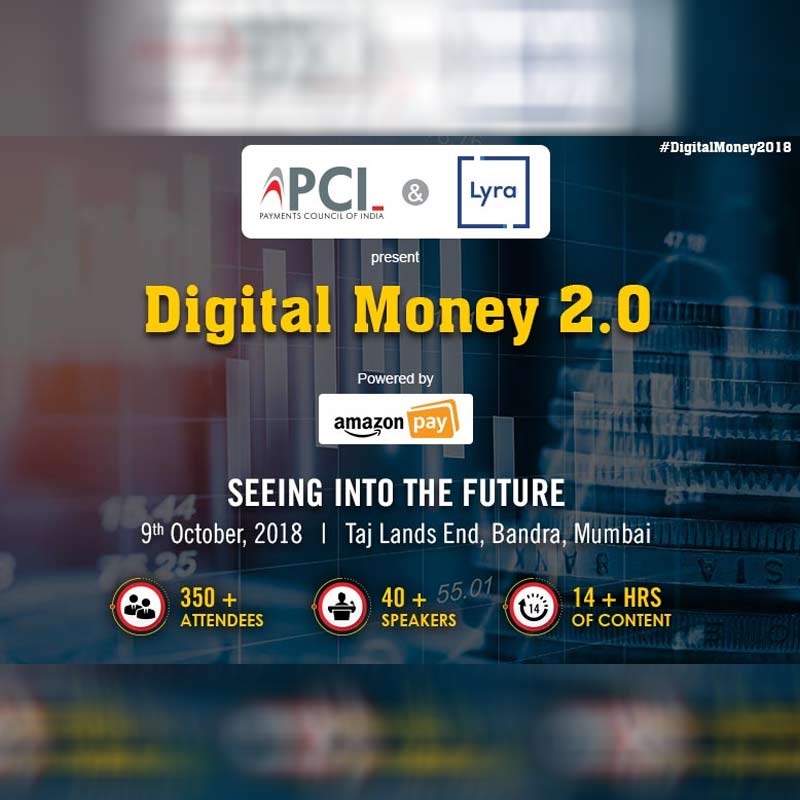
    Digital Money 2.0: Seeing into the future

    Payments Council of India – the apex body representing companies in the payments and settlement system in India, promotes the growth of the payments industry and supports the national goal of ‘Cash to Less Cash Society’ as well as ‘Growth of Financial Inclusion’ which is also the Vision Shared by the RBI and Government of India.
    It’s been 10 great years, as celebrated in the last edition, & now, PCI is back with the 11th edition of its annual conference – ‘Digital Money’: Seeing into the future. This conference aims to demystify, discover & deliberate upon the evolving trends and emerging technologies disrupting the global financial system and worldwide transactions.
    ‘Digital Money’ attendees will hear from leading world experts and innovators about – UPI & the entry of global players as well as the key factors for its success, Cross border remittances, Prepaid payment instruments, Merchant acquiring in India, Role of data in the payments industry, Digital payments and the E-tailer and the Roadmap to 30 billion digital payments in India.
    The conference, over the years, has been the largest annual gathering of digital payment players, enablers and supportive financial institutions in India which is focused on the multi-channel approach & other emerging trends instigating unified and seamless customer experience.

    When: 9th October 2018 – 9:00 am
    Where: Taj Lands End, Mumbai

    The conference will be attended by 500+ attendees from 250+ companies in the Digital Payment Industry, along with 40+ industry stalwarts as speakers.

    This year look forward to hear from a stellar list of Industry experts speak –

    • Shri Ganesh Kumar, Executive Director, RBI
    • Shri G Padmanabhan, Non-Executive Chairman, Bank of India
    • Mr. Dilip Asbe, MD & CEO, NPCI
    • Mr. Suresh Sethi, CEO, Indiapost Payments Bank
    • Mr. Kiran Vasireddy, COO, Paytm
    • Mr. Mahendra Nerurkar, GM- Payments, Amazon
    • Mr. Vishwas Patel, Director, Infibeam Avenues & Chairman, PCI
    • Mr. Sameer Nigam, Founder & CEO, PhonePe
    • Mr. Loney Antony, Director, Hitachi Payments, & Co-chairman, PCI

    Register today – Click here
     

  • Paytm appoints Ex- RBI deputy governor as advisor

    Paytm appoints Ex- RBI deputy governor as advisor

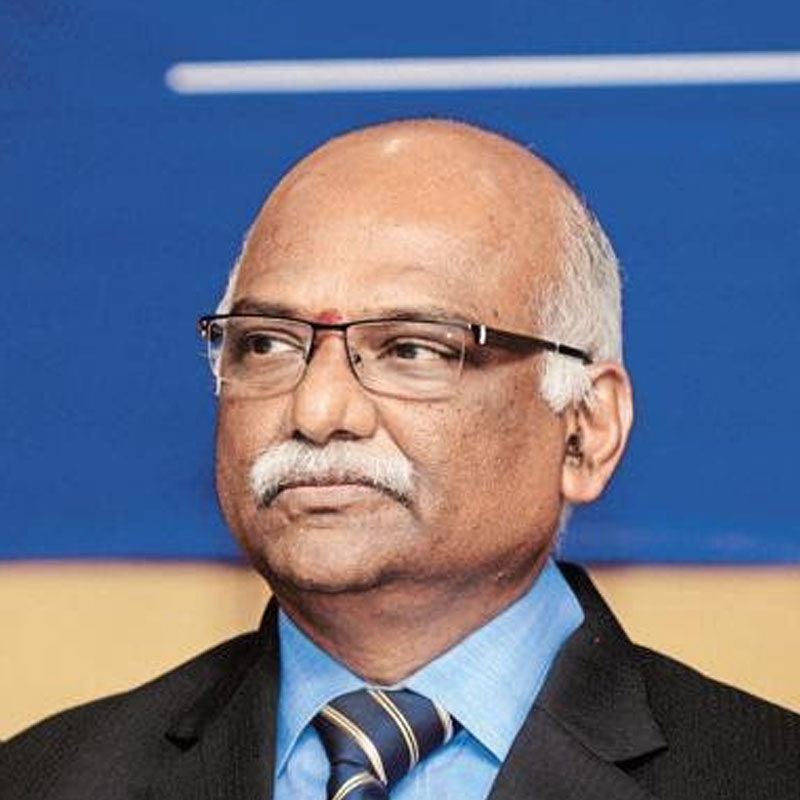
    MUMBAI: Indian e-commerce payment system and digital wallet company, Paytm has appointed former RBI deputy governor Rama Subramaniam Gandhi as an advisor to the company.

    In a blog post, the company said it would benefit from Gandhi’s knowledge and experience on payment systems, regulations, compliance and corporate governance. 

    Paytm founder and CEO Vijay Shekhar Sharma is excited about having Gandhi on board. He says, “Since the beginning of our journey, we have focused on building an organisation that has the culture and the resources of serving our customers responsibly. Mr. Gandhi joins our family, which now includes some of the most distinguished Indian and global leaders in the fields of finance, law, technology and business, all working together to help us achieve this goal.”

    Gandhi adds, “I am delighted to join Paytm as an advisor in its journey to bring digital and financial inclusion to half a billion Indians. I have dedicated my whole life to formulate policy and strengthen institutions in the financial services space. I will be happy to share my insights and guide Paytm in the creation of innovative financial services.”

    Before holding the position of the deputy governor, Gandhi worked with the central bank and was a member of the first Monetary Policy Committee. 

    He had a three-year secondment to the Securities and Exchange Board of India (SEBI) and has also been the head of two regional offices of the Reserve Bank. 

    Besides holding strategic roles in RBI, he had also piloted several innovative projects on IT, payment systems, financial literacy, financial inclusion and other developmental initiatives.

  • Ad agencies to be empanelled for RBI work

    Ad agencies to be empanelled for RBI work

    MUMBAI: The Reserve Bank of India (RBI) is planning to empanel advertising agencies for undertaking activities ranging from regular tender notices to full-fledged multimedia, multi- language ads across electronic and print media.

    The empanelled agencies would be conceptualising, designing and releasing commercials on television and radio and ads in newspapers, according to RBI’s Request for Proposal (RFP) for Empanelment of Advertising Agencies.

    The scope of work of the agencies would also cover production of TV spots/radio jingles, PTI reported. Translation / dubbing and adaptation of short films, TVCs radio spots and print advertisements into various India languages would also fall under the scope of work of the agencies.

    Detailing the process for assigning jobs, the document stated that the routine notice or tender type advertisement below Rs 1.5 million will be given to the empanelled agencies by rotation. For ads of between Rs 1.5 million and Rs 10 million, the work would be assigned after inviting bids.

  • GTPL Hathway share up as FII / FPI limit raised to 49 pc

    GTPL Hathway share up as FII / FPI limit raised to 49 pc

    MUMBAI: The share price of GTPL Hathway, a leading regional multi-system operator (MSO) which offers cable television and broadband services, rose 2.60 per cent to Rs 132 at 11:05am on the BSE after the central bank of India — RBI — raised foreign investment limit to 49 per cent from 24 per cent, earlier.

    The shares were listed on the stock exchanges on 4 July 2017, debuting on a flat note at Rs 170 compared with the IPO price of Rs 170. On a yearly basis, the price of GTPL Hathway has lost 23.46 per cent.

    The stock of GTPL Hathway, which recently pocketed Rs 480-mn Gujarat govt contracts, had touched a high of Rs 134 and a low of Rs 130.50 during the day. It was on 11 July that the stock climbed a record high of Rs 190.30 and hit a record low of Rs 126.60 on 24 August 2017.

    The stock had underperformed the market in the past month till 7 September 2017, falling 10.57 per cent when compared with 0.42 per cent overall decline in the Sensex.

    The Reserve Bank notified after market hours on 7 August 2017 that the Foreign Institutional Investors (FIIs)/Foreign Portfolios Investors (FPIs) investment limit under Portfolio Investment Scheme in GTPL Hathway has increased to 49 per cent of its paid-up capital.

    Recently, GTPL Hathway was awarded a work order by Gujarat Informatics Limited an estimated sum of Rs. 290 million for a five-year contract.  Additionally, it was awarded with a work order by the home department, government of Gujarat, worth Rs 190 million.

    ALSO READ :

    Restructuring brings Hathway to black in first quarter

    GTPL Hathway reports higher numbers and flat q-o-q ARPUs

    GTPL boosts channels & OTT with Harmonic, can deliver to 8 mn homes

  • Idea-Vodafone India merger creates leader with 42% market share

    MUMBAI: Britain’s Vodafone Group’s Indian subsidiary and Aditya Birla Group’s Idea Cellular, after eight months of discussion, have merged to create a new market leader better able to contest a brutal price war. The merger, expected to be completed in 2018, was necessitated due to the launch of Jio Infocomm that shook the Indian wireless telephony market with its low rates.

    Idea Cellular on Monday approved the merger with Vodafone Mobile Services Limited and Vodafone. According to a statement, promoters of Idea and Vodafone will have the right to nominate three directors each.

    The combined company would have almost 400 million customers, 35 per cent customer market share and 42 per cent revenue market share.

    According to reports, Idea Cellular will hold 25% stake in the merged company. Vodafone will hold 45.1 per cent stake, and will transfer 4.9 per cent stake to Idea founders. The merger will require regulatory approval.

    The equity value of the companies was estimated at Rs 40,000 crore each while the combined entity would have debt of around Rs 89,000 crore.

    In a BSE filing, Idea Celluar announced its approval of amalgamation of Vodafone India Ltd (VIL) and its wholly owned subsidiary Vodafone Mobile Services Limited (VMSL) with the company subject to receipt of necessary approvals of shareholders, creditors, SEBI, RBI and other governmental authorities.

    Idea release stated the proposed amalgamation may result in: Creation of the largest Indian telecom operator with widest mobile network in the country and pan India 3G/4G footprint. Sufficient spectrum to complete with major operators in the market while offering innovative priced mobile services to customers and acceleration of expansion of wireless broadband networks.

    “The combination of Vodafone India and Idea will create a new champion of Digital India founded with a long-term commitment and vision to bring world-class 4G networks to villages, towns and cities across India,” said Vodafone Group CEO Vittorio Colao.

  • Budget 2017: From highway to e-way media sector searches for sops

    Budget 2017: From highway to e-way media sector searches for sops

    MUMBAI: The Indian government today unveiled a roadmap for financial year 2017-18 that covers areas from “highways to e-ways” (PM Modi’s words while describing the Union Budget 2017) aimed at “strengthening the hands of the poor”, while looking at further easing doing business by abolishing Foreign Investment Promotion Board and hinting at a new FDI policy. However, for India’s media and entertainment sector, especially the broadcast and cable sector looking to reach the $ 100 million turnover mark, there wasn’t much to cheer about — unless an angel is hiding in the fine prints that are still being deciphered.

    Finance minister Arun Jaitley, while announcing the Budget, has brought in macro-level major financial reforms by slashing tax rates for middle level income groups and opening the FDI floodgates in favour of a rural economy.

    Jaitley’s budget focused on boosting infrastructure and lifting up rural incomes besides bringing in reforms in the financial sector such as the abolition of the FIPB to enable a new policy for FDI. The Indian Railways Catering and Tourism Corporation (IRCTC), one of the world’s biggest e-commerce companies, will be now be listed, Jaitley said, aside from sending out an indirect warning to economic offenders such as Lalit Modi and Vijay Mallya that for for absconders new legislation would be drafted soon.

    But a big thumbs up to the government for allocating Rs. 10,000 crore (Rs 100,000 million) to boost rural fibre optics network to give further leg up to all round digitisation.

    While the fine prints are still being read, some highlights are as follows:

    # The FIPB will be abolished. Further liberalisation in the FDI policy would be done in the next few days. (Star Den, etc to benefit)

    # SANKALP – Rs 4000 crore allotted for market-oriented training. (At least 4 million youth will be provided market-relevant training under Sankalp programme)

    # Cashback scheme – Petrol pumps card payments, launch two more schemes for use of BHIM app

    # In yet another boost for digitisation, the government has removed service tax on e-tickets .

    #IRCTC to be listed.

    # The government proposes to create a payment regulatory board at RBI. (The proposal assumes significance as there is currently no regulator for FinTech companies such as Paytm in India.)

    # Small and Medium enterprises (MSME) to be encouraged. Income tax reduced to 25% from 30% if turnover is up to Rs 50 crore or Rs 500 million.

    # Startups to pay tax on profits for three out of seven years, increased from three out of five years.

    # Under Bharat Net, optic fibre cable has been laid out In 1,55,000 km. (Recent spectrum auctions have removed spectrum scarcity.) Bharat Net allocation at Rs 10,000 crore.

  • Budget 2017: From highway to e-way media sector searches for sops

    Budget 2017: From highway to e-way media sector searches for sops

    MUMBAI: The Indian government today unveiled a roadmap for financial year 2017-18 that covers areas from “highways to e-ways” (PM Modi’s words while describing the Union Budget 2017) aimed at “strengthening the hands of the poor”, while looking at further easing doing business by abolishing Foreign Investment Promotion Board and hinting at a new FDI policy. However, for India’s media and entertainment sector, especially the broadcast and cable sector looking to reach the $ 100 million turnover mark, there wasn’t much to cheer about — unless an angel is hiding in the fine prints that are still being deciphered.

    Finance minister Arun Jaitley, while announcing the Budget, has brought in macro-level major financial reforms by slashing tax rates for middle level income groups and opening the FDI floodgates in favour of a rural economy.

    Jaitley’s budget focused on boosting infrastructure and lifting up rural incomes besides bringing in reforms in the financial sector such as the abolition of the FIPB to enable a new policy for FDI. The Indian Railways Catering and Tourism Corporation (IRCTC), one of the world’s biggest e-commerce companies, will be now be listed, Jaitley said, aside from sending out an indirect warning to economic offenders such as Lalit Modi and Vijay Mallya that for for absconders new legislation would be drafted soon.

    But a big thumbs up to the government for allocating Rs. 10,000 crore (Rs 100,000 million) to boost rural fibre optics network to give further leg up to all round digitisation.

    While the fine prints are still being read, some highlights are as follows:

    # The FIPB will be abolished. Further liberalisation in the FDI policy would be done in the next few days. (Star Den, etc to benefit)

    # SANKALP – Rs 4000 crore allotted for market-oriented training. (At least 4 million youth will be provided market-relevant training under Sankalp programme)

    # Cashback scheme – Petrol pumps card payments, launch two more schemes for use of BHIM app

    # In yet another boost for digitisation, the government has removed service tax on e-tickets .

    #IRCTC to be listed.

    # The government proposes to create a payment regulatory board at RBI. (The proposal assumes significance as there is currently no regulator for FinTech companies such as Paytm in India.)

    # Small and Medium enterprises (MSME) to be encouraged. Income tax reduced to 25% from 30% if turnover is up to Rs 50 crore or Rs 500 million.

    # Startups to pay tax on profits for three out of seven years, increased from three out of five years.

    # Under Bharat Net, optic fibre cable has been laid out In 1,55,000 km. (Recent spectrum auctions have removed spectrum scarcity.) Bharat Net allocation at Rs 10,000 crore.

  • PayU India gets approval to function as BBPU under the Bharat Bill Payment System (BBPS)

    PayU India gets approval to function as BBPU under the Bharat Bill Payment System (BBPS)

    MUMBAI: The Reserve Bank of India has given PayU in-principal approval to set up and operate Bharat Bill Payment System (BBPS).  PayU has been listed amongst the first non-bank entity that has been grated this license out of the total of 62 non-bank entities that applied for the said license.  BBPS is an is an integrated bill payment system in India, offering interoperable and accessible bill payment service to customers through a network of agents, enabling multiple payment modes, and providing instant confirmation of payment. Consumers will be the ones who will get the maximum benefit out of this as they will be able to pay their bills anytime and anywhere in India.

    Underlining the significance of the BBPS for the payments ecosystem in India, PayU India co founder and COO Shailaz Nag  commented, “PayU is very hopeful about the prospects of BBPS. With BBPS, customers would be presented with the opportunity of easy bill payments for almost all Billers in the country. PayU would ensure that the most convenient and best in class user experience is delivered to its customers, thus encouraging more people to transact online. With the provisions of BBPS, PayU believes more serious players will apply for authorization to work as BBPOU with RBI. Further admittance of prominent industry players in the business will only enhance the country’s payment ecosystem”.  

    The BBPS license gives a big boost to PayU India’s efforts to create a meaningful difference in the payment ecosystem and strengthen its position as the leader in the utility bill payments segment. The idea is to offer efficient and cost-effective alternative to the existing payment systems and enhance consumer confidence and experience. PayU’s seamless technology coupled with the recent BBPS license will help PayU India to get one step closer to achieve its mission of “Simplifying payments and financial services for everyone”.

  • PayU India gets approval to function as BBPU under the Bharat Bill Payment System (BBPS)

    PayU India gets approval to function as BBPU under the Bharat Bill Payment System (BBPS)

    MUMBAI: The Reserve Bank of India has given PayU in-principal approval to set up and operate Bharat Bill Payment System (BBPS).  PayU has been listed amongst the first non-bank entity that has been grated this license out of the total of 62 non-bank entities that applied for the said license.  BBPS is an is an integrated bill payment system in India, offering interoperable and accessible bill payment service to customers through a network of agents, enabling multiple payment modes, and providing instant confirmation of payment. Consumers will be the ones who will get the maximum benefit out of this as they will be able to pay their bills anytime and anywhere in India.

    Underlining the significance of the BBPS for the payments ecosystem in India, PayU India co founder and COO Shailaz Nag  commented, “PayU is very hopeful about the prospects of BBPS. With BBPS, customers would be presented with the opportunity of easy bill payments for almost all Billers in the country. PayU would ensure that the most convenient and best in class user experience is delivered to its customers, thus encouraging more people to transact online. With the provisions of BBPS, PayU believes more serious players will apply for authorization to work as BBPOU with RBI. Further admittance of prominent industry players in the business will only enhance the country’s payment ecosystem”.  

    The BBPS license gives a big boost to PayU India’s efforts to create a meaningful difference in the payment ecosystem and strengthen its position as the leader in the utility bill payments segment. The idea is to offer efficient and cost-effective alternative to the existing payment systems and enhance consumer confidence and experience. PayU’s seamless technology coupled with the recent BBPS license will help PayU India to get one step closer to achieve its mission of “Simplifying payments and financial services for everyone”.

  • Den Network gets RBI nod for increase in FDI to 74%

    Den Network gets RBI nod for increase in FDI to 74%

    BENGALURU: After receiving Foreign Investment Promotion Board’s (FIPB) permission to increase its foreign direct investment (FDI) limit from the existing 49 per cent to 74 per cent a few months ago, Den Network Limited has now received approval for the same from the Reserve Bank of India (RBI).


    A letter from Den Network’s company secretary Jatin Mahajan to the Bombay Stock Exchange (BSE) and the National Stock Exchange (NSE) says that the company has received approval from the RBI for increase in FDI limit beyond 49 per cent and up-to 74 per cent by Foreign Institutional Investors (FII), Non Resident Indians (NRI), Foreign Portfolio Investors (FPI) and other eligible foreign investors.


    The approval is subject to compliance Regulation 5(2) of FEMA Notification No 20/2000 RBI dated 3 May, 2000 (as amended time to time) issued under FEMA 1999 and conditions specified in FDI Policy circular dated 12 May, 2015.


    As was reported earlier by Indiantelevision.com, with this, the company which is currently building its broadband base and also working towards digitisation in phase III and IV areas, is looking at attracting overseas capital into the company.


    It can be noted that Den Networks had sought for increase in FDI limit beyond 49 per cent and up to 74 per cent by FIIs, NRIs, FPIs, and other eligible foreign investors through route of secondary market and / or open market purchase.


    Earlier in March this year, the Board of Directors of Den Networks had approved this proposal to increase foreign investment limit. The decision was subject to shareholder approval (through postal ballot), FIPB nod and adherence to all other statutory requirements.


    Currently, FIIs hold 22.79 per cent stake in Den Networks.