Tag: Ravish Kumar

  • Colors makes push into Bangla, Kannada with new shows

    Colors makes push into Bangla, Kannada with new shows

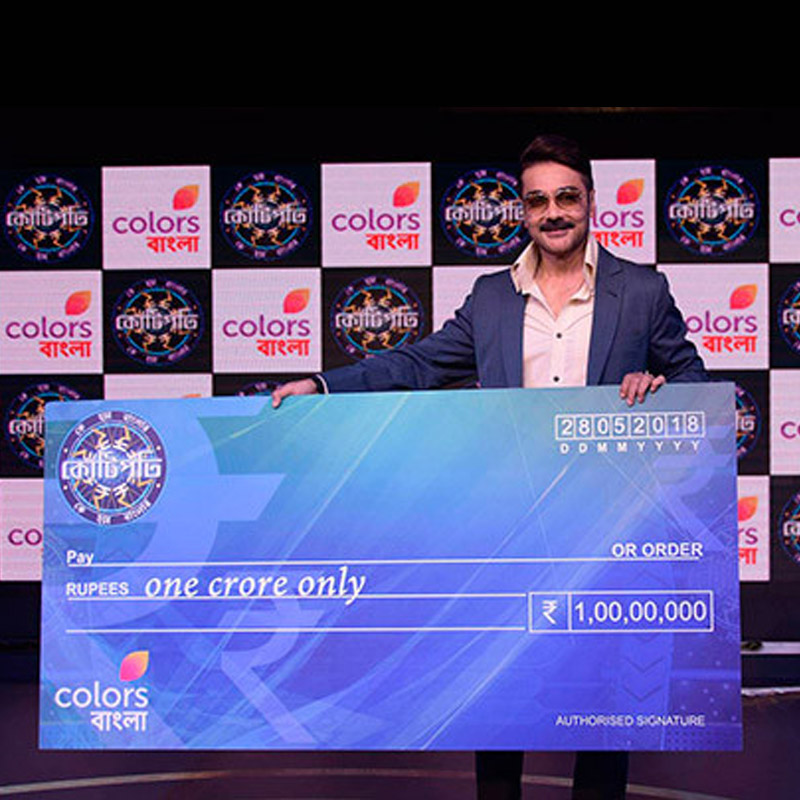
    MUMBAI: The Mukesh Ambani majority owned Viacom18 is firing ahead on two regional markets: Kannada and Bangla. Its flanking Kannada GEC Colors Super is all charged up to roll out eight show come 11 June, while Colors Bangla is unveiling a new season of the Who Wants to be a Millionaire format – Ke Hobe Banglar Kotipoti.

    The reason: the channel’s management is hoping to build up on the momentum the two have been gathering. While Colors Super has grown by 280 per cent in terms of reach and viewership in just the past year, Colors Bangla has seen its viewership double while its reach has gone up from 28 per cent to 40 per cent and its share has leapfrogged to eight per cent. So much so that it ranks third in the regional pecking order after Colors Kannada and Colors Marathi for Viacom18.

    “We are the one who understood the Kannada viewers wonderfully and understood what they wanted and we ran out of slots for our ideas. Because our existing shows are doing so good in a way and we have a couple of other plans so we needed another platform to execute them,” says Viacom 18 regional entertainment head Ravish Kumar. “The top shows were rating ninth, tenth and eleventh and there is lot of length left in the story, so I had no choice other than launching another channel. You must have seen the same network having several channels of kids, music, GEC but you have not seen a network having two channels of the same genre in the regional space.”

    The Colors Super offering appears to be a bit of a smorgasbord, spanning genres: socio mytho, family drama, romance, sitcom (which was an ETV Kannada property called Papa Pandu), a legal-based show with CLF for weekdays and two singing reality shows on weekends. These shows will be followed by Bigg Boss Kannada which will launch in September – October. A point to note is that Bigg Boss Kannada, helped polevault Colors Super to the No 2 spot in the non-fiction genre.

    A specially created promo ‘June Tingalu Super Tingalu’ has been hitting the channel for the past few days.

    Adds Ravish: “We built up a certain viewership base and we wanted to grow that even further and each one of these shows has helped us to do that. We could have continued with the current line-up. But since we at Colors feel that June is a month of change, we thought of coming up with new shows  which I hope people will like more.”

    With two years being crossed for Colors Super, the channel felt the need for more powerful narration and even giving a break to newcomers. “We liked their talent and decided to give them a break. I hope they will do a good job,” says Kumar. Among the old ones are Majaa Bharat and Majaa Talkies with the latter being produced by Kannada superstar Srujan Lokesh. The packaging has been entirely done by Colors in-house team.

    The Bengali version of KBC is produced by BIG Synergy with the usual fanfare of a quiz show. The Bangla version will premiere on 16 July 2018, every Monday to Friday at 9 pm. Taking the reigns as the host will be Bengali cinema stalwart Prosenjit Chatterjee.

    According to Kumar, the regional entertainment market is extremely dynamic in nature and the viewer appetite for quality content is fast increasing. He feels that Chatterjee is the host with the right mix of intellectual appeal and grandeur.

    Indiantelevision.com’s Poulami Sengupta spoke to Ravish Kumar on the sidelines of the show launch about the network’s plans to expand the Bangla and Kannada markets. Excerpts from the interview

    How has Colors’ distribution been in the Bengal market?

    I think our distribution is good. We are at par with other channels. What we really need to overdrive is the sense of excitement from the brands. This is what we are trying to do with KBC. Over time everyone starts to get very comfortable with their choices- the moment something comes it needs to be different from what is already there in the market. We come from a legacy of ETV, we work hard to modernise it across all our markets to make it contemporary and in line with the footprint of Colors.

    Who were the sponsors on board?

    The sponsors are yet to be decided. The show is still about 45 days away. So while a lot of conversations are going on, we would be finalising the sponsors in the next 15 to 20 days.

    Is the format going to change this time for KBC Bangla?

    KBC is the property of Big Synergy. So I think the format will follow the course. The difference comes in when you have different hosts, participants, questions and the emotions behind that.

    We will continue to look at the market where we were not present and we will continue to grow in a more meaningful way in the market where we are already present.

    public://ravisg.jpg
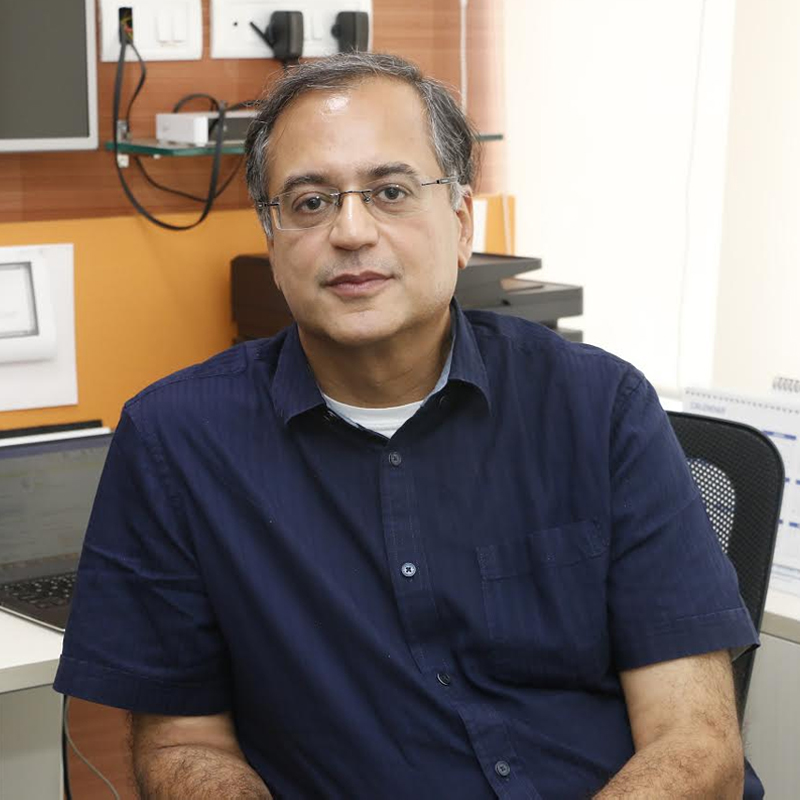
    Viacom18 head of regional entertainment Ravish Kumar

    Why Prosenjit Chatterjee as a host?

    So, when we thought of a host we thought of someone who would embody excellence, who people could look up to but at the same time not being intimidated by him. Chatterjee is a fabulous host- he is highly regarded in this market. He remakes himself with every grooming and so have a huge number of fans across Bengal.

    What are the marketing strategies?

    For all the big ticket shows we have the 360 degree campaign. So we are promoting through print ads, billboards, radio, cross channel promos and also the ground activations. In our case, since we have the call for the entries, so we have already started with the marketing. We will have a nice lead up to the show breaking. We have got about 45 days and we will ensure that all touch points of the consumers get powered. So it’s a massive campaign on the backend. Additionally, we also have the calls for entries happening, which, itself is a marketing campaign.

    How has KBC’s response been from all the Bengali speaking people across India?

    We have got a lot of response from Bengalis across India. But the counting is still on as the phone lines are open till today 7.30 pm. So, only after this, we will get the final answer. The promo will go live tonight at 8 pm and now it’s open for entries. We are already getting 14,000 to 15,000 entries a day. The promo will only be available on Colors Bangla but the news is going to cut across through all mediums.

    The Bengali GEC market is worth more than Rs 800 crore. I am very fond of this market. I think the talent in this market is incredible. This market has evolved a lot. There was a time when this market didn’t have much to offer and that changed when more broadcasters came and with them came a variety of genres. The shows are getting bigger and better and the kind of stories and concepts that are coming these days are incredible. This market is absolutely second to none and there are shows from this market that have been remade in Hindi and other languages.

    What are your plans for regional expansion?

    Right now we have two things in our mind. One is we wanted to expand our footprint market where we were very strong, so in Kannada we launched Colors Super. Then we wanted to do something for that market where we have not set our footprint, so we launched Colors Tamil. On the ongoing process, we continue to follow both these strategies- we will continue to look at the market where we were not present and we will continue to grow in a more meaningful way in the market where we are already present.

    What is Colors Bangla’s programming strategy for the upcoming festive season?

    So we include festive season as a part of our programming line-up. We will have some specials, we will also have events, and we will also have a lot of ground activation. In West Bengal, throughout the year many festivals are celebrated. In Bengali, there is a famous proverb ‘baro mashe tero parbon’ which means thirteen festivals in twelve months. And we all know that Durga Puja is the most significant of all celebrations in Bengal. Then they have the Poush Mela in December. We will cater to that in our own way- we will have special episodes where that particular festival will get reflected. We also do lots of events and we are planning to do this year as well.

    How are you planning to give a tough competition to your competitor channels in the Bengali market?

    We have already started giving them a tough competition to them by launching more and more non-fiction shows. If you look at Zee, they tend to follow a certain pattern in terms of non –fiction and they never change their formats and Star Jalsha has stopped doing non-fiction altogether. So I think non-fiction is a genre which a whole family can watch and one should keep on introducing new formats of non-fiction shows.

    Who is the target audience for Ke Hobe Banglar Kotipoti?

    Our audience is, of course, the families and it’s a format where everyone can sit together and watch or play along as well.
  • ‘Bigg Boss’ holds appeal across languages: Viacom18’s Ravish Kumar

    ‘Bigg Boss’ holds appeal across languages: Viacom18’s Ravish Kumar

    MUMBAI: Viacom18’s punt on Bigg Boss, the biggest reality show in the country, has paid off in a big way over the last ten years with an astronomical number of viewers on TV as well as the company’s digital platform Voot. After entertaining the Hindi masses, Colors launched the show in Kannada, Bengali and Marathi in order to garner regional audiences.

    “We were the first to pioneer Bigg Boss in Kannada and that expanded the franchise beyond. At that time, it was huge because we didn’t know how it would work and it was a big chunk of the budget for a market that has always shown an appetite for reality shows,” Viacom18 head of regional entertainment Ravish Kumar told Indiantelevision.com.

    While Bigg Boss Hindi usually has an hour-long episode, some of the regional slots stretch as much as an hour and a half. “The beauty of the show is, no matter what language you do it in, the moment you put new people in the house, it becomes an entirely new show,” he said.

    Colors, according to Kumar, shares a great overall working relationship with Endemol, the producer of the show, although, at times, there are creative differences. The duo has utilised its respective experience in markets effectively. “They were good in listening to us especially in the regional space, where their expertise was low and together we have built that. They, on the other hand, have a lot of learning from the other markets internationally,” he added.

    With over 331 million viewers hooked on to the show across India, the first ever edition of Bigg Boss in Marathi premiered with a grand launch event on 15 April at 7 pm. The show, anchored by actor-director-producer Mahesh Manjrekar has Dabur Red Paste as presenting sponsor.

    Prior to joining Viacom18 in 2011, Kumar was the executive VP and business head – regional channels at Star TV and a global category director at Reckitt Benckiser. He brings more than 23 years of experience in building brands, driving innovation, creating high-performance teams and delivering superlative business results across leading Fortune 500 companies in the US, the UK and India.

    In the latest episode of Indiantelevision.com’s Executive Dossier, Viacom18 head of regional entertainment Ravish Kumar spoke about the show’s success in Kannada, his experience of working with Endemol Shine and plans for other languages.

    Also Read :

    No reason for GECs to panic as IPL grabs eyeballs

    The era of dance reality shows

    Owning IP not priority for Big Synergy

  • Will increase ads after sampling phase of Colors Tamil: Ravish Kumar

    Will increase ads after sampling phase of Colors Tamil: Ravish Kumar

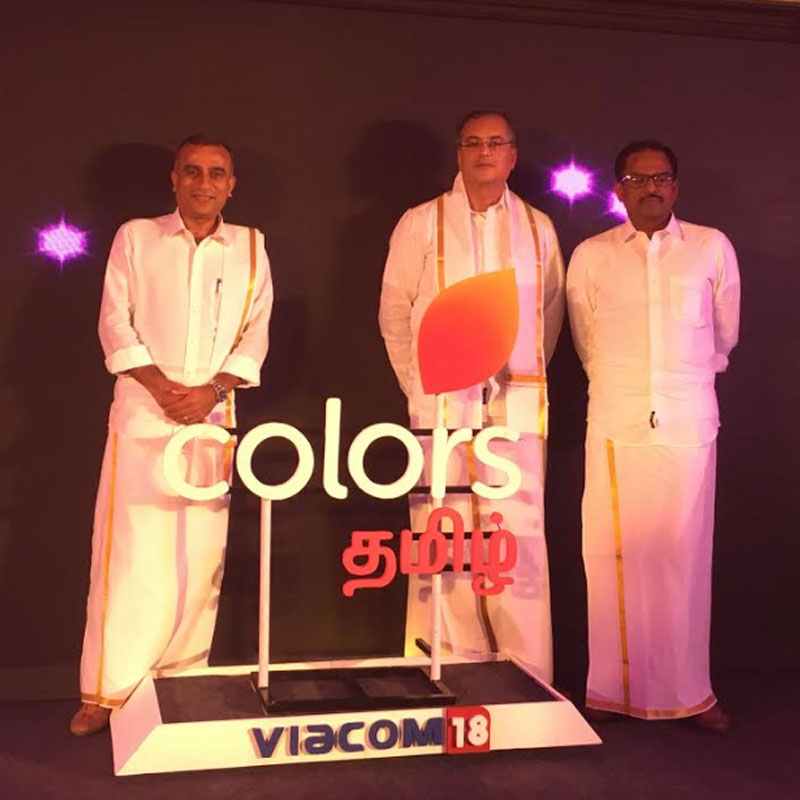
    MUMBAI: Viacom18 has forayed into yet another regional language with the launch of Colors Tamil on 19 February 2018. Within 10 days, the network claims to have garnered positive response from the viewers on social media, advertisers and the agencies.

    Viacom18 head-regional entertainment Ravish Kumar, in an interaction with Indiantelevision.com, says that among Kannada, Marathi, Gujarati, Bengali and Odia, Kannada GEC market has more than 30 per cent share of the market share.

    Viacom18 already has five general entertainment channels in regional languages under the name Colors, Tamil is the another language that the network is betting on with crossed fingers. The region has a strong TV broadcast market, one of the biggest in the country.

    Edited excerpts:

    How has the response been to Colors Tamil?

    While it’s early in the day to comment on the feedback, the response from the viewers on social media, advertisers, agencies and the industry per se has been very positive and encouraging. People are appreciating the strong connect, the fabulous production values, the choice of stories and the manner of storytelling. Viewers have gone overboard, online, advising Arya on his endeavor to choose his soulmate. We are keeping our fingers crossed and hoping for the best.

    Are you looking at a phased launch of new shows?

    We have launched three and a half hours of weekday programming and two hours of weekend programming and we intend to increase those hours basis viewer reaction.

    What has been the advertisers’ response post the channel launch?

    We have Nippon Paints and India Gate Basmati Rice on Arya’s show (Enga Veetu Mapilla). Nippon Paints has come onboard as channel partners as well. Plenty of advertisers, both national and retail, have shown interest in partnering with us. Currently, we want to optimise the sampling of the channel amongst the viewers and hence are onboarding advertisers in a phased manner. Once we move past the initial launch phase, you will see a lot more ads on the channel.

    Is Colors Tamil a part of the base pack of all the DTH operators?

    Colors Tamil is free for an introductory period. The channel is widely distributed across key players both on DTH platforms as well as cable operators.

    How different is your content compared to the other players in the market?

    It’s different on two levels – both at the conceptual and the production levels. We are not only doing shows which are engaging and socially relevant but also bringing cinematic value on television through Alexa camera, top quality sound, enhanced production value and real locations resulting in an unprecedented never-seen-before look and feel.

    Of all your regional channels, which language has the highest viewership? 

    We are a strong No. 1 player in the Kannada GEC market and have more than 30 per cent share of the market pie. The huge surge of advertisers and love from the viewers prompted us to launch a second GEC – Colors SUPER, which is one of the fastest growing and already counted in the top tier channels.

    How big is the overall regional GEC market according to you? 

    The overall regional GEC ad market is at Rs 6100 crore currently.

    According to BARC data, the viewership of Marathi GECs witnessed a spurt in the latter half of 2017. Do you think this phenomenon reflects the larger trend of viewers shifting to regional GECs?

    India is an ‘and’ market. What we are seeing is an increase in the overall television viewership and this growth is reflected in the increasing affinity to local / regional content. The regional channels have been producing a lot of quality content and hence are attracting a good number of new viewers. Colors Marathi, for instance, introduced quite a few good concepts last year like Ghadge & Suun, Sur nava dhyaas nava, Tumcha saathi kaypan, Radha Prem Rangi Rangli etc. which saw a jump in viewership for us.

    What genre of programming is liked by the Tamil audience?

    The Tamil viewers are progressive. They look forward to content that resonate with their culture and ethos. They look forward to quality content, something that reflects their strong connect with their land as well as allows them to expand their horizons.

    What do you make of Hindi shows being dubbed in regional languages and vice-versa?

    In our experience, good content always cuts across markets and languages. If the story has local connect or viewers identify with the content, dubbing does work. Viewers are waiting to discover good content. Great stories will work anywhere in the world. Our endeavor is to provide the viewers larger than life content, whether its originally produced or dubbed. Dubbed South Indian movies work big on our Hindi movie channels. Likewise even good Hindi shows dubbed in South Indian languages have great potential to resonate with the viewers. Our ambition is to make a show in Tamil that will go global.

    Is the dubbing and subtitling cost significant? 

    In order to do quality work, you have to pay a premium. As I’ve said before, some stories are universal and can connect with viewers across languages. The advantage of having a network play is that, based on regional synergies, we can cross-pollinate content. And of-course, the dubbing quality has to be in sync with the premium production quality that we offer.

    Also read:

    Viacom18 rolls up its sleeves for Tamil market share

    Viacom18 widens regional reach, to launch Colors Tamil in Q4

  • Viacom18 rolls up its sleeves for Tamil market share

    Viacom18 rolls up its sleeves for Tamil market share

    MUMBAI: Viacom18 has set for itself the task of taking a big bite out of the Tamil general entertainment channel (GEC) market, a stronghold of long-reigning Sun Network. The network is all set to launch its channel Colors Tamil into a large and important entertainment market of India. 

    Scheduled to go on air on 19 February 2018 in Tamil Nadu, the channel will be the conglomerate’s first foray into the state. Viacom18 already operates general entertainment channels in five regional languages, under the brand name Colors Kannada, Marathi, Gujarati, Bengali and Odia.

    Despite big players emptying their coffers in the Southern Indian market, the region has been strongly captivated by the Sun Network.

    Speaking at the launch, Viacom18 Group CEO Sudhanshu Vats says, “After spreading our wings across seven languages, India’s flagship general entertainment brand – Colors is entering the lucrative, fast growing and discerning Tamil entertainment market in line with our stated strategy to drive regional growth aggressively. Our proven ability to break the clutter and disrupt the status quo will help us tell endearing stories to over 20 million TV households in the state and a large global audience in the coming months and years.”

    Tamil Nadu is the country’s sixth most populous state as per census 2011 and is among the bigger television content consuming markets, with a per capita daily viewership of 3 hours which is more than that of the Hindi speaking markets which is 2.5 hours. With an estimated base of 1150 advertisers, Tamil Nadu is among the more lucrative broadcast entertainment markets in India. 

    In order to cater to the market, Viacom18 head of regional entertainment Ravish Kumar reveals the company’s biggest drive is to deliver new and never before seen content to the Tamil audience. “We have invested big in conceptualising programs that are inspiring, innovative, experimental and technically sound. With 22 hours of original content at launch, we are more than confident of Colors Tamil becoming a blockbuster hit here,” he says. 

    With a robust content strategy developed after thoroughly studying the consumer patterns of the region, Colors Tamil offers several original shows in both the fiction and the non-fiction categories. Foraying into a market with existing predominant players, the channel aims at bringing together a range of shows spanning a diverse variety of entertainment genres catering to all demographics.

    Colors Tamil business head Anup Chandrasekharan adds,“Idhu Namma Oru Coloru… the Colors of our land. Our tagline encapsulates our vision of Colors Tamil. It is a platform that aims to entertain, enrich and engage individuals across the length and breadth of the state. Our study of the existing broadcast entertainment market suggests that there is a need gap between what the audience wants to watch and the kind of content that is available to them. Therefore, our focus is on content that is differentiated, thought provoking and socially conscious. Colors Tamil is a promise of optimism, celebration and hope.”

    The channel will offer a range of fiction and non-fiction programs spanning from family drama, reality TV, comedy to fantasy to name a few. The four original shows of the channel will set new standards in the industry with its distinct content and sound technology. The network will also remake the famous show Naaagin from the Hindi GEC Colors for the new Colors Tamil. Naagin has been a huge hit property of the network.

    At launch, Colors Tamil will be available in all leading cable networks catering to an estimated 3.5 million homes in Greater Chennai through SCV, TCCL among others and 11 million homes in the rest of Tamil Nadu through Tamil Nadu Arasu Corporation. 

    Furthermore, the channel will be available on all DTH platforms including Sun Direct, Tata Sky, Airtel, Dish TV & Videocon d2h reaching out to 5.5 million households. Additionally, the entire content library of Colors Tamil will also be available digitally on the network’s OTT platform – Voot.

    As part of its fiction lineup, the channel has curated three striking shows that portray strong women protagonists breaking the shackles of the society. Shot in native locations of Tamil Nadu with top-notch equipment, the shows are set to offer a movie-like experience to the viewers. 

    Offering a refreshing break from the common soap operas, Velunachi is an inspirational story of young girl who transforms herself into a strong woman carrying her father’s lineage in Silambattam. 

    Sivagami show is a transforming tale of courage of a young woman tackling conflicts in society to bring up her daughter as a successful IPS officer. The story is set in rural Tamil Nadu with nativity and rustic aims to create a positive change in mindset among people. 

    Another show, Perazhagi, is an uplifting drama that breaks the stereotype around skin colour featuring a small girl who fights against all odds to become a celebrity.

    Created as the flagship show of Colors Tamil, the reality show Enge Veetu Maapilai will feature the hunt for the ideal match for brand ambassador & Kollywood superstar Arya. Spanning over 40 episodes, the show will telecast the search for the heartthrob’s perfect match. 

    Catering to the young ones, Colors Super Kids is a one of a kind talent show for children, offering them an equal and well-deserved platform to showcase their talents without the concept of competing against each other.

    public://TAMIL.jpg


    Also Read:

    Viacom18 widens regional reach, to launch Colors Tamil in Q4

    TV18 to increase Viacom18 stake to 51%

    Viacom reports lower revenue for Q1 2018

  • …and journalism just happened to Bhupendra Chaubey

    …and journalism just happened to Bhupendra Chaubey

    Sometimes the best things in life which make you stand out are unplanned. Mapping his way from a postgraduate in films to senior journalist in CNN-News18 is Bhupendra Chaubey. Set out to become a filmmaker in life, journalism just happened to him. Being good at theatre, public speaking, essay-writing and elocution, etc, cinema is something that still excites him.

    The Delhi-based graduate heard about Dr Prannoy Roy looking for bilingual people to come on board. Although not too excited by the news to boost his friend’s confidence who was applying for a job at NDTV, Chaubey went along and dropped his CV as well.

    As they did not know anyone working there, the duo randomly dropped their CVs a couple of times at NDTV and forgot about it.  After a few days, not the other guy but Chaubey received a call from the HR for a meeting scheduled with Dr Roy. Declining to meet would have looked mean, and so Chaubey decided to meet him just to convey his regards. The co-founder of NDTV, after going through Chaubey’s CV, immediately offered him a job right there. But, Delhi was not the place where this young budding journalist’s heart was. He wanted to work in Mumbai.

    Bhupendra Chaubey’s resume

    Chaubey has been a TV journalist since 2000, when he started his career with NDTV. In 2005, he left NDTV and was a part of the team that started CNN IBN. As a political journalist, he has travelled the length and breadth of the country and has covered three general elections and assembly elections in a majority of Indian states.

    A graduate in Mathematics and a postgraduate in films, Chaubey has been among the finest political journalists of his generation. He has that unique ability to grasp things at a micro level, and then present them with a macro-level understanding. He is amongst those journalists who depend more on (political) awareness on the ground supplementing it with academic awareness of issues that confront the nation.

    Chaubey moved up the ladder by becoming the executive editor of CNN News18. Today, he hosts the prime-time broadcast Big5 at 10pm. He also hosts a weekend interview show Hot Seat where he puts tough questions to key newsmakers and regularly writes columns for various English and Hindi newspapers, magazines and digital media. He lives in the national capital with his wife and two children.

    Chaubey till date remembers what Dr Roy told him that day: “I think I am seeing a journalist in you. You should give it a shot. If you think you can’t fit in, there is always an option to leave”.

    Thus started his journey with New Delhi Television. One thing led to the next which caught Chaubey’s interest and there was no stopping, then. Dating a girl then who is now his wife, going to Mumbai was still on the cards. “Working with NDTV was phenomenal and an enriching experience. Imagine a newsroom working alongside Rajdeep Sardesai, Barkha Dutt and Arnab Goswami under one roof. Today, they all are in different companies but I have learnt a lot from them,” shares Chaubey.

    Chaubey preferred putting himself as the third generation of TV journalists in India considering Dr Roy and Vinod Dua as the first generation, and Rajdeep, Barkha, Arnab and Ravish as the second generation. “The beauty of entering a different profession is that you start as a novice. As I did not know what was coming my way, each day was a new day. Barkha was an outstanding scriptwriter, and I also learnt a lot about storytelling formats from her. Arnab was a great political mind; all the conversations with him were enriching. Rajdeep was a big superstar even in those days.”

    Remembering his tough days and working in various shifts, the curious reporter credits three people in his life. His wife, who knew a bit about journalism, the one who trained him to think in 10 different ways. “In school, you debate at an elementary level. But, the ability to speak on a topic in multiple ways is something I learnt from her. (The second) Prannoy, the head of NDTV, was my ideal, but I made it a point to hang around Rajdeep (Sardesai) to see what he was doing”. Rajdeep handheld Chaubey and was always a dear friend and editor to him.

    Mentioning the time of during the Coffingate, the then defence minister George Fernandes was the main target of the critics accused in supplying coffins to the Indian army jawans. “One fine afternoon, on a weekday, as I was climbing down the stairs of NDTV office, Sardesai was seated in his car heading to some place”. He asked Chaubey to join him. In the next few minutes, they were right in front of Fernandes’s house opposite to Arun Jaitley’s place without any camera. Sardesai, being a star at that time, the duo was allowed to enter the minister’s house. Fernandes was not giving interviews to anybody because of the heat around the allegations. Sardesai, positioning himself completely on his side by saying a few things about Fernandes which made him feel very comfortable, sectretly messaged a cameraman. While, he was having the conversation with Fernandes, the man with a single camera entered. Sardesai convinced Fernandes to be patient with only five questions and got a 25-minute interview with him. “Rajdeep was sitting behind the camera. So, after George answered his last question, the cameraman was asked to focus only on Rajdeep and he repeated the questions which he had put to Fernandes. He was blessed with a photographic memory. That was my first encounter wherein I learnt how to convert a single cam entity to two cam entity”.

    “He has always motivated and helped me. There is a certain kind of bond and friendship that I have with him. He made me understand the nuances of journalism. That is why when he left NDTV, I too left.”

    “Bhupendra is a dynamic and bright journalist. I wish him all the best for whatever he does in future,” says Sardesai.

    Right after that Arnab Goswami made an exit from NDTV. “Arnab was very keen on me working with him. But, I joined Rajdeep. So, for some time, he was not happy with it.”

    “Now the person who is really helping me and encouraging me to create, enhance and carve a niche for myself is Rahul Joshi. He is an absolutely great guy to work with completely different from any TV editor. I am enjoying working with him.”

    With Google not being efficient in those days, on several occasions, Chaubey has worked under pressure. Not knowing where political parties office were, he used to often dial AskMe service at that time to figure out addresses. It has led him to several wrong addresses, nonetheless. “Pressure and dilemma are there in every work life, every profession, and journalism is no different. The only point is that journalism allows you to take decisions completely on your own. What you do in your journalistic career, only you are accountable for that.  While it is a team game, it is often enormously an individualistic game where it enables you to own your individual skills”.

    One crazy experience that Chaubey cites during his tenure with NDTV was back in 2003 when Uma Bharti was the chief minister of Madhya Pradesh. The day he was supposed to meet her for an interview, Bharti resigned as she wanted to surrender herself in the court of law. She decided to undertake a train journey from Bhopal to Hooghly; it was a two-day long journey. While preparing to return to NDTV, he got a call from Sardesai asking to interview her during the jounery, and there was no option but to accept. “Rajdeep has a peculiar way of talking. I got on the train without a ticket. I remember, at some station, Bharti wanted to take a bath. Being in an express train, one of her followers came arrived with two buckets full of water for her. She simply took the buckets, went inside the loo and poured it on her person and came out in the same clothes”.

    At the Jim Corbett National Park, there was a story of dying elephants which smacked of corporate poaching. Chaubey was asked to follow up, and he obeyed. On reaching there, he recorded an interview with the forest conservator who game some interesting viewpoints. “At that time, we did not have OB vans. The park is 300 kms from Delhi. In my great enthusiasm, I sent the tape back to Delhi with the driver and asked him to return. Rajdeep got so angry with me for this two-way journey.”

    Chaubey’s journey with NDTV was full of twists and turns. He left the network in 2005 and was a part of the team that launched CNN IBN. He joined CNN-IBN (now, CNN-News18) as the chief political correspondent. Before joining CNN IBN, he got a call from Prannoy Roy. He said, “Only a stupid person would think of leaving The New York Times to join The Tribune hinting that NDTV is the NY Times and CNN-IBN is The Tribune.”

    “He comes with abundant energy to work everyday. His energy is infectious and sometimes gets transmitted to those working with him,” says IBN18 Network chief executive producer Rajen Garabadu about Chaubey. “You tend to work harder when you see him work so hard. He reaches on time for an early morning shoot even if he has worked till late the previous day. He remains fully charged and his energy does not fade through the day. Having spent more than two decades in news television, I can say there aren’t too many journalists who can match his energy,” Garabadu said.

    Always hoping to anchor ‘The Big Fight’ which Sardesai used to do, it was a difficult task for Chaubey to leave NDTV. “Prannoy Roy did not like it when I bid adieu to him. But, that is the way some of our media barons are. They expect extreme loyalty, and he thought it was disloyal on my part to be moving away with Rajdeep”.

    Chaubey went back and told this to Sardesai, to which he replied, “One day, we will make it bigger than the New York Times”.

    “Bhupendra is good for his place. There are few editors who can decide and put entertainment in primetime slots which Bhupendra understands well. Earlier, Rajdeep’s blue-eyed boy and now Rahul Joshi’s lad,” says a senior media expert.

    Chaubey has been termed as Rajdeep’s blue-eyed boy on various occasions. Contradicting this remark, Garabadu says, “I don’t think he is. I have worked very closely with Rajdeep for more than 11 years. The editor-in-chief of a channel will work closely with his senior journalists. Anyone who breaks big stories becomes the editor’s blue-eyed boy. And, in that sense, Bhupen did break stories from time to time”.

    Leading a team of bright reporters, Chaubey recollects how challenging it was for him to work with his peers. But, it came out well for him. Always believing in leading by example, he does not consider himself like a studio anchor. “I cannot sit in an AC office and ask everyone else to do the job”.

    One more instance that comes to his mind is when Sardesai wanted Ram Jethmalani as a guest for a primetime show. Chaubey barged into Jethmalani’s car without his permission. “I was not permitted to talk on the phone. So, I went to a place where he was a speaker and parked myself next to his car. When he arrived to board the car, I opened the other door and got inside his car. I requested him to speak to me”.

    On one occasion, Chaubey caught hold of Murli Manohar Joshi when he was passing by, at which he got furious. “Today, he is a good friend of mine. These events toughen you, and CNN-IBN has toughened me even more. Through the years, one improves through the experiences of various kinds,” he observes.

    Chaubey believes that there has been a complete change in the approach to journalism. The entire concept of journalism has been turned upside down. “News has been replaced by views, and the feeling right now is like views are news. Some channels have converted it into a fine art wherein you can just say what you want to and will present only one side of the truth. You would convert it into an opportunity, a scenario where no one else can question you which is a dangerous trend and should not be taking place. These dangers are the result of falling standards of journalism reflected in various forms now”.

    Chaubey himself became news after his CNN IBN interview with the Bollywood star Sunny Leone for which he received a lot of flak. After the drama post telecast, he explained that he was simply doing his job by questioning her. “If anyone felt offended, I am sorry. That was not my intention. My focus was to get, try and figure out who the real Sunny Leone was. In this country, people can object to anything. Viewers thought that my tone was not in good taste but this is the way it is. They just expect filmstars to be treated differently.”

    “In my opinion, he spoilt the interview with Sunny Leone. It was a bit awkward and in bad taste. But, soon enough, he felt it and apologised which was appreciated. The interview was certainly a miscalculation and he realised, adds a senior journalist.

    “The interview became more than what he said. His manner of asking questions, his expression, the tone, etc., made the issue bigger than its actual content. I am sure he did not mean to offend Sunny or belittle her. It was just the manner and a few wording which upset some people. In hindsight, he could have chosen his words better,” adds another senior reporter.

    For people who admire Chaubey and want to be successful, one thing that he follows is “be patient because if there is any profession that will check your patience, it is journalism.” Making a film is definitely on the agenda that Chaubey wishes to pursue. Writing a book is also his plan going forward.

    “Journalism should not be restricted to one platform or source, it should be across sources. I will be very keen if it works out well,” concludes Chaubey.

    “For Bhupendra, keep up the same level of energy as you bring to the newsroom everyday. Keep rocking. For others, there is much more to Bhupendra than what you see on screen. He puts in a lot of hard work which might not be visible on TV,” voices Garabadu.

  • …and journalism just happened to Bhupendra Chaubey

    …and journalism just happened to Bhupendra Chaubey

    Sometimes the best things in life which make you stand out are unplanned. Mapping his way from a postgraduate in films to senior journalist in CNN-News18 is Bhupendra Chaubey. Set out to become a filmmaker in life, journalism just happened to him. Being good at theatre, public speaking, essay-writing and elocution, etc, cinema is something that still excites him.

    The Delhi-based graduate heard about Dr Prannoy Roy looking for bilingual people to come on board. Although not too excited by the news to boost his friend’s confidence who was applying for a job at NDTV, Chaubey went along and dropped his CV as well.

    As they did not know anyone working there, the duo randomly dropped their CVs a couple of times at NDTV and forgot about it.  After a few days, not the other guy but Chaubey received a call from the HR for a meeting scheduled with Dr Roy. Declining to meet would have looked mean, and so Chaubey decided to meet him just to convey his regards. The co-founder of NDTV, after going through Chaubey’s CV, immediately offered him a job right there. But, Delhi was not the place where this young budding journalist’s heart was. He wanted to work in Mumbai.

    Bhupendra Chaubey’s resume

    Chaubey has been a TV journalist since 2000, when he started his career with NDTV. In 2005, he left NDTV and was a part of the team that started CNN IBN. As a political journalist, he has travelled the length and breadth of the country and has covered three general elections and assembly elections in a majority of Indian states.

    A graduate in Mathematics and a postgraduate in films, Chaubey has been among the finest political journalists of his generation. He has that unique ability to grasp things at a micro level, and then present them with a macro-level understanding. He is amongst those journalists who depend more on (political) awareness on the ground supplementing it with academic awareness of issues that confront the nation.

    Chaubey moved up the ladder by becoming the executive editor of CNN News18. Today, he hosts the prime-time broadcast Big5 at 10pm. He also hosts a weekend interview show Hot Seat where he puts tough questions to key newsmakers and regularly writes columns for various English and Hindi newspapers, magazines and digital media. He lives in the national capital with his wife and two children.

    Chaubey till date remembers what Dr Roy told him that day: “I think I am seeing a journalist in you. You should give it a shot. If you think you can’t fit in, there is always an option to leave”.

    Thus started his journey with New Delhi Television. One thing led to the next which caught Chaubey’s interest and there was no stopping, then. Dating a girl then who is now his wife, going to Mumbai was still on the cards. “Working with NDTV was phenomenal and an enriching experience. Imagine a newsroom working alongside Rajdeep Sardesai, Barkha Dutt and Arnab Goswami under one roof. Today, they all are in different companies but I have learnt a lot from them,” shares Chaubey.

    Chaubey preferred putting himself as the third generation of TV journalists in India considering Dr Roy and Vinod Dua as the first generation, and Rajdeep, Barkha, Arnab and Ravish as the second generation. “The beauty of entering a different profession is that you start as a novice. As I did not know what was coming my way, each day was a new day. Barkha was an outstanding scriptwriter, and I also learnt a lot about storytelling formats from her. Arnab was a great political mind; all the conversations with him were enriching. Rajdeep was a big superstar even in those days.”

    Remembering his tough days and working in various shifts, the curious reporter credits three people in his life. His wife, who knew a bit about journalism, the one who trained him to think in 10 different ways. “In school, you debate at an elementary level. But, the ability to speak on a topic in multiple ways is something I learnt from her. (The second) Prannoy, the head of NDTV, was my ideal, but I made it a point to hang around Rajdeep (Sardesai) to see what he was doing”. Rajdeep handheld Chaubey and was always a dear friend and editor to him.

    Mentioning the time of during the Coffingate, the then defence minister George Fernandes was the main target of the critics accused in supplying coffins to the Indian army jawans. “One fine afternoon, on a weekday, as I was climbing down the stairs of NDTV office, Sardesai was seated in his car heading to some place”. He asked Chaubey to join him. In the next few minutes, they were right in front of Fernandes’s house opposite to Arun Jaitley’s place without any camera. Sardesai, being a star at that time, the duo was allowed to enter the minister’s house. Fernandes was not giving interviews to anybody because of the heat around the allegations. Sardesai, positioning himself completely on his side by saying a few things about Fernandes which made him feel very comfortable, sectretly messaged a cameraman. While, he was having the conversation with Fernandes, the man with a single camera entered. Sardesai convinced Fernandes to be patient with only five questions and got a 25-minute interview with him. “Rajdeep was sitting behind the camera. So, after George answered his last question, the cameraman was asked to focus only on Rajdeep and he repeated the questions which he had put to Fernandes. He was blessed with a photographic memory. That was my first encounter wherein I learnt how to convert a single cam entity to two cam entity”.

    “He has always motivated and helped me. There is a certain kind of bond and friendship that I have with him. He made me understand the nuances of journalism. That is why when he left NDTV, I too left.”

    “Bhupendra is a dynamic and bright journalist. I wish him all the best for whatever he does in future,” says Sardesai.

    Right after that Arnab Goswami made an exit from NDTV. “Arnab was very keen on me working with him. But, I joined Rajdeep. So, for some time, he was not happy with it.”

    “Now the person who is really helping me and encouraging me to create, enhance and carve a niche for myself is Rahul Joshi. He is an absolutely great guy to work with completely different from any TV editor. I am enjoying working with him.”

    With Google not being efficient in those days, on several occasions, Chaubey has worked under pressure. Not knowing where political parties office were, he used to often dial AskMe service at that time to figure out addresses. It has led him to several wrong addresses, nonetheless. “Pressure and dilemma are there in every work life, every profession, and journalism is no different. The only point is that journalism allows you to take decisions completely on your own. What you do in your journalistic career, only you are accountable for that.  While it is a team game, it is often enormously an individualistic game where it enables you to own your individual skills”.

    One crazy experience that Chaubey cites during his tenure with NDTV was back in 2003 when Uma Bharti was the chief minister of Madhya Pradesh. The day he was supposed to meet her for an interview, Bharti resigned as she wanted to surrender herself in the court of law. She decided to undertake a train journey from Bhopal to Hooghly; it was a two-day long journey. While preparing to return to NDTV, he got a call from Sardesai asking to interview her during the jounery, and there was no option but to accept. “Rajdeep has a peculiar way of talking. I got on the train without a ticket. I remember, at some station, Bharti wanted to take a bath. Being in an express train, one of her followers came arrived with two buckets full of water for her. She simply took the buckets, went inside the loo and poured it on her person and came out in the same clothes”.

    At the Jim Corbett National Park, there was a story of dying elephants which smacked of corporate poaching. Chaubey was asked to follow up, and he obeyed. On reaching there, he recorded an interview with the forest conservator who game some interesting viewpoints. “At that time, we did not have OB vans. The park is 300 kms from Delhi. In my great enthusiasm, I sent the tape back to Delhi with the driver and asked him to return. Rajdeep got so angry with me for this two-way journey.”

    Chaubey’s journey with NDTV was full of twists and turns. He left the network in 2005 and was a part of the team that launched CNN IBN. He joined CNN-IBN (now, CNN-News18) as the chief political correspondent. Before joining CNN IBN, he got a call from Prannoy Roy. He said, “Only a stupid person would think of leaving The New York Times to join The Tribune hinting that NDTV is the NY Times and CNN-IBN is The Tribune.”

    “He comes with abundant energy to work everyday. His energy is infectious and sometimes gets transmitted to those working with him,” says IBN18 Network chief executive producer Rajen Garabadu about Chaubey. “You tend to work harder when you see him work so hard. He reaches on time for an early morning shoot even if he has worked till late the previous day. He remains fully charged and his energy does not fade through the day. Having spent more than two decades in news television, I can say there aren’t too many journalists who can match his energy,” Garabadu said.

    Always hoping to anchor ‘The Big Fight’ which Sardesai used to do, it was a difficult task for Chaubey to leave NDTV. “Prannoy Roy did not like it when I bid adieu to him. But, that is the way some of our media barons are. They expect extreme loyalty, and he thought it was disloyal on my part to be moving away with Rajdeep”.

    Chaubey went back and told this to Sardesai, to which he replied, “One day, we will make it bigger than the New York Times”.

    “Bhupendra is good for his place. There are few editors who can decide and put entertainment in primetime slots which Bhupendra understands well. Earlier, Rajdeep’s blue-eyed boy and now Rahul Joshi’s lad,” says a senior media expert.

    Chaubey has been termed as Rajdeep’s blue-eyed boy on various occasions. Contradicting this remark, Garabadu says, “I don’t think he is. I have worked very closely with Rajdeep for more than 11 years. The editor-in-chief of a channel will work closely with his senior journalists. Anyone who breaks big stories becomes the editor’s blue-eyed boy. And, in that sense, Bhupen did break stories from time to time”.

    Leading a team of bright reporters, Chaubey recollects how challenging it was for him to work with his peers. But, it came out well for him. Always believing in leading by example, he does not consider himself like a studio anchor. “I cannot sit in an AC office and ask everyone else to do the job”.

    One more instance that comes to his mind is when Sardesai wanted Ram Jethmalani as a guest for a primetime show. Chaubey barged into Jethmalani’s car without his permission. “I was not permitted to talk on the phone. So, I went to a place where he was a speaker and parked myself next to his car. When he arrived to board the car, I opened the other door and got inside his car. I requested him to speak to me”.

    On one occasion, Chaubey caught hold of Murli Manohar Joshi when he was passing by, at which he got furious. “Today, he is a good friend of mine. These events toughen you, and CNN-IBN has toughened me even more. Through the years, one improves through the experiences of various kinds,” he observes.

    Chaubey believes that there has been a complete change in the approach to journalism. The entire concept of journalism has been turned upside down. “News has been replaced by views, and the feeling right now is like views are news. Some channels have converted it into a fine art wherein you can just say what you want to and will present only one side of the truth. You would convert it into an opportunity, a scenario where no one else can question you which is a dangerous trend and should not be taking place. These dangers are the result of falling standards of journalism reflected in various forms now”.

    Chaubey himself became news after his CNN IBN interview with the Bollywood star Sunny Leone for which he received a lot of flak. After the drama post telecast, he explained that he was simply doing his job by questioning her. “If anyone felt offended, I am sorry. That was not my intention. My focus was to get, try and figure out who the real Sunny Leone was. In this country, people can object to anything. Viewers thought that my tone was not in good taste but this is the way it is. They just expect filmstars to be treated differently.”

    “In my opinion, he spoilt the interview with Sunny Leone. It was a bit awkward and in bad taste. But, soon enough, he felt it and apologised which was appreciated. The interview was certainly a miscalculation and he realised, adds a senior journalist.

    “The interview became more than what he said. His manner of asking questions, his expression, the tone, etc., made the issue bigger than its actual content. I am sure he did not mean to offend Sunny or belittle her. It was just the manner and a few wording which upset some people. In hindsight, he could have chosen his words better,” adds another senior reporter.

    For people who admire Chaubey and want to be successful, one thing that he follows is “be patient because if there is any profession that will check your patience, it is journalism.” Making a film is definitely on the agenda that Chaubey wishes to pursue. Writing a book is also his plan going forward.

    “Journalism should not be restricted to one platform or source, it should be across sources. I will be very keen if it works out well,” concludes Chaubey.

    “For Bhupendra, keep up the same level of energy as you bring to the newsroom everyday. Keep rocking. For others, there is much more to Bhupendra than what you see on screen. He puts in a lot of hard work which might not be visible on TV,” voices Garabadu.

  • Viacom 18 launches second GEC – Colors Super for Kannada audiences

    Viacom 18 launches second GEC – Colors Super for Kannada audiences

    MUMBAI: Viacom 18, after ruling the rating charts in the Kannada market for 62 weeks, now is set to launch its second GEC in the same space. Come 24 July 2016 Karnataka will have a new channel, Colors Super offering new programming. The channel will launch with four hours of original programming with mainstream genres per day during weekdays and a movie premiere on Sundays.  Colors Super will be available on all the major DTH players. 

    Speaking on the launch of new channel, Viacom 18 group CEO Sudhanshu Vats said, “In terms of market size in the Indian television scenario, regional entertainment is next only to Hindi general entertainment, as a category. This translates into a sizeable ad market, growing at a CAGR of 15 per cent, similar to the overall TV ad market, over the next few years.”

    Elaborating further, Vats stated, “Within the regional entertainment pie, the Kannada GEC ad market alone stood at an estimated Rs 500 crore in FY16. As we cemented our dominance on this market, we realized we had a lot more to offer – both in terms of content and brand solution opportunities. Colors Super will expand our offering to both the viewer, by bringing in missing genres into the market, and the advertiser, by increasing the available ad inventory, thereby plugging in existing gaps in the current market.”

    public://Sudhanshu Vats and Ravish Kumar at the launch of Colors Super.JPG

    Viacom18 has planned a marketing blitz across 179 major towns of Karnataka, targeting both the urban and rural markets of the state. The group is selling the channels separately.  Colors Super has roped in Vizeum as a media planning company from Mumbai. The channel will aggressively use 360 degree to market the channel across platforms including television channels, print, outdoor and digital.  The channel is spending more than Rs 5 crore on an ad campaign.

    With the launch of Colors Super, the group’s aim is to create a superb family viewing experience by offering viewers an exciting mix of stories and genres that are currently absent but much in demand. The two channels Colors Kannada and Colors Super will complement each other and offer viewers holistic and superlative entertainment. Viacom 18 regional channels (Colors Kannada, Colors Super and Colors Bangla) project head Ravish Kumar explained, “The biggest point is the kind of content we will be airing is different from the shows that there are in the market today. We have many ideas but we were not able to do execute them because of limited number of time slots and were not just able to do them. Hence we realized that there is a very strong demand from the viewers on the content. Therefore the logical step was to launch the new GEC.”

    With an eclectic mix of content, spanning mythology, fantasy and supernatural, romcoms, reality television and world satellite premieres of movies, Colors Super promises to induct a diverse mix of genres in the Kannada general entertainment market. Kannada heartthrob Yash, who started his career with Colors Kannada, will be leading the marketing campaign for Colors Super.

    In todays’ time, Hindi general entertainment channels are extending their prime time. Talking about the trend in the Kannada market, Kumar explained, “If you look at the Karnataka GEC market in the past people have experimented with the morning programming. Even in Colors Kannada we used to have the original slots in the morning, we used to have original programming in the morning and over a period of time we discovered that the original programming was not working for us. Later when we started the repeats of the original programming they started rating better than the original. So, the buzz for the prime time is from the 6 pm to 10.30 pm. 6pm time slot is still early but the core prime time is from 7pm to 10pm.”

    As mentioned above, Colors Kannada ruled the rating charts for 62 weeks – Kumar added on being a competitor of its own channel, he said, “We want to compete with ourselves because that brings out the best in us.”

    The new offering provides significant opportunity for content innovation and business growth and is set to emerge as a high decibel entertainment destination for the viewers.

  • Viacom 18 launches second GEC – Colors Super for Kannada audiences

    Viacom 18 launches second GEC – Colors Super for Kannada audiences

    MUMBAI: Viacom 18, after ruling the rating charts in the Kannada market for 62 weeks, now is set to launch its second GEC in the same space. Come 24 July 2016 Karnataka will have a new channel, Colors Super offering new programming. The channel will launch with four hours of original programming with mainstream genres per day during weekdays and a movie premiere on Sundays.  Colors Super will be available on all the major DTH players. 

    Speaking on the launch of new channel, Viacom 18 group CEO Sudhanshu Vats said, “In terms of market size in the Indian television scenario, regional entertainment is next only to Hindi general entertainment, as a category. This translates into a sizeable ad market, growing at a CAGR of 15 per cent, similar to the overall TV ad market, over the next few years.”

    Elaborating further, Vats stated, “Within the regional entertainment pie, the Kannada GEC ad market alone stood at an estimated Rs 500 crore in FY16. As we cemented our dominance on this market, we realized we had a lot more to offer – both in terms of content and brand solution opportunities. Colors Super will expand our offering to both the viewer, by bringing in missing genres into the market, and the advertiser, by increasing the available ad inventory, thereby plugging in existing gaps in the current market.”

    public://Sudhanshu Vats and Ravish Kumar at the launch of Colors Super.JPG

    Viacom18 has planned a marketing blitz across 179 major towns of Karnataka, targeting both the urban and rural markets of the state. The group is selling the channels separately.  Colors Super has roped in Vizeum as a media planning company from Mumbai. The channel will aggressively use 360 degree to market the channel across platforms including television channels, print, outdoor and digital.  The channel is spending more than Rs 5 crore on an ad campaign.

    With the launch of Colors Super, the group’s aim is to create a superb family viewing experience by offering viewers an exciting mix of stories and genres that are currently absent but much in demand. The two channels Colors Kannada and Colors Super will complement each other and offer viewers holistic and superlative entertainment. Viacom 18 regional channels (Colors Kannada, Colors Super and Colors Bangla) project head Ravish Kumar explained, “The biggest point is the kind of content we will be airing is different from the shows that there are in the market today. We have many ideas but we were not able to do execute them because of limited number of time slots and were not just able to do them. Hence we realized that there is a very strong demand from the viewers on the content. Therefore the logical step was to launch the new GEC.”

    With an eclectic mix of content, spanning mythology, fantasy and supernatural, romcoms, reality television and world satellite premieres of movies, Colors Super promises to induct a diverse mix of genres in the Kannada general entertainment market. Kannada heartthrob Yash, who started his career with Colors Kannada, will be leading the marketing campaign for Colors Super.

    In todays’ time, Hindi general entertainment channels are extending their prime time. Talking about the trend in the Kannada market, Kumar explained, “If you look at the Karnataka GEC market in the past people have experimented with the morning programming. Even in Colors Kannada we used to have the original slots in the morning, we used to have original programming in the morning and over a period of time we discovered that the original programming was not working for us. Later when we started the repeats of the original programming they started rating better than the original. So, the buzz for the prime time is from the 6 pm to 10.30 pm. 6pm time slot is still early but the core prime time is from 7pm to 10pm.”

    As mentioned above, Colors Kannada ruled the rating charts for 62 weeks – Kumar added on being a competitor of its own channel, he said, “We want to compete with ourselves because that brings out the best in us.”

    The new offering provides significant opportunity for content innovation and business growth and is set to emerge as a high decibel entertainment destination for the viewers.

  • Eighth NT Awards evening a roaring success

    Eighth NT Awards evening a roaring success

    It’s a night that the news industry will remember for a long time.

    The beautiful ballroom at The Lalit in New Delhi wore a dazzling look and excitement was in the air on 29 June 2016. The chandeliers above and mirrors reflected the gaiety of those in attendance: the who’s who of the Indian news television ecosystem. Cheers and applause broke out from time to time as peer and rival professionals went up on stage to receive their respective awards.

    The occasion: indiantelevision.com’s Eighth News Television Awards (NT Awards). CEOs, reporters, editors, tech executives and what have you all came out in droves to celebrate success and excellence for the work they put in while informing and entertaining their viewers daily.  Marathi, Hindi, English and Telugu channel reps all came together under one roof, forgetting deadlines and pressures of newsbreaks for a day, showing solidarity and unity at the extravaganza.

    The NT Awards 2016 received over 900 entries across 43 categories from more than 30 news channels operating in the space of English, Hindi, Telugu and Marathi. A stellar jury -consisting of senior print and television news professionals – completed the judging process recently.

    Price Waterhouse Coopers was the tabulator for the awards process.  

    The night of glory saw a packed house as over 100 awards in various categories were given by stalwarts from the fields of sports, politics, society and culture.

    Congratulating the winners, indiantelevision.com group founder & CEO Anil Wanvari said, “The news TV business in India is extremely vibrant and is evolving uniquely as compared to the rest of the world. We at indiantelevision.com have been responding to this evolution and are delighted to work with the industry and news veterans to recognise the best efforts that each of them is putting in. I trust our initiative will help raise the standards of the news industry talent further.”

    Some of the dignitaries present at the award function were Murli Manohar Joshi, Shashi Tharoor, Aroon Poorie, Dr Abhishek Manu Singhvi, Sambit Patra, among others.

    Top domestic mobile handset maker Gionee was the title sponsor of indiantelevision.com’s Eighth NT Awards.  

    Commenting on the ceremony, Gionee India CEO & managing director Arvind R Vohra  stated, “The response to NT has been exceptional. Some of the most influential personalities of the country attended the night. I must congratulate Indiantelevision.com Group for putting up a great show. Looking forward to associate again next year.”

    indiantelevision.com group director (Revenue and Commercial) Anoop Wanvari said, “The NTs this year are bigger and better. It’s seen an immense growth in credibility and impact over the past eight years. We are glad to have Gionee as the title partner this year, taking the endeavour to even greater heights. We also would like to thank all our other support partners.”

    The evening saw around 500 guests – consisting of professionals from the TV news ecosystem – attend and cheer for the winners as they took away galores of prizes.

    Awards were given for the best in categories like crime shows, sports shows, technology, documentaries with limited episode, TV news presenter, TV news anchor, investigative feature, investigative news report, entertainment news show et al.

    Some of the big take aways for the night were Barkha Dutt-Best TV News Anchor (English), Ravish Kumar- Best TV News Anchor (Hindi), Rajeev Masand-Entertainment News Anchor, Harikrishna-TV News Presenter (Telugu), Vinayak Gaikwad- Best TV News Presenter (Marathi), ITV Editorial Special Award for TV News Presenter- Sudhir Chaudhary. Special Hall of Fame recognition went to Ashok Venkatramani of ABP NEWS.

    Click here for Full list of Winners:

    NT Awards 2016 was anchored by noted stand-up comedians Sorabh Pant and Angad Singh Ranyal, whose quips had everyone in splits throughout the evening.  

    The Spotlight Partners included CNNNEWS18, IBN7, Silver Partners ABP ASMITA, ABP LIVE, Akamai, Support Partners CNBC Awaaz, CNBC TV18, TV9.Tellychakkar.com and Radioandmusic.com were the Online Media Partners. The event was executed and produced by indiantelevision.com’s ITV 2.0 Productions.

  • Eighth NT Awards evening a roaring success

    Eighth NT Awards evening a roaring success

    It’s a night that the news industry will remember for a long time.

    The beautiful ballroom at The Lalit in New Delhi wore a dazzling look and excitement was in the air on 29 June 2016. The chandeliers above and mirrors reflected the gaiety of those in attendance: the who’s who of the Indian news television ecosystem. Cheers and applause broke out from time to time as peer and rival professionals went up on stage to receive their respective awards.

    The occasion: indiantelevision.com’s Eighth News Television Awards (NT Awards). CEOs, reporters, editors, tech executives and what have you all came out in droves to celebrate success and excellence for the work they put in while informing and entertaining their viewers daily.  Marathi, Hindi, English and Telugu channel reps all came together under one roof, forgetting deadlines and pressures of newsbreaks for a day, showing solidarity and unity at the extravaganza.

    The NT Awards 2016 received over 900 entries across 43 categories from more than 30 news channels operating in the space of English, Hindi, Telugu and Marathi. A stellar jury -consisting of senior print and television news professionals – completed the judging process recently.

    Price Waterhouse Coopers was the tabulator for the awards process.  

    The night of glory saw a packed house as over 100 awards in various categories were given by stalwarts from the fields of sports, politics, society and culture.

    Congratulating the winners, indiantelevision.com group founder & CEO Anil Wanvari said, “The news TV business in India is extremely vibrant and is evolving uniquely as compared to the rest of the world. We at indiantelevision.com have been responding to this evolution and are delighted to work with the industry and news veterans to recognise the best efforts that each of them is putting in. I trust our initiative will help raise the standards of the news industry talent further.”

    Some of the dignitaries present at the award function were Murli Manohar Joshi, Shashi Tharoor, Aroon Poorie, Dr Abhishek Manu Singhvi, Sambit Patra, among others.

    Top domestic mobile handset maker Gionee was the title sponsor of indiantelevision.com’s Eighth NT Awards.  

    Commenting on the ceremony, Gionee India CEO & managing director Arvind R Vohra  stated, “The response to NT has been exceptional. Some of the most influential personalities of the country attended the night. I must congratulate Indiantelevision.com Group for putting up a great show. Looking forward to associate again next year.”

    indiantelevision.com group director (Revenue and Commercial) Anoop Wanvari said, “The NTs this year are bigger and better. It’s seen an immense growth in credibility and impact over the past eight years. We are glad to have Gionee as the title partner this year, taking the endeavour to even greater heights. We also would like to thank all our other support partners.”

    The evening saw around 500 guests – consisting of professionals from the TV news ecosystem – attend and cheer for the winners as they took away galores of prizes.

    Awards were given for the best in categories like crime shows, sports shows, technology, documentaries with limited episode, TV news presenter, TV news anchor, investigative feature, investigative news report, entertainment news show et al.

    Some of the big take aways for the night were Barkha Dutt-Best TV News Anchor (English), Ravish Kumar- Best TV News Anchor (Hindi), Rajeev Masand-Entertainment News Anchor, Harikrishna-TV News Presenter (Telugu), Vinayak Gaikwad- Best TV News Presenter (Marathi), ITV Editorial Special Award for TV News Presenter- Sudhir Chaudhary. Special Hall of Fame recognition went to Ashok Venkatramani of ABP NEWS.

    Click here for Full list of Winners:

    NT Awards 2016 was anchored by noted stand-up comedians Sorabh Pant and Angad Singh Ranyal, whose quips had everyone in splits throughout the evening.  

    The Spotlight Partners included CNNNEWS18, IBN7, Silver Partners ABP ASMITA, ABP LIVE, Akamai, Support Partners CNBC Awaaz, CNBC TV18, TV9.Tellychakkar.com and Radioandmusic.com were the Online Media Partners. The event was executed and produced by indiantelevision.com’s ITV 2.0 Productions.