Tag: Ravi Singh

  • Discovery India and WWF India come together to build a sustainable future for Sundarbans

    Discovery India and WWF India come together to build a sustainable future for Sundarbans

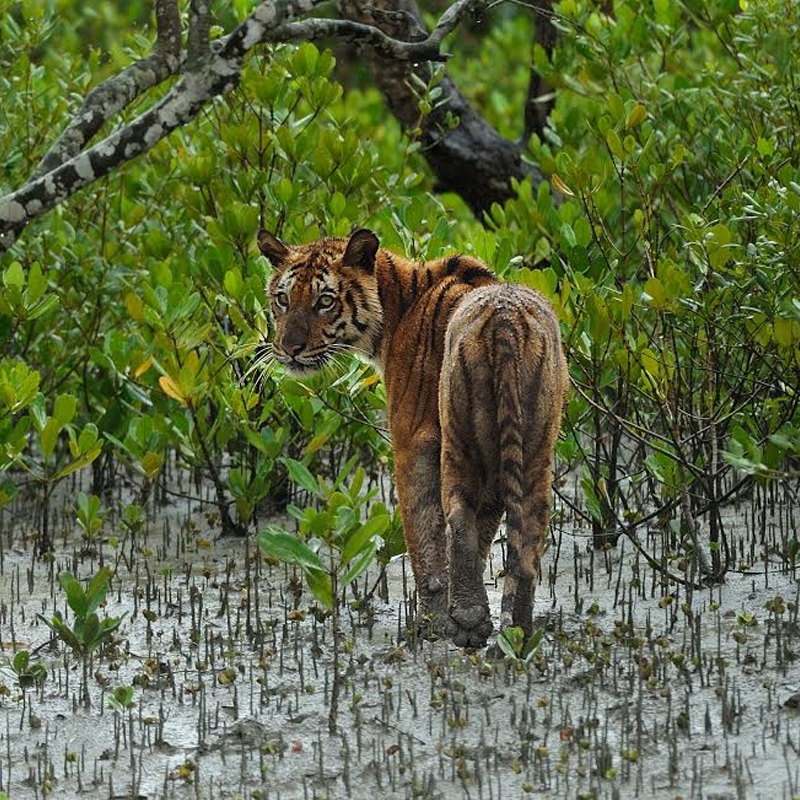
    Mumbai: Discovery India and WWF India have come together to protect the world’s only mangrove tiger habitat, in partnership with the Forest Directorate, Govt. of West Bengal and local communities in the Sundarbans. The initiative builds on WWF India’s work in the region to promote sustainable livelihoods, access to clean energy, and effective human-wildlife conflict management. By adopting an integrated approach, the project aims to assist the Forest Directorate for effectively managing populations of tiger, prey and their habitat in Sundarbans, and reduce human-tiger conflict. It will   work with Panchayats help build resilient communities in this ecologically fragile and climatically vulnerable region.

    The Sundarbans region is highly vulnerable to the impacts of climate change, which threatens the safety and livelihood of local communities. With a vision to create climate-smart villages in the Sundarbans, WWF India and Discovery India are working with government agencies, civil society partners and scientific institutions to build the capacity of village panchayats and local communities to incorporate climate resilience into development planning, thereby helping secure livelihoods, biodiversity and ecosystem services.

    The initiative also focuses on enhancing farmland productivity through low-cost measures and adjusting crop calendars to deal with of climate change. The initiative will also include work towards securing habitats for tigers and prey species. This will entail building datasets on impacts of climate change on the estuarine ecosystem. Through this project, in partnership with the West Bengal Forest Directorate and IISER Kolkata two Sundarbans Ecological Observatories will be set up, each featuring data loggers, monitoring buoys and an onsite laboratory.  

    As part of the partnership, the Forest Directorate has also been supported with nylon net fences to prevent tigers from straying out to villages adjacent to the mangrove forests. Such nylon net fences have contributed greatly towards reducing human injuries and fatalities. A floating camp and speed boat are also being provided to the West Bengal Forest Directorate, to accelerate the response time of forest personnel during various emergency situations.

    Mr. Ravi Singh, Secretary General & CEO, WWF India said, “This partnership between WWF India and Discovery India is significant as it brings together different institutions for the benefit of communities and wildlife of Sundarbans. This additionally includes the setting up of ecological observatories, reduction of human-wildlife conflict and providing scientific inputs for proper management.”

    “The project at Sundarbans is part of a global movement – Project C.A.T – Conserving Acres for Tigers – aimed at building healthy habitats for Tigers wherein we support conserve nearly six million acres of protected land across four countries. In India, beyond Sundarbans, a detailed intervention is also being implemented at Manas Tiger Reserve,” said, Megha Tata, Managing Director – South Asia, Discovery. “Discovery is a purpose-driven company with a mission to educate and inspire audiences around the world. We remain committed to leverage our brand strength to galvanize people power for the cause of Tigers and other endangered species.”

  • Canara HSBC OBC & WWF raise ‘Earth Hour’ awareness

    MUMBAI: WWF-India, in association with Canara HSBC Oriental Bank of Commerce Life Insurance hosted Pedal for the Planet 2017, a Cyclothon and Walkathon to celebrate the world’s largest grassroots environmental campaign – Earth Hour 2017.

    Earth Hour 2017 celebrates a decade of climate action with people from more than 7000 cities across the globe set to take a stand against climate change by celebrating Earth Hour 2017. In the last ten years, Earth Hour has gone from being a token switch-off event to becoming the largest voluntary movement ever witnessed in history. As the planet continues to witness climate records being broken and the need for greater ambition and commitment accelerates, Earth Hour is mobilizing individuals, communities and organizations globally to do their part to help change climate change.

    The exhilarating 21 kilometer cyclothon, covered over two rounds and the 3.5km walkathon. The residents of Delhi NCR enthusiastically participated to promote the cause of Earth Hour and ask people to switch off their lights during the hour later that night. Pedal for the Planet is a WWF-India initiative that aims to raise awareness about Earth Hour and promote a healthier, greener and more sustainable lifestyle at an individual level. Every year, since 2009, hundreds of citizens of Delhi NCR have been gathering in an enormous show of support for Earth Hour at the Pedal for the Planet Cyclothon and Walkathon. In the past decade, as global efforts to control climate change gained momentum, Earth Hour has helped bridge the gap between the grassroots and the corridors of power, taking climate action from conference rooms to living rooms in over 172 countries.

    Canara HSBC Oriental Bank of Commerce Life Insurance CEO Anuj Mathur said, “It is heartening to see the increasing awareness around the world on the need to preserve the environment and within our organization we are taking all steps to contribute to this cause.”

    WWF-India secretary-general & CEO Ravi Singh said, “Earth Hour is our attempt to inspire and empower individuals and help them fight against the complex issue of climate change. The enormous enthusiasm and support that we’ve witnessed for Earth Hour at the Pedal for the Planet Cyclothon is very humbling, it is great to see people coming together and committing to fight for a common cause that threatens the world as we know it.”

  • Cable TV fraternity celebrates SN Sharma’s rejoining DEN

    Cable TV fraternity celebrates SN Sharma’s rejoining DEN

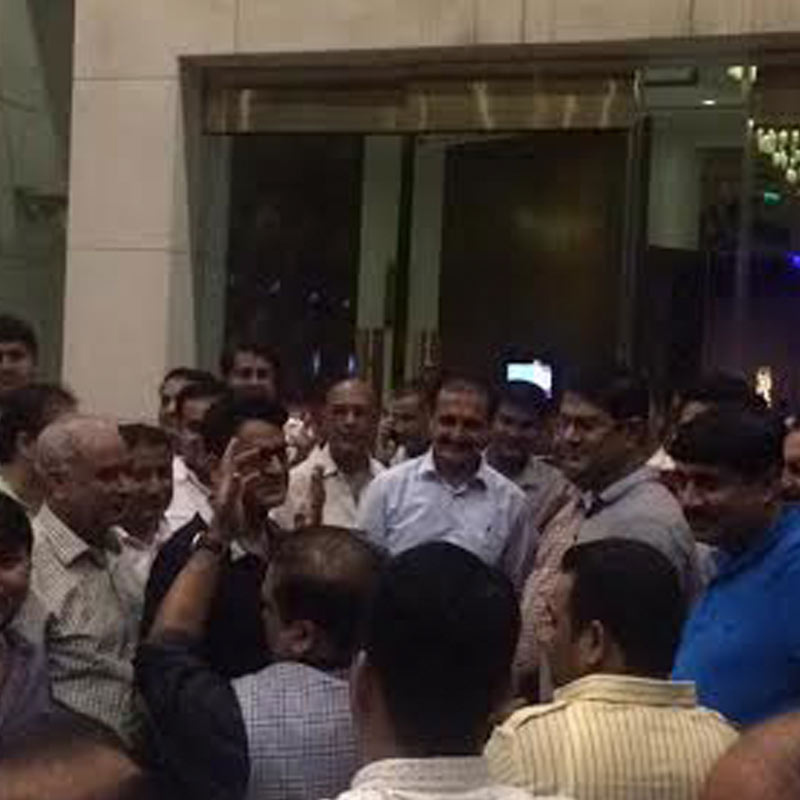
    DELHI: “The Tiger returns to his DEN” was the cry that went on through the night. It was a gathering of the cable TV fraternity to congratulate and celebrate SN Sharma’s return to the national MSO DEN Networks founded by Sameer Manchanda.

    Among those who attended the party at the Hotel Crowne Plaza in Okhla were about 150 representatives from DEN’s joint ventures in the north, small broadcasters, cable TV operators, industry pioneers, among others. A few of those who made it to the party included: Dr Anil Rastogi, Ravi Singh, Ravi Bali, Romi Shiv, Sanjeev Kapoor, Bhanu, Virender Gaur, among many others.

    The party went on late into the night . The food was lip smacking and everyone had a gala time.

  • Cable TV fraternity celebrates SN Sharma’s rejoining DEN

    Cable TV fraternity celebrates SN Sharma’s rejoining DEN

    DELHI: “The Tiger returns to his DEN” was the cry that went on through the night. It was a gathering of the cable TV fraternity to congratulate and celebrate SN Sharma’s return to the national MSO DEN Networks founded by Sameer Manchanda.

    Among those who attended the party at the Hotel Crowne Plaza in Okhla were about 150 representatives from DEN’s joint ventures in the north, small broadcasters, cable TV operators, industry pioneers, among others. A few of those who made it to the party included: Dr Anil Rastogi, Ravi Singh, Ravi Bali, Romi Shiv, Sanjeev Kapoor, Bhanu, Virender Gaur, among many others.

    The party went on late into the night . The food was lip smacking and everyone had a gala time.

  • DEN JV partners on warpath over differential treatment, form separate association

    DEN JV partners on warpath over differential treatment, form separate association

    NEW DELHI: Even as Indian multi system operator (MSO) DEN Networks is looking at doing away with joint venture partnerships in Phase III and IV of digitization by taking the direct distribution route, its existing joint venture partners across the country are up in arms.


    In a meeting of DEN’s JV partners held in Delhi, they alleged that DEN indulges in different financial and other arrangements with partners all over the country.


    According to information available with Indiantelevision.com, the grievance of Den’s JV partners is that while for some JVs the agreement was on a 50:50 basis, for others it was 51:49 or 60:40.


    The JV partners, who also formed the DEN India JV Partners Association in their meeting here, said that there was no transparency in the deals with different JV partners.


    Speaking to this website, Association spokesperson and Mumbai-based DEN Satellite Network JV partner Ravi Singh said that the comfort level with DEN was missing and the Association wanted DEN to deal with all partners on an equal footing.


    DEN has a presence across the country in Delhi, Uttar Pradesh, Karnataka, Maharashtra, Gujarat, Rajasthan, Haryana, Kerala, West Bengal, Jharkhand, Bihar, Madhya Pradesh and Uttarakhand through multiple JV deals.


    At the meeting held in Delhi, around twenty JV shareholders from all over the country were present.


    Repeated attempts to get reactions from the DEN Network management were futile.

  • Discovery kids in association with WWF-INDIA organises Wild Wisdom Quiz 2014

    Discovery kids in association with WWF-INDIA organises Wild Wisdom Quiz 2014

    NEW DELHI: Discovery Kids partnered with WWF–India to host this years’ Wild Wisdom Quiz, Asia’s largest wildlife quiz for children.  An annual event by WWF-India, the quiz aims to increase environmental awareness in India through various themes associated with conservation. The quiz is supported by the Ministry of Environment, Forests and Climate Change (MoEF & CC), Central Board of Secondary Education (CBSE), and powered by Perfetti-Mentos and Canon Pixma.


    Discovery Kids & WWF-India’s Wild Wisdom Quiz 2014 was conducted across 30 cities in India. Over 12,000 students from 425 schools participated in the quiz.   Each city level winning team (30 teams) will now compete in the National Finale to be held at the WWF Auditorium, New Delhi on 1 October during Wildlife Week.   The top 3 teams will win a trip to Adventure Nation’s Camp Tusker near Rajaji National Park, in the Shivalik Hills. The finale will be broadcast on Discovery Kids, the most distinguished television brand offering learning based entertainment.


    Announcing the association, Rahul Johri, Executive Vice-President and General Manager – South Asia and Head of Revenue, Pan-Regional Ad Sales and Southeast Asia, Discovery Networks Asia-Pacific, said, “Discovery Kids stimulates learning and imagination of children through its programmes and its on-ground initiatives such as Wild Wisdom Quiz 2014.  The nationwide quiz aims to create a strong connect amongst students towards nature and wildlife.Such initiatives help children in understanding the fragility of our natural environment and the importance of its protection.” 


    Ravi Singh, CEO, WWF-India said, “WWF-India is pleased to partner with Discovery Kids to host Wild Wisdom 2014. The quiz is one of its kind in the realm of wildlife and conservation and has in the last six years built a large constituency of children who are now more connected to the natural world. The quiz goes beyond being just a competition and stokes children’s sense of wonder towards nature. The overwhelming response from schools, teachers and children alike, over the last few years has made the Wild Wisdom Quiz a success and we believe that we will be able to take this quiz to an increasing number of schools and children every year, helping create future conservationists who will take the mission forward.”


    Discovery Kids & WWF-India’s Wild Wisdom Quiz focused on ‘Forest Biodiversity’ as the theme for 2014.  The quiz reached out to more than 15,000 schools and invited participation from children at various levels – Middle School level (Classes 6-8); Junior School quiz (Classes 3-5) and online version for High School students (Classes 9-12).  

  • Zee Sports yet to sign up with Mumbai’s major MSOs

    Zee Sports yet to sign up with Mumbai’s major MSOs

    MUMBAI: Zee Sports, which was available to viewers in Mumbai for the India-West Indies cricket match, is once again blacked out from the major cable networks in Mumbai today evening.

    “Major operators in Mumbai have still not reached an agreement for continuation of signals for the sports channel. Since the operators are being stubborn and are not agreeing to sign the agreement, we are being compelled to switch off the channel on defaulting networks,” says Zee Turner CEO Arun Poddar.

    Counters Cable Operators and Distributors Association (CODA) vice-president Ravi Singh, “If we have not signed the agreement, how can we be turned as defaulters? Zee Sports is asking us to pay for an unreasonable subscriber base.”

    Zee Turner had restored the signals of Zee Sports channel early in the day on assurance from MSOs like Hathway Cable & Datacom and Incablenet that they would be signing the pay channel agreement in Mumbai.

    In a meeting with major operators held in Mumbai, the operators had to discuss and sign the pay channel subscription agreement and had requested Zee Turner to allow the signals for today’s India-West Indies match. Considering the request from cable operators, Zee Turner had allowed the signals of Zee Sports to these networks in Mumbai, says Poddar. “The operators that have already signed the agreement will continue to get the signals for rest of the matches on Zee Sports,” he adds.

    CODA had an internal meeting in the afternoon but could not agree to Zee Sports demand. “The channel does not have telecast rights to any major event after this. If we can withstand the pressure over the next few days, we needn’t yield to their demands,” says a CODA member. The DLF tri-series will last till 24 September.

    Zee Sports, which has bought the telecast rights from BCCI (Board of Control for Cricket in India) for cricket matches to be played by India in non cricket playing countries over the next five years, will be showing the India-Australia match on Saturday.

    The channel, however, is back on cable networks in Pune after the Pune District Consumer Disputes Redressal Forum directed Zee Sports to restore the signals till further hearings on 21 September. “We have restored the signals in Pune following the order. The next hearing comes up on 21 September,” a Zee Turner spokesperson confirms.

    Zee Sports is also available in Chennai as SCV signed a commercial agreement with the channel for the conditional access system (CAS) market. The channel, however, is blacked out in other parts of Tamil Nadu where SCV has not signed up.

  • Mumbai cable TV shut as operators protest police clampdown

    Mumbai cable TV shut as operators protest police clampdown

    MUMBAI: Cable operators across India’s entertainment capital Mumbai blacked out all channels on their networks on 21 August late evening. The reason: they were protesting against the move by the authorities to stop them from transmitting English and Hindi movie channels to their viewers.

    Earlier in the day, the Mumbai police had swooped down on cable TV control rooms and sealed decoder boxes of nine channels for showing adult content. Among these were Hindi and English movie channels (Zee Cinema, Star Movies, HBO, Filmy, Star Gold, AXN and Max), and Hindi entertainment channels Star One and Sahara One.

    At the time of writing, unconfirmed reports were that other cities across the western Indian state of Maharashtra had also been affected with cable TV services partially or completely shut down. For instance a major cable operator in Pune revealed that decoders of the above nine channels and also those of MTV and Channel V had been sealed.

    Additionally, certain cable TV networks had started scrolling that the agitation had spread through the rest of Maharashtra with services being shut down every where.

    “Police have sealed the decoder boxes of nine channels. We had to sign a bond that we wouldn’t be telecasting these channels till the High Court ruling,” says a senior executive of a leading multi system operator (MSO).

    The Bombay High Court had last week pulled up the Maharashtra police chief for not acting against cable operators who were violating its earlier order banning adult movies on TV. In December 2005, the High Court had ordered the police to take action against cable operators and cable service providers who beamed movies with ‘A’ or ‘U/A’ certificates. This was in response to a public interest litigation filed by social activist Pratibha Nathani.

    In Mumbai, cable operators have blacked out their service. “There was too much confusion and we didn’t receive a definite list of which channels to block. Movie channels like Pix and Zee Studio, for instance, are spared. It is only late in the day that the police has come to our control rooms and sealed the decoders of nine channels. To avoid all this chaos, the three control rooms of Siticable in Mumbai have switched off their service,” says Ravi Singh, a distributor of Siticable.

    Adds a cable operator, “They should have told us early in the day which channels we are not to telecast. There would have been no need for the police to visit all the control rooms in Mumbai as we would have blocked these channels. We are not broadcasters and we can’t be expected to act as the censors of content.”

    The Bombay High court had on 16 August directed Director General of Police Dr P S Pasricha to file an additional affidavit within a week to explain whether any action has been taken against erring cable operators.

    MSOs are deciding what course of action they should take. “We may move the court,” says Wire and Wireless India Ltd. (WWIL) CEO Jagjit Kohli.

    When contacted, a Star India spokesperson did not wish to comment on the issue.

  • LMOs And The CAS Conundrum

    LMOs And The CAS Conundrum

    Nothing can get more complex than this. It is not only the pay-TV broadcasters and the government who are wanting to take time out for implementation of conditional access system (CAS). Opposition is coming from within the value chain of the cable TV industry itself with the distributors and the last mile operators (LMOs) expressing concern over CAS.

    “CAS is not good for consumers, distributors and last mile operators. It will lead to too much of confusion in the market. Besides, broadcasters are not providing a la carte rates,” says Cable Operators and Distributors Association (Coda) vice president Ravi Singh.

    Clearly, the mood among the cable operators is not to rush with CAS. They would rather wait to see if direct-to-home (DTH) picks up once Tata Sky launches its service later in the year. Their fear of CAS is grounded in the fact that they will lose control of their subscribers to the multi-system operators (MSOs). And in the transparent system of digital cable, they will have to open up the unreported subscribers to the MSOs.

    Cable operators’ fear of CAS is grounded in the fact that they will lose control of their subscribers to the multi-system operators
    _____****_____

    To counter this “two-way defeat,” the distributors and last mile operators are willing to vote CAS out. So how do they plan to compete with DTH? By dropping prices of analogue cable while throwing the offer open for digital service without CAS.

    Quite a miserable situation to be in if you are a MSO as you will be hurt both ways. In the scenario of a price drop, the MSOs will have to absorb the slippage. And in case of digital cable without CAS, they will have to invest while facing the uphill task of luring subscribers away from analogue. Particularly in a market that has grown a spoilt breed of over 52 million (NRS says its 61 million) cable TV consumers who are used to a large menu of channels on a comparatively low monthly subscription fee.

    The LMOs, in fact, have an open-ended strategy. If DTH starts pocketing cable TV subscribers, the gameplan is up for change. They will bend and cooperate with the MSOs, becoming a part of an organised distribution system with margins well-defined and structured.

    Yes, broadcasters have been dilly-dallying on CAS. But MSOs have not made it any easier for them with such statements as “the true value of pay channels has come to the surface in Chennai where consumers have thrown them out.”
    _____****_____

    But wait. Having enjoyed the spoils of a long grown unorganised industry, the distributors and LMOs do not want to let go so soon. Coda, an association of cable operators and distributors in Mumbai, is even talking of setting up a digital headend in a CAS regime. This is nothing new. In 2003, when the CAS topic was hot, Coda made similar rumblings that threatened but sounded empty. But this time, there is a significant change. There are around 50 distributors in Mumbai and they have invested in fibre. What this means is that they are connected by fibre with each other, except in small patches where work is going on, and have the infrastructure to put up a digital network.

    “We will jointly invest in a headend and run it as partners,” says Coda president Ganesh Naidu.

    Talk is easier than action. Investments on setting up a digital infrastructure is not all; a sizeable chunk of money needs to be set aside for subsidising set-top boxes (STBs). Then there is the issue of professionalising customer care services like a call centre and technical team for maintenance. Besides, negotiations with broadcasters can be a tedious process. And who can forget management issues between as wide a body as the distributors and the LMOs?

    Behind the garb of an entrepreneurial spirit may lie the hidden agenda of bargaining for a “pound of flesh.” The distributors, who feel insecure of their role in a CAS system, want to ensure that their place is protected as a bridge between the MSOs and the LMOs. They, along with the MSOs, have been asking for more, as share in terms of commission from conversions into digital consumers.

    The MSOs can take the blame for not ironing out differences with their distributors and LMOs. Even as the time frame for implementation of CAS is set for delay, there is no effort to fix the margins. The argument on offer: such margins can be settled only after the broadcasters come out with their proposals.

    Yes, broadcasters have been dilly-dallying on CAS. But MSOs have not made it any easier for them with such statements as “the true value of pay channels has come to the surface in Chennai where consumers have thrown them out.” Perhaps, MSOs went overboard thinking that this would win them support from the consumers and, hence, the government as it would imply cheaper cable subscription fees. The sad fate of CAS is that consumers didn’t quite agree with this.

  • Animal Planet teams with WWF for eco-reality series ‘Planet Action’

    Animal Planet teams with WWF for eco-reality series ‘Planet Action’

    MUMBAI: Around the globe, pollution, global warming, deforestation, fishing practices, all play a part in endangering the world’s wildlife. Most often, the danger comes as a result of human behaviour. In a mission to show viewers how they can help the conservation cause, Animal Planet and WWF, the global conservation organisation, present Planet Action – an eco-reality series which takes on these crises in a brand new way.

    Starting 2 April, the six-episode series Planet Action will air on Animal Planet every Sunday at 9 pm. The series will premiere globally on Animal Planet.

    The series takes an unique approach in addressing some of the current
    issues facing wildlife and eco-systems today. The series follows an
    international team of seven enthusiastic amateur environmentalists as they are immersed in six different conservation projects. Working under the pressure of strict deadlines and tight budgets in remote locations, the team must work together to accomplish each mission.

    Over six weeks, we see conservation in action as the team tackles projects to make a real difference. The journeys range from saving endangered leatherback turtles in Panama to planting 100 trees in the heart of Borneo’s rainforest to help the orangutans fight for survival.

    Animal Planet Brand Director Raja Balasubramanian said, “Animal Planet has presented many entertaining programmes, both from India and abroad, to increase the understanding on wildlife extinction and environment deterioration. Planet Action is an eco-reality programme that, besides informing, will entertain viewers by presenting them all the emotion and drama of a group of amateur environmentalists tasked with real-life challenges.”

    The diverse group of participants from Venezuela, Vietnam, Sweden,
    Australia, Brazil, UK and USA came together to pursue a common cause. WWF experts are on hand as ‘mentors’ during each challenge, as the team learns firsthand about the realities of conservation while at the same time coping with extreme conditions, unfamiliar cultures and the pressures of protecting wildlife.

    Can the team put personal issues aside and cooperate as a group to undertake these important challenges? Planet Action captures all the emotion and drama as tempers fray and moods swing while the team works together towards their ultimate goal – protecting the future of the animals with whom we share the planet.

    WWF-India SG and CEO Ravi Singh said, “Planet Action is a great example of active media partnership to showcase the tough work of conservation to the world. I am hopeful that more and more people will be sensitised about the threats to the environment and to it’s species and the urgent need to conserve the same.”

    WWF-India is the largest and one of the most experienced conservation organizations in the country. And, with almost five million supporters distributed throughout five continents, WWF has a global network active in over 90 countries and has played a major role in the evolution of the international conservation movement. Their mission is to stop the degradation of the planet and to help people live in harmony with nature.