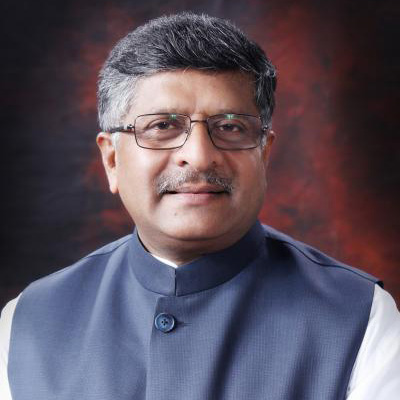
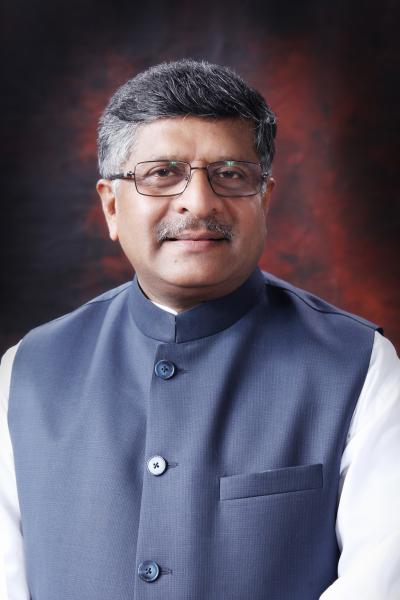
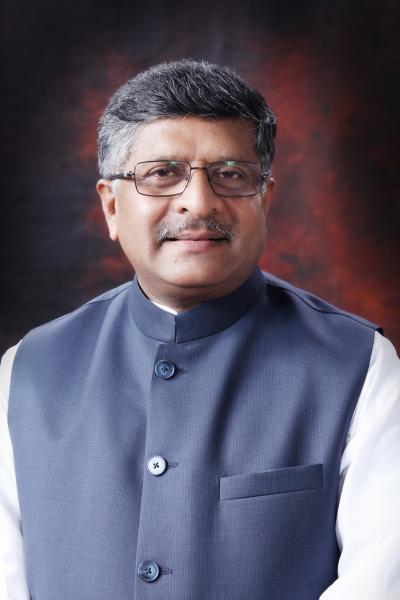
Tag: Ravi Shankar Prasad

  • “Digitisation will boost GDP growth” – Ravi Shankar Prasad

    “Digitisation will boost GDP growth” – Ravi Shankar Prasad

    MUMBAI: Taking a leaf out of Prime Minister Narendra Modi’s Digital India initiative, Union Minister of Communication and Information Technology Ravi Shankar Prasad today stressed on how the country’s growth is interlinked to this programme.
    “The government is dedicated to creating a digital ecosystem that will enable internet to touch the lives of all Indians,” Prasad, who was speaking at the 9th India Digital Summit of IAMAI, said.
    He further pointed out how it was imperative to create hubs in rural India that will help the growth of e-commerce, which remains unexplored so far. “Unless connectivity reaches every village of India, the dynamics of growth will remain unchanged,” he said.
    Speaking on access, Prasad said, “It took 30 years to cover 10 lakh kilometres of optic fibre laying, and in just next three years, seven lakh kilometres will be added, making rural connectivity a reality.”
    Releasing the IAMAI &The Boston Consulting Group (BCG) report India@Digital.Bharat, Prasad said, “For the internet economy to touch $200 billion by 2020 that will contribute five per cent of GDP, we need to move at a fast pace towards computer literacy. The other key areas which will help the internet economy to grow is mobile internet. The government is committed to digitisation and we look at extensive public-private partnerships (PPP) to the have successful implementation.”
    The India@Digital.Bharat report establishes that India is headed towards an internet economy worth $200 billion by 2020, that will contribute five per cent of the GDP growing at 23 per cent compared to 13 per cent overall.

    As the following chart shows, Internet in India by 2018 will be more mature and mobile will be more predominant.

    The number of internet users in rural areas will touch 210 million by 2018, aiding India’s internet user base to cross 500 million by 2018.

    Speaking at the launch of the report, BCG senior partner and director Alpesh Shah said, “India will have more than half a billion internet users in the next three years – this growth has the potential to fundamentally change the way in which consumers save, learn, play, move and work. However, the extent of shift will depend a lot on how the government and the industry come together to unlock the true potential of the internet.”
    IAMAI chairman and Google India managing director Rajan Anandan, stressed on the growth of internet in India and successful roll-out of the government’s Digital India programme. “India is the third country in the world to have over five Internet companies valued at over $1 billion. India is the fastest growing Internet country but we need to move from narrow band to broadband at the earliest,” Anandan said.


  • DeitY celebrates Good Governance Day

    DeitY celebrates Good Governance Day

    KOLKATA: The Department of Electronics and Information Technology (DeitY) organised a mega event and an exhibition at the Manekshaw Centre, New Delhi on 25 December to celebrate Good Governance Day.

    The event was inaugurated by Union Minister of Communications & Information Technology Ravi Shankar Prasad, and attended by officials of central government and its agencies, industry partners, interested netizens, and electronic and print media.

    In his keynote address at the event, the Minister said, “Based on the pillars of participation, accountability, transparency, responsiveness and efficiency, Good Governance can be effectively achieved through the vision of Digital India of Digital Infrastructure as a utility to every citizen, Governance and services on demand and digital empowerment of citizens.”

    The Minister further emphasised that simple and inclusive technology has transformative power and is the source of good governance.

    “In the last six months, the government has taken a number of landmark initiatives. The Digital India programme, unveiled by Prime Minister Narendra Modi, is committed to take the cause of Good Governance forward in letter and spirit,” the Minister added.

    He in his concluding remarks directed all the officials of the ministry of communications and IT that we must ensure that the vision of Digital India becomes a reality!

    The Minister launched a number of Good Governance projects initiated by Department of Electronics and Information Technology, Department of Telecommunication, Department of Posts and their organisations.

    On the other hand DeitY secretary RS Sharma said, “The department has taken a number of initiatives like MyGov (Citizen participation platform), Aadhaar Enabled Biometric Attendance System, Jeevan Pramaan, e-Greetings, e-Sampark, National Digital Literacy Mission, e-Governance Competency Framework etc to promote good governance in the country.”


  • Rs 18000 crore worth investments received for ‘Digital India’: Prasad

    Rs 18000 crore worth investments received for ‘Digital India’: Prasad

    NEW DELHI: The Prime Minister Narendra Modi’s mandate of ‘Digital India’ will be a game changer for the country and will have a cascading effect on the entire system said Communications and Information Technology Minister Ravi Shankar Prasad.


    Chairing the consultative committee meeting attached to his Ministry, he informed the members that about 700,000 kilometer of cable for broadband is proposed to be laid in the next three years as against one million kilometers already laid in the country, so far.


    The Minister informed members that 50,000 gram panchayats will be provided broadband facility in the first tranche and 2.5 lakh in the next three years. Prasad also assured the members that the government is giving priority to the production of electronic goods as part of the ‘Make in India’ programme.


    Reacting to the concern of some of the members about poor services of the BSNL network in the country, he said more funds are proposed to be provided to the public sector telephone service providers during the VII phase to improve their functioning and make them commercially active.


    The Department of Electronics and Information Technology secretary RS Sharma, made a presentation on the ‘Digital India’ programme before the members of the consultative committee. Earlier at the FICCI, Prasad said Rs 18000 crore worth investments proposals have been received till now for the ‘Digital India’ programme, of which Rs 4000 crore worth have been approved and more are in the pipeline.


    Speaking at the session on ‘The role of ICT and ‘Digital India’ initiative in India’s growth’ at the 87th AGM of FICCI, Prasad said that while there are issues of spectrum to provide high speed connectivity and regulatory control, India will become an exciting place as far as ‘Digital India’ is concerned. E-commerce, he said, was worth billions of dollars and will help increase India’s GDP in a big way.


    Prasad said that the huge postal network can be used for various services like banking, insurance etc. The postal services earn Rs 280 crore from e-commerce, he said, and urged the private sector to take the initiative to develop India digitally.


    Stating that digital connectivity is needed for good governance, Prasad said India had more than $100 billion turnover in IT industry. All fortune companies connect with India’s IT. India has the potential of becoming number two after China and surpass the United States.


    Spelling out the initiatives that have already been taken under the Digital India Programme, the Minister said mygov.in portal has been launched to allow India to interact on various government programmes. Suggestions received on various programmes like ‘Clean Ganga’, ‘Swachh Bharat’ through the portal and designing, logo, slogan etc have been prepared. Under the ‘Jan Dhan Yojna’ – name for the programme was coined with the help of suggestions received through the portal, eight crore bank accounts have been opened till now with a total deposit amount of Rs 8000 crore. This is an ideal example of financial inclusion through digital technology.


    Additionally, programmes such as ‘Jeevan Pramaan’, a  biometric-enabled digital service for pensioners has been launched. Besides, through IT, two lakh schools were connected (two crore children) on the eve of Teacher’s Day.


    Prasad said the digital divide between those who have and those who don’t needs to be plugged. For this the government has initiated the programme – National Optical Fibre Network (NOFN) – which proposes to connect seven lakh kilometers optical fiber to be laid to connect 250 gram panchayats in three years. Wi-fi spots will be provided around the clusters after that and all villages to be provided with internet connectivity.


    He said that to promote ‘Digital India’ it is proposed to set up a broadband duct which is a pre-requisite for getting sewer, water and electricity connections.

  • India seeks re-election to International Telecommunications Union Council

    India seeks re-election to International Telecommunications Union Council

    NEW DELHI: India wants democratisation and broad-basing of the global affairs of telecommunications and internet governance, according to Communications and Information Technology Minister Ravi Shankar Prasad.
     
    Addressing the inauguration of the International Telecommunications Union (ITU) Conference at Busan in South Korea, he said that India’s point is that ITU should take leadership and partner with UN and other International/Regional organisations in executing the Information and Communication Technology projects and programmes in developing countries.
     
    India also wants the ITU to be the supervisory authority of Space Assets. India expressed its desire that ITU should play a more active role in the global Internet governance as envisaged during the World Summit on Information Society (WSIS).
    The Conference was inaugurated by the President of South Korea.
     
    The Indian delegation has been participating in The Plenipotentiary Conference, which is the top policy-making body of the 193 member strong International Telecommunications Union. It meets once in every four years. India has also been pitching for a re-election into the ITU Council.

    During the visit, the Minister also met Samsung SDI president and CEO Sang Jin Park in Seoul. The Minister shared the ideas of ‘Digital India’ and the initiative of ‘Make In India’. The CEO was curious about the changed business environment in India and he informed the Minister about his proposed visit to India next month. The Minister also met various other business leaders in the fields of electronics, communication and Information technology.

  • Facebook to join hands with Indian government

    Facebook to join hands with Indian government

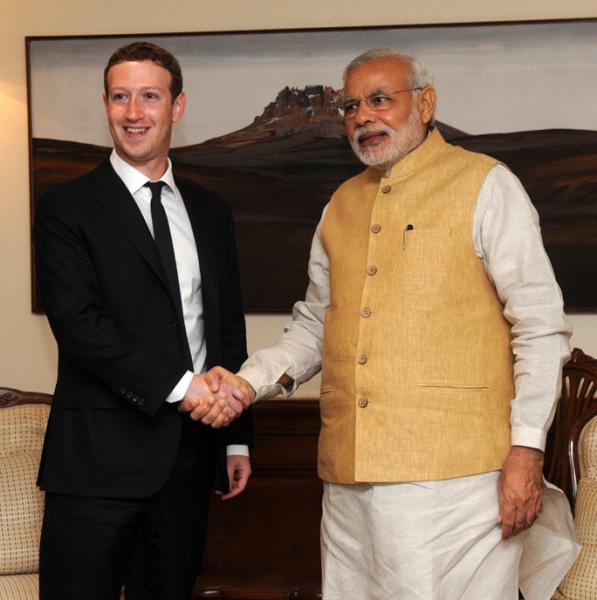
    MUMBAI: After swooning the nation with his ideas to enhance the internet connectivity in India in the Internet.org summit, Facebook founder Mark Zuckerberg, who was in the country on a two-day visit, met Prime Minister Narendra Modi on 10 October.

    Soon after the meeting, the PM tweeted, “It was wonderful meeting Facebook CEO Mark Zuckerberg. We discussed a wide range of issues.”

    The discussion included an array of topics revolving around the innovative use of Facebook as a platform to engage with a large audience in the service of humanity; from helping in the digital India campaign to fighting terrorism using social media.

    “I spoke to him about Swachh Bharat Mission. Zuckerberg shared that Facebook would assist the Government of India in the Clean India mobile application. This will surely give an impetus to Swachh Bharat Mission. “

    “Zuckerberg is excited about Digital India initiative. I requested him to identify certain areas where Facebook can help us in that. I also requested Zuckerberg to identify how Facebook can help promote India’s rich tourist potential across the world,” Modi posted on his Facebook page.

    They also talked about the Digital India initiative. A statement on Modi’s website said, “Zuckerberg said that he is extremely excited about the Digital India initiative of the Government of India. Prime Minister Shri Modi asked him to identify some domains of Digital India where Facebook can get involved and help.”

    The Prime Minister appealed to Facebook co-founder to look at how to enhance Internet literacy along with Internet connectivity.

    Adding to the same, Zuckerberg stated that Facebook wants to work with the Government of India in the fields of healthcare, education and provide a gamut of services to the people.

    He further added that Facebook will also help in the creation of the Clean India Mobile App and that it would be launched soon. This would give a strong impetus to the Swachh Bharat Mission.

    In the meeting, PM also pointed out that lots of terrorist elements are using social media platforms to recruit members, according to an official statement.
    “This is unfortunate and we need to think of the role the social media can play to stop terror,” Modi said.

    Earlier in the day, the Facebook co-founder also met Information Technology Minister Ravi Shankar Prasad as part of the Centre’s ambitious Digital India plan which seeks to expand internet access across the nation.

    “Mark’s interest in India impressed me. Facebook wants to work with the Digital India program and the Indian govt is happy to support them in their launch of internet.org,” Prasad said.

    “He has shown profound interest to involve Facebook in the Digital India program and in broadband distribution, e-Health, e-Education etc. Really there is a great scope to work together. His idea to promote entrepreneurship among Indians in the field of IT was truly remarkable,” he posted on his Facebook page.

    They also spoke about the National Optical Fiber Network (NOFN) project during their meeting which aims to connect 2.5 lakh village panchayats through high-speed broadband by 2017.

    Prasad said that he believes there exists a great opportunity for Facebook to harness the vast potential of Indian entrepreneurs in retailing of internet connectivity to the masses by involving local entrepreneurs. Government would extend all cooperation to Facebook in this endeavor.

    He proposed that Facebook could contribute to India’s Rs 21,000-crore NOFN project on last-mile connectivity.

    Zuckerberg also spoke of alternate technology such as drones and satellite communications playing a critical part in this last-mile linkage.

    “India could be the first country in which Facebook deploys drones to provide broadband connectivity in remote and inaccessible areas, with CEO Mark Zuckerberg proposing a pilot project to bridge this digital divide during his meeting,” the IT Minister added.

    Facebook’s Connectivity Lab is actively developing large, inexpensive, solar-powered drones that will be able to fly for years at a time, the division’s engineering director Yael Maguire announced earlier this year. These unmanned vehicles will be about the size of a Boeing 747 but weigh only as much as four car tyres while serving as large connectivity hubs.

    The drones would fly at a height of 60,000 to 90,000 feet above the ground, far above commercial jetliners and at a level where they wouldn’t be affected by the weather, effectively making them invisible.

    In order to continuously provide Wi-Fi coverage, they would be powered by the sun, Maguire had said, adding that these could be tested in the US as early as next year.

    On 9 October, while addressing media persons, Zuckerberg had said that Facebook is working extensively in rural India to enhance connectivity. “Internet.org  is an effort to bring basic Internet services to all”, he added. The pilot project of Facebook has already helped to connect more than 3 million people with this program.  “If we can connect people over here, we can help bring this rich Indian culture to the world.”

    Stressing on the importance of connectivity, Zuckerberg had said while India has about 243 million Internet users and have 100 million plus Facebook users, there are over a billion people in the country who do not have access to the net.

    The 30-year-old billionaire is the third high-profile head of a US-based tech firm to visit India in the last few weeks, after Satya Nadella of Microsoft and Jeff Bezos of Amazon.


  • Media comes under attack from CEC and Law Minister on regulation and paid news

    Media comes under attack from CEC and Law Minister on regulation and paid news

    NEW DELHI: The media came under attack on issues of paid news and regulation at different forums in the capital over the weekend.


    Chief election commissioner (CEC) VS Sampath suggested that paid news should be made an electoral offence that attracts disqualification so that it acts as a deterrent, regretting that inadequacies in legal framework were not allowing the poll panel to effectively check this and other malpractices.


    He also said that there is a ‘crying need’ for a ‘well defined legislation’ governing expenditure of political parties during elections as its absence was allowing them and their candidates to circumvent the rules.


    Speaking at a session organised by the Law Commission, Sampath reckoned, “When the Election Commission looked into whether it had the powers to deal with paid news it found the answer was negative.”


    He also added that paid news in whatever form is presently not even an electoral offence. “If it is an electoral offence, it can eventually lead to the disqualification of the candidate. Whatever the difficulties of implementation, the very fact that if it is listed as electoral offence, it would act as a deterrent against people using it in the elections,” he further explained.


    The CEC revealed that a recommendation in this regard has been made to the Law Ministry.


    He also asked why government advertisements during elections should not be considered as paid news. “Since paid news is not an electoral offence, the Commission now tries to check this menace by invoking its powers related to candidates’ spending,” he added.


    “When they (candidates) file their expenditure returns, they always build a cushion for this. If Rs 40 lakh those days was the limit, invariably no candidate would file a return for more than Rs 25 lakh. That Rs 15 lakh will be the cushion for this,” Sampath stated.


    Sampath also revealed that while the Commission’s control over a candidate’s spending is only after he files his nomination, people make substantial election related expenses before that.


    He added that people start spending but the Election Commission is constrained ‘because of the law and the interpretation of the law.’


    The law states that EC can hold an election within the period of six months before the due date.  “We have been making proposals on so many occasions. Why should not the Commission have powers to ensure the purity of the election during this six-month period?” the CEC questioned.


    He noted that all limits for poll expenditure is for candidates and none for political parties.


    “We have seen political parties handling huge amounts of cash. We have seen political parties giving to the candidates’ huge amounts of cash. When it is caught they will say no, no it is not meant for him, it is meant for him to distribute to others in his district or in his state.


    “There is no regulatory framework governing these things.  There is a crying need for a well defined legislation governing political parties particularly political parties’ finance,” Sampath reckoned.


    The Commission had recently tried to come out with some transparency guidelines. He said in countries like the US, expenditure commissions only take care of the expenditure and how political parties raise finance.  He also called for a ‘well defined law’ relating to opinion polls conducted by TV channels.


    “There should be a well defined law regulating opinion polls also,” Sampath said, adding that there is a view that voters will not be swayed by opinion polls but added that that there were instances where candidates won by wafer thin margins. Later, he was asked why during elections when polling was on in one area, poll related news from other areas continued to be shown on electronic media or internet.


    Sampath also explained that there is a mismatch between law and electronic revolution. “On every poll day during this Lok Sabha election, this violation has taken place. It is because of mismatch between law and electronic revolution in the country. All our laws did not take in to account electronic revolution,” he said, adding that EC has to abide by the law as it exists.


    At another session, Law Minister Ravi Shankar Prasad said those in politics and government should recognise the right of the Press to ‘criticise, lampoon us.’


    Delivering the inaugural address at the National Consultation in Media Law organised by the Law Commission of India with the National Law University, Delhi, Prasad said the leaders in his government, including Prime Minister Narendra Modi, were those who fought for press freedom during the Emergency.


    Noting that the Indian media has matured during the comparatively short span of its existence, he spoke of his early years as a panellist on TV. “Earlier we used to outshout each other. Anchors spoke more, some still do it. But the process of maturing has started,” he said.


    “But if media freedom is necessary and important for the media, self-regulation must be the mode,” he added.


    “Paid news is sickening. Politicians have to realise that Indian voters are mature and cannot be swayed by aggressive promises alone,” Prasad stated.


    He said press freedom should be equally balanced with right to privacy, so also the right of the media should not hinder the freedom to conduct a fair trial.


    “My government recognises the importance of social media. We have no intention to curb this flowering of creativity. But there are reasonable restrictions prescribed under the Constitution, which will be used only in extreme, rare circumstances and with the complete approval of the higher authorities, that too only in serious issues threatening our national or communal framework,” the Minister explained.


    Speaking at a panel discussion on the topic media regulations, Kasturi and Sons Ltd Chairman (publishers of The Hindu) N Ram opined, “There was hardly any self-regulation for the Press today. He claimed that his newspaper had introduced the idea of a full-time news ombudsman independent of the editor. He said this practice however had not spread to other newspapers, and TV certainly did not have it.”


    He also added how even the Press Council of India was dominated by people from the newspaper industry and that an independent mechanism, which was also transparent, was crucial for self-regulation.

  • Siblings bond on Raksha Bandhan

    Siblings bond on Raksha Bandhan

    For many it is a daily struggle – how to balance their daily routines between work and perosnal life. But there are occasions when even the wealthiest man, the most powerful CEO or politician has to forget the position his/her occupation has given him/her. When he/she is at home, the role they enact is simply that of a father or a mother or a son or a daughter and for those who are fortunate enough of a brother and a sister.

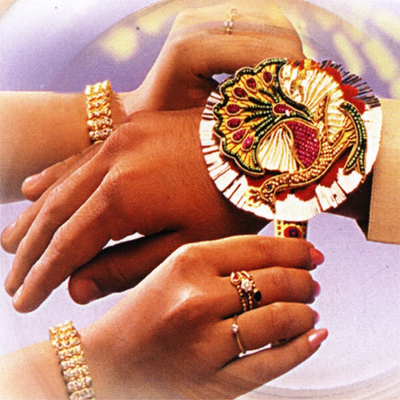
    Raksha Bandhan – a day that reminds brothers and sisters that they share a bond – for a lifetime. She ties a string on his wrist. She annoints his forehead with tikka, and does his pooja. The brother in turn promises to look after his sister, no matter what, and gives her a gift – and seeks her blesssing.  A moment that helps us connect and reminds us that we are human, that all is equal.

    On the eve of Raksha Bandhan, a pious festival, we take a look at some of the well-known brother-sister combinations in the industry. Over the years, they have created their own identities in the media and entertainment sector.  Whether it be broadcast, television, films or the government, these siblings have become powerhouses in their respective fields.

    On this special day, Indiantelevision.com features a few siblings in the media industry.

    Vandana Malik and Raghav Bahl

    The two together built an empire that recently shifted hands to another powerful person in the country. Indeed, brother sister duo Vandana Malik and Raghav Bahl gave their all to the Network 18 group in the span of two decades.

    In early 1990s when Raghav started producing shows for BBC including India Business Report, he roped in his sister Vandana to head operations from Mumbai. Vandana, a housewife,  knew zilch about the industry, took a bold step with her brother’s help and went on to be a core member of the group’s expansion in the years to come.

    Raghav stormed into the media industry with JVs with some of the big names across the world- Viacom, CNBC, CNN, Forbes, GS Home Shopping etc.

    Now with Network 18 being in the hands of one of India’s richest industrialists – Reliance Industries’ chairman Mukesh Ambani, Raghav has ventured into the hand held personalised news space while Vandana’s next venture is not yet known.

    Anurradha and Ravi Shankar Prasad

    She is the managing director of the BAG Network while her brother is the current Union Minister of Ministry of Communications and Information Technology. Anurradha Prasad and Ravi Shankar Prasad have both excelled in their fields, making their presence known wherever they go.

    While the sister is a power woman in the field of news and entertainment television, the brother is one of the country’s top leaders of Bharatiya Janata Party.

    Anurradha runs two TV channels, News 24 and E24 as well as a production house called BAG. Ravi helped establish Goa as the destination for holding the International Film Festival of India as well as led the Indian delegation to film festivals in Cannes, Venice and London.

    Ila Arun and Piyush Pandey

    The godfather of Indian advertising, Piyush Pandey, is brother of Ila Arun, the queen of Indian contemporary music. Born in Jaipur, both Piyush Pandey and Ila Arun are one of the most dynamic brother-sister duos in the media industry.

    While Ila, the singer who turned folk-pop into a craze is also a very talented writer, music director and actor, her ad-guru brother Piyush is Ogilvy & Mather India south Asia executive chairman and creative director. It was under his leadership O&M has become one of the largest advertising agencies in India. He has also penned a patriotic song ‘Mile Sur Mera Tumhara’ for the National Literacy Mission of India in 1988.

    And as Ila blends the rural and the urban traditions of India; Piyush brings the nation together through his addictive campaigns.

    Madhu Trehan and Aroon Purie

    The euphemism, two sides of the same coin, aptly suits the combination of brother sister duo Aroon Purie and Madhu Trehan. The Doon school educated Aroon is well known as the founder of the India Today group while Madhu is arguably one of India’s fiercest media critics today.

    Their father, the late Vidya Vilas Purie was a former film financer and owner of the Thompson Press who in 1975 launched a tabloid newspaper called India Today. Aroon and Madhu revived the tabloid into a fortnightly magazine initially targeting NRI’s.

    In 1977 when Madhu was pregnant she decided to move abroad to start a family. She handed over the magazine’s complete operations to her brother. When she returned to India in 1988, she launched Newstrack, a video news magazine and in 2012 she went on to launch Newslaundry a web portal that keeps a sharp check on the country’s media houses and people including those owned by her brother.

    Ekta and Tusshar Kapoor

    She is the queen of television.  Ekta Kapoor, who late into her teens was only known as Jeetendra’s daughter, is today the CEO of one of the finest production houses Balaji Telefilms in India. She was just 17 when she started working and since then, she has breathed, eaten and slept only television. Today, she also has a film production house – Balaji Motion Pictures – to her credit.

    Ekta shares a very strong bond with her brother Tusshar who is an actor. He has over 30 films under his belt. He is also the executive director of Balaji Motion Pictures.

    Nalini Singh and Arun Shourie

    They are the son and daughter of consumer rights activist, HD Shourie. Nalini Singh is a TV celebrity and senior Indian journalist who is known for her anchoring of the popular television show Ankhon Dekhi on Doordarshan. Her sibling, intrepid journalist Arun Shourie,is known for his writing in Indian Express during the emergency. He has now moved out of media to grace the hallowed corridors of power in New Delhi. He is a powerful politician, columnist and ex-Union Minister.

    Divya and Yogesh Radhakrishnan

    Known for always being on the two opposing ends of the table, Divya and Yogesh Radhakrishan are forces to be reckoned with in their respective fields. Divya set up her own specialty company, Helios Media for broadcasters after working in an agency model for over two decades. On the other hand, Yogesh, the former CEO of Prime Connect is now the director of Pioneer Channel Factory.

    Shavon Barua and Kaustav Niyogi

    She loves most things old world, fashion, travel off the map, her boys are her world and also happens to be the Havas Worldwide West + South India president. Shavon with over 15 years of experience has led major global brands like Pepsi, Nestle, Colgate, Palmolive and Lakme Lever (Unilever) at various agencies such as JWT, Publicis, Y&R, and SSC&B Lintas. Her brother is the Mad Man of the advertising fraternity. Kaustav Niyogi aka Kausti has worked with the big names like McCann Erikson, Rediffusion Y&R and Publicis as creative head. He is currently, busy directing Pooja Bhatt’s next film Cabaret.
  • Lok Sabha passes TRAI amendment bill

    Lok Sabha passes TRAI amendment bill

    NEW DELHI: The appointment of former Telecom Regulatory Authority of India (TRAI) chairman Nripendra Misra as principal secretary to the Prime Minister got legislative sanction in the Lok Sabha when it passed the amendment to the TRAI Bill to remove the clause which bars appointment of former TRAI officers in government posts.


    The amendment was passed despite protests by the Congress. The Nationalist Congress Party which is an ally of the Congress had over the weekend said that it would support the amendment as this was not the first case of a retired government servant being re-employed in the government. The Trinamool Congress which had initially said it would oppose the bill decided to support it.


    The Bill replaces the ordinance issued on 28 May by the Bharatiya Janata Party which said it was based on merits while the Congress has criticised the government for showing undue haste in bringing a person specific ordinance.


    Under Parliamentary procedures, any ordinance has to be replaced by an Act within six weeks of the session that commences after the promulgation of the ordinance.


    The government strongly defended the move. Law and Telecom Minister Ravi Shankar Prasad said the government is in “full power to bring the bill” and the effort was to bring TRAI on par with other similar organisations like the Competition Commission.


    Misra, a 69-year old 1967-batch Indian Administrative Service officer of Uttar Pradesh cadre who retired in 2009, joined the Prime Minister’s Office the day the ordinance was promulgated. Before the Ordinance was promulgated, the TRAI Act prohibited its chairman and members from taking up any other job in central or state governments after demitting office.


    The TRAI Act 1997 says: “The chairperson or any other member ceasing to hold office as such, shall (a) be ineligible for further employment under the Central government or any state government or (b) not accept any commercial employment for a period of two years from the date he ceases to hold such office.”


    The amended section now reads: “The chairperson and the whole-time members shall not, for a period of two years from the date on which they cease to hold office as such, except with the previous approval of the Central government, accept “(a) any employment either under the Central government or under any state government; or “(b) any appointment in any company in the business of telecommunication service.”


    Although the BJP is in a minority in the Rajya Sabha, the Bill is expected to be passed in the Upper House as the Samajwadi Party and Bahujan Samaj Party apart from NCP and TMC are also supporting it.


    The bill will become a law after it is passed by the Rajya Sabha and assented to by the President.

  • Prakash Javadekar takes over as I&B Minister

    Prakash Javadekar takes over as I&B Minister

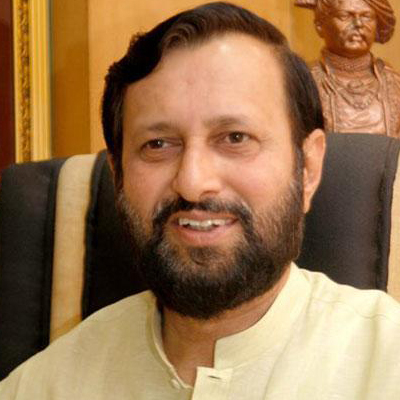
    NEW DELHI: Senior BJP leader Prakash Javadekar has been sworn in as the new Information and Broadcasting Minister. Javadekar, in an interview to a News channel has said that his first priority as the Minister of State Information & Broadcasting would be to ensure the freedom of media.


    Javadekar, who will take charge of the ministry later today, also said he would like to study three portfolios given to him for three to four days before taking any action.


    Javadekar has also been given (Independent charge) of Environment and Parliamentary Affairs.


    Ravi Shankar Prasad is to be the new communication and information technology minister with cabinet rank. He will also hold charge of the law and justice ministry.