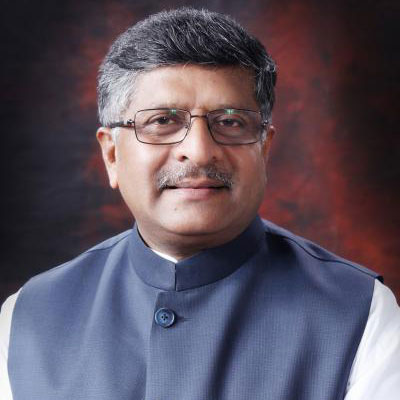
Tag: Ravi Shankar Prasad

  • ‘Digital India’ working towards empowered Digital Village: Prasad

    ‘Digital India’ working towards empowered Digital Village: Prasad

    NEW DELHI: The transformative and ambitious ‘Digital India’ programme of the Government of India has started bearing fruits after six months of its inception and e-services have begun to pick up momentum and reaching the bottom of the pyramid, which is digitally empowering the people of the country.

     
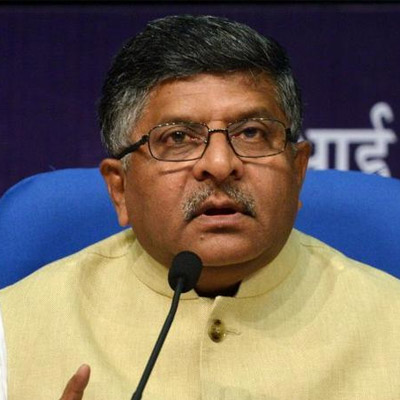
    Making this claim, Communications and Information and Technology Minister Ravi Shankar Prasad said today that the governments at the Central and state levels, industry and academia need to work in tandem to accelerate the pace of digitisation.
     

    He was addressing the second edition of the international conference ‘i-Bharat’ organised by FICCI in partnership with the Department of Electronics & IT (DeitY) of the Ministry.
     

    Highlighting the progress of Digital India, Prasad said more than 12,000 rural post office branches had been linked digitally and soon payment banking would also become a reality for the post offices. As part of Digital India, the government had also planned to make Digital Village across the country by linking all schemes with technology. The digital village would be powered by LED lighting, solar energy, skill development centres, e-services like e-education and e-health. To make this programme a success, District Collectors will have to play an important role.
     

    Speaking about e-Taal, Prasad said the web portal disseminates real time statistics of the e-transactions taking place at the national and state level e-Governance Projects. He added that the National e-Governance Plan of the Government sought to provide impetus for long-term growth of e-Governance within the country.
     

    On promoting electronic manufacturing in India, Prasad said the progressive policies and aggressive focus on ‘Make in India’ initiative have played a significant part in the resurgence of the electronics manufacturing sector. Investment in the electronics manufacturing has increased, giving a quantum jump to the sector.
     

    Elaborating on the headway made in connecting gram panchayats of the country with the optical fibre network, Prasad said 18 states were on board and the work was on at a rapid pace. To script a success story with ‘Digital India,’ the government and industry had to look for innovative ways to expedite the process of connecting India digitally, he added.
     

    FICCI President Harshavardhan Neotia said the Government has embarked on a reforms programme focused on making India an easy place to do business. The emphasis has been on simplification and rationalisation of the existing rules and introduction of information technology to make governance more efficient and effective. Jan Dhan Yojana, Aadhaar and Mobile number (JAM) trinity is acting as a game changing reform that is allowing transfer of benefits in a leakage-proof, well-targeted and cashless manner.


    FICCI-IT Committee chairperson Debjani Ghosh said technology was changing the world and its transformative powers were evidently visible in India. New technologies were deeply impacting governance, society, and security and this year’s i-Bharat conference aimed to bring together leaders from all segments of industry and government to explore and demystify the complex technology trends and reach at solutions and execution techniques of the programs to connect India digitally. She added that the government and industry needed to figure out new solutions to speed up the process of making India digital. 
  • e-governance should work towards creating & sustaining a vibrant ecosystem for growth: Prasad

    e-governance should work towards creating & sustaining a vibrant ecosystem for growth: Prasad

    NEW DELHI: Noting that Information Communication Technology (ICT) is the tool of development and progress, which is the very ethos and purpose of e-Governance, Communications and Information Technology Minister Ravi Shankar Prasad said, “The thrust of good governance is on creating and sustaining an ecosystem which fosters strong and equitable development.”


    In a message on Digital India at the start of the e-Governance week, Prasad said, “The foundation of a strong, prosperous nation is built on the quality of governance that it provides to its citizens. The recent rapid advances in ICT have made e-Govemance a very potent tool for ushering in an era of good governance.”


    He added that “Citizen-First” is the mantra, motto and guiding principle. “We are committed to bridge the digital gap between the ‘haves’ and ‘havenots’,” he said.


    “With this vision in mind, we bunched the “Digital India” Programme that will create a strong communication and IT infrastructure for enabling e-services like e-banking, e-Commerce, e-education, e-governance, e-entertainment, e-health etc. across the country to give a new fillip to the inclusive growth of Indian economy,” he added.


    Good Governance is the key to a nation’s progress, he said adding that Prime Minister Narendra Modi had emphasised “Minimum Government, Maximum Governance” on more than one occasion, which can help in easy, effective and economical governance.

  • Aaj Tak’s power packed fourth summit to kickstart on 11 December

    Aaj Tak’s power packed fourth summit to kickstart on 11 December

    MUMBAI: The fourth edition of Hindi heartland’s biggest summit – Agenda Aaj Tak also known as the Hindi Jagat ka Mahamanch will be held this year on 11 and 12 December.


    The two day conclave will see the convergence of key names across politics, entertainment and sports.


    The event, in its fourth year, will focus on the biggest subjects in the national mind space right from politics, social issues, industry initiatives, culture and more, thus setting the stage for the most crucial national decisions.


    The list of speakers include prominent politicians like Arun Jaitley, Nitin Gadkari, Suresh Prabhakar Prabhu, Ravi Shankar Prasad, Smriti Irani along with the likes of Brinda Karat, Akhilesh Yadav, PA Sangma, Shivraj Singh Chouhan, Salman Khurshid, Asaduddin Owaisi and Mehbooba Mufti Sayeed.


    From the sports background eminent personalities like Imran Khan and Kapil Dev along with stars from the entertainment industry like Ranveer Singh, Deepika Padukone, Sonam Kapoor, Sunny Deol, Anupam Kher, Adnan Sami and Annu Kapoor will also be present at the summit.


    The conclave will open with the session, Vikas Ka Express Way with Minister of Shipping, Road Transport and Highways Nitin Gadkari and Lok Sabha Congress leader Mallikarjun Kharge.


    The Congress party leader Anand Sharma and CPI leader Brinda Karat with cabinet minister Ravi Shankar Prasad will discuss the impact of PM Narendra Modi in the session Thehar Gayi Modi Lehar? UP CM Akhilesh Yadav will lay out his plans in the session Akhilesh Ki Agni Pariksha, while CBI director Anil Sinha will answer the big question of Kab Aayega Dawood?


    Kiren Rijiju and P.A. Sangma will share their point of view during North East Par Seedhi Nazar. Senior BJP leader and CM of Madhya Pradesh Shivraj Singh Chouhan will outline his achievements during Dus Ka Dum.


    The World Cup winning captains from both sides of the border Imran Khan and Kapil Dev will speak on Sabse Bade Khiladi.


    The second day of the conclave will start with finance minister Arun Jaitley explaining his vision and plan to revive Indian economy during Main Hoon Na, while J&K leader Mehbooba Mufti Sayeed will share plans for Jammu Kashmir in Mission Kashmir.


    Shayari v/s Smiley will add to the entertainment quotient with poets Munawwar Rana, Kumar Vishwas, author Amish Tripathi and actor & TV presenter Annu Kapoor.


    The session of Terror Ka Tension will have discussions on plans to counter terrorism with the police commissioners of Delhi, Mumbai and Bangalore, Bhim Sain Bassi, Ahmed Javed and N. S. Megharikh respectively.


    Sunny Deol will speak in the session Yamla, Pagla, Deewana while Anupam Kher and Ashutosh Rana will discuss the contentious issue of intolerance.


    Pakistan’s High Commissioner to India, Abdul Basit will share his views in Pakistan Ke Dil Mein Kya Hai, while Bollywood heartthrobs Ranveer Singh and Deepika Padukone will let their heart out during the session Bollywood Ke Mastaane.

  • Govt. bows to votaries of free social media, withdraws controversial draft on Encryption Policy

    Govt. bows to votaries of free social media, withdraws controversial draft on Encryption Policy

    NEW DELHI: Following protests by votaries of a free social media, the government today withdrew a draft of an encryption policy, thus exempting mass use encryption products, which are currently being used in web applications, social media sites, and social media applications such as Whatsapp, Facebook, Twitter, etc


    In a statement, the Department of Electronics and Information Technology said that it had “noted public sentiments viz-a-viz this draft. It is clarified that the above mentioned draft is not the final view of the Government on the matter.”


    The draft had been prepared by a High-level Committee as part of an attempt to ensure secure transactions in Cyber Space for individuals, businesses and Government and prepare a National Encryption Policy. 


    The statement said the Department had also taken note of the ambiguity in some portions of the draft that may have led to misgivings. “Hence, the draft has been withdrawn and will be put up for consultation after appropriate revision.” 


    The removal of the draft also amounts to exemptions to SSL/TLS (Secure Sockets Layer/ Transport Layer Security) encryption products being used in Internet-banking and payment gateways as directed by the Reserve Bank of India and SSL/TLS encryption products being used for e-commerce and password-based transactions.


    Communications and IT Minister Ravi Shankar Prasad told newspersons that the draft was not the final view of the government. “The policy will consider the views of the public,” he said.


    Under the draft, which has now been withdrawn, every message that is sent through e-mail, Whatsapp or SMS was required to be stored in plain text format for 90 days from the date of transaction and made available to the law enforcement agencies on demand.


    The draft was to help introduce a New Encryption Policy under Section 84A of the Information Technology Act, 2000, and had called for public comments by 16 October.


    The stated mission of the policy is to provide confidentiality of information in cyber space for individuals, protect sensitive or proprietary information, ensure reliability and integrity of nationally-critical information systems and networks.


    “Users or organisations within B2B group may use encryption for storage and communication. Encryption algorithms and key sizes shall be prescribed by the government through notifications from time to time… On demand, the user shall be able to reproduce the same plain text and encrypted text pairs using the software or hardware used to produce the encrypted text from the given plain text,” the draft said.

  • BSNL leaps towards Digital India, to upgrade broadband speed

    BSNL leaps towards Digital India, to upgrade broadband speed

    NEW DELHI: In an effort to fulfil its aim of linking the nation through the Internet, Bharat Sanchar Nigam Ltd is upgrading broadband speed by a minimum 2 Mbps at no additional cost for consumers pan India from 1 October.


    Earlier, BSNL had offered free night calling from BSNL landlines to all operator networks from 9 pm to 7 am and free incoming roaming services for its mobile customers. 


    BSNL is also offering 1 Gb free E-Mail box to customers from the existing 50 Mb mail box.


    Minister of Communications and Information Technology Ravi Shankar Prasad made this announcement at a function in Gurgaon. Minister of State for Planning Rao Inderjeet Singh was also present along with BSNL CMD Anupam Srivastav, director (CFA) N K Gupta, director (HR) Sujata Ray, and Haryana CGM R C Arya.


    The speed upgradation will benefit all existing and new BSNL broadband customers. Under this scheme, BSNL is upgrading the speed of existing broadband plans of 512 Kbps and 1 Mbps to 2 Mbps speed. With this upgradation, BSNL customers can access and surf the internet at high speed.


    BSNL is the first service provider to provide the Broadband Access to the country. The company launched broadband services over its landline in India in 2005 with speed of 256kbps and above over the Multi Protocol Label Switching (MPLS) based IP infrastructure in urban as well as rural areas.


    Since then BSNL is constantly working to increase the broadband speed for enhanced customer experience in urban and rural areas as envisaged in the New Telecom Policy 2012. Now, BSNL offers Broadband services with various plans ranging from 2 mbps to 100 mbps speed using ADSL/VDSL and fibre based GPON technology in a very affordable price range. The company currently has around 10 million broadband customers including about 1.1 million rural customers.


    This upgradation shall enhance customer experience while surfing on internet and enjoying live video streaming by all customers even in the low price range. This scheme is expected to attract new customers for subscribing BSNL broadband customers in an affordable manner.


    BSNL has more than 77 million mobile customers, more than 16 million wired line telephone connections and around 10 million wired broadband connections.

  • “We will enhance internet penetration from 300 mil to 500 mil within 2.5 years:” Ravi Shankar Prasad

    “We will enhance internet penetration from 300 mil to 500 mil within 2.5 years:” Ravi Shankar Prasad

    MUMBAI: India today launched four world class broadband products by Centre for Development of Telematics (C-DOT). With this, the country has come at par with all other developed countries in the world in respect of quality telecommunication services and effective penetration of advanced broadband based services.


    Union Minister for communication and IT, Ravi Shankar Prasad while launching the new products indigenously developed by C-DOT stated that the NDA Government is committed to bring all 2.5 lakh villages under broadband services and enhance internet penetration from 300 million to 500 million within two and half years. 


    Prasad launched the products in the presence of his Kenyan counterpart, cabinet secretary, ICT in a function organised at C-DOT campus, New Delhi. Prasad further stated that the new products have been launched with an aim to provide an advanced digital infrastructure for ‘Digital India’ Initiative launched by Prime Minister Narendra Modi.


    He further stated that ‘Digital India’ initiative is bound to bring governance available in the palm of every Indian. It is more for the poor, underprivileged and the marginal people like masons and carpenters etc.


    Prasad stressed on the fact that, ‘Digital India’ is a transformational programme and a dream to bring a positive change. The initiative would also go a long way in digital empowerment of the people of India. The initiative launched by Modi would make India developed, globally credible, affluent and would further sync with Make in India and Skill India programme.


    Prasad elaborated the importance of skill development and said that there are ample opportunities of earning in mobile maintenance profession as the number of mobile sets are surging day by day. 

    He also appreciated the role of C-DOT in transforming the telecommunication scenario in the country, especially in the rural India. C-DOT has rendered significant contribution in providing broadband coverage across the nation. He also appreciated the products developed by C-DOT and stated that the long distance Wi-Fi is going to solve the problem of distance, whereas Solar powered Wi-Fi would do away the dependence on the power availability.


    He stated that the Next Generation Network technology is quite important for the service providers for converging landline/ mobile/ data network. MTNL and BSNL users are going to be benefitted as they would be able to transform their landline network into the most advanced network. He called upon C-DOT to come out with more advanced innovative products in order to ensure foolproof telecom services, apart from lending a hand in ensuring digital literacy across the country in respective local languages.


    The Union Minister further stated that digital connectivity leads to good governance and the C-DOT products are great, innovative and dependable, but he would be happier if the products are savvy and are used by more people.


    He exhorted the private sector to go for C-DOT products on large scale as these have been developed after a sustained research and analysis for which the Government invested a substantial amount keeping in view the need to match with the fast changing world. 


    The next generation land line network would not only revolutionise the basic telephony but would upgrade the entire landline services. He added that presently all gram panchayats are connected with broadband, the government is committed to connect all gram panchayats in the country with broadband. 

    C-DOT executive director Vipin Tyagi said that its efforts are in the way of taking dream of Digital India further as he delivered his welcome address.


    He also stated that the C-DOT has been innovating with an aim to empower the weaker strata of the society and developing indigenous products to facilitate continuous telecom up-gradation. He said that technology is big enabler and broadband is big leveler. Roti, Kapda, Makan and Broadband are the basic needs of the human being. 

  • Spectrum sharing and trading guidelines on the anvil: Ravi Shankar Prasad

    Spectrum sharing and trading guidelines on the anvil: Ravi Shankar Prasad

    NEW DELHI: The Government is in the process of finalising the spectrum sharing and trading guidelines and is working towards creating an enabling ecosystem to make India a digitally-enabled society, according to Communications & IT Minister Ravi Shankar Prasad.


    Addressing a CEOs Roundtable on ‘Investment in the NexGen Digital Infrastructure’ organised by FICCI in collaboration with the Ministry to give an impetus to the recently launched ‘Digital India’ programme, Prasad said in the last 15 months, the government has been able to set a benchmark with its approach in spectrum auction. He added that the private sector has a pivotal role in driving the ‘Digital India’ programme.


    Prasad said the government is working towards ‘Digital Inclusion’. In this regard, the process of digitally linking services such as healthcare and postal with community centres in rural areas have already begun. ‘Digital India’ programme needs massive investments, said Prasad and urged the industry to take advantage of the opportunities in the sector.


    Prasad said electronic manufacturing has been one of the neglected sectors, which holds great promise. His ministry has been pursuing this vigorously and has been able to take the entire county onboard to drive this initiative. He added that the success of ‘Digital India’ would lead to employment generation, both primary and ancillary, and enhancing digital literacy of the citizens.


    While highlighting the initiatives of the government Telecom Secretary Rakesh Garg said harmonization of spectrum had begun and by the yearend this process would be complete for majority of bandwidth. He added that Mobile Number Portability is now possible throughout the country and Bharat Net by way of National Optic Fiber Network, would connect 2.5 lakh gram panchayats in India.


    Garg underlined cyber security, local testing labs for cyber security and cloud computing as some of the promising areas for private sector investment. He added that with the expansion of digitization services such as e-health would become a reality where a person from rural area would be able to consult doctors in cities through a virtual platform. 


    Electronics & Information Technology Additional Secretary Tapan Ray said, “Digital India programme aims to provide a seamless communication between the government and its citizens. For this, the government in its ‘Digital India Week’ launched services like Digital Locker and E-sign to enable every citizen to seek services from the government.”


    “India is marred by a digital divide,” said Ray and added that there is a need to bridge this gap with the creation of digital infrastructure. He called upon the industry to invest in digital infrastructure as the sector required massive funding which the government alone could not provide. Highlighting the areas for investments, Ray said that cyber security is one of the biggest challenges for the sector, which provides a huge opportunity to the private sector to explore as continuous vigilance would be needed to safeguard systems against cyberattacks.


    FICCI President Jyotsna Suri said public-private partnerships would play a major role in shaping the future of ‘Digital India’ programme, by bringing efficiency along with much needed funding required for sustainability and scalability. She added that industry needs to understand the nature of the opportunities being offered by the government programmes like ‘Digital India’ hence FICCI has initiated the ‘Digital Bharat’ series as a platform for having transformative exchanges and deliberations.


  • Ravi Shankar Prasad to inaugurate free Wi-fi connection for tourists at Taj Mahal

    Ravi Shankar Prasad to inaugurate free Wi-fi connection for tourists at Taj Mahal

    NEW DELHI: Within days of Telecom Minister Ravi Shankar Prasad’s announcement about strengthening broadband base throughout the country, BSNL has said visitors to the Taj Mahal in Agra will get free Wi-Fi internet facility across the sprawling campus for 30 minutes from 16 June.


    However, any browsing or usage like downloading, surfing after this period would invite charges at Rs 30 an hour, a Bharat Sanchar Nigam Limited official said.


    The trials have been completed and the service will be launched by Prasad in Agra on 16 June.


    While the bandwidth is being provided by BSNL, the system integrator – Bengaluru based Quadgen – is providing the wireless support.


    Due to security and other reasons, the ASI has only permitted the Wi-Fi availability in a radius of 30 metres from the main gate of the Taj Mahal, officials further said.


    Millions of domestic and foreign tourists visit the Taj Mahal, often considered as the epitome of love as it was built by Mughal emperor Shah Jahan in memory of his beloved wife Mumtaz Mahal.


    The Archaeological Survey of India (ASI) had requested the BSNL to work on the project to start the facility in the complex. Wi-Fi internet facility at public places in Agra is currently available only at the Agra Cantonment railway station.


    If the trials are successful, BSNL may extend the facility to Fatehpur Sikri as well.

  • Full mobile number portability from July: Ravi Shankar Prasad

    Full mobile number portability from July: Ravi Shankar Prasad

    NEW DELHI: Communications and Information Technology minister Ravi Shankar Prasad has said that full mobile number portability will become operational across the country from July and consumers will get to keep the same numbers even when changing the telecom service provider.


    He also announced on 2 June 2015 that Bharat Sanchar Nigam Limited (BSNL) will offer free roaming all over the country from 15 June.


    The telecom minister further added that spectrum sharing and trading policy would go to the Cabinet this month.


    Last month, BSNL introduced an unlimited free calling scheme from 9 pm and 7 am to revive its landline business. BSNL has the largest number of landline customers, with a market share of 62.26 per cent.


    The Minister regretted that BSNL, which had shown profits in 2004, was showing a deficit at present.


    When asked about frequent call drop complaints by consumers, the Minister said he has asked officials if a scheme of disincentive for the operators can be put in place.


    “Call drops are due to lack of towers. As far as installation is concerned it is subject to local law. No point to raise bogey of cell tower radiation and then complain of call drop,” Prasad said.  


    Additionally, answering a question relating to the controversial Section 66A of the IT Act 2000, Prasad said that the government fully backs freedom of speech.


    Section 66A defines the punishment for sending “offensive” messages through a computer or any other communication device like a mobile phone or a tablet. A conviction can fetch a maximum of three years in jail and a fine.


    The Supreme Court is already examining the constitutional validity of Section 66A of the amended IT Act following a batch of petitions alleging the section impinges upon the Fundamental Right to freedom of speech and expression.


    The Minister said, “The case was pending in the court before I joined the ministry.”

  • Spectrum auctions to be done in timely, fair & transparent way: Ravi Shankar Prasad

    Spectrum auctions to be done in timely, fair & transparent way: Ravi Shankar Prasad

    NEW DELHI: Communications and Information Technology Minister Ravi Shankar Prasad has assured the industry that the auction of spectrum in the future too would be conducted in a timely, fair and transparent manner.


    The hallmark will be good governance and “the road map will be fully disclosed in advance so that industry can put its act together in a planned manner,” he said.


    Inaugurating ‘Digital Bharat 2015,’ the first edition of FICCI’s platform for having transformative exchanges and deliberations, organized jointly with the Department of Telecommunications, Ministry of Communications & IT, Prasad said that the ‘Digital India’ programme was party-neutral, ideology-neutral and Centre-State-neutral. “It aims at bridging the urban-rural divide and is committed to ensure digital inclusion. I would like to see every mason and carpenter in the country using his smart phone to enhance his business and income,” he added.


    The last spectrum auction, the biggest so far, that ended in March this year fetched about Rs 1.10 lakh crore to the government. 


    The Minister also launched the FICCI-EY report titled ‘Speeding Ahead on the Telecom and Digital Economy Highway.’ 


    Telecom secretary Rakesh Garg said that the three ambitious and visionary programmes – Make in India, Digital India and Smart Cities – have opened up huge opportunities for the industry. The economy, he said, would stand to benefit immensely through higher productivity that the vast number of talented Indians will usher in. 


    He said that the government was committed to doing everything possible to make the environment conducive for industry and the consumer, the success of which will depend upon industry and government working together.


    The Indian Express whole-time director and head, new media Anant Goenka pointed out that the importance of digital technology could be gleaned from the success stories of the young multi-billionaires who have used digital platforms innovatively. “The question that remains is how ‘Digital Bharat’ is achieved in a fair and sustainable way,” he said.


    USIBC Digital Economy Industry Group chairman Joseph Alhadeff spoke of the need to achieve global standards in manufacturing and integration into the global supply chains. He also called for more enhanced cooperation amongst the stakeholders so that there was no duplication of effort. 


    FICCI president Jyotsna Suri, in her welcome address, said that it was encouraging that the Indian government is prioritizing technology as an enabler for the transformation and development of the country. “However, to reach the desired goals, it is extremely important to develop an environment, which nurtures Government-Industry dialogue and partnerships,” she emphasized and added, “We need to understand the nature of the opportunities being offered by the government programs like Digital India and Make in India and therefore FICCI has initiated the Digital Bharat series as a platform for having transformative exchanges and deliberations.”


    FICCI communications and digital economy committee chairman Virat Bhatia, who moderated the inaugural session and delivered a vote of thanks, stated, “The digital revolution now stands at the cusp of a transformation, with the government having laid out its vision of a digitally enabled India over the last one year. The success of both “Digital India” and “Make in India”, will ride on the back of strong telecom ecosystem, digital infrastructure and industry’s link in the value chain. Some important issues on policy and regulatory front will need continued attention.”


    EY global telecommunications leader Prashant Singhal presented the highlights and recommendations of the FICCI-EY report.


    The key takeaways of the report are as follows:


    ·Recommends to bring handsets under provisions of “Goods of Special Importance” under the Central Excise Tax Act, 1956; thus, capping the maximum VAT levied by states at five per cent.


    ·Endorses a ten-year tax holiday on a block of 15 years on all profits and gains for manufacturing in the mobile phone industry.


    ·Endorses to incorporate the DoT guidelines on installation of mobile tower in the statutory framework and rules in line with the 53rd Parliamentary Committee report.


    ·Recommends to have minimum interest subsidy of five per cent on all fixed capital investments for entire Electronic System Design and Manufacturing sector in the lines of benefits given under Technology Upgradation Fund Scheme.


    ·Recommends to eliminate or reduce Universal Service Obligation Fund (USOF) to one – three per cent.


    Commenting on these findings, Singhal said, “A favourable and stable regulatory environment, coupled with increased transparency, is critical for attracting investments to the sector. An empathetic perspective of challenges faced by service providers is also important for restoring its vitality. Our report highlights that the country will speed ahead on the Digital Highway only with the provision of a clear spectrum roadmap, reducing USOF levy, rationalizing taxes and providing a policy push to boost manufacturing ecosystem. The resultant benefits transcend sectors. Moreover, telecom should be considered a critical infrastructure sector and its financing needs should be addressed accordingly.”