Tag: Ravi Shankar

  • Broadband target by government needs to be evaluated, says Khullar

    Broadband target by government needs to be evaluated, says Khullar

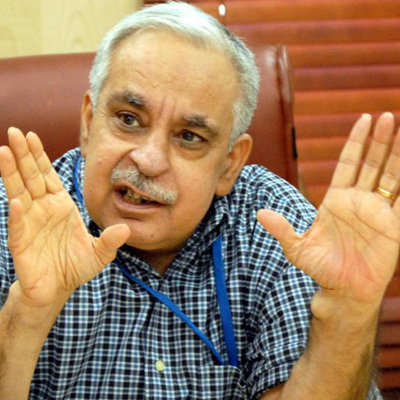
    MUMBAI: Telecom Regulatory Authority of India (TRAI) chairman Rahul Khullar said the target set by the government for providing broadband network for all was unrealistic and called for evaluating it. He said it would be simpler to first connect the metros and then look at connecting cities and talukas in a gradual manner.

     “Right now we are sort of deluding ourselves by saying we will achieve 100 per cent and all of you know exactly what has been achieved,” said Khullar. “This can’t be an infrastructure project. Focus on just building the infrastructure is wrong. The entire ecosystem – from applications to services — needs to be developed. The approach should be more practical and realistic,” Khullar added.

     The government plans to link 2.5 lakh village panchayats across the country by December 2016 through the national optical fibre network (NOFN) programme, while promoting initiatives like e-governance, e-education and e-health. The project also aims to ensure that all villages in India have high speed internet.

     In an interview with the Economic Times in August this year, telecom minister Ravi Shankar Prasad had said the government of Prime Minister Narendra Modi wants to ensure a smartphone in the hands of every citizen by 2019. Currently, nearly 74 per cent of the population has mobile phones, most of which though are in the hands of urban Indians.


  • Iconic music films mark 100th FD Zone screening this week

    Iconic music films mark 100th FD Zone screening this week

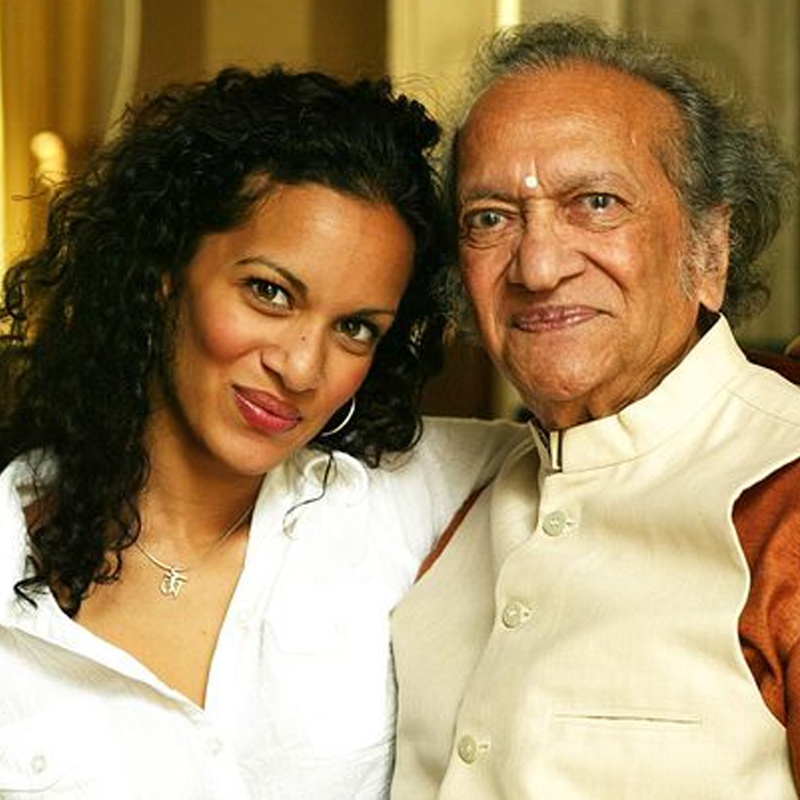
    NEW DELHI:  Eminent film based on the country’s music legends will mark the 100th FD Zone screening. The films include Ravi Shankar which is based on the Bharat Ratna sitarist and is directed by Pramod Pati. Others include Amir Khan by SNS Sastry, and on Bhimsen Joshi directed by the eminent Gulzar. The screening will begin on 12 July at 4 pm.


    All the three films are remarkably individualistic in style. Pramod Pati’s film carries his zany energy, while Sastry’s film is a sublime meditation of the arts of music and film-making. Gulzar’s film is a feature-length documentary which is a sensory delight.


    FD Zone commenced two years earlier with a three-day festival of Mani Kaul’s films at the FD office in Mumbai. The programme of weekly screenings began on 14 July 2012 with SNS Sastry’s I am Twenty and Ashim Ahluwalia’s John and Jane.


    Since then, films have been shown every Saturday from the archives of the division aimed at creating a dialogue on diverse film-making practices, with emphasis on the non-fiction genre.


    The FD Zone screenings are free and open to all and even independent films have been screened along with films from the FD archives.


    Filmmakers visiting Mumbai have shared their films, fellow filmmakers have curated programmes and the audience has supported and enthusiastically participated in creating this space. The programme has been running once a month in seven other cities – Delhi, Bengaluru, Chennai, Kolkata, Madurai, Thrissur and Coimbatore, in partnership with local organisations.


    The films on Ravi Shankar and Amir Khan were made in 1970, while the film on Joshi was made in 1992.

  • Bridging the urban-rural gap

    Bridging the urban-rural gap

    MUMBAI: It was in the early 90s that India opened up to trade and investment with the rest of the world and ever since there has been no looking back.


    Liberalisation has upped the purchasing power and standard of living of the middle class but it has also deepened the urban-rural divide, what with marketers focusing more on major towns and metros as compared to rural areas in the country.


    Initiatives such as HUL’s Project Shakti – which aims to create livelihood for underprivileged women in villages – have been very few and far between.


    Speaking of similar such endeavours at the Rural Marketing Forum were the likes of Avinash Oza, Ashish Tandon, Ravi Shankar, Rajendra Dhandhukia, Sanjeev Goyle, Sharad Varshney, Taranbir Singh, Vinay Thakker and Veerendra Jamdade.


    Part of the three-day Asia Retail Congress – a global platform to promote world-class retail practices – the forum saw discussions titled Agriculture Sector – Challenges & Opportunities, Is it possible to decode Rural Consumer Behaviour and Bus Stations – New Hub for Rural Marketing among others.


    According to Fullerton India Credit Company marketing and rural business head Ravi Shankar, government-introduced welfare schemes such as NREGA come with their fair share of challenges. “We have to educate people, especially youngsters who don’t want to follow their parents into farming that there are a lot more initiatives like dairy farming, poultry farming etc. that they can indulge in and earn well without leaving their villages or smaller cities,” he said.


    ING Vysya Bank business head for agriculture and rural banking Taranbir Singh gave the example of what Nestle did to Moga in Punjab. “The city is a perfect example of how corporates can transform lives and hopefully, more corporates will help change rural India by starting more branches, manufacturing units etc,” he said.


    JCB India rural GM and head Puneet Vidyarathi was of the view that citizens as a whole, need to start contributing to agriculture and work on challenges including increasing land banks, managing water resources and building on infrastructure.


    A majority of the participants felt that regional players would gain apart from the people in rural areas if the required importance was given to rural development by both government and corporates.


    On the topic of how brands can reach out to rural areas, Vritti Solutions founder and director Veerendra Jamade suggested that instead of waiting for melas, schools and pilgrims to reach out to rural consumers, bus stations should be utilised for the purpose. “Melas, schools, etc. have their own limitations whereas bus stations, if used to our advantage, can optimise the presence of the brand in that area,” he said.


    A key observation that emerged was: rural consumers follow a herd mentality and go by what their elders advise and hence, brands have a tough job convincing them about their products. However, mobile penetration seems to be changing that.


    A related takeaway was that brands need to focus on different age groups in rural areas and target them accordingly.

  • Aegis Media India launches Carat Fresh Rural

    Aegis Media India launches Carat Fresh Rural

    MUMBAI: Aegis Media India has launched Carat Fresh Rural, a professionally run, international rural communications agency. Carat Fresh Rural, the rural division of Carat Fresh Integrated, will provide comprehensive rural marketing and communication solutions to clients, which include rural planning, implementing outreach campaigns in rural areas, route planning, monitoring, van operations, haat and mandi contact programs, wall paintings, melas and any other marketing communication activities that may be required in small towns and villages.

    Interestingly, it has already bagged assignments from clients like Mahindra & Mahindra, Godrej Consumer Products, Escorts, Godrej, GPI, SONY MAX, Pidilite, Force Motors, Bayer Crop Science, and others. Carat Fresh Rural will be starting with a team of 30 rural marketers and a network of 1500 operators, across seven offices and 20 operation bases, led by the famous rural expert, Keshav Chandorkar, who will report to Carat Fresh Integrated head, Ravi Shankar.

    Before launching, they have already carried out activities in over 18000 villages across 21 states.

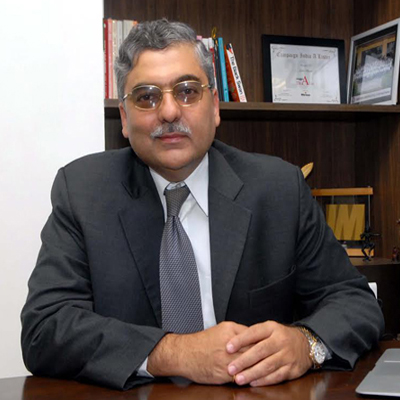
    “Rural Marketing Communications is the holy grail that no agency has successfully cracked in India, thus far. I believe that there is a universe at least equal to the size of the entire advertising industry available to agencies to explore in the rural marketing communications field. Carat Fresh Rural will, in many ways, pioneer that.  We are developing, for the first time in India, state-of-the-art rural management tools.  The Carat Fresh suite of Rural Tools will have the country’s only real time Rural Planning Tool, enabled by 3G connectivity and linked to a host of data sources including the rich census data, media data and 16 other sources of data. Since implementation in rural is key, every one of the Carat Fresh Rural operators will have an App on their GPS enabled trackers that will automatically monitor and relay data without human intervention. Several Tools and Apps are being developed to revolutionize rural communications in India” said, chairman India & CEO South East Asia Ashish Bhasin.

    Carat Fresh Rural aims to have a network of 10,000 people and 100 rural experts, across  26 states, by mid-2015. By 2015 Carat Fresh Rural expects to have covered over 100,000 villages throughout India.  In the second phase of expansion, which will span from 2016 t0 2018, it is anticipated that the network will grow to 20000 people, employees to 200+ and over 200,000 villages would have been covered.

  • Bengaluru City Police partners with Havas WW Digital Matrix

    MUMBAI: Bengaluru City Police has partnered with Havas‘s full service digital agency Havas Worldwide Matrix to build their police community engagement program through social media.

    The programme will be launched with the aim of generating awareness among citizens and assisting Bengaluru City Police in building a social media community via platforms like Facebook and Twitter. This will be a common communication platform and help the city police to listen and engage with the law-abiding citizens and establish better connect with them.

    This Police Community Engagement program will also help the Bengaluru City Police to showcase and make citizens aware about their community initiatives like Elders Helpline (1090), Children Helpline (Makkala Sahayavani- 1098) and Women Helpline (Vanitha Sahayavani- 1091).

    Havas Worldwide Digital Matrix will put into place its expertise and help the Bengaluru Police establish an online media centre in the country. Havas Worldwide Digital Matrix will assist BCP in building their own team of Social Media Community managers and will help them serve people better.

    Bengaluru City Police will also have access to Havas Worldwide Digital Matrix‘s online communication tool ReputeMe which will help the community managers to listen, monitor and engage with the people and understand and attend to their concerns and problems at a faster pace. When it comes to Social Media communication and technology, this would add significant ammo in their armoury.

    The Social Media Community will also serve as an instrument for crisis management, along with exploring the idea of community policing using social media. Havas WW Matrix has been roped in also to implement this approach and to maintain an equally good reputation online as offline.

    Joint Commissioner of Police Crime B. Dayananda said, “We are eager to build a community and reach out to more citizens through our Social Media Program. With Social media fast turning into a medium for the masses, this program will help us to enhance our reach and connect with the citizens on a personal level. We are confident that our association with Havas Worldwide Digital Matrix will help fulfill our goal of making BCP accessible to the masses.”

    Havas Worldwide Digital Matrix CEO Ravi Shankar said, “As the community expands and disperses, Social Media comes across as a great platform to keep the community closer. This Social Media Community will be highly engaging and will help the city police come closer to the community and reach the larger population of Bengaluru. Launching a Social Media Program is a great endeavor by the BCP, and Havas Worldwide Digital Matrix is happy to be its part. We believe the future of this association is going to be very bright, and are looking forward to the same.”