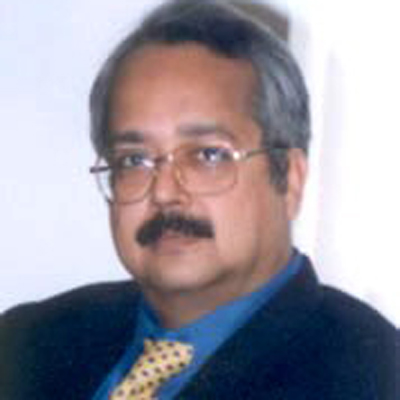
Tag: Ravi Mansukhani

  • Ravi Mansukhani to handle content business for IMCL associate Indusind Entertainment

    Ravi Mansukhani to handle content business for IMCL associate Indusind Entertainment

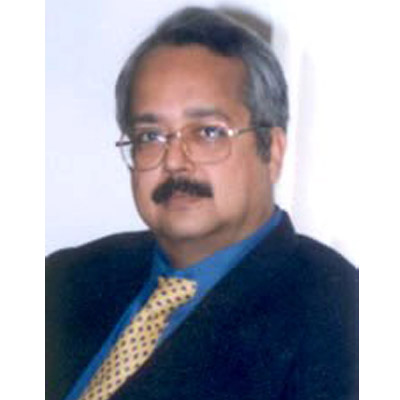
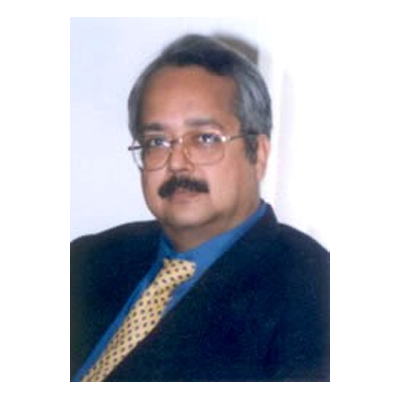
    MUMBAI:  For quite a while now, multi-system operator (MSO) IndusInd Media and Communications Limited (IMCL) has been focused on distribution though it started out with local content. However, the MSO has decided to revisit its core strength, with none other than former MD Ravi Mansukhani taking up the gauntlet.


    Ever since Ravi stepped down from his position in February, making way for Tony D’Silva, speculation has been rife about his next move. In the midst of all this, indiantelevision.com found out that he will be returning to the fold, albeit in a new role. “Digitisation has new content challenges and that content needs to be segmented,” Hinduja group sources say.  “He has played a crucial role in IMCL in the last decade, but prior to that, he was also in charge of content. So, he has experience in different spheres. Now, it is up to the promoters to utilize his services.”


    The Hinduja Group is looking at developing content as a major international vertical.


    Ravi meanwhile said, “Yes, I will be taking up the role. But nothing is finalized yet. The exact role still needs to be discussed,” before clarifying that there would be clarity on his new job profile only after a couple of more meetings.


    The Hinduja Media group , according to industry sources, is not only interested in localised content but also animation and some of this would be sourced from Indusind Entertainment.  If they are to be believed, Ravi may be involved with content related to animation and might be working closely with Ambika Hinduja. Further, the company may also be looking at setting up an animation facility with Ravi working on it.


    With the Hinduja group acquiring the license for its Headend In The Sky (HITS) project, and phase III and phase IV to be tapped by both the MSO and the HITS platform, will foraying into content help? “Content can do well, only if the distribution does,” said a source.

  • IndusInd Media undergoing complete top management overhaul

    IndusInd Media undergoing complete top management overhaul

     MUMBAI: Hinduja Ventures Limited-owned IndusInd Media & Communications Ltd is going in for a complete overhaul of its top management.


     After having appointed Tony D’silva as the MD and CEO of IndusInd Media and also as Hinduja Venture’s Group CEO – media, the company is also looking at bringing in fresh faces in other key positions, sources said.


     D’silva’s appointment has combined the positions of the managing director and chief executive officer at IndusInd Media, which were earlier held by two persons – Ravi Mansukhani as the MD and Nagesh Chabria as the CEO.


     Ravi Mansukhani’s resignation has already been accepted by the company’s board of directors. Chabria’s position as CEO has become untenable with D’silva’s appointment.


     According to sources in the company, Chabria has resigned and is currently serving a notice period. Indiantelevision.com could not reach Chabria for a comment.


     The company sources also said IndusInd Media’s chief financial officer Dilip Panjwani and chief technology officer Vivek Garg too could be replaced soon.


    When contacted, Panjwani denied rumours that he has resigned. “This isn’t true. I haven’t resigned and neither am I serving my notice period,” he said.


     Hinduja Ventures reported that for the nine months ended 31 December, 2013, IndusInd Media and Communications had revenues of Rs 21.86 million, down 50 per cent from Rs 43.73 million a year ago.


    Surprisingly, IndusInd Media and Communications’ revenue for the quarter ended December 31, 2013 has been shown as nil.


     For the nine months ended 31 December, 2013, IndusInd Media Communications had a loss of Rs 84.47 million against profit before tax of Rs 16.72 million a year ago.


     The poor operational performance and the appointment of D’silva comes in the midst of IndusInd Media’s plans to launch new digital cable services like HD services, hybrid set-top boxes for cable TV and internet and other value-added services.


     IndusInd  Media has an estimated 8.5 million subscribers across 36 cities and offers over 350 channels in digital mode. It has a backbone of 10,000 kms of hybrid fibre optic network through which it also offers broadband services.

  • Tony D’silva to spearhead Hinduja Group’s media business

    Tony D’silva to spearhead Hinduja Group’s media business

    MUMBAI: Cable TV industry is undergoing major changes and in this wave of change has come a shocker. IndusInd Media & Communications Ltd. (IMCL) managing director Ravi Mansukhani, has stepped down from his position. Mansukhani, who has been associated with IMCL for more than seven years, had earlier expressed the desire to relinquish his services, which was accepted by the board of directors in the board meeting held on 31 January.


    “Yes, I have stepped down,” confirmed Mansukhani without commenting further.


    The board has now appointed Tony D’silva as IMCL MD and CEO with immediate effect and also approved certain other key management changes. D’silva who is currently the president of Hinduja Ventures Limited (HVL) has also been re-designated as Group CEO- media of HVL. As Group CEO –media and MD and CEO of IMCL, D’silva will hold the responsibility to restructure entire media business and value creation.


    It is notable that HVL is restructuring its media vertical in order to enhance synergy across its various media initiatives. And to support this initiative, Rs 300 crore is being invested in the media business.


    D’silva has been associated with HVL for the past one and a half years and comes with more than four decades of rich experience spread across media, FMCG and pharma sectors holding senior positions. He has a creditable track record of setting up and scaling up media ventures. D’silva began his media foray in 1992 as Modi Entertainment CEO and in 1997 helped Zee TV launch its international business in UK. Upon his return to India in 2001, he joined Star as executive VP and consolidated its TV business. He joined the Sun Group in 2007 to set up Sun Direct DTH as CEO, and then took over as the Group CEO, overseeing its entire media business including TV, print and radio.

  • Mumbai’s cable TV operators battle on Maharashtra entertainment tax

    Mumbai’s cable TV operators battle on Maharashtra entertainment tax

    MUMBAI: There’s a battle royale brewing in India’s entertainment and commercial capital Mumbai. On one side is the Cable Operators’ & Distributors Association (CODA) led by its president Anil Parab. On the other side is the Maharashtra government.

    Parab has threatened to switch off all news channels – including Marathi, English and Hindi – when the Maharashtra assembly convenes for its Monsoon session starting 15 July. What’s bugging cable operators is the entertainment tax that is levied by the Maharashtra government.

    “At Rs 45 per subscriber, it is too high,” says InCable managing director Ravi Mansukhani.

    Parab says that this should be brought down to Rs 15 per set top box or subscriber. “We had agreed to the government’s demand to take it up to Rs 45 from Rs 30 per subscriber earlier because they said cable TV subscriber connectivity declaration was at 30 per cent at that time. Now with digitisation coming in and declarations going up to 100 per cent we believe the tax should go down. Not only will the government’s entertainment tax collections go up, it will also be fair to the cable TV community.”

    Entertainment tax in Delhi is Rs 20, while in others it is zero and yet others keep it in the five per cent to six per cent range. Estimates are that the government has collected around Rs 3.34 crore in entertainment tax from the cable TV operators this year.

    Parab, a legislator and lawyer himself, says he had even met up with deputy chief minister Ajit Pawar on the same earlier, and has asked for a meeting with Maharashtra revenue minister Balasaheb Thorat this week. “I hope to get a positive response. If we don’t then the news channel blackout will spread to the rest of Maharashtra too as I have been getting calls from those in the interiors too expressing their support.”

    Parab is quite clear none of the channels will be spared, not even Doordarshan. “We will go all the way,” says he.

    Indeed. Are those in the corridors of power in Maharashtra listening?

  • TV industry to debate digital dividends at Casbaa India Forum

    TV industry to debate digital dividends at Casbaa India Forum

    NEW DELHI: The ongoing satellite capacity crunch and the challenges of navigating a complex regulatory environment to identifying the future trends in the country‘s multichannel TV market in the era of digitization will be among the subjects under discussion at the India Forum of the Cable and Satellite Broadcasters Association of Asia (Casbaa).

    The meet on 7 March here will bring into focus the disparate voices of various television industry stakeholders.

    “India is undeniably a vast and complex market, but one that continues to provide unparalleled opportunities and potential to investors,” said Casbaa CEO Christopher Slaughter.

    “However, success depends on the ability to navigate the hurdles of the country‘s broadcasting industry and CASBAA‘s annual India Forum provides an ideal platform to hear from leaders and experts from across borders and market segments.”

    Industry leaders will bring their unique perspectives on the current state of Indian broadcasting and what to expect moving ahead.

    Headlining the respected roster of speakers at the event will be government representatives Information and Broadcasting Ministry Secretary Uday Kumar Varma, Telecom Regulatory Authority of India Chairman Rahul Khullar; TRAI Principal Advisor Parameswaran N., and Sudhir Gupta, and Ms. Supriya Sahu, both Joint Secretary (Broadcasting & Policies) in the Ministry.

    The varied list of speakers and panellists will also include Thomas Choi (CEO, Asia Broadcast Satellite), Smita Jha (Leader, Entertainment and Media Practice, PwC India), LV Krishnan (CEO, TAM Media Research), Sameer Manchanda (Chairman & MD, DEN), Ravi Mansukhani (MD, IMCL), Deepak Mathur (SVP, Commercial, Asia-Pacific and the Middle East, SES), Harit Nagpal (MD & CEO, Tata Sky), Bharat Kumar Ranga (Chief Content & Creative Officer, Zee Entertainment), Man Jit Singh (CEO, MSM; President, IBF), Shashi Sinha (Chairman of Technical Committee, BARC; CEO, IPG Mediabrands India), Bill Wade (President & CEO, AsiaSat), Robert Zitter (EVP & CTO, HBO), Deepak Jacob (President, Legal & General Counsel, STAR TV India) among others.

    Partners for the CASBAA India Forum 2013 include Supporting Sponsor SES and Sponsors AsiaSat, Brightcove, CSG International, Eutelsat, IBM and Star India.

  • Hinduja group plans HITS platform; seeks licence from I&B Ministry

    Hinduja group plans HITS platform; seeks licence from I&B Ministry

    MUMBAI: Hinduja Group, which has interests in cable TV distribution business through IndusInd Media and Communications Ltd, is planning to launch Headend-In-The-Sky (HITS) platform for smaller cable TV operators to offer digital service.

    The HITS business will be under Grant Investrade, an investment arm of the Hindujas. Grant Investrade holds 6 per cent stake in IMCL.

    Grant Investrade has applied to the Information and Broadcasting ministry for a licence to operate HITS.

    "We applied for HITS licence about two weeks back. We feel that there will be a huge demand for such a service in the third and fourth phase of digitisation which will spread over small towns," IMCL managing director Ravi Mansukhani tells Indiantelevision.com.

    Former Sun Group chief executive officer Tony D‘Silva will head the HITS business for the Hindujas. A veteran in the distribution business, D‘Silva has experience in both the broadcasting and the direct-to-home (DTH) side of the business. He was earlier heading Sun Direct, Kalanithi Maran‘s DTH company. Prior to that, he was headling Star India‘s distribution business.

    Wouldn‘t it have made more sense for the HITS business to reside in IMCL? "We are looking at creating a neutral platform which cable operators and other MSOs can also tap. So we decided that it be housed under a separate company," explains Mansukhani.

    IMCL is in talks with private equity investors to raise $75 million to fund the second phase of cable TV digitisation. The company plans to deploy four million set-top boxes (STBs) on top of the 1.5 million it is expecting to achieve in the first phase of digitisation.

    Building a HITS platform will involve huge investments as it requires transponder space on satellite, encryption systems and digital set-top boxes. Noida Software Technology Park Limited (NSTPL), part of the Jain TV Group, is planning to invest Rs 15 billion over five years in its Headend-In-The-Sky (HITS) project. The HITS service will operate under the JainHits brand.

    The government has mandated digitisation across India by 31 December 2014. The second phase in 38 more cities will be by 31 March 2013, following the switchover to digital delivery of cable TV in Mumbai, Delhi and Kolkata from 1 November. The revised deadline for switchover to digital delivery in Chennai is likely to be decided by the Madras High Court.

  • ‘Buyout valuations will now be decided in terms of ARPU rather than carriage growth’ : IMCL MD and CEO Ravi Mansukhani

    ‘Buyout valuations will now be decided in terms of ARPU rather than carriage growth’ : IMCL MD and CEO Ravi Mansukhani

    IndusInd Media and Communications Ltd (IMCL), the media subsidiary company of Hinduja Ventures Ltd, plans to raise $100 million, a major chunk of which will be used to fund acquisitions.


    Operating its cable TV business under the InCablenet brand, IMCL had earlier planned an initial public offering (IPO) but changed its stance as the newly listed cable TV entities, Den Networks and Hathway Cable & Datacom, dropped in market value.


    Even on the acquisition front, IMCL has changed gears. Earlier, the focus was to buy small-sized cable TV networks and expand geographies. Now it targets big-ticket acquisitions, expecting the sector to consolidate as the government chalks out a schedule for digitisation across the country.


    Slow on the broadband path, IMCL is experimenting on new technologies where it will not have to entirely overhaul its network to load on broadband capability.


    In an interview with Indiantelevision.com’s Sibabrata Das, IMCL managing director and chief executive officer Ravi Mansukhani talks about how the acquisition game is going to move from carriage calculations to valuations based on ARPU (average revenue per user) growth as the cable TV sector transitions into the digital era.


    Excerpts:

    Why is IMCL taking so much time in readying its IPO?
    We are in the market to raise $100 million ahead of the IPO and have mandated Deutsche Bank for this. We want to first build a solid valuation base. We believe the value of the top-rung MSOs will get a significant boost once the government fixes up a schedule for digitisation. We want to also expand on our size before we go for a public float.


    We have separately raised Rs 1 billion of debt from General Electric. So funding is being taken care of. We are getting ready to move into top gear.

    Have you finalised on how you are going to raise this amount?
    We are weighing various options. We are looking at mezzanine structures. The final structuring will depend on what fund-raising instrument we select.

    Are we going to expect acquisitions or a drive to greater digitisation?
    We plan to use three-fourth of the amount raised for acquiring cable TV networks. We are looking at small and big-ticket acquisitions. We believe there is going to be consolidation in the industry. For digitisation, we have a separate funding plan to meet the capex requirements.

    Why has there been a change in stance as the earlier focus was to buy small-sized cable TV networks and expand geographies?
    We see an opportunity out there as the other leading MSOs like Hathway Cable & Datacom and Den Networks are not on a buying spree. The valuations have dropped and we are ready to make big-ticket acquisitions ahead of the government‘s digitisation schedule. The acquisition focus now will be not on expanding into new geographies but on consolidating and growing in existing operational cities.

    Will the acquisition game change even as the government lays out a roadmap for digitisation across the country?
    The game will definitely change. A few years back, when the pace was set by new entrants such as Den and Digicable, acquisitions were based on carriage calculations and TRP cities were favoured. Now, as digitisation creeps in, buyout valuations will be decided in terms of ARPU growth. So we have decided to consolidate and expand in areas where we already exist like Maharashtra. There is no point in spreading lean.

    “We are in the market to raise $100 mn ahead of the IPO. We want to first build a solid valuation base. We believe the value of the top-rung MSOs will get a significant boost once the govt fixes up a schedule for digitisation. We want to also expand on our size before we go for a public float”

    Do you see MSOs fighting amongst each other once the digitisation programme is announced?
    MSOs would rather consolidate and expand where they are strong; their focus would be on digitising their existing network. MSOs can‘t create a fight today without being attacked; too much is at stake.

    How will MSOs counter the DTH invasion?
    India will remain primarily a cable country. Yes, in a diversified and fragmented market, DTH will have space. But being the incumbent player, cable TV has a distinct advantage. Besides, it is cheaper priced, bandwidth is no issue and it can be interactive. MSOs will also start launching server-based local channels as in the digital era, space will open up for more channels. There will be need for local news and events. DTH can‘t offer these channels.

    How much of IMCL‘s network is digitised?
    We have over half a million digital set-top boxes (STBs) installed. Out of the 28 cities that we operate in, we provide digital services in 17 cities via 10 digital head-ends.


    If the government‘s digitisation plan is on stream, we will deploy close to two million additional boxes in Phase 1. We are going to fund our digitisation through lease and vendor financing.

    Why is IMCL‘s broadband story yet to emerge?
    Our focus has not been on broadband in the past because the franchisee operators have been providing it. Though we provide broadband in nine cities, our revenues from this segment stood at just Rs 50-60 million in FY‘11.


    We plan to have a strong broadband story once the digital path is properly spelt out. We are currently experimenting on new technologies where we will not have to entirely overhaul our network to load on broadband capability.


    We won‘t have a problem building up broadband revenues once we have pushed the digital STBs in. The script will change after the government announces the sunset date for the digitally notified areas. It is companies like You Telecom who will need to grow their cable TV presence in order to provide broadband.

    Hathway has announced it would launch its HD service in June. When are you getting into this segment?
    Our first priority is to offer digital service. We will then graduate to HD. The market is still not ready for it. HD boxes are on the anvil and we will introduce them into the market in the next few months.

    IMCL‘s total income jumped 23 per cent to Rs 4.03 billion in FY‘11. What growth do you estimate in FY‘12 and what is the outlook on carriage income?
    We expect revenue to grow between 20-25 per cent. This will be higher if we raise capital fast and make big-ticket acquisitions.


    We saw 18-20 per cent growth in carriage income in FY‘11. We expect strong growth from this stream as more and more channels get launched in the fiscal.

  • ‘We plan to raise Rs 5 billion’ : Ravi Mansukhani – Indusind Media & Communications CEO and MD

    ‘We plan to raise Rs 5 billion’ : Ravi Mansukhani – Indusind Media & Communications CEO and MD

    Hinduja-owned IndusInd Media & Communications Ltd (IMCL) has survived the scare from a wave of new multi-system operators (MSOs) that threatened to land grab even in the lucrative market of Mumbai.

    IMCL has expanded its footprint to 27 cities and thrived on a hefty carriage revenue that helped the MSO turn profitable. In FY‘09, carriage made up for almost 50 per cent of IMCL‘s turnover as broadcasters coughed out Rs 1.4 billion to place their channels on the network.

    The media subsidiary company of Hinduja Ventures Ltd plans to list through an initial public offering (IPO). Ahead of that, it is in talks to rope in an investor. The total fund-raising agenda: Rs 5 billion.

    Operating its cable TV distribution business under the Incablenet brand, IMCL has agreed to dilute one per cent stake to Ashley Investments at a valuation of $644 million. As part of this exercise, 0.22 per cent has been diluted.

    The MSO has aggressive plans to grow in the digital environment. IMCL is also gearing up to grow its fledgling broadband business, after upping its primary connections to 200,000 that would give it access to the last mile.

    In an interview with Indiantelevision.com‘s Sibabrata Das, Indusind Media & Communications CEO and MD Ravi Mansukhani talks about the MSO‘s growth plans.

    Excerpts:

    IMCL is planning to take the IPO route. How much are you going to raise?
    We are out in the market, looking to raise money. We may get an investor before we possibly do the IPO. We feel this is the best route to take. But if there is no match on our valuations, we will go on our own. We plan to raise Rs 5 billion to fund acquisitions and our digital cable TV expansion. But we are not in a hurry. We want to list with the right fundamentals and the future for digitisation.

    Why are cable TV companies suddenly rushing to list?
    DEN (Digital Entertainment Networks)a late entrant, is planning an IPO this year. There are media reports also about Hathway Cable & Datacom readying to tap the market. Wire & Wireless India Ltd (WWIL) is in the process of raising money through a rights issue. The fact is that cable TV companies are looking at expansion as they feel there is a huge potential left open. Unfortunately, DTH has not been able to fight analogue cable because of the pricing. And with digital cable growing slowly, DTH has not grown to everybody‘s expectations.

    But is it not true that all the DTH operators are mopping up subscribers very aggressively?
    DTH is growing either in cable dark or bad cable areas. In urban India, they have made penetration in mostly multiple TV homes and, thus, co-existed with cable. A very small percentage has come at the expense of the cable TV operators, perhaps because the ARPUs (average revenue per user) are low.

    A wave of new MSOs have entered the market. How has this affected Incablenet?
    In the urban areas, this led to ground warfare as the entrants wanted to grab territory. Subscription rates, undoubtedly, got affected as we had to retain our base. This was particularly felt in case of franchisee fees. But we held on – and are slowly getting back the old rates.

    We have actually grown in revenues as we expanded through acquisitions. We are present in 27 cities, up from 12 a couple of years back. We have laid more infrastructure and have over 6000 km of hybrid fibre network. We have posted a 45 per cent growth year-on-year over the last two years. We have also turned around and become profitable.

    Wasn‘t this largely because of the steep growth in carriage fee which accounted for almost 50 per cent of IMCL‘s FY‘09 revenues?
    Yes, the placement charges helped to a large extent for IMCL turning profitable. But we are no more stuck as just a cable MSO. Though video is the mainstay of our business, we have laid infrastructure and will now aggressively push for broadband.
    ‘This is a good time to make acquisitions as the cost per point has come down. In prime locations, valuations have fallen by a quarter and in other areas by almost 50%‘

    The company has been talking about broadband for the last few years but very little has happened. The revenue from broadband for FY‘09, in fact, was under Rs 50 million. So what changes this time?

    The three bottlenecks that hindered our broadband growth are now behind us. Bandwidth costs have fallen. Secondly, we have merged the broadband company with the cable outfit, so that saves us from paying out any network charges. The third and the most important fact is that we have grown our primary points from 50,000 to 200,000 and, as we own the last mile here, we don‘t have to pay commissions to franchisee operators. We are targeting to double our revenues from broadband this year. We will also get into commercial clients as it will give us higher ARPUs. In the retail segment, our ARPU stands at Rs 400

    Was there a conscious decision to acquire more of primary points?

    When we went in for acquisitions, we ensured that we got into good ARPU areas. We also took care that we acquired 30 per cent of primary connections from the cable networks that we snapped up.

    Were you driven to new geographies because of the carriage market and also because of a land grab situation from new competition?

    The older MSOs like us expanded into new cities because of the promise of digitisation which would lead to transparency and ensure that we carve out a commission system for ourselves. The new MSOs came under the plank of carriage fees. Undoubtedly, placement charges helped all MSOs to survive and grow – including the digital business.

    The economic slowdown is hurting broadcasters and they are pulling down their carriage costs. How is this going to affect IMCL‘s growth this year?

    Carriage revenue will not dip but flatten for us this year. There are new channel launches but they are not of that scale as last year‘s. This will be a consolidation year for us.

    How much is IMCL investing this year?

    We had invested Rs 1 billion in FY‘09, equally split between acquisition, digitisation and laying of infrastructure. For this fiscal, we plan to invest a similar amount. We will add two digital headends to our existing eight. We will also supply digital feed to four more cities during the fiscal, in addition to the four that we have currently linked up.

    We have so far seeded 350,000 digital set-top boxes (STBs) across eight cities. We haven‘t got fresh STBs this fiscal as the government has imposed duty on the import of boxes. But we have placed orders and expect supplies to arrive in November. Our target is to add 150,000-200,000 boxes during the fiscal. The Commonwealth Games in Delhi also could act as a big boost if the government comes out with a digitisation policy to coincide with that event.

    Will you be aggressive on acquisitions this year?

    We will continue to make acquisitions where we see an opportunity being thrown on us at the right value. This is a good time to buy as the cost per point has come down. In prime locations, valuations have fallen by a quarter and in other areas by almost 50 per cent. Operators need the support of bigger MSOs because of the huge subsidy in digital boxes. We will consolidate in states where we are already present.

    And there will be more disturbance on the ground?

    Warfare for territory will reduce as the new MSOs will not be that aggressive. Money is drying up and they are back in the market trying to raise funds.

    Is there a drive to restructure the content business under associate company Planet E-Shop Holdings India Ltd?

    The movie business is moving into Planet E-Shop. This is also housing the distribution of channels for retail and commercial. We are distributing ESPN in Mumbai and are in talks with two other major broadcasters. We have also taken up marketing and distribution of foreign channels like Arirang and Miracle Channel that seek downlinking in India. We are looking at signing up three more foreign channels this year.

    Will the cable movie channel, CVO, move into this company?

    The channel is part of IMCL and there are no plans as of now to shift this out. We may make it a pay channel down the road as the digital environment grows. We have bought 100 movies this year and are planning to add 300-400 more as prices have fallen. The revenues are getting squeezed for cable movie channels. But we have a library of 700 movies and later may create thematic channels for digital subscribers.

    What plans do you have to grow the content side of the business?

    We will create server-based local channels when the time is ripe. Cable news channels in metros may not be viable as it makes more sense to get placement fees than run your own channel in a choked analogue environment. The situation can be different in smaller towns. Our interest is to create these server-based local channels that do not depend on advertising but pay revenues.

    Will the cable movie channel, CVO, move into this company?
    The channel is part of IMCL and there are no plans as of now to shift this out. We may make it a pay channel down the road as the digital environment grows. We have bought 100 movies this year and are planning to add 300-400 more as prices have fallen. The revenues are getting squeezed for cable movie channels. But we have a library of 700 movies and later may create thematic channels for digital subscribers.

    What plans do you have to grow the content side of the business?
    We will create server-based local channels when the time is ripe. Cable news channels in metros may not be viable as it makes more sense to get placement fees than run your own channel in a choked analogue environment. The situation can be different in smaller towns. Our interest is to create these server-based local channels that do not depend on advertising but pay revenues.

  • Cas: MSOs strain to meet demand for boxes

    Cas: MSOs strain to meet demand for boxes

    MUMBAI/DELHI: Multi-system operators (MSOs) are under stress and strain to meet the demand for set-top boxes (STBs) as conditional access system (Cas) has come into effect in the notified areas of Mumbai, Delhi and Kolkata.

    “We are moving 5000-6000 STBs a day in Mumbai,” says IndusInd Media and Communications Ltd. director-in- charge Ravi Mansukhani.

    Wire & Wireless India Ltd CEO Jagjit Singh Kohli says that while he can’t give a number in terms of the number of boxes being seeded, business has been brisk and smooth. “There have not been any technical glitches. The Cas deployments in the notified areas by all the cable operators has so far been much more than what direct-to-home (DTH) has achieved in these pockets.”.

    For those who are taking the boxes, MSOs are providing all the pay channels for a trial period of 15 days. “We want to give them some time before they can decide on the channels that they want to pay for. After this period, they can choose what they want and they will be billed only for what they have decided to take,” says Mansukhani.

    Adds WWIL executive vice president Arvind Mohan: “This is a transition period, so we are giving all the channels to all the STB subscribers. The processing of the forms being filled up takes some time. We are giving the subscribers a free run of all the channels. By 15 January, the entire system will be in place, and billing will be for the month depending on the channels they have selected.”

    So how long does it take once a consumer orders for a STB? With so many people wanting a box at the same time, the maximum time it would take to get the system installed is a day as it has to be fed into the smart card and billing system, says Mansukhani.

    Interestingly, there are indications that at the ground level there is some confusion in terms of pricing. For instance, this writer, residing in the Colaba area of South Mumbai, paid Rs 2000 on 1 January for a box while the MSO had recently announced a reduction in the price to Rs 1500. “There are some confusions still prevailing on the ground about the prices and packages on offer,” admits a local cable operator.

    Speaking on behalf of the broadcasters, Star India’s distribution head Tony D’Silva says that it is too soon to comment on the adoption rate. “We had expected that there would be some confusion. We are adopting a wait and watch policy. In a few days time the situation should be clear.”

    Zee Turner CEO Arun Poddar says that there is certainly a demand and supply mismatch across all the MSOs. He concedes some last mile operators would not be communicating adequately with consumers, thus leading to confusion.

    Despite some confusion, the Cas rollout in South Delhi is happening steadily as there is a rush for the STBs.

    SN Sharma of Hathway denied that there is any shortage of boxes. “This is a continuous process and we are getting consignments from our Korea company on a daily basis. There is a lag of time for getting connected because the local cable operator has a manpower shortage,” he says.

    The time between a request coming in and a box being connected is about an hour, he adds. “The LCOs have about five or six people working, who have to attend to calls for repairs, collect payments and also deploy the boxes. So the connection giving ability is in the same ratio as the staff strength.”

    According to RWA president GS Gulati, most of the residents in Delhi were still waiting and have not subscribed to either cable or DTH operators. “The cable operator has left a box for me at my shop, but I have not got connected, because we do not know what is better, this or DTH.”

    In some areas, people complained about technical glitches. Sometime during the evening of 1 January, Cas boxes in some areas of south Delhi went blank for about 10 minutes first, and then intermittently for shorter durations about three times.

    “This should not be the case, because the boxes are highly efficient. This must be some fault like a loose connection or a person tinkering too much with the remote control, as people do with all new things,” Sharma says.

  • ‘Investors are waiting for Cas to roll out before they come up with definite valuations’ : Ravi Mansukhani – IMCL director-in-charge

    ‘Investors are waiting for Cas to roll out before they come up with definite valuations’ : Ravi Mansukhani – IMCL director-in-charge

    Cable TV is in the midst of transition. We are seeing Cas being just implemented. Consumers are wanting set-top boxes (STBs) so that they can see their favourite pay channels. Multi-system operators (MSOs) are gearing up so that demand doesn’t outstrip supply. They know this is their last chance: if they don’t do it right, direct-to-home (DTH) will take over and they will become dinosaurs.


    In an exclusive chat with Indiantelevision.com’s Sibabrata Das, IndusInd Media and Communications Ltd director-in-charge Ravi Mansukhani discusses the dynamic changes taking place in the area of cable TV, the exciting prospects for digitisation, and the challenges that lie ahead as way of competition from emerging technologies.


    Excerpts:

    HTMT had earlier decided to consolidate its media businesses under InNetwork Entertainment Ltd (INEL). What made it change track and bring IndusInd Media and Communications Ltd (IMCL) as the umbrella entity?

    Suddenly the cable distribution business, which is with IMCL, has become big and is heading towards transparency under conditional access system (Cas). It has got a definite growth path now. That was not the case earlier and we thought we would bring everything under INEL which is the content company. The track has changed and content will sit on distribution. So we are merging In2Cable ( the broadband subsidiary) and INEL into IMCL. The parent company for the consolidated media business will be HTMT (an existing listed entity). The demerged IT/ITES entity will be listed under HTMT Technologies.

    While Zee Telefilms has demerged its media entity, your restructuring process is actually consolidating the media business. Is this because the different lines of media business are still having nascent revenues?

    We couldn’t have separated the different media activities as we don’t have size at this stage. We are only demerging the IT/ITES business from the media activities as we believe these have separate identities, will need independent focus, and can unlock value for the shareholders.

    Will HTMT (residual) also house the real estate business?

    The company will have the media businesses, Shop 24 Seven (shopping channel) and the real estate business. The demerger process is underway and a listing is expected by February-end after the restructuring process gets the necessary regulatory approvals.

    Isn’t this a strange mix for an investor in the company?

    There is some real estate property which was sitting there earlier in the company. Since we aren’t expanding on that at this stage, we are leaving it as it is. Real estate may become a play later.

    How much cash will be allocated towards expanding the media business?

    We will have Rs 5 billion for this. This will be used for new business initiatives, acquisitions and funding the expansion of the media and entertainment business.

    Like Zee’s Wire & Wireless India Ltd (WWIL), are you planning to make last mile acquisitions to expand your network?

    We are adopting a different business plan where we want to partner rather than buy out operators. WWIL, on the other hand, wants to acquire 51 per cent in cable networks. Our expansion plan includes offering to operators shares in HTMT (after demerger) as they form an integral part of our distribution chain. This will be based on the subscribers they declare. No decision has been taken as to the exact ratio that would be on offer.

    Will one share be issued to operators for every declared subscriber?

    We are working towards that.

    Do you think your strategy will be more acceptable?

    We have decided that is the best way to go forward, even in the non Cas (conditional access system) areas. By becoming shareholders, operators won’t perceive us as a threat. They can own their network while we make the investments on technology and digital cable. This way they can retain their customers, particularly as they face threat from DTH and other digital cable service providers. We are not exercising the buying option yet. If they want to sell, we may step in later. And by having ownership over the network, it would be in their interest to drive up ARPUs (average revenue per user) and launch value-added services.

    Will ARPUs fall?

    Initially, it will fall or stay flat. The subscriber ARPU in the Cas areas where we are operating is Rs 250. We see this going up to $10 (Rs 450) in two years and, perhaps, to $15 (Rs 675) in five years because of value-added services. Our topline is going to be rammed in the first year, but the bottomline is going to improve immediately as we will have an assured distribution margin.

    Would you prefer inducting a strategic rather than a private equity investor?

    We would favour a strategic than a pure financial investor. We feel inputs from a strategic partner would give us a competitive edge.
    But the possibility of roping in an investor would likely be after the listing of the two entities.

    We are not looking at customer acquisition via bouquet packages. For the ground to open up territorially for the MSOs, it will take time.

    Are investors keen to know about the content side of your story?

    Investors at this stage basically want to know our distribution plan. Our focus right now is on the distribution side of the business. Perhaps, by April we will have an investment plan for content and the other lines of media business.

    Have you initiated talks with global major Liberty which has shown interest in entering into India?

    There are a bunch of them who are interested in India’s cable story. But all the investors are waiting for Cas to roll out before they come up with definite valuations.

    Multi-system operators (MSOs) have announced bouquet packages. Do you see this as a price war to win consumers or local operators from rival networks?

    Our schemes are directed to make our existing consumers happy. We are not looking at customer acquisition via packages.

    Isn’t there a conscious effort to protect your turf from WWIL, which wants to poach operators to increase its thin presence in Mumbai, and DTH service providers like Tata Sky?

    We took care to offer a better quality package than WWIL or Tata Sky. We are offering six months of free subscription for consumers who have to pay just Rs 1500 (plus taxes) in the Cas areas. We are offering three bouquet packages – Star loaded (Sitara with 18 pay channels), Sony-led (Sona with 20 channels) and Zee-Turner (Zabardast with 35 channels). Under the STB rental scheme, we are offering the Optimiser package (Star and Sony bouquets) at Rs 120 (second TV set Rs 55) and the Super Saver scheme (Star, Sony and Zee bouquets) at Rs 190 (second TV set Rs 100). DTH has a high entry barrier as installation of the boxes are costlier than cable. And for the ground to open up territorially for the MSOs, it will take time.

    With WWIL intending to poach operators, do you have a truce on the ground with Hathway Cable & Datacom?

    We would like to keep the peace on the ground.

    With Cas already on, do you see a situation where demand for STBs will outstrip supply?

    We are confident of tackling it. We have in stock 168,000 STBs and have seeded over 40,000 boxes. We are installing more than 5,000 boxes a day. People are waking up as the pay channels are blacked out. We are ready to meet the surge in demand. We have also ordered for over 100,000 STBs from a Korean vendor.

    How keen are you to beef up the content side?

    We will put all our energies into distribution now. Once we have a solid distribution platform, then we are actually de-risking on the content front. We want to get into movie production and are looking at the distribution chain as well. We have earlier done movie financing and have funded around 14 movies from the current crop.

    Are you going to line up special channels for Cas subscribers?

    We are launching thematic channels without advertisement breaks. We have already started In Digital Premium which was made available first in Mumbai. It will also be seen in Delhi and we have movies in different themes – action-oriented, comedy and drama. We are planning to charge Rs 5-10 per movie. We will add more channels.

    What are your plans for CVO?

    The cable movie channel is highly popular and is licensed across 55 cities. But it has been stagnating over the last few years. With our distribution growing, it will bounce back into the growth path. We continue to acquire movies. Last year, we bought 150 movies.

    Revenues from cable internet and content have been depressed. How are you planning to promote your broadband business?

    We are revamping our broadband business. We will be aggressive on pricing. Our focus so far was on quality, not price. We never believed in LAN-based (local area network) internet. Now we will be doing that model. For the last two years, we concentrated on consolidating and upgrading our networks. Even we will start VoIP (Voice over Internet Protocol). We have this system connecting all our Hinduja offices across the globe. We will have to see how we can expand on that and launch commercially.

    What are your revenue projections this fiscal?

    We did Rs 1.6 billion last fiscal, with cable distribution accounting for Rs 1.38 billion, INEL Rs 170 million and In2Cable Rs 50 million. We are not sure how we would finally end up this fiscal as we expect the last quarter to be chaotic. But the topline should leapfrog by FY08.