Tag: Ravi Kottarakara

  • Big Picture round up: Best time for M&E even as clear policies needed for TV & films

    Big Picture round up: Best time for M&E even as clear policies needed for TV & films

    NEW DELHI: This is perhaps the best time for the media and entertainment (M&E) industry as the sector is being seen for the first time as an exporter and major source of foreign investment.


    This was the general impression at various sessions of the Big Picture summit organised by the Confederation of Indian Industry (CII), where speakers also said that the promulgation of goods and services tax would be a great help.


    However, problems were raised about shortage of screens for the film sector and state governments and the centre were asked to offer whatever help they could to overcome this.


    Even as they were assured by Finance Ministry officials that the GST would be an anathema to their woes, the sector – particularly the film sector – appeared skeptic as it had to content with other problems such as piracy, shortage of screens and a lack of good content writers.


    In the session on Taxing Times for M&E at which Revenue Special Secretary Rashmi Verma and Member Service Tax and GST V S Krishnan sought to allay fears, Film Federation of India vice president Ravi Kottarakara said the film industry had at one time been the most powerful entertainment medium but had now lost its power despite making more than a thousand films in different languages every year. He said this was because the success rate was just five per cent and the competition from other screens had increased apart from the malaise of piracy and multiple taxation.


    The session was moderated by Network 18 advisor to the chairman A P Parigi. 


    Kottarakara said people tended to forget that 95 per cent of the films failed at the box office and lost money and only remembered films, which had created records. The share of the film industry in M&E has fallen from 60 per cent to 13 per cent, he said.


    He also regretted that the film industry was at a crossroads since development in other sectors was at the cost of the film industry and so it was going through one of its worst phases despite going global. In the mind of the government, cinema was akin to sins like lotteries or liquor. Even in Delhi, cinema houses came under the Shops and Establishments Act and not as an art.


    Even banks were wary of financing films and the filmmakers had to struggle for finance.


    Kottarakara described GST as a double-edged sword and said that assurance was needed that the states would not interfere once the new tax regime came in.


    Hinduja Ventures whole time director Ashok Mansukhani said that the media industry exists only on passion. He wondered why service tax was levied on this industry when it was entertaining people and said this appeared unrealistic.


    He said that the first multi system operator (MSO) had come in 1965 and taxes came in much later when the government found a new source of earning money.


    It was also unrealistic of the government to have digitised 30 million cable television homes in the last two years and was expecting to digitise 70 million homes in less than 15 months. “No other country has ever been able to do this,” Mansukhani said.


    Mansukhani wanted GST to be transparent and urged the government to clear transitional problems. “At present there are 24 types of VAT in the country,” he informed.


    Ernst and Young partner and markets leader Farokh Balsara called for a speedier decision on greater foreign direct investment (FDI).


    Zee Network’s legal expert Avnindra Mohan wanted to know if television was considered a media or a goods industry, considering the way it was treated. “The television industry needs equity and fairness, clarity, and a help in development. But all these are missing,” he lamented.


    As an example, Mohan said 50 per cent went into taxes in the direct to home (DTH) industry, 40 per cent into licence fee and only 10 per cent came to the operator.


    In comparison, the session on Increasing Exports was more positive as most speakers felt that this was the best time for the industry as the government was looking towards it as an exporter and foreign export earner.


    Viacom 18 executive vice president Ferzad Palia said Indian television serials had ample scope to travel overseas but were not available in as many as 140 countries.


    Motion Pictures Distribution MD Uday Singh was of the opinion that something had to be done about the low screen density in the country. However, he noted the growth in mobiles and said OTT will spur this growth.


    Wizcraft founder Sabbas Joseph said despite his experience of the International Indian Film Academy (IIFA) Awards, he had realised there were some success stories of Indian artistes overseas but no picture of a unified M&E industry. “There is a need for deep introspection and the dependence on the government is a mistake,” he voiced.


    In a third session on regional cinema conducted by Delhi film critic Shubhra Gupta, the filmmakers were unanimous that regional cinema contained the heart and soul of the country’s culture but that Doordarshan and other channels failed to encourage this.


    Ashoke Vishwanathan of Kolkata said cinema had gone global but had not reached other parts of the country. He wanted an educated National Film Policy. He was seconded by Kannada filmmaker P Seshadhri who said filmmakers had to act as entrepreneurs since there were few distributors for takers of serious regional cinema.


    Assam State Film Finance and Development Corporation chairperson Bobbeeta Sharma said the state government was now helping the industry in the state. She wondered why Doordarshan was not lending a helping hand.


    Drishyam Films CEO Shiladitya Bora related how the attempt was to depend less on the large screen and so made films that appealed to all kinds of audiences. 

  • Govt working to provide seamless work environment to film industry: Rathore

    Govt working to provide seamless work environment to film industry: Rathore

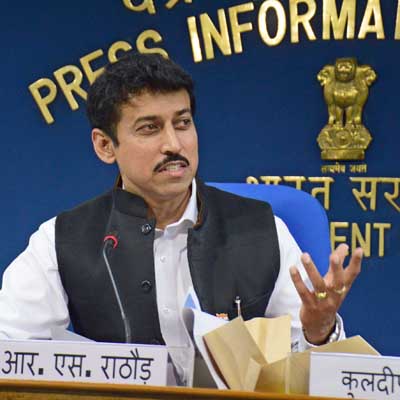
    NEW DELHI: Minister of State for Information and Broadcasting Rajyavardhan Rathore today said that the government was rigorously working towards providing a seamless work environment for the film industry by establishing a single window clearance mechanism.


    Inaugurating the India Pavilion at the Cannes International Film Festival in France today, he said a centre of excellence for gaming and visual effects had been announced. The government would do its best to be an infrastructure partner and would like to have faculty coming from the industry itself and looks forward to more faculty exchanges. 


    Rathore said, “India had already signed coproduction agreements with a slew of countries. In the last one year, five co-productions had been undertaken with France alone. We need to take these partnerships to the next level now.”


    He said the film industry is an important part of campaigns like ‘Make in India’ and ‘Skill India’ given its tremendous potential towards job creation. 


    The session also saw unveiling of the 46th IFFI 2015 regulations and ‘India Film Guide’ by the Minister.


    The India Film Guide is a comprehensive booklet with information on policy initiatives by the government pertaining to film sector, the listing of Indian companies at Cannes Film Market, Indian Films at Cannes and contacts of important people in the business of filmmaking. 


    The session was attended by Indian Ambassador to France Mohan Kumar, Bobby Bedi, Nandita Das, Karnataka Information and Public Relations Minister Roshan Baig, I&B ministry joint secretary (films) K Sanjay Murthy and Film Federation of India former president Ravi Kottarakara. 


    Bedi in his welcome address said, “India’s presence at Cannes had increased tremendously over the past decade and we have seen an increase in representation in terms of quantity and an improvement in the quality of content as well.”


    Kumar added that the aim should be to get Indian films in the most important category of films at Cannes. He added that over the next two to three years he would strive to work on that. The quality of films from India had been rich in content and quality. 


    Kottarakara felt that India has on offer some of the best shooting locations. “There has been a tremendous change in the Indian film landscape and the sector is definitely going to grow by leaps and bounds. We should try to experiment more to have a wider global acceptability. Also, India’s linguistic cinema which includes films in Tamil, Malayalam, Bengali, Marathi, Bhojpuri are as good as mainstream Bollywood films and should get an equal opportunity to be showcased,” he said.


    Talking about the much-debated issue of censorship in India, Das said, “As we mature, it is important to promote freedom of expression rather than curtailing voices.”


    On his behalf, Baig suggested that it will be great if the regional film industry is showcased as a part of the delegations to some of the major international film festivals.


    Murthy added that over the next few days,he hoped to learn from various film commissions and carry back new partnerships and learning experiences.

  • Kamal Haasan roots for Bengaluru to hold FICCI MEBC in future

    Kamal Haasan roots for Bengaluru to hold FICCI MEBC in future

    BENGALURU: The fifth edition of the FICCI MEBC (Media and Entertainment Business Conclave) came to a new location this year to IT City Bengaluru. MEBC president and actor Kamal Haasan rooted for Bengaluru to be a recurring location for the conclave to be held.


    Among the people present at the inaugural function were Karnataka chief minister Siddaramaiah, Information and Broadcasting secretary Bimal Julka, Film Federation of India president Ravi Kottarakara, Karnataka Film Chamber of Commerce president H D Gangaraju, Karnataka government IT BT and S&T secretary Srivatsa Krishna and Association of Bangalore Animation Industry president and technicolor India head Biren Ghose.


    “Bengaluru is the second largest IT hub in the world after Silicon Valley and in the years to come we want to surpass even Silicon Valley to become the hub of innovation and convergence of media and entertainment,” said Krishna.


    Kamal Haasan said that Bengaluru has all the things needed to make it an IT hub as well as keep FICCI MEBC going in the city. “We will give a push to the digital medium,” he added.


    Siddaramaiah emphasised the need for building qualitative online content that will give advertisers innovative ways to reach out to people. “The industry should look at remaking old movies with good value and rich in vernacular content,” he said. He also urged the need for creating programming and growth friendly policies for industry.


    Issues that were concerning the film industry were also raised by Kottarakara such as service tax and lack of support from banks for movie funding. “Film making is put in the ‘sinful’ industry along with gambling, drinking and smoking. It is not so,” he said.


    The sessions for the two day event included ‘formulating and implementing a viable media and entertainment policy for a state’, ‘reshaping mobile entertainment in the era of digital revolution’, ‘the challenge of news: defining number one in the dizzying newscape’, ‘the broadcasting ecosystem in the digital era’, ‘customising global VFX for Indian cinema’, ‘emerging trends of Indian IP in animation and their exploitation’, ‘the emerging gaming industry in southern India’, ‘emerging technologies and the impact on media and entertainment industry’ and ‘changing trends in regional TV: ratings, content and formats’.

  • Ravi Kottarakara is new president of FFI, to take charge from January

    Ravi Kottarakara is new president of FFI, to take charge from January

    Filmmaker Ravi Kottarakara has been elected as the new president of the Film Federation of India.


    At the first meeting of the FFI executive committee held immediately after the 60th Annual General Meeting, Kottarakara representing the South Indian Film Chamber of Commerce elected unanimously. The office bearers will assume office in January 2014.


    The other Office Bearers are:-


    Vice Presidents:


    Bijay Khemka (outgoing FFI President)
    T. P. Aggarwal
    C. Kalyan
    L. Suresh
    Kishinchand Janiani
    Rajendra Singh
    Ram Vidhani
    K. S. Ramarao
    Vijay Kumar
     

    Hon. Gen. Secretary
     

    A. R. Raju
    Hirachand Dand
     

    Hon. Treasurer
    Sangram Shirke.


    Supran Sen will continue as the Secretary General of the Federation.
     

  • Bijay Khemka is new President of Film Federation of India

    Bijay Khemka is new President of Film Federation of India

    NEW DELHI: Bijay Khemka has taken charge as the President of the Film Federation of India (FFI) with effect from 1 January.

    Khemka, who is from Kolkata, succeeds Vinod Lamba, who is from Delhi. Lamba is now one of the eight vice-presidents of the FFI, the apex body of film organisations in the country.

    The other vice-presidents are T P Aggarwal (Mumbai); L Suresh (Chennai); Jitendra Jain (Indore); Ravi Kottarakara (Chennai); K C N Chandrashekhar (Bengaluru); Ram Vidhani (Mumbai); and K Rama Subba Reddy (Hyderabad).
    C Kalyan (Hyderabad) and R P Anand (Mumbai) have been elected honorary general secretaries. Sangram Shirke (Mumbai) is the honorary treasurer.

    Supran Sen continues as the Secretary General of the FFI.

  • I&B Ministry seeks to placate irate film fraternity over IFFI

    I&B Ministry seeks to placate irate film fraternity over IFFI

    NEW DELHI: The Information and Broadcasting Ministry has assured the film fraternity that it had never intended to keep out representatives from the organisation of the International Film Festival of India.

    I&B Joint Secretary (Films) Raghavendra Singh told a delegation of the Film Federation of India that the he would examine their grievances but requested them to cooperate with the organisation of the Festival, being held in November in Panaji, Goa.

    Singh, an Indian Administrative Service officer of the 1983 batch from the West Bengal cadre, said he had been in the Ministry for just a few weeks and would study their issues.

    The FFI was represented by its President Vinod Lamba, Secretary General Supran Sen, and Vice-Presidents L Suresh and Ravi Kottarakara, Rajendra Singh from Delhi, and Ramesh Tekwani from Mumbai among others.

    The move comes just over a week after the FFI, the apex body of the film industry, decided to boycott all activities of the IFFI to protest its being by-passed and not being called to any meeting of the Steering and other Committees.

    The members present told Raghavendra Singh that they were told of the Industry Coordination Committee meeting as late as August-end by which time some major discussions that are normally taken at this meeting had already been taken by the Directorate of Film Festivals and IFFI Secretariat.

    The Federation in its Annual General Meeting earlier this month in Mumbai unanimously decided that FFI will not participate in any of the activities of IFFI.

    FFI has always been an essential component of the Steering Committee and its members actively involved in various other committees and sub-committees such as Theatre, Technical, Hospitality and others. But this has not happened in recent years and ‘FFI can only assume that either the committees have been discontinued or FFI has been kept out of them.’

    The IFFI by its very tenets is a festival held jointly by the Government and the Indian Film Industry, and the Film Federation of India being the apex body of the industry ‘has been playing their part with total sincerity and efficiency.’

  • Film industry split on stopping work on 23 February

    Film industry split on stopping work on 23 February

    NEW DELHI: Fissures have started appearing amongst the film fraternity on the issue of striking tomorrow to protest the 10.3 per cent service tax, with the Film Federation of India, the apex body of the film industry, reiterating that the plans remain unchanged and the Film and TV Producers Guild wanting that the strike should be deferred.


    FFI President Vinod K Lamba told indiantelevision that he did not give any credence to statements being made by some filmmakers in Mumbai that the strike had been called off, and also regretted that some TV news channels had been playing up these statements. He also questioned the locus standii of the persons who had been saying that the strike had been called off.


    However, Guild Vice-President Mukesh Bhatt told indiantelevision.com in Mumbai that he wished the best to Lamba, but “let me tell you more than 90 per cent of film folks including the film associations across India and the Multiplex Owners Association are with us and will not take part in the strike tomorrow”.


    Lamba said the FFI was an umbrella body comprising various industry associations including exhibitors, distributors, producers and single screen cinemas, and had taken a unanimous decision to go ahead with the strike. “The result would be there for everyone to see day after tomorrow. My only plea to people not participating in the strike is that they should not sabotage the protest.”


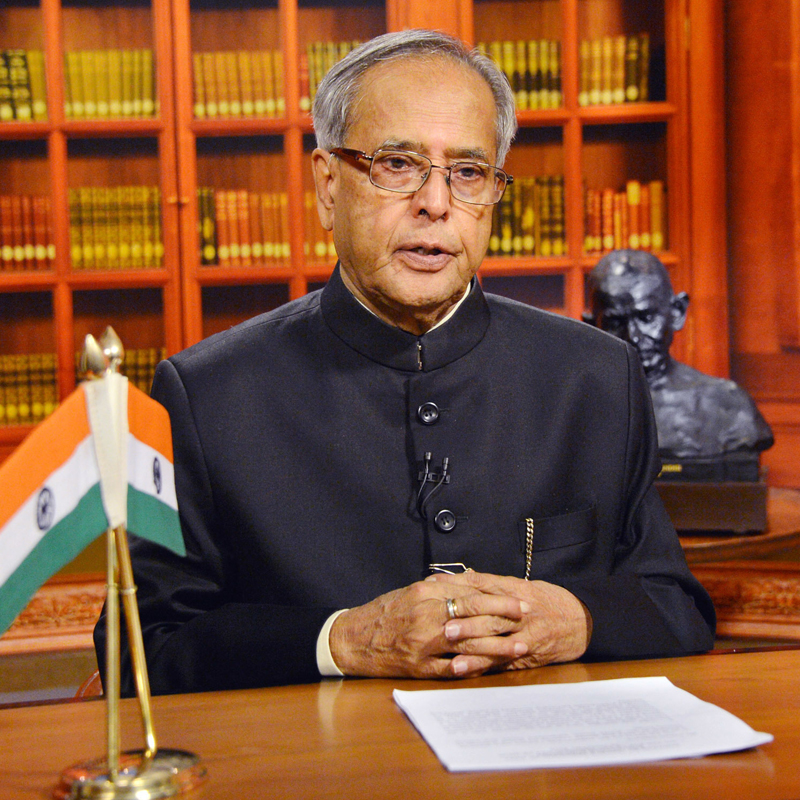
    He said though Finance Minister Pranab Mukherjee had given a patient hearing in a meeting over the weekend, he had declined to give any assurances. However, Bhatt was categorical that Mukherjee had wanted the film industry to wait till after the Budget before taking any decision.


    A Guild spokesperson also said messages had been received to the effect that some states like Andhra Pradesh would not be joining the strike. Eminent Tamil filmmaker and FFI Committee member L Suresh is also understood to have advised deferment.


    Earlier yesterday after a day-long meeting chaired by Lamba, it had been announced that it was necessary for all film bodies to join the protest to voice their anger to the government.


    Lamba had told a press meet that apart from Mukherjee, the Information and Broadcasting Minister Ambika Soni had also met representatives of the industry over the weekend but both had been non-committal.


    Apart from the fact that the industry is already over-burdened by other taxes like the Entertainment Tax, the Show Tax, and the state-imposed taxes, it has to fight the menace of video piracy, he added.


    The FFI has been asking the Government to waive the tax. But Lamba said: “To its utter distress, the Finance Ministry through a circular of 13th December 2011 clarified that the tax was applicable under Finance Act.”


    He said that imposition of the service tax would amount to double taxation since the states imposed their own. In any case, taxation was a state subject and, therefore, the imposition of any tax by the centre was unconstitutional.


    Lamba said the strike had the full support of all organisations including Indian Motion Pictures Producers Association, organisations of distributors, exhibitors and even exporters. There will be a complete shut down of theatres, and shooting studios on that day all over the country.


    Others who attended the meet included South India Film Chamber Secretary Ravi Kottarakara, Arijit Dutta and R S Khemka of the East India Motion Picture Association, A R Raju of the Karnataka Film Chamber, Kalyan of the Andhra Pradesh Film Chamber, Hirachand Dand who is Vice President of the Indian Film Exporters Association, and T P Aggarwal who is Vice President of FFI.


    Lamba said that the service tax is generally levied only on the end user, but this was not possible since the rate of admission tickets in cinemas was already very high because of various taxes.


    Kottarakara, who is also Convener of the Sub-Committee set up for the strike, said it was unfortunate that the film industry was equated by the government to shopping or gambling with taxes imposed on normal industries, whereas this was a creative field.


    It was pointed out that at a time when the number of theatres had come down to under 11,000 for a population of over a billion people, the government should have helped to help build more theatres.


    The negative list concept of service tax and the definition of ‘service’ therein intend to consider ‘right to enter any premises’ as an activity liable to service tax. This endangers the box office collection to be eligible to service tax of 10.3 per cent which is already taxed by high rates of entertainment tax. The new approach of negative list continues to consider film distribution rights as liable to service tax.


    The power to levy taxes on luxuries, including entertainment has been exclusively granted to state governments under entry 62 of the State List of the Constitution. The Empowered Committee of the State Finance Ministers on 9 and 10 January 2012 had suggested that all items mentioned in the State List of the Constitution (including entertainment tax) should be included in the negative list so the Centre cannot impose tax on them. Thus, even state governments agree that service tax should not be made applicable on right to enter any premises.