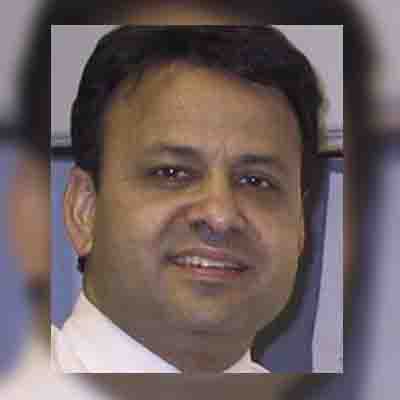
As head of CinéMaya Media, Sunil Hali has emerged as a pioneer in South Asian media production and management in the US.
A double gold medallist in engineering, Sunil claims the distinction of being featured on the cover of The New York Times, Metro Section.
In June 2000, he launched NREYES, the millennium TV series profiling the most successful US-based NRIs, on Zee TV Network. The same month he launched, as the publisher, the North American edition of The Indian Express through a Franchise Agreement. Hali is also the chief executive consultant to EBC, the first South Asian FM radio station in the US.
In an email interview with indiantelevision.com, Hali holds forth on his company, projects and ambitions. Excerpts –
How did your foray into the medium begin? How long have you been in this business?
I have been in theatre since childhood and have worked in Baaki Itihaas, Ek Aur Dronacharaya, Under Secretary, etc through my college and postgraduate degrees in engineering in Roorkee and Nagpur. I came to the US in 1997 and within a short time felt a creative urge to fill up the void in the South Asian media scene, initially by making a TV Serial. I created a TV serial Aadhey-Adhooray (1992) after acquiring the rights to the script. It was telecast on TV Asia UK (now Zee), TV Asia USA, cable channels, and later released on video. I soon realised that television will become big through satellite and to become a major player, I needed to understand the field completely, and produce high quality programmes in order to stand apart. Since my expertise is management of large projects, I opted to start producing television and events in 1993.
But, how exactly do you operate sitting in the US? Do you have a set up in India?
I have a full-time staff of three persons in India. I have a good relationship with channels, and am always networking with able writers, directors, actors and technicians. This has been developed through observing their work and frequent trips to India. Since we are the only company that has produced most of international television work in the last decade, we have established a unique name for ourselves with the channels. And we propose projects with international audience in mind, television or events.
Being outside the “box”, my effort is to propose unique concepts, pitch them to the senior programming people in channels. I believe strongly in “partnering” and the directors are very active players in my projects and are given wide responsibilities. I am also setting up an office in Mumbai with additional staff. My goal is to produce high quality entertainment TV programmes and films with South Asian ethos for our audience world-wide.
There would be limitations on the kind of work you can source from India. So what are your alternatives?
In fact, our limitation is our strength. Being probably the only company that has produced international subjects, with authenticity, we have a headstart and identity. As we have made a name for ourselves for quality and standards, and earned the trust of channels, we are ready to produce subjects based in India. Also, sooner or later, the canvas of shows will expand and some will be shot abroad, In fact, Zee TV, Zee News, B4U, and CNBC/TV18 have sought our services for projects on a short notice and we delivered.
Do you essentially cater to the Indian diaspora or do you look at a wider canvas?
We are a media company and provide programmes that should appeal to Indians around the world. But the prime target audience is India, this is the largest segment and also helps make projects commercially viable. Our initial entry was obviously through programmes based abroad. But now our reputation has established as producers of high quality, and the trust we have earned is helping us to get programmes based in India. These will be primarily shot in India.
|
The channels are so caught up with daily issues and are not able to respond and act on getting new programmes off the ground fast.
|
 A still from Dollar Bahu A still from Dollar Bahu |
What is your production set-up like?
We have about 2,400 square foot office space in mid-town Manhattan. We have a crew on full-time staff and others on an on-call basis. We have camera, liner and Non-liner editing setup, sound and light package for smaller shoots. But we have a complete knowledge of the space in US and rent on an as-needed basis.
Which subjects appeal to you as a producer?
Any subject which has potential for appeal to the largest audience, offers visual treatment, has depth and is entertaining.NREYES that features successful Indians in USA inspires youth while Mausam got featured on the cover of New York Times. Dollar Bahu has become a brand on India, and Bollywood Awards in USA and a six-nation cricket series for international broadcast involved international crews and established a milestone in production in the USA for us.
On what basis do you choose a channel?
Generally speaking, every channel has a character with respect to the type of programming and people to deal with. Zee is the first Indian channel and we have started with them and done most of the work with them. We are expanding with programmes for Sony and Star too.
On what basis do you choose a director?
The foremost criteria are professional background and abilities to work with an international crew. The flexibility and commitment with us and not being spread too thin, commitment to quality and mutual respect and somewhere down the line, cost consciousness. After that, the relationship evolves and we move forward.
What exactly went wrong with Dollar Bahu when Ajai Sinha had to be replaced as director with Ravi Kemmu?
Zee suggested I take Ajai Sinha as director. I researched on him and contracted him to do the work after explaining our functioning style that requires serious and single minded commitment.
But once he got Justujoo, and Dollar Bahu became a twice-weekly show, I anticipated trouble. When I asked him on how he would handle the two projects, he said his friend Eshan Trivedi would direct Justujoo after the initial two episodes. But he got busy with Justujoo untill he reached the US. Then, I started getting complaints from EPs in Zee that editing suggestions were discarded. On checking with my team, I found that he was using music from Hasratein and stock CDs which was inappropriate to our scene requirements. This was unacceptable as the product suffered and he was charging me for the music anyway. In the US, his weaknesses started to show up. His directorial inabilities were exposed when a party scene with major cast and 25 plus people took two days to shoot. After returning to India, his attention again shifted to Justujoo and he asked his assistant to direct some scenes of Dollar Bahu. When confronted, he said he wanted to give him a chance.
Have you ever felt that not being physically present in India has been a handicap to your production business?
Production of work on hand has not suffered due to this but business has. The channels are so caught up with daily issues and are not able to respond and act on getting new programmes off the ground fast. This is in spite of acknowledging that our product will make a difference. Communication and progress has improved due to Internet. And now with international presence, most channels are actively communicating to progress on our projects faster as they are unique in concept, quality and are shot on visually stimulating backgrounds.
Do you feel your company is in a position to take up a daily soap if an opportunity comes your way?
We have been discussing a daily soap and a daily sitcom. These are based in India and the USA. In fact, we were prepared to make Dollar Bahu thrice a week. This is possible once channels make a serious commitment like in the West where projects have a definite life for the season.
What is your company’s vision? Which are the programming genres you would like to venture in?
CinéMaya’s mission is to create quality content that can compete with international media at the highest level, thematically, aesthetically and technically. A fast growing, vertically-integrated minority owned company, CinéMaya has a diverse range of interests including: Television, Publication, Advertising, Events, Radio.
 |
I believe TV can create an audience if a planned and sustained effort is made involving professionals.
|
What do you think of the present programming variety on Indian channels?
In fact, Indian television is in its infancy even after a decade. It started off with no identity for any channel, and then a period came when you could almost recognise the channel by watching a programme due to subject and treatment. One would have hoped a serious uplift in programming standards. But we went backwards. Everyone was trying to do what worked for others without looking internally on what was one’s strength and weakness. Whether it was game show or subjects for a soap or mythological. I believe TV can create an audience if a planned and sustained effort is made involving professionals. Essentially, the programming variety is static except for some innovations.
Are you satisfied with the response your programmes have got?
There was a time when it was tough convincing even CEOs that Indian TV programmes could be made based in India and the US and that too almost around Indian budgets. And keeping that in mind, if I do a retrospective analysis, it is very good.
What’s next in line from you?
We have been shortlisted for fiction and non-fiction programming. These include a soap and a sitcom based in the US, two daily soaps in India, news and current affairs programmes and a weekly entertaining profile show. We are also scheduled to launch a unique annual event that will be a corporate branding event and will help in India’s image on the international level. This will be held in India.