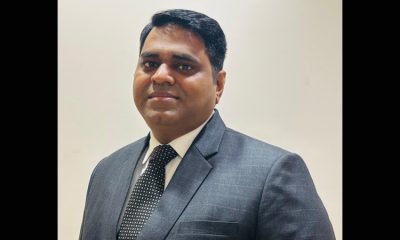
Tag: Ravi Gupta

  • Madhur Sugar and Dentsu Creative Webchutney promote The Good Cut

    Madhur Sugar and Dentsu Creative Webchutney promote The Good Cut

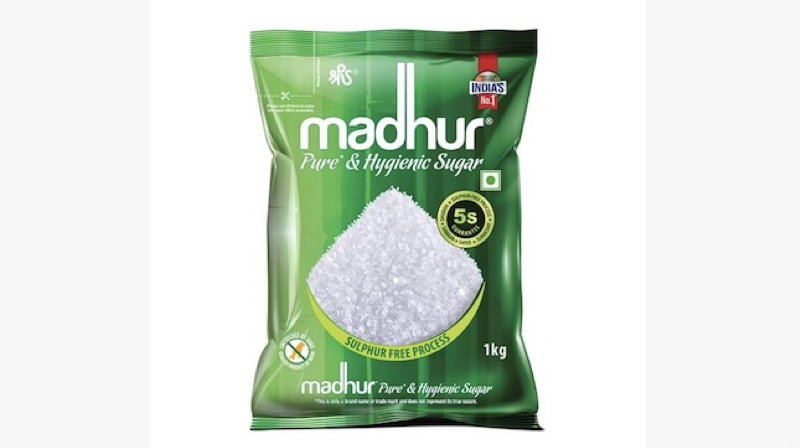
    MUMBAI: Madhur Sugar, in a sweet partnership with Dentsu Creative Webchutney, is shaking up the packaging world with The Good Cut, a simple yet radical redesign aimed at tackling India’s alarming microplastic problem. With India churning out a staggering 391,879 tonnes of microplastics annually – that’s 18 Statues of Liberty’s worth of tiny plastic terrors – something had to give.

    The culprit? Our casual corner-cutting habit. You know, that satisfying snip when opening a packet? Turns out, those tiny plastic shards are ditching the recycling bin and diving straight into the environment. Madhur Sugar’s The Good Cut flips the script, literally, guiding consumers to cut horizontally instead of tearing corners. A mere 5 cm shift, yet a potential game-changer.
     

    Ravi Gupt Surjo Dutt

    Shree Renuka Sugars executive director  Ravi Gupta declared, “Environment and sustainability have to be goals of a responsible business. Our packs are 100 per cent recyclable! But we realized that a corner piece of them never made it to recycling plants as it is trashed directly. That had to change.” He added, with a hint of optimism, “We hope this innovation sparks a movement, encouraging more brands to embrace The Good Cut and rethink packaging for a cleaner future.”

    Dentsu Creative Webchutney chief creative officer Surjo Dutt  chimed in, “Creativity is about solving real problems with ideas that fit seamlessly into everyday life. The Good Cut does just that – transforming a habitual action into an eco-friendly choice. A 5cm cut may seem tiny, but in the fight against microplastic pollution, it’s a step toward something bigger.”

    Available in select stores, The Good Cut is set to launch a digital, social, and outdoor blitz, aiming to turn this packaging tweak into an industry-wide revolution. It’s not just about sugar; it’s about a sweet solution to a sticky problem.

  • Weekend Unwind with Gargee Designer’s Ravi Gupta

    Weekend Unwind with Gargee Designer’s Ravi Gupta

    Mumbai: With another weekend upon us, it is time to unwind with the latest Q&A edition of Indiantelevision.com’s Weekend Unwind—a series of informal chats that peek into the minds of business executives through a fun lens in an attempt to get to know the person behind the title a little better.

    In this week’s session, we have Gargee Designer’s creative director Ravi Gupta.

    Gupta is a fashion designer and the creative director of Gargee Designers. He honed his skills by completing his B.A. in Design & Technology, during which he actively participated in renowned competitions worldwide, including “WOW” in New Zealand, “The Debut” by Wills Lifestyle in Delhi, “Haining Warp Knitting Fashion Design Competition” in China, and “Swatch Alternative Fashion Week London.” These experiences served as a stepping stone for his journey into the world of fashion.  

    So without further ado here it goes…

    1.Your mantra for life

    Ans: My mantra in life is to Don’t tell what you cannot show. This is what pushes me forward in life.

    2. A book you are currently reading or plan to read

    Ans: One book that I am currently reading is The 12-Week Year. It’s reshaping my approach to productivity and goal-setting, emphasizing the power of consistent action and strategic execution.

    3. Your fitness mantra, especially during the pandemic

    Ans: My fitness mantra has always been to wake up early in the morning meditate and do yoga and even during the pandemic this was the fitness mantra I solely followed.

    4. Your comfort food

    Ans: When it comes to finding solace in food, nothing compares to the comforting embrace of a warm, flaky paratha generously slathered with creamy butter and paired with tangy pickles.

    5. A quote or philosophy that keeps you going when the chips are down

    Ans: “Reflect upon your present blessings of which every man has plenty; not on your past misfortunes of which all men have some.” Thankful for whatever we have rather than focusing on misfortunes.

    6. Your guilty pleasure

    Ans: Indulging in Big Chill’s desserts is my ultimate guilty pleasure whenever I crave something sweet. From their decadent cakes to their creamy ice creams, each bite is a delightful treat for my taste buds, satisfying my cravings like no other.

    7. The last time you tried something new

    Ans: A very recent thing that I tried is Chat gpt4, as the world is getting technologically advanced chat gpt has become one handy tool which has become a necessity in today’s time.

    8. A life lesson you learned the hard way

    Ans: “The greatest wealth is health” highlights the value of good health. Effective communication and transparency build trust, collaboration, and goal alignment. Active listening, clear expression, and feedback are key. I aim to foster open dialogue and problem-solving.

    9. What gets you excited about life?

    Ans: What excites me about life is the daily opportunities to meet new people, and engage in novel experiences, particularly those involving creativity, which ignites a spark

    10. What’s on top of your bucket list?

    Ans: At the top of my bucket list is to visit Japan. The place is known for its traditional clothing, especially the kimono.  

    11. If you could give one piece of advice to your younger self, what would it be?

    Ans: Embrace learning and growth, trust your abilities, and persevere through challenges. Stay passionate, and resilient, and cherish the journey ahead.

    12. One thing you would most like to change about the world

    Ans: One change I aim for in the world is to advance sustainable practices across all industries. Our planet confronts various environmental issues such as climate change, pollution, and habitat destruction. To enact meaningful change, global systemic shifts are imperative.

    13. An activity that keeps you motivated and charged during tough times

    Ans: Dedicating time to read motivational literature, and engage in conversations with supportive individuals who uplift, inspire and create a positive mindset amidst challenging circumstances.

    14. What lifts your spirits when life gets you down?

    Ans: Learning from past experiences and understanding life’s inevitable ups and downs is what lifts my spirits, it helps break the monotony, fostering peace and rejuvenation.

    15. Your go-to stress buster

    Ans: My go-to stress buster is spending time at the club, where I can unwind, socialize, and enjoy music and dancing.

  • #MainFarkNahiKarta, says Tata Green Batteries & WATConsult’s new campaign

    #MainFarkNahiKarta, says Tata Green Batteries & WATConsult’s new campaign

    MUMBAI: Tata Green Batteries has come out with a new digital campaign titled #MainFarkNahiKarta to mark the revamp of its product line.

    Centering around the theme of Naye India Ki Nayi Battery, the campaign designed by WATConsult aims to reach out to every Indian by portraying the importance of celebrating each other’s differences rather than discriminating because of them. Through its previously launched campaigns including #IndiaKiBattery, Tata Green Batteries has strived to highlight and commemorate a changing India. This time around too, it’s building on the same premise to promote the brand’s ethos.

    The campaign comprises a digital video commercial, which, apart from Hindi, has been launched in three other languages – Tamil, Malayalam and Telugu. This will help extend the brand’s reach manifold and stay thoughtful to the diversity of the Indian audiences. Having kicked off with intriguing teasers, the campaign also includes online contests, providing a platform to the viewers to express their opinions on the brand’s new catchphrase #MainFarkNahiKarta. Additionally, to strengthen the communication objective, live interactive sessions with senior management have also been arranged.

    Tata Green Batteries CEO Ravi Gupta said: “This concept revolves around the philosophy of equal rights for every Indian. It also entails that we believe in One Nation. Similarly, we don’t differentiate amongst our customers; we treat all of them as equal and serve them with the same passion, zest and energy every day, every time. Which is why we like to say #MainFarkNahiKarta.”

    WATConsult CEO Heeru Dingra added, “#MainFarkNahiKarta takes a sentimental approach to effectively put across the brand’s ethos of moving towards a new India. Presenting some highly relatable nuances from our day-to-day lives, the campaign salutes all those who do not discriminate on any basis by simply showcasing some small yet big differences that usually go unnoticed by each one of us.”

    The brand has a wide range of categories that it caters to. These include 2W, Tractor, PV and CV. The campaign, with its inclusive attributes, appropriately targets all these lines-of-business.

  • ‘Challenge is to scale up the production slate’ : Ravi Gupta – Mukta Arts CEO

    ‘Challenge is to scale up the production slate’ : Ravi Gupta – Mukta Arts CEO

     Subhash Ghai-promoted Mukta Arts has churned out several blockbusters in the past. But it has had to wait till 2006-07 to cross Rs 1 billion in turnover, dwarfing its earlier best performance of Rs 511.63 million in 2004-05.

    The plan now is to increase its production bandwidth and quickly build a large library. As part of this script, Mukta Arts has acquired a 50.01 per cent stake in Manish Goswami’s (who runs a TV content company Siddhant Cinevision) start-up movie company Red Carpet Films. A three-movie distribution deal has also been stitched with Eros for Rs 730 million.

    In an interview with Indiantelevision.com’s Sibabrata Das, Mukta Arts CEO says the company is set to produce 10 films a year by 2010 and create a talent pool from its film institute Whistling Woods International before it starts playing the real big game.

    Excerpts:

    How has Mukta Arts been able to hit record revenues in 2006-07?
    We had a 12-movie satellite telecast rights deal with Zee Cinema. The total size of the transaction is Rs 220 million; we got Rs 180 million in the fiscal 2006-07. We also sold the five-year home video rights to Shemaroo Entertainment for Rs 32.5 million. But there are other reasons for our strong performance in the fiscal. We released four movies in the year – Shaadi se pehle, 36 China Town, Apne sapna money money and Khanna and Iyer.

    Mukta Arts has a basket of 26 movies. Will we see the revenue rub-off from the remaining 14 movies even in 2007-08?
    The library will come up for renewals in different periods. We expect the total earning potential of the fully amortised library of 26 movies to be upward of Rs 400 million in every five-year window.This will come from re-issue rights of satellite, direct-to-home (DTH), cable, home video, terrestrial TV and other electronic media rights. It will add to our bottomline and our turnover. But the challenge is to scale up the production slate and build a larger library in quick speed.

    Which is why Mukta Arts acquired a 50.01 per cent stake in start-up company Red Carpet Films?
    The idea is to increase the bandwidth of our production capability. We bought the stake in the newly started movie company at par value. Though Red Carpet Films has not produced any movie so far, it has a distribution deal in place with Eros; it will also have Eros financing four mid-budget movies.

    Manish Goswami already runs a successful TV content company. We expect Red Carpet Films to produce at least four movies a year. We will have another source to ramp up our production. We hope to have a film project every quarter through Red Carpet Films. We are also talking to other potential filmmakers for projects.

    Are you creating divisions inside Mukta Arts to produce movies for different segments?
    Mukta Arts will produce big budget films. Mukta Searchlight will make movies for niche audiences while Malpix will be engaged in regional language films. The segmentation approach is necessary since these are films having distinct identity. We expect to step up our production to 10 films a year. This should be further ramped up including movies produced to release directly on digital format.

    But 2007-08 doesn’t look like a scale up year for Mukta Arts?
    We should be having four films in the year. We have already released Good Boy Bad Boy. While Bombay to Bangkok will be on 18 January, Black & White (directed by Subhash Ghai) will release on 7 March. The Marathi movie will also get reflected in the year. Cycle Kick may come up in the fiscal but Right yaa Wrong will get into the next financial year. We are also producing Yuvraaj (Rs 400 million budget film directed by Ghai) which is slated for release in 2008-09.

    The acceleration in producing more movies will be possible once we build an infrastructure for it. Our long term vision is to create a backward integration into education which will drive up talent pool. We expect to benefit from the talent that will get created at Whistling Woods International.

    You can’t lock in stars and star directors. The model works with younger talent; lock them at an early phase

    Are you widening the base of Whistling Woods International?
    We plan to franchise it beyond the mother campus. We are looking at other key production centres like Bangalore, Hyderabad and Chennai. We also plan to take it overseas like Dubai Media City, South Africa and Nigeria.

    Exhibition contributes to 34 per cent of the company’s revenues. Will this go up this year?
    We do bookings for PVR (all theatres), Adlabs (north), Fun City (north) and Wave Cinema. We also distribute 6-7 movies every year.

    Why did you then get into a deal with Eros for distributing three of Mukta Arts’ films?
    We will get paid Rs 730 million and Eros will have the distribution rights for five years. It made business sense for us as we were getting a higher amount.

    Many film production houses have gone in for long term deals with stars and directors. Why has Mukta Arts stayed out of it?
    There are only limited number of stars and star directors. Besides, we also don’t believe that this is the best way forward. You can’t lock in stars. The model works with younger talent; lock them at an early phase.

    Why did Mukta Arts sell out to Adlabs and exit from the digital cinema joint venture?
    Adlabs bought out our 50 per cent stake in the joint venture company, Mukta Adlabs Digital Exhibition. We realised that there is no standardisation in the marketplace. Globally, there is no technology which meets industry standards. We felt that if we were betting on the wrong technology, it could be a high risk business and our investments would go down the drain.

    Does Mukta Arts have a digital plan?
    We are learning how to create and repurpose content for digital media. We are also launching two websites – bollywoodmoviemax.com which will have digital downloads and indianfilmtrade.com. Both are on the testing stage.

    Mukta Arts had floated a subsidiary for TV production. Is there any move to energise this company?
    Mukta Telemedia is developing concepts. We are open to TV but the hurdle is that the IPR stays with broadcasters. We want to retain IPR.
     
    Why did Mukta Arts not pick up equity in Dubai-based Arab Venture Corporation?
    We had the option in the Dubai-based company which was launching a channel but decided against it. We took it up as a turnkey project.
     
    Mukta Arts had a movie production deal with Zee. Is it being extended?
    It was a single project deal. We have released Khanna and Iyer (featuring talent from Zee’s Cinestar Ki Khoj) and there is no plan yet to do more movies for Zee.
     
    Do you see movie producers holding on to rights rather than selling them for a longer period as other forms of exploitation like direct-to-home (DTH) open up?
    The number of DTH subscribers are too limited now. It will take a few more years to grow. We don’t want to deny ourselves the revenues by holding on to the rights. We lock ourselves into five-year deals like we recently did with Zee.
  • Mukta arts to take Whistling Woods to South Africa and Dubai

    Mukta arts to take Whistling Woods to South Africa and Dubai

    MUMBAI: Filmmaker Subhash Ghai is planning to set up Whistling Woods, a film and media arts institute, in South Africa and Dubai through joint ventures with local partners.

    “We see opportunity in Dubai and South Africa. We have signed an MoU with the provincial government of the Western Cape and are in talks with Dubai Media City,” says Mukta Arts CEO Ravi Gupta.

    Whistling Woods International Ltd, a subsidiary company, will jointly conduct a feasibility report for each of these markets. “The cost of setting up each institute will be close to Rs 1 billion. We would want to do it along with local partners,” adds Gupta.

    Ghai, has signed with Ibrahim Rasool, the premier of the Provincial Government of the Western Cape, Republic of South Africa, a declaration of intent to work out a collaborative strategy for establishment of a film and media institute in Cape Town. “We expect to complete the feability study in three to four months. We will take a decision only after that,” says Gupta.

    Mukta Arts has already pumped in Rs 600 million to set up Asia’s biggest film, television, animation and media arts institute in Mumbai. The aim is to create a talent pool for the rapidly-growing Indian film and animation industry.

    Whistling Woods, which is offering two-year courses, has tied up with technology majors including nVidia, Apple, Sony, AMD, Belden, Nortel, Seneca, DigiDesign, Recreate Solutions, ToonBoom and Sennheiser.

    The institute provides specialisations in direction, ccreenwriting, editing, acting, business of film and television, cinematography, art and techniques of animation and sound recording and design.

  • Adlabs to buy out Mukta stake in JV, pump in Rs 2 billion in twin-screen theatres

    Adlabs to buy out Mukta stake in JV, pump in Rs 2 billion in twin-screen theatres

    MUMBAI: Anil Ambani-controlled Adlabs Films Ltd is buying out Mukta Arts’ 50 per cent stake in the joint venture company, Mukta Adlabs Digital Exhibition.

    As a step up in the plan, Adlabs is earmarking an investment of Rs two billion towards acquisition of 50 old cinema theatres for conversion into “twin screens.” Part of this investment will include the installation of digital projectors in these theatres.

    “We are acquiring the entire stake of Mukta Arts. We will be investing Rs two billion to upgrade 50 cinema theatres and install digital delivery systems in them,” Adlabs Films chairman and managing director Manmohan Shetty tells Indiantelevision.com.

    Adlabs and Subhash Ghai-promoted Mukta Arts had floated a joint venture company in 2003 for digital delivery of movies. Mukta Adlabs Digital Exhibition had invested around Rs 100 million but the company had been unable to make much headway with its technology which required a server and projectors to be installed in the theatres.

    For buying out the stake, Adlabs has not paid any premium. “We have paid a little less than Rs 50 million which is the actual investments made by Mukta Arts. We didn’t want any partners as we were planning to integrate the twin-screen converted cinema threatres with the installation of digital projectors. We plan to have the 50 twin screen theatres in B-class stations over 3-4 years,” says Shetty.

    Mukta Arts, however, is not abandoning the digital delivery of movies project. “We decided to part ways with Adlabs as our plans were different. Digital distribution of movies will be very much part of our plans as we are committed to technologies of the future,” says Mukta Arts CEO Ravi Gupta.

    The new technology of digital projection through hard discs avoids the use of film prints, which costs between Rs 50,000 and Rs 60,000 to the distributor. It also enables audiences of “B” and “C” class centres to watch their favourite films on the first day itself, thereby making simultaneous worldwide release a possibility. The technology also combats against piracy.

    Anil Ambani has big plans to deliver movies to cinema theatres through Reliance Infocomm’s fibre optic network. Having designs on launching a direct-to-home (DTH) service, he may also take the satellite delivery route for distribution of movies. “Even if the current delivery sytems are changed, digital projectors will be required in the fibre or the satellite system. Our plan is to aggressively install these projectors in the theatres which we are taking up for converting into twin screens,” says Shetty.