Tag: Ravi Agrawal

  • “India is an incredibly important market for us with no dearth of stories to tell”:   Ravi Agrawal

    “India is an incredibly important market for us with no dearth of stories to tell”: Ravi Agrawal

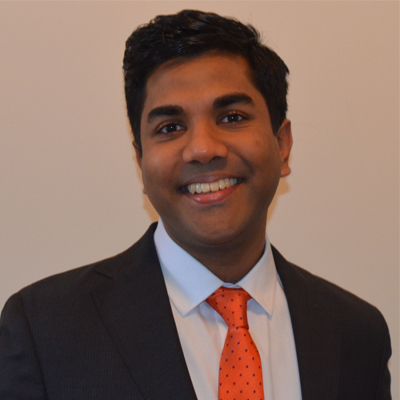
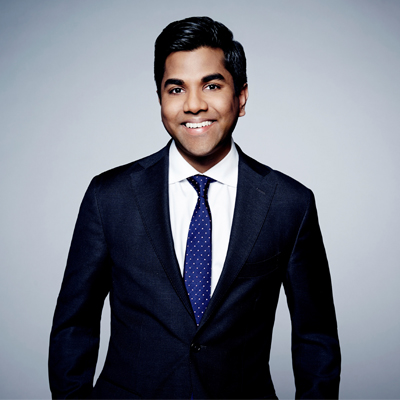
    It has been just six months since he’s taken charge of CNN International operations from south Asia. As bureau chief from New Delhi, Ravi Agrawal has been associated with the media conglomerate since he stepped into the media fraternity eight years ago.


    First in London and then in New York, Agrawal has been producer for several shows including ‘Fareed Zakaria GPS’. Now in Delhi, he will be looking at increasing the coverage from the country with a new government at the helm. As the world’s focus shifts towards South Asia, Agrawal will lead the CNN team from India to deliver key stories for the global English audience.


    In conversation with indiantelevision.com’s Vishaka Chakrapani, he shares a few insights on the focus of CNN International in the country and what Indian stories mean to the world.


    Excerpts…


    How important is India in terms of world stories for CNN International?


    India is a great fascinating story now. It’s 1/6th of humanity. It has become an increasingly important force economically speaking and is demographically vibrant. In all our stories we emphasise that the median age of Indians is 27 which means half of all Indians are under 27 years of age which when compared to other countries shows India as a very young and vibrant country. It has immense potential to be a huge player. The spurt in growth of smartphones which will grow from 130 million users today to 250 million in the next five years will impact stories and the economy. This in turn will also impact how we as journalists cover stories. India is an incredibly important market for us and there is no dearth of stories to tell us. 


    What are the changes you’ve brought in the reporting teams?


    Historically, we have had a very strong presence in India and are looking at maintaining that with two correspondents in Mumbai and Delhi for politics and business. With producers and cameramen and now we are well positioned to attack not just breaking news but also trend stories.


    What stories from India interest your audience?


    Certainly demographics interest us as well as the growth of digital in the country. The reason why Flipkart raised $1 billion was because there was a feeling that with the growth of the smartphone industry, Indians are going to spend a lot of money online. Immediately after, Amazon announced its investment of $2 billion here. We are fascinated with this because it changes not just retail but also the media, banking and daily life of people.


    Politics is also of interest to us, especially with the arrival of a new government which has got a mandate after 30 years with absolute majority. A lot of businessmen we spoke to are optimistic about the opportunity India has in store. Our challenge is how will we cover the larger India narrative that is on the cusp of doing what China might have done 20 years ago which is high speed growth, big transformative change across country and as journalists we need to analyse whether this change will actually happen.


    We do have a commitment to doing strong people stories. For all of India’s economic advances, there are a number of social ills too. We have a show called Freedom Project where we tackle world issues but they have mostly led us back to south Asia.


    Have there been any changes in the reporting style?


    That’s a constantly evolving process. We use Live-U for reporting, which enables us to go anywhere and broadcast with just two people. In India, with widespread technology and 3G coverage, we get amazing signals and so we can be more mobile and live.


    We invest a lot of money and resources in our photographers. We shoot state of the art 16:9 HD and we broadcast in HD in the US and you can see that difference the way our shots are framed, the way we get to places that few others get to. Some examples are our coverage in Gaza, Africa for Ebola and the Ukraine crisis. We invest a lot in just reaching these places and reporting from there. It costs a lot to get there first, to ensure security and to be with experienced teams.


    Does CNN have any plan to produce shows from India anytime soon?


    We have a bureau where we have a number of places where we can go live from, but we don’t have a studio yet. However, we are committed to telling the India story. One of our shows, Connect the World has now shifted from London to Abu Dhabi that puts focus on the Middle East and South Asia. That’s a global story, watched in Latin America but it still nods to the fact that its 8:30pm in India when its telecast.


    During elections, Becky Anderson came to India and hosted her entire show from here.  We are well equipped to broadcast live from India by getting anchors here for breaking news. Indian elections were covered in both our International feed and the US feed. Americans love elections and so a number of shows did live and guest segments with Becky.


    Any plans for a regional focus in India?


    We are essentially an English channel catering to an English speaking audience that is the upper niche, outward looking, global traveller with business interests. The global viewer is English and India will soon be the biggest English speaking audience.


    How do you operate on digital? Is digital a precursor to TV for breaking news now?


    We’ve stopped distinguishing between TV and digital. We don’t think of a story as ‘this is a web story’ or ‘this is a TV story’.  The basic research needed for both is the same. CNN is truly one of those places where we think multi-platform for every story. When we take a picture we think of it in terms of the best TV imagery and also if it can be used online. The aim is to show it visually for TV and in a simple way for digital. We ensure that we aren’t just tweeting our stories but also engaging people and collecting news. When there is breaking news, we first verify and then put it out on multi platforms simultaneously.

  • Content creators see value in social media data

    Content creators see value in social media data

    MUMBAI: Twitter, Facebook and television go hand in hand these days. The relationship between television and social media has been growing over the years. But does it have the potential to turn into a major revenue stream?

    Discussing this was a panel at TV.Nxt 2014 comprising Viacom18 Media VP and Colors commercial and digital head Vivek Srivastava, CNN International New Delhi bureau chief Ravi Agrawal, Nielsen India MD Prashant Singh, GroupM South Asia managing partner Tushar Vyas and Star India VP and digital marketing and CRM head Venke Sharma. The session was headed by Provocateur Advisory principal Paritosh Joshi.

    Firing up the session, Joshi asked Agrawal to share some insights as to how CNN evolved and now functions with the proliferation of social media since it was one of the early entrants into it. Agrawal highlighted that in the early 2000s, CNN had created a website called ireport.com where it invited people to click pictures and post from places where a journalist couldn’t be. “That’s when we saw that regular citizens can get the story before anyone can. We saw this even in the 2008 attack on the Taj Hotel in Mumbai, when the first few images that came were from the common people which were of superb quality. That became a great tool for us to tell stories from places unreachable to us,” he said. He went on to add that the notion of TV and social media being a new marriage is actually an old one in many parts of the world.

    While the possibility of getting a return path was natural for news, how does it work for fiction makers? Sharma started off by saying that there are people for whom entertainment is defined by buzzing topics and a fear of missing out. Talking about Star Plus’ hit show Diya Aur Baati Hum, he said that although it rates high on TAM ratings, it doesn’t garner the same on social media vis-a-vis Iss Pyaar Ko Kya Naam Du which doesn’t get the ratings but gets the buzz.

    Joshi went on to ask Vyas about the translation of social media into a source of revenue. Vyas said that social media works as a surrogate and is also an incremental data point. “We capitalise on the second screen behaviour and try and reach out to all set of audiences on various platforms. Social media is an incremental data over TV data,” he said.

    Nielsen had recently launched its Twitter TV ratings in the US for calculating data on TV shows on the social networking platform. Said Singh, “In this, we don’t count the number of tweets but rather the impressions. It is the GRP equivalent. Whether the market will decide to trade on it or to use it as another dimension against TV ratings is to be seen. But we believe that being able to measure impressions would be more and more important.”

    Talking about how the medium works in sync with the TV, Srivastava said that it is mostly important from a catch-up stand point in the media space. Facebook was to interact while not watching TV while Twitter was an accompaniment while watching TV. This was agreed upon by Sharma who said that Star had used Facebook to sharply target and get viewers to sample its latest Pro Kabaddi League.

    However, Agrawal pointed out that the capability of knowing how people react to your stories also puts the onus on journalists to be more careful and responsible.

    Joshi said that content makers are worried about the fact that the value of a viewer on TV is 100 times more than on digital. To this Vyas said that although it might be true in terms of absolute value, the audience on a platform like YouTube is higher than many other TV monetisation that is happening today. “If you look at advertising money, then digital is slowly reaching the top of the pyramid,” said Vyas.

    Star has set up its own listening hub to understand trends and draw actionable insights, highlighted Sharma. Agrawal ended the session by stating that drawing data from social media is also a danger. “It isn’t always a reflection of reality. The demographics that use social media are of a certain type and especially globally I would be slightly vary about extrapolating data from there,” he concluded.

  • CNN International Appoints Ravi Agrawal as New Delhi Bureau Chief

    CNN International Appoints Ravi Agrawal as New Delhi Bureau Chief

    MUMBAI: CNN International today announced Ravi Agrawal as the New Delhi Bureau Chief. Agrawal will commence in this role with effect from April 1, 2014.Based in the country’s capital,Agrawal will manage and oversee CNN’s multi-platform newsgathering operations from India.

     
    Agrawal is an award-winning CNN producer and has worked with the network across its London and US offices for eight years. He assumes this new role from being the senior producer of CNN’s flagship Sunday program on world affairs ‘Fareed Zakaria GPS’.

    “India has the world’s interest and CNN has had a long standing presence and robust operations in the countryfor well over two decades now. Ravi’s appointment is very timely as we prepare to coverthe world’s largest democracy going to the polls in the coming months,” said Ellana Lee, Vice President and Managing Editor, CNN International Asia Pacific. “The wealth of talent and experience at CNN has enabled us to recruit the strongest candidate from inside the company for this vital role.With a combination of Ravi’s deep knowledge, understanding of India and his in-depth experience with the network’s global shows and operations, we will continue our comprehensive coverage from this country,” she added.
     

    Before GPS, Agrawal was the senior producer for ‘Connect the World’, CNN International’s daily primetime show.Previously, he produced key news programs from the London bureau including Business International, CNN Today and World Business Today. Having joined the network in 2006, Agrawal rose to become a producer in a very short span gaining extensive “live” and in-field production experience from around the world including, Davos, Delhi, London, Mumbai, New York and Washington.

    While Agrawal was its senior producer, ‘Fareed Zakaria GPS’ won a Peabody Award and garnered three Emmy nominations. In 2013, Agrawal was named a “Young Global Shaper” by the World Economic Forum. He received his Bachelor of Arts in International Relations from Harvard College where he was elected to the editorial board of The Harvard Crimson in his freshman year.