Tag: ratings

  • BARC week 34: Colors topples Star Plus to capture numero uno slot in Hindi GECs

    BARC week 34: Colors topples Star Plus to capture numero uno slot in Hindi GECs

    MUMBAI: Toppling the market leader Star Plus in the Hindi general entertainment channels (GECs) genre, Colors secured the leadership position in week 34 with 360494 (000 Sums), according to the Broadcast Audience Research Council (BARC) India ratings.


    Star Plus stood at the second spot with 359509 (000 Sums). On the other hand, Zee TV and Life OK held the third and fourth position with 264237 (000 Sums) and 224264 (000 Sums) respectively.  Sab grabbed the fifth position with 186090 (000 Sums) in week 34.  


    Zee TV’s prime time show Kumkum Bhagya topped the list with 6576 (000 Sums). Four of Colors’ shows made it to the top five chart in week 34. While Sasural Simar Ka grabbed the second position with 5438 (000 Sums), Meri Aashiqui Tum Se Hi with 5365 (000 Sums) was in the third slot. Swaragini and Udaan secured fourth and fifth place with 5300 (000 Sums) and 5243 (000 Sums) respectively. 


    With no change of the position in sports genre, Ten Sports’ continued to top the chart with 640272 (000 Sums) followed by Sony Six in the second slot with 370673 (000 Sums) and Ten Cricket in the third slot with 8998 (000 Sums). 


    In the kids segment, Nick led the pack with 47180 (000 Sums) followed by Pogo TV with 39480 (000 Sums) on second position and Cartoon Network secured the third position with 31445 (000 Sums). 


    In the English news broadcast segment, Times Now continued to rule the roost and secured first position with 431 (000 Sums). On second and third slot respectively were News 9 with 208 (000 Sums) and India Today Television with 160 (000 Sums).

    On the other hand, Big Magic Ganga, in Bhojpuri section led the list with 4371 (000 Sums) followed by ETV Bihar Jharkhand on second berth with 1460 (000 Sums) and Dangal TV in third space with 954 (000 Sums).  

  • “If OTT players offer a unique proposition, all of them can co-exist:” Debashish Ghosh

    “If OTT players offer a unique proposition, all of them can co-exist:” Debashish Ghosh

    ditto TV – India’s first OTT venture owned by media mogul Subhash Chandra – is all set to thrust forward in the space with a strong focus on innovation and fresh content. The OTT player has launched its international operations and will soon have content from across the globe. 


    In conversation with Indiantelevision.com’s Anirban Roy Choudhury, ditto TV CEO Debashish Ghosh shares his vision and thoughts on the emerging OTT market in India. Prepared to take on international players entering the market, he says that Zee Entertainment Enterprises does not believe in loss making business propositions. Every business under the conglomerate is financially independent. The emerging market not only has the potential to grow rapidly but also offers ample scope for innovation.


    Excerpts:


    Is India ready for OTT platforms? How is the market shaping up?


    The Indian market is surely getting ready for OTT. The only challenge that Indian OTT players face is that of bandwidth. The cost of data be it mobile or cable is high. For an average Indian to shell out Rs 2000 individually to have internet on their mobile is still a challenge. Yes, things are improving and it’s but natural that penetration will increase. Statistically, we are going over the US when it comes to penetration of the Internet.


    We at ditto TV are cognizant of the bandwidth condition in the country from the very beginning. Hence, we are not a platform that only works on 3G or Wi-Fi. ditto TV also works on 2G, WAP as well as on feature phones. The OTT market in India is growing and has great growth opportunity. The infrastructure will get better and data will become cheaper as we go along. The growth of OTT will also be interconnected with the new set of consumers that are coming in. Anybody born post 1990s and is above 25 years old doesn’t really watch TV today. They watch all their content on the digital platform.


    Which revenue model will sustain in the long run for OTT players in India and which model will ditto TV follow?


    I don’t believe any one model will work. It has to be a hybrid scenario. Advertising revenue for at least next three – five years is not the proposition that will be sufficient to offset the cost, so if the business strategy is to incur huge losses then going with the advertising platform is okay. We don’t believe in such loss making propositions. We believe in that whatever business we do, must pay for itself and that’s the reason why we follow the subscription model. I think we are one of the two players, who follow a subscription revenue model. World over the subscription based revenue model is something that’s proven to be sustainable and I don’t see that changing in India.


    What kind of advertising can OTT platforms offer? What is the advertiser’s overview on the platform?


    If today India is paying for TV that means they are paying for content. The way digital platforms have progressed in this country, creates a challenge. So far the advertising model was working but we all know that it’s stagnating now. Display advertising by its own nature isn’t attractive anymore on digital for brands. As digital is a measurable medium, people over the platform want to target a specific audience and hence the funda of mass roll-out does not work here. That’s why a proposition like native advertising is coming in and innovations like brand solutions, integrated marketing and most importantly proposition like highly targeted advertising will work. Now when a brand wants to advertise, they won’t say “I want ‘X’ GRP” or “‘X’ circulation of a medium,” but will instead say “I want to target 1 million Male, who are aged between 24-32 and are interested in sports.”


    BARC is scheduled to release data for all screens which will also include screens that OTT caters to. Do you feel we have enough data to provide brands with a platform for targeted advertising?


    Even if BARC provides data for all screens, it will still remain a sample based proposition.


    On the other hand, publishers today have the capacity to roll out empirical data. We can give empirical data of the number of people watching our content, how they are watching it, how much time they are spending and how many of them are coming back. Based on this data, we can target specifically. That infrastructure is a function of technology and technology exists today. There are many data management companies like Lotame and Bluberry, which are in play today. So it is possible to fulfil advertisers’ demand and those who can fulfil this will remain in play or get premium CPM for their inventory. The growth will come from targeted advertising. But I believe that India is a market where if the content is original, attractive and effective, people will pay for it.


    What’s your take on the current content on OTT platforms? What will be ditto TV’s content strategy and what kind of content is likely to work?


    Largely, OTT players today are going for pre-produced TV content, which is easily available. At the same time, brands, freelancers and MCNs are also creating a lot of original content. ditto TV has also invested in creating original content. We launched a music show, which is exclusively for digital and then we are also moving towards producing a whole lot of original shows in different genres like humor, horror, short series and short movies etc. This is sharable content that resonates with consumers, which is not necessarily long. 


    I believe that the debate between long and short show is a wrong one. Content is what is important. If the content has quality, short will also work. We can take example from Sujoy Ghosh’s Ahalya, which got more than two million views in three days. So if the content has quality, it will fly. We make so many long movies but how many do we actually remember at the end of the day?


    Do you think an ‘only original’ content strategy is monetarily sustainable at this stage?


    Creating content cannot be the only strategy. Producing content is also a strategy. One must have all sorts of content including original content. You cannot drive something only on the basis of original content. Let’s face the reality, TV content is still attractive and liked by the mass so there is no point in saying that we will only create original content and dump TV.


    Also if you create content, you have to find different ways of monetizing it and that’s where syndication comes in. If you are stuck to a particular model, it’s highly unlikely that you will recover money. Also, the more the content is watched, the more relevant it becomes. House of Cards, Game of Thrones and Orange Is The New Black are examples that we already seen.


    Do you feel post the 4G launch, there will be more mobile consumption?


    I am keenly waiting for 4G to roll out. But I believe that content will be consumed on both mobile as well as broadband devices. Expecting someone to watch content full day standing on one leg is a little too much as entertainment is not only about content quality but also experience. So group viewing will continue but at the same time when someone is travelling, instead of missing the content because they are in transit, they will watch it on mobile devices, which they wouldn’t be able to do if OTT wasn’t present. In my opinionm consumption is never a ‘or’ but is always an ‘and’ proposition.


    Do you feel that the launch of global OTT players Netflix and HOOQ can pose a threat to existing Indian OOT platforms?


    India is a very big market and there is scope for everybody to play, provided you are unique. Whether you are ditto TV, HOOQ, Netflix or Hotstar, your USP should be clear to the consumers. The consumer is fickle, so if these players bring in a unique proposition in terms of content and entertainment, all of them will reside simultaneously.


    However, in the long run, there will be players who will survive and those who will perish. The platform offering the best holistic experience will survive and hence OTT players will have to keep innovating and setting benchmarks.


    Was ditto TV’s new TVC with the tagline ‘Who watches TV alone?’ launched with the aim of taking a dig at Hotstar’s ‘Go Solo’ campaign?


    If you don’t go only by the last line, with this campaign what we are actually trying to convey is that television viewing is a collective experience. Initially when TV came to India, it used to be a community viewing. We all used to go to the neighbour’s place and watch Mahabharat. I believe that has not changed significantly because it’s entertainment at the end of the day.


    Entertainment is consumed with people one cares for and that’s what we wanted to communicate. In today’s world, where cultures are shifting, people are moving out of their families, nuclear families are mushrooming but relationships do not change. So if people have separated due to circumstances, they don’t need to change their habit of watching TV together. That’s why we showcased mother – daughter, fiancé, brother and sister as well as friends in our campaign. This campaign was executed after research and has nothing to do with Hotstar or its campaign.


    With the campaign, was the aim to reach a particular milestone in terms of downloads? What is ditto TV’s subscriber base at this stage?


    Downloads mean nothing to us. Ideally, download should mean nothing to everybody. It is just an eyewash. Being a subscription based platform, we analyse ourselves on the basis of the number of active subscribers we have and our target is always to enhance the subscriber base, not the downloads.


    We have 1.5 million monthly paid subscriber base out of which most of them are based in India. We have just launched our international operations and have around 20,000 international subscribers. We believe that international operations will play a big role in our growth in terms of monetisation. 


    What is the roadmap ahead for ditto TV?


    Our goal is to have a worldwide presence with a versatile range of content, which includes both regional as well as international content. We will keep innovating and offering people an exquisite experience. We will make subscription easy and have a wide range of packs, which will make people pay for what they want.


    A Bengali has no necessity of a South Indian pack and vice versa, so we will make sure that channels are not forced on to consumers. We allow users to download shows and watch them at their leisure. So overall, we will keep innovating and I believe that’s something that the OTT sector also needs to do non–stop.
     

  • BARC Wk 30: Aaj Tak leads Hindi news channel category

    BARC Wk 30: Aaj Tak leads Hindi news channel category

    MUMBAI: In the week 30 of Broadcast Audience Research Council (BARC) India analysis Hindi news channel Aaj Tak has topped the ratings chart in the Hindi news channel genre category. The channel has bagged 60594 (000 sum). The second in the ratings chart is India TV with 48446 (000 sum) and ABP News with 46565(000 sum) stood third.


    The English news channel genre has also done well this week. Times Now saw a hike in the ratings chart with 1038 (000 sum). India Today Television followed Times Now with 454 (000 sum), NDTV 24×7 grabbed the third slot with 401 (000 sum).


    The Hindi general entertainment channel (GEC) category continued to see Star Plus as the leader with 367463 (000 sum) followed by Colors with 348221 (000 sum). Zee TV with 258488 (000 sum) grabbed the third spot while Life OK after garnering 221448 (000 sum) sat over Sab which secured 221125 (000 sum) to grab the fifth spot.


    Star Plus’ Saath Nibhaana Saathiya with 5518(000 sum) secured top berth in the list of top programs as per BARC India analysis. Zee TV’s Kumkum Bhagya with 5351(000 sum) secured second position while Colors’ Meri Aashiqui Tum Se Hi with 5182(000 sum) and Sasural Simar Ka with 5141(000 sum) booked third and fourth berth respectively. Star Plus’ Ye Hai Mohabbatein with 4561(000 sum) sat on fifth slot.


    Ten Sports with 37321 (000 sum) continued its leadership position in the sports genre while Ten Cricket of the same conglomerate with 13981 (000 sum) booked second berth followed by Star Sports 2 with 11183 (000 sum).

  • Star China Media’s ‘The Voice of China’ 4 premiere breaks rating records

    Star China Media’s ‘The Voice of China’ 4 premiere breaks rating records

    MUMBAI: Star China Media’s The Voice of China (TVOC) season 4 has received top ratings for its 16 July premiere on Zhejiang Satellite TV.


    The premiere of TVOC season 4 saw 5.418 per cent rating and 16.597 per cent share of CSM 50 cities. With this, the show broke the record of all premieres of Chinese entertainment programmes.


    The rating of the first episode of season 4 increased 28 per cent over the final episode of season 3, and it was also higher than the finale of season 2. The premiere ratings for the show have shown an upward trend season after season. So while season 1 rated 1.48 per cent, the ratings from season 2-4 were 3.52 per cent, 4.16 per cent and 5.31 per cent. The main audience comprised young people below age 35, representing 24 per cent of the audience. Additionally, 27 per cent of the audience has a higher education.


    “Star China is thrilled that our production The Voice of China remains very popular with the Chinese audience and won the time period, breaking records. We expect this season to surpass last year’s big success. Our CEO, Tian Ming, is a visionary in China in the formats’ arena – both in raising the production standards and in creation of new formats and his dream is being realized with The Voice of China. We also want to thank our broadcast partner, Zhejiang Satellite TV, for all their generous support around the show,” said Star deputy general manager Iris Xia.

  • India – Pakistan match registers 288 million viewers

    India – Pakistan match registers 288 million viewers

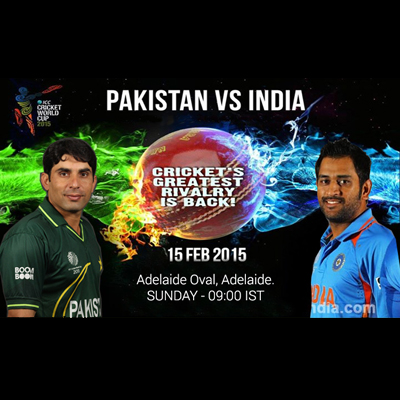
    MUMBAI: The most anticipated clash of the ICC Cricket World Cup 2015 created Indian television history as 288 million viewers (TAM data CS4+ extrapolated to the universe using a standard conversion factor) tuned in to watch India take on Pakistan on 15 February, 2015.


    The game was the most watched television event in India in the last four years, since the finals of the ICC Cricket World Cup 2011.


    The match between archrivals rated 14.8 TVR (TAM data M15+ ABC) across Star network including DD. The match rated 11.9 TVR (TAM data M15+ ABC) on Star network and 2.9 TVR (TAM data M15+ ABC) on DD. The India – Pakistan game delivered across town classes led by the top six Metros rating 17.2 TVR and 1million+ towns rating 15.5TVR (All data TAM data M15+ ABC).


    Star India CEO Uday Shankar said, “Nothing is bigger than the ICC Cricket World Cup and the Indian fans have shown their unflinching faith and passionate following for Team India as they began their World Cup campaign with a bang. As the country’s leading broadcaster, our efforts have been to showcase the best of cricket, have wider coverage, offer multiple languages and take the sport deeper by reinventing the viewer experience. With a host of innovations, we are committed to make this edition of the ICC Cricket World Cup the biggest ever.”


    Star unleashed a host of innovations for the biggest spectacle in the country. The first ever broadcast in six languages of the India – Pakistan game received 76 per cent of the viewership from Hindi and regional feeds and the balance 24 per cent from English validating the multi-lingual strategy pioneered by Star.


    A disruptive ‘Mauka’ ad campaign, which went beyond cricket on the field and leveraged fan passion in a unique way, went viral with over 17 million views online. Star roped in the most prominent voice in Indian cinema, Amitabh Bachchan, for India’s biggest game as he debuted as a commentator with the Star Sports panel of Kapil Dev, Shoaib Akhtar, Rahul Dravid and Sanjay Manjrekar for the India – Pakistan game.


    The India – Pakistan clash at the World Cup took social media in India by storm as 324,000 consumers spoke 500,000 times about the match, generating a potential three billion impressions. The match dominated conversations on Twitter, with 10/10 trends on Twitter Web, and 15/15 trends on Twitter Mobile, India spoke about nothing else. Indian fans were hopeful of India’s victory, and #Indwins was used 90,000 times, starting well before the game ended. The Star Sports campaign #wontgiveitback was used 24,000 times, and the second installment of the ‘Mauka’ campaign was viewed half a million times within hours of its release.

  • IBF is not ending TAM subscription: Punit Goenka

    IBF is not ending TAM subscription: Punit Goenka

    MUMBAI: The sword has been hanging on Television Audience Measurement’s (TAM) head for a long time now. From NDTV Group’s $1.3 billion lawsuit (though dismissed by courts) to Broadcast Audience Research Council India (BARC) likely to start releasing television ratings data by April, as reported earlier by Indiantelevision.com, things haven’t been hunky-dory for the measurement body for a while now.


    However, not only did the agency fight tooth and nail the allegations of poor quality TAM research data, it also complied with the guidelines set by Information and Broadcasting Ministry for a TV ratings agency in order to exist. For instance, TAM continues to increase the size of the panel to fulfill the minimum peoplemeter sample size of 20,000 homes guideline, set by the I&B Ministry.


    With a few months left for BARC to begin rolling out its data, there have been various speculations making rounds in the industry. “There is the cost issue. Why would one pay for both TAM and BARC subscription? Also, since both the measurement bodies have a different way of functioning, one needs to take a break before adopting the new one,” says an industry source on the reason for the ratings blackout, if indeed it ever happens.


    So much so, a few media reports have gone on record to say that the Indian Broadcasting Foundation (IBF) is planning to end its subscription with TAM leading to a period sans ratings. This in turn has created panic in the industry, as it awaits two major events namely the ICC Cricket World Cup 2015 and the eighth edition of the Indian Premiere League (IPL). As per sources, ad rates for WC are touted to be around Rs 4 lakh for 10 seconds and ad rates for IPL have seen an increase of around 10-15 per cent generating huge ad revenue for broadcasters.


    When questioned on the reports doing the rounds and how it would impact the industry in case the IBF decides to end its subscription from TAM, Kantar CEO Eric Salama laughs saying, “I don’t know about the intentions.”


    What’s more, an industry source  close to the development clarifies that so far the ratings agency had not heard from the IBF or anyone from the industry on the matter.


    To get further confirmation on the matter, Indiantelevision.com contacted IBF board member and BARC chairman Punit Goenka and he denied the report as well. “There is no such decision taken by the IBF,” he asserted.


  • Zee TV Middle East’s Parwaaz takes off with record ratings in UAE

    Zee TV Middle East’s Parwaaz takes off with record ratings in UAE

    MUMBAI: Zee TV Middle East’s Parwaaz (meaning ‘to take flight’), the first ever Hindi fiction series produced completely in the UAE in the last decade, got an opening rating of 12.52 amongst all South Asians in UAE, the highest registered by any shows across any channels in 2014. Parwaaz airs at a very competitive time band (Every Sat 2130hrs to 2230hrs) where other Hindi GECs air high profile shows like Big Boss (Colors), Everest (Star Plus) and CID (Sony).  Despite stiff competition, Parwaaz managed to top the charts on the back of a UAE-based storyline that expats living away from their home could relate to.


    Parwaaz is the story of 2 young men – Adarsh from India and Sikandar from Pakistan, whose lives intersect in Dubai in the early 90’s when they come here for their dream jobs. However, fate plays a cruel hand when they find that they have been duped by their employment agent back home. Their story of struggle, grit and friendship spans over 20 years – from their humble beginnings of doing odd jobs for survival, to the heights of their success, and the trials and tribulations along the way. Their story spanning 2 decades is being showcased in a series of 13 one-hour episodes.


    Pakistani actor Noman Habib who was last seen in the lead role of Pakistani movie Main Hoon Shahid Afridi plays Sikander while Devansa Vasan who has been seen in many cameo roles in Hindi series in India plays Adarsh. The two lead actresses are Priyal Gor from India (last seen in Ram Milaye Jodi on Zee TV) and Suzain Fatima who has acted in many dramas in Pakistan.  In another first in Hindi serials, an Emirati, Adel Farooq too was part of the star cast as Alam, the negative lead. Adel also sung the title-track for Parwaaz. The music played a key role in the promotion and has been played by FM stations in the UAE. 4 versions of the title track was recorded, the OST and lounge version sung by Adel Farooq, the sufi version sung by a local talent Ejaz Ahmed and the lounge version by Krishna Beura.


  • Doordarshan National is no. 1 among all GECs

    Doordarshan National is no. 1 among all GECs

    NEW DELHI: Leaving behind the top touted general entertainment channels, Doordarshan National jumped to number one position in all Hindi GECs during the afternoon hours 12:00pm to 3:00 pm in weekdays in all India 1mn+ markets


    DD National had an average 448 thousands viewership in average last twelve weeks (Wk 35’14- Wk 46’14) in all 4+TG. 


    As reported by TAM, Doordarshan National was at the top with 448 GVTs followed by Star Plus with 436 GVTs, Life OK with 391 GVTs.


    This spurt in viewership is the direct result of the channel’s strategy to provide the viewers with fresh content in their afternoon slot – ‘DD Dopahar’, while the other major GECs were still running their repeat telecast.


    While in the evening slot (7:00pm-11:00pm) Doordarshan National is ahead of Sony TV, Life OK with 566 GVTs in all India 1mn+ market averaged in the last twelve weeks (Wk 35’14- Wk 46’14) in all 4+TG. 

  • DD gets watermarked

    DD gets watermarked

    MUMBAI: The pubcaster has finally got itself inked for ratings. Doordarshan’s 20 channels have got watermarked as per the Broadcast Audience Research Council (BARC) India’s standards for viewership ratings.

    Doordarshan, which has been a founding member of the measurement council, took a while to get the channels watermarked. As per sources, the cost of watermarking a channel costs around Rs 20 lakh and the pubcaster has spent close to Rs 4.5 crore to get the technology on board.

    The audience measurement company has already got on board 250 channels that have ordered for watermarking embedders. Half of this has already been installed.

    The watermarking technology has been taken from Netherlands based Civolution and field testing of the meters is underway for homologating them to Indian conditions. As BARC India has consistently maintained, the meters have been assembled in India at a fraction of the cost of global suppliers.

    Deals with 26 vendor partners such as Intel, Hansa, Mediametrie, Civolution, Markdata, Magic9Media across 12 processes have been finalised. It also claims that this is the largest such audience measurement system globally with cutting edge technology.

    The government has laid down policy guidelines that prescribe a minimum of 20, 000 homes, which BARC India feels isn’t enough in the long run. It has also opted for the harder and tougher method of assembling systems from various vendors to offer a superior and cost effective output.


  • Nielsen says it has issued faulty ratings since March 2014

    Nielsen says it has issued faulty ratings since March 2014

    MUMBAI: Nielsen, which controls almost all of the television ratings measurement market in the US, has been issuing incorrect TV ratings for national broadcast networks due to a technical error. The error, introduced in March, was not discovered until 6 October, the company said in a statement.


    The error was ‘generally imperceptible until we saw high viewing levels associated with fall season premiere week,’ it added. “As a result, small amounts of viewing for some national broadcast networks and syndicators were misattributed. Cable networks and local TV ratings were not affected by this error.”


    The company fixed the error on 9 October and now plans to reprocess all of its ratings data going back to 18 August, when the first new broadcast program of the season aired. It will also conduct an analysis to determine if other weeks also need to be reprocessed.


    ABC appears to be the beneficiary of the glitch, with its programs getting credited for views that belonged to other networks.


    Nielsen’s ratings is the metric that advertisers and networks rely on to conduct their ad sales business and will be majorly affected due to this gaffe. It is not yet clear to what extent the ratings will change when the numbers are reprocessed. The changes are expected to be relatively minor.


    “We will undertake an exhaustive post-mortem-internally and with our clients-and we are asking Ernst & Young and the MRC to join us in these efforts,” the company added in its statement.


    Nielsen, along with Kantar, operates TAM in India, the current industry body for TV ratings.


    Read the full statement from Nielsen:


    In response to recent ratings irregularities, Nielsen conducted an extensive internal investigation of our systems and processes. On Oct. 6, 2014, we uncovered a technical error that impacts national network television ratings over several months.


    The technical error was introduced on March 2, 2014, and was generally imperceptible until we saw high viewing levels associated with fall season premiere week. As a result, small amounts of viewing for some national broadcast networks and syndicators were misattributed. Cable networks and local TV ratings were not affected by this error.


    A software fix to correct the problem was deployed on Oct. 9, 2014, meaning that all data being released today and going forward is correct.


    In addition,


    All of the commercial data-including C3-for the current TV season, which will begin releasing this weekend, will be correct. All previously released data since September 22nd will be reprocessed and reissued by Oct. 17, 2014. We will also reprocess all of the impacted data going back to Aug. 18, 2014, when the first new season broadcast network program aired. This data will be reissued by Oct. 31, 2014. Nielsen is also conducting an impact analysis to determine whether additional weeks should be reprocessed. We will work closely with our clients and the industry to provide updates as soon as possible. This issue has to do with difficult-to-attribute content called “all other tuning with code” (AOT with code). This data represents between 0.1% and 0.25% of all viewing minutes that we credit nationally. In the vast majority of cases, the impact is small; in a handful of cases, the impact is more significant.


    As part of our investigation, we have also determined that there are no issues with the National People Meter, our data collection process, our panel, our TV audience measurement methodology or the total TV viewership data produced during this affected period.


    We are working closely with our clients to manage this situation and will continue to be transparent with the industry and the media about our plans. In addition, we will undertake an exhaustive post-mortem-internally and with our clients-and we are asking Ernst & Young and the MRC to join us in these efforts.


    Nielsen is committed to upholding the highest standards of television audience measurement and data processing, in order to provide the most effective audience measurement solutions to meet client needs.