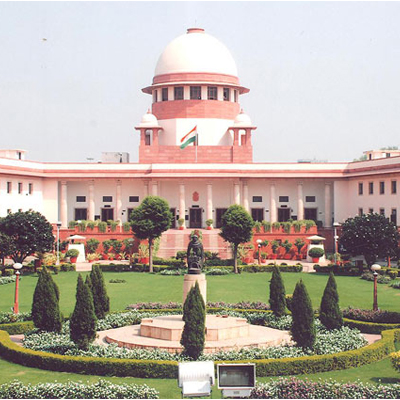
Tag: Ranjan Gogoi

  • Supreme Court allows photos of Governors, CMs and Ministers permitted in Government ads, in review of earlier order

    Supreme Court allows photos of Governors, CMs and Ministers permitted in Government ads, in review of earlier order

    New Delhi: In a reversal of its own judgment of 13 May last year, the Supreme Court today allowed the use of photographs of governors, chief ministers and ministers in government advertisements.

    The apex Court gave the judgment on a batch of petitions filed by the Centre and various states seeking a review relating to photos of politicians on government advertisements.

    The Court had in May last year given a direction on a public interest petition that only photographs of the Prime Minister, President and Chief Justice of India can be published in official media advertisements and not those of chief ministers. But the personal approval of these three authorities will be necessary before publication.

    The Centre in its petition argued that it is for the government to decide whose photographs should be published and what the content of advertisements should be. It said the court should refrain from interfering in such policy matters.

    The Centre also said barring photos of chief ministers on advertisements was against the federal structure.

    Justices Ranjan Gogoi and Prafulla C. Pant who had passed the original directions said in September that the review petitions will be heard in open court.

    Prior to the order relating to hearing in open court, the judges perused the petitions of Tamil Nadu, West Bengal, Karnataka, and Assam in the chamber.

    The four states filed the review petitions challenging direction as being discriminatory and erroneous since it has permitted the photograph of the Prime Minister but not the chief ministers who too are elected representatives of the people.

    The states pointed out that the expert panel had recommended display of photos of CMs/governors as well but the Court had restrained the states from displaying photos of CMs/governors.

    The petitions had said: “There is nothing wrong if the publication issued by the government highlighting the achievements of the government contains photographs of the chief minister and the other ministers if they have made contribution to the achievements of the state government. The judgment is completely silent regarding the exclusion of the chief minister who is the head of the state government. If the photograph of the prime minister is permitted on the publication/advertisement then the photographs of the chief minister must have also been permitted by this court.”

    The original public interest litigations (PIL) filed by the NGOs Common Cause represented by counsel Meera Bhatia and the Centre for Public Interest Litigation (CPIL) represented by advocate Prashant Bhushan had urged the apex Court to frame guidelines.

    Holding that taxpayers’ money cannot be spent to build “personality cults” of political leaders, the Court in May last had restrained ruling parties from publishing photographs of political leaders or prominent persons in government-funded advertisements.

    The Court had said such photos divert attention from the policies of the government, unnecessarily associate an individual with a government project, and pave the way for cultivating a “personality cult”.

    The observations of the Court were based on examination of the findings of a Committee led by Bangalore’s National Law University Director N.S. Madhava Menon set up in May last year which had submitted its report in October.

    The Committee had been set up by the Information and Broadcasting Ministry pursuant to an order of 23 April 2014. Other members were former Lok Sabha Secretary General T K Vishwanathan, and senior advocate Ranjit Kumar. Mr Bimal Julka, then Secretary in the I and B Ministry, was the member Secretary of the Committee.  
  • Supreme Court allows photos of Governors, CMs and Ministers permitted in Government ads, in review of earlier order

    Supreme Court allows photos of Governors, CMs and Ministers permitted in Government ads, in review of earlier order

    New Delhi: In a reversal of its own judgment of 13 May last year, the Supreme Court today allowed the use of photographs of governors, chief ministers and ministers in government advertisements.

    The apex Court gave the judgment on a batch of petitions filed by the Centre and various states seeking a review relating to photos of politicians on government advertisements.

    The Court had in May last year given a direction on a public interest petition that only photographs of the Prime Minister, President and Chief Justice of India can be published in official media advertisements and not those of chief ministers. But the personal approval of these three authorities will be necessary before publication.

    The Centre in its petition argued that it is for the government to decide whose photographs should be published and what the content of advertisements should be. It said the court should refrain from interfering in such policy matters.

    The Centre also said barring photos of chief ministers on advertisements was against the federal structure.

    Justices Ranjan Gogoi and Prafulla C. Pant who had passed the original directions said in September that the review petitions will be heard in open court.

    Prior to the order relating to hearing in open court, the judges perused the petitions of Tamil Nadu, West Bengal, Karnataka, and Assam in the chamber.

    The four states filed the review petitions challenging direction as being discriminatory and erroneous since it has permitted the photograph of the Prime Minister but not the chief ministers who too are elected representatives of the people.

    The states pointed out that the expert panel had recommended display of photos of CMs/governors as well but the Court had restrained the states from displaying photos of CMs/governors.

    The petitions had said: “There is nothing wrong if the publication issued by the government highlighting the achievements of the government contains photographs of the chief minister and the other ministers if they have made contribution to the achievements of the state government. The judgment is completely silent regarding the exclusion of the chief minister who is the head of the state government. If the photograph of the prime minister is permitted on the publication/advertisement then the photographs of the chief minister must have also been permitted by this court.”

    The original public interest litigations (PIL) filed by the NGOs Common Cause represented by counsel Meera Bhatia and the Centre for Public Interest Litigation (CPIL) represented by advocate Prashant Bhushan had urged the apex Court to frame guidelines.

    Holding that taxpayers’ money cannot be spent to build “personality cults” of political leaders, the Court in May last had restrained ruling parties from publishing photographs of political leaders or prominent persons in government-funded advertisements.

    The Court had said such photos divert attention from the policies of the government, unnecessarily associate an individual with a government project, and pave the way for cultivating a “personality cult”.

    The observations of the Court were based on examination of the findings of a Committee led by Bangalore’s National Law University Director N.S. Madhava Menon set up in May last year which had submitted its report in October.

    The Committee had been set up by the Information and Broadcasting Ministry pursuant to an order of 23 April 2014. Other members were former Lok Sabha Secretary General T K Vishwanathan, and senior advocate Ranjit Kumar. Mr Bimal Julka, then Secretary in the I and B Ministry, was the member Secretary of the Committee.  

  • Karunanidhi opposes SC rule against ban of politicians’ pictures in govt ads

    Karunanidhi opposes SC rule against ban of politicians’ pictures in govt ads

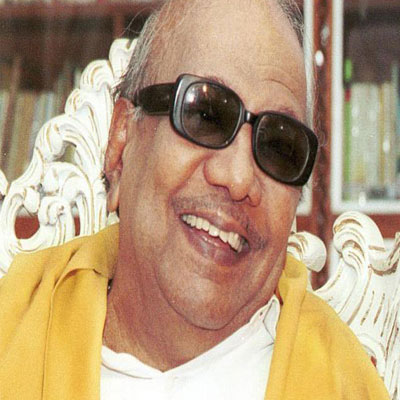
    NEW DELHI: DMK chief and former Tamil Nadu chief minister M Karunanidhi has lashed out at the Supreme Court’s ban on the photos of politicians in government ads.


    The veteran politician has said that this takes away the rights of the states.


    He was quoted in media reports as saying, “The PM and CMs are of same status in a federal set-up. In states, people give more importance to the CMs than the PM. A picture of a CM is inevitable in state govt advertisements. There are few educated people. The pictures help people understand ads better.”


    Holding that taxpayers’ money cannot be spent to build “personality cults” of political leaders, the Supreme Court restrained ruling parties from publishing photographs of political leaders or prominent persons in government-funded advertisements.


    The Court said such photos divert attention from the policies of the government, unnecessarily associate an individual with a government project, and pave the way for cultivating a “personality cult.”


    A bench of Justices Ranjan Gogoi and N.V. Ramana said the photos of only three constitutional authorities – the Prime Minister, the President and the Chief Justice of India – can be used in such ads. However, the personal approval of these three authorities will be necessary before publication.


    The observations of the Court were based on examination of the findings of a Committee led by Bangalore’s National Law University Director N.S. Madhava Menon set up in May last year, which had submitted its report in October. The Committee was set up by the Information and Broadcasting Ministry pursuant to an order of 23 April last year. Other members were former Lok Sabha secretary general T K Vishwanathan, and senior advocate Ranjit Kumar. Bimal Julka, secretary in the I&B Ministry, was the member secretary of the Committee.


    The court passed the order on a public interest litigation (PIL) filed by the NGOs Common Cause represented by counsel Meera Bhatia and the Centre for Public Interest Litigation (CPIL) represented by advocate Prashant Bhushan pleading it to frame guidelines.


    The petitions sought issuance of guidelines for curbing ruling parties from taking political mileage by projecting their leaders in official advertisements.


    The Menon panel had recommended a complete ban on publishing of photos in the ads. It had further said that no ads should be allowed on election eve.


    However, Justice Gogoi made changes in four cases. Instead of a complete ban on publishing of photos of all individuals, it said pictures of PM, President and CJI can be used provided they personally clear it – thus, in a way, making them also accountable for the publication.


    Secondly, the court improvised on the Menon committee recommendations to direct the government to appoint a three-member Ombudsman body of persons with “unimpeachable integrity.”


    The bench disagreed with the panel’s suggestion for a performance audit on such government ads.


    Holding that there had been “misuse and abuse” of public money on such advertisements, the three-member committee headed by eminent academician Professor Menon had framed guidelines to regulate expenditure and contents of such ads.


    The report had said only pictures and names of the President, the Prime Minister, Governor and Chief Ministers be published.


    The apex court bench had then said that the existing guidelines of the Directorate of Advertising and Visual Publicity (DAVP) do not cover such ads. There was therefore a need for substantive guidelines to be issued by the Court until the legislature enacts a law in this regard.


    The three members of the committee recommended that the governments must prepare a list of personalities whose birth or death anniversaries will be marked with ads in advance.


    The government must then specify which Ministry should release the ad to avoid different departments and state-run companies from paying tribute to the same leader with a multitude of ads. “There should be a single advertisement only,” the Committee said.


    The committee said that its recommendations are to prevent “the arbitrary use of public funds for advertising… to project particular personalities, parties or governments without any attendant public interest.”


    As was reported earlier by Indiantelevision.com, the move is likely to impact the revenues of some media groups as television channels will no longer be able to run TVCs by state governments featuring Chief Ministers and other local political leaders.