Tag: Rani Mukerji

  • Aiyyaa: An insult to audience’s intelligence

    Aiyyaa: An insult to audience’s intelligence

    MUMBAI: Aiyyaa stars Rani Mukerji as the main draw when she seemed to be fading out of memory. Still this can‘t be called a woman-oriented film because for the first 45 minutes, neither the film nor Rani Mukerji shows any definite orientation. She dreams all the time and in her dreams she is either aping Madhuri Dixit or Sridevi, singing and dancing to their hit romantic numbers. You think this woman is aspiring to be a film star.

    Rani Mukerji‘s parents are trying to get her married to a man of their choice but being a romantic she wants to fall in love first and marry the guy she loves. A matrimonial classified has been issued in a local paper and everyday she is paraded before a new suitor as her mother keeps repeating her well rehearsed speech about her daughter‘s virtues. Finally, a suitor says yes and a date is finalised for the betrothal.

    But Mukerji has started chasing an art student, Prithviraj, who emanates fragrance from his clothes. Yet, it is not a film plugging one of those cheap perfume sprays advertised on TV where half a dozen women get ecstatic and chase a man using one such spray.

    Inspired from one part, Lagnaachya Vayachi Mulgi (A Bride To Be), of a three part Marathi movie, Gandha, Aiyyaa is the story of a typically Marathi girl Mukerji, who, having been drawn by the fragrant lad, falls in love with him at the very first smell of him. Yet she never gathers the courage to tell him for two reasons: the first is that he is a very reserved and aloof guy who is never seen talking with anyone and, second, because of her typical Marathi middleclass upbringing where she may dream all she wants but cant utter ‘I love you‘. There are also stories spun around him: that he is a drunkard, heavily into drugs and has squandered his father‘s riches on his vices.

    The talk around him makes Prithviraj even more mystical for Mukerji and hence more determined to win him over. The first half of the film is a total drain and so is most of second part till last 20 minutes or so when the engagement is due to take place.

    verything is in place, including the suitor, but the girl is missing. She is doing her favourite thing, stalking Prithviraj. After a marathon 148 minutes, the boy opens his mouth, professes his interest in Mukerji and the last scene of engagement with new suitor in place culminates with a jamboree in a typical Marathi style.

    Aiyyaa has a poor premise with Mukerji chasing a boy like a teenager and trying to entertain by making all sorts of faces or dancing in traditional Marathi outfits. If the script and screenplay are poor, the direction is amateurish. This Hindi film goes into Marathi or Tamil diatribes at will, adding to the viewers‘ exasperation. The only one with some presence in the film, thanks to his limited dialogue, is Prithviraj.

    Aiyyaa is an insult to a viewer‘s intelligence.

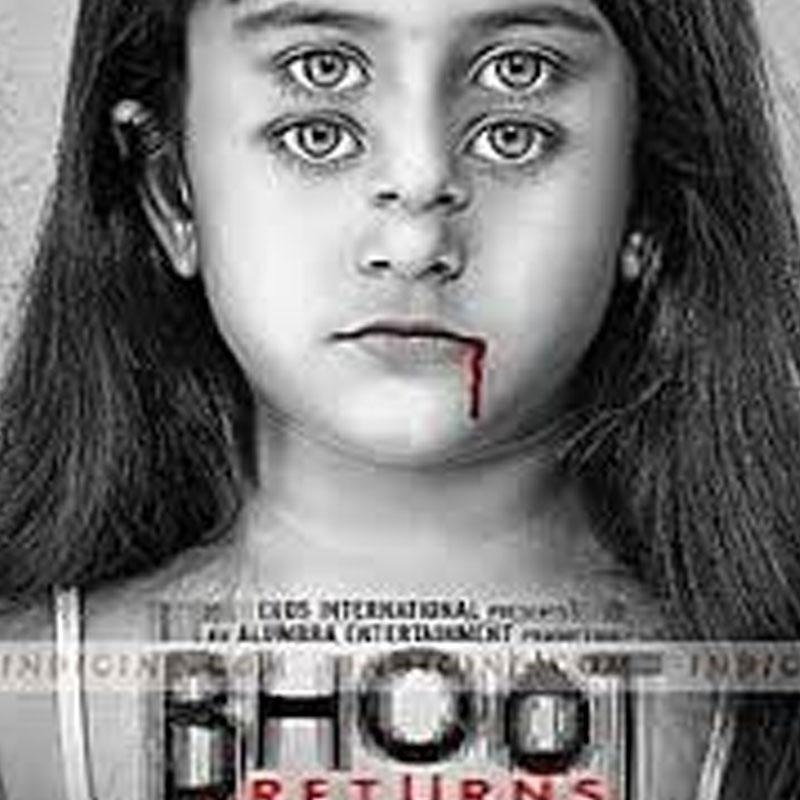
    Bhoot Returns: Varma‘s latest dud

    When stars don‘t care to work with a director, the only alternative left is to cast new faces or try to dig out over the hill stars faded from memory. Since such names don‘t sell, there are budget constraints. However, these are minor hindrances if you have a solid script which, even if one does not dig too far back, has been proved over and over by films such as The Dirty Picture, Kahaani, Vicky Donor, OMG Oh My God! and English Vinglish.

    Bhoot Returns has none of the above: no story, no coherent script, no stars worth spending high admission rates on. So director Ram Gopal Varma arms himself with his earlier media-endorsed hit Bhoot (which in reality was a loser in most circuits), loud background sound and 3-D effects to lure in the audience.

    A posh house is vacated by previous tenants without a warning and they have vanished into thin air. The owner, staying somewhere abroad, asks his agent to find new tenants. The new tenants are Manisha Koirala, Chekravarthy and their two children, a daughter and a son. In case these four fall short in filling the screen pace, in comes Madhu Shalini playing Chekravarthy‘s sister. There is also a domestic servant who can be the first sacrificial lamb to establish the presence of a ghost in the house.

    Uncanny things start happening in the house at night. Usually these are just eerie sounds and loud knocking on the main door, which, according to the convenience of the director, is sometimes on the ground floor and at others on the mezzanine. Most of the scaring that happens is done by the three, Chekravarthy, Koirala and Shalini, all three out in the dark to check what is happening and bumping into each other as loud background music blares to help them scare each other but never the viewer. This helps the film linger on for 80 of its 90 minute duration as each dull scene goes on and on.

    The film did not really need 3-D because nothing jumps out of the screen to scare or involve the audience. In the event, the director indulges and uses the medium to shoot almost all his scenes from behind an object like a fan swirling above or a tree or a drawing room showpiece. His indulgence makes the performers secondary; even while the three are out in the open space discussing the odd happenings; the shot is through some leaves. Who cares what the actors are talking or what their expressions are!

    Shot on one location of a bungalow, with just five characters in the cast, Bhoot Returns is a cheap product sure, but so poor as to not even assure the return of that small budget.

    Makkhi: An interesting watch

    When a commercially successful director attempts a different film to prove that it is not stars but the idea and its execution that finally work, the advantage is that, subconsciously, he still aims at the box office. S S Rajamouli, when taunted that he depended on stars for box office success, decided to take recourse to a story his father had told him 16 years back and came up with Eega, a Telugu film, which was later dubbed in Tamil as Naane and in Malayalam as Eecha. Together, they are reported to have grossed over 125 crore with the original version being the best among all three so far. The Hindi dubbed version now seeks acceptance from the Hindi film audience.

    Makkhi is a live-action animation film, which is an arduous task in itself and all the effort would be a waste if the film did not have a convincing story to tell.

    Samantha Ruth is a social worker staying with her bhabhi and absentee brother (working in Dubai). Staying in a house opposite her is a man called Nani, who has been trying to woo her for two years. She also comes to like him and finally decides to accept his friendship and later his love. Her organization, which depends mainly on donations and contributions from others, is in dire need of cash. On a suggestion, she decides to call on the big-time builder, Sudeep, who has a glad eye for pretty girls and a boast that no girl whom he wanted has ever turned him down.

    Sudeep is reluctant to meet any donation-seeker first but when he catches sight of Samantha and sees how pretty she is, he turns generous and immediately writes a cheque of 15 lakh for her organization. Having done that, Sudeep soon starts finding reasons to see Samantha and seduce her only to realize that even when she was with him, her eyes were on Nani, who never lets her out of his sight. Sudeep is outraged at not only being rejected by a girl but that too for the sake of an ordinary lad. He kills Nani to get him out of his way. Nani, while dying, promises he would kill Sudeep if he as much as looked at Samantha.

    True to his word, Nani is back within 10 days, born again is a common fly- Makkhi. Being born as Makkhi, the avenging bit is a bit tricky for Nani. His priorities are twofold; one to somehow convey to Samantha that he is Nani and here to protect her as well as to avenge his own death and second to let Sudeep know that is Nani reborn as a fly and is here with an agenda to kill him. He does both, in a way which looks convincing to the viewer and which in turn keeps audience interest alive. While once almost killing Sudeep in a car crash, Makkhi drives his killer crazy with rage. Sudeep resorts to desperate and irrational acts harming his business as well as sanity. Samantha now knows Makkhi is Nani and supports him in his revenge.

    The main hero of Makkhi is its animation and special effects, both executed with finesse and which the villain Sudeep, effectively sinister and maniacal that he is, can‘t triumph against. A hero is only as strong as a film‘s villain is and, to his credit, Sudeep‘s villainy makes the hero of the film, technique, laudable. Samantha is effectively charming. Nani in a brief role is good. All credit to S S Rajamouli for an immensely watchable film with a common house fly as its main protagonist. Background score and cinematography are in keeping with top standards.

    However, the street publicity campaign with posters of a fly could have been avoided since it is quite a put off for many.

    Makkhi is a slow opener but worth watching and critical acclaim and word of mouth is the only way it can pick up some momentum at the box office.


  • VCL adds visual effects for Karan Johar’s latest flick

    VCL adds visual effects for Karan Johar’s latest flick

    MUMBAI: Visual Computing Labs (VCL), a division of Tata Elxsi, provided the Visual Effects (VFX) for Karan Johar’s third directorial venture -Kabhi Alvida Na Kehna (KANK)-.starring Amitabh Bachchan, Shahrukh Khan, Rani Mukerji, Preity Zinta, Abhishek Bachchan and Kiron Kher in pivotal roles.

    The movie was shot over a 90-day stint in the USA and a few on four large sets in Mumbai’s studios.

    “This is VCL’s second project for Dharma Productions, having worked with them earlier on Kal Ho Na Ho. In KANK,VCL has executed more than 45 minutes of effects work” said VCL head K.Chandrashekhar.

    Says Visual Computing Labs, Tata Elxsi Creative Director Pankaj Khandpur, “The most outstanding work in the multi starrer movie was the creation of a Computer Graphic Image (CGI) football stadium and the neighboring city in the aerial views. It is for the first time in India that the creation of thousands of stadium crowds in all the long-shots was all done in computer graphics!”

    “The creation of CGI crowds in the stadium was particularly challenging as we were combining CGI characters in the distance with existing live-action actors in the foreground. Each of the CGI ‘agents’ had to reflect the same level of movement and excitement as the live-action actors, so that both types of ‘actors’ could blend seamlessly in the same shot’s. Even the relative clothing, hair etc. had to be similar! Apart from the blending, the biggest challenge was rendering a crowd of 75,000 people in CG, each in complete 3D, with clothes, caps, shoes, and even tubs of popcorn!” he further added.

    All the environment effects like snow and rain for many of the scenes,
    including depicting the ‘changing’ of seasons in real time were created in CG by VCL An important requirement was to ensure the seamless integration from one scene to the other; this required the creation of ‘matched’ trees, as well as matching the ‘grounds’ of various shots, and the creation of freshly fallen digital ‘snow’ in the Shahrukh shot. This was challenging considering the individual shots had been shot at different locations, and at different times, weeks apart from each other.

    Apart from animation for the movie and the film logo, VCL has designed the opening credits of the film, as well as many minutes of ‘hidden’ effects: cosmetic fixes, embellishment, transitions, and day-for-night effects.

    Visual Computing Labs, a division of Tata Elxsi Ltd, is a creative facility offering animation, gaming and special effects for the global entertainment and broadcast industry. Headquartered in Bangalore, Visual Computing Labs is a unique mix of engineering and creative skills, which provides solutions from scripting, pre/post production, character modelling & Animation, VFX and Development services among others.

  • Cartoon Network, Pogo, Star Plus are kids’ favourite channels: New Generations 2005

    Cartoon Network, Pogo, Star Plus are kids’ favourite channels: New Generations 2005

    MUMBAI: Mobile phones with cameras, computers, Shahrukh Khan, Cartoon Network, Pogo, Star Plus, Rani Mukerji, Sachin Tendulkar, online games, pocket money and Sania Mirza.

    The common factor among these is that they are Indian kids’ favourites according to the findings of Cartoon Network’s sixth edition of its patented kids’ lifestyle study – New Generations 2005.

    This year, the scope of the research has been expanded to include 15-19 year old teens, 4-6 year old kids, socio-economic class SEC C, as well as a number of new categories such as Health and Diet, Gadgets and Technology brands and Shopping and Kids’ perspectives.

    Conducted in association with Synovate India, New Generations 2005 is the largest and most in-depth research on Indian kids and seeks to gain insights on various aspects of their lives such as, pocket money, media habits, values and attitudes, product consumption habits etc.

    This year a couple of new elements have been added to the study, which are:

    The respondents category has been expanded to include younger kids (mothers of 4-6 year olds), older teens (15-19 year olds) and SEC C across age groups.

    New information areas like kids and their parents’ views on the child’s health and diet, TV viewing and regulation, sports and fitness, activity-mapping of a typical school-day and holiday, the brands that kids think are cool and the gadgets that kids desire has been included.

    The survey revealed that almost 40 per cent of kids aged 7-14 across cities and SEC strata are computer users and have used a computer in the past month. While 54 per cent of SEC A kids use computers, 37 per cent of SEC B and 34 per cent of SEC C are computer users.

    On the other hand, there is only a slight difference between boys (40 per cent) and girls (38 per cent). One in six computer users also surf the internet with more boys (20 per cent) than girls (15 per cent) surfing cyber space. Internet surfing increases with age with 20 per cent of 10-14s accessing the Internet, compared to 11 per cent of 7-9s. Also, 58 per cent of Internet users “usually access” the Internet at school, 26 per cent at cyber cafés and 17 per cent from home.

    Mobile phones with cameras rank the highest in the list of gadgets of desire for kids 7-14 with 74 per cent of the children, who have heard of one, saying they would like to own one. This is followed by the X-Box at 45 per cent, Apple iPod at 43 per cent and Sony Playstation at 33 per cent, of the kids who have heard of these gadgets.

    Nokia turned out to be the coolest brand among this age group with 72 per cent agreeing that Nokia was “very cool” followed by Sony (71 per cent), LG (60 per cent), Reliance (56 per cent), Wipro (35 per cent), Microsoft (39 per cent), Google (31 per cent), HCL (32 per cent), Infosys (30 per cent), amongst others, of the kids who have heard of these companies.

    The study also highlights that 87 per cent of kids aged 7-14 feel that too much of their time is spent studying. The feeling is the highest amongst kids from Madurai (98 per cent), followed by Kolkata and Cochin at 95 per cent. It is 90 per cent+ in Mumbai, Chennai and Jaipur. However, for 80 per cent of kids across India, achieving the top rank is important even if it means having less free time.

    Interestingly, Kolkata also scores high here (97 per cent), followed by Nasik (95 per cent), then Cochin (93 per cent). Delhi is the lowest of the 14 cities at 67 per cent. And 95 per cent of kids aged 7-14 in Kolkata believe that it is difficult to score good marks without tuitions/extra classes compared to the national average of 57 per cent and Mumbai (60 per cent), Delhi (38 per cent) and Bangalore (65 per cent).

    Cartoon Network (47 per cent), Pogo (14 per cent) and Star Plus (9 per cent) emerge as top three channels amongst kids across India. On the other hand, TV viewing has emerged as universal among kids across the week, with over 9 in 10 parents watching with their kids.

    Questioned about their top three favourite television genres, 79 per cent kids voted for cartoons, 34 per cent for sports and 31 per cent for movies. The genres remained the same when split among boys and girls with boys (45 per cent versus 22 per cent) opting for sports and girls (29 per cent versus 17 per cent) preferring dance/music shows.

    Another interesting trend that was revealed in New Generations 2005 was the frequency of giving out pocket money to kids. Of kids who receive pocket money (39 per cent), 54 per cent receive pocket money on a daily basis, this is up from 33 per cent in 2004 and 24 per cent in 2003. Another fact is that 60 per cent kids get gift money, which is Rs 306 per year on an average. By adding the monies that kids receive each year (based on those receiving either gift or pocket money, only in the 14 markets), it comes to Rs 3.64 billion! And with a spending rate of 80 per cent, kids spend Rs 2.91 billion in a year!

    Referring to health and diet, 83 per cent parents believe that their children eat plenty of fruits and vegetables (Mumbai at 95 per cent and Delhi at 65 per cent), 78 per cent of kids across India echo a similar sentiment, ranging from 94 per cent in Madurai to 57 per cent in Delhi agreeing that they eat plenty of fruits and vegetables. Also, 88 per cent parents across India (7-14) and their children agree they lead an active and healthy lifestyle with an impressive 99 per cent kids and 96 per cent parents in Madurai claiming so. However, 83 per cent parents would like their children to play more sports and 73 per cent kids would prefer to do so.

    Coming to shopping now… 84 per cent of the parents have taken their children with them for shopping, with 63 per cent of them shopping with their kids at least once a month. One in four kids ask for something (every time) while they are out shopping with their parents and most of them get what they want as well. A child’s opinion and choice is taken into consideration while deciding to purchase even high value items. Also, 71 per cent of parents agreed that their child influences which brand is chosen while buying television sets, 70 per cent for computers, 67 per cent while buying mobile phones and 66 per cent on the purchase of a car!

    Shahrukh Khan rules the roost as the favourite actor with 20 per cent of the total kids (7-14) voting for him, while Rani Mukerji emerged the favourite actress among all respondents with 16 per cent voting in her favour. The ranking is almost the same among boys (Shahrukh Khan -18 per cent and Rani Mukerji -14 per cent) and girls (Shah Rukh Khan – 22 per cent and Rani Mukerji – 17 per cent).

    Sachin Tendulkar continues to be Indian children’s favourite amongst sportspersons with 41 per cent of kids aged 7-14 voting for him followed by Rahul Dravid at 13 per cent, Sourav Ganguly and Sania Mirza at 6 per cent each.

    While 74 per cent of kids have heard of Sania Mirza and among these, nine out of 10 correctly identified the sport she plays, only 22 per cent have heard of Narain Karthikeyan and only six out of 10 of these could correctly identify his sport.

    Turner International Asia Pacific Ltd vice president research and market development Duncan Morris said, “Being the trailblazers in the kids’ entertainment category, Cartoon Network also pioneered the use of large-scale research surveys focused on kids. With subsequent editions of New Generations, Cartoon Network seeks to trace and update the trends related to various aspects of Indian kids’ lives and make this valuable survey information available to all those who are concerned with Indian children. With extended scope and a number of new research categories, New Generations 2005 once again provides the latest and most comprehensive guide to kids in India.”

    Turner International India Pvt. LTD senior manager research Krishna Desai said, “New Generations 2005 from Cartoon Network continues to build on its wealth of information about Indian kids and once again promises to be full of attention grabbing insights into Indian kids’ lifestyles, habits, preferences etc. Like its predecessors, New Generations 2005 is sure to be of great benefit and a reference guide to organisations and individuals with a focus on Indian kids, and aims to help further develop their expertise in this area.”

    The field work for New Generations 2005 was undertaken during November – December 2005 covering 14 cities and 8,927 respondents comprising 4,043 children between 7-19 years and their parents plus 841 mothers of 4-6 year olds. The sample was evenly split by gender, SEC A, B and C and age ranges 4-6, 7-9, 10-14 and 15-19.