Tag: Ramoji Film City

  • Deloitte: Indian film industry to touch Rs 23,800 crore by 2020

    Deloitte: Indian film industry to touch Rs 23,800 crore by 2020

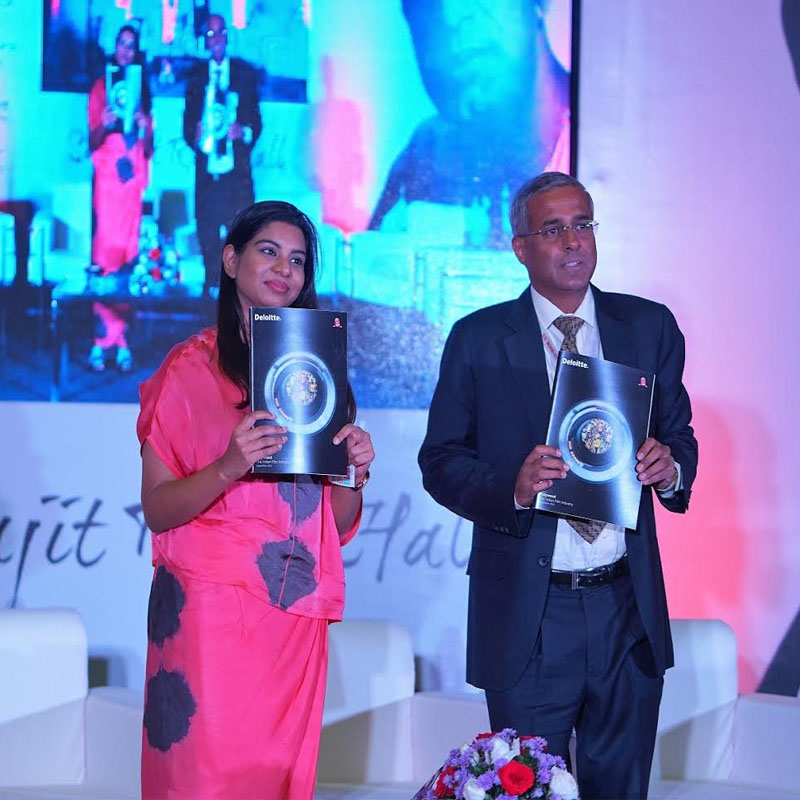
    MUMBAI: Can the Indian film industry come up to scale and rival the US and Canadian box offices? Yes, it can. The potential is huge, says a new report on the Indian cinema industry released by Deloitte Touche Tohmatsu India at the Indywood Film Carnival taking place during 24-27 September in Ramoji Film City, Hyderabad.

    Both, the US and Canada, have a box office of $11 billion annually though they produce less films (700). India, with 1,500 to 2,000 films in more than 20 languages, is the world’s largest film producer and it also has the second highest footfalls at 2.1 billion, just behind China (2.2 billion).

    It is growing at a rapid clip of 10 per cent and its gross realisations are at Rs 13,800 crore ($2.1 billion). “This is mainly due to low ticket realizations and occupancy levels, lack of quality content, and rampant piracy,” says the report titled “IndyWood: The Indian Film Industry.”

    This growth is set to accelerate further to 11.5 per cent CAGR and by 2020 the Indian film industry will gross revenues of Rs 23,800 crore ($3.7 billion). Yes, that’s still not measuring up to the US and Canadian revenues, but given time, the Indian film industry will grow even further.

    Says the Deloitte report: “The key growth drivers are rising income levels and a swelling middle class, expansion of multiplexes in smaller cities, investments by foreign studios in domestic and regional productions, growing popularity of niche movies, and the emergence of digital and ancillary revenue streams.”

    The report points out that “By 2020, the Indian average household income is expected to reach $18,500 from $8,000 currently with a corresponding middle class of over 90 million people. This level of median household income will drive discretionary spending on leisure and entertainment. The proliferation of internet and smart phone usage has opened up a new platform for film distribution and viewing.”

    In all, 43 per cent of revenues for Indian cinema are accounted for by the Hindi film industry with regional and international cinema contributing 50 and seven per cent respectively. Tamil and Telugu movies account for 36 per cent, with other regional languages contributing 14 per cent. The south Indian film industry accounts for Rs 4200 crore, and is growing at 12 per cent CAGR. The Marathi film industry has ballooned to gross revenues of Rs 150 crore and it grew at 40-45 per cent in 2015, even as the Gujarati film business expanded to Rs 55 crore in 2015.

    The report says that “cable and satellite rights and online/ digital aggregation revenues are the fastest growing segments, and are expected to grow at a CAGR of about 15 per cent over the period FY6-FY20, driven by rising demand for movies on TV and increasing smartphone penetration across the country respectively. On the other hand, home videos have been shrinking due to increasing piracy and growing popularity of digital platforms. Home video has lost share to video on demand (VOD) through direct-to-home (DTH) operators and over-the-top (OTT) platforms.”

    What’s helping contribute to the Indian film industry’s revenues is in-cinema advertising which stood at Rs 630 crore in 2015 and is expected to grow 18-20 per cent annually over the next four years. Demand is expected to rise from Tier 2 and Tier 3 cities where retail malls and multiplexes are slated to come up — which obviously will lead to more screens.

    Says the report: “Multiplexes have shown a growth rate of 15 per cent in Indian cities, increasing from 925 in 2009 to 2,100 in 2015. Over 2,000 single screen cinemas have been shut down or converted to multiplexes in the last year mainly due to greater cost of operations (higher entertainment taxes, increase in distributors’ share, and lower ticket prices), non-viability of running on a standalone basis and low occupancy rate. Multiplexes currently account for approximately 26 per cent market share of the screens; however, they contribute more than 40 per cent of box office collections. Wider content and programming flexibility result in higher occupancy and hence profitability of multiplexes. With comparison to growing economies, India has a low penetration of multiplexes with a potential to have almost 7,500-10,000 multiplex screens across the nation.”

    Also, film studios will have to start looking at international markets for revenues. Only 15 per cent of Indian cinema makers revenues comes from outside India, while Hollywood earns two-thirds of its revenues outside the US. The report also states that the producers and distributors should start looking at the potential of merchandising, licensing for mobile and games, delivering movies directly to the consumers via the internet or on their smart phones.

    Piracy if controlled could also help the Indian film industry which loses nearly Rs 19,000 crore annually to pirate sites. “Over 150 sites thrive on piracy where content is stolen from Indian movies, quick copies are made and distributed globally. Nearly half of the 150 are from the US, followed by 11 from Canada, nine from Panama and six from Pakistan. The top 100 sites make Rs 35 billion ($510 million) highlighting the extent of the issue,” the report highlights.

  • Deloitte: Indian film industry to touch Rs 23,800 crore by 2020

    Deloitte: Indian film industry to touch Rs 23,800 crore by 2020

    MUMBAI: Can the Indian film industry come up to scale and rival the US and Canadian box offices? Yes, it can. The potential is huge, says a new report on the Indian cinema industry released by Deloitte Touche Tohmatsu India at the Indywood Film Carnival taking place during 24-27 September in Ramoji Film City, Hyderabad.

    Both, the US and Canada, have a box office of $11 billion annually though they produce less films (700). India, with 1,500 to 2,000 films in more than 20 languages, is the world’s largest film producer and it also has the second highest footfalls at 2.1 billion, just behind China (2.2 billion).

    It is growing at a rapid clip of 10 per cent and its gross realisations are at Rs 13,800 crore ($2.1 billion). “This is mainly due to low ticket realizations and occupancy levels, lack of quality content, and rampant piracy,” says the report titled “IndyWood: The Indian Film Industry.”

    This growth is set to accelerate further to 11.5 per cent CAGR and by 2020 the Indian film industry will gross revenues of Rs 23,800 crore ($3.7 billion). Yes, that’s still not measuring up to the US and Canadian revenues, but given time, the Indian film industry will grow even further.

    Says the Deloitte report: “The key growth drivers are rising income levels and a swelling middle class, expansion of multiplexes in smaller cities, investments by foreign studios in domestic and regional productions, growing popularity of niche movies, and the emergence of digital and ancillary revenue streams.”

    The report points out that “By 2020, the Indian average household income is expected to reach $18,500 from $8,000 currently with a corresponding middle class of over 90 million people. This level of median household income will drive discretionary spending on leisure and entertainment. The proliferation of internet and smart phone usage has opened up a new platform for film distribution and viewing.”

    In all, 43 per cent of revenues for Indian cinema are accounted for by the Hindi film industry with regional and international cinema contributing 50 and seven per cent respectively. Tamil and Telugu movies account for 36 per cent, with other regional languages contributing 14 per cent. The south Indian film industry accounts for Rs 4200 crore, and is growing at 12 per cent CAGR. The Marathi film industry has ballooned to gross revenues of Rs 150 crore and it grew at 40-45 per cent in 2015, even as the Gujarati film business expanded to Rs 55 crore in 2015.

    The report says that “cable and satellite rights and online/ digital aggregation revenues are the fastest growing segments, and are expected to grow at a CAGR of about 15 per cent over the period FY6-FY20, driven by rising demand for movies on TV and increasing smartphone penetration across the country respectively. On the other hand, home videos have been shrinking due to increasing piracy and growing popularity of digital platforms. Home video has lost share to video on demand (VOD) through direct-to-home (DTH) operators and over-the-top (OTT) platforms.”

    What’s helping contribute to the Indian film industry’s revenues is in-cinema advertising which stood at Rs 630 crore in 2015 and is expected to grow 18-20 per cent annually over the next four years. Demand is expected to rise from Tier 2 and Tier 3 cities where retail malls and multiplexes are slated to come up — which obviously will lead to more screens.

    Says the report: “Multiplexes have shown a growth rate of 15 per cent in Indian cities, increasing from 925 in 2009 to 2,100 in 2015. Over 2,000 single screen cinemas have been shut down or converted to multiplexes in the last year mainly due to greater cost of operations (higher entertainment taxes, increase in distributors’ share, and lower ticket prices), non-viability of running on a standalone basis and low occupancy rate. Multiplexes currently account for approximately 26 per cent market share of the screens; however, they contribute more than 40 per cent of box office collections. Wider content and programming flexibility result in higher occupancy and hence profitability of multiplexes. With comparison to growing economies, India has a low penetration of multiplexes with a potential to have almost 7,500-10,000 multiplex screens across the nation.”

    Also, film studios will have to start looking at international markets for revenues. Only 15 per cent of Indian cinema makers revenues comes from outside India, while Hollywood earns two-thirds of its revenues outside the US. The report also states that the producers and distributors should start looking at the potential of merchandising, licensing for mobile and games, delivering movies directly to the consumers via the internet or on their smart phones.

    Piracy if controlled could also help the Indian film industry which loses nearly Rs 19,000 crore annually to pirate sites. “Over 150 sites thrive on piracy where content is stolen from Indian movies, quick copies are made and distributed globally. Nearly half of the 150 are from the US, followed by 11 from Canada, nine from Panama and six from Pakistan. The top 100 sites make Rs 35 billion ($510 million) highlighting the extent of the issue,” the report highlights.

  • Q3-2016: Weather affects Wonderla footfalls, but revenue rises

    Q3-2016: Weather affects Wonderla footfalls, but revenue rises


    BENGALURU: South Indian amusement park and resorts player Wonderla Holidays Limited (Wonderla) reported 11.7 per cent lower footfalls in the quarter ended 31 December, 2015 (Q3-2016, current quarter) because of the bad weather across Southern India that had also caused floods and destruction in Chennai. The company reported 5.66 lakh footfalls in the current quarter as compared to 6.41 lakh footfalls in Q3-2015. Despite this setback, the company has posted 6.5 per cent year on year (YoY) growth in total income from operations (TIO) for the current quarter at Rs 50.43 crore as compared to Rs 47.36 crore and a 16.7 per cent quarter and quarter (QoQ) growth as compared to Rs 43.23 crore. Amongst Wonderla’s peers are Adlabs, Ramoji Film City and Essel World


    Note: 100,00,000 = 100 lakh = 10 million = 1 crore


    Increase in revenue can be attributed to the higher average ticket and non-ticket revenues per visitor, says the company. Net average ticket revenue per customer in Q3-2016 increased 19 per cent to Rs 686.90 as compared to Rs 579.50 in Q3-2015. Average non-ticket revenue per customer increased 33 per cent to Rs 230.40 from Rs 173.70 in Q3-2015.


    Company speak


    “We are generally satisfied with the performance during the third quarter of the ongoing financial year. We have recorded growth in revenue in spite of a 11.7 per cent decline in the footfalls at the parks during the quarter, mainly due to unfavourable weather conditions during November. We are seeing a rebound in footfalls, and are optimistic about growth in footfall in the coming quarters for both existing amusement parks. We are also eagerly waiting to launch our brand new amusement park in Hyderabad to public within a couple of months,” said Wonderla managing director Arun K Chittilappilly.


    Revenue streams


    The company has three amusement parks in Bengaluru, Kochi and Hyderabad and a resort in Bengaluru. A large part of its revenues come from its Bengaluru operations.


    It reports two revenue streams – from sales of services and from sales of products.


    Revenue from sales of services in Q3-2016 increased 3.4 per cent YoY to Rs 42.64 crore (84.6 per cent of TIO) from Rs 41.24 crore (87.1 per cent of TIO) in Q3-2015 and increased 15.3 per cent QoQ from Rs 36.98 crore (85.5 per cent of TIO).


    Revenue from sales of products increased 27.3 per cent YoY to Rs 7.79 crore (15.4 per cent of TIO) from Rs 6.12 crore (12.9 per cent of TIO) and increased 24.6 per cent QoQ as compared to Rs 6.35 crore (14.5 per cent of TIO)


    Let us look at the other numbers reported by Wonderla


    Wonderla Profit after Tax (PAT) in Q3-2016 declined four per cent YoY to Rs 12.26 crore (24.3 per cent margin) as compared to Rs 12.77 crore (27 per cent margin), but was 2.6 per cent higher QoQ as compared to Rs 11.95 crore (27.6 per cent margin) in the immediate trailing quarter.


    EBIDTA in the current quarter declined 12.9 per cent YoY to Rs 18.21 crore (36.1 per cent margin) as compared to Rs 20.89 crore (44.1 per cent margin), but increased 23.8 per cent QoQ from Rs 14.71 crore (34 per cent margin) in Q2-2016.


    Total Expense in Q3-2016 increased 14.9 per cent YoY to Rs 35.04 crore (69.5 per cent of TIO) from Rs 30.51 crore (64.4 per cent of TIO) and increased eight per cent QoQ as compared to Rs 32.45 crore (75.1 per cent of TIO).


    Employee Benefit Expense in Q3-2016 increased 25.7 per cent to Rs 8.15 crore (16.2 per cent of TIO) as compared to Rs 6.49 crore (13.7 per cent of TIO) in Q3-2015 and increased 7.7 per cent as compared to Rs 7.57 crore (17.5 per cent of TIO) in Q2-2016.


    The company spent 7.1 per cent less YoY towards marketing and advertising expenses in the current quarter at Rs 5.32 crore (10.6 per cent of TIO) as compared to Rs 5.73 crore (12.1 per cent of TIO), but spent 51.9 per cent more than the Rs 3.51 crore (8.1 per cent of TIO) in Q2-2016.


  • Q3-2016: Weather affects Wonderla footfalls, but revenue rises

    Q3-2016: Weather affects Wonderla footfalls, but revenue rises


    BENGALURU: South Indian amusement park and resorts player Wonderla Holidays Limited (Wonderla) reported 11.7 per cent lower footfalls in the quarter ended 31 December, 2015 (Q3-2016, current quarter) because of the bad weather across Southern India that had also caused floods and destruction in Chennai. The company reported 5.66 lakh footfalls in the current quarter as compared to 6.41 lakh footfalls in Q3-2015. Despite this setback, the company has posted 6.5 per cent year on year (YoY) growth in total income from operations (TIO) for the current quarter at Rs 50.43 crore as compared to Rs 47.36 crore and a 16.7 per cent quarter and quarter (QoQ) growth as compared to Rs 43.23 crore. Amongst Wonderla’s peers are Adlabs, Ramoji Film City and Essel World


    Note: 100,00,000 = 100 lakh = 10 million = 1 crore


    Increase in revenue can be attributed to the higher average ticket and non-ticket revenues per visitor, says the company. Net average ticket revenue per customer in Q3-2016 increased 19 per cent to Rs 686.90 as compared to Rs 579.50 in Q3-2015. Average non-ticket revenue per customer increased 33 per cent to Rs 230.40 from Rs 173.70 in Q3-2015.


    Company speak


    “We are generally satisfied with the performance during the third quarter of the ongoing financial year. We have recorded growth in revenue in spite of a 11.7 per cent decline in the footfalls at the parks during the quarter, mainly due to unfavourable weather conditions during November. We are seeing a rebound in footfalls, and are optimistic about growth in footfall in the coming quarters for both existing amusement parks. We are also eagerly waiting to launch our brand new amusement park in Hyderabad to public within a couple of months,” said Wonderla managing director Arun K Chittilappilly.


    Revenue streams


    The company has three amusement parks in Bengaluru, Kochi and Hyderabad and a resort in Bengaluru. A large part of its revenues come from its Bengaluru operations.


    It reports two revenue streams – from sales of services and from sales of products.


    Revenue from sales of services in Q3-2016 increased 3.4 per cent YoY to Rs 42.64 crore (84.6 per cent of TIO) from Rs 41.24 crore (87.1 per cent of TIO) in Q3-2015 and increased 15.3 per cent QoQ from Rs 36.98 crore (85.5 per cent of TIO).


    Revenue from sales of products increased 27.3 per cent YoY to Rs 7.79 crore (15.4 per cent of TIO) from Rs 6.12 crore (12.9 per cent of TIO) and increased 24.6 per cent QoQ as compared to Rs 6.35 crore (14.5 per cent of TIO)


    Let us look at the other numbers reported by Wonderla


    Wonderla Profit after Tax (PAT) in Q3-2016 declined four per cent YoY to Rs 12.26 crore (24.3 per cent margin) as compared to Rs 12.77 crore (27 per cent margin), but was 2.6 per cent higher QoQ as compared to Rs 11.95 crore (27.6 per cent margin) in the immediate trailing quarter.


    EBIDTA in the current quarter declined 12.9 per cent YoY to Rs 18.21 crore (36.1 per cent margin) as compared to Rs 20.89 crore (44.1 per cent margin), but increased 23.8 per cent QoQ from Rs 14.71 crore (34 per cent margin) in Q2-2016.


    Total Expense in Q3-2016 increased 14.9 per cent YoY to Rs 35.04 crore (69.5 per cent of TIO) from Rs 30.51 crore (64.4 per cent of TIO) and increased eight per cent QoQ as compared to Rs 32.45 crore (75.1 per cent of TIO).


    Employee Benefit Expense in Q3-2016 increased 25.7 per cent to Rs 8.15 crore (16.2 per cent of TIO) as compared to Rs 6.49 crore (13.7 per cent of TIO) in Q3-2015 and increased 7.7 per cent as compared to Rs 7.57 crore (17.5 per cent of TIO) in Q2-2016.


    The company spent 7.1 per cent less YoY towards marketing and advertising expenses in the current quarter at Rs 5.32 crore (10.6 per cent of TIO) as compared to Rs 5.73 crore (12.1 per cent of TIO), but spent 51.9 per cent more than the Rs 3.51 crore (8.1 per cent of TIO) in Q2-2016.


  • Blackstone to invest $ 275 million in Ramoji

    Blackstone to invest $ 275 million in Ramoji

    MUMBAI: In the single-largest investment in Indian media, global private investment firm Blackstone Group has announced it will be pumping in $ 275 million (approximately Rs 12.38 billion) to acquire a stake in Ushodaya Enterprises Limited (UEL), the holding company that manages Ramoji Rao’s media assets.

    While yesterday’s announcement gave no details on the quantum of the stake that Blackstone would be taking in the south Indian media baron’s closely held company, media reports have put it at 26 per cent. This would put UEL’s enterprise valuation at $1.06 billion.

    In addition to the $ 275 million that UEL is raising from Blackstone, it is also taking $190 million of bank financing, bringing the total financing it expects to raise to $465 million. As part of the agreement, Blackstone will have representation on the Board of UEL.

    The transaction is subject to regulatory approval by Foreign Investment Promotion Board (FIPB) and the information and broadcasting ministry.

    UEL chairman Ramoji Rao stated, “We were impressed with Blackstone’s disciplined and highly rigorous investment process and the ability to combine this emphasis with a deep and genuine respect for the promoter’s interests and desire to add value. The company had access to several financing options, including an IPO; but we decided to go with Blackstone because we believe that at this stage of our growth we have an opportunity to create significant value by leveraging Blackstone’s outstanding experience and track record in the global media sector.”

    Akhil Gupta, chairman and managing director of Blackstone Advisors India Private Limited, stated, “We believe that the Indian media sector will be a key beneficiary of a secular trend in growth in personal consumption that is driving India’s economic expansion which in turn will spur advertising growth. Importantly, we believe that UEL is an ideal platform for Blackstone to play this highly attractive sector in India..”

    Kotak Investment Banking acted as the sole investment banking advisor to the transaction.

    UEL owns Eenadu, the third largest newspaper, and ETV, the fourth largest private television broadcasting network in the country. The parent company of UEL, Ramoji Group, owns the 1,600-acre Ramoji Film City, which is Asia’s largest studio, apart from diversified interests in hotels, foods and financial services.

    The Blackstone Group is a global private investment and advisory firm that has has raised a total of more than $75 billion for alternative asset investing since its formation of which over $30 billion has been for private equity investing