Tag: Ramayan

  • Dangal TV leads BARC’s maiden across genres list in new TRAI tariff regime

    Dangal TV leads BARC’s maiden across genres list in new TRAI tariff regime

    BENGALURU: Two Hindi GECs entered Broadcast Audience Research Council of India (BARC) maiden list after the new tariff regime of top 10 channels across genres list for week 13 of 2019 (Saturday, 23 March 2019 to Friday, 29 March 2019). Dangal TV headed the across genres list for week 13 of 2019 with 1,164.432 million weekly impressions. Another Hindi GEC – Big Magic, which also entered the list was ranked fourth with 675.106 million weekly impressions.

    Six Hindi GECS, two Tamil channels and one channel each from the sports and Telugu genres formed BARC’s weekly list of top 10 channels across genres during the week under consideration. From the network perspective, there were three channels each from Star India, Zee Entertainment Enterprises Ltd (Zeel) and one channel each from Enterr 10 Television, Sony Pictures Network India (SPN), Sun TV Network and Viacom18 stables for week 13 of 2019.

    As mentioned above, Dangal TV headed BARC’s list of top 10 channels across genres in week 13 of 2019. Dangal TV also headed BARC’s weekly lists of top 10 Hindi GECs in the combined urban and rural Hindi speaking market – HSM (U+R) and HSM (R). It was ranked sixth in HSM (U). Two Indian mythology programmes – Ramayan and Mahima Shanidev Ki were in BARC’s list of Top 5 Hindi GEC programmes based on average rating across all original airings in the week in HSM (U+R). Further, four programmes on Dangal TV– Ramayan, Mahima Shanidev Ki, Saibaba and Bandini were also among the top 5 Hindi GEC programmes in HSM (R).

    Star Sports 1 Hindi was ranked second with 1,094.720 million weekly impressions in week 13 of 2019. The channel was ranked first in BARC’s weekly list of top 5 sports channels, and all the five programmes – (matches) led by the Mumbai Indians – Royal Challengers Bangalore match were aired on Star Sports 1 Hindi. The other four channels in BARC’s weekly list of top 5 sports channels were from the Star India stable.

    At third rank was the Sun TV Network’s flagship Tamil GEC Sun TV with 850.156 million weekly impressions. Sun TV also headed BARC’s weekly list of top 5 Tamil channels in the Tamil Nadu and Puducherry markets and four of the top 5 Tamil programmes based on average rating across all original airings in the week were aired on Sun TV.

    Also as mentioned above, Zeel’s Big Magic was ranked fourth in week 13 of 2019. Big Magic was ranked second in BARC’s weekly lists of top 10 Hindi GECs in HSM (U+R) and HSM (R). Big Magic was ranked eighth in BARC’s weekly list of top 10 Hindi GECs in HSM (U). The fantasy action thriller Maharakshak Aryan aired on Big Magic was ranked fifth in BARC’s weekly list of top 5 Hindi programmes based on average rating across all original airings in the week in HSM (R).

    At fifth rank in week 13 of 2019 was Star India’s flagship Hindi GEC Star Plus with 668.739 million weekly impressions. Star Plus was also ranked third, fourth and first in BARC’s weekly list of top 10 Hindi GECs in HSM (U+R), HSM (R) and HSM (U) respectively. Three programmes on Star Plus – Kulfi Kumar Bajewala, Kasauti Zindagi Kay, Yeh Rishta Kya Kehlata Hai were amongst BARC’s weekly list of top 5 Hindi programmes on average rating across all original airings in the week in HSM (U).

    At sixth rank was Star India’s flagship Telugu GEC Star Maa with 635.721 million weekly impressions in week 13 of 2019. Star Maa was also ranked first in BARC’s weekly list of top 5 Telugu GECs in the Andhra Pradesh/Telangana markets and all the five programmes in BARC’s weekly list of top 5 Telugu programmes based on average rating across all original airings in the week in these markets were aired on Star Maa.

    At seventh rank was Zeel’s flagship Hindi GEC Zee TV with 589.507 weekly impressions. Zee TV was ranked fourth in HSM (U+R) and HSM (U) and was ranked third in HSM (R). The Balaji Telefilms produced Kumkum Bhagya and its spinoff Kundali Bhagya and Tujhse Hai Raabta aired on Zee TV were among the top 5 programmes based on average rating across all original airings in the week in HSM (U+R). Further, Kundali Bhagya on Zee TV was also ranked fourth in BARC’s weekly list of top 5 programmes based on average rating across all original airings in the week in HSM (U).

    SPN’s flagship Hindi GEC Sony Entertainment Television (SET) was ranked eighth in week 13 of 2019 with 533.980 million weekly impressions. SET was also ranked fifth, sixth and second in BARC’s weekly list of top 10 Hindi GECs in HSM (U+R), HSM (R) and HSM (U) respectively. The reality dance show Super Dancer Chapter 3 was ranked third in BARC’s weekly list of top 5 programmes based on average rating across all original airings in the week in HSM (U).

    At ninth rank was Viacom18’s flagship Hindi GEC Colors with 520.906 million weekly impressions. Colors was also ranked sixth, fifth and third  in BARC’s weekly list of top 10 Hindi GECs in HSM (U+R), HSM (R) and HSM (U) respectively.

    At tenth place was Zeel’s flagship Tamil GEC Zee Tamil with 515.571 million weekly impressions. Zee Tamil was ranked second in  BARC’s weekly list of top 5 Tamil channels in the Tamil Nadu and Puducherry markets and one of the top 5 Tamil programmes based on average rating across all original airings in the week was aired on Zee Tamil.
  • Discovery Kids to showcase mythological movies during Diwali

    Discovery Kids to showcase mythological movies during Diwali

    MUMBAI: Discovery Kids will celebrate Diwali with a line-up of animated classics like Ramayan, Mahabharat, Hanuman Immortal 2, Pandavas, Little Krishna and Krishna aur Kans starting 19 October 2017. All the animated movies are being showcased as a part of Diwali celebration campaign called Diwali Dhamaka.

    Discovery Communications India’s Discovery Kids head Uttam Pal Singh said, “We have put together a line-up of timeless classics with an aim to ensure that kids enjoy India’s rich mythological heritage along with their parents on the auspicious occasion of Diwali.”

    Discovery Kids will witness the victory of good over evil with shows such as Ramayan (11:00 am, 19th October) Hanuman Immortal 2 (19th October at 1.30 pm), and Pandavas (20th October at 1:30 pm). Mahabharata, India’s biggest multi starrer animation film, will air on Friday, 20th October at 11 am. The voice-over in this mythological epic have been given by renowned Bollywood celebrities including Amitabh Bachchan (Bheeshma), Vidya Balan (Draupadi), Ajay Devgn (Arjun), Sunny Deol (Bheem), Anil Kapoor (Karna) and Jackie Shroff (Duryodhan).

    Krishna aur Kans, a stereoscopic animated feature film, will air on Saturday, 21 October 2017 at 11 am. Bollywood celebrities such as Manoj Bajpayee, Juhi Chawla, Mukesh Khanna and Anupam Kher and Om Puri have given their voice for various characters in this movie.

  • DD may seek mythological serial producers at ‘premium,’ plan to revive epic dramas under way

    MUMBAI: With the direction of the ministry of information and broadcasting ministry for concentrating on quality programmes as reconfirmed by the union minister Venkaiah Naidu in Chennai, Prasar Bharati seems to have fastened its belt.

    Pubcaster Doordarshan, with the aim increasing its TRPs (television rating points), has decided to telecast golden oldies — Mahabharat and Ramayan kind of mega serials. These mega-serials were not telecast in the past several years.

    By airing mega serials based on Indian mythology, Prasar Bharati hopes that Doordarshan will gain significant revenue as there is a ready market for such serials which had been money-spinners for Doordarshan. Although a number of private television channels had been trying to follow the Doordarshan formula of telecasting serials based on Indian mythology, they had been unable to generate the kind of following that the pubcaster had had.

    The national broadcaster may to seek proposals for production of serials based on “Indian mythological” themes, sources said. The Prasar Bharati board meanwhile is planning to increase the commissioning fees of serials. Because, sources said, under the prevailing rates, attracting big production houses for developing content for mega serials is remote.

    Owing to the tremendous popularity of the mega serials on Doordarshan, a number of actors such as Arvind Trivedi, Deepika Chikliya and Nitish Bharadwaj were voted to power by the electorate.

    Also Read :

    Chennai DD upgrade under way, Rs 15-cr HD studio to be operational in ’17-18

    Arasu licence for ‘affordability’, pvt MSOs concern to be studied, says Naidu

    DD FreeDish auction next week, reserve price is Rs 80 million

    DTH & cable gap being tapped by FTAs like FreeDish, DTT to reach 60 cities: Naidu


  • For DD, it’s time to introspect not celebrate

    For DD, it’s time to introspect not celebrate

    NEW DELHI: There were evenings in the 1960s to mid ’70s when India, at least those homes fortunate to have TV sets, set their alarm clock in the evening to around 6 pm. It was that time the TV sets came alive with a signature tune and colour bands heralding something exciting.

    Those were the days when Indian pubcaster Doordarshan brought the world and entertainment — in a rationed manner typical of those pre-liberalization days — to Indian homes via production values that would be considered shoddy by today’s standards.

    Cut to circa 2016. TV sets today beam audio and video round the clock by DD, as Doordarshan came to be popularly known as, and a swathe of private sector TV channels.

    However, at a time when DD celebrated its Foundation Day (or birthday) on September 15, a question that rankles everybody is: Why does Doordarshan not function like some other pubcasters — the BBC, NHK, DW, PBS, etc —- in terms of functioning and quality of programming?

    Clearly, it is linked to another question: was Doordarshan doing better off when it was a direct wing of the Ministry of Information and Broadcasting (MIB), or has it benefitted by become ‘autonomous’ under Prasar Bharati?

    Doordarshan since 1959 beamed for half an hour educational programmes three days a week. However, as its programming timing grew, so did the control by the government, which found in DD a perfect tool for propaganda.

    Whether the Emergency days during Prime Minister Indira Gandhi or other governments, the government of the day realized the importance of DD’s widening networks and its role in pushing the government agenda.

    The Prasar Bharati Bill, paving the way for an autonomous DD and sibling All India Radio, was only notified and formalized in 1997.

    Interestingly, DD saw its hey days in the eighties with programmes like ‘Hum Log’; ‘Buniyaad’, ‘Ramayana’, ‘Mahabharat’, ‘Tamas’ and ‘Nukkad’, among many others, which not only highlighted India’s cultural traditions but also the ongoing societal changes. In fact, one wonders, whether a serial like `Tamas’, based on India’s partition, could be made today without somebody’s sentiments getting hurt and, in the bargain, getting canned.

    Though DD (and AIR) are modeled on the BBC — as famously described the then MIB Minister Jaipal Reddy in 1997 — DD’s case is different. Despite being dependent on government funding, it is running low on financial resources with each successive government insisting that Prasar Bharati start generating its own resources, but not letting go of the control. But this is difficult when the network has to compete against more than 800 private channels that are not impeded in terms of programming and other initiatives like DD is.

    No wonder the present Prasar Bharati CEO Jawhar Sircar said on DD’s birthday, “We need to look forward…renew our tryst with destiny.”

    Lines by a Canadian author, who penned ‘Morningstar’, aptly sum up the confused state of Prasar Bharati: “If you think you know what your purpose is, but can never seem to gain satisfaction from it, then it’s probably not the purpose you’re destined for.”

  • For DD, it’s time to introspect not celebrate

    For DD, it’s time to introspect not celebrate

    NEW DELHI: There were evenings in the 1960s to mid ’70s when India, at least those homes fortunate to have TV sets, set their alarm clock in the evening to around 6 pm. It was that time the TV sets came alive with a signature tune and colour bands heralding something exciting.

    Those were the days when Indian pubcaster Doordarshan brought the world and entertainment — in a rationed manner typical of those pre-liberalization days — to Indian homes via production values that would be considered shoddy by today’s standards.

    Cut to circa 2016. TV sets today beam audio and video round the clock by DD, as Doordarshan came to be popularly known as, and a swathe of private sector TV channels.

    However, at a time when DD celebrated its Foundation Day (or birthday) on September 15, a question that rankles everybody is: Why does Doordarshan not function like some other pubcasters — the BBC, NHK, DW, PBS, etc —- in terms of functioning and quality of programming?

    Clearly, it is linked to another question: was Doordarshan doing better off when it was a direct wing of the Ministry of Information and Broadcasting (MIB), or has it benefitted by become ‘autonomous’ under Prasar Bharati?

    Doordarshan since 1959 beamed for half an hour educational programmes three days a week. However, as its programming timing grew, so did the control by the government, which found in DD a perfect tool for propaganda.

    Whether the Emergency days during Prime Minister Indira Gandhi or other governments, the government of the day realized the importance of DD’s widening networks and its role in pushing the government agenda.

    The Prasar Bharati Bill, paving the way for an autonomous DD and sibling All India Radio, was only notified and formalized in 1997.

    Interestingly, DD saw its hey days in the eighties with programmes like ‘Hum Log’; ‘Buniyaad’, ‘Ramayana’, ‘Mahabharat’, ‘Tamas’ and ‘Nukkad’, among many others, which not only highlighted India’s cultural traditions but also the ongoing societal changes. In fact, one wonders, whether a serial like `Tamas’, based on India’s partition, could be made today without somebody’s sentiments getting hurt and, in the bargain, getting canned.

    Though DD (and AIR) are modeled on the BBC — as famously described the then MIB Minister Jaipal Reddy in 1997 — DD’s case is different. Despite being dependent on government funding, it is running low on financial resources with each successive government insisting that Prasar Bharati start generating its own resources, but not letting go of the control. But this is difficult when the network has to compete against more than 800 private channels that are not impeded in terms of programming and other initiatives like DD is.

    No wonder the present Prasar Bharati CEO Jawhar Sircar said on DD’s birthday, “We need to look forward…renew our tryst with destiny.”

    Lines by a Canadian author, who penned ‘Morningstar’, aptly sum up the confused state of Prasar Bharati: “If you think you know what your purpose is, but can never seem to gain satisfaction from it, then it’s probably not the purpose you’re destined for.”

  • Zeel launches localised GEC – Zee Hiburan in Indonesia

    Zeel launches localised GEC – Zee Hiburan in Indonesia

    MUMBAI: After the launch of Zee Bioskop in Indonesia last year, Zee Entertainment Enterprises Limited (ZEEL) has now launched Zee Hiburan in Indonesia. 


    ‘Hiburan’ means ‘Entertainment’ in English. The general entertainment channel (GEC) will feature popular Indian serials localized for the mainstream Indonesian audience.


    Zeel business head – Asia Pacific Sushruta Samanta said, “Zee Hiburan in Indonesia is our third launch in the APAC region in the last 14 months, following Zee Bioskop and Zee Nung. Zee Hiburan will consolidate our position and market share in Indonesia, which is one of the fastest growing Pay-TV markets in the region. Our initial interaction with the distributors was very encouraging, which propelled us to launch a GEC within a year of launching our Bollywood channel, Zee Bioskop in the market. Indian content has created a huge wave in the local FTA space and with Zee Hiburan, we believe that we will be able to take it to the next level.”


    Zeel country head – Indonesia Maria Liza Ginting added, “With Indian stories narrated like never before, Zee Hiburan promises to engage the viewers with shows that travel from the eras of the kings and queens to the modern world. The channel is positioned as ‘Color Your Life’ showcasing every emotion in the most colorful fashion. Inspired from paper puppets and paper quilling art forms, the channel packaging is artistically designed to merge the Indonesian and Indian cultures.”


    The channel will showcase Zee shows and dramas like Ramayan, Jhansi ki Rani, Jodha Akbar, Kumkum Bhagya, Pavitra Rishta, Kasam Se, Sapne Suhane Ladakpan, Jab Love Hua and Fear Files amongst others.


    Zee Hiburan – Warnai Hidup Anda (Zee Entertainment – Color your life) is currently available as a pay channel on ICTA – Indonesia Cable TV Association and the DTH platform K Vision. It will soon be available on more platforms in the market. 


  • DD Bharati commences cultural and religious season

    DD Bharati commences cultural and religious season

    NEW DELHI: The public broadcaster Doordarshan’s channel DD Bharati has slated several programmes to establish its identity as the television channel reflecting the art and culture of the country.


    Jewels of Hindustani Classical Music, a programme specially curated from the archives of stalwarts of Hindustani vocal and instrumental musicians who are alive and are virtually legends is commencing this evening.


    The first telecast at 9.00 pm with repeat telecast at 5.00 am and 1.00 pm features Begum Parveen Sultana of the Patiala Gharana followed by Vidushi Kishori Amonkar of the Jaipur- Atrauli Gharana. The legendary Pt Jasraj will be featured tomorrow at the same time.


    The programme, especially curated by Kumud Diwan and Yatindra Mishra, delves into their gharana, their musical genius, and their musical journey etc.   


    Coinciding with Dussehra and Diwali next month, DD Bharati will commence telecast of Ramayana from 27 September at 10.30 pm with repeat the next day at 6.30 am and 2.30 pm. It will be a series of presentation of ballets and documentary on the Ramkatha traditions prevalent in India.


    The Ramayana or Ramkatha tradition is pervasive not only in India but throughout South East Asia. Stories revolving around Ram, Sita and Lakshman penetrate through rural and urban, mundane and religious, sacred and secular domains. They defy categorization of art as folk or classical, rural or urban, textual or oral. Literary, oral, kinetic and pictorial aspects intermingle to generate multiple renditions of the text in different locales and contexts; each rendition with unique local flavour and linguistic distinction. The performative aspect of the text makes it fluid, accessible and adaptable. It accounts for its preservation, survival, transmission and mobility, cutting across boundaries of time and space. Every region has its own particular form and style of singing and reciting the story.


    Earlier this week with the start of Mahalaya, DD Bharati in association with the Girnar Kendra of Doordarshan presented ‘Maa Ni Chundari Lehrai’ from its rich collection of archives. A series of Garba presentation especially done and performed during the Navratra Festival was telecast with repeats the next day.


    DD Bharati also presented Devi Darshan from 24 September at 10.30 pm through a series of dance ballets and documentary celebrating the festivities of Durgaostav. Durga Puja festival is a 10-day long festival that starts off on Mahalaya (the day of the new moon) – the first day when Goddess Durga is believed to come into the world to destroy the evil.  The festival ends up in Dashumi- the last day when the Goddess Durga is believed to go back to her heavenly home, leaving behind the trails of happiness, goodness and purity. This is the day of the Lord’s victory over evil and is celebrated as Vijay Dashami or Dussehra. The salient ritual of Durga Puja spans a five days period Maha Sashti, Maha Saptami, Maha Ashtami, Maha Nabami and Vijaya Dashami.

  • ‘Buddha’: Zee’s Sunday treat for its viewers

    ‘Buddha’: Zee’s Sunday treat for its viewers

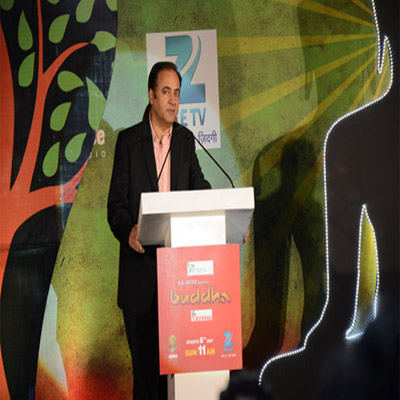
    MUMBAI: A lot has been written and spoken about ‘the enlightened one’ but this is the first time someone has attempted to capture his life on screen. ‘It was my vision to do a conceptualised show like this on Indian television’, says Spice Studios founder and chairman and also producer of the show Dr BK Modi.

    Come 8 September, Sunday mornings are going to be much more informative and educational where the viewers will be taken to the life and journey of Buddha every Sunday at 11:00 am. The series will be an hour long and replacing Ramayan, which unfortunately has not been getting good ratings.
    Bharat Kumar Ranga Ranga feels that the epic is not only meant for Indians or Indians living abroad, but it will also have an international appeal to it as well

    Zeel and Essel group chairman Subhash Chandra exults: “We have been working with many researchers and experts on the subject. We are delighted to partner with Spice Studios to present a new series which is never-before-seen biopic on television on the life of Buddha.”

    The channel feels that the show is going to create waves around the country since the life of the Buddha would be shown for the first time on Indian television. Told in 52 gripping episodes, the series will be an entertaining action drama that will showcase the unexplored life of Buddha as Siddhartha.

    It was always Modi’s desire to showcase the life of Buddha. It is interesting to note that this was supposed to be made into a feature film. Modi had begun work on a film based on the same subject with filmmakers Shekhar Kapur and Ashutosh Gowariker helming the research and script development and was also in talks with Hollywood’s renowned scribe David Wault. But he has finally chosen the small screen to fulfill his wishful endeavour.

    He clarifies: “There is a lot to show on this subject and it was not possible for it to wrap up in just three hours. The scope of television today is larger than films and we wanted Buddha’s story to unfold in all its splendour and reach out to the largest denominator of people possible. Only TV can give us that reach, especially Zee, with its international reach spanning over 169 countries.”

    Asking whether this attempt to revive the morning slot for weekend work with the audiences, a top-placed media planner on the basis on anonymity answers: “Apart from the 90s when Ramayan and Mahabharat worked, nothing has really clicked in the Sunday morning slot. Star tried to relive it by getting Satyamev Jayate and it did work for it. Apart from that the slot is not very attractive.”
    Dr BK Modi and Subhash Chandra want Buddha’s story to unfold in all its splendour and reach out to the largest denominator of people possible

    Further adding: “But since no one has tried with Budhdha earlier maybe it will attract some eyeballs. But overall it is the treatment which matters. Let’s wait and watch if it will be able to relive the slot.”

    But on the other hand, Modi is quite confident that the historic epic will entertain the viewers. And the audience will get to learn a lot and the show will be the reference point for researchers.

    Adds Modi: “Ramayan and Mahabharat gained huge success when it started, but audiences started losing interest from the time it was repeatedly made by different channels. If one show is made in a different way by different directors, it obviously loses its charm and uniqueness. The reason these shows are not working well today is because people have already had enough of it and have seen the same thing but in different avatars.”

    The magnum opus has an international appeal with its grand scale, opulent sets at the Film City spread over a sprawling four acre plot. The promos which are already on-air are quite impressive with state-of-art 3D graphics being used to re-create the look and feel of a bygone era. Moreover, well-researched costumes have been bought out of Jodhpur and Jaipur. Customised jewellery has been sourced from Patna and will bring alive the majestic lifestyles of the royal family of that time.

    It has been more than two months that the entire cast and crew has started shooting and approximately 15-20 episodes have been canned at the time of writing.

    The channel has roped in Syska LED as the presenting sponsor and is powered by Crystal. On the promotions side, the promos are already on the television screens and one can see them focusing and promoting on the OOH platform as well.

    To top it all, Zeel chief content and creative officer Bharat Kumar Ranga feels proud to come up with such a huge show. He says: “We have concentrated in capturing the life of Buddha and the transition from prince Siddhartha to Gautama Buddha. But the life itself provides such a great dramatic possibilities that we have realised there is one story which is untold in India and worldwide and many people do not know about it. Therefore this will capture the attention because there is a value in this particular proposition.”
    The ensemble cast of Buddha

    He further adds: “Many years of research work has gone behind this. We knew that internationally there will be a lot of misconceptions so therefore we thought of not focusing on Buddhism instead we focused only on the life of Buddha. A lot of investments has gone behind the extensive research.”

    Zee and Spice are leaving no stone unturned when it comes to perfection and showing people the facts. They also wrote to Buddhists communities across the world largely in Asia pacific, asking for their valuable inputs. “The idea was to pre-inform them, so if at all somebody has some inputs they can provide it to us; otherwise we have done our research very thoroughly. Modi’s team has done a great job ensuring that every single thing is presented correctly as possible and factually as possible”, says Ranga.

    Ranga also feels that it is not only meant for Indians or Indians living abroad, but it will have an international appeal to it as well.

    Amongst the cast, veteran actor Kabir Bedi will be seen making a comeback to acting after a long hiatus. Others on the list are Samir Dharmadhikari, Nigaar Khan, Deepak Upadhyay, Gungun Uprari and Siddhartha Vasudev.

    “It should set a benchmark for the people, a point of reference. Our expectations are that people should truly enjoy this. We believe that it will add a lot to people’s lives and it will be beyond those TVTs and viewerships”, Ranga signs off.
    Though the channel has not yet thrown any light on who will portray the character of ‘the enlightened one’. We hope this Buddha brings a smile to the channel and its viewers

  • Nautanki Saala: Khurrana delivers yet again

    Nautanki Saala: Khurrana delivers yet again

    MUMBAI: This film defies all descriptions. Nautanki it is not. The film depicts the drought of imagination in story, script, casting, music, direction.

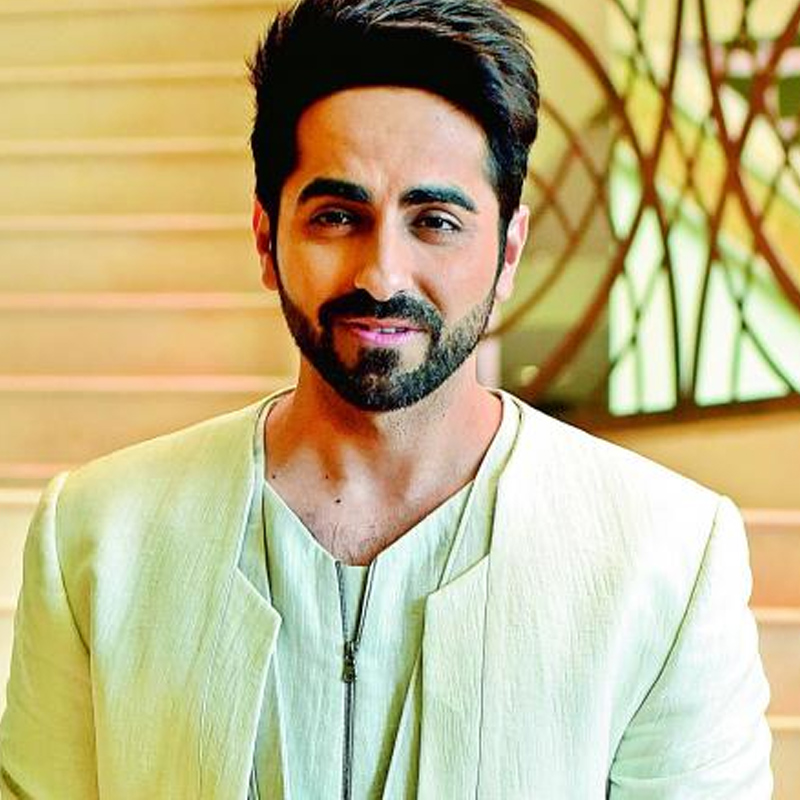
    Nautanki Saala opens with the advantage of having Ayushmann Khurrana in the lead. Khurrana made an impact in his debut film, Vicky Donor and this film being his immediate second, is one looked forward to.

    Khurana is a successful stage director and actor whose latest play based on the epic Ramayan has run for hundreds of shows. Late one night, he sees a man trying to hang himself from a tree in the middle of the road and being a perpetual do-gooder, he saves Kunaal Roy Kapoor, a loser on all counts. Kapoor has not only amounted to nothing in life, his latest blow is that his girlfriend, Pooja Salvi, has dropped him on the advice of his own grandmother. Khurrana takes him home to make sure he does not make another attempt. Khurrana‘s girlfriend, Gaelyn Mendonca, is not sure he should get too involved but later comes to grow fond of Kapoor.

    Khurrana now takes it upon himself to find Salvi and bring her and Kapoor together. Meanwhile, he also tries to build Kapoor‘s self confidence and when the Ram from his Ramayan has left, he decides to cast Kapoor for the role. What follows is supposed to provide laughs which, most of the time, it does not. On the other hand, Khurrana has found Salvi who runs a florist shop and now keeps visiting her waiting for an opportunity to take her to Kapoor. But, there is a hurdle: she has a boyfriend and is due to marry him in few weeks. Kapoor has to get him out of her life and bring her to Kapoor. This is also supposed to provide laughs but does not. The do-gooder Khurrana finally falls for Kapoor‘s girlfriend, drops his own girlfriend like a stale potato and yet all live happily ever after.

    Nautanki Saala is supposed to be a comedy but comes out as one huge yawn fest. While Khurrana is natural and tries his best, Kapoor can‘t act and is a drain on an already poor script. The girls lack charm or talent. The film uses two tracks from old movies, ‘So gaya yeh jahan…..‘ from Tezaab and ‘Dhak dhak….‘ from Beta. And that is the best the film has to offer with only original song from the soundtrack worth listening to is ‘Mera man kehne laga…‘

    Nautanki Saala has had an average opening and is not expected to sustain the word of mouth being generally against.

    Commando – A One Man Army: A mass action flick

    Budget films need not always be comedies or sex oriented dramas. At times, they can be action films if you have the right candidate to deliver without the help of special effects which cost a lot. Commando has a hero in Vidyut Jamwal, who can deliver without special effects and crores spent on action sequences. Producer Vipul Amrutlal Shah is as much an entrepreneur as he is a creative man and he brings the age old formulas of One Man Army and The First Blood (Sylvester Stallone) on screen through his action hero.

    Jamwal is an elite commando gifted with special talents and trained for special assignments. His helicopter on a routine mission crash-lands and he ends up on the Chinese side of the border. He is captured by the Chinese and treated as an Indian spy. After a year of Chinese torture, he is about to be sentenced when he escapes from under the Chinese army.

    While he is away, a drama is being played out in a small town of Punjab where a sinister bad man, Jaideep Ahlawat, has been able to plant his five MLAs in the State Assembly and now controls the area. He eyes the daughter of the earlier, honest, politician. The daughter, Pooja Chopra, decides to flee town rather than marry the ugly villain who was born without pupils in his eyes which make him look repulsive. While Chopra is on the run, Ahlawat‘s goons, led by his brother, Jagat Rawat, catch up with her. Surrounded by a horde of them, she is helpless when Jamwal lands up on his way back. He is a human fighting machine and, in no time, overcomes the goons.

    Now, Chopra can‘t stay back and wants Jamwal to escort her out of the district where, she thinks, Ahlawat won‘t be able to reach her. She is wrong because the bus the couple takes is intercepted over a bridge with nowhere to run. Jamwal manages to humiliate the villain and jumps in the river with Chopra. Now, the couple have to survive in the jungle and at the same time keep dodging the villains (as well as fall in love and imagine a couple romantic songs!). Trained for survival in such terrains, Jamwal goes on eliminating Ahlawat‘s people. Ahlawat wants to capture him alive and kill him in the village square so the local folk continue to fear him. The hero is shot by one of the goons and in anger, Ahlawat throws the injured Jamwal into the river. This serves to stretch the film further as the village square vow is postponed letting the hero recoup and return for the final battle and rescue not only Chopra but also the villagers.

    Action movies are costly to make but the advantage with this film is that, in Jamwal , the makers have a gifted and trained action hero who requires no double or wires and special effects and does his stunts himself. That helps the budget, wastes little time and makes the fights look natural. Jamwal excels in action and is quite satisfactory in romantic scenes too. Chopra is good. Ahlawat is effective. Rawat supports well. Direction by Dilip Ghosh is competent. The film could have done without songs which would have made it crisper. Dialogue and SMS jokes are a good distraction from this all action movie.

    Commando is an outright mass film which has been received well and the weekend should add to this advantage.

  • Jump Games, Virgin Comics tie-up for worldwide release of mobile games

    Jump Games, Virgin Comics tie-up for worldwide release of mobile games

    MUMBAI: Jump Games, mobile and web games developer and publisher has joined hands with Virgin Comics in an agreement to expand the Virgin Comics Shakti series characters into mobile games. With this association, action and role-playing games based on three Virgin Comics properties – Devi, The Sadhu and Ramayan 3392 AD are slated to launch globally in January, March and April 2007 respectively.

    Jump Games (previously Paradox Studios) CEO Salil Bhargava told Indiantelvision.com that the company had lined up telecom operators across the globe for this worldwide release including DoCoMo in Japan, Horizon in US, Vodafone in Europe. Ofcourse, in India he emphasised that they were in talks with all mobile players including the usual suspects Reliance, BSNL and Idea. The price points will be based on a pay-per download system as per expected rates.

    All these mobile games contain multiple levels of game challenges with varying difficulties. Jump Games has developed the mobile applications and will be responsible for marketing the games worldwide.

    These comics were released across the US and UK four months ago however, the titles have not yet arrived in India, the company is targeting December end for its launch. In addition, the comany is also looking at releasing localised versions of the same across Europe by the end Q1 ’07.

    There is a need to build the comic industry in India by targeting primarily Indian youth (15-25 year olds) which comprises the voice of a new generation, says Virgin Comics CEO Sharad Devarajan.

    Commenting on the new relationship filmmaker and Virgin Comics co-founder Shekhar Kapur said, “Mobile Gaming is predicted to be the fastest growing sector in the entertainment business worldwide, and I am excited by our collaboration with Jump Games. The clearly stated intention of Virgin comics, and indeed my personal ambition has been to showcase Indian talent to bring it to the forefront of international entertainment. I am sure that together we will create some of the most successful mobile gaming platforms in the world.”

    Bhargava said, “Virgin is one of the world’s most powerful youth brands and collaborating with Virgin Comics on this venture has been an excellent experience. Virgin’s larger-than-life characters provide us with a tremendous scope to recreate the magic of a comic book both on 2D as well as 3D gaming platforms. Our games based on the Shakti series are not only suited well for Indian audiences but also have a strong global appeal. Working with Virgin Comics has been a great start for Jump’s vision and focus on emerging as a leader in 2D and 3D Mobile gaming.”

    In addition to Devi which depicts an Indian female superhero created by Shekhar Kapur, Ramayan 3392 AD is a futuristic sci-fi story inspired by the original Ramayan mythology, also created by Kapur along with author Deepak Chopra. The third is The Sadhu, which follows the story of a British soldier who discovers the mystical powers of Indian sadhus. Actor Nicolas Cage has been roped in to play the role of The Sadhu in the feature film. A fourth mobile application based on Deepak Chopra’s recent book Kama Sutra will explore Chopra’s views on the connection between spirituality and sexuality.