Tag: Rakesh Garg

  • “We will enhance internet penetration from 300 mil to 500 mil within 2.5 years:” Ravi Shankar Prasad

    “We will enhance internet penetration from 300 mil to 500 mil within 2.5 years:” Ravi Shankar Prasad

    MUMBAI: India today launched four world class broadband products by Centre for Development of Telematics (C-DOT). With this, the country has come at par with all other developed countries in the world in respect of quality telecommunication services and effective penetration of advanced broadband based services.


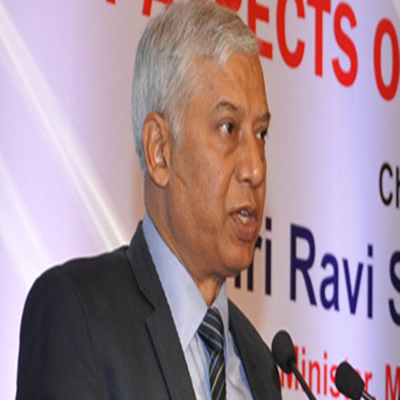
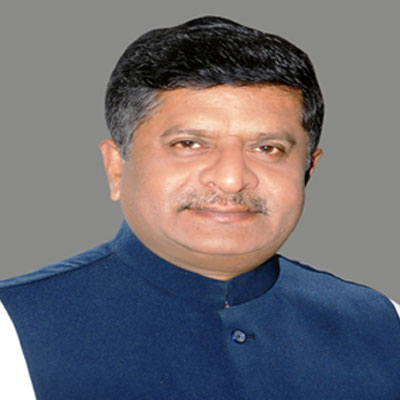
    Union Minister for communication and IT, Ravi Shankar Prasad while launching the new products indigenously developed by C-DOT stated that the NDA Government is committed to bring all 2.5 lakh villages under broadband services and enhance internet penetration from 300 million to 500 million within two and half years. 


    Prasad launched the products in the presence of his Kenyan counterpart, cabinet secretary, ICT in a function organised at C-DOT campus, New Delhi. Prasad further stated that the new products have been launched with an aim to provide an advanced digital infrastructure for ‘Digital India’ Initiative launched by Prime Minister Narendra Modi.


    He further stated that ‘Digital India’ initiative is bound to bring governance available in the palm of every Indian. It is more for the poor, underprivileged and the marginal people like masons and carpenters etc.


    Prasad stressed on the fact that, ‘Digital India’ is a transformational programme and a dream to bring a positive change. The initiative would also go a long way in digital empowerment of the people of India. The initiative launched by Modi would make India developed, globally credible, affluent and would further sync with Make in India and Skill India programme.


    Prasad elaborated the importance of skill development and said that there are ample opportunities of earning in mobile maintenance profession as the number of mobile sets are surging day by day. 

    He also appreciated the role of C-DOT in transforming the telecommunication scenario in the country, especially in the rural India. C-DOT has rendered significant contribution in providing broadband coverage across the nation. He also appreciated the products developed by C-DOT and stated that the long distance Wi-Fi is going to solve the problem of distance, whereas Solar powered Wi-Fi would do away the dependence on the power availability.


    He stated that the Next Generation Network technology is quite important for the service providers for converging landline/ mobile/ data network. MTNL and BSNL users are going to be benefitted as they would be able to transform their landline network into the most advanced network. He called upon C-DOT to come out with more advanced innovative products in order to ensure foolproof telecom services, apart from lending a hand in ensuring digital literacy across the country in respective local languages.


    The Union Minister further stated that digital connectivity leads to good governance and the C-DOT products are great, innovative and dependable, but he would be happier if the products are savvy and are used by more people.


    He exhorted the private sector to go for C-DOT products on large scale as these have been developed after a sustained research and analysis for which the Government invested a substantial amount keeping in view the need to match with the fast changing world. 


    The next generation land line network would not only revolutionise the basic telephony but would upgrade the entire landline services. He added that presently all gram panchayats are connected with broadband, the government is committed to connect all gram panchayats in the country with broadband. 

    C-DOT executive director Vipin Tyagi said that its efforts are in the way of taking dream of Digital India further as he delivered his welcome address.


    He also stated that the C-DOT has been innovating with an aim to empower the weaker strata of the society and developing indigenous products to facilitate continuous telecom up-gradation. He said that technology is big enabler and broadband is big leveler. Roti, Kapda, Makan and Broadband are the basic needs of the human being. 

  • Spectrum auctions to be done in timely, fair & transparent way: Ravi Shankar Prasad

    Spectrum auctions to be done in timely, fair & transparent way: Ravi Shankar Prasad

    NEW DELHI: Communications and Information Technology Minister Ravi Shankar Prasad has assured the industry that the auction of spectrum in the future too would be conducted in a timely, fair and transparent manner.


    The hallmark will be good governance and “the road map will be fully disclosed in advance so that industry can put its act together in a planned manner,” he said.


    Inaugurating ‘Digital Bharat 2015,’ the first edition of FICCI’s platform for having transformative exchanges and deliberations, organized jointly with the Department of Telecommunications, Ministry of Communications & IT, Prasad said that the ‘Digital India’ programme was party-neutral, ideology-neutral and Centre-State-neutral. “It aims at bridging the urban-rural divide and is committed to ensure digital inclusion. I would like to see every mason and carpenter in the country using his smart phone to enhance his business and income,” he added.


    The last spectrum auction, the biggest so far, that ended in March this year fetched about Rs 1.10 lakh crore to the government. 


    The Minister also launched the FICCI-EY report titled ‘Speeding Ahead on the Telecom and Digital Economy Highway.’ 


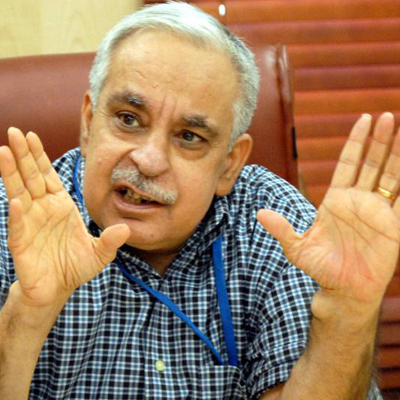
    Telecom secretary Rakesh Garg said that the three ambitious and visionary programmes – Make in India, Digital India and Smart Cities – have opened up huge opportunities for the industry. The economy, he said, would stand to benefit immensely through higher productivity that the vast number of talented Indians will usher in. 


    He said that the government was committed to doing everything possible to make the environment conducive for industry and the consumer, the success of which will depend upon industry and government working together.


    The Indian Express whole-time director and head, new media Anant Goenka pointed out that the importance of digital technology could be gleaned from the success stories of the young multi-billionaires who have used digital platforms innovatively. “The question that remains is how ‘Digital Bharat’ is achieved in a fair and sustainable way,” he said.


    USIBC Digital Economy Industry Group chairman Joseph Alhadeff spoke of the need to achieve global standards in manufacturing and integration into the global supply chains. He also called for more enhanced cooperation amongst the stakeholders so that there was no duplication of effort. 


    FICCI president Jyotsna Suri, in her welcome address, said that it was encouraging that the Indian government is prioritizing technology as an enabler for the transformation and development of the country. “However, to reach the desired goals, it is extremely important to develop an environment, which nurtures Government-Industry dialogue and partnerships,” she emphasized and added, “We need to understand the nature of the opportunities being offered by the government programs like Digital India and Make in India and therefore FICCI has initiated the Digital Bharat series as a platform for having transformative exchanges and deliberations.”


    FICCI communications and digital economy committee chairman Virat Bhatia, who moderated the inaugural session and delivered a vote of thanks, stated, “The digital revolution now stands at the cusp of a transformation, with the government having laid out its vision of a digitally enabled India over the last one year. The success of both “Digital India” and “Make in India”, will ride on the back of strong telecom ecosystem, digital infrastructure and industry’s link in the value chain. Some important issues on policy and regulatory front will need continued attention.”


    EY global telecommunications leader Prashant Singhal presented the highlights and recommendations of the FICCI-EY report.


    The key takeaways of the report are as follows:


    ·Recommends to bring handsets under provisions of “Goods of Special Importance” under the Central Excise Tax Act, 1956; thus, capping the maximum VAT levied by states at five per cent.


    ·Endorses a ten-year tax holiday on a block of 15 years on all profits and gains for manufacturing in the mobile phone industry.


    ·Endorses to incorporate the DoT guidelines on installation of mobile tower in the statutory framework and rules in line with the 53rd Parliamentary Committee report.


    ·Recommends to have minimum interest subsidy of five per cent on all fixed capital investments for entire Electronic System Design and Manufacturing sector in the lines of benefits given under Technology Upgradation Fund Scheme.


    ·Recommends to eliminate or reduce Universal Service Obligation Fund (USOF) to one – three per cent.


    Commenting on these findings, Singhal said, “A favourable and stable regulatory environment, coupled with increased transparency, is critical for attracting investments to the sector. An empathetic perspective of challenges faced by service providers is also important for restoring its vitality. Our report highlights that the country will speed ahead on the Digital Highway only with the provision of a clear spectrum roadmap, reducing USOF levy, rationalizing taxes and providing a policy push to boost manufacturing ecosystem. The resultant benefits transcend sectors. Moreover, telecom should be considered a critical infrastructure sector and its financing needs should be addressed accordingly.”

  • TSPs asked to ensure transparency in mobile billing, cut call drops

    TSPs asked to ensure transparency in mobile billing, cut call drops

    NEW DELHI: The Government has told Telecom Service Providers (TSPs) that the public in general was highly dissatisfied with frequent and heavy call drops throughout the day and that were not confined to peak calling hours, which shows poor quality of the telecom networks.


    Briefing TSPs about the falling perception in the public with regard to poor quality of telecom services in the country in general and with special emphasis on degrading quality in Metros, the TSPs were today also told about the perception of the public that such call drops are deliberate attempts to have multiple charging and consequent commercial gain.


    It was also noticed that the billing by TSPs is not transparent and there are frequent changes in the package rates, contrary to initial agreed upon package, without the consent of the customer.


    The meeting chaired by Telecom secretary and Telecom Commission chairman Rakesh Garg was held following a recent Calling Attention Notice in Parliament in various public forums as well as in the media. 

    In case of international roaming, TSPs do not have any warning system about the tariffs to be charged for various applications, that is, data download, which result in many complaints of heavy charging of the customer. There have been frequent complaints of charging even though the customer has already disconnected or has not used the services of the TSPs. 

    The TSPs gave an assurance to look into the billing complaints on a priority basis and set up a transparent system to educate the customers about various tariffs being charged so that billing complaints are minimized. 


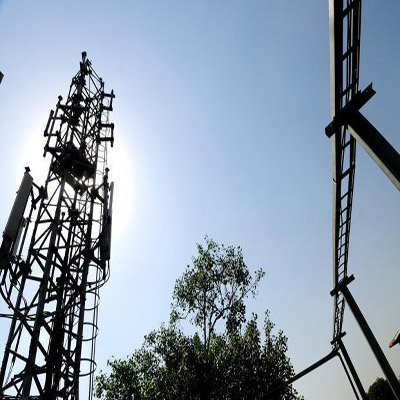
    The TSPs also highlighted the delay in acquisition of new sites for additional towers because of fear of EMF radiation in the public, closure of existing tower sites because of local bodies’ regulations and delay in getting permission from local bodies for laying/ repair of cables etc. 

    Garg emphasized the need for utmost integrity of the billing system and charging of telecom customers and to bring in place a transparent and foolproof billing mechanism with provisions for timely intimation and consent of the customer to effect any changes in the tariff plan, especially in case of national and international roaming. 


    It was also emphasized that TSPs should take further steps to educate the public about the stringent EMF norms being followed in India. It should be highlighted through seminars and public meetings that there are no harmful effects of tower radiations. The education material as well as seminars should also be conducted in vernacular languages. To improve the quality of the network to reduce frequent call drops, it was emphasized that the TSPs should optimize their RF network extensively in a regular and routine matter. 


    DoT has also written from time to time to various State Governments/ Local Bodies to facilitate the acquisition of tower sites, permissions for laying/ repair of cables in line with guidelines issued by the Department. The TSPs should also follow the guidelines issued by local bodies in this regard. He emphasized that in no case these can become shield for poor service in the public perception and all the TSPs should take all possible steps to improve the quality of service and deal with customers’ complaints promptly. 


    All the TSPs assured they would take all necessary measures to bring transparency in the billing system and to improve the overall quality of telecom services in the shortest possible time.

  • TRAI’s Khullar lashes out at DoT for delay in giving spectrum to Airtel and Vodafone

    TRAI’s Khullar lashes out at DoT for delay in giving spectrum to Airtel and Vodafone

    NEW DEHI: The Telecom Regulatory Authority of India (TRAI) has lashed out at the Department of Telecom (DoT), noting that it is “unable to understand the reasons for the inordinate delay in the assignment of spectrum despite the clear provision in the notice inviting applications fo the assignment of spectrum and after the payment has been made by the licencees.


    In a letter by TRAI chairman Rahul Khullar to Telecom secretary Rakesh Garg, it has been stated that the Authority is seriously concerned that this delay on the part of WPC in assigning spectrum in the 1800 MHz band may lead to a partial breakdown of services offered by  Airtel and  Vodafone especially in Delhi, the national capital.

    This will inconvenience consumers greatly. Both these operators have around 20 million subscribers in Delhi which constitute around 45 per cent of the total subscriber base of Delhi Licence Service Area. It is apprehended that in December 2014, there will be a serious deterioration in the quality of service to these subscribers because of call drops, network congestions etc.
     
    The Authority has suggested that the DoT should immediately call a meeting of both Telecom Service Providers and arrive at a feasible solution so that consumers’ inconvenience can be avoided.
     
    At the outset, Khullar said in the three metros of Delhi, Mumbai and Kolkata, the first two CMTS/UAS licences given in 1994 are due to expire on 29/30 November 2014. These “expiry” licensees were holding spectrum in the 900 MHz and 1800 MHz band which was put to auction in the February 2014 auctions. Except Loop which did not participate in the auctions, other “expiry” licensees.  and Vodafone were successful in re-acquiring spectrum in these LSAs.
     
    In the Delhi LSA, Airtel and Vodafone, which were both having 8MHz in 900 MHz, could re-acquire only 6 and 5 MHz of 900 MHz band respectively in the auctions. Moreover, the spot frequencies now assigned to them are almost entirely different from the earlier different from the earlier assignment.  To make up for the shortfall int eh 900 MHz band, these TSPs have acquired additional spectrum in the 1800 MHz band, but it will require sufficient time to build a new network in the 1800 MHz spectrum.  In addition, in the Delhi LSA, Idea has acquired 5 MHz in the 900 MHz band, which has to be assigned to it after getting it vacated from these two TSPs.
     
    As reported by these TSPs, this whole exercise of change over of frequencies will need to be carried out in two stages. First, these TSPs will have to build a new network of 1800 MHz spectrum by putting new BTSs and augmenting the capacity of the existing ones. In the second stage, they will have to reduce their holding in the
    900 MHz band in steps and carry out swapping of spectrum andreleasing spectrum to the new entrant (Idea). Both of them will berequired to do rigorous planning and work in tandem. The above change  over  will be  a huge challenge  as all these changes are to be carried out on a live network catering to millions of subscribers and any lapse may result in service interruption and serious deterioration in quality of service.
     
    Anticipating the above challenges in mind, the Authority, in its recommendations on ‘Auction of Spectrum’ dated 23 April 2012 had recommended that the 900 MHz spectrum be auctioned at least 18 months in advance so as to enable the winning bidders to be ready with the deployment plans. According to the NIA of 12 December 2013 for the auctions of February 2014 in case of bidders whose licenses were about to expire in 2014, the effective date of spectrum assignment in 1800 MHz band, will be the preferred date of allotment of spectrum indicated by the successful bidders which in no case shall be later than date of expiry of existing licenses in the respective service area.
     
    Khullar noted that media reports had reported and Vodafone and Airtel had told the Authority that there has been inordinate delay in the assignment of spectrum in the 1800 MHz band. Vodafone says it has been assigned spectrum only on 10 October 2014, that is, after almost 8 months from the February 2014 auctions despite a number of representations to the WPC.
     
    In its representation of 16 October, Vodafone has indicated that it would require at least one week for the deployment of new frequencies assigned in the 1800 MHz band and 9 weeks for freeing up the excess 3MHz in the 900 MHz band in a progressive manner.  Subsequently, it would require another three weeks’ time for swapping of its frequencies in the 900 MHz band with Airtel.
     
    However, only seven weeks are left before the expiry of licences, Khullar noted.