Tag: Rajyavardhan Singh Rathore

  • Sony Max, ESPN air PWL 2 live as Haryana Hammers dominate Mumbai Maharathi

    Sony Max, ESPN air PWL 2 live as Haryana Hammers dominate Mumbai Maharathi

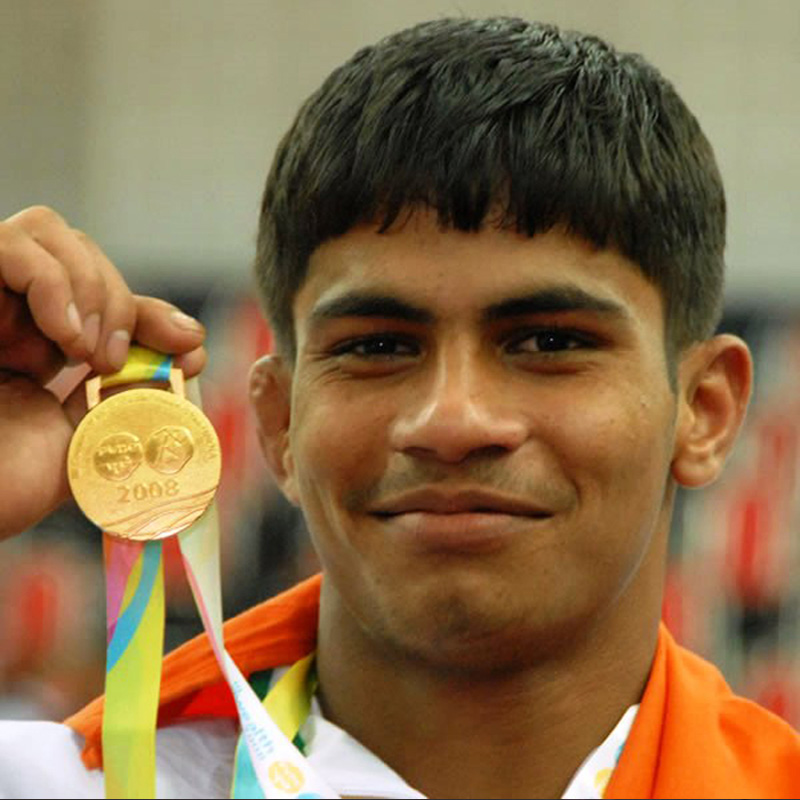
    MUMBAI: A dominating performance by Haryana Hammers saw them register their first victory against defending champions Mumbai Maharathi on the opening day of the Pro Wrestling League Season 2 at the K D Jadhav Indoor Stadium here today. Present at the occasion were Minister of State for Information and Broadcasting Rajyavardhan Singh Rathore and WFI president Brij Bhushan Sharan Singh.

    The second season’s live telecast can be seen on Sony Max and Sony ESPN. You can catch the online streaming of the event on the Sony website as well.

    Mumbai captain Erica Wiebe won the toss and blocked the 70kg Men’s category while Haryana chose to block the 48kg Women’s category. The first bout was fought between Rajneesh (Haryana Hammers) and Vikas Kumar (Mumbai Maharathi) in the 65 kg Men’s category. Rajneesh executed some skillful moves as he combined attack with defence cleverly to prevail over Vikas 7-2.

    The second bout for the 75 kg Women’s category was won by Mumbai, as they drew level with Haryana. Canadian Erica Wiebe, who won Gold in the 2016 Rio Olympics, led from the front as Haryana’s Kiran proved to be the weaker opponent. Erica won the bout by technical superiority as Kiran failed to score a single point compared to the Canadian’s 16.

    Haryana came back strongly in the third bout, as Russian Abdusalam Gadisov employed single leg attack and ankle hold takedowns to effectively score against his opponent, Ukraine’s Pavlo Oliinyk. Haryana secured a 2-1 lead by virtue of this victory.

    The fourth bout was contested in the 53 kg Women’s category as grapplers Sofia Mattsson from Sweden and India’s Lalita Sehrawat played an aggressive game. Although Lalita kept searching for points, Sofia who had earned a Bronze in the 2016 Olympics, prevailed over her and eventually won by Pin Fall.

    Even as Mumbai conceded a 1-3 lead in the tie, they tried to stage a comeback as Azerbaijan-born Jabrayil Hasanov outclassed his opponent Sumit Sehrawat, clinching the bout in Mumbai’s favour by virtue of technical superiority.

    Haryana Hammers took full advantage of the crucial sixth bout as Marwa Amri defeated Mumbai Maharathi’s Sarita 5-0. The Tunisian grappler showed full supremacy on the mat, as her technical acumen proved to be too good for Sarita. The 2016 Rio Olympics Bronze medalist clinched the tie with this victory, as Haryana took an unassailable 4-2 lead.

    The final bout of the tie saw some explosive action with Mumbai’s Rahul Aware completely dominating over his opponent Sandeep Tomar from Haryana. Although Sandeep had an early 3-point advantage, Rahul came from behind to display a series of well-executed takedowns to win the bout 14-5. Rahul’s brilliant effort went in vain, as Haryana won the game by a 4-3 margin.

    Speaking after the match, a delighted Haryana Hammers Co-Owner Golden Behl said: ” I believe Rahul Aware and Sandeep Tomar was the most exciting match of the days but of course we were looking forward to Sandeep’s win. But in the end, it’s a game and things change within fraction of seconds. We came with a target of 5-2 win but we are surely not disappointed with a 4-3 victory on the first day of PWL.”

    Haryana Hammers player Abdusalam Gadisov said: “I believe our team is a great mix of some great Indian and international wrestlers and the performance on the first day has been great so far. Look forward to some more exciting matches in the coming days.

  • Manpower audit required to identify posts in Prasar Bharati that need to be filled: Rathore

    Manpower audit required to identify posts in Prasar Bharati that need to be filled: Rathore

    NEW DELHI: Prasar Bharati has been advised to carry out a Manpower Audit to identify posts that actually need to be filled up, the Parliament has been informed.


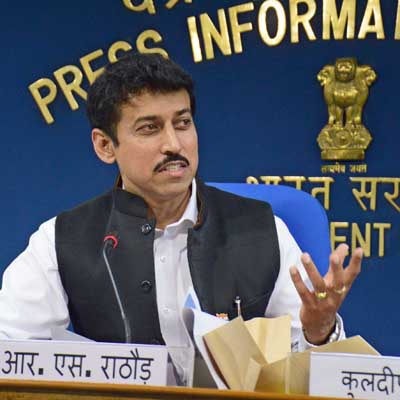
    Minister of State for Information and Broadcasting Col. Rajyavardhan Singh Rathore said in reply to a question that though there are vacancies in All India Radio and Doordarshan Kendras, there is a need to reassess actual requirement of staff in Prasar Bharati keeping in view changes in broadcast technologies.


    Earlier this year, a report had shown that although it had stressed the need for a manpower audit in view of technological upgradation, statistics showed that only 30093 of the 46756 sanctioned posts have been filled in the cash-strapped Prasar Bharati.


    Of the total, the filled posts in All India Radio are 15538 out of the sanctioned 26129, while 14555 posts have been filled out of the 20627 sanctioned posts in Doordarshan.


    In Group A, AIR has filled just 719 of the 2002 posts and DD has filled just 517 of the 1083 sanctioned strength.


    After rigorous exercise, the Government had identified 3452 posts as essential category posts for filling up in Prasar Bharati. Out of these, 3067 posts were identified by Government as essential category of posts in Prasar Bharati to be filled up through direct recruitment have been revived.


    A Special onetime dispensation was obtained to recruit these through Staff Selection Commission.


    Prasar Bharati sources say Staff Selection Commission has already recommended 2367 candidates for appointment. Prasar Bharati is in the process of issue of appointment orders.


    In addition, 38 middle/ senior level Programme posts have been revived for filling up on deputation basis.

  • Government plans to increase funds for M&E industry: CII

    Government plans to increase funds for M&E industry: CII

    MUMBAI: Minister of State for Information & Broadcasting (I&B) Rajyavardhan Singh Rathore assured the media and entertainment (M&E) industry that the government policies would be supportive and calibrated to enhance the modernisation and monetisation of the sector.


    Addressing the fourth edition of the CII Big Picture Summit 2015 in New Delhi, Rathore said, “In phase II of the auction of the frequencies for the radio, there was no provision for broadcasting news. This was changed during the phase III auction, when private radio was allowed to broadcast the news of the All India Radio (AIR) for a specified time.”


    Rathore mentioned that a lot of initiatives were being taken by the government to support the M&E industry in the country, such as channelising more advertisements to the digital media like YouTube, outsourcing some of the creative works of Doordarshan and AIR to the industry. More such steps would be taken in due course.


    In this regard, plans are underway to revamp the terrestrial broadcast of DD to couple it with internet and DTH so that there would be opportunities for making local programs based on events happening in smaller towns and rural areas. This would also give a boost to creation of contents, which have local flavour and relevance. 


    Acknowledging the industry demand that the monetisation of the M&E segment had not kept pace with the requirements, Rathore disclosed that the government had proposed to set up a university to develop soft skills needed for the industry.


    This university would specialise in providing skills to students in areas like gaming, animation and other avenues of creative pursuits relevant to the industry. He wanted industry to take a lead in this endeavour and create centers of excellence, which would enable the M&E industry to reach $100 billion by 2025. He also said that industry support was imperative to improve the content and appeal of the programs and for training media professionals.


    Responding to a suggestion made by the industry to bring down high incidence of tax levied on the M&E industry, the Minister said that the Good and Services Tax (GST), which the Government wanted to enact would have subsumed various taxes incidental on the industry. He hoped that the bill would be passed soon in the interest of the nation.


    Rathore observed that the Government was keen to create a single window clearance for shooting films in India, which could enhance the monetisation and profitability of the industry. He wanted CII to come out with a plan for creating a dynamic eco system for the film industry to flourish. At the same time, he said that inadequate number of cinema halls in India as compared to countries like the US and China could be more to do with real estate prices.


    Ministry of I&B special secretary J S Mathur said, “The process of digitisation in the M&E sector was at a higher pace and would show results in the coming years. He was of the opinion that smart phones, which could carry large quantum of data including films, news bulletins etc. would redefine the digital space in India.”


    He also mentioned that the Government was in the process of finalising the draft of the Intellectual Property Rights (IPR), which would enable more and more people to invest in India in various segments like content creation, production, animation, and gaming. 


    Prasar Bharati CEO Jawhar Sircar opined that a consortium approach should be followed by the industry and the Government to promote the convergence in the M&E industry to realise its potentials. He suggested that a shared approach should be there among the players to make use of the vast infrastructure of the government through innovative schemes that would put to use smart phones as carriers of innovative contents.


    CII National Committee on Media and Entertainment and Group CEO, Viacom 18 Group CEO and CII National Committee on Media and Entertainment chairman Sudhanshu Vats pitched for easing of doing business and greater application of convergence of technology to tap the potentials of the industry. Monetisation of the industry can be enhanced through proper government support to the industry.


    Narrating the problems being faced by the M&E sector, Star India COO Sanjay Gupta said that bandwidth problems, high cost, high taxes etc were adversely affecting the growth of M&E industry. He wanted a supportive policy regime to help the industry reach $100 billion mark by 2025.

  • TV channels require bandwidth of 28.5 Mbps to transmit: Rathore

    TV channels require bandwidth of 28.5 Mbps to transmit: Rathore

    NEW DELHI: The typical value of bandwidth or data rate required to transmit (uplink / downlink) TV channels is around 28.5 Mbps, the Parliament was told today.

    Rathore said that 822 private satellite TV channels had been permitted by the Ministry under the Uplinking / Downlinking Guidelines.

    In reply to a question, Rathore informed that the permitted satellite TV channels, after obtaining permission from the Ministry, have to operationalise within one year in accordance with the provisions of Clause 2.4.2, 2.5.1 and 3.5.1 of the Uplinking Guidelines.

    In order to ensure operationalisation, a Performance Bank Guarantee of certain amount has to be deposited by the permission holding company, which is forfeited if the company fails to operationalise by the due date. 

    Quoting information supplied by the Department of Telecommunications, Minister of State for Information and Broadcasting (I&B) Rajyavardhan Rathore said the spectrum was as follows:

  • Rajyavardhan Singh Rathore to inaugurate India Pavilion at Cannes

    Rajyavardhan Singh Rathore to inaugurate India Pavilion at Cannes

    NEW DELHI: The India Pavilion at 111 Village International Riviera (Cannes, France) will be inaugurated by Minister of State for Information and Broadcasting Rajyavardhan Rathore on 14 May, 2015.


    Eminent people including Indian Ambassador to France Mohan Kumar, Marche Du Film Director Jerome Paillard, producers Rakeysh Om Prakash Mehra and Bobby Bedi will also be present at official opening of the Pavilion. Marche Du Film is one of the most important film markets in the industry.


    Two Indian films, Chauthi Koot by Gurvinder Singh and Masaan by Neeraj Ghaywan have been chosen under the Un Certain Regard category.


    A session on journey to Cannes of the film Chauthi Koot will take place on the first day. A post screening reception for the film has also been organized.


    FICCI is coordinating the India Pavilion at Cannes Film Festival with the Ministry for the second consecutive year.


    The India Pavilion will showcase Indian cinema’s linguistic, cultural and regional diversity by showcasing trailers, displaying literature and brochures on varied aspects. The primary focus would of course be boosting co-production opportunities with countries India has signed treaty with, attracting international studios to shoot in the country and exploring new international partnerships in the realms of distribution, production, filming in India, script development and technology, and promoting film sales and syndication.


    Also, the fourth edition of the ‘Indian Film Guide’ will be placed at the Pavilion for the delegates. The ‘Indian Film Guide’ is a comprehensive booklet with information on policy initiatives by the government pertaining to film sector, the listing of Indian companies at Cannes Film Market, Indian Films at Cannes and contacts of important people in the business of filmmaking.


    FICCI along with the Ministry will be holding sessions on the sidelines of the festival. The sessions would focus on important aspects like co production agreements, international distribution – challenges and way forward and how to make films reach out to worldwide audience amidst a wider range of issues faced by the sector.


    The sessions would have speakers with wide ranging experience in their fields and the likes of Film France COO Frank Priot, Telefilm Canada director international promotion Shiela de La Varende, Film London senior inward investment manager David Shepheard, CNC France director Pierre Emmanuel, ASAP Films producer Marc Baschet, Australia India Film Fund head Anupam Sharma, Special Treats CEO Colin Burrows, Indian filmmakers Nandita Das and Rishi Mehta, PVR Pictures president Kamal Gianchandani, Mongrel Media distributer Charlotte Mickie, Westend Films’ Eve Schoukroun, Dragongate CEO William Pfeiffer, Film London CEO Adrian Wooton and Cinestaan founder Rohit Khattar.


    The Government is proactively supporting the sector and has even listed it among the 25 focus sectors under the ‘Make in India’ campaign.


    Punjabi film ChauthiKoot (The Fourth Direction) is based on two short stories by Punjabi writer Waryam Singh Sandhu, titled Chauthi Koot and Hunn Main Theek Haan. The story is set in Punjab against the backdrop of the Sikh separatist movement in the ‘80s. It catches the mood of Punjab during the turbulent period.


    Masaanset in Varanasi revolves around four key characters, that of a young orphan, a low-caste teenage boy, a girl and her father as they attempt to fight against the morality and traditions typical of the small town they live in. Their lives intersect tangentially when the low-caste boy, played by Vicky Kaushal, falls in love with an upper-caste girl and Richa Chadha’s character finds herself in a sex scandal. Her father Sanjay Mishra finds himself fighting the taboo but in him, the young orphan, played by Nikhil Sahni, finds a father figure.

  • 178 applications for new TV channels pending: Rajyavardhan Singh Rathore

    178 applications for new TV channels pending: Rajyavardhan Singh Rathore

    NEW DELHI: A total of 178 applications for new TV channels have been pending with the Government of India since 2012.


    Information and Broadcasting Minister of State Rajyavardhan Singh Rathore said, “The grant of permission to private TV channels is dependent upon requisite clearances from various ministries and departments. After receipt of all clearances, the ministry takes up the case for grant or rejection of permissions.”


    The Minister further added that the matters were being taken up regularly with various departments and ministries at various levels for early clearance so that the permission to the TV channels could be granted.


    Giving details on the pendency, Rathore said that there were 36 applications in 2012, 59 in 2013, 56 in 2014 and 27 in 2015.


    The Minister said that the Ministry, at present, granted permission to 832 TV channels out of which 406 were news and 426 were general entertainment channels (GECs). Religious channels and sports channels are included in the GEC category.

  • I&B Ministry open to discussion with M&E sector: Rajyavardhan Singh Rathore

    I&B Ministry open to discussion with M&E sector: Rajyavardhan Singh Rathore

    MUMBAI: The India media and entertainment (M&E) sector is undergoing rapid changes and has huge potential to take its content across the globe. However, in order to achieve this, the sector will need the support of the Information and Broadcasting (I&B) Ministry.


    “The country has the power to become a super power in M&E and as government, we want to interact with the different sectors in the M&E industry. We want to hear about the bottlenecks and the suggestions. We are keen to iron them out to do business,” said Minister of State Information & Broadcasting Rajyavardhan Singh Rathore.


    Rathore, who was talking at the just concluded FICCI Frames 2015, said that the Indian M&E sector had the ability to reach out to the world. “India is poised to be a global phenomena. We just need to come up with content that can create a foothold in any country,” said Rathore.


    He added that Indian content can be targeted at larger audiences and not just the Indian diaspora. “This we can learn from the US, which has been able to push across its culture across boundaries,” he said.


    The I&B Ministry, under the aegis of Prime Minister Narendra Modi’s government, has been working hard towards improving the media unit. “The Prime Minister has been able to popularize radio, which is now expanding. In a year or so, close to 800-900 cities will have either one or multiple FM Radio stations,” he informed.


    Talking about film certification, Rathore said that the Central Board of Film Certification (CBFC) has be a certification board and not censorship body. “They need to give certification based on content,” he said, adding that the Ministry has decided to have a re-look at the Cinematography Act.


    The Ministry is also looking at improving the Film and Television Institute of India (FTII). “Script is important for any movie and that is what is currently lacking. There is no structure. This facility needs to be improved. Film and TV industry should partner with FTII,” he said.


    Talking about the other initiatives, which the Ministry is undertaking, Rathore said that a National Centre of Excellence for the Animation, Visual, Gaming and Comic (AVGC) is being set up. “We want this centre to be a benchmark for all centres that come later. But to do this, the government will need the support of the industry. It is the industry, which can give life to this project. Become a partner with us,” urged Rathore.


    The MoS is of the view that the country’s culture can be promoted though the films. “The content that is being put out should carry our culture,” he said.


    Speaking on how the M&E sector could become a ‘Soft Power’ of the 21st century, Rathore said, “Currently, the M&E sector is working on individual efforts. We need to join forces and interact more to understand the strengths and move in a certain direction.”


    Rathore concluded by assuring the sector that the Ministry will, with open arms, help the M&E sector grow. “We need to develop a degree of trust to grow,” he concluded.


  • Govt. assures Parliament that film on Nirbhaya incident of December 2012 will not be telecast

    Govt. assures Parliament that film on Nirbhaya incident of December 2012 will not be telecast

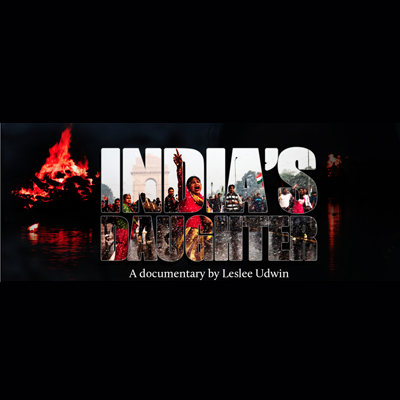
    NEW DELHI: Following strong protests in Rajya Sabha today, Home Minister Rajnath Singh committed to members that the government will move to court to restrain the screening of the film on the ghastly Nirbhaya incident of 16 December 2012 by British filmmaker Leslee Udwin while informing the upper house that a first information report has already been filed against the producers.


    The uproar arose out of the revelation in the press meet on 3 March by Udwin and co-producer Dibang that the film contained interviews conducted in Tihar Jail with those who have been convicted in the case, including Mukesh Singh who had justified the gang rape.


    Singh said that he is personally hurt by the incident and he has spoken to the authorities to stop screening of the documentary in India. He said the government will act promptly and firmly against those officials and others responsible for giving permission to the BBC and a British filmmaker to go ahead with the interviews and to subsequently allow its broadcast.


    Earlier before question, Minister of State for Parliamentary Affairs Mukhtar Abbas Naqvi gave an absolute assurance that the government would act, but this did not satisfy the opposition, and some members trooped into the Well of the House to disrupt proceedings. The House session was being chaired by its Deputy Chairman P.J.Kurien, who had to adjourn for 15 minutes.


    Singh said, “The condition was given to shoot the interview for social purpose and not for commercial use. A legal notice was issued to them when the jail authorities came to know that it violated the conditions. The permission to shoot the documentary was given with conditions.”


    Later, Minister of State for Information and Broadcasting Rajyavardhan Singh Rathore said, “The airing of documentary would be contempt of court. This entire documentary is against the programming code of I&B ministry. Language seems to incite violence against women, and instills fear.”


    Although nobody has been named in the FIR, Delhi Police Commissioner B S Bassi maintained that the ‘main actor’ is the person who has made these assertions.


    He urged the media not to broadcast any assertion which transgresses the domain of law. “This was a ghastly crime. One has to take into consideration that reporting of a crime does not transgress the domain of law and if that happens then the law will have to take its own course,” he told reporters.


    The FIR was registered under IPC sections 505 (Statements conducing to public mischief), 504 (Intentional insult with intent to provoke breach of the peace) 505(1)(b) (With intent to cause, or which is likely to cause, fear or alarm to the public), 509 (Word, gesture or act intended to insult the modesty of a woman) and section 66A of the IT Act (Punishment for sending offensive messages through communication service) at the Economic Offences Wing (EOW) of Delhi Police.


    Udwin had claimed that she took permission from the then Director General of Tihar jail Vimla Mehra to interview Mukesh Singh in prison for the BBC. 


    Asked about this claims, Bassi said, “I am not aware of any permission. Even if it was given, it was given to remain in the domain of law. If any act transgresses the domain of law and particularly IPC, I am duty bound to take action and we have registered a case.”


    The India-United King co-production India’s Daughter was slated for a world premiere simultaneously in India, the UK, Denmark, Sweden, Switzerland, Norway and Canada.


    NDTV 24×7 was to telecast of the interview-based documentary in India on International Women’s Day – 8 March at 9.00 pm. 


    India’s Daughter tells the story of the horrific Delhi gang rape and of the unprecedented protests and riots, which this horrific event ignited throughout India, demanding changes in attitudes towards women. 


    Udwin said Mukesh Singh, the driver of the bus in which the 23-year-old paramedical student was brutally gang-raped by six men, said women who went out at night had only themselves to blame if they attracted the attention of gangs of male molesters.

  • Govt. denies interference in working of CBFC

    Govt. denies interference in working of CBFC

    NEW DELHI: The Government has categorically denied any interference in the decision-making of the Central Board of Film Certification or any coercion on the chairperson or any other member by the Information and Broadcasting Ministry.


    Minister of state for I&B Rajyavardhan Singh Rathore said that the Ministry had ‘at no point’ communicated with the chairperson or members regarding certification of any film.


    While announcing that Pahlaj Nihalani was made chairman and 10 new Board members had been appointed to fill the places of nine members who resigned, Rathore told Parliament that the legal regime with regard to CBFC is well laid out and it is the Board alone which decides within its jurisdiction.


    Aggrieved producers have the right to move the Film Certification Appellate Tribunal headed by a retired Judge of a High Court which decides matters in appeal in accordance with the Cinematograph Act.


    There are adequate provisions in the Act and the Rules to protect the autonomy of the Board.


    He said Leela Samson’s tenure as chairperson had ended in March but she had continued to hold charge because as per the Certification Rules an outgoing Chairperson has to hold charge until the new incumbent takes over. While there is no such rule for the members, fourteen members whose tenure had ended on 24 May had been asked to continue until further orders.

    The resignation of Samson and nine other members who resigned alleging interference was accepted with effect from 19 January this year.

  • MPs push for fresh guidelines to promote India as film destination

    MPs push for fresh guidelines to promote India as film destination

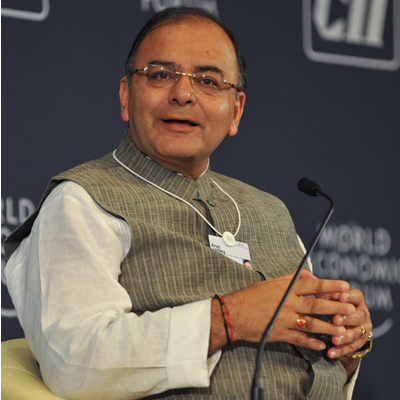
    NEW DELHI: Information and Broadcasting Ministry (I&B) Arun Jaitley said that all efforts need to be taken to give the concept of India as a film destination a strong ‘Brand Push’ to promote India as a soft power.


    The branding could be undertaken by creating and promoting a capsule that incorporated the key features of India’s professional ability, that is skills, human resources, diverse locales, filming support from institutional structures and core strengths of India’s film industry. This capsule needed to be showcased at all major international film festivals as part of the efforts to promote the ‘filming destination concept.’


    The Minister was chairing a meeting of the Consultative Committee of Members of Parliament attached to the I&B Ministry to discuss the issue of “India as a soft power – As a Filming Destination.” Minister of State Rajyavardhan Singh Rathore was also present in the meeting.


    Jaitley said the topic for discussion was extremely important in view of the efforts being made to project India’s ability and standing as a soft power and a filming destination. The concept would not only facilitate the contours of growth of the film industry but would also promote the diversity of India to the world through the medium of films and cinema. This initiative and proactive stance would boost the inflow of tourism in India from other countries. Jaitely also emphasized that there was a need to simplify procedures and rules in order to promote the idea in letter and spirit.


    A presentation was made on behalf of the Ministry giving an overview of the steps and initiatives undertaken so far to promote India as a soft power. The presentation provided an overview of the processes involved to promote filming in India with reference to the multi pronged strategy adopted by the Ministry. Specific references were made to promotion to film festivals and film bazaars, co-production units, the proposed legislative framework and policy initiatives to promote skill development in the film industry.


    Members of the Committee gave suggestions to ensure that the concerns of the stakeholders were addressed and the idea was implemented in totality. It was emphasized that skill development was a critical area and necessary measures needed to be taken by the Government and the industry together.


    It was also suggested that rules and guidelines for promoting the destination concept required a relook. Laws and rules needed to be in sync with contemporary technological tools. It was also mentioned that the concept required collaboration and partnership between the ministry and the state governments and other stakeholders.