Tag: Rajyavardhan Rathore

  • Media Communication Policy being drafted to ensure access to information

    Media Communication Policy being drafted to ensure access to information

    NEW DELHI: A Media Communication Policy is under formulation in the Information and Broadcasting Ministry to address communication needs and enhance access to information.

    Stating this, Minister of State for I and B Rajyavardhan Rathore told Parliament today that the aim would also be to promote national dialogue on development issues by all citizens; and ensure timely, orderly and effective growth and dissemination of Government information.

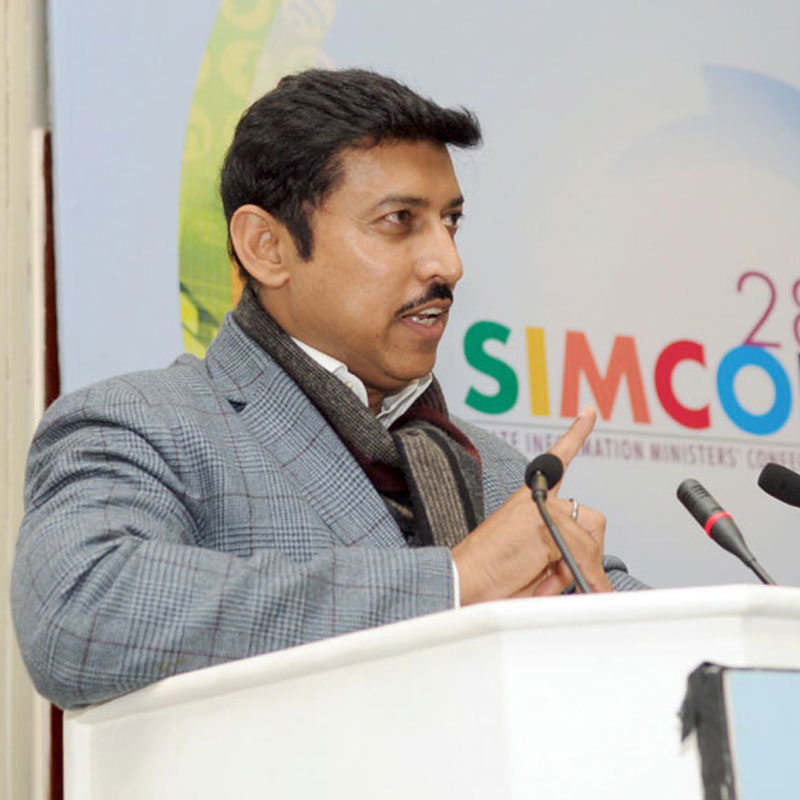
    This was decided in the State Information Ministers’ Conference (SIMCON) held on 9 and 10 December 2016.

    Various issues concerning State and Central Governments on integrated and effective dissemination of information were discussed.

    It was decided that the policy will be finalized in consultation with States.

    Integrating Government communication with development and enabling participation from citizens to improve decision making and implementation of Government programmes will be the aims of the policy, the Minister said.

    He said facilitating systematic use of communication and information strategies contributes in large measure to more effective use of Government resources and better implementation of Government programmes and policies thereby contributing to improved quality of life of citizens. 

    Also Read:

    Mass Comm courses in regional languages significant: Naidu

  • Over Rs 149 million spent on govt ads post-DeMo

    Over Rs 149 million spent on govt ads post-DeMo

    NEW DELHI: A sum of Rs 14,95,84,691 (Rs 14.9 crore or Rs 149 million) has been paid by the Directorate of Advertising and Visual Publicity on advertisements published after demonetisation.

    The period covered is 9 November 2016 to 25 January 2017, minister of state for information and broadcastng Rajyavardhan Rathore told the Parliament.

    DAVP has the practice of making cashless payments to newspapers generally through NEFT. The bill submission period is 60 days from the date of publication of print advertisement. 

    The total committed expenditure for awareness regarding digital payment and popularizing action on less cash economy is Rs 93,93,28,566, he said.

    A major share of these ads went to the print media, a source said.

    Also Read:

    EC to screen govt ads; PM photo on hoardings disallowed

    YUSH-ASCI to regulate advertisements

    TV adcaps case in Delhi HC deferred to 20 April

  • Streamline media grievance redressal, SC asks govt

    Streamline media grievance redressal, SC asks govt

    NEW DELHI: Action was taken in 52 cases of television and two of radio in the past three years for violation of the Programme or Advertisement Code of the Government. Minister of state for information and broadcasting Rajyavardhan Rathore said the action in most cases was limited to apology scrolls, or switching off channels for a brief period.

    This included in the case of TV 19,15 and 18 cases in 2014, 1015 and 2016, respectively, and one each in the case of FM radio in 2015 and 2016.

    Meanwhile, the minister said the Supreme Court had, on 12 January 2017, advised the Government to formalise the complaint redressal mechanism including the period of limitation within which a complaint can be filed. 

    The court also said the concerned statutory authority which shall adjudicate upon the same including the appellate and other redressal mechanisms, leading to a final conclusive determination. 

    At present, an Inter-Ministerial Committee takes action on complaints forwarded to it. In addition, there is self-regulation at the level of the Advertisement Standards Council of India, the Broadcast Content Control Council and the News Broadcast Standards Authority.

    The Inter Ministerial Committee (IMC) under Section 20 of the Cable Television Networks (Regulation) Act 1995 comprising officers  from Ministries of Home Affairs, Defence, External Affairs, Law & Justice, Women & Child Development, Health & Family Welfare, Consumer Affairs and a representative from Advertising Standards Council of India, to take cognizance suo moto or to look into specific complaints regarding content on private TV channels on any platform including FM Radio channels.

    As and when there is a prima facie case of violation by private satellite TV channels and private FM channels regarding content aired by them, the matter is placed before the IMC for its consideration/recommendations. Thus, IMC functions in a recommendatory capacity. The final decision is taken on the basis of the recommendations of IMC by the Ministry after which action is taken such as issuing warnings or advisories to the channels or asking them to run apology scrolls on their channels or directing the channels to be taken off air for a limited period depending on the gravity of the violation.

    Apart from this, the Ministry has also issued directions to States to set up District level and State level Monitoring Committees to regulate content telecast of local TV channels carried on Cable TV Networks.

    Also Read:
    SC to MIB: Get mechanism to deal with complaints on TV, radio shows

    MIB urgently seeks pending 78 channels’ equipment details

    Govt warning to TV channels on b’cast norms breach

    Mittal wants self-regulation for new media, Rathore says IT Act adequate

  • Over Rs 149 million spent on govt ads post-DeMo

    Over Rs 149 million spent on govt ads post-DeMo

    NEW DELHI: A sum of Rs 14,95,84,691 (Rs 14.9 crore or Rs 149 million) has been paid by the Directorate of Advertising and Visual Publicity on advertisements published after demonetisation.

    The period covered is 9 November 2016 to 25 January 2017, minister of state for information and broadcastng Rajyavardhan Rathore told the Parliament.

    DAVP has the practice of making cashless payments to newspapers generally through NEFT. The bill submission period is 60 days from the date of publication of print advertisement. 

    The total committed expenditure for awareness regarding digital payment and popularizing action on less cash economy is Rs 93,93,28,566, he said.

    A major share of these ads went to the print media, a source said.

    Also Read:

    EC to screen govt ads; PM photo on hoardings disallowed

    YUSH-ASCI to regulate advertisements

    TV adcaps case in Delhi HC deferred to 20 April

  • Streamline media grievance redressal, SC asks govt

    Streamline media grievance redressal, SC asks govt

    NEW DELHI: Action was taken in 52 cases of television and two of radio in the past three years for violation of the Programme or Advertisement Code of the Government. Minister of state for information and broadcasting Rajyavardhan Rathore said the action in most cases was limited to apology scrolls, or switching off channels for a brief period.

    This included in the case of TV 19,15 and 18 cases in 2014, 1015 and 2016, respectively, and one each in the case of FM radio in 2015 and 2016.

    Meanwhile, the minister said the Supreme Court had, on 12 January 2017, advised the Government to formalise the complaint redressal mechanism including the period of limitation within which a complaint can be filed. 

    The court also said the concerned statutory authority which shall adjudicate upon the same including the appellate and other redressal mechanisms, leading to a final conclusive determination. 

    At present, an Inter-Ministerial Committee takes action on complaints forwarded to it. In addition, there is self-regulation at the level of the Advertisement Standards Council of India, the Broadcast Content Control Council and the News Broadcast Standards Authority.

    The Inter Ministerial Committee (IMC) under Section 20 of the Cable Television Networks (Regulation) Act 1995 comprising officers  from Ministries of Home Affairs, Defence, External Affairs, Law & Justice, Women & Child Development, Health & Family Welfare, Consumer Affairs and a representative from Advertising Standards Council of India, to take cognizance suo moto or to look into specific complaints regarding content on private TV channels on any platform including FM Radio channels.

    As and when there is a prima facie case of violation by private satellite TV channels and private FM channels regarding content aired by them, the matter is placed before the IMC for its consideration/recommendations. Thus, IMC functions in a recommendatory capacity. The final decision is taken on the basis of the recommendations of IMC by the Ministry after which action is taken such as issuing warnings or advisories to the channels or asking them to run apology scrolls on their channels or directing the channels to be taken off air for a limited period depending on the gravity of the violation.

    Apart from this, the Ministry has also issued directions to States to set up District level and State level Monitoring Committees to regulate content telecast of local TV channels carried on Cable TV Networks.

    Also Read:
    SC to MIB: Get mechanism to deal with complaints on TV, radio shows

    MIB urgently seeks pending 78 channels’ equipment details

    Govt warning to TV channels on b’cast norms breach

    Mittal wants self-regulation for new media, Rathore says IT Act adequate

  • Films development: India & Portugal to work out co-production pact

    Films development: India & Portugal to work out co-production pact

    NEW DELHI: India and Portugal have agreed to work out modalities for a co-production agreement in the Film Sector in a time-bound manner keeping in mind the legal aspects of such an agreement.

    A possibility of a Memorandum of Understanding between the public broadcasters of both countries to share best practices and seek cooperation in technical and content related matters was also discussed.

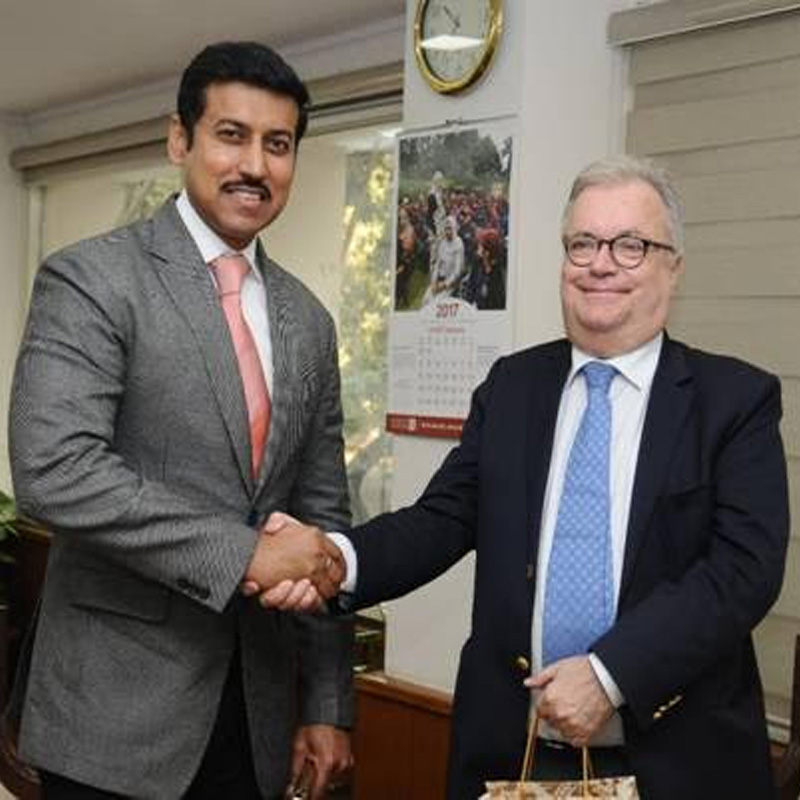
    Minister of State for Information & Broadcasting Rajyavardhan Rathore at a meeting with Portugal Culture Minister Luis Filipe Castro Mendes today apprised the Portuguese Minister on the initiatives taken by MIB to provide Single Window clearances for Foreign Film Producers in the country through the Film Facilitation Office. He also highlighted the prestigious National Film Heritage Mission of the Government to digitise, restore, and preserve the rich filmic heritage of the Country.

    (India already has such audio-visual agreements with several countries including France, Canada, New Zealand, Brazil. germany, Italy and the United Kingdom.)

    He also told the Portuguese Minister about the Indian Instute of Mass Communications and Film and Television Institute of India as the premier educational institutes in the field of Journalism and Film Production respectively in the country. The Ministers discussed the possibility of Student Exchange programmes between educational institutions of both the countries and expressed interest for possible co-operation in the areas of information and communication technology and Start-ups.

    The scheduled meeting of the Portuguese Prime Minister with the film fraternity at Goa on 12 January 2017 organized by FICCI was also discussed.

    The Ministers expressed interest in sharing of experiences and best practices in Social Media to enhance the outreach.

    Also Read:

    Dhillon among three women on Film Tribunal

  • Films development: India & Portugal to work out co-production pact

    Films development: India & Portugal to work out co-production pact

    NEW DELHI: India and Portugal have agreed to work out modalities for a co-production agreement in the Film Sector in a time-bound manner keeping in mind the legal aspects of such an agreement.

    A possibility of a Memorandum of Understanding between the public broadcasters of both countries to share best practices and seek cooperation in technical and content related matters was also discussed.

    Minister of State for Information & Broadcasting Rajyavardhan Rathore at a meeting with Portugal Culture Minister Luis Filipe Castro Mendes today apprised the Portuguese Minister on the initiatives taken by MIB to provide Single Window clearances for Foreign Film Producers in the country through the Film Facilitation Office. He also highlighted the prestigious National Film Heritage Mission of the Government to digitise, restore, and preserve the rich filmic heritage of the Country.

    (India already has such audio-visual agreements with several countries including France, Canada, New Zealand, Brazil. germany, Italy and the United Kingdom.)

    He also told the Portuguese Minister about the Indian Instute of Mass Communications and Film and Television Institute of India as the premier educational institutes in the field of Journalism and Film Production respectively in the country. The Ministers discussed the possibility of Student Exchange programmes between educational institutions of both the countries and expressed interest for possible co-operation in the areas of information and communication technology and Start-ups.

    The scheduled meeting of the Portuguese Prime Minister with the film fraternity at Goa on 12 January 2017 organized by FICCI was also discussed.

    The Ministers expressed interest in sharing of experiences and best practices in Social Media to enhance the outreach.

    Also Read:

    Dhillon among three women on Film Tribunal

  • Mittal wants self-regulation for new media, Rathore says IT Act adequate

    Mittal wants self-regulation for new media, Rathore says IT Act adequate

    NEW DELHI: Even as Minister of State for Information and Broadcasting Rajyavardhan Rathore categorically told Parliament earlier this month that his Ministry was not contemplating any regulatory framework for censorship of content appearing on the internet, Secretary Ajay Mittal has said the Centre is concerned about new media in the absence of a regulatory framework.

    Speaking in Kolkata at the Merchants’ Chamber of Commerce and Industries (MCCI), Mittal said

    “An important area of challenge in the new media is that there is unfortunately no regulatory framework. What you cannot see on TV or hear on your radio, it is all possibly up there in open access.”

    Mittal said much more was needed to be done to prepare the government and its officers to deal with the “completely new paradigm of digital media”.

    He said the Ministry was discussing with the state governments and “we are now going to train their people in the information sector so that they can deal with the challenges created by new media that is causing a whole lot of concern.”

    Mittal said questions have also been raised in Parliament on “this issue of digital media without any boundaries. We are very clear that in the media space the best form of regulation is self regulation and the government would like to keep away as far as possible.”

    Rathore had said in reply to a question about censoring new platforms for publication and broadcasting of media content like social networks and online video services that Section 69A of the Information Technology Act 2000 provides for blocking access to information under specific conditions. He said the Act has provisions for removal of objectionable online content.

    The Information Technology (Intermediary Guidelines) rules 2011 require that the Intermediaries shall observe due diligence while discharging their duties and shall inform the users of computer resources not to host, display, upload, modify, publish, transmit, update or share any information that is harmful, objectionable, affects minors and is unlawful in any way.

    As far as OTT was concerned, sources in the ministry told indiantelevision.com that this was still a new subject, and the government would take action in the event of any complaints from viewers and subscribers.

    The Ministry, sources said, has no control over films appearing online as this falls in the ambit of the IT Act which is administered by IT Ministry.

  • Mittal wants self-regulation for new media, Rathore says IT Act adequate

    Mittal wants self-regulation for new media, Rathore says IT Act adequate

    NEW DELHI: Even as Minister of State for Information and Broadcasting Rajyavardhan Rathore categorically told Parliament earlier this month that his Ministry was not contemplating any regulatory framework for censorship of content appearing on the internet, Secretary Ajay Mittal has said the Centre is concerned about new media in the absence of a regulatory framework.

    Speaking in Kolkata at the Merchants’ Chamber of Commerce and Industries (MCCI), Mittal said

    “An important area of challenge in the new media is that there is unfortunately no regulatory framework. What you cannot see on TV or hear on your radio, it is all possibly up there in open access.”

    Mittal said much more was needed to be done to prepare the government and its officers to deal with the “completely new paradigm of digital media”.

    He said the Ministry was discussing with the state governments and “we are now going to train their people in the information sector so that they can deal with the challenges created by new media that is causing a whole lot of concern.”

    Mittal said questions have also been raised in Parliament on “this issue of digital media without any boundaries. We are very clear that in the media space the best form of regulation is self regulation and the government would like to keep away as far as possible.”

    Rathore had said in reply to a question about censoring new platforms for publication and broadcasting of media content like social networks and online video services that Section 69A of the Information Technology Act 2000 provides for blocking access to information under specific conditions. He said the Act has provisions for removal of objectionable online content.

    The Information Technology (Intermediary Guidelines) rules 2011 require that the Intermediaries shall observe due diligence while discharging their duties and shall inform the users of computer resources not to host, display, upload, modify, publish, transmit, update or share any information that is harmful, objectionable, affects minors and is unlawful in any way.

    As far as OTT was concerned, sources in the ministry told indiantelevision.com that this was still a new subject, and the government would take action in the event of any complaints from viewers and subscribers.

    The Ministry, sources said, has no control over films appearing online as this falls in the ambit of the IT Act which is administered by IT Ministry.

  • MIB stresses on digital, connectivity revolution; Google Play govt schemes

    MIB stresses on digital, connectivity revolution; Google Play govt schemes

    NEW DELHI: Information and Broadcasting Minister M Venkaiah Naidu has said the endeavour of the Government is to improve delivery systems, need to promote digital transformation and take forward the connectivity revolution in all sectors.

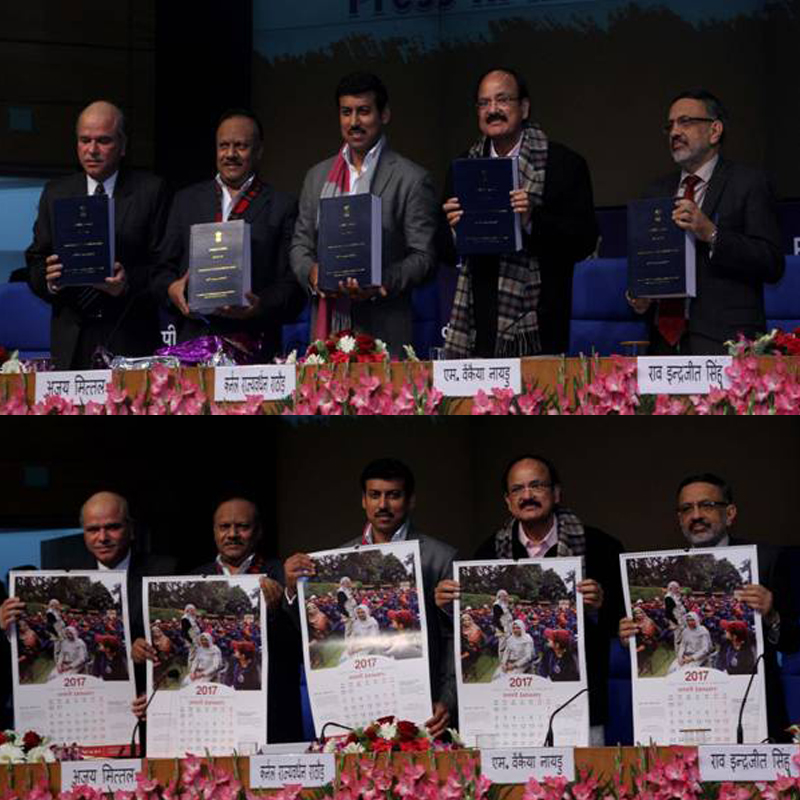
    Speaking after the release of the Government of India Calendar 2017, he lauded the growth of the Indian print media and said it continued its growth story at a steady rate of 5.13% over the previous year. Earlier, Naidu launched the Government of India Digital Calendar 2017 App. He added that the calendar App could be downloaded from Google Play store free of cost.

    A total of 5,423 new publications had been registered during the year 2015-16 with the total number of Registered Publications as on 31 March 2016 standing at 1, 10,851.

    Giving the Circulation-wise details, Naidu said that Hindi publications continued to lead with 31,44,55,106 copies per publishing day followed by English with 6,54,13,443 copies and Urdu with 5,17,75,006 copies per publishing day.

    He said the phenomenal growth of the print media sector had mandated changes in the print media policy/guidelines in the past years. The need to update policies keeping in mind the changing dynamics in the print media sector, has resulted in evolving a robust mechanism for RNI to maintain an updated list of Publications in the Country. This mechanism also facilitated weeding out illegal publications that may prove to be an irritant to law-enforcement agencies.

    Referring to the New Print Advertisement Policy framework, the Minister said that it provided for circulation verification Procedure for empanelment of Newspapers and Journals with DAVP. The procedure involved certification by RNI if circulation exceeds 45,000 copies per publishing day.

    He said the vision of the Government was to position the nation on a sustainable growth trajectory. The Government is committed to bring about transformational changes in the country with the mantra of ‘Reform, Perform & Transform’.

    The vision has been depicted in the Government of India Calendar 2017 with the theme “Mera Desh Badal Raha Hai, Aage Badh Raha Hai”.

    He also released the Press in India Report 2015-16 prepared by the Registrar of Newspapers of India. Minister of state for information & broadcasting Rajyavardhan Rathore was also present on the occasion.

    Naidu announced that the Government would be launching a 100 days campaign across the country on the theme of Good Governance from 25 December which marks the birthday of the former prime minister A B Vajpayee and is celebrated as Good Governance Day. Ministers, Members of the Parliament would be travelling across the country to highlight key initiatives of the Government that has been taken in the last two and a half years.

    The Government Calendar meanwhile showcases various flagship schemes and initiatives of the Government identifying a different theme every month:

    ·        Jan:     Skilling India for Youth Led Development

    ·        Feb:    Empowering the Poor

    ·        Mar:   Sashakt Nari, Sashakt Bharat

    ·        April: Futuristic India through Infrastructure Building

    ·        May:  MSME: India’s Economic Backbone

    ·        June: Farmers: Bread Winners of our Nation

    ·        July:   Rural Electrification: Lightning Every Home     

    ·        Aug:    Armed Forces: Pride of the Nation

    ·        Sept:   Cashless Transactions

    ·        Oct:     Swachh Bharat: New Vigour to Sanitation

    ·        Nov:   Corruption Free Governance

    ·        Dec:    Sugamya Bharat: Accessible India


    The highlights of the Press in India Report is given below:

    1

    The Total Number of Registered Publications

    i)       Newspaper category (Daily, Tri/Bi-weekly periodicities)

    ii)    Periodicals category (other periodicities)

    1,10,851

    16,136

    94,715

    2

    The number of new publicationsregistered during 2015-16

    5,423

    3

    Number of publications ceased during2015-16

                15

    4

    Number of publications  deregisteredduring 2015-16

                22

    5

    Percentage of growth of total registered publications over the previous year

    5.13 %

    6

    The largest number of publications registered in any Indian language (Hindi)

    44,557

    7

    The second largest number of publications registered in any languageother than Hindi (English)

    14,083

    8

    The State with the largest number ofregistered publications (Uttar Pradesh)

    16,984

    9

    The State with the second largest number of registered publications(Maharashtra)

    15,260

    10

    The number of  publications that submitted Annual Statements

    (This figure includes 1,341 Misc. publications)

    27,445

    11

    The total claimed circulation of publications during 2015-16

    i)       Hindi Publications

    ii)    English Publications

    iii)  Urdu Publications

    iv)  Marathi

    v)     Gujarati

    vi)  Telugu

    vii)  Odiya

    viii) Malayalam

    ix)  Tamil

    x)     Kannada

    xi)  Punjabi

    xii)                        Assamese

    xiii)                     Kashmiri

    61,02,38,581

    31,44,55,106

    6,54,13,443

    5,17,75,006

    3,67,88,737

    2,88,28,334

    2,76,45,134

    2,03,12,592

    1,55,57,673

    93,39,722

    64,85,082

    59,31,641

    13,90,759

    1,37,450

    12

    The largest number of publications that submitted Annual Statements in any Indian language (Hindi).

    14,316

    13

    The second largest number of publications that submitted Annual Statements in any language (English).

    2,174

    14

    The largest circulated Daily: “Ananda Bazar Patrika”, Bengali, Kolkata.

    11,50,038

    15

    The Second largest circulated Daily:“Hindustan Times” English, Delhi.

    9,92,239

    16

    The largest circulated Hindi Daily:“Punjab Kesari”, Jalandhar

    7,36,399

    17

    The largest circulated Multi-edition Daily: “Dainik Bhaskar”, Hindi. (45 editions)

    46,14,939

    18

    The second largest circulated Multi-edition Daily: “The Times of India”, English. (33 editions)

    44,21,374

    19

    The largest circulated Periodical: “The Sunday Times of India”, English/Weekly edition, Delhi.

    8,02,466

    20

    The largest circulated Periodical inMalayalam“Vanitha”,Malayalam/Fortnightly edition, Kottayam.

    6,94,291

    21

    Total Title Applications Received

    Titles Approved

    20,999

    12,817

    22

    Titles Deblocked during 2015-16

    (As they did not apply for registration within 2 years)

    7,754