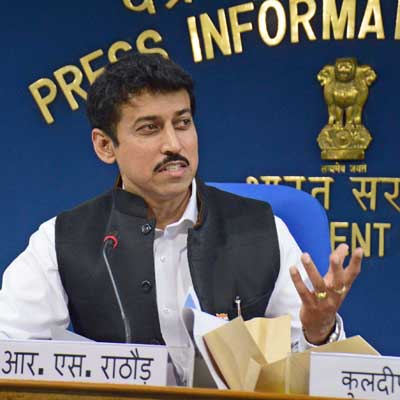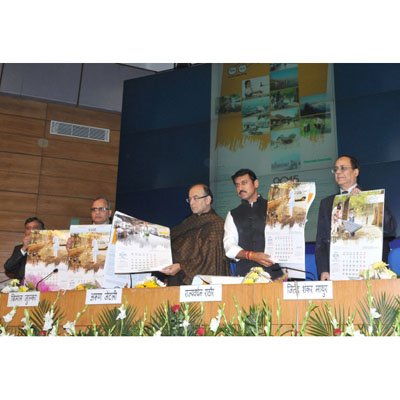
Tag: Rajyavardhan Rathore

  • FreeDish aims to reach 150 channels, earned Rs 3 bn in a year

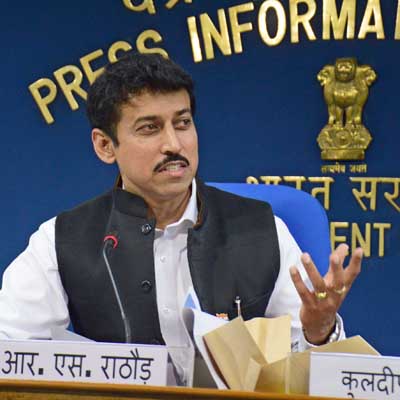
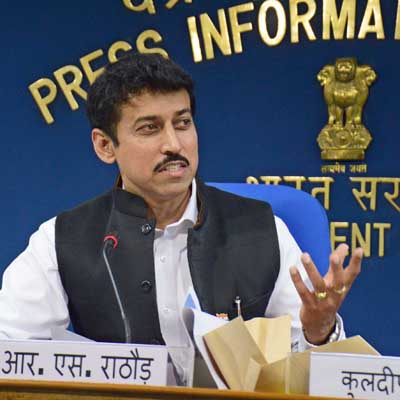
    NEW DELHI: Doordarshan earned revenue of Rs 2.5356 billion during 2016-17 from e-auctions of television slots on its free to air Free Dish direct-to-home platform. In comparison, DD had earned Rs 1.8034 billion in 2015-16, the minister of state for information and broadcasting Rajyavardhan Rathore told the Parliament.

    Rathore said the last e-auction – the 32nd e-Auction – on 14 February 2017 fetched Rs. 655 million. Despite the reserve price of Rs 48 million, the highest bid for a slot was Rs 73 million for Sony Pal.

    Meanwhile, Doordarshan sources told indiantelevision.com that FreeDish earned Rs 2.8665 billion through auction of 54 slots in six auctions from 30 March 2016 to 14 February 2017.

    Explaining the differential between the figure given by the Minister and that given by DD, these sources said as money was paid in installments within six months of the e-auction, the figure given in the Parliament was the money actually received.

    The reserve price in the first five auctions was Rs 43 million and was raised to Rs 48 million in the 32nd auction.

    A new era begun with the adoption of MPEG4 helping FreeDish take the first major step to mark towards its target of 104 television channels by March end with its 32nd e-auction which helped it cross the capacity of eighty channels. Having touched the figure of 104 with its 32nd Auction, DD is now holding another auction on 11 April in as part of its aim to reach the figure of 150 by the middle of the year.

    With this new leap, DD had also raised its reserve price to Rs 48 million per slot from the hitherto Rs 43 million for the mid-February auction. The reserve price had been Rs 37 million till 2015 but was raised to Rs 43 million for the 25th e-auction in January 2016.

    The e-Auctions are conducted by M/s. C1 India Pvt. Ltd., Noida which also conducted the FM Radio Phase III auctions on behalf of Prasar Bharati.

    Doordarshan had in October last year formally announced that FreeDish was capable of carrying 104 television channels and 24 channels would be added to the existing 80 channels after the launch of MPEG4 technology.

    In line with the ‘Digital India’ and ‘Make in India’, DD has decided to implement Indian CAS (iCAS) on DD FreeDish Platform. iCAS (which is an initiative of the central government) is being introduced in 24 MPEG-4 channels. The introduction of iCAS will provide enhanced viewing experience.

    DD officials said these additional 24 MPEG-4 SDTV channels will be available to viewers in FTA mode. The existing viewers will continue to get 80 SDTV channels, but will have to obtain iCAS-enabled authorised set-top boxes for accessing all 104 channels.

    Although FreeDish will remain free to air with no monthly or periodic fee, the viewers will be required to register with DD FreeDish on getting the new STB from Doordarshan authorised STB dealers. DD earned Rs 980 million in 2014-15, Rs 1800 million in 2015-16, and Rs 1040 million till September in 2016-17.

    FreeDish was launched with a modest bouquet of 33 channels in December 2004, and now carries eighty TV channels and 32 radio channels. This includes 22 Doordarshan channels and two parliamentary channels, seven general entertainment channels, 18 movie channels, 13 news channels, seven music channels, three religious channels and eight channels of other genres. All All India Radio stations also piggy-back on the platform.

  • Film piracy: Govt has no ‘losses’ figure, industry estimates Rs 180 bn a yr

    NEW DELHI: Even as the government said that no definite data was available on losses owing to piracy “if any”, the film industry had said in mid-2016 that the Indian film industry was losing $ 2.7 billion (Rs 180 billion) every year.

    Minister of state for information and broadcasting Rajyavardhan Rathore told the Parliament that the government ‘is aware that there are instances of piracy of films but these are subject matters of investigation by concerned investigating agencies of the respective state governments based on complaints by the concerned filmmakers’.

    The Copyright Act 1957 as amended in 2012 provides Civil Remedies [Chapter XII (Section 54-62)] as well as Criminal Remedies [Chapter XIII (Section 63-70)] to the Copyright holder and clause (c) of subsection (1) of Section 52 of the Copyright Act, 1957 read with the Rule 75 of the Copyright Rules, 2013 are the provisions of the Act which deal with piracy of films, he said.

    The loss due to piracy is said to be 35 per cent more than the $2 billion from legitimate sources such as screening at theatres, home videos and TV rights earned by the film industry which is the largest globally with some 1,000 movies produced each year.

    Motion Picture Distributors’ Association (India) MD Uday Singh had said in mid-2016 that content theft or piracy in the film industry originates from ‘camcording’ in cinema halls. Over 90 per cent of new release titles originate from cinemas. He claimed that the Indian film industry loses over 60,000 jobs every year because of piracy.

    The World Intellectual Property Organisation (WIPO) also quoted these figures of loss due to piracy quoting noted filmmaker Anurag Basu. While the Indian film industry is, indeed, flourishing, piracy points toward how much more its stakeholders can make, he said.

    Meanwhile, the KPMG in India-FICCI Report on Media and Entertainment presented at the FICCI FRAMES earlier this month said films grew at a crawling pace of three per cent in 2016.

    The segment was impacted by decline in core revenue streams of domestic theatricals and satellite rights, augmented by poor box office performance of Bollywood and Tamil films.

    Expansion of overseas markets, increase of depth in regional content and rise in acquisitions of digital content byover-the-top platforms are expected to be the future growth drivers that would help the segment bounce back at a forecasted CAGR of 7.7 per cent.

    However, factors such as dwindling screen count and inconsistent content quality could prove to be limiting factors.

  • Govt wakes up to broadcast tech changes, Prasar manpower audit under way

    NEW DELHI: Even as the government admits to shortage of staff in the public service broadcaster Prasar Bharati, there is a need to re-assess actual requirement of staff keeping in view changes in broadcast technologies.

    Minister of state for information and broadcasting Rajyavardhan Rathore told the Parliament that Prasar Bharati has been advised to carry out a Manpower Audit to identify posts actually needed to be filled up.

    However, he said that limited recruitment has been undertaken as a special dispensation through Staff Selection Commission for critical Group ‘B’ and ‘C’ vacancies which were revived by the Government. In addition, special recruitment drive for filling up of backlog vacancies of Persons with Disabilities has also been carried out in Prasar Bharati.

    No plans to regularise contractual workers

    In reply to another question, the minister said there was no plan at present to regularise contractual workers in Prasar Bharati, Doordarshan, or All India Radio. He said Prasar Bharati has 38, Doordarshan has 749 and AIR has 196 contractual workers.

    These contractual workersare engaged for various categories of work such as news dissemination, programme generation, legal assistance, marketing, computers/ IT consultancy etc, both for AIR and DD, according to requirement.

    The number of casual announcers and casual comperes in various stations of All India Radio is 9722 and 4108, respectively. The casual announcers and comperes are engaged by the stations on assignment basis for a maximum of 6 bookings in a month up to a maximum of 72 days in a year, solely to meet the requirement of adding variety and interest to the programmes for which engagement on regular basis is not justified/ needed.

  • Rs 125 million incurred on Film Heritage Mission this year

    NEW DELHI: A total of about 1,32,000 film reels have been acquired and the work of assessment, preventive conservation and restoration started under a mission mode project under the National Film Heritage Mission (NFHM).

    The scheme is to be implemented between 2014-15 and 2020-21 with total outlay of Rs 5.9741 billion to restore, digitize and archive films and filmic material through the National Film Archives of India.

    Of the outlay, Rs 126.6 million has been incurred till date during 2016-17. The expenditure incurred in 2015-16 was Rs 108 million and Rs 162 million in 2014-15.

    The minister of state for information and broadcasting Rajyavardhan Rathore said the NFAI has temperature and humidity controlled vaults for storage and preservation of film reels.

    The non-filmic ancillary material, such as photographs, song booklets, posters, films magazines, etc. are stored under temperature controlled environment.

    Some of the objectives of the NFHM include:

    i. To undertake film conservation assessment.
    ii. Preventive conservation of film reels.
    iii. Picture and sound restoration of landmark feature films and short films.
    iv. Digitization of feature films and short films.
    v. Construction of archival and preservation facilities for material restored under NFHM.
    vi. Conducting training workshops and courses in field of conservation, preservation and archiving.

  • No middlemen in film certification process anymore

    NEW DELHI: The Indian Government has said that it has obviated the role for intermediaries/ agents in the existing as well as new online certification system.

    Minister of state for information and broadcasting Rajyavardhan Rathore has told the Parliament that the online system is user-friendly, and will be accessible to all the applicants.

    The Central Board of Film Certification (CBFC) certifies films in accordance with Cinematograph Act, 1952 and the Rules and the Guidelines made thereunder.

    CBFC is in an advanced stage of setting up the online film certification system which is likely to be made operational very soon.

    (Meanwhile, the government is still studying the two reports on film certification submitted by the Shyam Benegal Committee, a ministry source told indiantelevision.com.)

  • Photographs with social media become powerful tools for Information: Naidu

    Photographs along with Social Media had been a potent combination in today’s digital world as influential mediums to spread awareness and ensure Good Governance, Information and Broadcasting Minister M.Venkaiah Naidu has said.

    The ‘Selfie with Daughters’ campaign launched by Prime Minister Narendra Modi came out to be a powerful instrument of social change. This way of posting photos created a powerful impact on societal behaviour and ingrained cultural traditions.
    The Minister was speaking at the 6th National Photography Awards ceremony here, in the presence of Minister of State for I and B Rajyavardhan Rathore and Ministry secretary Ajay Mittal.

    On the role of fast changing technology in communication domain, Naidu said the Internet had brought out the resurgence of visual image into our everyday communication. Digital cameras and cell phones with integrated cameras have generated an explosion of images into everyone’s lives. Social Media has provided a new platform to people to Share, Communicate and inform through photographs.

    Naidu conferred the Life Time Achievement Award to eminent photographer Raghu Rai, Professional Photographer of the year award to K K Mustafah and Amateur Photographer of the year award to Ravinder Kumar.

    The theme for this year’s awards for Professional category was “Skilled India”, while in the Amateur category the topic was “Swatch Bharat”.

  • Audo-visual, electronic media greatest beneficiary of Govt ads in 2016-17

    NEW DELHI: A sum of Rs 5.0983 billion was spent on government advertisements through the audio video and electronic media.

    Giving figures of 2016-17 until 17 March 2017, Parliament was told today by Minister of State for Information and Broadcasting Rajyavardhan Rathore that in comparison, a sum of Rs 4.2377 billion was spent on the print media.

    A total of Rs 1.3291 billion was spent on Advertisement Boards / Outdoor Publicity.

    Advertisements are given out through agencies accredited with the Directorate of Advertising and Visual Publicity.

    Advertisements were given out to the electronic media on behalf of 65 departments or programmes of the government, with the largest being spent on Department of Drinking Water Supply – just over Rs 1.336 billion.

    In comparison, 415 different government ads were given to print media, and 35 ads went to outdoor publicity.

  • 28 complaints against 12 TV channels about reality shows since 2006

    NEW DELHI: Twelve television channels have faced action from the Information and Broadcasting Ministry for 28 complaints relating to reality shows since 2006.

    Parliament was told by Minister of State for Information and Broadcasting Ministry Rajyavardhan Rathore today that in addition to the above, two advisories were issued – one relating to depiction of cruelty to animals, and the other about quiz-based reality shows – to all television channels in 2011.

    Interestingly, there has been no complaint against any TV channel wth regard to violation of Programme or Advertising Codes after January 2015.

    The channels were either warned or issued advisories, asked to run an apology scroll for a fixed period, or shift the programme to after 11.00 pm.

    Colors leads the list with six complaints of which five relate to different seasons of Bigg Boss. The sixth related to Khatron ke Khilari.

    Bindass comes next with four complaints, followed by three complaints each against MTV, Channel (V), and Sony TV. There were two complaints relating to Star One and Zee Telugu, and one each against Star Plus, Real TV, NDTV Imagine and Imagine TV.

  • Automatic renewal of TV channels subject to fee and ten-year validity

    NEW DELHI: The Government, which had said that payment of annual permission fee sixty days before the due date will by itself be sufficient permission for continuation of a channel for a further period of one year, has clarified that all the TV channels and Teleports are likely to benefit from this decision provided the validity of 10-year permission is available.

    Minister of State for Information and Broadcasting Rajyavardhan Rathore said that broadcasters which hold valid permission for uplinking and/or downlinking will not be required to obtain annual Renewal Permission from the Ministry in conformity with the policy guidelines for uplinking and downlinking of TV channels.

    He told Parliament that the Ministry had taken initiatives to promote the ease of doing business in view of commitment to the vision of the Government and Prime Minister:

    The Government had also done away with the restrictions imposed under clauses 2.1.4 and 3.1.15 of the Uplinking Guidelines dated 5 December 2011 and clause 1.10 of the Downlinking Guidelines dated 5 December 2011 regarding appointment at top management position with minimum 3 years of prior experience in a media company (media companies) operating News/Non-News and Current Affairs TV Channels. .

    It has also been decided that in view of the exemption mentioned in Master Circular of RBI dated 1 July 2014, regarding the Exchange Earner’s Foreign Currency (EEFC) account holders, the broadcasters and Teleport Operators who have EEFC account, may now make payment in foreign exchange towards availing transponder services on foreign satellite for uplinking of TV channels/Teleports/DSNG Vans, to the Satellite service providers without approval of the Ministry.

  • Present mechanism to check TV content is adequate, says Rathore

    NEW DELHI: Noting that the present mechanism for checking content of private television channels is considered adequate, the minister of state for information & broadcasting Rajyavardhan Rathore has said “there is no need to clarify the restrictions on right to freedom of speech and expression guaranteed under the Constitution in so far as the issues of national security and interests are concerned.”

    In a reply in the Parliament, Rathore said the Programme and Advertising Codes and the Inter-Ministerial Committee (IMC) set up in the Ministry to look into specific complaints or suo-motu take cognizance against the violation of Programme and Advertising Codes are sufficient. The IMC functions in a recommendatory capacity. The final decision is taken by the competent authority based on the recommendations of IMC.

    He said that under the existing regulatory framework, all programmes and advertisements telecast on private satellite TV channels and transmitted/re-transmitted through the Cable TV network are required to adhere to the Programme Code and Advertising Code prescribed under the Cable Television Networks (Regulation) Act, 1995 and Cable Television Network Rules, 1994 framed thereunder.

    The Act does not provide for pre-censorship of any programme or advertisement telecast on such TV channels. These Codes contain a whole range of parameters to regulate content on such TV channels.

    Rule 6(1)(p) of the Programme Code provides that “No programme should be carried in the cable service which contains live coverage of any anti-terrorist operation by security forces, wherein media coverage shall be restricted to periodic briefing by an officer designated by the appropriate Government, till such operation concludes. It is clarified that “anti-terrorist operation” means such operation undertaken to bring terrorists to justice, which includes all engagements involving justifiable use of force between security forces and terrorists”.

    The Constitution allows State to impose reasonable restrictions on Freedom of Speech and Expression guaranteed under Article 19(1)(a) on grounds of sovereignty and integrity of India, security of the State, friendly relations with foreign States, public order, decency, morality, or in relation to contempt of Court, defamation or incitement to an offence, as laid down under Article 19(2) of the Constitution.

    Similarly reasonable restrictions can be imposed under certain situations on the freedom to practice any profession, business, etc. under Article 19(1)(g). This spirit of the Constitution is also reflected in the Cable Television Networks (Regulation) Act, 1995, which while upholding the freedom of Electronic Media imposes reasonable restrictions in public interest.