Tag: Rajyavardhan Rathore

  • MIB’s new secy Amit Khare joins office

    MIB’s new secy Amit Khare joins office

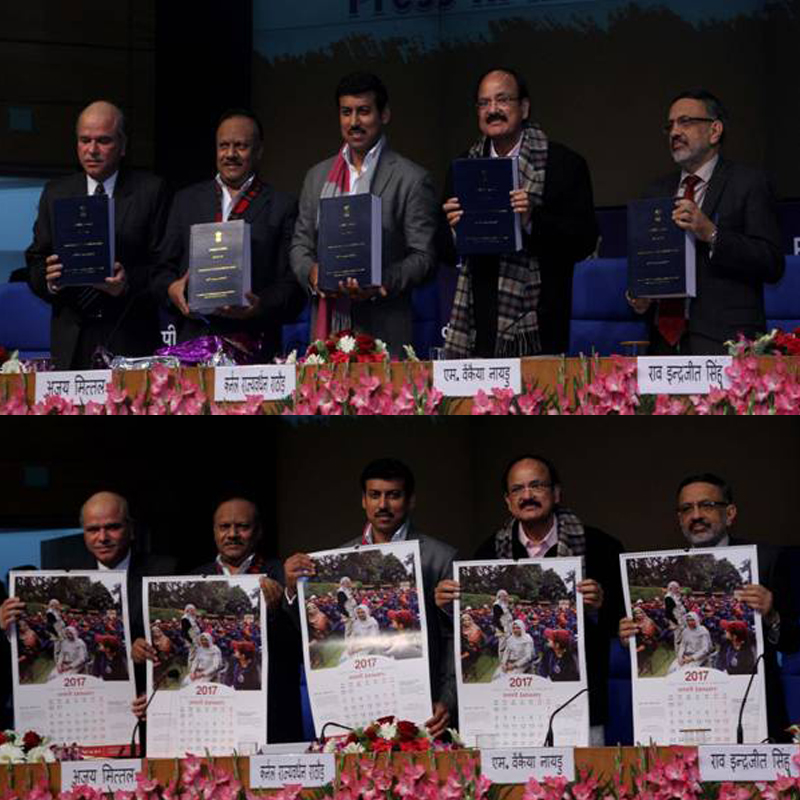
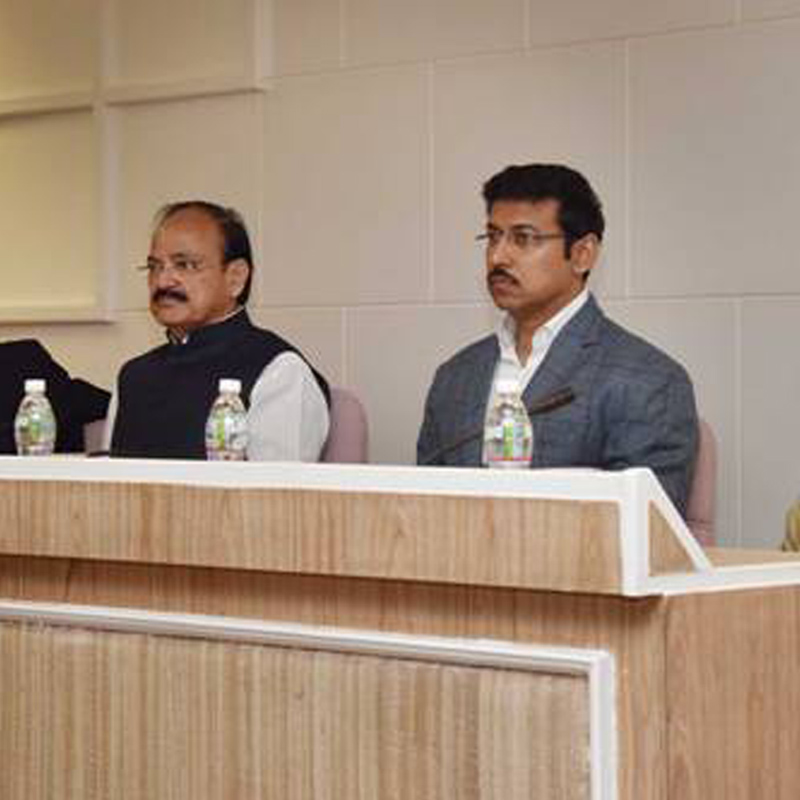
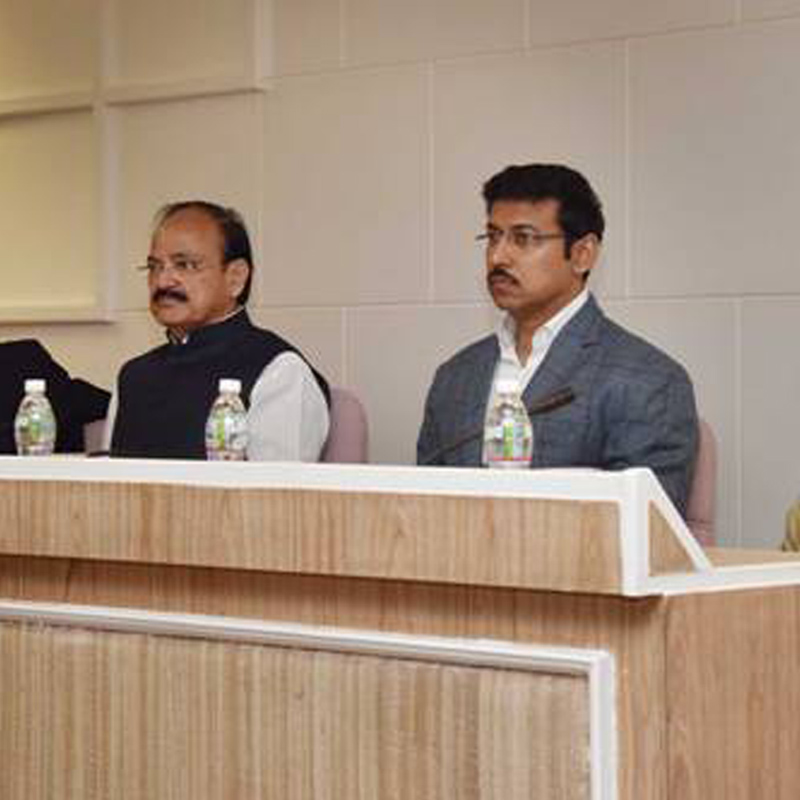
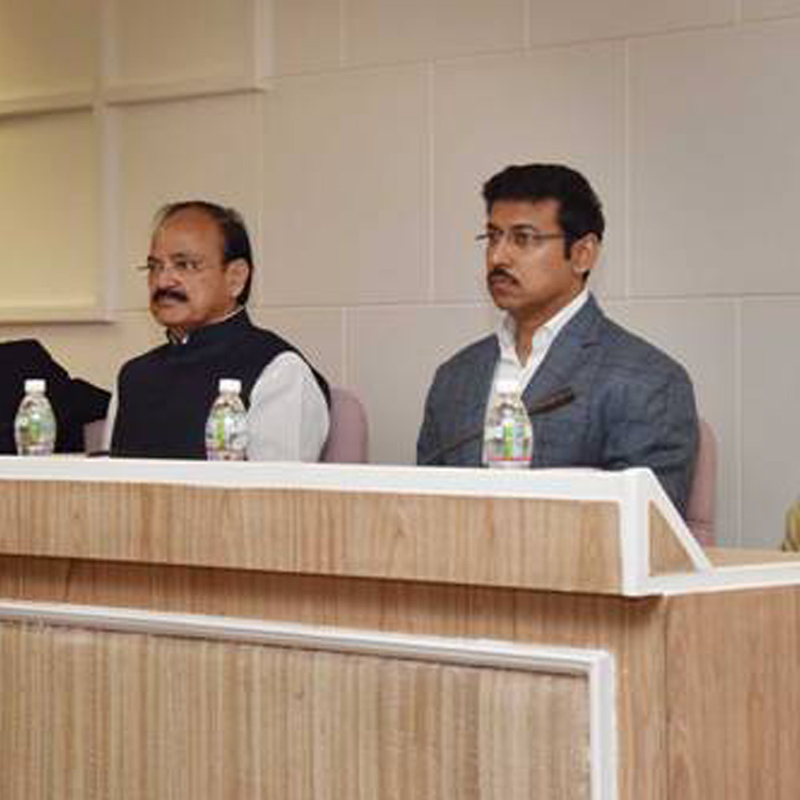
    NEW DELHI: In what could be termed as challenging times, Amit Khare (third from left in the pix) yesterday assumed charge as secretary in the Ministry of Information & Broadcasting on superannuation of Narendra Kumar Sinha.

    Khare is a 1985 batch Indian Administrative Service officer and was posted at a senior level in the state of Jharkhand before he was nominated to take over from Sinha at MIB. Considered an upright civil servant, he is credited for unearthing the multi-million-dollar fodder scam two decades ago in Bihar for which some powerful politicians, including former Bihar chief minister Lallu Yadav, and senior officials have been handed jail sentences of varied time period.

    Some of the issues that would need Khare’s immediate attention, as also his boss MIB minister Rajyavardhan Rathore, include putting in motion the process of quick decision-making at this important ministry, which is responsible for policy-making and their implementation for multi-billion dollar sectors of television, radio, films and advertising.

    With the media and entertainment industry undergoing changes with the arrival of newer technologies, like online distribution of content of all types, MIB needs to keep pace without upsetting the ecosystem that has been reeling under the impact of a sluggish economy and after effects of several other financial policies taken over the last 24 months by the government.

    To give some momentum, Khare would need to hit the road running working along with sector regulator TRAI that has made several recommendations relating to policies, which are yet to be acted upon by MIB, apart from working with the regulator on guidelines that could be in the offing, including uplink and downlink guidelines, DTH licencing norms, online content regulation, removal of bottlenecks in the film sector on opening up more screens and cajoling sister government organisations like Department of Space to have a more liberal approach. Not to mention soothe ruffled feathers at pubcaster Prasar Bharati.

    Media reports have indicated that in the last nine months, inaction had come to such a head at MIB that inter-departmental power games stalled a decision on over 100 applications for new TV channels. It was only about 10 days back that some channel permissions were processed and conveyed to stakeholders.

    During a career span of more than 33 years, Khare has held various field postings and worked at both the state and federal levels.

  • Comment: 3 areas that new MIB minister Rathore needs to target

    Comment: 3 areas that new MIB minister Rathore needs to target

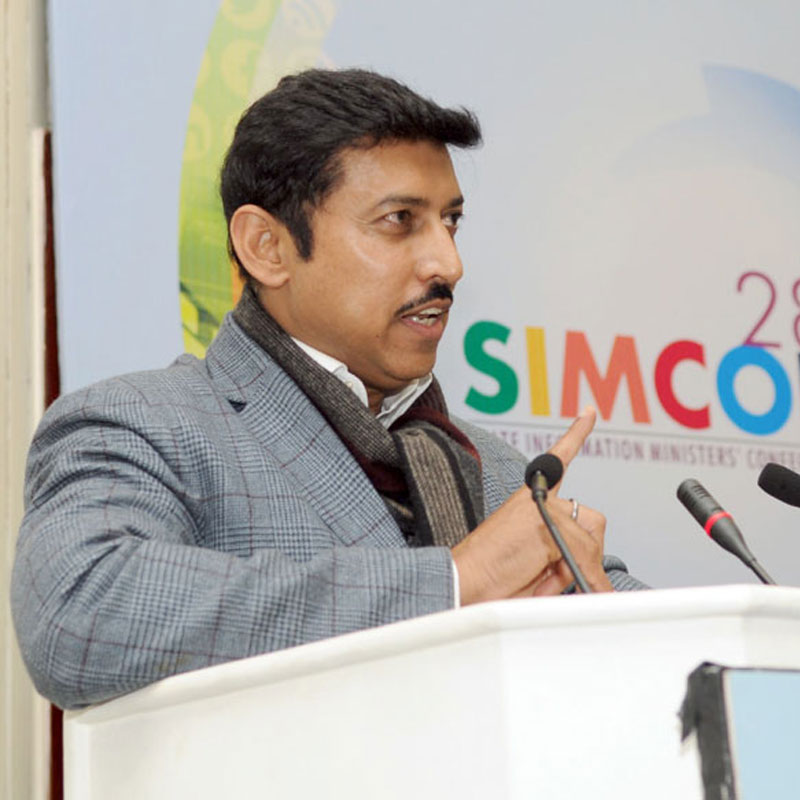
    In a recent reshuffle of his cabinet colleagues and their portfolios initiated by PM Modi, a surprise move was not Ministry of Information and Broadcasting (MIB) minister Smriti Irani’s removal, but handing the independent charge of the portfolio to her till-now junior, Rajyavardhan Rathore.

    There is some merit in giving Rathore full responsibility of MIB, which was conceptualised by the nation’s founding fathers to be the government interface with the media and public, in general. That MIB could have lost its relevance in this digital age – an issue being debated in certain quarters – is another story altogether for some other time. Why Rathore at the helm of MIB seems just what the doctor advised?

    First, he is young and suave. Second, he comes with a good pedigree of being an army officer and an Olympic medalist. Third, he’s comparatively young and has built a youth and people-friendly image, apart from his work as independent charge holder at Ministry of Youth Affairs and Sports – his latest initiative on Twitter, #HumFitTohIndiaFit , aimed at encouraging fitness by inviting celebs is already a hit on social media.

    As Rathore has served as a junior MIB minister long enough to get to know the complex issues that come with the terrain, it is expected that he is best suited to address the challenges being faced by the media industry. But for that, he needs to aim at the following three areas and hit the bull’s eye.

    Content Regulation

    The previous MIB minister waded into controversies because of her largely perceived unpopular move to create a panel in April this year to explore regulations for online media/news portals and online content. It did not help her or the government’s cause as this announcement, though being hinted at for several months, came close on the heels of a widely protested move to cancel the accreditation of journalists if found peddling fake news, while the government did not define clearly what constituted a fake news. Though the order was rescinded at the behest of the PM’s Office, the online content committee lingers on directionless and with nobody willing to father the baby presently. That this move antagonised not just online journalists, but also social media players (many of whom are backed and funded by government’s sympathisers) and video-on- demand portals is a story in itself.

    Rathore knows media in India enjoys certain constitutional freedoms, including the right to exercise freedom of speech and expression. Therefore, any move targeted at “regulating” such content shall only be interpreted as silencing criticism. That the online committee is packed with government officials with minuscule industry representation and zero presence of online media raises questions on government’s motives.

    What’s more, doubts have also been raised on the jurisdictional propriety of MIB to create such a committee in the first place. The government allocation of business rules that determine the remit of various government agencies clearly highlights that for all “policy matters relating to information technology; electronics; and Internet” only Ministry of Electronics and IT (MeITY) is competent to make decisions. The ambit of MIB is limited only to “the enunciation and implementation of the law relating to radio and television broadcasting in India by private Indian companies or Indian nationals”.

    With multiple laws applicable on online content, there seems to be no need of any additional regulation for online content, though MeITY could think otherwise, but it’s for it to take a call. Still, a self-regulating mechanism that places uniform standards over user-generated content platforms and video-on-demand portals is the need of the day. This shall also be in line with Rathore’s views expressed after assuming full charge at MIB where he stressed upon self-regulation as the only means of regulating media.

    As the final authority at MIB now, Rathore needs to walk the talk on online content regulation and, probably, let the committee set up by his predecessor die a natural death.

    Online content aside, in the world of traditional broadcasting there is a need to strengthen the already established self-regulatory mechanisms such as the Broadcasting Content Complaints Council (BCCC) of the IBF and a similar self-regulatory set-up of the NBA India.

    Ease of Doing Business

    It would be an understatement to say that the past year has been a difficult period for the Indian media and entertainment (M&E) sector what with after-effects of demonetisation of high-value currency notes and a new tax regime of GST rolled out last year. The story remains the same for ease of doing business in the sector as well.

    On this aspect, Rathore could focus on the recommendations made by Telecom Regulatory Authority of India (TRAI) on`Ease of Doing Business in Broadcasting Sector’ and implement them in letter and spirit.

    A unilateral decision by the previous leadership of MIB to impose a processing fee of Rs 100,000 per day/channel on temporary live uplinking of events (such as sports) and the same amount for seeking minor amendments (like change in name, logo, etc) has been causing heart burns.

    What was the rationale behind such moves to review processing fees? Allegedly non-revision for several years and that such a move could bring in some revenue for the government. But, should a government use licensing/permission fee as means of revenue maximisation? Probably, no.

    Another issue that demands attention from Rathore is the denial of permissions by DoS to satellite TV channels using private satellite capacity, especially foreign. Here, the newly appointed minister shall have to display his trademark leadership and try to resolve the concerns of his constituents (TV channels, DTH operators, teleport operators, etc) vis-a-vis DoS.

    Building an Investment Friendly Environment

    In the recently held global Asia Media Summit 2018 in New Delhi, PM Narendra Modi said that Asia has emerged as a promising region for media businesses and offers opportunities for international cooperation. This statement highlights his government’s push for increasing investment inflow across sectors of the Indian economy – including creative industries such as M&E.

    In this respect, Rathore will have to hit the road running — which he has done — and look at all the factors impeding investments in the sectors under him. This could necessitate reviewing licensing conditions and guidelines, which many in the industry believe hamper investments.

    Can Rathore bite the bullet and recreate the magic that he unveiled one fine day years back to get India the first Olympic medal in an individual event? Certainly, he can. Keep tuned in for the next episode.

    Also Read :

    MIB clears TV channel applications; Rathore calls for stakeholder meets

    Comment: India’s NTP 2018 gets digital makeover but needs complimentary policies

    Comment: MIB’s botched whip on fake news akin to testing waters

    M&E to add 1 mn jobs in 5 years: Sudhanshu Vats

  • MIB clears TV channel applications; Rathore calls for stakeholder meets

    MIB clears TV channel applications; Rathore calls for stakeholder meets

    NEW DELHI: Within days of Rajyavardhan Rathore given independent charge of the Ministry of Information and Broadcasting (MIB) by the PM Modi-led government after removal of his senior Smriti Irani, the organisation has been galvanised into action. What’s more, important issues are being discussed, including clearances of three new TV channel applications and meetings being called with broadcast industry stakeholders to debate matters like use of foreign satellites versus Indian ones.

    The three TV channels that have been reportedly given initial government go-ahead — further processes like bank guarantees, etc need to be completed — include Aastha Kannad, Aastha Tamil and Aastha Telugu. All these channels are Indian language off-shoots of the religious product Aastha network that at present broadcasts in Hindi.

    Though critics may say the government has given the nod to three TV channels in South Indian languages belonging to Vedic Broadcasting Ltd (VBL), which is controlled by Yoga guru`Patanjali’ Ramdev’s close associate Acharya Balkrishna and considered close to the present BJP-led government in New Delhi, independent observers feel at least MIB has started taking a stand on applications, a process that was halted for the last nine months or so for various reasons.

    Media industry sources indicated that over 100 applications for TV channels are pending at MIB. And, such applications include ones from big and small broadcast companies.

    VBL is controlled by majority shareholder Balkrishna, who, along with Ramdev, bought it in 2011 from the people who had started a religious TV channel few years back airing yoga shows, religious sermons and some cultural programmes.

    When VBL is searched on Google, one is taken to www.acharyabalkrishna.com where it is indirectly stated that Balkrishna is the managing director. It is further stated: “Vedic Broadcasting Limited is also part of his vision. It [’s a] pioneer & leading socio-cultural network in India. Astha & Astha Bhajan Channel is propagating Indian culture and heritage, Health, Ayurveda, Education, Yoga, Values and Morals, Devotional songs, Spiritual meetings, talks, etc. The channels are available globally covering the continents of Asia, Africa, Australia, Europe and North America (USA & Canada), thus, enabling global organisations an opportunity to reach followers and other viewers worldwide.”

    Meanwhile, both government and industry sources indicated that MIB, under Rathore, is attempting to be a breath of fresh air, if not completely turn over decisions taken earlier under Irani. One such step in that direction was to start convening meetings with TV channels and their holding companies in an attempt to try to address some of the concerns.

    In one such meeting held this week, the representatives from the broadcasting company owning and operating over 30 TV channels in India were asked about their concerns. Also present were government officials from Department of Space and Indian space agency ISRO.

    When the issue of migration to an Indian satellite from foreign ones was brought up by the TV channel reps in the meeting, it was conveyed to them politely that it would be in the national interest to do so, though those having existing contracts could be allowed, in all probability, to go through with contractual obligations.

    One of the concerns relating to leasing space on foreign satellites is that ISRO, according to industry sources, was unwilling to come forth with data on disaster and backup management in case an Indian satellite, through which a TV channel is beaming, for example, sputtered or developed some snag.

    The sources said that more such meetings are in the pipeline with other broadcasting companies.

  • Amit Khare appointed as new MIB secretary

    Amit Khare appointed as new MIB secretary

    MUMBAI: Jharkhand state development commissioner and a whistle-blower civil servant Amit Khare has been named as the new secretary of the Ministry of Information and Broadcasting (MIB). He will take over from NK Sinha who is due to superannuate on 31 May 2018 after a comparatively quiet stint of approximately nine months at a high profile ministry that has constantly remained in the news after finance minister Arun Jaitley gave up the MIB portfolio in 2016 to concentrate on India’s economy.

    The announcement regarding MIB and Khare came on Friday as part of a big bureaucratic reshuffle initiated by the government that is now gearing up for general elections either late this year or first half next year as its five-year term in New Delhi officially comes to an end in May 2019.

    Khare is a 1985 batch Indian Administrative Service officer and is presently serving in Jharkhand. Considered an upright civil servant, he is credited for unearthing the multi-million dollar fodder scam two decades ago in Bihar for which some powerful politicians, including former Bihar chief minister Lalu Yadav, and senior officials have been handed jail sentences of varied time periods.

    Meanwhile, media industry observers hoped that with Khare’s arrival next month and junior minister Rajyavardhan Rathore entrusted with independent charge of MIB last week, some freshness and action would also arrive at the ministry, which has been under fire in recent months for not only taking controversial policy decisions (one of them relating to regulation of fake news being rolled back after PM’s Office intervened), but also angering its own foot soldiers or the Indian Information Service officials by arbitrary transfer postings and allegedly bungling on a film award event where the president of the country was to be present.

    A senior TV executive on condition of anonymity said both Rathore and Khare would hopefully end power games within MIB and actually work to live up to PM Modi’s claims of easing norms for doing business in India; especially as the media industry has been straining to get some helping hand from the government in difficult economic times when the sector is still in the process of recovering from after-effects of demonetisation of high value currency notes in 2016 and a new tax regime of goods and services tax of 2017.   

    Rathore’s senior Smriti Irani, a former TV actress who was handed the dual charge of MIB along with textiles ministry almost a year back, has somehow been in the news for wrong reasons and was divested of the portfolio last week when the Prime Minister initiated a reshuffle of his cabinet colleagues.

    Broadcast industry has been complaining of arbitrary policy decisions being taken by MIB under Irani, including attempts at creating artificial entry-level barriers by insisting on TV channels shift to Indian satellites from foreign ones and hiking administrative processing fees many folds. Industry organisation Indian Broadcasting Foundation recently petitioned the PM’s Office drawing attention to the likely ill-effects on the industry if certain norms regarding uplinking and downlinking, being debated at MIB and regulatory body TRAI, came into force.

    Media reports have also indicated that in the last nine months inaction had come to such a head at MIB that inter-departmental power games had stalled a decision on over 100 applications for new TV channels, apart from other sundry issues. So, media industry stakeholders expect a breath of fresh air to blow in the corridors of New Delhi’s Shastri Bhawan, which houses the MIB along with some other ministries, with Rathore-Khare duo taking charge.

    Earlier this week, Vikram Sahay was appointed as a joint secretary in the MIB.

    ALSO READ:

    Smriti Irani moved out of MIB as Rajyavardhan Singh Rathore gets independent charge

    MIB moves to regulate online media: various organisations join issue   

    PMO directs MIB to withdraw guidelines on fake news

    Time to have rules ensuring no one player dominates media: Smriti Irani

    Smriti Irani exhorts DD to leverage reach better

  • MIB says ISRO upping capacity to facilitate migration from foreign satellites

    MIB says ISRO upping capacity to facilitate migration from foreign satellites

    NEW DELHI: The Indian government has admitted that inadequate capacity on Indian satellites has compelled domestic direct to home (DTH) operators to use a large number of transponders on foreign satellites and that India’s space agency Indian Space Research Organisation (ISRO) is gearing up to meet growing demands owing to proliferation of HD TV channels.

    “Presently DTH services are being supported by 42 transponders on indigenous satellites (INSAT/GSAT) and about 69 transponders on foreign satellites. There is a registered demand of additional about 64 transponders for immediate future,” junior minister at Ministry of Information and Broadcasting (MIB) Rajyavardhan Rathore informed fellow parliamentarians in Lok Sabha or the Lower House of Parliament recently.

    Without stating it in so many words though, Rathore said that as ISRO increases its satellite capacity to be able to meet the demands of Indian DTH operators, a migration from foreign satellites would become a reality — a move that MIB and Department of Space are slowly implementing to nudge users of satellite services, especially TV channels, to move away from non-Indian birds.

    “It is expected that over a period of next three years adequate capacity would be added through Indian satellites to facilitate migration of foreign capacity to Indian [satellite] capacity,” the minister said, adding, according to Telecom Regulatory Authority of India (TRAI) data, there has been a significant growth in the number of high definition (HD) satellite TV channels. The number has grown from three in 2010 to 83 in 2017.

    Dwelling on TRAI’s recommendations on sharing of infrastructure on a voluntary basis, Rathore clarified that till date MIB has not received any proposal from DTH operators for sharing of satellite transponders and earth station facilities with another such player or distribution platforms. “Enabling sharing of infrastructure may address the issue of demand-supply mismatch and reduce capital and operating expenditure of the service provider to an appreciable extent,” he added.

    Meanwhile, addressing another set of queries raised by parliamentarians relating to DTH, the minister said a total number of 1922 complaints/grievances against private DTH service providers were received through monitoring systems of the government and TRAI over the last three years on various issues ranging from technical/financial/policy matters to delay or improper installation, malfunctioning of STBs, issues of interoperability, disruption of signals during bad weather, improper billing, channel packaging, FTA channels, etc. As many as 1811 complaints were addressed by MIB till date.

    As soon as complaints are received, they are brought to the attention of the DTH operator concerned and later a follow-up action too is undertaken to evaluate compliance and whether the problems were resolved or not, the minister explained.

    According to the minister, sector regulator TRAI had issued last year a set of tariff guidelines to boost healthy competition among DTH service providers and bring down the subscription prices for consumers. The guidelines were legally contested by some stakeholders and are awaiting judicial advice, he added.

    ALSO READ:

    MIB admits no DTH infra sharing permission sought

    MIB, DoS nudge TV channel to use Indian satellites

    MIB to collect data on satellite capacity needs, digital chatter

    MIB, TRAI allay industry fears on sat capacity leasing & content regulations


  • MIB admits no DTH infra sharing permission sought

    MIB admits no DTH infra sharing permission sought

    NEW DELHI: Despite the initial hype and enthusiasm over infrastructure sharing by broadcast, cable and satellite-delivered service players (such as DTH operators) and lengthy suggestions on the subject by the Telecom Regulatory Authority of India (TRAI), the government has admitted no stakeholder has evinced interest so far.

    “Ministry of Information and Broadcasting has not received any proposal from DTH operators for sharing of satellite transponders and earth station facilities with other DTH players and distribution platforms,” junior MIB minister Rajyavardhan Rathore told the Indian Parliament last week.

    Pointing out that sector regulator TRAI had made recommendations in March 2017 on infrastructure sharing by broadcast and cable sector players, the minister admitted that enabling sharing could address the issue of the demand-supply mismatch. Such a sharing could also “reduce capital and operating expenditure” of a service provider to an appreciable extent, Rathore added.

    TRAI had made suggestions on the hows and whys of infrastructure sharing, especially by DTH players, and had also exhorted the government to tweak policy guidelines to enable such sharing.

    “To enable [the] sharing of the DTH platform and transport streams transmitted on the DTH platform, the authority recommends that the guidelines for providing DTH services should be suitably amended,” TRAI had noted while making recommendations on infrastructure sharing.

    A decision to review the DTH policy guidelines is pending with the MIB with no firm decision on it being taken yet, if industry sources are to be believed, who also pointed out that the ministry may be readying files to refer the issue to the Ministry of Law and Justice for an opinion—a move that could be time consuming. The lack of a policy review has resulted in several glitches hitting DTH operators in India.

    TRAI had suggested that to ensure efficient use of scarce satellite resources, DTH operators—which have already set up earth stations and hired satellite transponder capacities, and willing to share the platform and transport stream of TV channels—should be allowed to do so with prior written intimation to the government.

    Amongst other recommendations of TRAI on sharing of infrastructure by DTH and distribution platforms, the following are noteworthy:

    — The central government should encourage sharing of infrastructure, wherever technically feasible, in TV broadcasting distribution network services on a voluntary basis.

    — To allow a new DTH operator to use the existing DTH platform and transport streams of TV channels transmitted on that platform, the conditions relating to hiring of satellite capacity and setting up of an earth station should be amended suitably.

    — A DTH operator, providing DTH services using the shared infrastructure with another DTH operator, should be allowed to establish, maintain and operate its own platform at a later date within the licence validity period if it decides so after following the due procedure.

    — An easier process should be put in place to ensure continuity of services to subscribers in the event of any disaster. One of the way in which it could be ensured is sharing of the main and the disaster recovery site in hot standby mode with the prior approval of the licensor.

    — The DTH operator, willing to share its transport stream of TV channels with another DTH operator, should ensure that the other DTH operator has valid written interconnection agreements with broadcasters concerned for distribution of pay TV channels to the subscribers.

    — On a voluntary basis, sharing of head-end used for cable TV services and transport streams transmitting signals of TV channels, among MSOs, should be permitted.

    Also Read :

    Law ministry likely to give opinion on DTH guidelines review 

    DTH’s year of consolidation

  • MIB has no data on OTTs; not under regulation: Minister

    MIB has no data on OTTs; not under regulation: Minister

    NEW DELHI: The government on Thursday while admitting it has no official data relating to OTT industry, including number of players and subscribers, said the Ministry of Information and Broadcasting (MIB) doesn’t regulate internet-based video services.

    “MIB does not regulate paid streaming and video-on-demand services provided over the internet. However, there are enough safeguards available under the Information Technology Act, 2000, which is administered by Ministry of Electronics and Information Technology (MEITY), for content appearing on paid streaming and video-on-demand services,” MIB junior minister Rajyavardhan Rathore informed Indian Parliament’s Lower House or Lok Sabha. 

    The government stand is significant because increasingly voices of criticism were being heard from the conservative section of society questioning edgy content on OTT platforms that technically don’t have to follow any content code like done by linear TV, which also broadly follows guidelines on content as enumerated in the Cable TV Act 1997, apart from imposing self-regulations administered by industry bodies like NBA and IBF.

    With original shows and serials on OTT platforms operating in India increasing by the day — egged on by global and domestic players like Netflix, Amazon, Hotstar, VOOT and Arre  — the fledgling industry segment has given content producers a platform where out-of-the-box themes are being tested and tried.

    According to Rathore, who was answering a series of questions on the country’s OTT services, there were no official figures available with the ministry.

    However, MIB quoted Frost & Sullivan to state it is estimated there were around 70 million unique connected viewers of which 1.3 million were paid video subscribers.

    While not directly stating whether the government proposed any content regulations for OTT platforms, Rathore clarified that IT Ministry was empowered to block and/or censure content and its distributors on several grounds, including those relating to security of the country, foreign relations and pornography.

    As of now OTT platforms in India could breathe easy as regulator TRAI, too, has not issued any guideline relating to OTT content preferring to restrict its diktat on the telecoms side of net neutrality. Still, many OTT platforms, some of which are digital extensions of traditional TV services owned by big broadcasting companies, prefer to do self-censorship on edgy content in shows like the Game of Thrones.

    ALSO READ:

    TRAI releases recommendations on net neutrality 

    Regional OTT content more than just catch-up TV    

    Can OTT players leverage market opportunities & rationalize rising content costs?

  • Smriti Irani: Need to reduce gap between regional & national news & democratize viewership

    Smriti Irani: Need to reduce gap between regional & national news & democratize viewership

    NEW DELHI: Stressing on the need for a model structure of broadcasting, which can strengthen the Indian democracy, Minister for Information and Broadcasting Smriti Irani yesterday exhorted the media to reduce the gap between regional and national news, thus democratizing viewership, and the need for meeting objectives of public good and entertainment.

    “If we want the broadcasting landscape to be strong, the first and the foremost requirement is to give as much importance to the regional content as the national content…(and) reduce the gap between the regional news and  national content,” Irani said yesterday while delivering the Sardar Patel Memorial Lecture 2017 themed ‘Model of Broadcast: Landscape for Democracies’.
     
    Describing the broadcast news landscape as a “spectator sport”, the minister said the rush for audience ratings has reduced everything to “headlines competing with hashtags” in the wake of social media explosion taking place in the country that has provided a new pathway for information dissemination.

    Coming down heavily on a certain section of the media for being driven by TRPs, forsaking codes, ethics and conduct rules, unlike another section, Irani said, ”There is a need to democratize the (audience) measurement system in the country.”

    According to the feisty minister, who also holds the portfolio for Textiles Ministry, a model structure of broadcasting should focus on “democratized viewership” based on an accurate measurement system that reflects the strength of regional languages, varied tastes of viewers/consumers and bridges the divide on issues related to agenda setting, creative content and revenue between the mainstream and regional platforms.

    Stressing the importance of the sector keeping abreast with trends in the social media, which she described as a “disruptive” force, Irani said though the broadcasting sector is based on business propositions and technological upgradation, the ‘Mann ki Baat’ programme of Prime Minister Narendra Modi aired on AIR was an ideal example of how a technology platform blended his message with citizen understanding and awareness of the issues highlighted in each episode.

    Highlighting the difference in the way pubcasters — Doordarshan and All India Radio — functioned vis-a-vis a large section of the private sector media, Irani added: ”If you look at the broadcasting sector, the overriding focus of the public broadcaster has been on serving the public good. In today’s times, however, when news has become a spectator sport, there is a need to bridge the gap between serving the public good and providing entertainment.”

    The annual lecture held at the National Media Centre in the Capital, started by All India Radio way back in the 1950s, was attended by Minister of State for MIB Rajyavardhan Rathore, pubcaster Prasar Bharati chairman A. Surya Prakash and Prasar Bharati CEO Shashi S. Vempati, apart from other senior government officials.

    Even as Irani lauded the public broadcaster’s endeavour to focus on public good, she said it was the “duty of the public broadcaster to speak fairly and freely, as it is doing now”. She also called upon the pubcaster to weave stories on the lives of ordinary people, which could have an impact both within India and abroad.

    The minister said it would be the endeavour of MIB to promote the concept of “design thinkers” for content generation in the digital space in the light of growing use of technology by the young generation in areas of internet, mobile content and animation & gaming. This would also incorporate the elements of the New India vision envisaged by the Prime Minister by 2022.

    Highlighting the fulcrum strength of her ministry, Irani said that the Information Service officers’ profile would be strengthened in the future by giving them skill sets along with an integrated administrative exposure so as to enable them to serve policy and programmes of the people through the medium of information. This would be along the lines of Sardar Patel’s vision of creating a steel frame to serve the people through the channel of information dissemination, she added.

    The first Patel memorial lecture was delivered by C. Rajagopalachari, while the other distinguished speakers in the series have included stalwarts like Dr. Zakir Hussain, Dr. A.P.J. Abdul Kalam and Morarji Desai.

    Also Read: Smriti Irani tweets industry body advisory urging restraint by TV news channels

    MIB minister Smriti Irani orders review of DD prime time auction process

    Smriti Irani gets additional charge as MIB minister

    BARC India to TRAI and MIB: Tweak legislation to make data tamper-proof

  • Govt warned 55 violators of programme & ad codes in 3 yrs, says Rathore

    NEW DELHI: The government issued 55 advisories or warnings since 2014 to various channels for violation of the Programme or Advertising Codes, the Parliament has been told.

    These include four advisories to all channels of which two were issued this year, one relating to telecast of Republic Day events with accompaniment of sign language.

    There were nineteen cases in 2014, 17 in 2015, 16 last year and three this year, the minister of state for information and broadcasting Rajyavardhan Rathore said.

    In most cases, channels have been issued warnings or advisories and in some cases to run apology scrolls.

    Permission to uplink and downlink private satellite TV channel is granted in accordance with the extant Policy Guidelines of Uplinking and downlinking of TV channels in India. Such permission holder companies, are required to abide by all the rules and regulations mentioned in the Policy Guidelines.

    Whenever any information/complaints about alleged irregularities in the functioning of any TV channel or their allied companies comes to the notice of this ministry, action is taken on case to case basis, under the provisions of the Policy Guidelines.

    In addition, all permitted broadcasters are required to ensure that all programmes and advertisements telecast on private satellite TV channels and transmitted/retransmitted through the Cable TV Network are required to adhere to the Programme and Advertisements Codes prescribed under the Cable Television Networks (Regulations) Act, 1995 and Cable Television Networks Rules, 1994 framed thereunder.

    ALSO READ :

    No plan for one-stop broadcast authority at present, says Rathore

    Prasar Bharati finds transmitter tenders plaint unsubstantiated

    Govt rules out TV channel categorisation (updated)


  • Prasar Bharati finds transmitter tenders plaint unsubstantiated

    NEW DELHI: Pubcaster Prasar Bharati, after an investigation, found the allegations regarding the purchase of transmitters by All-India Radio are unsubstantiated, the Parliament has been told.

    Minister of state for information and broadcasting Rajyavardhan Rathore said the complaint was received in this ministry on 7 October 2015. It was sent to Prasar Bharati for further inquiry, he said.

    It is the endeavour of the government to ensure that the tendering process is conducted as per GFR, 2005/2017.

    The government is also implementing e-tendering process for procurement of various goods and services to obtain the most competitive and suitable bids.

    AlsO Read :

    Doordarshan & AIR’s combined news ops may be lead by a D-G

    Mann ki Baat ten-second ad rate is Rs 200,000

    TRAI for pvt players in DTT, suggests capping of transmitters

    After DTT, TRAI launches exercise on digital radio broadcasting