Tag: Rajyavardhan Rathore

  • Prasar Bharati lacks content & marketing; open to tie-ups: MIB Minister

    Prasar Bharati lacks content & marketing; open to tie-ups: MIB Minister

    NEW DELHI: Conceding that Prasar Bharati is lagging in both content and marketing, Minister of State for Information & Broadcasting (MIB) Rajyavardhan Rathore on Wednesday said there was a need to bring in outside experts for improving these aspects.

    At the same time, not willing to throw out the baby with the bath-water, the Minister clarified that for India’s pubcaster it wasn’t an easy task as it had to telecast in 23 languages. He said that Prasar Bharati was open to partnering with other broadcasters.

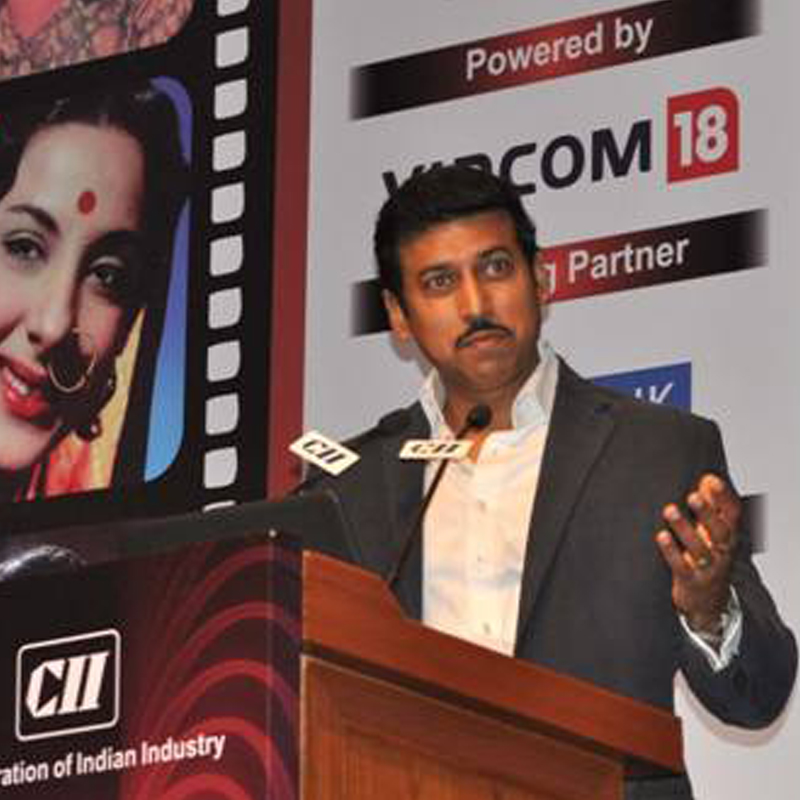
    Speaking at the CII Big Picture Summit 2016 here, Rathore admitted that with technological changes and innovations, a content platform is undergoing constant change with respect to creation, access and distribution. As a consequence, revenue and business models were being fragmented along with changes in market distribution and talent pool identification, he added.

    Pointing out that a series of measures have been undertaken to facilitate the growth and innovation within the media and entertainment (M&E) sector, the Minister said those initiatives included streamlining of processes and procedures for broadcasting sector in the context of licensing TV channels and measures to promote the branding of India’s soft power at international films festivals.

    Referring to the animation sector, the Minister said the government would be fast tracking the setting up of the National Centre for Excellence in partnership with the industry in an effort to optimise the returns in the sector.

    Later answering questions from participants, he regretted that news on online channels was going overseas unregulated and MIB would be taking up the issue with the Ministry of Information Technology. However, he said streaming of a film could not be done without a certification by the Central Board of Film Certification.

    On a question about spectrum and its scarcity, Rathore said as the whole process involved different ministries the logistics got delayed, but also pointed out that the IT Ministry had recently obtained a large chunk of spectrum from the Ministry of Defence for use in the telecoms and broadcast sectors.

    Asked about the cumbersome and time consuming process to get security clearances for television channels and multi-system operators, Rathore explained that delays were caused as several government organisations, apart from MIB, were involved in giving clearances. Still, a total of 881 TV channels had been licensed, including 349 news channels, he added, hinting that such procedural delays hadn’t slowed down the hunger for licences.

  • Govt adapting new communication strategies, says I & B minister

    Govt adapting new communication strategies, says I & B minister

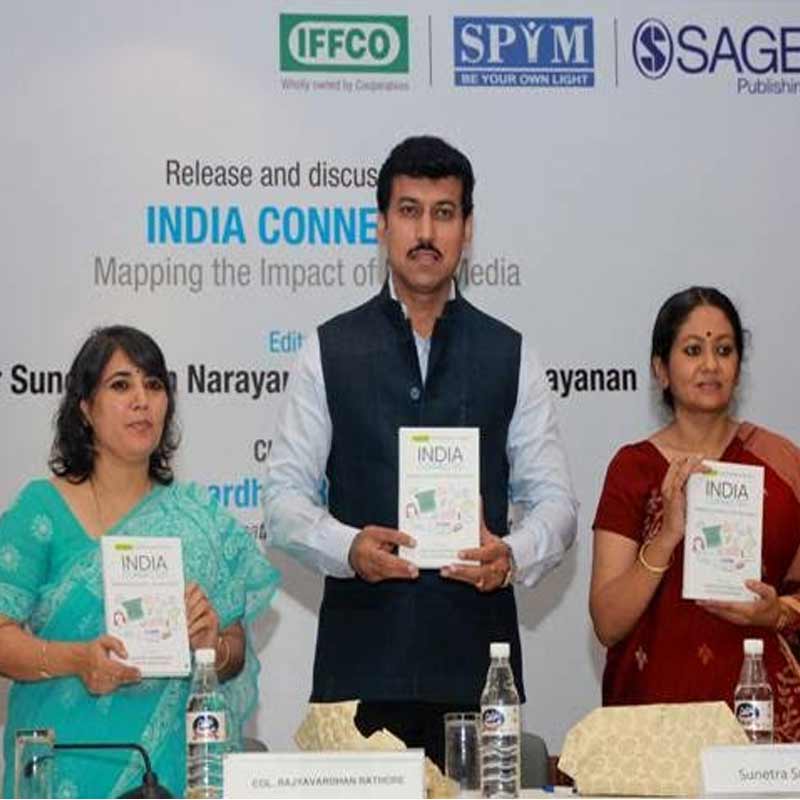
    NEW DELHI: Minister of state for information and broadcasting Rajyavardhan Rathore today said that the Government has been redefining and adapting the content and information dissemination strategy in accordance with the changing paradigm in communication space, especially in the social media.

    Rathore said, due to technology change, information generation pattern and information consumption has changed today. The minister said this after releasing the book “India Connected: Mapping the Impact of New Media” here today. The book has been jointly authored by Dr Shalini Narayanan and Dr. Sunetra Sen Narayanan.

    Elaborating, the minister said news broadcasters today were following social media trends for designing debates and discussions on their channels.

    Rathore said the Government has been conducting seminars and workshops to train officers in social media with the latest tools and techniques to effectively communicate with citizens.

    The book outlines the impact of social media while comparing it with the traditional media. The book flags challenges and opportunities that social media offers in the Indian setting.

  • Govt adapting new communication strategies, says I & B minister

    Govt adapting new communication strategies, says I & B minister

    NEW DELHI: Minister of state for information and broadcasting Rajyavardhan Rathore today said that the Government has been redefining and adapting the content and information dissemination strategy in accordance with the changing paradigm in communication space, especially in the social media.

    Rathore said, due to technology change, information generation pattern and information consumption has changed today. The minister said this after releasing the book “India Connected: Mapping the Impact of New Media” here today. The book has been jointly authored by Dr Shalini Narayanan and Dr. Sunetra Sen Narayanan.

    Elaborating, the minister said news broadcasters today were following social media trends for designing debates and discussions on their channels.

    Rathore said the Government has been conducting seminars and workshops to train officers in social media with the latest tools and techniques to effectively communicate with citizens.

    The book outlines the impact of social media while comparing it with the traditional media. The book flags challenges and opportunities that social media offers in the Indian setting.

  • On DD’s b’day, Naidu lauds it for information empowerment

    On DD’s b’day, Naidu lauds it for information empowerment

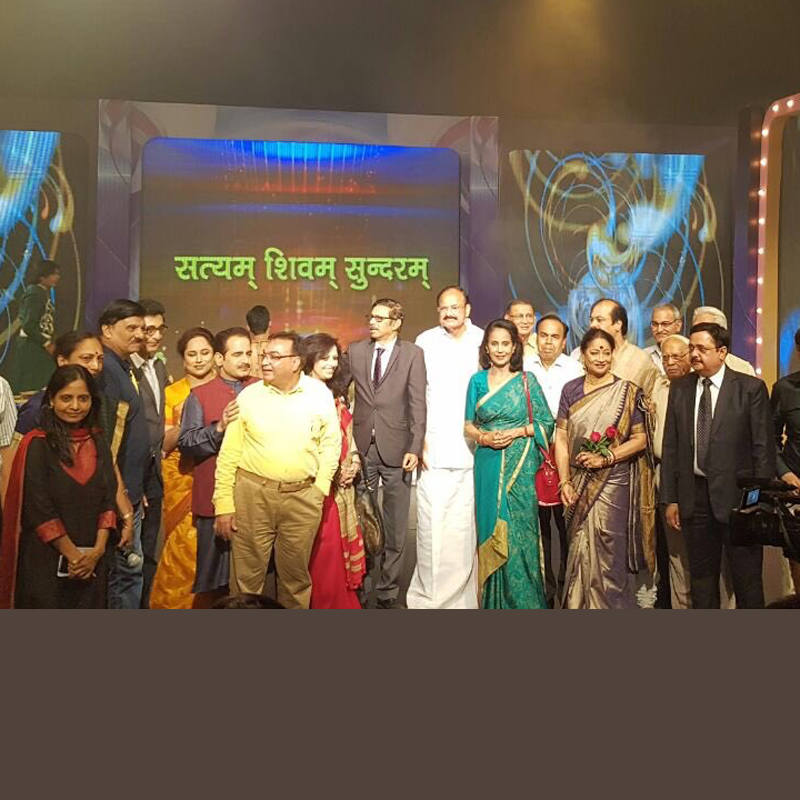
    NEW DELHI: Information and Broadcasting Minister M Venakaiah Naidu said on Thursday that Doordarshan had truly lived up to its credo of being a public service broadcaster — not caring for competition and sticking to its mandate.

    He also said the DD News remains the most credible news TV channel in the country giving news that were in-depth and complete in every way and that the organisation had resulted in creating information empowerment by spreading information of government programmes.

    Speaking at a cultural programme held in the Doordarshan premises to mark the birthday or foundation day of DD, he said it had a national reach and also a reputation that was far above the private channels’.

    The Minister said the programmes telecast by Doordarshan had kept alive the arts and culture of the country through its vast archives and encouragement to classical artistes.

    In recorded messages, both Minister of State for I and B Rajyavardhan Rathore and Prasar Bharati board chairman Surya Prakash conveyed their gratitude to the millions of people who had always given encouragement to the presenters. Prasar Bharati CEO Jawhar Sircar said DD ran 16 regional stations, had seven national level channels, and several other channels apart from beaming for overseas Indians.

    MIB Minister exhorts journalism students to stay true to profession

    Meanwhile, on a busy day at another event, Naidu said communicators should stay away from sensationalism and present facts as they existed without any biases.

    Addressing students of the Indian Institute of Mass Communication (IIMC) during the 49th convocation, he urged them to preserve age-old values and culture while reporting and use information to fight social evils such as corruption, poverty and illiteracy.

    While referring to the corrupt practice of paid news, the Minister urged them to not succumb to such unethical pressures and that they should maintain high standards of journalism as true soldiers of fourth estate.

    He said the process of converting IIMC into a university was under way and it would have a platform to start many innovative programmes that would aim at providing wider perspective and inter-disciplinary approach to media education. It would also provide the institute with requisite resources to meet the growing demand of manpower in the industry and academia.

    Emphasizing on the increasing role of social and digital media in communications domain, Naidu said social media had changed the way the communication flows. Millions of people across cultures and geographies are interacting in real time turning the world virtually into a ‘global village’.

    He further added that digital media had brought in immense opportunities and challenges because information was shared in real time which generated instant feedback and response.


  • On DD’s b’day, Naidu lauds it for information empowerment

    On DD’s b’day, Naidu lauds it for information empowerment

    NEW DELHI: Information and Broadcasting Minister M Venakaiah Naidu said on Thursday that Doordarshan had truly lived up to its credo of being a public service broadcaster — not caring for competition and sticking to its mandate.

    He also said the DD News remains the most credible news TV channel in the country giving news that were in-depth and complete in every way and that the organisation had resulted in creating information empowerment by spreading information of government programmes.

    Speaking at a cultural programme held in the Doordarshan premises to mark the birthday or foundation day of DD, he said it had a national reach and also a reputation that was far above the private channels’.

    The Minister said the programmes telecast by Doordarshan had kept alive the arts and culture of the country through its vast archives and encouragement to classical artistes.

    In recorded messages, both Minister of State for I and B Rajyavardhan Rathore and Prasar Bharati board chairman Surya Prakash conveyed their gratitude to the millions of people who had always given encouragement to the presenters. Prasar Bharati CEO Jawhar Sircar said DD ran 16 regional stations, had seven national level channels, and several other channels apart from beaming for overseas Indians.

    MIB Minister exhorts journalism students to stay true to profession

    Meanwhile, on a busy day at another event, Naidu said communicators should stay away from sensationalism and present facts as they existed without any biases.

    Addressing students of the Indian Institute of Mass Communication (IIMC) during the 49th convocation, he urged them to preserve age-old values and culture while reporting and use information to fight social evils such as corruption, poverty and illiteracy.

    While referring to the corrupt practice of paid news, the Minister urged them to not succumb to such unethical pressures and that they should maintain high standards of journalism as true soldiers of fourth estate.

    He said the process of converting IIMC into a university was under way and it would have a platform to start many innovative programmes that would aim at providing wider perspective and inter-disciplinary approach to media education. It would also provide the institute with requisite resources to meet the growing demand of manpower in the industry and academia.

    Emphasizing on the increasing role of social and digital media in communications domain, Naidu said social media had changed the way the communication flows. Millions of people across cultures and geographies are interacting in real time turning the world virtually into a ‘global village’.

    He further added that digital media had brought in immense opportunities and challenges because information was shared in real time which generated instant feedback and response.


  • India to sign film co-production pacts with BRICS members

    India to sign film co-production pacts with BRICS members

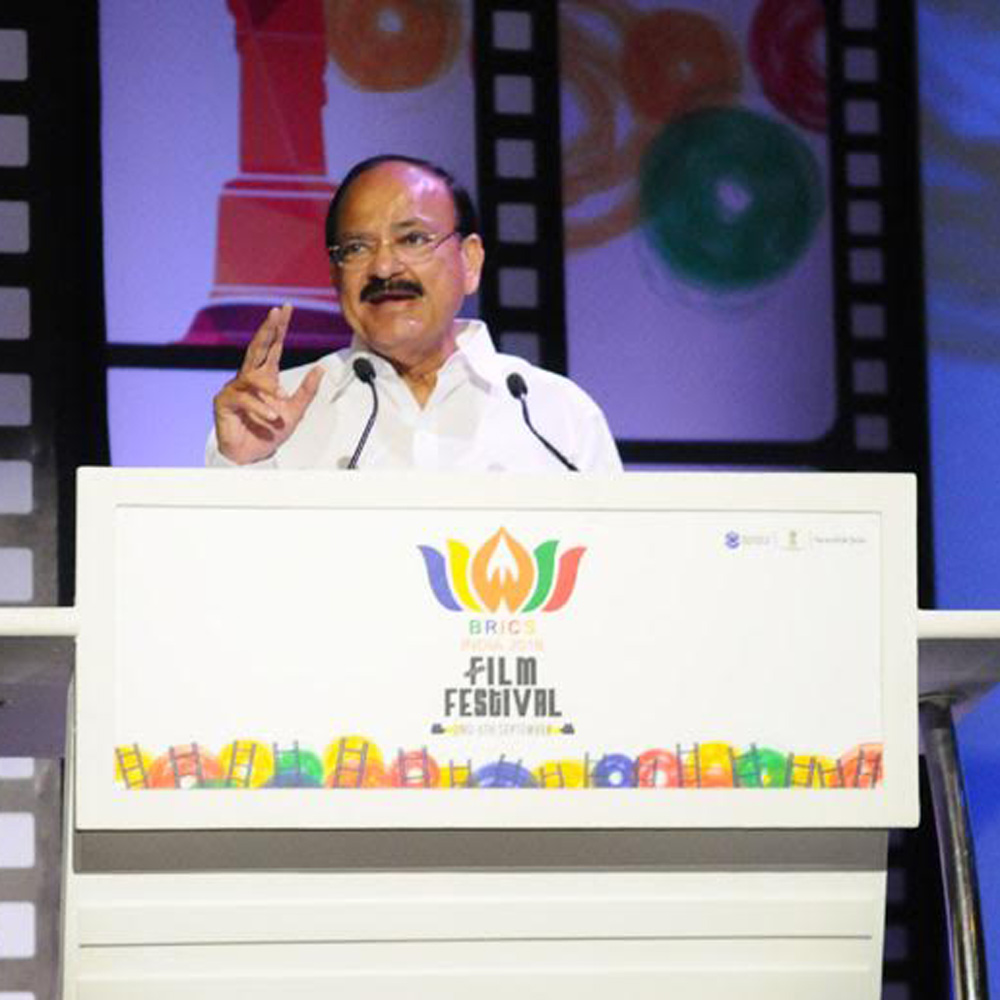
    NEW DELHI: A specially-curated BRICS section would form a part of the International Film Festival of India from this year. It would become a regular feature in the future editions. The BRICS Film Festival was held in the capital from 2 to 6 September 2016.

    Information and Broadcasting Minister M Venkaiaih Naidu said the government was actively considering signing co-production agreements with Russia and South Africa to promote India as a filming destination, taking the process forward after having signed similar agreements with Brazil and China.

    At the festival, 20 films were screened in the competition section, four from each country. The opening film at the festival saw the World Premiere of the Malayalam movie “Veeram” by Jayaraj Rajasekharan Nair starring Kunal Kapoor. The closing film was the Chinese “Skiptrace” starring Jackie Chan directed by Renny Harlin. It is an action-comedy, which revolves round a Chinese detective who teams up with an American Gambler to catch a Chinese criminal.

    Speaking at the closing of the first BRICS Film Festival, the minister also proposed setting up of institutional mechanisms for regular collaboration between film archives of the member-countries as it would ensure exchange of information on preservation of film heritage. He said that BRICS countries could explore the possibility of having a formal mechanism for student exchange programmes among the leading film institutes.

    Naidu said the new-age cinema from the BRICS nations spoke to a wider audience with socially relevant themes, and filmmakers were not afraid of communicating in the way they desired. This inspired young film makers to make films that were not only entertaining but also enlightening. As a powerful medium, it sent across the right message that could counter the negativity emerging from acts of terrorism worldwide. Films awakened national consciousness and helped in channelizing energies of the youth in social reconstruction and nation-building.

    Minister of State for Information and Broadcasting Rajyavardhan Rathore was also present at the event where awards were given away to award-winning films.

    Naidu said the diverse topography of India offers a variety of locales for shooting of films round the year. In addition to this, India is home to one of the most vibrant and highly-skilled film professionals.

    BRICS film directors should take this opportunity to explore possibilities for shooting their films in India. The government has taken several steps to create a conducive environment for shooting. One such step is setting up of a Film Facilitation Office under the National Film Development Corporation.

    Kannada movie “Thithi” was awarded the Best Film, while the Special Jury prize was awarded to “Between Valleys” from Brazil. Huo Jianqi from China was adjudged the Best Director for “Xuan Chang”. Thabo Rametsi from South Africa was awarded the Best Actor (Male) award for “Kalushi (The story of Solomon Mahlangu)” and Yulia Peresild from Russia was awarded the Best Actor (Female) award for “Battle for Sevastopol”. The jury also recommended Special Mention awards to the films “Songs of the Phoenix” from China and “14+” from Russia.

    The festival showcased an amalgamation of culture, films, song and dance, and food of the member-countries, Brazil, Russia, India, China and South Africa. Exclusive cuisine from all the nations was also available at the Food Court at the venue. A Craft Fair was also organized at the Siri Fort auditorium complex with all member-countries putting up stalls with souvenirs and other properties for sale.

    Beyond films, the festival also had spectacular performances by the Chengdu Performing Arts Theatre (China), Theatre Leningrad Centre Dreams (Russia) and MBZ Music Production (South Africa). The closing ceremony also saw the release of the first BRICS Film Festival Scroll, which was presented to representatives from China. It was announced that China will host the next version of the BRICS Film Festival in Chengdu.

    Meanwhile, the Deputy Director General of Film Bureau of China Zhou Jiandong said that China produces almost 650 to 700 feature films annually. The box office collection was $ 6.8 billion last year and the urban accumulative attendance was 1.26 billion. The Chinese delegation comprised 40 members. The cast and crew from the competing movies of China shared their stories, ideas and experiences in a press gathering.

    Members included Huo Jianqi, Director of ‘Xuan Zang’, China Film Cooperation Limited Vice President Zhou Baolin who is the co-producer of ‘Xuan Zang’, Wu Yuan Yuan who is the scriptwriter of ‘Go Away Mr. Tumor’, and Wu Yan Yan who produced, ‘Songs of the Phoenix’.

    ‘Xuan Zang’ was co-produced by China and EROS Entertainment, India. “We hope that after the success of this movie, more Chinese filmmakers will be interested in working with their Indian counterparts. With such collaborations, we will be able to bring more Indian movies to China,” Baolin said. Jianqui said the story was common to both, India and China, as it deals with the topic of Buddhism.

    The story of ‘Go Away Mr. Tumor’ is not only limited to China, but depicts universal optimistic spirit, said Yuan. Last year, this movie was showcased in film festivals of North America and Australia owing of its universal subject. She added that Indian movies inspire her a lot. She watched ‘3 idiots’ and learned that a film can be entertaining as well as educating.

    Yan Yan was happy that a non-commercial movie also received a huge audience applause. Her movie ‘Song of Phoenix’ was running successfully in theatres for two months, and it gave her a lot of hope that such cinema was appreciated by the young audience.

    In a separate exchange, delegates from South Africa expressed hope that very soon member-countries will co-produce films on various interesting topics and enhance bilateral relations. The delegation said talks at the highest level of governments are progressing well and will soon give a final shape to joint cooperation in the field of cinema.

    The cast and crew from the competing films of South Africa shared their stories, ideas and experiences. Present at the conference were Sallas de Jager, Director of ‘Free State’; Director Mandla Dube along with Associate producer Lerato Louise Montoedi of ‘Kalushi: The Story of Soloman Mahlangu’; Thapelo Mokoena, Actor of ‘Mrs. Right Guy’ and Paul Egan, Producer of ‘Tess’.

    Jager said ‘Free State’ was shot two years ago and involved people from South Africa and India. It was a privilege for him to write the story, portraying the essence of a forbidden love story. The film represents the relation between parents and children. He noted that working with the Indian crew was a great learning experience.

    ‘Free State’ showcases the story of Jeanette, who is a beautiful open-minded law student. During her summer holiday with her father in the Free State, a random act of kindness by an attractive Indian sprouts an unexpected love affair. Secret meetings follow, since it was against the law at the time to have an inter-racial relationship. As the film progresses, their secret comes out and hell breaks loose.

    Dube said ‘Kalushi’ was shot eight years ago and had been screened at various film festivals including Cannes, and loved by the people of Edinburgh, South Africa, Zanzibar and London.

    Lerato Louise added that the idea of making this movie came from a stage play. The movie portrays the story of a young liberator who fought for the country. The story of Solomon relates to the connection of South Africa and India, as the lawyer of Kalushi was an Indian.

    Thapelo Mokoena said ‘Mrs. Right Guy’ revolved round a woman and is one of the three romantic comedy movies produced by the black community. He added that the film is more than just a struggle story of the past.

    ‘Mrs. Right Guy’ is the story of Gugu, a woman who rejects love before it can get too close to rock her from a self-imposed exile from love. But, to find bliss with the right guy she must first realize that no man is created equal.

    Paul Egan said the shooting of ‘Tess’ was completed in June 2016 and the audience outside South Africa witnessed it for the first time at this festival. The quality and precision of movies from the other countries screened at BRICS were extremely inspiring and that they were learning quite a lot from them, he added.
  • India to sign film co-production pacts with BRICS members

    India to sign film co-production pacts with BRICS members

    NEW DELHI: A specially-curated BRICS section would form a part of the International Film Festival of India from this year. It would become a regular feature in the future editions. The BRICS Film Festival was held in the capital from 2 to 6 September 2016.

    Information and Broadcasting Minister M Venkaiaih Naidu said the government was actively considering signing co-production agreements with Russia and South Africa to promote India as a filming destination, taking the process forward after having signed similar agreements with Brazil and China.

    At the festival, 20 films were screened in the competition section, four from each country. The opening film at the festival saw the World Premiere of the Malayalam movie “Veeram” by Jayaraj Rajasekharan Nair starring Kunal Kapoor. The closing film was the Chinese “Skiptrace” starring Jackie Chan directed by Renny Harlin. It is an action-comedy, which revolves round a Chinese detective who teams up with an American Gambler to catch a Chinese criminal.

    Speaking at the closing of the first BRICS Film Festival, the minister also proposed setting up of institutional mechanisms for regular collaboration between film archives of the member-countries as it would ensure exchange of information on preservation of film heritage. He said that BRICS countries could explore the possibility of having a formal mechanism for student exchange programmes among the leading film institutes.

    Naidu said the new-age cinema from the BRICS nations spoke to a wider audience with socially relevant themes, and filmmakers were not afraid of communicating in the way they desired. This inspired young film makers to make films that were not only entertaining but also enlightening. As a powerful medium, it sent across the right message that could counter the negativity emerging from acts of terrorism worldwide. Films awakened national consciousness and helped in channelizing energies of the youth in social reconstruction and nation-building.

    Minister of State for Information and Broadcasting Rajyavardhan Rathore was also present at the event where awards were given away to award-winning films.

    Naidu said the diverse topography of India offers a variety of locales for shooting of films round the year. In addition to this, India is home to one of the most vibrant and highly-skilled film professionals.

    BRICS film directors should take this opportunity to explore possibilities for shooting their films in India. The government has taken several steps to create a conducive environment for shooting. One such step is setting up of a Film Facilitation Office under the National Film Development Corporation.

    Kannada movie “Thithi” was awarded the Best Film, while the Special Jury prize was awarded to “Between Valleys” from Brazil. Huo Jianqi from China was adjudged the Best Director for “Xuan Chang”. Thabo Rametsi from South Africa was awarded the Best Actor (Male) award for “Kalushi (The story of Solomon Mahlangu)” and Yulia Peresild from Russia was awarded the Best Actor (Female) award for “Battle for Sevastopol”. The jury also recommended Special Mention awards to the films “Songs of the Phoenix” from China and “14+” from Russia.

    The festival showcased an amalgamation of culture, films, song and dance, and food of the member-countries, Brazil, Russia, India, China and South Africa. Exclusive cuisine from all the nations was also available at the Food Court at the venue. A Craft Fair was also organized at the Siri Fort auditorium complex with all member-countries putting up stalls with souvenirs and other properties for sale.

    Beyond films, the festival also had spectacular performances by the Chengdu Performing Arts Theatre (China), Theatre Leningrad Centre Dreams (Russia) and MBZ Music Production (South Africa). The closing ceremony also saw the release of the first BRICS Film Festival Scroll, which was presented to representatives from China. It was announced that China will host the next version of the BRICS Film Festival in Chengdu.

    Meanwhile, the Deputy Director General of Film Bureau of China Zhou Jiandong said that China produces almost 650 to 700 feature films annually. The box office collection was $ 6.8 billion last year and the urban accumulative attendance was 1.26 billion. The Chinese delegation comprised 40 members. The cast and crew from the competing movies of China shared their stories, ideas and experiences in a press gathering.

    Members included Huo Jianqi, Director of ‘Xuan Zang’, China Film Cooperation Limited Vice President Zhou Baolin who is the co-producer of ‘Xuan Zang’, Wu Yuan Yuan who is the scriptwriter of ‘Go Away Mr. Tumor’, and Wu Yan Yan who produced, ‘Songs of the Phoenix’.

    ‘Xuan Zang’ was co-produced by China and EROS Entertainment, India. “We hope that after the success of this movie, more Chinese filmmakers will be interested in working with their Indian counterparts. With such collaborations, we will be able to bring more Indian movies to China,” Baolin said. Jianqui said the story was common to both, India and China, as it deals with the topic of Buddhism.

    The story of ‘Go Away Mr. Tumor’ is not only limited to China, but depicts universal optimistic spirit, said Yuan. Last year, this movie was showcased in film festivals of North America and Australia owing of its universal subject. She added that Indian movies inspire her a lot. She watched ‘3 idiots’ and learned that a film can be entertaining as well as educating.

    Yan Yan was happy that a non-commercial movie also received a huge audience applause. Her movie ‘Song of Phoenix’ was running successfully in theatres for two months, and it gave her a lot of hope that such cinema was appreciated by the young audience.

    In a separate exchange, delegates from South Africa expressed hope that very soon member-countries will co-produce films on various interesting topics and enhance bilateral relations. The delegation said talks at the highest level of governments are progressing well and will soon give a final shape to joint cooperation in the field of cinema.

    The cast and crew from the competing films of South Africa shared their stories, ideas and experiences. Present at the conference were Sallas de Jager, Director of ‘Free State’; Director Mandla Dube along with Associate producer Lerato Louise Montoedi of ‘Kalushi: The Story of Soloman Mahlangu’; Thapelo Mokoena, Actor of ‘Mrs. Right Guy’ and Paul Egan, Producer of ‘Tess’.

    Jager said ‘Free State’ was shot two years ago and involved people from South Africa and India. It was a privilege for him to write the story, portraying the essence of a forbidden love story. The film represents the relation between parents and children. He noted that working with the Indian crew was a great learning experience.

    ‘Free State’ showcases the story of Jeanette, who is a beautiful open-minded law student. During her summer holiday with her father in the Free State, a random act of kindness by an attractive Indian sprouts an unexpected love affair. Secret meetings follow, since it was against the law at the time to have an inter-racial relationship. As the film progresses, their secret comes out and hell breaks loose.

    Dube said ‘Kalushi’ was shot eight years ago and had been screened at various film festivals including Cannes, and loved by the people of Edinburgh, South Africa, Zanzibar and London.

    Lerato Louise added that the idea of making this movie came from a stage play. The movie portrays the story of a young liberator who fought for the country. The story of Solomon relates to the connection of South Africa and India, as the lawyer of Kalushi was an Indian.

    Thapelo Mokoena said ‘Mrs. Right Guy’ revolved round a woman and is one of the three romantic comedy movies produced by the black community. He added that the film is more than just a struggle story of the past.

    ‘Mrs. Right Guy’ is the story of Gugu, a woman who rejects love before it can get too close to rock her from a self-imposed exile from love. But, to find bliss with the right guy she must first realize that no man is created equal.

    Paul Egan said the shooting of ‘Tess’ was completed in June 2016 and the audience outside South Africa witnessed it for the first time at this festival. The quality and precision of movies from the other countries screened at BRICS were extremely inspiring and that they were learning quite a lot from them, he added.
  • Giving information effectively a major challenge: Naidu

    Giving information effectively a major challenge: Naidu

    NEW DELHI: Information & Broadcasting Minister M Venkaiah Naidu has said information is “ammunition to fight social evils such as corruption, poverty, illiteracy and terrorism”.

    To ensure last mile reach and keep pace with the changing communication paradigm, the government communication needs to incorporate innovative and out of the box ideas. Innovative ideas such as Prime Minister Narendra Modi’s Mann ki Baat and the MoU signed with Amar Chitra Katha for comic books on Swachh Bharat Abhiyaan influenced the masses at large.

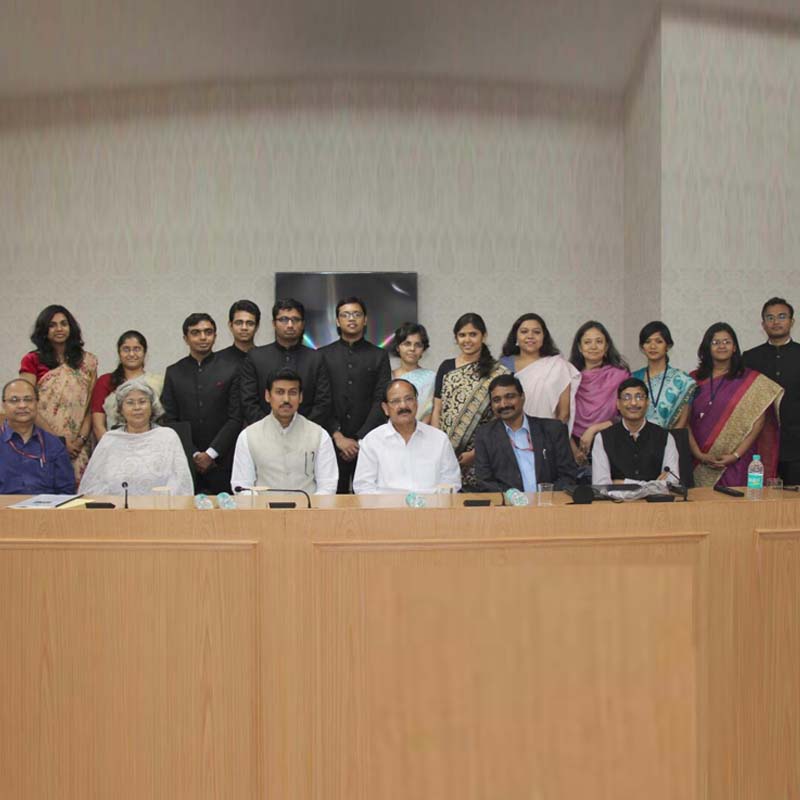
    Naidu was addressing the Indian Information Service Officer Trainees of 2015 batch currently undergoing at training at Indian Institute of Mass Communications (IIMC) here, who had called on President Pranab Mukherjee yesterday. Minister of State for I and B Rajyavardhan Rathore and senior officers of the Ministry were also present on the occasion.

    Naidu said to effectively design communication strategy for various government programmes and flagship schemes was a major challenge for government communication managers. He added that communicating success stories about developmental programs like Swachh Bharat Abhiyaan (Clean India campaign) would inspire and motivate citizens and would engage them as stakeholders in the governance process.

    The Minister emphasized on the need for India Information Service (IIS) officers to learn and adapt to the new technologies, tools and techniques to enhance reach of the government; especially in the age of social media.

    “The social media perspective has changed the way we communicate and govern today, which provided challenges and opportunities for the officers to enhance government outreach,” Naidu said.

    In his interaction, the Minister emphasized on the need to be progressive in thought and take pride in the role and responsibility assigned to each officer. He specifically mentioned the initiative taken by the Ministry to institutionalize capacity building through appropriate training programs at different career levels. Naidu also assured the officer-trainees that the quality aspect associated with capacity building issues in the training programs would be improved to meet the communication challenges.

    Rathore advised the officer trainees that there was a need to continuously learn and add value to their skills as well as the organization where they would be working.

    IIS Officer Trainees also shared their experiences of the past nine months of training with the two Ministers.

  • Giving information effectively a major challenge: Naidu

    Giving information effectively a major challenge: Naidu

    NEW DELHI: Information & Broadcasting Minister M Venkaiah Naidu has said information is “ammunition to fight social evils such as corruption, poverty, illiteracy and terrorism”.

    To ensure last mile reach and keep pace with the changing communication paradigm, the government communication needs to incorporate innovative and out of the box ideas. Innovative ideas such as Prime Minister Narendra Modi’s Mann ki Baat and the MoU signed with Amar Chitra Katha for comic books on Swachh Bharat Abhiyaan influenced the masses at large.

    Naidu was addressing the Indian Information Service Officer Trainees of 2015 batch currently undergoing at training at Indian Institute of Mass Communications (IIMC) here, who had called on President Pranab Mukherjee yesterday. Minister of State for I and B Rajyavardhan Rathore and senior officers of the Ministry were also present on the occasion.

    Naidu said to effectively design communication strategy for various government programmes and flagship schemes was a major challenge for government communication managers. He added that communicating success stories about developmental programs like Swachh Bharat Abhiyaan (Clean India campaign) would inspire and motivate citizens and would engage them as stakeholders in the governance process.

    The Minister emphasized on the need for India Information Service (IIS) officers to learn and adapt to the new technologies, tools and techniques to enhance reach of the government; especially in the age of social media.

    “The social media perspective has changed the way we communicate and govern today, which provided challenges and opportunities for the officers to enhance government outreach,” Naidu said.

    In his interaction, the Minister emphasized on the need to be progressive in thought and take pride in the role and responsibility assigned to each officer. He specifically mentioned the initiative taken by the Ministry to institutionalize capacity building through appropriate training programs at different career levels. Naidu also assured the officer-trainees that the quality aspect associated with capacity building issues in the training programs would be improved to meet the communication challenges.

    Rathore advised the officer trainees that there was a need to continuously learn and add value to their skills as well as the organization where they would be working.

    IIS Officer Trainees also shared their experiences of the past nine months of training with the two Ministers.

  • Rathore urges govt. officials to aggressively use social media

    Rathore urges govt. officials to aggressively use social media

    NEW DELHI: Taking a cue from Prime Minister Modi’s effective use of social media, Minister of State for Information and Broadcasting (MIB) Rajyavardhan Rathore’s message to his officials is use social media aggressively for disseminating information on government.

    “We need to open up. Typically, governments have been with iron curtains all around. But today time is changing, so we first need to change our mindset,” A PTI report quoted Rathore as saying today.

    The junior MIB minister was inaugurating a workshop for government officials in Press Information Bureau (PIB) on how to use Facebook more effectively for communication.

    PIB is the public relations division of the government and its official under a director-general are entrusted with disseminating information on government initiatives. 

    Addressing PIB officials, the PTI report states, Rathore advised that the process of how information is shared from decision makers to disseminators needs to get faster and social media can play a key role as it not only shapes debates on TV but also public opinion.

    According to the minister, “You cannot hide information in today’s world. You have to share that information. The idea is to send the right kind of content that people can engage with.” 

    Pointing out that often incorrect information regarding ministries and government departments goes on social media,  Rathore advised that on such occasions the correct facts should be provided.

    “That is the time you could get to the social media and correct that information. People are hungry for information,” Rathore is said to have opined as per the PTI report.

    The minister compared old and present times regarding communications. He said had it been older times pigeons would have to used for communicating and the head of PIB would have had maximum number of pigeons, hinting at the amount of communication that a government undertakes as part of its outreach programme.

    A lot of people dismiss social media, saying the debate going on there is “junk”, he said but emphasised that this very debate shapes what is reported on television and in the print media.

    “It is shaping your mind when you sit on the dining table during dinner time and do your discussions,” he is quoted as having said.

    The minister pointed out that 85 per cent of federal ministers were on Facebook and 80 per cent ministries already have verified FB accounts.

    Referring to PM Modi’s love for technology and effective use of social media, Rathore says the “coach has shown the way and it is now for the athelets to act.”

    Interestingly when Rathore was questioned on Twitter for this government support to a private enterprise (Facebook) as being strange, the minister tweeted back saying: “Yes, but all communication tools, public/ private need to be utilised for empowering & enhancing outreach.”

    Facebook executives were present on the occasion.