Tag: Rajyavardhan Rathore

  • Encourage cashless transactions, Naidu urges officials

    Encourage cashless transactions, Naidu urges officials

    NEW DELHI: M Venkaiah Naidu, who holds the dual charge of the ministries of information & broadcasting, and urban development and housing & urban poverty alleviation, yesterday urged officials in both the ministries to facilitate cashless economy and encourage digital and online transactions.

    Addressing the officers regarding the steps being taken by the government, he said the attempt was to prevent delays through seamless transactions and end the menace of corruption and black money.

    Naidu mentioned that the government’s JAM (Jan Dhan, AADHAR & Mobile) initiative would also facilitate this transformation. In this context, he reiterated the prime minister’s JAM vision which would ensure maximum penetration of technology among the masses and maximum empowerment for the poor.

    Naidu urged all officers to provide counselling to their staff to move and adapt to a cashless and digital transactions reducing the role of physical money in day-to-day transactions. This exercise could also be conducted at the homes by officers and staff with the people associated in their day to day life as part of social responsibility. The minister also mentioned few platforms available for digital transactions including Unified Payment Interface and Mobile Wallets.

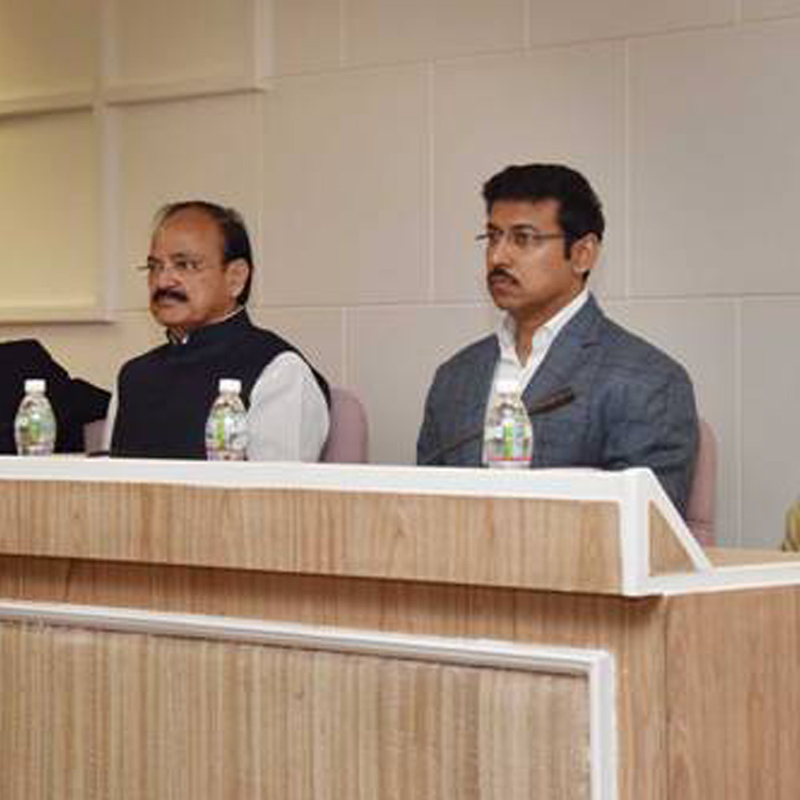
    Minister of state for information & broadcasting Rajyavardhan Rathore, ministry secretary Ajay Mittal, urban development secretary Rajiv Gauba, housing and urban poverty secretary Dr. Nandita Chatterjee, senior officers from the ministries, were also present in the meeting held at Vigyan Bhawan, NewDelhi.

    A presentation on “Government – Citizen Transactions towards less cash economy including different platforms and methods of transaction” was also made by Team NITI Ayog. The presentation was followed by a Question & Answer session, where doubts were cleared and queries answered.
  • India to digitise all services, says I&B MoS Rathore

    India to digitise all services, says I&B MoS Rathore

    NEW DELHI: Minister of State for Information & Broadcasting Rajyavardhan Rathore has said that the government is making all efforts to digitalise the whole spectrum of services available to the citizens. He said that convergence of array of services to empower citizens through mobile technology was already happening.

    Speaking after giving away the awards at the conclusion of the 47th International Film Festival of India in Panaji in Goa yesterday evening, Rathore said the Film Facilitation Office (FFO) set up by the government was a step towards facilitating single window clearance for filmmakers, promote India as a filming destination and provide the platform for film tourism in the country.

    He said films were not only a means for entertainment but a powerful art form which heralded social change. He added that it was a testament to the power of fluency and persuasion that cinema was the only art form that is deemed fit to be regulated by an Act of Parliament.

    The role of Cinema to bridge cultures was experienced in IFFI with the partnership between India and the focus country for the year 2016 – South Korea — through films which acted as gateway for further cultural exchanges.

    Rathore said multiplexes had revolutionised the film-viewing experience with the top films grossing box office returns due to the multiplex boom. A paradigm shift in technology also enabled the mobile viewing boom in the country. This enabled individuals to shoot films based on one’s taste and perception of the given environment. This acted as a big fillip to young filmmakers and it was evident from the record number of entries at the Swachh Bharat Film Festival organised by the ministry.

    (Speaking at another event earlier in the day, Rathore said IFFI provided a unique platform for experts from across the globe to share their behind the screen experiences and stories. The effort was to provide a rich experience for all the delegates and film fraternity.

    Rathore said Films were an effective tool as a medium of communication and appreciated the efforts of NFAI in depicting the struggle of freedom fighters through this exhibition on cinema. Linking the issue of films with the demonetisation scheme of the Government, Rathore said this initiative of the Government would bring transparency in the film industry and would curb the use of black money.)

    Iranian film “Daughter” bagged the Golden Peacock for best feature film at the Festival with a certificate and a cash prize amount of Rs Four million, shared between the Director and the Producer equally. Iranian actor Farhad Aslani won the ‘Best Actor’ award for his portrayal of the strict father in the same film, picking up the Silver Peacock and Rs 1 million in cash prize. The film had also won the best film award in the Moscow International Film Festival earlier this year.

    The awards were given away by Rathore in the presence of the Goa governor Mridula Sinha, the chief minister Laxmikant Parsekar and the chief guest S S Rajamouli.

    The ‘Best Director’ award was given to Baris Kaya for the film “Rauf”, who bagged the Silver Peacock Trophy and cash prize of Rs 1.5 million. Elina Vaska won the Best Actress Award for the film “Fellow Mud”, getting the Silver Peacock Trophy and cash Prize of Rs One million. The Special Jury award was given to Lee Joon-ik for the Direction of the movie “The Throne” with the Silver Peacock Award and a cash prize of Rs 1.5 million.

    The ICFT –UNESCO Gandhi Medal was awarded to Turkish film maker Mustafa Kara’s ‘Cold of Kalandar’. This award, instituted by the International Council for Film & Television, Paris, and UNESCO is given to a film that portrays the Gandhian values of peace and harmony. ‘Cold of Kalandar’, set in a mountain village in the Black Sea region is also Turkey’s official entry for ‘Best Foreign Language Film’ category of Oscar Awards.

    The Canadian multi-lingual entry ‘The Apology’ by Toronto based Tiffany Hsiung won the Special Mention under the ICFT-UNESCO Gandhi Medal competition. In all seven films, including an Indian film ‘Allama’ by T S Nagabharana, were in the fray for this award.

    Earlier, Parsekar said that collaboration between the central and state governments and the film industry made this edition of IFFI a great success which not only promoted Indian Film Industry but also promoted Goa as a creative hub.

    Rajamouli said the biggest beneficiaries of such film festivals are young filmmakers who gets a platform to see the best of films across the globe and learn from the vision of reputed film makers around the World.

    I and B additional secretary Jayashree Mukherjee said IFFI besides showcasing films also provided a large number of avenues for learning in form of workshops and master classes.

    The closing ceremony witnessed glitz and glamour through the scintillating musical performances representing a rich musical culture of India composed by Sachin Jigar.

  • India to digitise all services, says I&B MoS Rathore

    India to digitise all services, says I&B MoS Rathore

    NEW DELHI: Minister of State for Information & Broadcasting Rajyavardhan Rathore has said that the government is making all efforts to digitalise the whole spectrum of services available to the citizens. He said that convergence of array of services to empower citizens through mobile technology was already happening.

    Speaking after giving away the awards at the conclusion of the 47th International Film Festival of India in Panaji in Goa yesterday evening, Rathore said the Film Facilitation Office (FFO) set up by the government was a step towards facilitating single window clearance for filmmakers, promote India as a filming destination and provide the platform for film tourism in the country.

    He said films were not only a means for entertainment but a powerful art form which heralded social change. He added that it was a testament to the power of fluency and persuasion that cinema was the only art form that is deemed fit to be regulated by an Act of Parliament.

    The role of Cinema to bridge cultures was experienced in IFFI with the partnership between India and the focus country for the year 2016 – South Korea — through films which acted as gateway for further cultural exchanges.

    Rathore said multiplexes had revolutionised the film-viewing experience with the top films grossing box office returns due to the multiplex boom. A paradigm shift in technology also enabled the mobile viewing boom in the country. This enabled individuals to shoot films based on one’s taste and perception of the given environment. This acted as a big fillip to young filmmakers and it was evident from the record number of entries at the Swachh Bharat Film Festival organised by the ministry.

    (Speaking at another event earlier in the day, Rathore said IFFI provided a unique platform for experts from across the globe to share their behind the screen experiences and stories. The effort was to provide a rich experience for all the delegates and film fraternity.

    Rathore said Films were an effective tool as a medium of communication and appreciated the efforts of NFAI in depicting the struggle of freedom fighters through this exhibition on cinema. Linking the issue of films with the demonetisation scheme of the Government, Rathore said this initiative of the Government would bring transparency in the film industry and would curb the use of black money.)

    Iranian film “Daughter” bagged the Golden Peacock for best feature film at the Festival with a certificate and a cash prize amount of Rs Four million, shared between the Director and the Producer equally. Iranian actor Farhad Aslani won the ‘Best Actor’ award for his portrayal of the strict father in the same film, picking up the Silver Peacock and Rs 1 million in cash prize. The film had also won the best film award in the Moscow International Film Festival earlier this year.

    The awards were given away by Rathore in the presence of the Goa governor Mridula Sinha, the chief minister Laxmikant Parsekar and the chief guest S S Rajamouli.

    The ‘Best Director’ award was given to Baris Kaya for the film “Rauf”, who bagged the Silver Peacock Trophy and cash prize of Rs 1.5 million. Elina Vaska won the Best Actress Award for the film “Fellow Mud”, getting the Silver Peacock Trophy and cash Prize of Rs One million. The Special Jury award was given to Lee Joon-ik for the Direction of the movie “The Throne” with the Silver Peacock Award and a cash prize of Rs 1.5 million.

    The ICFT –UNESCO Gandhi Medal was awarded to Turkish film maker Mustafa Kara’s ‘Cold of Kalandar’. This award, instituted by the International Council for Film & Television, Paris, and UNESCO is given to a film that portrays the Gandhian values of peace and harmony. ‘Cold of Kalandar’, set in a mountain village in the Black Sea region is also Turkey’s official entry for ‘Best Foreign Language Film’ category of Oscar Awards.

    The Canadian multi-lingual entry ‘The Apology’ by Toronto based Tiffany Hsiung won the Special Mention under the ICFT-UNESCO Gandhi Medal competition. In all seven films, including an Indian film ‘Allama’ by T S Nagabharana, were in the fray for this award.

    Earlier, Parsekar said that collaboration between the central and state governments and the film industry made this edition of IFFI a great success which not only promoted Indian Film Industry but also promoted Goa as a creative hub.

    Rajamouli said the biggest beneficiaries of such film festivals are young filmmakers who gets a platform to see the best of films across the globe and learn from the vision of reputed film makers around the World.

    I and B additional secretary Jayashree Mukherjee said IFFI besides showcasing films also provided a large number of avenues for learning in form of workshops and master classes.

    The closing ceremony witnessed glitz and glamour through the scintillating musical performances representing a rich musical culture of India composed by Sachin Jigar.

  • Limited punitive action taken against 31 TV channels in 11 years

    Limited punitive action taken against 31 TV channels in 11 years

    NEW DELHI: As many as 31 TV channels were asked to stop transmission for specific period of time ranging from one day to 60 days including news channel for 30 days between 2005 and 2016.

    Minister of State for Information and Broadcasting Ministry Rajyavardhan Rathore told the Parliament that 22 private television channels including one channel for three different programmes and another for two programmes were asked to suspend transmission for duration ranging from one day to 30 days for telecasting content in violation of the Programme Code during the last three years and the current year.

    This included 14 in 2013, one in 2014, four in 2015, and three in 2016 (till November), Rathore said.

    The three in the current year are — NDTV India and Care World India with one violation each, and News Time Assam for three violations. The orders relating to NDTV and Care World India have been challenged in the courts of law. Earlier, in 2014, Manoranjan TV was punished twice.

    The channels punished in 2014 and 2015 are — Enterr 10, Zing, Mahua, SS TV, AXN, FTV, Movies OK, Comedy Central, Zoom TV, ABN Andhra Jyoti, UTV Bindass, WB, NTV, Big CBS Love, Jai Hind, Al Jazeera, and Satlon News.

    Action is taken against TV channels whenever any violation of the Programme and Advertising Codes is noticed or brought to the notice of the Ministry. The Ministry generally issues warnings or advisories to comply with the Codes or asks the channels to run an apology scroll on their channel.

    But, Rathore said the channels are occasionally taken off air temporarily for a limited period depending on the gravity of the violation.

  • Limited punitive action taken against 31 TV channels in 11 years

    Limited punitive action taken against 31 TV channels in 11 years

    NEW DELHI: As many as 31 TV channels were asked to stop transmission for specific period of time ranging from one day to 60 days including news channel for 30 days between 2005 and 2016.

    Minister of State for Information and Broadcasting Ministry Rajyavardhan Rathore told the Parliament that 22 private television channels including one channel for three different programmes and another for two programmes were asked to suspend transmission for duration ranging from one day to 30 days for telecasting content in violation of the Programme Code during the last three years and the current year.

    This included 14 in 2013, one in 2014, four in 2015, and three in 2016 (till November), Rathore said.

    The three in the current year are — NDTV India and Care World India with one violation each, and News Time Assam for three violations. The orders relating to NDTV and Care World India have been challenged in the courts of law. Earlier, in 2014, Manoranjan TV was punished twice.

    The channels punished in 2014 and 2015 are — Enterr 10, Zing, Mahua, SS TV, AXN, FTV, Movies OK, Comedy Central, Zoom TV, ABN Andhra Jyoti, UTV Bindass, WB, NTV, Big CBS Love, Jai Hind, Al Jazeera, and Satlon News.

    Action is taken against TV channels whenever any violation of the Programme and Advertising Codes is noticed or brought to the notice of the Ministry. The Ministry generally issues warnings or advisories to comply with the Codes or asks the channels to run an apology scroll on their channel.

    But, Rathore said the channels are occasionally taken off air temporarily for a limited period depending on the gravity of the violation.

  • Indian films promotion: No claimant for up to Rs 1-crore aid

    Indian films promotion: No claimant for up to Rs 1-crore aid

    NEW DELHI: Minister of state for information and broadcasting Rajyavardhan Rathore has said his ministry has introduced an additional activity under existing Plan Scheme for providing financial assistance to filmmakers whose films are selected in competition section of an international film festival of repute or India’s official nomination for Academy Awards under Foreign Film Category.

    Rethore told the Parliament that the Directorate of Film Festivals has been designated as the nodal agency for implementing this activity. The details of the scheme are available at http://mib.nic.in/WriteReadData/documents/Film_Promotion_Fund_-_procedure.pdf.

    The scheme was introduced with effect from 3 October 2016 and, so far, no eligible proposal for seeking assistance under the film promotion scheme has been received, and therefore no assistance has been provided, Rathore said.

    Early this month, union minister M Venkaiah Naidu had announced at a press meet here that the Fund was aimed at promoting Indian cinema at International Film Festivals. This initiative would help independent filmmakers to promote their work across the globe.

    Naidu claimed that the Government’s efforts to project India as a soft power and filming destination has been a win-win situation so far, in terms of attracting global stakeholders from various quarters of film industry to India as well as Indian films, expertise and talent being accepted globally at international festivals.

    According to details on the website, the Festivals to be covered are:

    Eligible Film Festival/Award & Corresponding Fund Value

    No. Feature Film Festival Key Sections Fund value (INR)
    1. Sundance Film Festival – January World Cinema Dramatic competition 15,00,000

    2. Sundance Film Festival – January Premieres 10,00,000

    3. Int. Film Festival of Rotterdam -January Hivos Tiger Awards Competition 10,00,000

    4. Int. Film Festival of Rotterdam -– January Bright Future 7,50,000

    5. Int. Film Festival of Rotterdam – January Spectrum 7,50,000

    6. Berlin International Film Festival – February Competition 15,00,000

    7. Berlin International Film Festival – February Panorama 10,00,000

    8. Berlin International Film Festival – February Forum 10,00,000

    9. Berlin International Film Festival – February Generation K-plus
    & Generation 14plus 10,00,000

    10. Festival de Cannes – May In Competition 20,00,000

    11. Festival de Cannes – May Un Certain Regard 15,00,000

    12. Directors’ Fortnight– May World Premiere 15,00,000

    13. International Critics’ Week – May World Premiere 10,00,000

    14. Venice International Film Festival – September In Competition 15,00,000

    15. Venice International Film Festival – September Orizzonti 10,00,000

    16. International Critics’ Week – September Official Selection 7,50,000

    17. Venice Days – September Official Selection 7,50,000

    18. Toronto Int. Film Festival – September Special Presentation 15,00,000

    19. Toronto Int. Film Festival – September Discovery 10,00,000

    20. Busan Int. Film Festival –October New Currents 10,00,000

    21. Busan Int. Film Festival – October Window on Asian Cinema 7,50,000

    22. Locarno Int. Film Festival Concorso Internazionale 7,50,000

    23. Oscars Foreign Language Film 50,00,000 to 1,00,00,000

  • Indian films promotion: No claimant for up to Rs 1-crore aid

    Indian films promotion: No claimant for up to Rs 1-crore aid

    NEW DELHI: Minister of state for information and broadcasting Rajyavardhan Rathore has said his ministry has introduced an additional activity under existing Plan Scheme for providing financial assistance to filmmakers whose films are selected in competition section of an international film festival of repute or India’s official nomination for Academy Awards under Foreign Film Category.

    Rethore told the Parliament that the Directorate of Film Festivals has been designated as the nodal agency for implementing this activity. The details of the scheme are available at http://mib.nic.in/WriteReadData/documents/Film_Promotion_Fund_-_procedure.pdf.

    The scheme was introduced with effect from 3 October 2016 and, so far, no eligible proposal for seeking assistance under the film promotion scheme has been received, and therefore no assistance has been provided, Rathore said.

    Early this month, union minister M Venkaiah Naidu had announced at a press meet here that the Fund was aimed at promoting Indian cinema at International Film Festivals. This initiative would help independent filmmakers to promote their work across the globe.

    Naidu claimed that the Government’s efforts to project India as a soft power and filming destination has been a win-win situation so far, in terms of attracting global stakeholders from various quarters of film industry to India as well as Indian films, expertise and talent being accepted globally at international festivals.

    According to details on the website, the Festivals to be covered are:

    Eligible Film Festival/Award & Corresponding Fund Value

    No. Feature Film Festival Key Sections Fund value (INR)
    1. Sundance Film Festival – January World Cinema Dramatic competition 15,00,000

    2. Sundance Film Festival – January Premieres 10,00,000

    3. Int. Film Festival of Rotterdam -January Hivos Tiger Awards Competition 10,00,000

    4. Int. Film Festival of Rotterdam -– January Bright Future 7,50,000

    5. Int. Film Festival of Rotterdam – January Spectrum 7,50,000

    6. Berlin International Film Festival – February Competition 15,00,000

    7. Berlin International Film Festival – February Panorama 10,00,000

    8. Berlin International Film Festival – February Forum 10,00,000

    9. Berlin International Film Festival – February Generation K-plus
    & Generation 14plus 10,00,000

    10. Festival de Cannes – May In Competition 20,00,000

    11. Festival de Cannes – May Un Certain Regard 15,00,000

    12. Directors’ Fortnight– May World Premiere 15,00,000

    13. International Critics’ Week – May World Premiere 10,00,000

    14. Venice International Film Festival – September In Competition 15,00,000

    15. Venice International Film Festival – September Orizzonti 10,00,000

    16. International Critics’ Week – September Official Selection 7,50,000

    17. Venice Days – September Official Selection 7,50,000

    18. Toronto Int. Film Festival – September Special Presentation 15,00,000

    19. Toronto Int. Film Festival – September Discovery 10,00,000

    20. Busan Int. Film Festival –October New Currents 10,00,000

    21. Busan Int. Film Festival – October Window on Asian Cinema 7,50,000

    22. Locarno Int. Film Festival Concorso Internazionale 7,50,000

    23. Oscars Foreign Language Film 50,00,000 to 1,00,00,000

  • Govt seeks professional help for DD revival

    Govt seeks professional help for DD revival

    NEW DELHI: Fazed by private sector television channels’ stridency in terms of revenues and viewership in an increasingly digital India, the government is seeking outside professional help in “transformation of Doordarshan.”

    A tender has been issued by an organisation under the Ministry of Information and Broadcasting (MIB) to look for a consultant to revamp Doordarshan into a leading public broadcaster that becomes a highly successful medium of mass communication.

    Amongst the objectives listed in the tender documents by the Broadcast Engineering Consultants India Ltd. (BECIL) a stated aim is to engage a consulting firm to support Doordarshan in achieving this “transformation goal by undertaking a comprehensive view on the projects and initiatives to be executed” by the Indian pubcaster.

    Pointing out that in the last couple of decades after introduction of cable television and technological changes in a country that’s now openly flirting with digital consumption of video and audio on multiple platforms, the government admitted DD’s monopoly days are over and it is not the target media for a large swathe of Indian population. “Given the potential television has, not just commercially but also as a means for socio-economic transformation, it’s critical to revitalize Doordarshan and develop it into a powerful and commercially successful organization of mass communication,” BECIL said in a note enumerating the objectives for the project.

    The consultant would have to undertake a comprehensive view on the projects and initiatives to be executed by Doordarshan, engage all stakeholders to arrive at trouble-spots and prepare a solution map for addressing those difficulties. The government is hoping that the consultant will identify in medium term goals for “quick wins” and further help Doordarshan develop a long-term strategic roadmap.

    The interested bidders are expected to send in their queries by 2 November 2016 and get responses in a pre-bid meeting on 4 November. The technical bids will be opened on 15 November at 1530 hours. Dates for presentations by bidders and opening of financial bids will be intimated later by BECIL.

    Interestingly, Minister of State for MIB Rajyavardhan Rathore few days back had admitted at a media conference that Prasar Bharati, DD’s parent, lacked adequate programming and marketing capabilities and was open to seeking help from private players.

    Doordarshan is one of the largest broadcasting organizations in the world in terms of studios and infrastructure and claims to cover 90 per cent of the total Indian population — a claim that, however, doesn’t aptly reflect in audience measurement data. DD, which offers 23 TV channels in various Indian languages, provides television, radio, online and app-based mobile services throughout India and overseas.

    ALSO READ:

    Prasar Bharati lacks content & marketing; open to tie-ups: MIB Minister


  • Govt seeks professional help for DD revival

    Govt seeks professional help for DD revival

    NEW DELHI: Fazed by private sector television channels’ stridency in terms of revenues and viewership in an increasingly digital India, the government is seeking outside professional help in “transformation of Doordarshan.”

    A tender has been issued by an organisation under the Ministry of Information and Broadcasting (MIB) to look for a consultant to revamp Doordarshan into a leading public broadcaster that becomes a highly successful medium of mass communication.

    Amongst the objectives listed in the tender documents by the Broadcast Engineering Consultants India Ltd. (BECIL) a stated aim is to engage a consulting firm to support Doordarshan in achieving this “transformation goal by undertaking a comprehensive view on the projects and initiatives to be executed” by the Indian pubcaster.

    Pointing out that in the last couple of decades after introduction of cable television and technological changes in a country that’s now openly flirting with digital consumption of video and audio on multiple platforms, the government admitted DD’s monopoly days are over and it is not the target media for a large swathe of Indian population. “Given the potential television has, not just commercially but also as a means for socio-economic transformation, it’s critical to revitalize Doordarshan and develop it into a powerful and commercially successful organization of mass communication,” BECIL said in a note enumerating the objectives for the project.

    The consultant would have to undertake a comprehensive view on the projects and initiatives to be executed by Doordarshan, engage all stakeholders to arrive at trouble-spots and prepare a solution map for addressing those difficulties. The government is hoping that the consultant will identify in medium term goals for “quick wins” and further help Doordarshan develop a long-term strategic roadmap.

    The interested bidders are expected to send in their queries by 2 November 2016 and get responses in a pre-bid meeting on 4 November. The technical bids will be opened on 15 November at 1530 hours. Dates for presentations by bidders and opening of financial bids will be intimated later by BECIL.

    Interestingly, Minister of State for MIB Rajyavardhan Rathore few days back had admitted at a media conference that Prasar Bharati, DD’s parent, lacked adequate programming and marketing capabilities and was open to seeking help from private players.

    Doordarshan is one of the largest broadcasting organizations in the world in terms of studios and infrastructure and claims to cover 90 per cent of the total Indian population — a claim that, however, doesn’t aptly reflect in audience measurement data. DD, which offers 23 TV channels in various Indian languages, provides television, radio, online and app-based mobile services throughout India and overseas.

    ALSO READ:

    Prasar Bharati lacks content & marketing; open to tie-ups: MIB Minister


  • Prasar Bharati lacks content & marketing; open to tie-ups: MIB Minister

    Prasar Bharati lacks content & marketing; open to tie-ups: MIB Minister

    NEW DELHI: Conceding that Prasar Bharati is lagging in both content and marketing, Minister of State for Information & Broadcasting (MIB) Rajyavardhan Rathore on Wednesday said there was a need to bring in outside experts for improving these aspects.

    At the same time, not willing to throw out the baby with the bath-water, the Minister clarified that for India’s pubcaster it wasn’t an easy task as it had to telecast in 23 languages. He said that Prasar Bharati was open to partnering with other broadcasters.

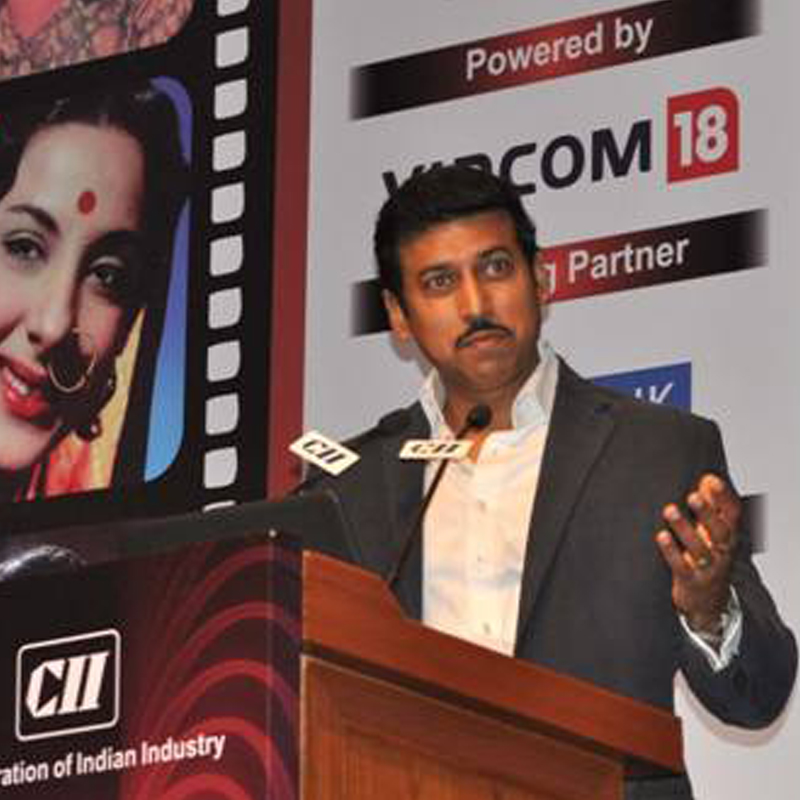
    Speaking at the CII Big Picture Summit 2016 here, Rathore admitted that with technological changes and innovations, a content platform is undergoing constant change with respect to creation, access and distribution. As a consequence, revenue and business models were being fragmented along with changes in market distribution and talent pool identification, he added.

    Pointing out that a series of measures have been undertaken to facilitate the growth and innovation within the media and entertainment (M&E) sector, the Minister said those initiatives included streamlining of processes and procedures for broadcasting sector in the context of licensing TV channels and measures to promote the branding of India’s soft power at international films festivals.

    Referring to the animation sector, the Minister said the government would be fast tracking the setting up of the National Centre for Excellence in partnership with the industry in an effort to optimise the returns in the sector.

    Later answering questions from participants, he regretted that news on online channels was going overseas unregulated and MIB would be taking up the issue with the Ministry of Information Technology. However, he said streaming of a film could not be done without a certification by the Central Board of Film Certification.

    On a question about spectrum and its scarcity, Rathore said as the whole process involved different ministries the logistics got delayed, but also pointed out that the IT Ministry had recently obtained a large chunk of spectrum from the Ministry of Defence for use in the telecoms and broadcast sectors.

    Asked about the cumbersome and time consuming process to get security clearances for television channels and multi-system operators, Rathore explained that delays were caused as several government organisations, apart from MIB, were involved in giving clearances. Still, a total of 881 TV channels had been licensed, including 349 news channels, he added, hinting that such procedural delays hadn’t slowed down the hunger for licences.