Tag: Rajyavardhan Rathore

  • ‘Mann Ki Baat’ earned Rs 4.78 cr; live streaming & app duds

    ‘Mann Ki Baat’ earned Rs 4.78 cr; live streaming & app duds

    MUMBAI: Prime Minister Narendra Modi’s radio address Mann ki Baat has reportedly got mega bucks for the All India Radio (AIR). Apart from getting millions of listeners, the programme, according to the information and broadcasting ministry, has fetched a gross revenue of over Rs 4.78 crore through advertisements.

    Prasar Bharati has informed that, as far as AIR is concerned, only the radio broadcast of Mann ki Baat is monetised and other platforms such as live streaming or app-based service are not, said the minister of state for information and broadcasting Rajyavardhan Rathore.

    Overall, the AIR registered a revenue growth in 2015-16 of Rs 447.76 crore from Rs 435.1 crore in 2014-15. Mann Ki Baat has also been visually adapted for telecast on Doordarshan channels.

    AIR, owned by the public broadcaster Prasar Bharati, so far aired 26 episodes of Mann Ki Baat. The show was launched in October 2014 and the broadcaster started monetising it by December. It is reported that AIR generates close to Rs 1 crore from Mann Ki Baat.

    According to a report in Livemint, the broadcaster has designated a total of seven minutes (five minutes before the show and two minutes after the show) for commercial revenue from Mann Ki Baat. It also airs self-promotional advertisements in those seven minutes.

    The report suggests that AIR charges an ad rate of Rs 2 lakh per 10 seconds of advertising for the PM’s radio address.

  • Slow pace of court cases, MSO registration may delay DAS deadline

    Slow pace of court cases, MSO registration may delay DAS deadline

    NEW DELHI: Between the analog sunset and a digital morning are court cases and cumbersome and slow MSO registration processes. And, the deadline of 31 December 2016 appears to be becoming a distant possibility despite assertions to the contrary in the stakeholder-government meetings.

    A mere 26 MSOs got provisional registration in November 2016, taking the total to 1,059 and the number of permanent MSOs (with ten-year licences) remaining static at 229.

    With the Ministry of Home Affairs (MHA) directive about doing away with security clearances for MSOs not being communicated in writing to the MIB, confusion prevails slowing down the registration processes of MSOs for delivering services in DAS areas.

    Junior minister in the Ministry of Information and Broadcasting (MIB) Rajyavardhan Rathore had admitted in response to a question in Parliament recently that legal cases, filed mostly by cable operators relating to some phases of digital rollout, may delay the year-end sunset date for analog services in the country.

    Though MIB officials and regulator TRAI in public insist that final digitisation deadline won’t be extended, in private government officials do admit that in Phase IV areas, comprising approximately 100,000 villages, small towns and hamlets, seeding of STBs is far from the desired level. An MIB official pointed out after the last DAS Task Force Meeting late last month that cash crunch due to demonetisation of high-value currency notes has only added to the problem on the ground slowing down the entire digital rollout process.

    Further impeding STB seeding is the slowing registration of MSOs who’d actually do the work on the ground.

    MIB List of Cancelled Registrations

    Meanwhile, MIB yesterday released a list of 44 MSOs whose registrations have been cancelled or their proposal for licences closed – as against 42 in October and 29 at the end of September 2016.These cancellations exclude four cases – Kal Cables of Chennai, Godfather Communication Pvt. Ltd of Amritsar, Digi Cable Network (India) Pvt Ltd of Mumbai, and Intermedia Cable Communication Pvt. Ltd of Delhi — in which provisional or permanent registrations were issued after high courts stayed the cancellation orders in petitions filed by these MSOs.

    Most of the other cases in the list of cancelled registrations had failed to get security clearance from the MHA. However, there are cases of many MSOs holding provisional licences not completing certain formalities relating to shareholders and so on.

    According to the latest list up to 30 November 2016, the areas of operation of two MSOs (one each in the permanent and provisional lists) have been revised or corrected after 31 October 2016.Of the new licensees, three (UCS Broadband Private Limited of Lucknow, Elxire IT Services Pvt. Ltd of Haryana and Microsense Wireless Pvt. Ltd of Chennai) have got pan-India licences. Maury Diginet Pvt. Ltd of Bihar has got pan-India licence for Phase II, III and IV.

    The other new registrations after October 2016 include state-wide licences or for specific districts in Kerala, Himachal Pradesh, Uttar Pradesh, Haryana, Maharashtra, Tamil Nadu, Gujarat, Madhya Pradesh, Chattisgarh, Rajasthan, Telengana, Andhra Pradesh, Manipur, Odisha, Punjab, Delhi and Tripura.In one of the meetings of stakeholders at MIB it was revealed that though there were a reported 6,000 MSOs in the country, but only a handful of them had come forward to register.

    ALSO READ:
    MIB’s digital deadline dilemma: to relax or not

    30 MSOs got provisional licences in Oct, taking total to 1033
     

  • Slow pace of court cases, MSO registration may delay DAS deadline

    Slow pace of court cases, MSO registration may delay DAS deadline

    NEW DELHI: Between the analog sunset and a digital morning are court cases and cumbersome and slow MSO registration processes. And, the deadline of 31 December 2016 appears to be becoming a distant possibility despite assertions to the contrary in the stakeholder-government meetings.

    A mere 26 MSOs got provisional registration in November 2016, taking the total to 1,059 and the number of permanent MSOs (with ten-year licences) remaining static at 229.

    With the Ministry of Home Affairs (MHA) directive about doing away with security clearances for MSOs not being communicated in writing to the MIB, confusion prevails slowing down the registration processes of MSOs for delivering services in DAS areas.

    Junior minister in the Ministry of Information and Broadcasting (MIB) Rajyavardhan Rathore had admitted in response to a question in Parliament recently that legal cases, filed mostly by cable operators relating to some phases of digital rollout, may delay the year-end sunset date for analog services in the country.

    Though MIB officials and regulator TRAI in public insist that final digitisation deadline won’t be extended, in private government officials do admit that in Phase IV areas, comprising approximately 100,000 villages, small towns and hamlets, seeding of STBs is far from the desired level. An MIB official pointed out after the last DAS Task Force Meeting late last month that cash crunch due to demonetisation of high-value currency notes has only added to the problem on the ground slowing down the entire digital rollout process.

    Further impeding STB seeding is the slowing registration of MSOs who’d actually do the work on the ground.

    MIB List of Cancelled Registrations

    Meanwhile, MIB yesterday released a list of 44 MSOs whose registrations have been cancelled or their proposal for licences closed – as against 42 in October and 29 at the end of September 2016.These cancellations exclude four cases – Kal Cables of Chennai, Godfather Communication Pvt. Ltd of Amritsar, Digi Cable Network (India) Pvt Ltd of Mumbai, and Intermedia Cable Communication Pvt. Ltd of Delhi — in which provisional or permanent registrations were issued after high courts stayed the cancellation orders in petitions filed by these MSOs.

    Most of the other cases in the list of cancelled registrations had failed to get security clearance from the MHA. However, there are cases of many MSOs holding provisional licences not completing certain formalities relating to shareholders and so on.

    According to the latest list up to 30 November 2016, the areas of operation of two MSOs (one each in the permanent and provisional lists) have been revised or corrected after 31 October 2016.Of the new licensees, three (UCS Broadband Private Limited of Lucknow, Elxire IT Services Pvt. Ltd of Haryana and Microsense Wireless Pvt. Ltd of Chennai) have got pan-India licences. Maury Diginet Pvt. Ltd of Bihar has got pan-India licence for Phase II, III and IV.

    The other new registrations after October 2016 include state-wide licences or for specific districts in Kerala, Himachal Pradesh, Uttar Pradesh, Haryana, Maharashtra, Tamil Nadu, Gujarat, Madhya Pradesh, Chattisgarh, Rajasthan, Telengana, Andhra Pradesh, Manipur, Odisha, Punjab, Delhi and Tripura.In one of the meetings of stakeholders at MIB it was revealed that though there were a reported 6,000 MSOs in the country, but only a handful of them had come forward to register.

    ALSO READ:
    MIB’s digital deadline dilemma: to relax or not

    30 MSOs got provisional licences in Oct, taking total to 1033
     

  • Govt defends UA certificate to ‘Jungle Book’ (3D)

    Govt defends UA certificate to ‘Jungle Book’ (3D)

    NEW DELHI: Even as it is still studying the recommendations of the Shyam Benegal Committee on film certification, the Government has justified the U/A certification to the English film “Jungle Book” (3D).

    The minister of state for information and broadcasting Rajyavardhan Rathore said in reply to a question in the Parliament that, though it was a children’s film, the Examining Committee of the Central Board of Film Certification judged it in its entirety from the viewpoint of its overall impact and felt that being in 3D technology, some of the visuals and sound effects could be scary for children below 12 years.

    Therefore, the film was recommended for “UA” certificate – universal viewing with parental guidance for children below 12 years. Similar grading was given for this film – “Parental Guidance” – in countries such as Australia, Canada, the U.S., the U.K., New Zealand, South Korea, Singapore, and the Philippines.

    CBFC certifies films for public exhibition in accordance with the Cinematograph Act 1952, Cinematograph (Certification) Rules, 1983 and guidelines issued thereunder.The Board issues certificates under the categories ‘U’, ‘UA’, ‘A’ or ‘S’ as applicable in accordance with Section 5A of the Cinematograph Act.

  • Govt defends UA certificate to ‘Jungle Book’ (3D)

    Govt defends UA certificate to ‘Jungle Book’ (3D)

    NEW DELHI: Even as it is still studying the recommendations of the Shyam Benegal Committee on film certification, the Government has justified the U/A certification to the English film “Jungle Book” (3D).

    The minister of state for information and broadcasting Rajyavardhan Rathore said in reply to a question in the Parliament that, though it was a children’s film, the Examining Committee of the Central Board of Film Certification judged it in its entirety from the viewpoint of its overall impact and felt that being in 3D technology, some of the visuals and sound effects could be scary for children below 12 years.

    Therefore, the film was recommended for “UA” certificate – universal viewing with parental guidance for children below 12 years. Similar grading was given for this film – “Parental Guidance” – in countries such as Australia, Canada, the U.S., the U.K., New Zealand, South Korea, Singapore, and the Philippines.

    CBFC certifies films for public exhibition in accordance with the Cinematograph Act 1952, Cinematograph (Certification) Rules, 1983 and guidelines issued thereunder.The Board issues certificates under the categories ‘U’, ‘UA’, ‘A’ or ‘S’ as applicable in accordance with Section 5A of the Cinematograph Act.

  • Reliance Jio may be fined for using PM’s pic in ad sans permission

    Reliance Jio may be fined for using PM’s pic in ad sans permission

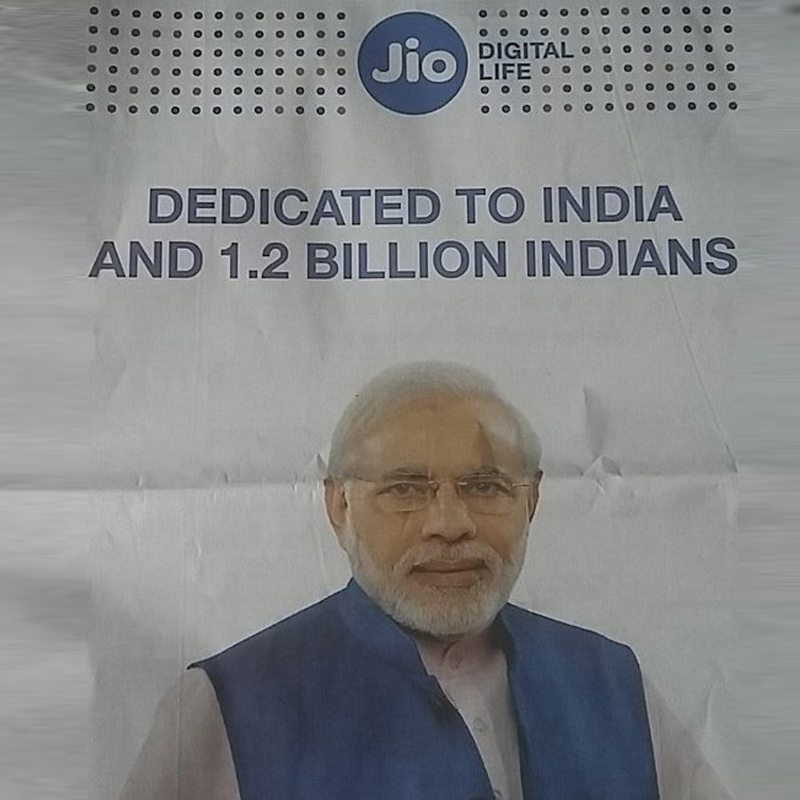
    NEW DELHI: The Government has denied that it gave permission for publication of a full-page photograph of the prime minister Narendra Modi in advertisements in newspapers about Reliance Jio.

    Minister of state for information and broadcasting Rajyavardhan Rathore said: “No permission was granted by the Prime Minister’s Office.”

    Rathore told the Parliament that the Act, ‘The Emblems and Names (Prevention of Improper Use) Act, 1950’ is administered by the Consumer Affairs, Food & Public Distribution Ministry.

    He also said that the directorate of advertising and visual publicity (DAVP) of his ministry releases Government advertisements only and does not release advertisements of any private body.

    Reliance Jio may have to pay only Rs 500 as fine for using Modi’s picture in advertisement, without permission from the government. Newspapers reported that the minor penalty could be charged from Jio.

    Rathore, in a written reply, admitted that it was aware that Reliance Jio used the PM’s photographs in the advertisement. About the actions that can be taken against Jio, he replied that the (DAVP) unit was responsible for it is the Emblems and Names (prevention of improper use) Act 1950.

    Section-3 of the Act states that no person shall use any “specified” name or emblem for the purpose of any trade, business or any such activities without the “previous permission of the central government” or officers authorised by the government. The list of names and emblems that cannot be used without prior permission from the government includes the president of India, the PM, governor of a state, the government of India or any state, Mahatma Gandhi, Indira Gandhi, Jawaharlal Nehru, United Nations Organisation, Ashok Chakra or Dharma Chakra.

  • Reliance Jio may be fined for using PM’s pic in ad sans permission

    Reliance Jio may be fined for using PM’s pic in ad sans permission

    NEW DELHI: The Government has denied that it gave permission for publication of a full-page photograph of the prime minister Narendra Modi in advertisements in newspapers about Reliance Jio.

    Minister of state for information and broadcasting Rajyavardhan Rathore said: “No permission was granted by the Prime Minister’s Office.”

    Rathore told the Parliament that the Act, ‘The Emblems and Names (Prevention of Improper Use) Act, 1950’ is administered by the Consumer Affairs, Food & Public Distribution Ministry.

    He also said that the directorate of advertising and visual publicity (DAVP) of his ministry releases Government advertisements only and does not release advertisements of any private body.

    Reliance Jio may have to pay only Rs 500 as fine for using Modi’s picture in advertisement, without permission from the government. Newspapers reported that the minor penalty could be charged from Jio.

    Rathore, in a written reply, admitted that it was aware that Reliance Jio used the PM’s photographs in the advertisement. About the actions that can be taken against Jio, he replied that the (DAVP) unit was responsible for it is the Emblems and Names (prevention of improper use) Act 1950.

    Section-3 of the Act states that no person shall use any “specified” name or emblem for the purpose of any trade, business or any such activities without the “previous permission of the central government” or officers authorised by the government. The list of names and emblems that cannot be used without prior permission from the government includes the president of India, the PM, governor of a state, the government of India or any state, Mahatma Gandhi, Indira Gandhi, Jawaharlal Nehru, United Nations Organisation, Ashok Chakra or Dharma Chakra.

  • Telecast ban withheld in two of 31 cases; no IMC recast plan

    Telecast ban withheld in two of 31 cases; no IMC recast plan

    NEW DELHI: Information and broadcasting minister M Venkaiah Naidu has said that there have been only two cases in the past two years and the current year where the government has put on hold its orders asking TV channels to prohibit transmission for limited time.

    These relate to channel DY 365 for a news broadcast on 12 June 2014 and the NDTV India for a report on 4 January 2016, Naidu told the Parliament. In both cases, he said, the channels had made representations to the ministry which were under consideration.

    The minister of state for information and broadcasting Rajyavardhan Rathore, answering a supplementary, said that there was no proposal to re-constitute the Inter-Ministerial Committee (IMC) which already includes representatives from the industry.

    DY 365 TV channel telecast news bulletin revealing identity of rape victims in two separate news reports. The matter was placed before the IMC on 13 January 2015 in which a representative of the channel was also afforded an opportunity of personal hearing. IMC recommended that the channel may be taken off air for a day due to multiple violations. With the approval of competent authority, an order dated 26 March 2015 was issued to DY 365. Subsequently, the channel submitted a representation on 27 March.

    NDTV India TV channel telecast a report on Pathankot terrorist attack disclosing sensitive information well beyond the briefing given by the designated officer while the anti-terrorist operations were still under way. The content was found in violation of Rule 6(1)(p) of the Programme Code. The matter was placed before the IMC on 25 July, 2016, in which representative of the channel was also afforded an opportunity of a personal hearing. It was recommended that the channel may be taken off air for at least one day keeping in view the gravity of the violation and an order issued on 2 November 2016. Subsequently, the channel submitted a representation dated 7 November 2016 which is pending.

    (Meanwhile, the Bombay High Court has admitted for hearing a petition by Care World India challenging a week-long telecast prohibition order.)

    In reply to another question, Rathore said as many as 31 TV channels had been ordered to stop transmission for periods ranging from one to 60 days since 2005. These include Care World India and AXN two times each, News Time Assam for three news items.

    The authority for exercising powers under Cable Act by Central Government or concerned Government/ authorised officers are provided under various sections of the Cable Act and mainly under Section 19 & 20.

  • Telecast ban withheld in two of 31 cases; no IMC recast plan

    Telecast ban withheld in two of 31 cases; no IMC recast plan

    NEW DELHI: Information and broadcasting minister M Venkaiah Naidu has said that there have been only two cases in the past two years and the current year where the government has put on hold its orders asking TV channels to prohibit transmission for limited time.

    These relate to channel DY 365 for a news broadcast on 12 June 2014 and the NDTV India for a report on 4 January 2016, Naidu told the Parliament. In both cases, he said, the channels had made representations to the ministry which were under consideration.

    The minister of state for information and broadcasting Rajyavardhan Rathore, answering a supplementary, said that there was no proposal to re-constitute the Inter-Ministerial Committee (IMC) which already includes representatives from the industry.

    DY 365 TV channel telecast news bulletin revealing identity of rape victims in two separate news reports. The matter was placed before the IMC on 13 January 2015 in which a representative of the channel was also afforded an opportunity of personal hearing. IMC recommended that the channel may be taken off air for a day due to multiple violations. With the approval of competent authority, an order dated 26 March 2015 was issued to DY 365. Subsequently, the channel submitted a representation on 27 March.

    NDTV India TV channel telecast a report on Pathankot terrorist attack disclosing sensitive information well beyond the briefing given by the designated officer while the anti-terrorist operations were still under way. The content was found in violation of Rule 6(1)(p) of the Programme Code. The matter was placed before the IMC on 25 July, 2016, in which representative of the channel was also afforded an opportunity of a personal hearing. It was recommended that the channel may be taken off air for at least one day keeping in view the gravity of the violation and an order issued on 2 November 2016. Subsequently, the channel submitted a representation dated 7 November 2016 which is pending.

    (Meanwhile, the Bombay High Court has admitted for hearing a petition by Care World India challenging a week-long telecast prohibition order.)

    In reply to another question, Rathore said as many as 31 TV channels had been ordered to stop transmission for periods ranging from one to 60 days since 2005. These include Care World India and AXN two times each, News Time Assam for three news items.

    The authority for exercising powers under Cable Act by Central Government or concerned Government/ authorised officers are provided under various sections of the Cable Act and mainly under Section 19 & 20.

  • Encourage cashless transactions, Naidu urges officials

    Encourage cashless transactions, Naidu urges officials

    NEW DELHI: M Venkaiah Naidu, who holds the dual charge of the ministries of information & broadcasting, and urban development and housing & urban poverty alleviation, yesterday urged officials in both the ministries to facilitate cashless economy and encourage digital and online transactions.

    Addressing the officers regarding the steps being taken by the government, he said the attempt was to prevent delays through seamless transactions and end the menace of corruption and black money.

    Naidu mentioned that the government’s JAM (Jan Dhan, AADHAR & Mobile) initiative would also facilitate this transformation. In this context, he reiterated the prime minister’s JAM vision which would ensure maximum penetration of technology among the masses and maximum empowerment for the poor.

    Naidu urged all officers to provide counselling to their staff to move and adapt to a cashless and digital transactions reducing the role of physical money in day-to-day transactions. This exercise could also be conducted at the homes by officers and staff with the people associated in their day to day life as part of social responsibility. The minister also mentioned few platforms available for digital transactions including Unified Payment Interface and Mobile Wallets.

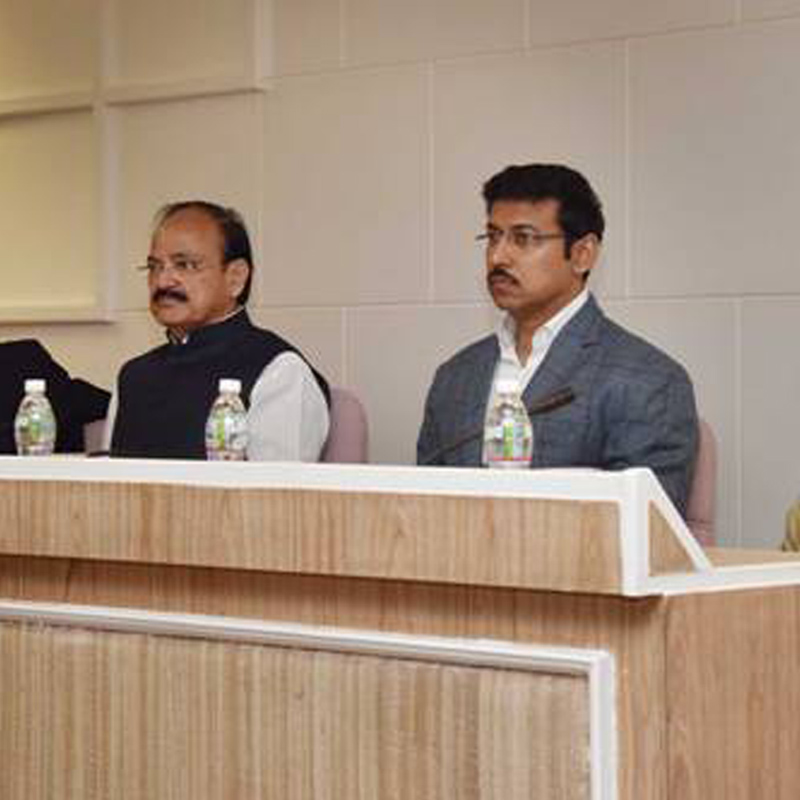
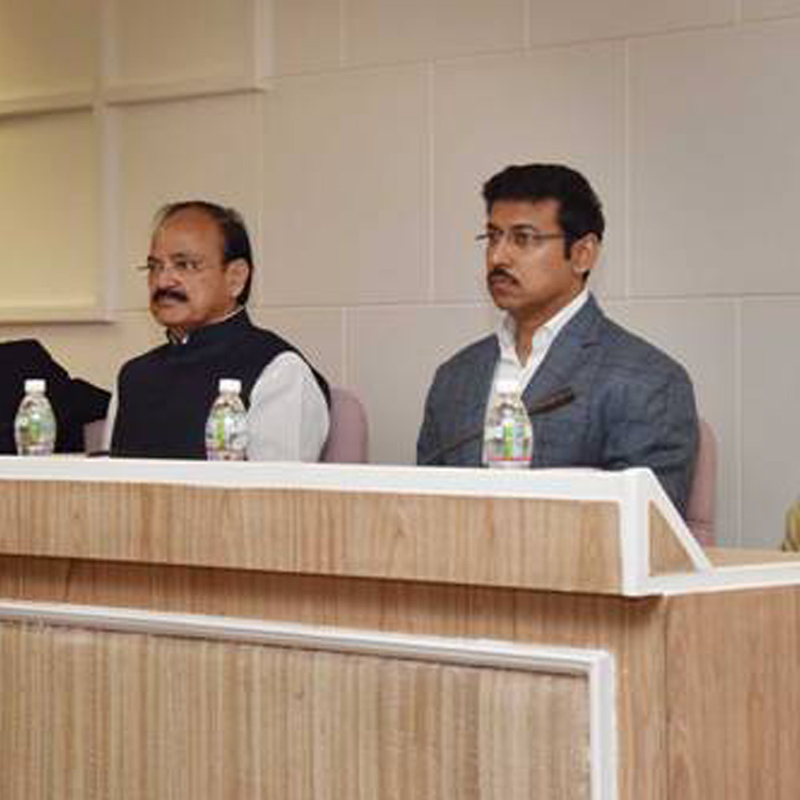
    Minister of state for information & broadcasting Rajyavardhan Rathore, ministry secretary Ajay Mittal, urban development secretary Rajiv Gauba, housing and urban poverty secretary Dr. Nandita Chatterjee, senior officers from the ministries, were also present in the meeting held at Vigyan Bhawan, NewDelhi.

    A presentation on “Government – Citizen Transactions towards less cash economy including different platforms and methods of transaction” was also made by Team NITI Ayog. The presentation was followed by a Question & Answer session, where doubts were cleared and queries answered.