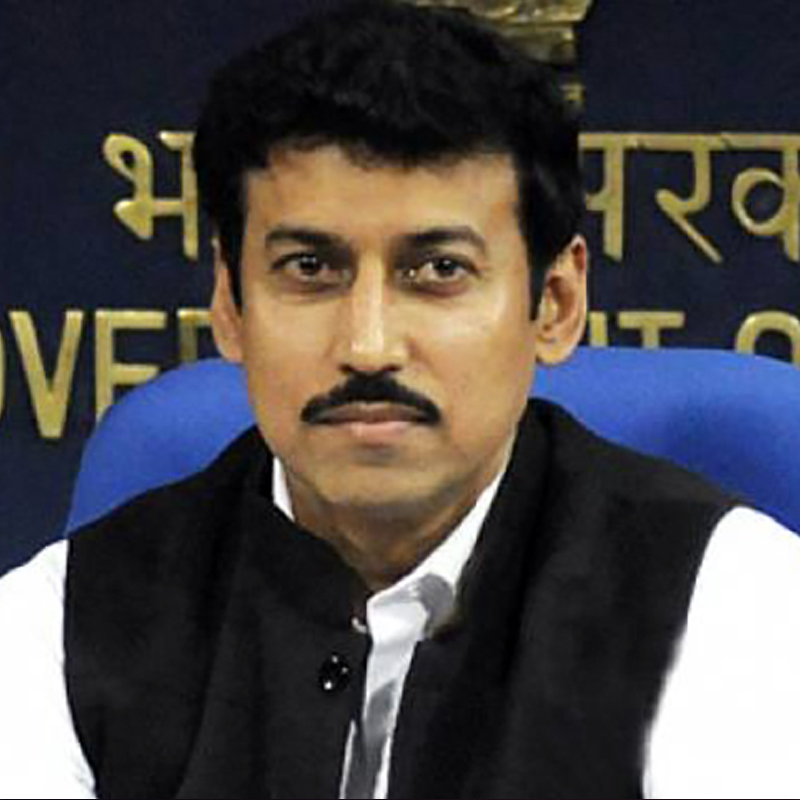
Tag: Rajyavardhan Rathore

  • MIB yet to finalise new DTH policy; interim extensions granted

    MIB yet to finalise new DTH policy; interim extensions granted

    MUMBAI: Direct-to-home (DTH) operators of India will have to wait a while if they were expecting something from the Ministry of Information and Broadcasting (MIB) regarding new DTH policy guidelines. In response to a question in the Parliament, Minister of State for MIB Rajyavardhan Rathore said that the government hasn’t yet finalised the new DTH policy.

    Rathore also added that the licenses of those DTH operators whose interim renewals were getting expired on 31 December 2018 have already been granted interim extension up to 30 June 2019.

    Last year TRAI had reiterated its recommendations to the Ministry on new licensing conditions for DTH players. The regulatory body had recommended that licences be issued for a period of 20 years and thereafter should be renewed every 10 years.

    Earlier it was reported that MIB was looking to send the new DTH policy for Cabinet approval by the end of 2018.

    The decades old DTH policy is being updated keeping the present scenario in mind, including fast changing technology and a slowing economy. Last month, MIB Secretary Amit Khare said that some sops would be handed to the DTH operators. However, he refused to comment on whether those sops would include financial rationalisation too like slashing of the annual revenue sharing with the government that is calculated at the rate of 10 per cent.

    In the past, the DTH industry has demanded, among other things, cut in annual revenue share percentage to 6-8 per cent and other financial adjustments (like removal of content acquisition cost and an adjusted gross revenue) while calculating gross revenues.

    Jawahar Goel, managing director of India’s biggest DTH operator (in terms of subscribers) Dish TV had written to policy-makers in October highlighting once again the industry’s woes and pleading for rationalisation of costs and taxes.

  • Digitisation has increased M&E revenue: MIB’s Rathore

    Digitisation has increased M&E revenue: MIB’s Rathore

    MUMBAI: The Ministry of Information and Broadcasting (MIB) is patting its back for the digitisation success in India. Minister of State for MIB Rajyavardhan Rathore endorsed the growth of the media and entertainment industry and the benefits of digitisation.

    In response to a question raised in the Lok Sabha, he said that digitisation has led to enhanced revenue generation in the industry as it enhanced benefits to consumers as well as transparency in the subscriber base. The government passed the Cable Television Networks (Regulation) Amendment Act in December 2011 for digitisation of cable television networks in a phased manner.

    He also added “Digitisation enables efficient utilisation of the spectrum bandwidth and enhances the capacity to carry channels on the cable. The consumers get a wider choice of channels, improved quality of content and added services and the states benefit from lowered incidence of evasion of taxes. Cable TV digitisation has also given a boost to the indigenous manufacturing of set top boxes (STBs) and it also results in skill development & employment generation in digital environment."

    Rathore cited the Federation of Indian Chambers of Commerce & Industry (FICCI) report which estimated the growth of the industry at Rs 1660 billion in 2018 from Rs 1473 billion in 2017, while the figure stood at Rs 1026 billion in 2014.  

    Indian M&E sector has not only seen investments from foreign behemoths only but from large domestic conglomerates. In addition to that, the current digital wave is boosting the growth faster.

  • Does govt propose to regulate kids’ channels? MIB says ‘no’

    Does govt propose to regulate kids’ channels? MIB says ‘no’

    NEW DELHI: Do watching cartoons have lasting effects on the children? Has the government made any assessment regarding the impact of cartoon channels on kids? Does the government propose to regulate/limit the telecast of cartoon programmes by private channels and Doordarshan in accordance with the examination schedule of children?

    Well, these were some of queries raised by an Indian parliamentarian in the Lok Sabha or Lower House yesterday. The government, while admitting kids’ programming could affect children, however, clarified there were no proposal at present to regulate such shows or limiting their broadcast schedules.

    Pointing out research does indicate that watching cartoon has both “negative and positive effects” on children, Minister of Information and Broadcasting Rajyavardhan Rathore said the government is not aware of any study or research that conclusively proves watching cartoons or any such other programme has “lasting effect on children”.

    Rathore further said, “Presently there is no such policy [to regulate or limit the telecast of cartoon programmes by private channels and Doordarshan].”

    According to Rathore, the government grants permission to TV channels under two categories of news & current affairs and non-news & current affairs and there was no separate categorisation (like cartoon channels) for granting of permission by the government to start a TV channel.

    “Non-news and current affairs channels are permitted to air programmes of any nature, including cartoon[s], provided the content of the programme adheres to [the] programme code stipulated under the Cable Television Networks (Regulation) Act, 1995,” the Minister added.

    Replying to another question on whether the Government proposes to introduce a legislation to regulate web media and news portals for their mandatory registration, Rathore said presently there was “no such proposal” in this regard.

    “The government is committed to freedom of speech and expression and privacy of its citizens as enshrined in the Constitution of India. Government does not regulate content appearing on web media. Law enforcement agencies take action on posting of malicious content on specific case to case basis,” the Minister told his fellow parliamentarian.

    The MIB, meanwhile, recently told the Supreme Court that it was withdrawing a proposal to set up a social media hub, which was criticized by the civil society and online activists on the ground that the government was trying to prepare a surveillance center to track live the digital footprints of its citizens.

  • DD has no plans to buy rights of cricket WC ’19 & Tests: MIB

    DD has no plans to buy rights of cricket WC ’19 & Tests: MIB

    NEW DELHI: Ministry of Information and Broadcasting (MIB) has stated that national broadcaster Doordarshan will continue relying on existing laws to air live and shared signals of relevant international cricket matches, the rights for which may be with some private broadcaster, while clarifying there were no plans to directly acquire rights for Tests or the cricket World Cup 2019.

    Quoting inputs from Prasar Bharati, parent of Indian pubcasters DD and All India Radio, MIB Minister Rajyavardhan Rathore told fellow parliamentarians that “live telecast of cricket matches” was being done on Doordarshan Sports channel under the Sports Broadcasting Signals (Mandatory Sharing with Prasar Bharati) Act, 2007, which was passed by the Parliament and notified the same year. These matches included the ongoing cricket series between India and England comprising three T20s and three one-dayers.

    “The Act enjoins upon the rights holder to share with Prasar Bharati, live broadcasting signals of sports events of national importance for which they hold broadcast rights to enable Prasar Bharati to re-transmit the same on its terrestrial and DTH networks,” Rathore explained.

    However, the government did not explain as to why it did not insist on shared TV feeds of five-day Test matches.

    Incidentally, Star India, managers of several sports channels and rights holders of IPL and several other cricket properties, which were acquired on payment of several billions of dollars, had filed a case in the Supreme Court against unencrypted signals of DD’s satellite-delivered channels not only spilling over to other countries, but also pirated by distribution platforms within India too during cricket matches. Star got a favourable directive from the apex court in 2017, though Prasar Bharati had described it as an opportunity. as it helped it to bring the focus back on DD Sports channel.

    Meanwhile, answering to other queries raised by parliamentarians on cricket, Rathore admitted there was “no proposal to acquire the broadcast rights” for live telecast of Test series between India and England, and the Cricket World Cup in 2019. The broadcast rights for India region for the ongoing England tour of India lies with Sony Pictures Networks India.

    DD Can’t Be Compared To Private Sector TV Channels’

    Pointing out that DD’s programming is more focused on issues of public interest like health, education, empowerment, social justice, etc., the Minister said that the pubcaster’s programmes could “not be be compared” with private channels as both have totally different objectives and programming formats.

    However, Doordarshan is striving to provide “impactful and meaningful” programmes to become the “preferred channel of choice of people”, Rathore said, adding it was a constant endeavour of DD to modernize its infrastructure and improve the quality of programmes.

    “Doordarshan has undertaken a comprehensive plan to improve the programme content, and look and feel of all national and regional channels in DD network,” the Minister said, highlighting that efforts were being made to empanel creative agencies that can work for better look and feel of the channel(s).

  • MIB: No deadline to TV channels on use of foreign satellites

    MIB: No deadline to TV channels on use of foreign satellites

    NEW DELHI: In what may come as a relief to TV channels, the Indian government said on Monday it has “not set any deadline” on the domestic media companies for use of transponders on foreign satellites, though it has withdrawn permission to over 200 channels for various reasons.

    Asked by a fellow parliamentarian whether some TV channels were using foreign transponders even after expiry of a government deadline, Minister of Information and Broadcasting Rajyavardhan Rathore told Rajya Sabha (Upper House), “The government has not set any deadline for use of foreign transponders by the TV channel owners.”

    The clarification from the MIB minister gains importance as indirect indications from various ministries — like delays in various clearances — over the last several months had been nudging TV channels to start the process of migration to Indian satellites from foreign spacecrafts.

    A senior executive of a big broadcasting company admitted last week in private that though giving Rathore a free hand at MIB was a good sign, but clearance processes in the ministry were still slow.

    Meanwhile, according to Rathore, out of the 867 private satellite TV channels having valid permission for uplinking and/or downlinking in India as of 30 June 2018, permission of 236 TV channels were cancelled due to “various reasons, including request for cancellation by the channel owner(s)”.

  • MIB’s Rathore admits to online media norms panel’s new avatar

    MIB’s Rathore admits to online media norms panel’s new avatar

    NEW DELHI: We had told you earlier, but now it’s official coming straight from the horse’s mouth. Ministry of Information and Broadcasting, led by an Olympics medal winning Rajyavardhan Rathore, has passed the baton to another government set-up to finish exploring regulations for the online media and content.

    “The Ministry of I&B had constituted a committee on 4 April 2018 for framing regulations for online media/news portals and online content, including digital broadcasting, which encompasses entertainment/infotainment and news/media aggregators,” MIB Minister Rathore said today in Parliament.

    He added: “However, since government had constituted an inter-ministerial committee on ‘Investment in Critical National Infrastructure, Digital Broadcasting and related issues’, which in its first meeting held on 10 May 2018 observed that some of the Terms of References (ToRs) and issues of the two committees are common, a decision was taken to dovetail the ToR of the committee constituted by this Ministry with that of the committee on ‘Investment in Critical National Infrastructure, Digital Broadcasting and related issues’.”

    The minister was replying to queries raised on proposed online media regulations by a fellow parliamentarian.

    The MIB panel, when constituted under the stewardship of Minister Smriti Irani, had drawn flak on many counts. One of many criticisms was that it was beyond MIB’s remit to deal with things that are internet-based as they fall within the purview of Ministry of Electronics and IT (Meity). Another drawback to the formation of this panel was that it had representatives from various government organisations, but no representation from India’s thriving and blooming online media that the committee was supposed to look into.

    The very fact that another government committee is supposed to look into matters relating to online media should continue keeping online players on their toes.

  • TRAI suggestions on uplink, downlink norms under consideration, says MIB

    TRAI suggestions on uplink, downlink norms under consideration, says MIB

    NEW DELHI: The Indian government has said broadcast and telecoms regulator TRAI’s recommendations on ease of doing business and uplink/downlink norms, some of them quite radical, are under consideration.

    “Government solicited recommendation of Telecom Regulatory Authority of India (TRAI)… they are under consideration,” Minister of Information and Broadcasting Rajyavardhan Rathore told Parliament last week without giving any time frame or clarifying whether the regulator’s suggestions on both the issues would be accepted in totality or they would be tweaked as and when legislated into regulations.

    Pointing out that because the present policy guidelines for uplinking of television channels from India and those relating to landing rights came into effect in December 2011, it was felt that the government should have them re-examined by the regulator in view of the changing broadcasting environ in the country, Rathore explained.

    However, TRAI in its recommendations on uplink and downlink norms, shot down an idea proposed by MIB that had suggested whether TV channels’ frequencies too could be auctioned on the lines of FM radio stations.

    TRAI also stuck with most of the existing guidelines and norms for uplink and downlink permissions for TV channel and teleports. However, it suggested enhancing of annual permission fees from the present levels, amongst some other changes. The recommendations on uplink and downlink of TV channels and teleports had been awaited eagerly by the industry, already reeling under pressures from various sides, including economic.

    The regulator also said that mandating encryption of broadcast of FTA TV channels was not a good idea, while suggesting that various processes for government clearances should be streamlined and completed within a stipulated time-frame.

    The broadcast industry and independent observers feel that it would help the industry if Minister Rathore’s team at MIB take a quick decision on the suggestions made by TRAI on both the issues instead of keeping the matter pending.

    However, as TRAI’s role is recommendatory, it is not mandatory for government organisations, including MIB, Department of Telecoms (DoT) and Department of Space, to accept the suggestions in any form.

    There have been instances when the regulator’s suggestions have been shot down or tweaked by the government. A recent example being TRAI’s push for its role to be upgraded to that of a converged regulator for broadcast, online and telecoms sectors, which was shot down by the DoT while formulating the final version of the National Digital Communications Policy 2018.

  • MIB Minister tries to allay fears on online surveillance & privacy violations

    MIB Minister tries to allay fears on online surveillance & privacy violations

    NEW DELHI: The Indian government has denied that its proposed Social Media Communications Hub, under the jurisdiction of Ministry of Information and Broadcasting (MIB), will violate a citizen’s privacy through monitoring of social media footprints as the plan was more directed towards propagating the government’s policy initiatives.

    The government has also clarified that there was no proposal under consideration to get installed tracking chips in set-top- boxes through which various TV and broadband services are delivered to a large number of the 190 million-plus TV households in India.

    “The government proposes to set up a Social Media Hub to facilitate information flow regarding its policies and programmes through social media platforms, that is Facebook, Twitter, Instagram, YouTube, etc.,” MIB Minister Rajyavardhan Rathore told the Indian Parliament’s Lower House yesterday while answering queries raised by fellow parliamentarians whether such a monitoring facility is aimed at collecting and analysing data across all major social media platforms that would ultimately be a surveillance tool for the government.

    The Minister also clarified that there was no proposal to “invade an

    individual’s right to privacy, and the right to freedom of speech” through the proposed social media hub.

    In the past two years, MIB has been a facilitator in providing publicity to the flagship schemes of the government on major social media platforms and had organized various online promotional activities in this regard, Rathore explained.

    What Rathore didn’t clarify or add — as he was not asked specifically so — as to why a tender for setting up of the Social Media Communications Hub was floated in the first place and why the document’s objectives were so detailed that it alarmed civil society on its citizen surveillance aspects. The full details of the tender document can be still found online.

    Incidentally, the deadline for a tender floated to locate vendor(s) to set up the proposed social media hub — termed by critics as a surveillance tool to monitor Indian citizens’ activities and thoughts in real time — has been extended several times since April 2018 with the new deadline now being 20 August 2018 before which the Supreme Court is scheduled to hear a case against its setting first week of August.

    The apex court’s initial observations sounded critical as it said if such a monitoring hub came up it could turn India into a “surveillance state”.

    Broadcast Engineering Consultants India Limited (BECIL), an organization under the umbrella of MIB, had floated a tender to supply a software for the project. When the idea was first mooted Smriti Irani was the MIB Minister.

    “A technology platform is needed to collect digital media chatter from all core social media platforms as well as digital platforms such as news, blogs… In a single system providing real-time insights, metrics and other valuable data,” the tender document stated.

    Under the project, media persons would be employed on contractual basis in each district to be the “eyes and ears” of the government and provide real-time updates from the ground — one of the reason for extending the deadline was this condition, missing in the original tender document, got added later.

    According to critics of the project, undertaken under a seemingly harmless name of Social Media Communications Hub, however, it aimed to monitor in real times not only the social media and online activities of Indian citizens, but also seeks to deploy technology to predict behavior and possible future actions of people. This, at a time when India doesn’t have strong data protection laws.

    Amongst the many listed objectives of the media hub is this: “What would be the headlines and breaking news of various channels and newspapers across the globe— could be done with knowledge about their leanings, business deals, investors, their country policies, sentiment of their population, past trends etc. NYT, Economist, Time etc. are good examples, what would be the global public perception due to such headlines and breaking news, how could the public perception be moulded in positive manner for the country, how could nationalistic feelings be inculcated in the masses, how can the perception management of India be improved at the world for a how could the media blitzkrieg of India’s adversaries be predicted and replied/neutralized, how could the social media and internet news/discussions be given a positive slant for India.”

    One of the many critics of this project is the Internet Freedom Foundation (IFF), which has also sent a notice to the MIB to stop the project, failing which the organization would take legal action. Its concerns? “Social Media Communication Hub will also have the ability to broadcast content without any legal authority or guidance through 20 central and 716 district level social media executives. In sum, this is a system of control through surveillance and a capacity to spread propaganda,” the Foundation had said in an online campaign last month.

  • Fake news on social media: Law & IT Minister favours evolving a policy

    Fake news on social media: Law & IT Minister favours evolving a policy

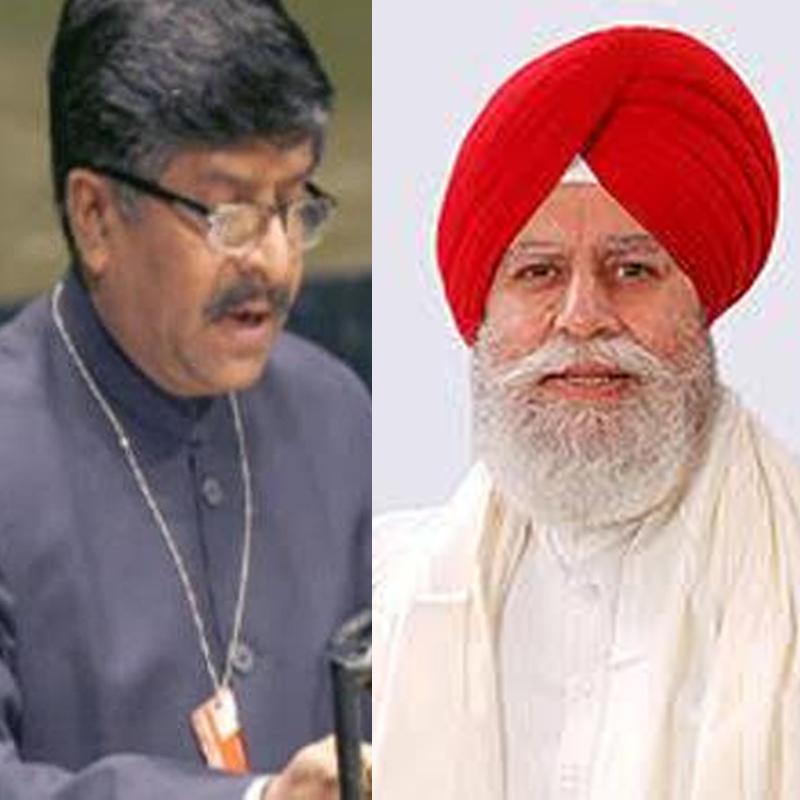
    NEW DELHI: The Indian government seems to be speaking in two voices over the menace of fake news. While law and IT Minister Ravi Shankar Prasad today said he would hold talks with stakeholders to evolve a policy, his junior SS Ahluwalia on Wednesday had told Parliament that the government doesn't propose to bring in regulations for social media.

    Law and IT Minister Ravi Shankar Prasad informed the Rajya Sabha (Upper House) yesterday that he will hold discussion with stakeholders, including political parties, to evolve a policy to deal with the misuse of social media, according to a PTI report, which also quoted a government statement saying it has been conveyed to WhatsApp in "unmistakable terms" that it was a very serious issue that "deserves a more sensitive response".

    The government yesterday also  shot off another notice to WhatsApp asking it to come out with effective solutions to curb the menace of fake news beyond just labelling forwards. It also warned the company that mediums used for propagation of rumours are liable to be treated as 'abettors' and can face legal consequences if they remain "mute spectators", the PTI report said.

    Facebook-owned WhatsApp has been under fire from the Indian government over fake news and false information being circulated on its messaging platform. The government had in the past too issued a stern warning to the company to clamp down on hoax messages designed to "provoke" and "instigate" people.

    "When rumours and fake news get propagated by mischief mongers, the medium used for such propagation cannot evade responsibility and accountability. If they remain mute spectators they are liable to be treated as abettors and thereafter face consequent legal action," a PTI report quoted an IT Ministry statement as saying. The ministry said it has approached WhatsApp to bring more effective solutions to the table, to ensure greater "accountability and facilitate enforcement of law" beyond the existing efforts towards labelling forwards and identifying fake news.

    The Supreme Court, earlier this week, asked Parliament to consider enacting a new law to effectively deal with incidents of mob lynching, saying "horrendous acts of mobocracy" cannot be allowed to become a new norm. 

    “Government doesn't regulate content on social media sites": IT Ministry's SS Ahluwalia,  

    On Wednesday, the Indian government admitted it doesn’t plan to regulate content on social media, as of now, despite the menace of fake news affecting the societal fabric. However, the government is quiet on the future of a committee set up under the Ministry of Information and Broadcasting (MIB) that has the mandate to explore regulation for online content, including those on OTT platforms.

    “Government does not regulate content appearing on social media sites, and law enforcement and security agencies may take action on specific case to case basis as per law in force,” junior Minister for Electronics & Information Technology (MEITY) SS Ahluwalia informed Parliament on Wednesday, emphasizing that the government was fully “committed to freedom of speech and expression” and “privacy” of its citizens as enshrined in the Indian Constitution.

    Ahluwalia was asked about the steps being taken by the federal government to address the problem of fake news and whether there were any plans to monitor and regulate social media content.

    According to the Minister, the Information Technology (IT) Act, 2000 has provisions for removal of objectionable online content that was “harmful, defamatory, hateful, libelous, objectionable” and affected minors, apart from the national security.

    However, as the Minister was not asked, he did not dwell on the future of  a committee —comprising representatives of various government organisations and few industry bodies too — set up under the MIB to explore online content regulations. The setting up of the panel was criticized as it was outside the remit of the MIB as the issue concerned came under the jurisdiction of MEITY.

    The said committee, helmed by MIB Secretary, is reported to have met a few times since its formation, but the details of those meetings are not public yet. Nor is the fact whether it would be disbanded or taken out MIB’s jurisdiction in favour of MEITY.

    MIB Stresses on Self-Regulation To Fight Fake News Menace On TV

    On Thursday, MIB Minister Rajyavardhan Rathore stressed on existing safeguards in laws and self-regulation to say that there was also no proposal to indulge in pre-censorship of TV channels to stop them from allegedly spreading fake news.

    “The [Cable Television Networks Regulation] Act [1995] does not provide for pre-censorship of any programmes and advertisements telecast on TV channels. However, it prescribes that all programmes and advertisements telecast on such TV channels should be in conformity with the prescribed Programme Code and Advertising Code enshrined in the aforesaid Act and the rules framed thereunder,” Rathore informed fellow parliamentarians who were concerned about some TV channels spreading fake news.

    Earlier, MIB, under minister Smriti Irani, had attempted to bring in regulations to control fake news, which had to be aborted as the Prime Minister's Office intervened in the aftermath of nation-wide criticism. Still, some critics feel that the botched attempt to bring in rules to rein in media critical of the government was testing of waters for future norms.

  • Comment: Why it’s important for Rathore at MIB to walk the (sports) talk

    Comment: Why it’s important for Rathore at MIB to walk the (sports) talk

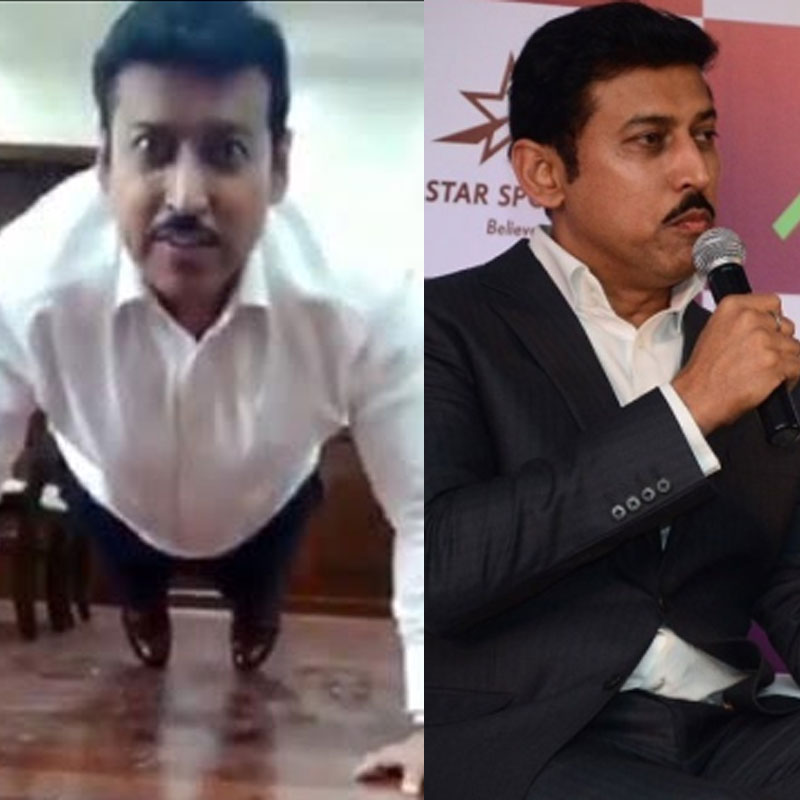
    He may have started the #HumFitToh IndiaFit campaign that went viral on social media last month and had celebs and plebs posting images of their health routine. He may also be a comparatively low-profile minister in the PM Modi cabinet who has delivered on various fronts, including being proactive on issues relating to sports. But Minister of Information & Broadcasting and Youth Affairs & Sports Rajyavardhan Rathore now needs to bring his Olympian attitude-to-succeed and political astuteness to marry the various causes his two ministries espouse.

    Though he has been around at MIB for some years now, acting as a junior to more high-profile ministers like Arun Jaitley and Smriti Irani, Rathore’s rise at MIB has lot to do with his success as minister of Youth Affairs and Sports. And, India’s broadcast and entertainment industry, still reeling under the after-effects of a slow economy and some economic policy decisions taken by the federal government, believed they may have found a messiah in Rathore when he was given independent charge of MIB a couple of months back. The arrival in the ministry of a new Secretary (Amit Khare) raised hopes further of removal of many artificial roadblocks created by the previous regime.

    Many of the earlier and controversial moves by the Ministry, headed by former TV actress-turned-politician Smriti Irani had the broadcast industry, especially, in a bind and hindered unencumbered growth and expansion. Policy decisions like introduction of hiked processing fees, new classification of `regional’ channels, unofficially nudging TV channels and teleport operators to move operations from foreign to Indian satellites, centralization of regular approval processes, etc. sent the industry into a tailspin.

    What was intriguing that though justified by the former minister and some bureaucrats, such moves in the MIB flew in the face of the present BJP-led government and PM Modi’s repeated assertions that India was taking policy steps to improve the country’s global ranking in the `Ease of Doing Business’ index. So much so that the Prime Minister’s Office  had to intervene and order a rollback of a MIB decision under Irani on online content and fake news.

    Col. (retd.) Rathore as both the Sports and MIB Minister has all the powers at his command to take right steps for the development of sports culture in the country that has produced only a handful of Olympian medalists in individual sports — he himself shot at a silver medal successfully. He has proved his determination in revamping school games with the successful conduct of `Khelo India’ (Play India), which is a holistic approach to prepare athletes from schools to Olympics.  It is aimed at achieving the twin objectives of mass participation and promotion of excellence in sports through competition on ground and slick packaging through TV sports channels to give the much needed exposure to emerging Indian talents in the sporting arena.

    However, some critics have questioned his commitment to promote sports through media as despite being the Sports Minister, he didn’t protest when his senior at MIB  introduced in December 2017 a whopping Rs.100,000 as processing fee for channels telecasting live sporting events.

    Given the fact that for the first time he has freedom and a free run to integrate promotion of sports with industry-friendly media policies, it is hoped that he uses the time wisely and work to fulfil the Prime Minister’s ambitious goal of making India both a global media and entertainment hub, and a sporting power.

    The lifeline of a sports channel is to have at least three or four live sports properties in a day and channels like Star Sports and Sony-ESPN excel in such a lineup. But a high processing fee per channel per day for live telecasting sporting events could soon make such business decisions unviable for sports channels; especially when they not only invest in telecast rights, but also building up properties from the scratch — Pro Kabaddi League, Pro Wrestling League and Ultimate Table Tennis are prime examples of this model. High fees, which also include temporary uplinking costs incurred on government permissions and technologies, not only put heavy burden on sports channels but also act as a dis-incentive to invest in other non-cricket and emerging sports like badminton, table tennis, weightlifting, boxing, basketball, gymnastics, football and athletics.

    Unlike in developed countries, the governing bodies in India that are running these non-cricket sports mostly survive on government grants and fail to attract major sponsors or TV channels as partners for promotional activities. Some of the recent policy decisions of MIB (in the form of high processing fee and creation of artificial barriers) have further disincentivized TV sports channels in joining hands with sports federations to showcase sporting competitions with a view to give a platform to emerging talents and bring more audience to the television screens and also on the ground.  

    If the government — and the MIB —believes that those managing and telecasting games like cricket can afford to pay the high processing fees and, thus, should be taxed is an argument that’s flawed. It is like in aiming to punish a high performer — also admittedly a bit controversial —for its success, the government has, in reality, managed to end up pushing those low-profile but potential target-sports further down. Controversies and opaqueness notwithstanding, it cannot be wished away that India’s cricket administrative body BCCI has successfully managed to promote the game in India and abroad with resounding success — and in turn making the country a global force to reckon with.

    Even the sector regulator, TRAI, had opposed formally introduction by MIB of processing fee for live telecast by non-news and current affairs TV channels and questioned the government as why such a step was taken without due consultation process. Now that the regulator has come out with some progressive recommendations relating to Ease of Doing Business in the Broadcast sector and issues relating to uplink and downlink of TV channels, instead of acting on those suggestions, another move has upset the industry — a recent MIB reference to the regulator to study the matter of temporary uplinking has not gone down too well with the industry that was hoping some respite under Rathore at MIB.

    The Sports Minister, who is also the MIB Minister, has a rare opportunity to showcase his talent — to promote sports in India through mass media by easing regulations and lessening the burden on the broadcast sector through administrative reforms, which will very well be in line with PM Modi’s vision. Khelega nahin India, toh champion kaise banega India (If India doesn’t play and gets a chance to showcase talent, how would champs be created)?