Tag: Raju Narisetti

  • A journalist with soild values:  RIP  Subrata N Chakravarty

    A journalist with soild values: RIP Subrata N Chakravarty

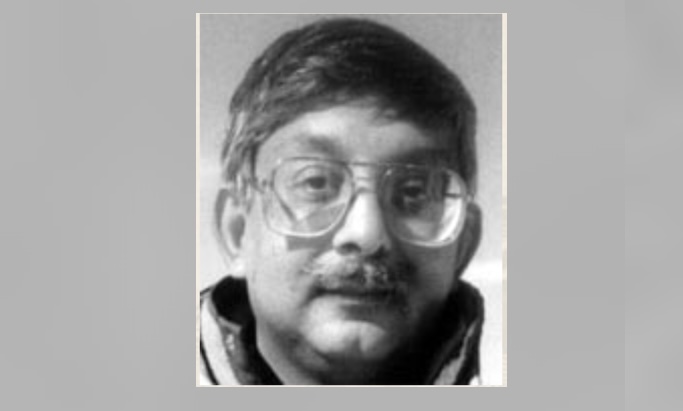
    MUMBAI: In 2007, Subrata N. Chakravarty wrote a remembrance piece  on Forbes editor and his mentor James W Michaels for India Abroad. This what he had to say: “Jim was far more to me than my editor. He was also my mentor and friend. He brought me into journalism, taught me, supported me when others were sceptical of my analysis, and helped me succeed.”

    Little did Subrata  know that 18 years later another respected scribe Raju Narisetti would be writing to inform the world about his passing while at the same time thanking him for his goodness when he was alive. This is how Raju  described Subrata: :  “Mourning the loss of a pioneering Indian journalist in America and a friend to many of us who chose to be journalists in the US, and looked up to him and benefited from his friendship and counsel. Subrata was a founding board member of South Asian Journalists Association (SAJA) in 2001. Thank you, Subrata, for your kindness and generosity.”

    Subrata passed away on 1 February 2025 at 4 pm in the United States after a career that saw him stay at Forbes for 27 years from June 1972 to November 1998 with his mentor James Michaels and transform it from a struggling magazine to one of the most respected business publications in the US. (He had been suffering from dementia since 2021.)

    He then served as senior editor for The Boston Consulting Company from November 1998 through April 2000. He worked as an assistant manager and editor for Institutional Investor Magazine from January 2001 through June 2003, and as an editor and reporter for Bloomberg News from July 2003 through November 2006.

    Born in Kolkata, and after an AB in Political Science from Yale University and an MBA from Harvard Business School, Subrata  spent his time at Forbes mentoring scores of young journalists.

    He was greatly influenced by Jim who had told him: in his early days “if a story wasn’t fresh, it should not be written….. if the herd was running one way, the story was quite often in the other direction…..writers have to be “the drama critic of business,” bluntly judging the performance of top management.”

    He made those nuggets of advice his leitmotifs throughout his career always looking for a new angle to a story or development. He also passed on that advice to those he mentored. He set up a company SNC Media, helping journalists to polish their interviewing, research, analytical and writing skills. He used the problem-solving techniques learned at the Harvard Business School with a writing style and attitude developed at Forbes magazine to help journalists tell factually accurate, compelling and entertaining stories. (He had held quite a few training sessions with Indian publishing houses – amongst which figured the then-ABP-owned BusinessWorld before the group sold it.  BusinessWorld too was once rated  as the top business publication in India between the late 1980s and early 2000s.)

    Subrata through his career did in depth interviews with the likes of  futurist Herman Kahn of the Hudson Institute, management thinker Peter Drucker, Edwin Land of Polaroid, and Harold Geneen of ITT.  But most of all he researched everything about companies and predicted the success of many and the downfall of some – rather with a high per centage of accuracy.

    Subrata leaves behind the his wife Barbara, and children  Anjali and Joya.

  • Six principles vital for acceptance of branded content: Vanessa Clifford

    Six principles vital for acceptance of branded content: Vanessa Clifford

    NEW DELHI: It’s the business of consumer connect, realistically. Noting that there was a dearth of good branded content and the British media invested 350,000 pounds sterling towards that every year, Newsworks deputy chief executive Vanessa Clifford said the aim should be to provide value to the consumer.

    Talking about opportunities for branded content at the session “All News is Good News” at ZEE Melt here, she listed six guiding principles for branded content.

    She said that the first was clearly the audience interest. One needed to attract the right kind of audience for a particular brand that one planned to sell through a specific advertisement, she said.

    There was need to plan the communication idea keeping the target audience and the platform – online or print – in mind. Secondly, the print medium was important as its expertise and heritage were built on reputation, she said.

    Trust and transparency was the third on Vanessa’s list of principles. She demonstrated examples of how a reader and viewer’s trust had been won in different advertisement campaigns.

    It was necessary for the advertiser and the media, she said, to set the right goals so that the objective of the campaign was fulfilled.

    Collaboration between the advertiser and the medium was of prime significance so that the message was conveyed perfectly well, Vanessa felt.

    Finally, Vanessa said, there was need to ‘create stories’ that kept the interest of the audience alive.

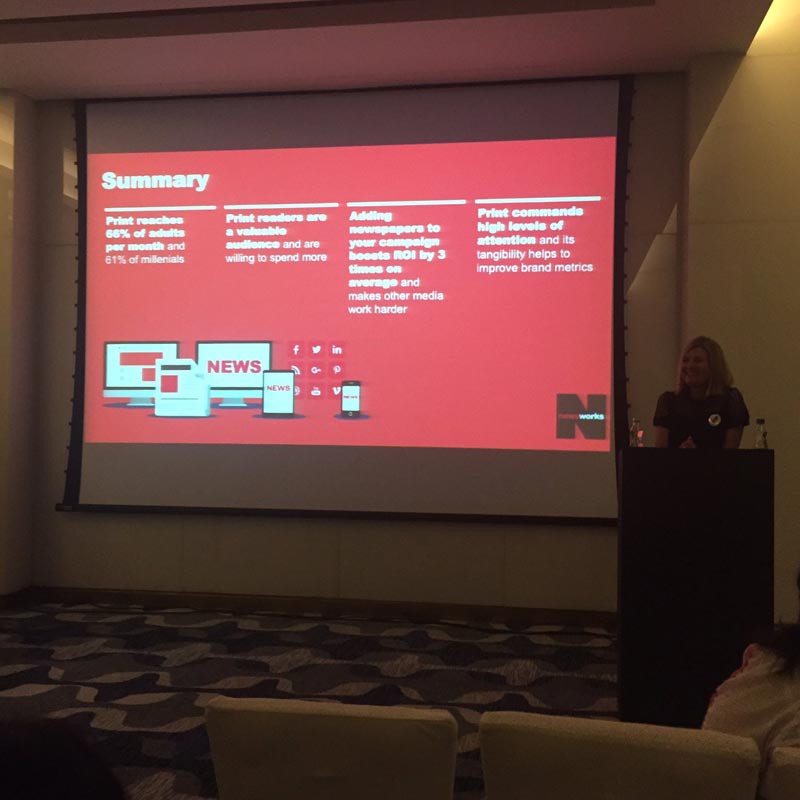
    Earlier, speaking in the same session on “The Role of Print”, Vanessa said that her experience in the United Kingdom had shown that the impact of the print medium was higher in the long-term and national newspapers drove news brands.

    She quoted Arthur Miller to say that a good newspaper was like a nation talking to itself.

    The print medium delivers results better than any other medium, and campaigners using the print news delivered stronger effects on businesses. News brands command a higher level of attention and 60% of that was focused on newspapers as against 57% on television.

    Referring to branding content, she said that there was greater engagement, trust and personal identification. She observed that advertisements worked on ‘sight and sound’ but often forgot the ‘touch’ aspect which actually drove brands, and this was achieved through the print medium.

    Furthermore, she said that physical interaction in researches had shown that 66% of the consumers considered buying or subscribing to a product if they saw it in print. The return on investments (ROI) by advertisers through the print medium was three times better than any other medium. The print also commanded a higher level of attention.

    Answering a question, she said credibility was higher in the print medium despite the influx of newer online media. Age of the consumer was not a consideration as far as the print medium was concerned, she noted.

    Speaking on “Brands and Marketers” in the age of democratized story-telling, News Corp Senior Vice President-Strategy Raju Narisetti said user-generated content (UGC) used by advertisers had greater effect than a commercial where it was clear that it was being enacted.

    “Everyone is creating content these days, and around 400 hours of content is produced on YouTube every minute,” he said. Democratized story-telling showed that anyone could tell a story through the mobile.

    Raju referred to studies that had shown that 92% consumers were more likely to trust their peers than an advertisement. But, he said, the challenges before UGC was volume, accuracy, acceptance and acquisition.

    There was need to align, identify, verify and license, and deploy before using technology for UGC, Raju concluded.

  • Six principles vital for acceptance of branded content: Vanessa Clifford

    Six principles vital for acceptance of branded content: Vanessa Clifford

    NEW DELHI: It’s the business of consumer connect, realistically. Noting that there was a dearth of good branded content and the British media invested 350,000 pounds sterling towards that every year, Newsworks deputy chief executive Vanessa Clifford said the aim should be to provide value to the consumer.

    Talking about opportunities for branded content at the session “All News is Good News” at ZEE Melt here, she listed six guiding principles for branded content.

    She said that the first was clearly the audience interest. One needed to attract the right kind of audience for a particular brand that one planned to sell through a specific advertisement, she said.

    There was need to plan the communication idea keeping the target audience and the platform – online or print – in mind. Secondly, the print medium was important as its expertise and heritage were built on reputation, she said.

    Trust and transparency was the third on Vanessa’s list of principles. She demonstrated examples of how a reader and viewer’s trust had been won in different advertisement campaigns.

    It was necessary for the advertiser and the media, she said, to set the right goals so that the objective of the campaign was fulfilled.

    Collaboration between the advertiser and the medium was of prime significance so that the message was conveyed perfectly well, Vanessa felt.

    Finally, Vanessa said, there was need to ‘create stories’ that kept the interest of the audience alive.

    Earlier, speaking in the same session on “The Role of Print”, Vanessa said that her experience in the United Kingdom had shown that the impact of the print medium was higher in the long-term and national newspapers drove news brands.

    She quoted Arthur Miller to say that a good newspaper was like a nation talking to itself.

    The print medium delivers results better than any other medium, and campaigners using the print news delivered stronger effects on businesses. News brands command a higher level of attention and 60% of that was focused on newspapers as against 57% on television.

    Referring to branding content, she said that there was greater engagement, trust and personal identification. She observed that advertisements worked on ‘sight and sound’ but often forgot the ‘touch’ aspect which actually drove brands, and this was achieved through the print medium.

    Furthermore, she said that physical interaction in researches had shown that 66% of the consumers considered buying or subscribing to a product if they saw it in print. The return on investments (ROI) by advertisers through the print medium was three times better than any other medium. The print also commanded a higher level of attention.

    Answering a question, she said credibility was higher in the print medium despite the influx of newer online media. Age of the consumer was not a consideration as far as the print medium was concerned, she noted.

    Speaking on “Brands and Marketers” in the age of democratized story-telling, News Corp Senior Vice President-Strategy Raju Narisetti said user-generated content (UGC) used by advertisers had greater effect than a commercial where it was clear that it was being enacted.

    “Everyone is creating content these days, and around 400 hours of content is produced on YouTube every minute,” he said. Democratized story-telling showed that anyone could tell a story through the mobile.

    Raju referred to studies that had shown that 92% consumers were more likely to trust their peers than an advertisement. But, he said, the challenges before UGC was volume, accuracy, acceptance and acquisition.

    There was need to align, identify, verify and license, and deploy before using technology for UGC, Raju concluded.

  • News Corp’s BigDecisions.com surpasses 900,000 personal finance interactions

    News Corp’s BigDecisions.com surpasses 900,000 personal finance interactions

    MUMBAI: News Corp owned personal financial advice platform BigDecisions.com has empowered 900,000 users to make informed financial decisions.


    The announcement has come as the platform unveiled its full suite of new, free-to-use, data-backed personal finance advice tools, along with insightful articles and videos.  


    BigDecisions helps users prudently plan for their retirement, the education of their children, assessing their life and health insurance needs, and helping them to benefit from transferring their home loans. In addition, the platform also helps users decide whether to rent or buy a home, a critical decision amid a stagnant real-estate market in India. The platform uniquely uses Big Data, such as healthcare costs across India and sample household expense data over 20 years, to calculate likely inflation for retirement planning, while enabling users arrive at more realistic and actionable next steps with simple-to-use tools.


    In the nine months since News Corp acquired BigDecisions.com, the platform has had 700,000 different users take advantage of its tools and insights. The number of visitors per month has increased to 400,000 from under 50,000 in January.


    “Sources of financial empowerment based on unbiased information and smart analytics have been few and far between in India,” said Manish Shah, Co-Founder and CEO, BigDecisions.com. “The quality of content, the wealth of impartial data backed insights and the ease of use make it an engagement worthy experience for our users who see immense value in our offerings.”


    For example, BigDecisions allows users to figure out how much health insurance they need based on family structure and treatment costs in their city. It relies on a sophisticated, behind-the-scenes algorithm that assigns a probability to each member of the family falling ill, helping assess an appropriate amount of health-insurance coverage for the family. Users are then free to choose where and how they want to acquire such insurance, from a variety of vetted, licensed third-party product providers. All this happens online, at a user’s convenience and with full data privacy, and without the product-sales pitches that are commonplace in India with sales of such products.


    “We have designed tools that are easy to navigate, with information that is easy to find and act upon,” said Gaurav Roy, Co-Founder and Product Head. “Our new platform, with its improved usability on the phone, enables us to expand our user base into Tier II and Tier III towns as well.”


    The majority of BigDecisions.com users currently come from the top 8 cities of India.


    “The early response to BigDecisions.com validates our belief that Indian consumers are looking for unbiased and accurate advice, as well as user-friendly calculators,” said Raju Narisetti, Senior Vice-President, Strategy, News Corp. “A vibrant digital India needs financially empowered citizens who can rely on trusted sources in their journey to financial prosperity.”


    As part of its roadmap, BigDecisions plans to combine its data-backed insights with peer-to-peer shared user experiences (for instance, “people similar to you did this”) to enhance decision-making for its users, as well as work with banking, asset management, insurance and other financial services companies in India to create tailored solutions aimed at educating and empowering users.

  • Star India snaps up Screen; News Corp to acquire VCCircle

    Star India snaps up Screen; News Corp to acquire VCCircle

    MUMBAI: Its maw appears to be insatiable.  Close on the heels of acquiring Telugu network Maa Television for around Rs 700 crore-1000 crore (media reports place the transaction at Rs 2,000 crore though), Star India has now gone on to gobble up entertainment broadsheet Screen from the Indian Express group.  The 51-year old weekly, which was once a tremendous force to reckon with in the world of entertainment,  has been grappling to find a position with readers over the last decade.


    A Star India release says that the “acquisition will create a definitive multimedia film and entertainment franchise.”


    The deal allows it to exclusively own the Screen franchise, covering the weekly, and its Screen Awards,  all the archival material and key employees. Editor Priyanka Sinha Jha – who is wedded to film-maker turned author Piyush Jha – will continue to lead the Screen editorial team.


    Certain reports have indicated that Screen will stop coming out in its print avatar from next week and it will be integrated with its hotstar.com app which has been witnessing a lot of traction over the past few months with its programming fare of TV shows, and sports related content. Screen has a circulation of around 12,000 copies each week.  


    The value of the Screen deal has not been disclosed but estimates are that it could be anywhere between Rs 30 crore to Rs 50 crore.


    Says an excited Star India CEO Uday Shankar: “Screen is a strong and reputable franchise and gives us access to the entertainment editorial suite and the tinsel world, where news that shapes trends is made by film stars, directors and producers. The acquisition of Screen will allow us to strengthen and expand the content brand online while taking the awards platform to the next level. There are strong synergies and the combination of the quality content and awards franchise with Star’s presence across television and digital platforms is strategic and scalable.”


    The Screen acquisition could yield good results for Star India. The publication owns the premier Screen Awards which have been running for the past 21 years.  The televised version of the property churns out an estimated Rs 30 crore from sponsorship of its telecast and through syndication deals annually. But more than that it gives Star India another hook into the world of Indian cinema, which is riddled with star egos.


    Star India has in the past acquired the rights  of the Screen Awards for several years since 2000, but surrendered them to Colors for a year before snaring them for Life OK once again this year.


    “We are delighted to enter into a transaction with Star India. Screen is one of the most reputed film and entertainment properties in the country. We have built this business with lot of passion and are confident that Star will nurture it and take it to greater heights” said Indian Express group chairman and managing director Viveck Goenka. 


    Speaking on the transaction Indian Express CEO George Varghese: “Screen is one of our leading properties on the entertainment side of the business. Our decision was driven by our belief in Star’s focus to grow this business, which we believe would translate into adding value for all stakeholders including employees.”


    AZB Partners acted as legal advisors to Star India while BMR Advisors acted as sole financial advisors and BMR Legal acted as legal advisors to the Indian Express Group.


    This is not the first time Star India is biting its teeth into an online internet property. In 2001, it had acquired the portal indya.com from Mircoland promoter Pradeep Kar and other investors for Rs 48 crore. The transaction went nowhere and yielded little dividend as the group tried to make sense of the digital ecosystem. It was finally merged with Star India’s online presence as star.indya.com.


    Meanwhile News Corp – the sister company of Star India’s parent 21st Century Corp – annnounced earlier today that it has signed a definitive agreement ot acquire the VCCircle Network -consisting of  VCCircle.com, Techcircle.in, VCCEdge, VCCircle Training, in addition to a premium-content driven conference business. The terms of the deal were not disclosed but it was expected to close by this month end. The various verticals come under Mosaic Media Ventures with 100 employees across India and are headed by CEO and founder P.V. Sahad who will now become a part of the News Corp India team. He will report to  News Corp’s senior vice-president, strategy, Raju Narisetti. The VCCircle acquisition is estimated to be in the vicinity of Rs 60 crore.


    In November 2014, News Corp had announced the acquisition of Proptiger – a residential real estate platform, and followed that up with an announcement to take over BigDecisions.com  in December 2014.

  • Raju Narisetti returns to The Wall Street

    Raju Narisetti returns to The Wall Street

    MUMBAI: The Wall Street Journal has appointed Raju Narisetti as its Digital Network managing editor and the deputy managing editor of the News Corp-owned newspaper. He will report to deputy managing editor and executive editor, Online Alan Murray.

    Narisetti currently serves as The Washington Post managing editor where he oversees the company’s digital content products, staff and strategy.

    The appointment marks a return to the Journal for Narisetti, who first joined the paper in 1994 as a reporter in Pittsburgh and most recently served as Editor of The Wall Street Journal Europe in 2006.

    Murray said, “Raju knows the world, knows digital journalism, and knows the Journal. He is the perfect person to lead us into a new era of global growth.”

    Narisetti’s appointment follows the recent departure of WSJ.com managing editor Kevin Delaney.

    WSJ’s digital news operations include WSJ.com, SmartMoney.com, MarketWatch and the Chinese, Japanese and German-language editions of WSJ.com.

    Dow Jones editor-in-chief Robert Thomson said, “Raju has done remarkable work as the digital czar at the Washington Post, integrating print and online businesses, building a successful web site, and developing key relationships with the digerati. His experience in creating Mint, a national web site and newspaper in India, also brings important relationships and unique expertise that will assist us as we expand our global digital network. Raju is wired, and we are jazzed.”

    Born in 1966, Narisetti has been a journalist for over 22 years, and has spent most of his work life at the Wall Street Journal in US and Europe. In his earlier stint at the Journal, he was editor of its European edition and also served as deputy managing editor of its US edition.

    Narisetti began his life in India, and after his journalism studies went on to do his masters in journalism from Indiana University in the US in 1991. Between 2006-2008, Narisetti was the editor of Mint, India’s newest and fastest growing business newspaper. Mint’s parent company, HT Media Ltd, is also the publisher of the English daily Hindustan Times as also the Hindi paper Hindustan. Narisetti was the Editor of Mint until end-2008 before moving on to join the Post.

    The Wall Street Journal Digital Network has seen growth in recent years with the introduction of expanded news coverage, content and new products as well as increased usage across its Web sites, mobile applications and tablet editions. The network has more than 1.3 million paid digital subscribers across multiple platforms and devices, and averages more than 50 million visitors per month online.

    WSJ.com’s success has been buoyed by an expansion in politics, national and world news, sports and lifestyle coverage, as well as live and on-demand video, real-time blogs and the launch of premium verticals. WSJ.com generated a 42 per cent year-over-year increase in traffic in 2011, averaging more than 36 million visitors per month worldwide.

    The new WSJ Live interactive video application is already available to millions of users via the iPad and multiple Internet-connected televisions and set-top boxes.

    Globally, more than 30 per cent of the total digital audience comes from outside the US including Asia, which generates more than 11 million visitors per month, and nearly six million from Europe, Middle East and Africa. In 2011, traffic to the Journal’s Chinese- and Japanese-language Web sites increased by 38 and 150 per cent, respectively.

    To further serve its expanding global audience, the Journal and Dow Jones have launched a series of regionally focused digital initiatives – the most recent of which, a German-language news site (WSJ.de), launched earlier this month. Other regional offerings are available, including China, Japan, Korea, India, Southeast Asia, and Central and Eastern Europe.