Tag: Raju Menon

  • Breaking youth drug codes with Mathrubhumi’s parent-focused campaign

    Breaking youth drug codes with Mathrubhumi’s parent-focused campaign

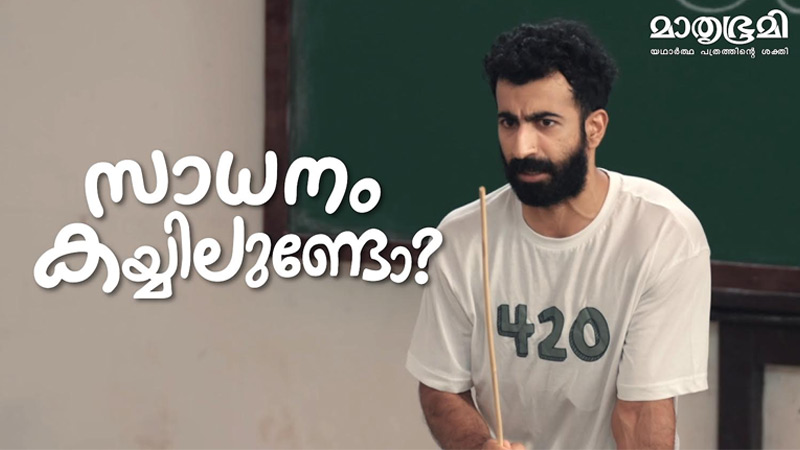
    MUMBAI: When it comes to tackling substance abuse, Mathrubhumi is proving that knowledge is the ultimate weapon. The media house’s latest anti-drug campaign, featuring youth icon Roshan Mathew, isn’t about moralising or over-dramatising, it’s about arming parents with the tools they need to spot trouble before it escalates.

    Titled simply yet powerfully, the campaign takes a realistic, engaging approach to the complex issue of youth drug use. It dives straight into the world parents rarely see, decoding the slang, secret codes, and even the pricing of substances that school-going children might encounter. By blending hard facts with practical guidance on monitoring financial transactions and recognising behavioural red flags, the initiative goes beyond typical warnings.

    “We aim to go beyond mere warnings and public appeals. The goal of this campaign is to arm parents with the specific knowledge they need to win this fight,” said Mathrubhumi managing director M.V. Shreyams Kumar. The approach shifts the focus from scaring young people to equipping the adults closest to them parents, families, and teachers with actionable insight.

    Maitri Advertising managing director Raju Menon of which conceptualised the short film, emphasised the strategy behind the realism. “While most anti-drug campaigns target the users themselves, we wanted to speak to those most likely to identify the issue early. Sure, kids might adapt their slang after seeing this, but at least we give parents a headstart.”

    The short film’s reception has been electric, sparking conversations across social media and in households alike. Its appeal lies in its authenticity: instead of bombarding viewers with fear-inducing images or exaggerated scenarios, it presents knowledge in a digestible, relatable format. Parents are shown not just what to look for, but how to interpret subtle signals from behaviour, conversations, and even financial patterns, a roadmap for proactive engagement.

    By leveraging Roshan Mathew’s relatability among the youth, the campaign bridges the generational gap. It reminds parents that influencing children about the dangers of drugs isn’t about confrontation, it’s about connection, awareness, and timely action. Every code word decoded, every price point revealed, and every practical tip shared is a small but crucial victory in the fight against substance abuse.

    Mathrubhumi’s initiative stands out for transforming anti-drug messaging from abstract warnings into tangible, everyday tools for parents. It’s a campaign that proves education and awareness can be both accessible and compelling, encouraging adults to step into the roles they’re naturally equipped for guides, protectors, and early responders. In a world where quick fixes and shortcuts often dominate, Mathrubhumi reminds us that vigilance, knowledge, and parental involvement remain the most effective measures.

    With this campaign, the message is crystal clear: the first line of defence against youth drug abuse isn’t law enforcement or peer pressure, it’s informed, attentive parents, ready to decode the hidden signals before it’s too late.

  • Maitri trunk calls glory as Farhan bags Kerala’s first Red Elephant

    Maitri trunk calls glory as Farhan bags Kerala’s first Red Elephant

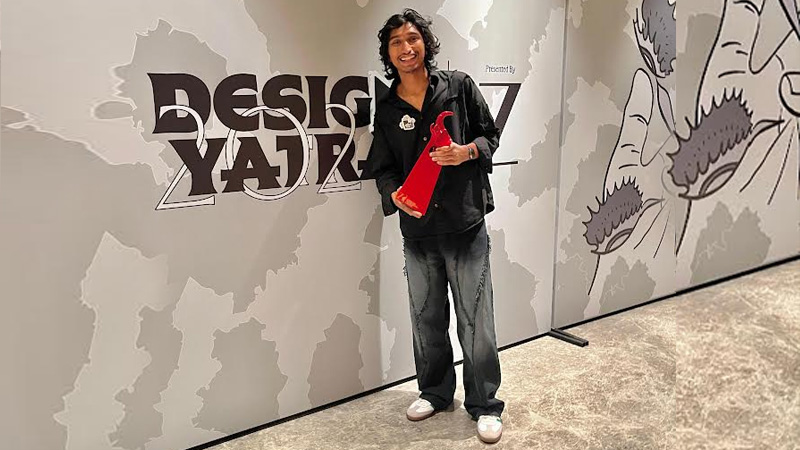
    MUMBAI: When elephants dance, they leave a mark and Muhammed Farhan just left one for the history books. The 22-year-old art director at Maitri has delivered Kerala its very first Red Elephant at the Kyoorius Design Yatra 2025, bagging the top honour for his packaging design for ITC Foods’ Bingo! festive gift packs. The brief was no small fry. Bingo! wanted festive gifting to feel modern and premium while sticking to a lean budget. Farhan responded with not one but two inventive packs that wowed the jury and stood out in a sea of entries.

    Pack A took inspiration from Warli art, a tribal form famous for its geometric motifs. Farhan cleverly wove Bingo!’s beloved snacks chips, nachos and Tedhe Medhe into celebratory Warli compositions. The design used a single strip with a looping mechanism, adaptable to hold varying snack quantities.

    Pack B went the nutty route, quite literally. Mandala-inspired and constructed with cashews, almonds, and exotic mixtures, the modular design borrowed from India’s classic tiffin box. Each paper unit clicked neatly together, allowing portions to be added or removed while staying securely locked.

    This wasn’t Farhan’s first brush with Kyoorius acclaim. He has already won four Blue Elephants and was shortlisted for the Young Maverick award at Goafest 2025 all without a formal design education. But this Red Elephant marks a historic leap, both for him and for Kerala.

    Maitri managing director Raju Menon couldn’t hide his pride: “Farhan joined us at 18, and his meteoric growth has been a delight to watch. We’re all very proud of our young star.” Maitri group creative director Francis Thomas added, “We knew this day was coming.”

    Farhan himself called the moment “unforgettable,” adding that representing Maitri on such a stage was an honour he would always carry.

    For Maitri, the win is more than just an award. It underscores the agency’s reputation for nurturing raw talent and pushing creative boundaries. For Farhan, it’s a reminder that sometimes the boldest ideas come from the youngest hands and they can carry the weight of an elephant.
     

  • Mallus of merit Maitri’s creative storm puts Kerala on the winners’ map

    Mallus of merit Maitri’s creative storm puts Kerala on the winners’ map

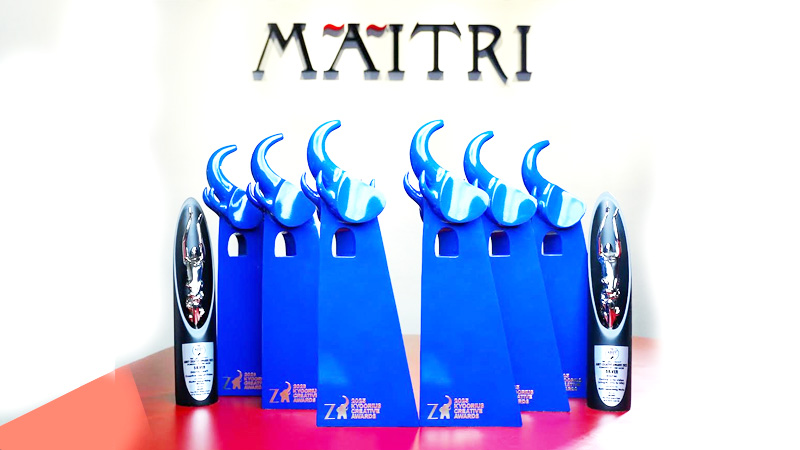
    MUMBAI: They came, they played, they cleaned house armed with satire, nostalgia, and a killer instinct for viral storytelling. In a blockbuster awards season, Kerala’s very own Maitri is rewriting the rules of regional creativity, bagging a shower of accolades at the Kyoorius Creative Awards and the Abbys 2025. The independent agency, headquartered far from the metros that usually dominate India’s creative scene, is now firmly in the national spotlight.

    “We’ve always believed that there’s plenty of creativity in Kerala,” said Maitri managing director Raju Menon. “These wins affirm that you don’t have to leave home for the world to see your work.”

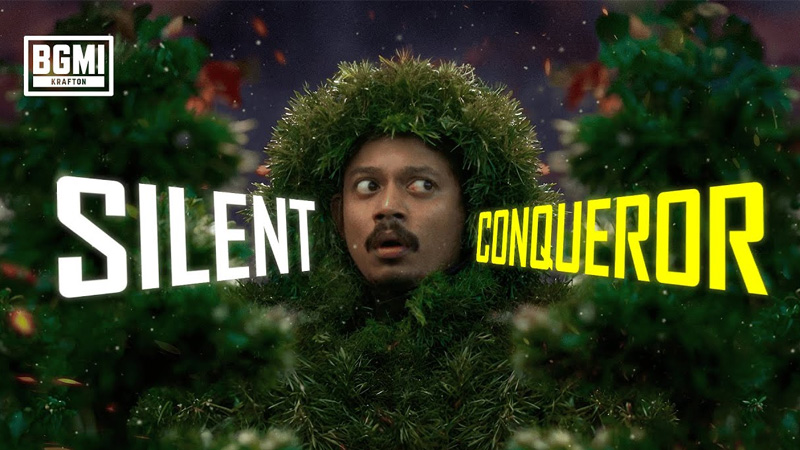
    And see it, they did. Maitri’s headline-grabbing campaign for Battlegrounds Mobile India (BGMI), a tongue-in-cheek scam ad that exposed scam ads snagged three Kyoorius metals in Topical Film, Social Media Engagement, and Film Craft (Produced Under Rs 10 Lakh). The same campaign added two Silver Abbys to its trophy shelf in Digital – online only video (30s to 60s) and Digital Craft – creative use of video.

    The kicker? It competed against high-budget campaigns from national giants and still stood out with originality and wit.

    Also racking up wins was Sandhesham, a Malayalee-nostalgia-laced BGMI film that struck gold in Kerala and went viral worldwide despite being in a language spoken by just 0.4 per cent of the global population. The result: two Blue Elephants at Kyoorius in Regional Film and Regional Digital and Social Media.

    On the Valentine’s Day front, Maitri flipped the script with Villantine’s Day, a villain-themed campaign for Asianet that blended nostalgia with pop-culture quirk. It earned a Blue Elephant and a lot of love from Malayalam-speaking social media.

    “Whether it was the satire in Thokkummoottil, the nostalgia of Sandhesham, or the humorous twist of Villantine’s Day, we tried to make each idea feel like it was born here but built to travel,” said Maitri Group creative director Francis Thomas.

    “The question we always ask ourselves is this something I’d send my friends?” added Maitri Group creative director Vincent Vadakkan.

    With a Baby Elephant and multiple shortlists, including under Young Maverick, Maitri’s momentum isn’t just a flash in the creative pan, it’s a marker of what’s to come.

    As Maitri director of digital & overseas business Sumit Raj summed up, “The best work comes from a place of mutual trust and respect, and we’re lucky we have that with our clients.”

    Maitri’s rise is not just a win for one agency, it’s a moment for the South, signalling that India’s creative future may well have a coconut tree in the frame and a cheeky, sharp script behind the camera.

    Kerala’s no longer just watching from the sidelines. It’s centre stage script in hand, mic turned up, and trophies in tow.

  • Maitri breaks new ground with BGMI ad for World Introvert Day

    Maitri breaks new ground with BGMI ad for World Introvert Day

    MUMBAI: In a world where extroverts dominate the narrative, a whisper of recognition often speaks louder than a shout.

    Maitri, in collaboration with Battlegrounds Mobile India (BGMI), has flipped the script on the traditional ad blitz with a campaign that’s as understated and impactful as its audience: introverts.

    While brands chase the loud fanfare of Valentine’s or Mother’s Day, Maitri chose World Introvert Day to quietly celebrate the unsung heroes who find joy in solitude, thrive in the shadows, and accomplish great things without fanfare. It’s a rare moment of applause for those who prefer none—a subtle yet powerful nod to the ones who rarely seek the spotlight but deserve it anyway.

    The ad, set to launch on World Introvert Day, 2 January 2025, focuses on providing a relatable story for introverts, capturing their quiet essence during the typically overwhelming holiday season. Directed by award-winning feature film director Manu Asokan, the ad stars actor and editor Sangeeth Pratap, whose portrayal resonates with the audience.

    “Games like BGMI provide the perfect balance of social interaction and community for introverts,” explained Maitri head of digital & overseas business, Sumit Raj. “By addressing them directly, we’ve crafted a campaign that engages BGMI’s audience in a light-hearted yet deeply meaningful way.”

    The ad leverages the timing of World Introvert Day, which follows the festive period—an especially challenging time for introverts. By weaving in relatable moments, the campaign positions BGMI as a platform where introverts can connect on their own terms.

    “The collaboration with Manu Asokan and Sangeeth Pratap gave the film a universal appeal,” said Maitri group creative director Francis Thomas. “Fans shared the ad widely, pushing it beyond the gaming community and into broader conversations about introversion and connection.”

    Maitri’s previous campaigns for BGMI in Tamil, Malayalam, and Kannada, such as the viral Malayalam ad with Dhyan Sreenivasan, set the stage for this ambitious project. However, this marks the agency’s first foray into creating a national Hindi-language ad for BGMI, typically handled out of Mumbai.

    “This national ad demonstrates the trust clients have in Maitri’s ability to consistently deliver impactful work,” said Maitri MD, Raju Menon. “As South India’s largest independent agency, we are proud to break new ground with campaigns that celebrate diversity, culture, and human stories.”

    With a 28-year history of award-winning campaigns for major national and international brands, Maitri continues to set benchmarks. The agency recently became the first independent firm to win a Grand Prix at Goafest 2024 and is a three-time winner of the IMA South Indian Agency of the Year award.

  • Onam delivers a little below market expectations; national advertisers go big on spending

    Onam delivers a little below market expectations; national advertisers go big on spending

    NEW DELHI: The merging of age-old agrarian myths and traditions with the commercial realities of today, the festival of Onam is a happy celebration for the Malayalis and businesses encashing their festivities. Historically, the festival acts as a hotbed of ad spends, consumer-friendly deals, the launch of new products, and flared up sales. It’s close proximity to the wedding season which also makes it a big opportunity for the advertising and the marketing industry to cash on. 

    However, for the past two years, the deadly floods washing the thin strip of land in the southwestern edge of India have also been drowning the great marketing fiesta it used to be. This year, while the rains were friendly, the ongoing Covid2019 crisis acted as a dampener to the celebrations.

    Albeit, if the insiders are to be believed, the festival has led the industry to raise its head a little above the sad water. Indiantelevision.com had extensively covered in a series of stories, and also in an exclusive one-day-long virtual conclave how Kerala ad market is pinning its hope on Onam to bring some respite to its dwindling cash reserves and the latest update is that it might have managed to achieve 50-70 per cent of what was expected out of it. 

    MPlan CEO Parag Masteh shares while the national advertisers went big on spends during Onam, local advertisers were very conscious of the spending and preferred staying away from making any big investments. This is also why the local agencies couldn’t soak in the benefits of the festival. However, it surely brought some respite from the lull of the previous months. “If I compare with the last month, our cash registers witnessed a hike of 15 per cent from the previous month,” he noted. 

    Nestle Milkmaid recently launched a campaign #SpreadSweetness around Onam. The brand rolled out a 30-second ad film with the cast of one “Vanambaadi”, a popular TV series of the region. The film showcases the famous mother-daughter duo discussing the excitement during the 10 days of Onam starting from Atham to Thiruvonam.  

    Nestle India director Vineet Singh said, “As part of the initiative, Nestlé Milkmaid is sharing 10,000+ bowls of payasam with the less privileged and we encourage people to do their own act of kindness, by pledging and sharing a bowl of Payasam with someone who needs it. We hope you will visit http://createsweetstories.in/ and spread joy and sweetness and create delightful experiences for the underprivileged.”  

    Another major FMCG player Marico also launched a digital campaign #ThankYouNurses honouring the unparalleled spirit of nurses across the country. The campaign salutes the brave warriors and provides a platform for all Indians celebrating Onam to come forward and express their gratitude for the nurses through their Pookalams, a popular floor decoration with flowers which is an integral part of Onam celebrations.

    Marico chief marketing officer Koshy George said, “As India continues its fight against the pandemic, we wanted to honour the nurturing spirit and tireless efforts of the nurses who have ensured millions of COVID survivors are with their families this festive season. Parachute Advansed Gold stands for care and nurturance and has a deeper connect with the consumer larger than just hair. With this heartwarming ode, Parachute Advansed Gold aims to not only salute them, but also encourages every individual to remember them and dedicate their pookalams to the unparalleled spirit of these warriors”  

    Amplifi EVP Chandra P Dobhal adds that for national advertisers, the purpose of advertising is not just sales but for a broader perspective of brand building as well. That’s why they continued advertising. “Smaller, local brands don’t have that big budgets. I won’t say that they weren’t advertising at all but they were conscious of where they were putting their money. Also, it seems they don't want to be the reason for the spread of covid2019 and don't want their shops to be crowded.”

    He also mentions that surprisingly there was an uptick in the ad spends by local advertisers at the end of July and the first week of August. However, they started pulling back mid-August. 

    As per the TAM Adex data published in reports, the print medium witnessed 280 per cent rise in ad volumes in July 2020 as opposed to April 2020 in Kerala market. Further, more than 180 categories, over 1,400 advertisers, the region saw an upsurge of advertisements as more than 1600 brands started to advertise on the print medium. Similarly, ad volumes on television in Kerala witnessed 102 per cent rise in the same period. With more than 160 categories, over 320 advertisers, and 540 brands advertising on television platforms, the market saw an upsurge of advertisements as top 10 advertisers contributed to almost 50 per cent of the ad volume share of advertising on Kerala TV channels.

    Maitri Advertising MD Raju Menon notes that one of the reasons for local advertisers staying away from the festival was the weekend lockdown that was mandated in the state. “Local advertisers felt they will not get any benefit from advertising if the consumers can’t reach their shops. There was no RoI they could see given the lockdown restrictions and also keeping in mind the safety concerns.” 

    Another reason that Menon mentions for local advertisers saving ad money is the positive consumer sentiment, “Many local players were also saying that we are getting consumers even without advertising, why should we spend money then?” 

    The expectation from Onam was that more categories will start advertising during the period, but that did not really happen.

    Masteh shares, “The categories that were active during the previous months were pretty much the ones who were advertising. Healthcare kept spending big, gold retail started spending, and some other categories like FMCG and white goods kept spending.”

    Menon adds, “Local retailers were conscious of their ad spends but white goods and FMCG were fairly active during the period. It is also because these were industries where consumers are actively spending.” 

    On the other hand, Fourth Dimension Media Solutions CEO Shankar B feels that while Onam might not have been able to help the market recover fully, it has certainly set the ball rolling. 

    Dobhal quips, “I am hoping that at the overall level the ad spends would be much closer to what it was last year. The best part is that schemes and discounts on products are being extended, especially keeping the limited footfalls in the market due to time restrictions for keeping the shops open. Hence it is expected that advertisers to support their channel partners will let their activities go in September too! The positive in all this is that advertisers will now spread their activity for a longer period rather than planning for a few dates or weeks before the main festival.” 
     

  • Kerala ad market pins hopes on Onam to bring respite

    Kerala ad market pins hopes on Onam to bring respite

    NEW DELHI: The South Indian ad market is a flourishing one, moving on an upward trajectory for the past decade. In 2019, it accounted for 30.7 per cent of the overall ad expenditures in India, as revealed by TAM AdEx’s Southside story report, contributing Rs 21,500 crore to the industry. Kerala market alone contributed Rs 4200 crore to the pie. 

    However, the past two years have been pretty difficult for the Kerala market, which was washed by floods in 2018 and 2019, and then  Covid2019, becoming one of the first states to get impacted by the contagious pandemic. 

    If Mplan CEO Parag Masteh is to be believed, the novel coronavirus alone has led to a 80-90 per cent drop in the investment cycle by advertisers. 

    Madison Media chief buying officer Vinay Hegde tells Indiantelevision.com, “The dip in Kerala ad market due to Covid2019 is roughly estimated to be around 75 per cent and largely in line with most other markets. Expectedly, it was the “essentials” categories like FMCG, foods and CSR for Covid2019-related issues that were active. Retail, a major player in Kerala, was just about present, being reduced drastically to around eight to 10 per cent of regular months.” 

    Maitri Advertising managing director Raju Menon adds, “February to May are the best months for Kerala market because of the tourist and wedding season. Around 30 per cent of the overall yearly sales happen during this time. However, it was a complete washout for us because of the lockdown. There are a few markets that work really well here, including banks, real estate, loans, textile and gold. But the pandemic left a negative impact on everything.”

    He continues, “For us at Maitri, there was a 60 per cent loss in billing during this lockdown. Not only was there a dip in queries, but some of our old bills, from January-February, were not cleared as well.” 

    Menon also shares that a few categories like automobiles, especially two-wheelers segment performed well than others given the market sentiment, but overall the whole industry witnessed a massive dip in revenues.

    In terms of television advertising, GECs saw their revenues down by more than 80 per cent YoY, both due to low inventory sales as well as discounts, reveals Hegde. He adds, “With the pandemic and the lockdown becoming the focal point, viewership shifted to news and the spike was exponential. A major shift from GECs to news was inevitable and visible and the channels did their best to hold on to their rates and monetise on the spike. This genre managed to rake in some ad revenues, yet inventory fill rate was lower than the normal average. April actually saw a dip in ad spends by almost 25 per cent Q4 of LY, but in May there was a massive spike of 120 per cent with retail and other clients making a beeline for the news genre.” 

    However, according to Menon, this growth in ad spends doesn’t necessarily mean more revenue for news channels. “If I give you an example, when the chief minister or the health minister is addressing the state via news channels, you can’t run commercials during that. So, advertisers buy the space on L-band, which costs around 97 per cent lesser than a slot for a video commercial. So, if you would have spent Rs 100 on a channel for video ads, you are spending only Rs 3 for the spot on L-band. Additionally, the inventory prices are kept low as the advertisers don’t have much money to spend. They are more concerned about paying their own people and keep their businesses afloat with the production-supply chain shut for most categories.  In terms of revenues, I believe they must have recorded a minimal growth of three to four per cent at max.” 

    Masteh shares that apart from the news genre, the ad spends from GECs were reallocated to digital media, which became a core part of the marketing strategy for even those brands which earlier refrained from it. He is hopeful that OTT will continue to grow and garner advertisers’ attention from here on. 

    As the lockdown eases, the industry is hoping to witness some progress in the advertiser as well as the consumer sentiment. 

    Hedge states, “Ease of lockdown has definitely seen an improvement in advertiser sentiment accompanied by the many relief schemes announced by the government in an effort to boost consumer sentiment and hence, demand. While the damage in Q1 of FY21 will take some time to heal, the additional forecast of economy contracting also needs to be considered by advertisers going forward. However, not advertising may not be an option as a short-term or long-term strategic call and hence, as the lockdown is being eased, we are seeing advertisers flocking back. TV, OOH and radio may still take more time to recover and as it happens, the competition will follow the competition.” 

    The industry is pinning its hope on the Onam season to bring a much-needed respite. 

    Menon says, “Onam counts for around 60 per cent of sales in the state and we are hopeful that will bring the advertisers back to the market. However, it will depend on the rains that we have. There are predictions for a good monsoon, but if the rains are heavy like the past two years, it is going to be a washout for us again.”  

    Hedge further adds, “August will also see the advent of festive season and it would be imperative for the advertiser to be visible. Also, by that time, lockdown would have eased even further. June is already seeing a much higher level of inquiries from advertisers compared to April and May. With originals making a comeback, July onwards, we should be seeing a fair degree of normal activity in terms of inventory consumption. Onam is an important festival in Kerala and is between 30 August to 2 September. That should be signaling a major recovery.” 

    But this recovery will be tampered by the gloomy forecast by the national and international bodies of contraction and recession, which however does not seem to be on top of the mind of advertisers and they would be looking at the most efficient extraction from media for their brands while the broadcasters/publishers will be looking to monetise demand uplift to also compensate for the loss of the first quarter, Hegde concludes.