Tag: Rajnish Lall

  • Lall speak about Jio Cinema’s Murder in Mahim

    Lall speak about Jio Cinema’s Murder in Mahim

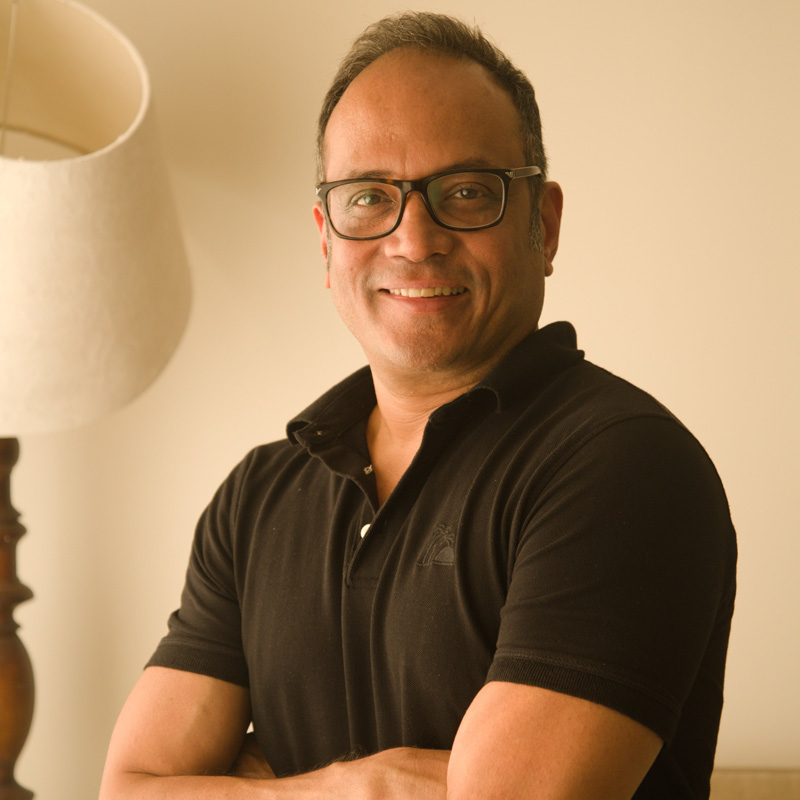
    Mumbai: Jigsaw Pictures founder Rajnish Lall is pleased as punch. The former advertising professional-turned TVC and series producer’s latest production Murder in Mahim was launched on Jio Cinema on 10 May. The series has been getting good traction with most viewers binge watching all the episodes or at least four episodes at one go.

    The production got the green light from Tipping Point and Voot in early 2022, and took almost two years to be completed. It’s based on journalist Jerry Pinto’s book of the same name which tracked the investigation into a bunch of gay murders in the Mumbai suburb of Mahim in the last decade just before approval for same sex relationships got the green signal from the government.

    “I was attracted to it because I have an emotional attachment with Mahim. OTT has pulled off lots of thrillers and it’s a genre I love,” said Lall. “Murder in Mahim was especially interesting because of the drama and the relationships between characters. Also because of the social message it was providing about the LGBT which is still prejudiced against.”

    Tipping Point – a Viacom and Jio owned studio – acquired the rights and Jigsaw came on as a producer. Along the way, it was collectively decided that Raj Acharya would be able to handle the script better than the director that was initially thought of.

    “We had brushed up the script,” said Lall. “Our decision to bring in Raj proved right as he did magic with it and  improved on the final product.”

    The production schedule was pushed forward from April to June 2022 after the approval came through from the studio.

    “That proved challenging as we had to shoot during the monsoons. And most of our filming was outdoors., which is why we had to do a lot of improvements through post and VFX,”  explained Lall. “The budget increased, however, the studio compensated us for it.”

    However, he is quick to appreciate the deftness of the director’s vision and approach. As well as Mark Benjamin, Anjali Bhushan and Mohan Bangera from Tipping Point and Manjit Sachdev from Voot.

    “We worked well as a team. And we had a sorted director who brought out the best in two superb actors Ashutosh and Vijay Raaz as well as the rest of the supporting cast and the script. Our casting too was on the button and we shot for approximately 70 days,” revealed Lall.

    According to him, what has worked well in Murder in Mahim, is the realism that the show wanted to convey. “We have not beautified or galmourised it; it is gritty as it can be,” said Lall. “The music has also been appreciated. We have a pretty decent show as everything fell into place.”

  • Kent RO’s film honours building watchmen on Independence Day

    Kent RO’s film honours building watchmen on Independence Day

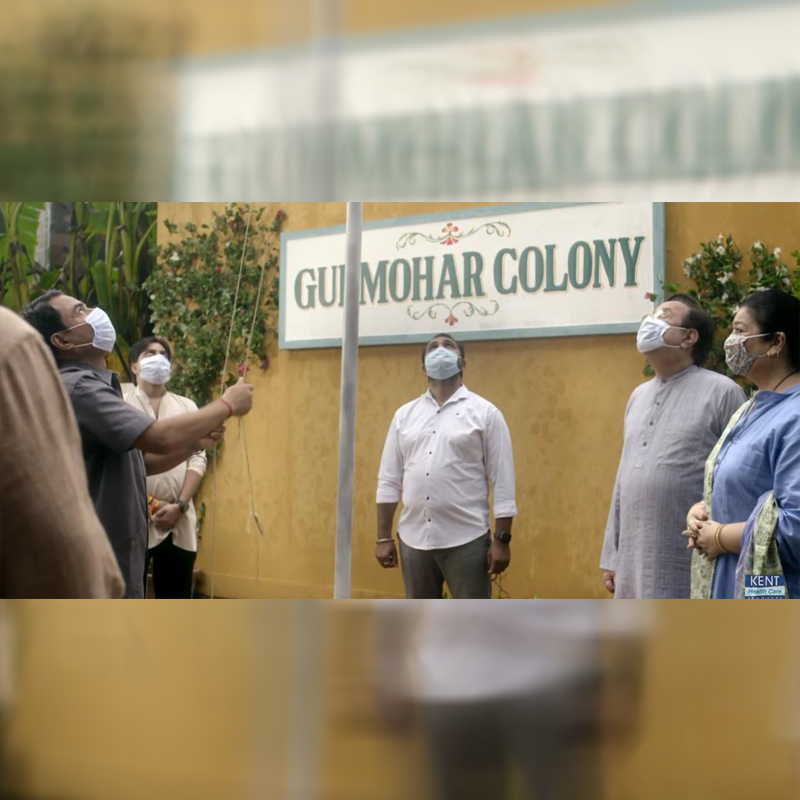
    NEW DELHI: As the nation preps up to commemorate its seventy-fourth Independence Day, Kent RO has come up with a campaign #NewNazairya which is currently doing the rounds of digital media. The first short digital film has a core message at its heart: let’s celebrate the unsung heroes who have helped us during the raging Covid2019 pandemic by bringing them centre stage on Independence Day.

    Conceptualised and produced by Jigsaw Pictures, it begins with the secretary of a residential housing society looking upset when he is informed that he will not be hoisting the flag on 15 August like he has been doing for the past five years. That’s because Ramdhan will be taking his place, he is told, and that change for him is unwelcome and undignified. His wife, who overhears his annoyance, calmly fills a glass of water from a Kent RO water purifier and while he sips from it she explains to him that there is dignity in getting freedom from old and sick thinking.  “Whether it’s you or Ramdhan, all are equal. Maybe he’s more than equal.”

    The next shot reveals who Ramdhan is: the watchman or security guard of the building complex. Masked and very grateful at being given the honour, he hoists the national colours with the members urging him on and saluting the flag.  A beaming Ramdhan gratefully acknowledges the honour that has been thrust on him. The secretary’s wife then says: “This act was his right. He kept us safe 24 hours every day during the pandemic.”

    The film ends with a voiceover declaring: “Let’s celebrate Independence Day by honouring our Covid2019 warriors.”

    At first glance, it looks like a very ordinary film, a simple thought, a simple truth, which has been used in many a film earlier in the past few months. But its message is deep. The SarsCov2 virus has taught us that it does not differentiate between rich and poor, it infects both, and kills both. It is the great leveller, just as death. The film makes us ponder how we can acknowledge this and respect those who keep us safe. And it brings to our attention the watchmen who are under our noses, but whom we take for granted.

    “We have all experienced the surge of humanism and equality around and within us due to many who have come forth to help us be safe and survive,” says Jigsaw Pictures founder and creative producer Rajnish Lall. “Amongst the set of Corona warriors, the one who didn’t get much appreciation widely was the security guard or watchman manning our residences as they are not specialists.”

    Adds Lall: “Watchmen all over India have gone beyond their defined duties and duty hours; they have made huge sacrifices. They have ensured that social distancing is practised and thus have helped millions of us escape the ravages of the infection. This is our way of reminding us of their contribution. We hope many other residential buildings and societies take note after watching our film and acknowledge their watchmen too. That will give us the greatest satisfaction.”

    Kent Ro has collaborated with the official brand ambassador Hema Malini in most of its advertising. However, this time the brand has opted for well-known film and TV actors Apara Mehta and Feroz Bhagat, who are playing the husband and wife in this film.

     “Kent Water Purifiers and Hema Malini are synonymous because of their long and impactful association,” explains Lall. “But as in the past, Kent makes its digital medium communications with actors other than Hema Malini. Because of the values the brand and she share, she’ll also be happy with the purity of thought in this communication and help spread it.”

    The producer shared that filming in early August was a different experience altogether, “We shot in a restricted controlled environment. We had to ensure that everyone felt safe on the set hence extra efforts had to be put to adhere to the SOPs set by the government. Then the post-production had to be done completely from remote which is much more taxing and time-consuming both. This really tested the patience of all the team members since weren’t around to see or hear and approve every bit of creative,” Lall points out. “But after seeing the end result I really believe it has been worth it.”

  • The psychology behind the making of TV ads vs digital

    The psychology behind the making of TV ads vs digital

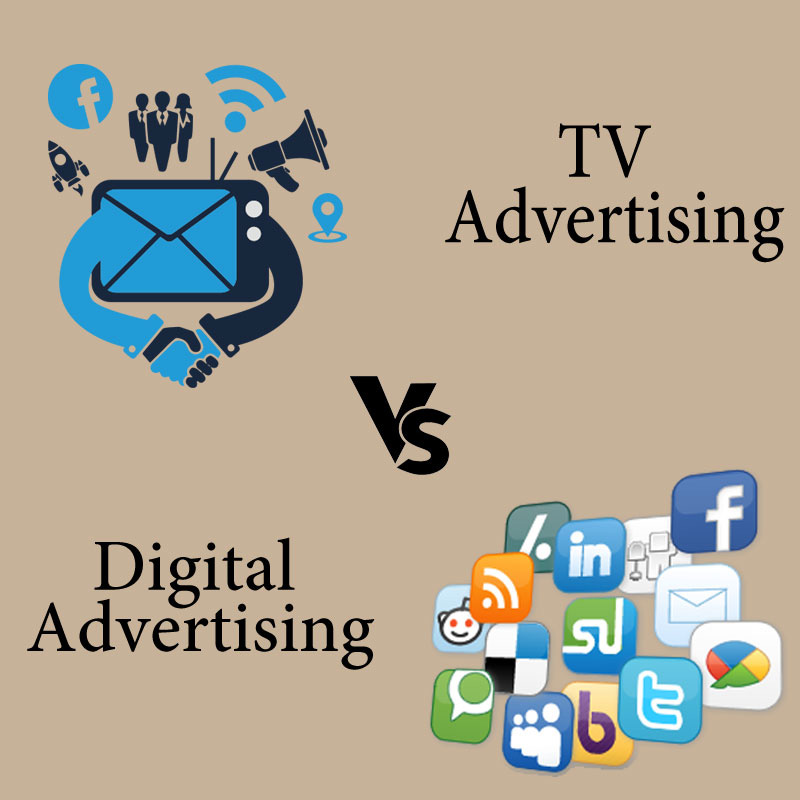
    MUMBAI: There was a time not so long ago when TV was the main medium to consume content. All that one had to do was create a TV commercial and voila! It was watched by millions. But recently, more and more youth and millenials are gravitating toward platforms like from Facebook to YouTube to Twitter to Whatsapp to Tiktok to Instagram to OTT, to consume video. How are brands engaging with them? What format of video ads are they creating to communicate their brand message?  And have TV commercials evolved in their journey from TV to OTT and digital?

    However, according to some industry experts, there is just a shift in the trend and format of advertising. In earlier days TVCs were the only content that was created but today it is much beyond that. Today it is more about creating ads for different platforms and of different durations rather than creating one single commercial.  Experts also believe that the slump in the economy has resulted in the decline of creating long format advertisements.

    Says Jigsaw Pictures founder and creative producer Rajnish Lall:  “I think there is a bit of similarity in creating both a TV and digital commercial. The difference is not about reach. Both are catering to a product or a brand and are done keeping in mind the brand proposition. People usually make a brand film which is 59 seconds so that it could also be put on Instagram. Content that we make is usually three and five minutes, depending upon client requirements.  Television costs a lot more. And to run on Facebook, WhatsApp or Instagram or any other digital platform it’s much more reasonable and people go for the longer version of it. Having said that, both the platforms are representing a brand and have more seriousness about it. When it comes to making a TVC the client is more precise about the output. The production quality cannot be down it has to be good, very good or great. However, in digital, people could make content in all sorts of budgets.”

    According to Havas Media Group CEO India and South East Asia Anita Nayyar, TVCs shot for television are normally for 30 seconds to 60 seconds and when they want to make an edit to run on television 60 sec is pretty long. Generally, ads are shot for 60 seconds so that it could run on cinema. When they run the campaign for other platforms they have the adaptation of 30 seconds to 20 seconds to 10 seconds depending upon the storyline.

    She adds: “There are two ways of putting a commercial on YouTube where you can do a long edit of a commercial that runs for one or half a minute but whereas when you look at advertising on digital media the ads are pretty short because according to reports the average attention span is three to five seconds. The creativity and the thinking in digital are done on that basis.”

    "Unlike a TVC which is based on a traditional story arc – beginning middle and end; the making of digital ads involves adapting to the media platform format and context,” points out Madison Media Sigma CEO Vanita Keswani. “The digital video creatives span from five to six seconds short format videos as well as long format 60-120 seconds storytelling ones. Tech innovative creatives on digital have a two-way communication with consumers" She adds.

    The advertising costs related to producing content for TV is expensive as compared to digital format. In fact, as per the reports of Magna, the research arm of  IPG Mediabrands, digital ad spending in 2017 reached $209 billion worldwide that is  41 per cent of the overall market. While television brought in $178 billion which tots up to 35 percent of the total market.

    If one were to estimate about 9 per cent of that going towards buying space and inventory on the different media platforms, that leaves us with digital ad production totting up to around $20 billion worldwide, whereas TV commercials production spend would be around $17 billion. The figures would be much lower for India, though as spends on creative and TV are much lower here compared to more developed markets in Europe, the US and Latin America.

    Says an ad industry veteran:  “A large part of the production budget is kept aside for paying celebrities as endorsers (even as high as 25 per cent sometimes) as lazy creative’s from advertising agencies and not savvy enough marketing executives look for short cuts to create their communication. My estimate is that almost 30 per cent of TVCs are relying on celebrity endorsements. What this means is that the quantum of TVCs being made by a brand is falling each year or if they want to produce the same number, they have to slash the production side of the budget,” says an industry expert. And this is being felt even more in these tough economic times where brands have slashed their spending. There is a huge squeeze on TV commercial makers.”

    Lall echoes this. “Before the digital era, they used to make two to three films in that budget. Now what is happening, the budget hasn’t gone up because economically we are a little down as a country so things are not taking off. The client has limited money, his expectation is not to make two or three films but to make eight films. So, the money you invested in making a television ad has gone low.”

    He also points out to another problem. According to him, advertisers are anyway even today more inclined towards putting aside higher budgets for making TV and cinema spots as compared to digital, though he would like this to change.“Normally you will not see a good quality digital film because of the lower budgets. Digital spots can be shot on any kind of camera, it could be on their phones as well. So basically it can be done at a very basic budget. So the output is not great. However, very established brands don’t mess around it because they are conscious and particular about every piece of communication they are providing to the brand. It should match the brand's personality, image and aura in the market and in the mind of the consumer also which the upcoming brands are not paying much attention to.”

    Says Nayyar:  “If you have a long format TVC they are normally done on a high budget which is done for Rs 1 crore to Rs 3 crore and Rs 5 crore. Whereas, in digital ad creation they usually don’t look for a long life piece of communication. While for television you produce one commercial for a longer period of time and for a digital you make multiple commercials. I don’t think so for digital money spend is as much as spent on creating TV or cinema commercials they are long format. TV spots also get adapted to suit digital. In digital you have to look at short duration, collaborations, what will grab the attention of audiences within the span three to five seconds as they have been provided with the option of skipping ads.”

    Keswani’s view is that brands and agency creatives should reduce their dependence on celebrities in TVCs. Says she: “Celebrity mass advertising is not as authentic, relevant and relatable today. The authenticity is being questioned. What works better is turning the spotlight on consumers in TVCs. Ad agency creative’s and brand managers could consider having real and relatable faces in TVCs, which will help the masses connect with the brand and its messaging.”

    “What it will also do is free up budgets towards creating a greater number of TVCs or putting in more VFX, animation, or a greater number of locations or better sets or bringing in better directors and videographers so that more impactful ads can be created for both digital and TV,” says the anonymous executive quoted earlier.

  • Rajnish Lall: Ad man to OTT content maker

    Rajnish Lall: Ad man to OTT content maker

    MUMBAI: With the explosion of OTT space in the last decade, the content creation folks are having a gala time like never before.  In India alone, there are currently over 30 OTT platforms fighting aggressively for the customer’s wallet-share and screen-time by offering movies, music, sports streaming, satellite channels and original shows.  

    This ever-increasing demand for original content has opened new avenues for young production enthusiasts, for whom  content creation is  more than just minting money.

    Rajnish Lall is one such movie enthusiast who forayed into production with his debut short movie ‘The Fall’ 13-years ago. Having spent more than a decade in corporate life working with advertising agencies (Clarion, Contract & Bates) and as marketing head of B4U Music, Lall had little experience in production before his first project.

     Lall says that he was bored with his life as an ad-film maker and was looking for a new medium to tell stories close to his heart.  

    His very first project, The Fall, a slickly shot love tale was a 10-minute-long silent movie featuring Rahul Bose and Nauheed Cyrusi.

    Recalling his experience, Lall says that the entire movie was shot in a single day with a budget of just over Rs 60,000 including the post-production cost.

    “To be honest, even Rs 60,000 felt like a big amount then. We shot the entire movie on Super 16 camera as there were no HD cameras then. I collected old footage left from earlier shoots. I asked my colleagues to edit it for free. Believe me, no one in our team, right from Rahul Bose, Nauheed Cyrusi, cinematographer Vishal Sinha (who shot Bhoot), composer Sandeep Chowta, was paid. People liked the movie and that gave me the confidence to continue making films,” remembers Lall, who since then has produced over 500 ad-films, one movie and two full seasons of a web-series.

    “The best thing about this experience was that I could tell stories that I wanted, which was not possible in ad-film making.”

    Lall’s next big break was Sooper se Ooper, which he produced in 2013 with Reliance Entertainment. However, he still regrets that the movie did not do as well commercially despite having a good script and some amazing performances.

    “2013 was a terrible year. Most of the movies produced by Reliance had tanked. There was Besharam, Zanjeer 2. At one stage, Reliance was not even upbeat about releasing the movie. When it was released, it got a good response, but since the following week was the release of Krrish 3, it could not reach its full potential,” he says, candidly accepting that its failure set him back.

    Big success came to Lall soon enough with Thinkistan, a story about changing dynamics of advertising in India in the late 1990s, when satellite TV helped advertisers find new reach. Told through the characters of English-speaking Hema and Hindi-speaking Amit, the series, released on MX Player, is like a love letter to the changing world of Indian advertising.

    Lall says that Thinkistan is the story of India in transition in 1990s, told through the contrasting experiences of two advertising professionals, one English-speaking and urban, the other Hindi-speaking and coming from small-town India.

    The show mirrors India’s evolution in the 21st century where more and more talent is coming from small-towns, where the likes of Piyush Pandey and Prasoon Joshi have elbowed-out big, established English copywriters and where Hindi is secure about its place in India and co-exists comfortably with English, adds Lall.

    The immediate success of Thinkistan, however, has not taken Lall of his feet. Any other usual run-of-the-mill producer would have tried to cash-in on its success by making similar shows. Lall, on the contrary, is taking his time to find a truly inspiring idea.

    “We were approached by multiple OTT players following the success of Thinkistan. However, I was clear that I do not want to do any regular, usual thriller, sex-comedy or family soap-opera. I am looking for a unique, big idea. I am in no rush to make just another ordinary show,” says Lall.   

    Talking about the streaming platforms, Lall says it has definitely improved availability of funds for shows.

    “OTT is here to say. However, its success and reach would depend on the quality of content offered,” quips Lall, who believes there is enough space for the more than 30 OTT players to co-exist in the expansive Indian market.

    Lall also has no qualms in accepting that he writes and produces shows for a global audience.

    “I do not belong to Hindustan, but a place called Thinkistan. My stories are based in India, but the emotions my characters deal with are universal, they cannot be limited to one particular time or society. I am making original, premium, web content for a global audience,” says Lall, adding that the coming of OTT platforms will help Indian content reach global audiences.

    To an extent, this has already happened. The international Emmy awards this year definitely has an Indian footprint. Two Indian shows, Sacred Games and Lust Stories, are nominated for Best Drama.

    “Indians have a natural talent for storytelling, even longer form storytelling. We gave the world Mahabarata, the world’s longest poem. If Indian producers are honest to their creative integrity, Indian content can truly reach a global audience.”

    Talking about censorship on OTT, Lall says that while he is principally opposed to the idea of censorship, he is also honest enough to accept that some of the producers have used the freedom offered by OTT platforms irresponsibly by overdoing nudity and cuss words, even when it’s not required by the script.

    “Not all of us are watching shows on mobiles. People are also watching shows on TV with families. And too much nudity is definitely a barrier in providing entertainment to this audience.”

    He underlines that while everyone is cashing-in on nudity and violence, there is still some reluctance on the part of Indian producers to take up politically sensitive issues.

    While Lall did not share specifics of his current projects, he did tell us that he is working on a show which tells the story of a product over 100 years, starting from the non-cooperation movement in the 1920s to 2019.

    Asked about his personal favourite shows, Lall says that he likes the scripting of Family Man and Made in Heaven. In foreign shows, Fauda and Barry.

    Having carved a niche space for himself as a producer of ad-films, web series and TV shows, Lall is currently in a happy space, where he is willing to wait and invest his time and energy in a truly inspiring idea, very much like the tag-line of his show Thinkistan – ‘Idea Jiska, India Uska’.

  • A ‘Sooper se Ooper’ launch of Jigsaw Pictures into feature films

    A ‘Sooper se Ooper’ launch of Jigsaw Pictures into feature films

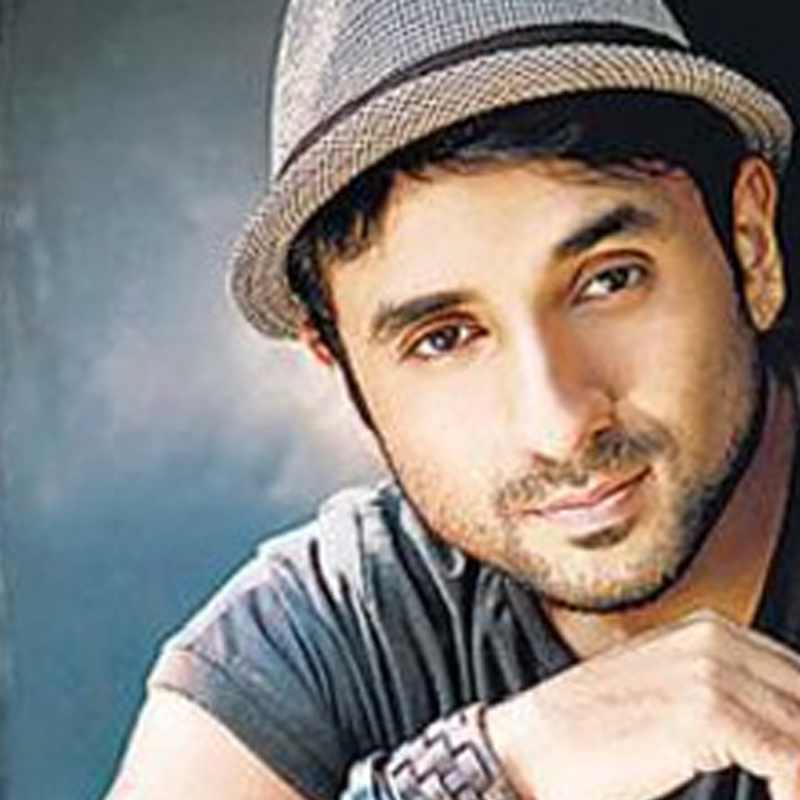
    MUMBAI: Having produced over 150 television commercials, music videos and even a critically acclaimed short film, The Fall (starring Rahul Bose), production house Jigsaw Pictures is now venturing into feature films with their first commercial film Sooper Se Ooper. This quirky drama with Vir Das in lead has been co produced with Reliance Entertainment and is scheduled to come to theatres across India on 25 October, 2013. 

    Jigsaw Pictures CEO and creative producer Rajnish Lall has had over nine years of experience in advertising, having worked in Clarion, Contract & Bates and thereafter headed the marketing division at B4U shortly after. He then founded Jigsaw Pictures about eight years ago and will debut as a creative producer and the line producer of Sooper se Ooper. He is among a few who is comfortably straddling the productions both in the TV commercials and feature films.  

    On his first production, Rajnish said, “Working on this film was like taking a fresh guard in the field of production… it has been an amazing, exciting and rich experience in the last two years. From fine tuning the script, putting together the right cast and technical team of my choice, the extensive shoot in Rajasthan and Mumbai to production of lovely songs all within a modest budget has been a Sooper se Ooper experience! In this journey we had the support and guidance of a big studio like Reliance Entertainment.” 

    The movie Sooper se Ooper is based on an Indian superstition ‘that making a will (legal document) is an indication that that your time has come near’. The story revolves around the character of Vir Das, whose fortune has dwindled and selling his ancestral property may just be the way out of the situation but he runs into a problem as the ancestral land was not will-ed to him by his parents. Filmed in Rajasthan and Mumbai, the story takes an interesting and entertaining turn during the journey from village to city and vice-versa. 

    The film stars Vir Das, Gulshan Grover, Deepak Dobriyal, Kirti Kulhari and Yashpal Sharma, among others. The music has been composed by Sonu Niigam and Bickram Ghosh who debut as a music duo in Hindi films and has quirky fusion BGM from Ranjit Barot. The director, a veteran of TV commercials also makes his debut with this film. The film is being presented by Reliance Entertainment and produced by Jigsaw Pictures. 

    Jigsaw Pictures’ next feature production is a comic thriller set in Mumbai and Kerala, which they will start shooting in April 2014.

  • A Sooper se Ooper launch of Jigsaw Pictures into feature films

    A Sooper se Ooper launch of Jigsaw Pictures into feature films

    Having produced over 150 television commercials, music videos and even a critically acclaimed short film, The Fall (starring Rahul Bose), production house Jigsaw Pictures is now venturing into feature films with their first commercial film Sooper Se Ooper. This quirky drama with Vir Das in lead has been co produced with Reliance Entertainment and is scheduled to come to theatres across India on 25 October, 2013.


    Jigsaw Pictures CEO and creative producer Rajnish Lall has had over nine years of experience in advertising, having worked in Clarion, Contract & Bates and thereafter headed the marketing division at B4U shortly after. He then founded Jigsaw Pictures about eight years ago and will debut as a creative producer and the line producer of Sooper se Ooper. He is among a few who is comfortably straddling the productions both in the TV commercials and feature films.  


    On his first production, Rajnish said, “Working on this film was like taking a fresh guard in the field of production… it has been an amazing, exciting and rich experience in the last two years. From fine tuning the script, putting together the right cast and technical team of my choice, the extensive shoot in Rajasthan and Mumbai to production of lovely songs all within a modest budget has been a Sooper se Ooper experience! In this journey we had the support and guidance of a big studio like Reliance Entertainment.”


    The movie Sooper se Ooper is based on an Indian superstition ‘that making a will (legal document) is an indication that that your time has come near’. The story revolves around the character of Vir Das, whose fortune has dwindled and selling his ancestral property may just be the way out of the situation but he runs into a problem as the ancestral land was not will-ed to him by his parents. Filmed in Rajasthan and Mumbai, the story takes an interesting and entertaining turn during the journey from village to city and vice-versa.


    The film stars Vir Das, Gulshan Grover, Deepak Dobriyal, Kirti Kulhari and Yashpal Sharma, among others. The music has been composed by Sonu Niigam and Bickram Ghosh who debut as a music duo in Hindi films and has quirky fusion BGM from Ranjit Barot. The director, a veteran of TV commercials also makes his debut with this film. The film is being presented by Reliance Entertainment and produced by Jigsaw Pictures.


    Jigsaw Pictures’ next feature production is a comic thriller set in Mumbai and Kerala, which they will start shooting in April 2014.