Tag: Rajiv Kapur

  • Rajiv Kapur’s views on India scenario

    Rajiv Kapur’s views on India scenario

    MUMBAI: When it comes to content consumption, India is no different from the rest of the world. The Indian consumers’ appetite for content, for when to watch, for where to watch, and for how to watch, along with customisation is growing. With the internet, content consumers are becoming device agnostic, moving from one media to another and enlarging contact points to access content and information. Media consumption habits are changing. People in such a scenario will not be happy with just the basic offerings. In terms of phones which were primarily made for voice calls, people look for additional facilities like video, whereas for television which is meant for video, people want a wide variety of features.


    Keeping the emerging scenario in mind, Broadcom has devised a number of technological innovations.  These offerings can only be utilized  fully if there is supporting broadband infrastructure and connectivity.


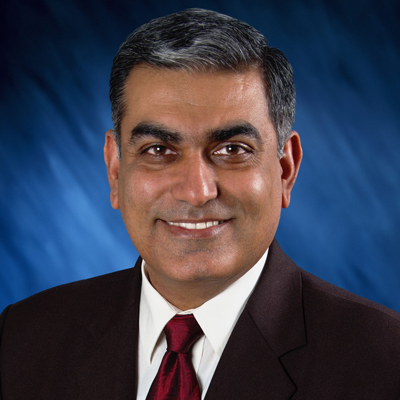
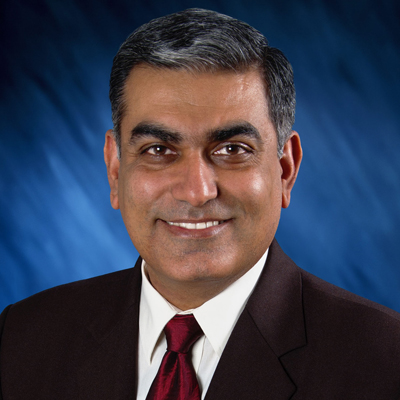
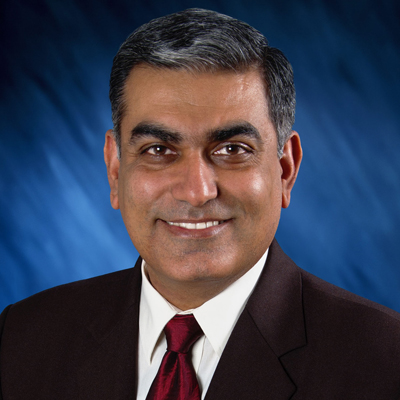
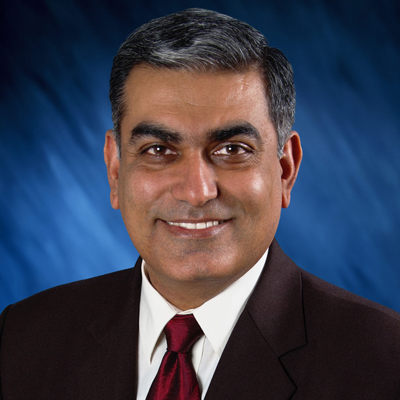
    Broadcom MD Rajiv Kapur believes that Reliance Jio can emerge as disruptor in India. He says, “Reliance Jio, with whatever they are doing is going to be a game changer, and the competition should be worried. Its foresight and deep pockets make the future look extremely interesting.”


    The cable industry is at a cusp. To start making money from avenues besides just carriage of television, the industry has to make the right technological upgradations. Internet data services must ride on the back of its existing infrastructure. Though all the players might not immediately realize the need for the right kind of upgradation, a few progressive minded ones can be the torch bearers, and their success will draw the rest in. Cable television or video ARPUs’ are not rising in India at the same rate as in the US or other geographies, where true high speed data ARPUs are a fraction, albeit quite a large fraction of Video ARPUs’. In India, it is the other way around- internet ARPUs’ are anything from twice to five plus times of cable television ARPUs’.


    Kapur says, “In every country there are a set of progressive minded operators and there are a few who reactively catch up. All that is needed is a few operators adapting hybrid technology with a goal of providing enhanced satisfaction to the consumer and in return getting more returns in terms of higher ARPU.”


    Broadcom now has devices based on DOCSIS 3.1 specifications, which obviously is an upgradation of the DOCSIS 3.0 version. DOCSIS 3.1 specifications hardware offer speeds of 1 gbps (Giga byte per second) as compared to the 100 mbps (Megabytes per second) or less that most DOCSIS 3 specification hardware is capable of. Kapur thinks “there is no real need of DOCSIS 3.1 in India at this stage” and he recommends that new innovators in the broadband space could start with DOCSIS 3.0.


    He says, “Let’s be realistic about India as a country. 100 mbps to 1 gbps!  There is no reason why India cannot talk about it, but as a country India still does not have the need for 1 gbps. But to begin with Docsis 2 today certainly makes no sense. It is like setting the ceiling lower than your own height.”


    “Data consumption for video is still the heaviest usage of internet by Indian consumers. For quality 1080 p viewing experience consistent 15 to 20 mbps speed is more than enough. So DOCSIS 3.1 is yet not a necessity in India,” avers Broadcom fellow and vice president Sherman Chen


    Kapur feels OTT will play a pivotal role in driving the need of broadband in India. Referring to the scenario five years back he says, “Today every hotel, coffee shop has Wi-Fi. Go back just five years and this was a rarity, so the evolution is happening. We are seeing taxi services offering Wi-Fi in their cabs during cab rides. OTT, telemedicine services will drive the need and the pipe will subsequently grow to meet the demand.”


    Kapur believes that the default HD box should be a hybrid ready and rest can be customer defined. The DAS phase III deadline is knocking at the door, Kapur opines that the boxes placed should be in a position to serve the needs of consumers for at least five years. “If we place 100 million boxes and in a year we land up in a situation where we have to change the boxes that will be sad. So depending on the need we must deploy the best we can. I don’t want to see them replaced even in 5 to 7 years. Quality is my biggest concern as we do not have a situation of testing arrivals” he concludes.

  • “India will be a huge broadband market over the next 3 years:” Rajiv Kapur

    “India will be a huge broadband market over the next 3 years:” Rajiv Kapur

    MUMBAI: The Indian Cable TV sector has a gargantuan task at hand. Not only does it have to work towards converting analogue cable TV homes to digital, but it also needs to work towards connecting India with high-speed broadband pipes.


    Multi system operators (MSOs) are now working towards strengthening their broadband services. While Hathway Cable & Datacom was the first to launch a 50 mbps broadband service on its Docsis 3.0 ultra high speed network in 2013, Siti Cable and Den Networks were quick to follow suit in 2014. Not only this, several cooperatives that mushroomed post the digitization announcement, are also looking at offering more broadband services. And all this, to improve business as well as their average revenue per user (ARPU).


    So are MSOs in India taking the right approach to build a broadband base in the country? Broadcom India managing director Rajiv Kapur tells Indiantelevision.com, “I applaud the MSOs in the country for what they are doing. They are taking the right approach. If anything, they should do more of it.”


    The satellite versus cable versus IPTV is probably the biggest war in the broadcast universe, where three different ways of delivering live TV compete with each other. “India is at a very nascent stage for IPTV, and that brings us to the satellite versus cable TV war. Like in any other market, both will co-exist with their own unique offerings. Both have existed with a large enough pie of their own and both bring something unique to the table,” opines Kapur.


    Kapur believes that a reason why cable benefits over satellite is because it can provide a two way service. “While one way service is very limited, two way services are way more powerful in customizing things to make them more entertaining, or in gaming context more interactive. Taking a cue from what has happened in the rest of the world, I foresee that the sheer desire to remain competitive against satellite will again lead cable to bring broadband more aggressively in Indian cable market. The market itself isn’t exactly demanding it, so there has to be a little bit of a push to create the demand,” he adds.


    Since Indian subscribers are currently not aware of the advantages of a two way pipe, cable operators will need to start making creative use of the pipe that gives two way cable services, which enhances one’s TV watching experience and not just leave it as a pipe. “Even if it is left as a pipe, there are still some benefits for cable operators because the ARPU will still be way higher,” Kapur informs.


    Broadband will not only benefit cable operators, but also subscribers as there will be less capital expenditures (CAPEX) and a lower total bill, if they get the services from one operator. “So everyone benefits and this will happen whether it’s a sheer data pipe or there are services in the data pipe, which embellishes TV watching experience,” says Kapur.


    According to him, one needs to be a little more patient with broadband as India is going through the basic steps of digitization. “As a country, barely have we been able to figure out how to get such a large footprint of analogue converted to digital. It is a very large market and that makes it that much more difficult. One needs to keep in mind that business relations between broadcasters, MSOs and LCOs are still settling down,” points out Kapur.


    The country definitely needs a broadband push and now. Talking about how it will happen, Kapur suggests two types of push mechanism. “The first push is much easier and has already started, which is offering a higher bandwidth speed at aggressive pricing. This kind of push takes a progressive operator to initiate it and we have seen it happening. The second level of push is TV embellishing two way service. If you fast forward into 2016, there will be at least one progressive like-minded large cable operator who will begin showcasing interactive services that others will either be forced to follow or would want to follow,” he suggests.


    Talking about the right pricing for broadband, Kapur says that the sweet spot of bandwidth and price is between Rs 800 – 1000. “There is always a package, which is above it and there is a package below it. What will happen with time is that higher speeds will come at the same price. This is the beauty of a competitive market. In a year from now, at least a few operators will start aggressive broadband packages in the market. The side effects of this on other operators starting the same, will take another year or two. So in the next two-three years, India will be a much larger broadband market than it is today,” feels Kapur.


    Delay in Digitization


    Kapur believes that even if the country sees a large percentage of digitized homes and not 100 per cent, is still a big step forward. “The only benefit of 100 per cent digitization is that one can do an analogue shut off,” he says.


    Citing the positives of the delay of digitization, Kapur says, “The sheer magnitude of what needs to be done is very large. The delay gives time and opportunity to MSOs, LCOs and broadcasters to sort out their complex relations and their businesses.”


    The pressure to complete seeding of set top boxes (STBs) on time in phase I and II saw many MSOs compromising with the STB quality. “If we have to deploy 50-100 million boxes, it will be a shame to do it without keeping quality in mind. This country shouldn’t waste money in replacing boxes. So there is a big positive in the delay as now the quality matrix of what needs to be looked in hardware procurement will be left uncompromised,” he adds.


    Pay TV channel revenues post digitization


    Currently there is fear in the masses that prices of pay TV channels post digitization will go up. Kapur feels that while there is an element of truth in that, it is only because in the analogue regime, people were not paying for what they were viewing. “The second television was not being paid for and people were slicing the cable and taking feeds. So in the bigger picture, prices will go up just because of that.”


    Citing examples from the telecom sector, where high competition and usage led to reduction of prices, Kapur suggests that hyper competition will force price control even in the cable TV sector. “More services will come, which if taken by subscribers, will increase the ARPU for operators,” he opines.


    In satellite, DTH players have existed since over 10 years, however the country witnessed hyper competition amongst players only in 2008-2009. As the DTH market enters its early stage of maturity, more services are being considered and offered to consumers. “All this took a decade. Cable will not take that long because the market is established due to DTH, but it still needs to go through it,” informs Kapur.

  • India ready for 4K & hybrid technology: Broadcom Corp

    India ready for 4K & hybrid technology: Broadcom Corp

    KOLKATA: Broadcom Corp, one of the market leaders in providing chips for technologies such as enterprise networking, set-top boxes, and mobile connectivity functions, believes that the Indian market is ready for concepts like value added services (VAS), 4K, and hybrid technology.


    Broadcom interacted with more than 50 companies including satellite operators, cable operators, CAF players and OEM (original equipment manufacturers’) at the recently concluded 23rd Convergence India 2015 Expo, largest South Asian platform for Telecom, Broadcast and Digital Media. After participating in the fair, themed ‘Connecting India’, the company said it has got overwhelming response from the industry and trade visitors. 


    “Newer concepts like VAS, 4K, and hybrid technology are of interest across the broader audience,” said Broadcom India managing director Rajiv Kapur.


    “We spent time and discussed about our products and services with top 30 players of the industry apart from interacting with mid-sized companies,” informed Kapur.


    While India is a large market for Pay TV and broadband, till some years ago, the technology platform was almost missing for stakeholders to gather at a platform and address the issues, challenges and scope of working.


    “Broadcom spent quality time with big players. Even small players were interested in using and leveraging our services,” he said.


    Kapur said that the company is eyeing further growth from Indian R&D centre. “Apart from executing ideas gathered from this meet at our global R&D centre, we would execute some ideas at our research centre in India,” he concluded.

  • Broadcom India eyes huge growth potential in cable broadband & OTT services

    Broadcom India eyes huge growth potential in cable broadband & OTT services

    KOLKATA: With digital television (DTV) and digitisation, household penetration is increasing in the country. “There exists tremendous opportunities for cable broadband and over-the-top (OTT) services”, opines Broadcom India managing director Rajiv Kapur.
     
     “The over-the-top television market may still be in its infancy in India, but it holds much promise for the future. The demand for OTT is going up. There are progressive operators who have been talking about value-added services. Internet entertainment on TV is on the rise,” says Kapur.
     
    Looking ahead, “one can see existing television sets transformed into smart TVs, enabling internet applications everywhere in the home,” adds Kapur. “We are expanding the options for entertainment in the home.  We are revolutionizing television by providing a full-range of platform solutions for content-sharing and video streaming throughout the home,” he further informs.
     
    Broadcom’s video and broadband solutions enables service providers offer a high-quality, TV-watching experience to its subscribers along with high-speed internet browsing.
     
    He went on to explain Broadcom’s role in OTT and broadband services through Set Top Boxes (STBs). Kapur says that the company constantly educates and trains various operators on the OTT services.
     
    India is currently witnessing the digitisation of analog cable TV signals as mandated by the Ministry of Information and Broadcasting (I&B). With digitisation, analog cable subscribers have been also migrating largely to digital cable, which has gained about 10 million subscribers in 2013, while net DTH subscribers increased by approximately three million.
     
    Post digitisation, while the viewing experience and expectations of the subscribers are soaring, it has also increased the demand for high-speed broadband.
     
    As per the Cisco Visual Networking Index 2014, in India, mobile data traffic will grow by a colossal 24-fold from 2013 to 2018, a Compound Annual Growth Rate (CAGR) of 88 per cent and Internet-Video-to-TV traffic will increase 8-fold between 2013 and 2018 (50.9 per cent CAGR).
     
    “Consumers are now more acutely aware about the content on their portable devices and the TV”, he further adds.
     
    As the users evolve with digital content streamed to them, the demand for OTT services increases.
     
    It should also be noted that in a report borne out by PricewaterhouseCoopers (PwC) survey, it forecasts 176 million OTT viewers by 2015 generating revenues of $552 million.


    Moreover, Morgan Stanley, a multinational financial services company, projects in its report that mobile data subscribers in India are likely to grow on an average by 25 per cent every year to reach 519 million by fiscal 2018, driven by falling handset prices and rise in smart phone usage and penetration.


    ‘With Wi-Fi internet access, end-users are looking for enhanced ways to communicate with large format screens too,” S Rajagopalan, a media analyst opines.


    “With this, users can also use Smart TV, though the interface is not user-friendly. The manufacturer, therefore, has to innovate with the interface, such as Flex Smartphone or Bluetooth / Wi-Fi-enabled keyboard to be integrated, which will grab the attention of the end-user. Maybe over a period of time, Smart TV will be preferred by the end-user to laptops, which will lead to more speed and bandwidth in the broadband segment,” concludes Rajagopalan.

  • Videocon d2h and Broadcom partner for HD service

    Videocon d2h and Broadcom partner for HD service

    MUMBAI: A few weeks after Videocon d2h familiarised Indians with 4K Ultra HD technology, it has now announced an official deal with Broadcom, which is a leader in semiconductor solutions for wired and wireless communications, for growing its HD service.


    The DTH provider has selected Broadcom’s integrated satellite set top box (STB) system-on-a-chip (SoC) device to power its HD digital video recorder (DVR). Broadcom’s BCM7358 HD satellite STB SoC enables the operator to fasten the deployment of its HD STBs with reduced design complexity, size and cost.


    Videocon d2h’s DVR is capable of recording on a USB device with digital picture quality and 1080p resolution. The HD USB DVR is supported by Broadcom’s BCM7358 single-channel 1080p HD advanced video coding (AVC) satellite receiver chip, featuring a high performance CPU and graphics engine, digital living network alliance (DLNA) connectivity support and advanced security functionality.


    Says Videocon d2h CEO Anil Khera, “The silicon innovation that Broadcom provides has been a key factor in our continued success in delivering rich content to our growing subscriber base. We’re leveraging a variety of Broadcom STB silicon throughout our portfolio and plan to extend our manufacturing capabilities to meet the needs of other cable operators in the region.”


    “The Indian television market is undergoing a major transition and operators such as Videocon d2h are leading the charge in dramatically improving the quality and variety of content delivery,” adds Broadcom India senior director of business development Rajiv Kapur. “As an established leader in STB silicon innovation around the world, Broadcom is delivering the technology required for a growing number of consumers to enjoy more sophisticated features such as HD quality content, digital video recording and on-demand services.”


    IHS Technology states that STB industry revenue will reach a record $ 22.8 billion in 2015, driven largely by growth in emerging markets and subscriber demand for HD content. “As pay-TV operators move to accommodate changes in delivery platforms and formats, including the adoption of HD, STB shipments will continue to rise, hitting record levels for the next few years,” said IHS Technology director for connected home research Daniel Simmons.


    “Technology-based service differentiation is becoming increasingly important for pay-TV operators in emerging regions, as these markets begin to mature and saturate. Transitioning subscribers from SD to HD at minimal cost will be critical for driving further pay-TV growth in emerging markets.”

  • Is India ready for HD HEVC set top boxes?

    Is India ready for HD HEVC set top boxes?

    MUMBAI: India may be struggling with completing the strenuous task of digitising the close to 9.4 crore cable TV homes, but when it comes to keeping pace with technology as compared to the rest of the world, we are not very far behind.

    While it was direct to home (DTH) player Videocon d2h which first announced that it was working out to launch its 4K Ultra HD service, Tata Sky followed soon. And with this, came the one big question: is the country ready for a technology such as this? Answers Broadcom Corporation associate product line director Brett Tischler, “The consumer is ready for 4K technology, which gives a clearer, sharper and brighter viewing experience. When people see it, they want it.”

    Worldwide, when the first 4K Ultra HD TV was launched, it cost close to $20,000. “This has now come down to $1000. This makes the TV much more affordable. The premium consumer is quick to respond,” he adds.

    The chip making company, Broadcom has forayed into 4K technology as well. And if sources are to be believed, it is Broadcom’s chip that has been used in the 4K Ultra HD set top boxes (STBs) introduced by both Videocon d2h and Tata Sky.

    While one may feel that there is not enough 4K content available the world over, Tischler feels otherwise. According to him, 4K content can be made available on Over the Top (OTT) platforms or through Live TV, Video on Demand (VOD) and web based content. Sports and movies are the two genres which will be popular in 4K. “There are a few Hollywood movies which are being made in 4K. Also the last three or four 2014 FIFA World Cup matches were broadcast in 4K in South America,” adds Tischler.

    Broadcom, in the past had also telecast the winter Olympics using 4K technology. According to Broadcom managing director Rajiv Kapur 4K will be adopted faster world over.

    Ultra HD filming, transmission and broadcast requires a significant increase in bandwidth. “Our Ultra HD video decoder solutions with integrated high efficiency video codec (HEVC) technology reduces bandwidth usage by 50 per cent, allowing users to download Ultra HD content in half the time,” informs Tischler.

    Both Kapur and Tishler are of the view that HEVC is the standard that the industry will move towards now. And if the duo is to be believed, the operators in India will soon move towards HD HEVC set top boxes (STBs), since the technology compresses the content and reduces the bandwidth needed to half.

    “India has the potential. We have developed an optimised technology that works well in the country. It is an exciting time for the country,” opines Tischler.

    Content today is generally produced and transmitted in 8 bit but HEVC take it up to 10 bit, giving a wider colour gamut. And so a lot of the content creators will now be looking at adopting this technology. “Most producers and broadcasters know that they will need to create content in 10 bit for better experience, but if they make it in 8 bit, even that will work,” informs Tischler.

    On the flip side, with Indian DTH operators facing transponder space constraints, will the technology be accepted? Answers Tischler, “HEVC content at the same resolution is about half the size. So the 10 megabit AVC content can be reduced to 5 megabit HEVC content, without having any effect on the quality of the content. HD moving to 4K is a multiplier by four and by using the HEVC, this can be halved, and so it’s a multiplier by two.”

    For both Kapur and Tischler, cable satellite and IP TV operators either have definite plans to move to HEVC or are planning to move to it. “It is a better codec for them to use. They are already putting it in their next generation equipments,” says Kapur.

    4K Ultra HD is a premium service, which according to Kapur will start as VOD and then move to OTT and then to full channels.

    The primary obstacle for introducing 4K is gone. With TV sets being sold, the operator cannot ask the consumer to first go and buy TV and then launch the service. “TVs are selling and  the service can’t be far behind. 4K initially will be a premium product, but HEVC as an HD codec, applies to everybody. So some operators who are doing HD will go right into HEVC, and will only do HD in HEVC. So we see HEVC being adopted by some of the biggest and most developed DTH operators in the world and also some of the emerging markets which are going into digitisation,” opines Tischler.

    HEVC is future-proof and will give better returns on investment. “We have a range of HEVC chips, but the 4K p60 10 bit HEVC chip is what we are planning to put in people’s houses,” adds Kapur.

    If the operator chooses to do VOD in HEVC, they can do it using half the bandwidth. According to Kapur, the early decision of deploying boxes by the operators will now play a critical role, since changing the boxes, after the operator has installed them over a large subscriber base will be a tedious task. 

    The HEVC boxes will move into production this year and will be available by 2015. “We are right at the cusp of these developments,” informs Tischler.

    Both Tischler and Kapur are of the view that the phase III and phase IV markets in India will not be using HEVC, since MPEG 2 SD boxes will dominate these markets. “Currently, the operators are looking at grabbing as many subscribers as possible. So they want to push as many and cheapest boxes as possible. It is only later they will introduce newer technology boxes. Then they will try to grow their revenue and give more services to their consumers,” opines Kapur.

    Unlike DTH, the cable TV market in India is still dominated by the SD STBs. Will that also see introduction of HD HEVC boxes? Says Kapur, “DTH also took decades to grow from basic SD boxes to some of the latest technologies. Cable will go through similar evolution.”

    Broadcom which has some 70 offices worldwide, invests heavily on R&D. The company which has close to 35 R&D offices, spends close to 21-23 per cent of its total revenue on R&D.

  • Chip maker Broadcom gets chirpy about India

    Chip maker Broadcom gets chirpy about India

    KOLKATA:  It’s got India on its mind.  Most Indian cable TV and DTH operators are pretty familiar with the  US-headquartered Broadcom Corp. The company provides the chips that go into the set top boxes and also for enterprise networking and mobile connectivity functions. What they probably don’t know is that it has invested more than 15 per cent of its global R&D budget in its Indian R&D centre. And that its Indian MD Rajiv Kapur is extremely gung-ho about the potential in India as its television ecosystem digitises. 


    And that’s despite the fact that there’s not been a flood of orders from those wanting to supply STBs to Indian  cable TV ops and MSOs.


    Says he:  “Right now activity is more on the technology front. The actual orders are expected to come before the end of the deadline (31 December 2014). And hence I can confidently say further growth will come. Even in the current situation, India’s revenue is being noticed from the global perspective.”


    Surely. With India’s transition from analog to digital television service, many consumers need new, full-featured set-top boxes (STBs) for home viewing. This represents a major opportunity for regional operators and set-top box manufacturers, as only a portion of the roughly 100 million STBs in consumers’ homes have already been digitised according to published government figures. Adding to this potential for set-top box growth is the trend of consumers adding more than one television to their home, as well as natural consumer upgrade cycles from standard definition to high definition, and so on.


    Meanwhile Kapur  points out that the company has invested -and is continuing to invest –  in India to develop complete solutions and also for support infrastructure.  “Our core competency is in chip making. But we have walked the extra mile by designing the complete hardware and software part. We have put many more features in the chip,” says Kapur.  


    Demand for those chips will come in the not to distant future. For  now, he says, “We see an immediate demand for standard definition STB “Zappers,” which are cost-effective and easy to deploy to new and current subscribers. In time, STBs with advanced features may either be imported or manufactured regionally due to their lower volume demand.”


    Endorsing his view is Vadodara-based VKJ Advisory CEO Vinod K Jhaveri who adds that Broadcom could and should take advantage of the current government’s stated policy to encourage indigenous production of chips in order to save the nation precious forex and make the silicon affordable. “Companies like Broadcom Corp have a great future as they can – in  the years to come – become a hub for Asia. They can use their  facilities to export  chips and semi conductors to countries like China and other Asian counterparts.”

  • “The country cannot afford to have tens of millions of bad STBs deployed”

    “The country cannot afford to have tens of millions of bad STBs deployed”

    For a company that was founded just about 23 years ago, Broadcom Corp has indeed come a long way. Founded by a student-professor combo, it is expected to announce financial toplines in excess of $8.5 billion this year. But more than that it is a market leader in providing chips for technologies such as enterprise networking, set-top boxes, and mobile connectivity functions.


    Earlier this year Broadcom president & CEO Scott McGregor had announced that both China and India are critical markets for the company at a conference in Shanghai. He had highlighted that Broadcom’s investments in research and development in India are probably the highest outside of the US. 

    Broadcom executive vice-president & general manager of broadband communications group Daniel Marotta had stated at the same conference that the company sees huge opportunities in the digitisation of the Indian cable TV business and that it had developed a special chip for the market as the ARPUs in the country are low. 


    Indiantelevision.com’s Sandhya Sutodia got in touch with Broadcom India managing director Rajiv Kapur to get further insights into how he views the progress of India’s government mandated digitisation and the opportunities available to his firm.


    Excerpts:


    What is the current state of digitisation in the country and Broadcom’s role in it?


    Digitisation has just about begun with phase III and IV still ahead of us. The new government seems to be putting its focus on various forward looking initiatives. We expect digitisation to continue with a high momentum.


    As Broadcom, we have prepared a variety of STB platforms providing a range of solutions for operators to offer to their subscribers. These range from the very basic cost sensitive SD zappers to entry HD platforms to higher end PVR and server class solutions. We offer several unique market differentiating features in each of these platforms, allowing subscribers and operators to enjoy the best of digital TV.


    Broadcom also invests heavily in hybrid solutions enhancing live TV with interactivity and over the top content and applications. Our lowest end SD solution offers USB and Ethernet interfaces at market competitive prices.


    We have a host of suppliers ready with STBs designed, both in the country and abroad, ready to ship as operators place future orders for the next wave of digitisation they are preparing for.


    How do you see the growth in the next two years?


    We expect the high growth in STB sales to continue beyond the digitisation deadlines. First reason is that subscribers may stagger their purchases of STBs for their second and third TVs in some homes.  Then, continued sales of TVs drives a healthy demand for more STBs in a market where TVs are always recycled to another room or home. Third, and most importantly, operators will continue to catch up with additional technologies and applications we invent on a continuous basis to drive improved user experiences and in turn higher retention and ARPUs for themselves.


    How are the dynamics of the business changing since the past couple of years in the Indian market?


    One visible change is a rising interest in local design and manufacturing. We are finally seeing supplies for the national optical fiber network (NOFN) which demanded a large percentage of made in India products. Small entrepreneurs are stepping up to design and manufacture electronics products locally. Operators are showing more acceptance of locally manufactured products.


    What are Broadcom’s recent innovations and solutions for the cable industry?


    We have implemented an almost complete turnkey solution for the low end cable TV market which includes a ready hardware and software stack to go along. This is so optimised that the memory footprint is very small, thus reducing costs. Additionally, market differentiating features like fast channel change have been added to enhance the user experiences in a digital world.


    We also invested in a range of STB solutions that have a unique technology that allows operators to manage their networks with high quality of service. The end-users benefit with better video and service at lower costs and faster response times.


    We have also invented new architectures for broadband on coax that are designed for deep finer, low density networks. This lowers costs of installation for operators so more customers can enjoy high speed broadband despite lack of subscriber density.


    Please share some of the latest developments at Broadcom for the STB space?


    We keep innovating on market differentiating features. With a large R&D team in India, we take advantage of the local resources to invent new features for the country. We named a few above. There are many others. For example, we automatically can adjust the volume of programs to levelize them across ads or channels. Or we can automatically reformat video received on live TV for viewing on a mobile screen in the same room or for take away. Many more examples exist.


    What concerns you about digitisation in India over the recent past?


    Rapid paced digitisation is always risky. Additionally, quality of hardware and services are critical, not just for now but for a long life of hardware ahead. I am particularly concerned about some of the suppliers that are shipping into India.


    For example, most STBs in India face a high risk of lightning or surge burn out. Operators have been experiencing this. We strongly recommend all STBs imported into the country be specified to meet a high protection standard to reduce risks and damage commonly seen here.


    Additionally, the harsh conditions in India make it important that performance of each STB is predictable and consistent for years to come despite physical damage, moisture etc. Legacy CAN tuners in TVs are known to have a varying performance from STB to STB, and over the years.


    The country cannot afford to have tens of millions of bad quality STBs deployed. We cannot waste energy and resources to replace STBs in a few years. The quality of every STB is critical.