Tag: Rajiv Garg

  • Zee News, WWIL to list by February 2007; Dish TV likely by March

    Zee News, WWIL to list by February 2007; Dish TV likely by March

    MUMBAI: Zee Telefilms Ltd (ZTL) expects its two demerged entities, Wire & Wireless India Ltd (WWIL) and Zee News Ltd, to be listed by February 2007. This follows the approval of the demerger scheme by the Bombay High Court.

    The listing of Dish TV, Zee’s demerged direct-to-home (DTH) business, is likely to be by March. The scheme relating to the de-merger of DTH has not yet been listed for hearing at the Bombay Stock Exchange or in the Delhi Stock Exchange and will take some time. The listing date will be known only after the court gives the nod.

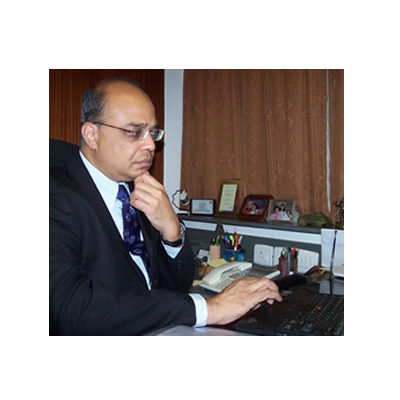
    “WWIL and Zee News Ltd should list by February 2007. We expect to list Dish TV by March,” says Essel Group CEO, corporate strategy and finance, Rajiv Garg.

    ZTL today announced the approval of its demerger scheme by the Bombay High Court. This paves the way for setting the record date for the demerger of the cable distribution and news and regional broadcasting businesses of Zee into WWIL and ZNL respectively.

    The Record Date is likely to fall in the latter half of December.

    The shareholders of Zee as on the Record Date shall be allotted shares in WWIL and Zee News. The respective companies would then be applying for listing of such shares to the BSE, NSE and CSE, in compliance with SEBI guidelines.

    Zee expects this process to be completed by February 2007.

  • Zee Telefilms picks up 50% stake in Ten Sports

    Zee Telefilms picks up 50% stake in Ten Sports

    MUMBAI: Zee Telefilms Ltd. has acquired 50 per stake in Ten Sports in an all-cash deal for $57.15 million.

    Confirming the development Essel Group CEO of corporate strategy and finance Rajiv Garg said, “The acquisition has been made with the enterprise value of Ten Sports at $114.3 million.”

    Ten Sports was in prolonged discussions with Sony Entertainment Television (SET) India, but talks were called off as differences on valuations could not be ironed out.

    Zee will have controlling interest in Taj TV as in the seven-member board, it will have four representatives while Abdul Rahman Bukhatir (Taj TV promoter) will have three.

    Zee has the option to hike its stake in Taj TV after 2009. The price of the balance 50 per cent will be decided at that stage by the two companies and an independent valuer.

    “This acquisition is an important step from Zee towards consolidation in the media industry. We are confident that this will add significant value for the shareholders of Zee. The acquisition of a stake in Ten Sports not only gives us a strong foothold in the arena of sports broadcasting across Asia but also strengthens our operations in the Middle East.

    “I have known Bukhatir for some time now and have the greatest respect for him as a businessman and his leadership as one of the most successful conglomerates in the Middle East and more particularly, the achievements that he has had in the areas of manufacturing, retail, construction, and especially the way he has popularised cricket in the Middle East. I am certain that our joint partnership will result in a mutually beneficial relationship,” said Zee Telefilms chairman Subhash Chandra.

    Taj TV’s average annual revenue for the next three financial years will be around $50 million, Zee said in a statement today. The average annual EBITDA is expected to be $14 million during this period. The Taj TV financial statements shall be consolidated on a line by line basis in Zee’s books.

    Ten Sports operates separate beams in the Middle East, Pakistan, Sri Lanka, Bangladesh and Hong Kong. Besides, it has rights to leading cricket properties like Pakistan Cricket Board, Sri Lanka Cricket Board and the West Indies Cricket Board. “These rights combined with the BCCI neutral venue rights that Zee Sports has, creates the single largest repertoire of cricket programming. Among the other sports, Ten Sports also has rights to the UEFA Champions League, WWE, US Open, Hockey World Cup, which rate amongst the most popular programs in India. Zee Sports also has the rights to Indian football, Davis Cup, WTA, Italian Serie A. Both the sports channels will be able to leverage these properties to its maximum potential across both the platforms,” the release said.

    Ten Sports is distributed by SET-Discovery’s One Alliance and is guaranteed minimum subscription revenues.

    Commenting on the deal, Bukhatir said, “Sports television is an extremely challenging business, and yet we have in a short time established ourselves as a major player. I believe that we will now take Ten Sports to unprecedented heights by joining hands with Zee and Chandra. I have the utmost respect for him as a business man and I have been very impressed by the leadership position he and his team have staked out in every line of the media business, from content to cable to DTH to international. Ultimately, I see our partnership as one which will change the industry.”

    Zee Sports and Ten Sports will draw synergies from each other in operating in the Asian market place. The two will work out plans to share the sports properties between the two channels. Also sharing of different language commentaries will be worked out. “This move would consolidate the number of sports broadcasters in India, thereby bringing about a price correction in the burgeoning rights fees for various sports properties,” the release pointed out.

    Expanding on the benefits of the deal, Zee Sports business head Himanshu Mody said,”The addition of Ten Sports gives us a significant strength, enabling further effective exploitation of all our sports properties. The operational synergies between Zee Sports and Ten Sports would be tremendous and we should be able to run the two channels at much better economies of scale.”

    The Zee scrip reacted positively today, gaining 3.33 per cent to close at Rs 341.65, after touching an intra-day high of Rs 345.50.

  • ETC share buyback programme: SEBI exempts Zee from making open offer

    ETC share buyback programme: SEBI exempts Zee from making open offer

    MUMBAI: The Securities and Exchange Board of India (SEBI) has paved the way for repurchase of shares by ETC Networks Ltd. The market regulator has granted exemption to Zee Telefilms Ltd. (ZTL) and Asian Satellite Broadcast Pvt. Ltd. from making an open offer regarding increase in their voting rights from 54.42 per cent to 58.73 per cent.

    “Pursuant to the said increase in voting rights, there would not be any change in control of the target company (ETC Networks). The application seeking exemption was forwarded by SEBI to the takeover panel. The panel recommended for exemption to the acquirers from making an open offer,” SEBI says in a release.

    ZTL and Asian Satellite Broadcast (referred to as ‘the acquirers’) are the promoters and collectively hold 54.42 per cent in ETC.

    “The repurchase of shares by ETC is aimed at increasing shareholder value. We plan to exercise the buyback programme after getting the necessary approvals,” says Essel Group CEO of corporate strategy and finance Rajiv Garg.

    ZTL and Asian Satellite Broadcast (holding company of the Group) had, on 13 June 2006, filed an application with the SEBI. “ETC Networks has announced to buy back up to 10 per cent of its total paid up equity capital and free reserves at a price not exceeding Rs 62 per share in compliance with the provisions of sections 77A and 77AA of the Companies Act 1956 and provisions of SEBI (Buy-Back of Securities) Regulations, 1998. In view of the said buy back, the holding of the acquirers would increase from 54.42 per cent to 58.73 per cent of the total paid up capital of the target company. As the shareholding of the acquirers would increase beyond 55 per cent of the issued capital of the target company, the acquirers have sought exemption from the provisions of Chapter III of the Takeover Regulations,” the letter said.

    The aim of the share repurchase programme is reduce the paid up share capital and improve earnings per share (EPS). This will be beneficial to the shareholders in the form of higher dividend pay out and increased EPS.

  • Zee Telefilms mulls an entry into China

    Zee Telefilms mulls an entry into China

    MUMBAI: Foreign media companies seem to have hit a wall when it comes to China. Star Group, for example, continues to bleed in that market despite pumping in big money for years. This, however, has not stopped global firms from eyeing a slice of the cake that a 1.3 billion population promises.

    Subhash Chandra is the latest media baron willing to throw his hat in the ring. Zee Telefilms Ltd. (ZTL) is planning to enter China, the toughest market to crack with its tight controls on foreign media.

    “We will be entering that market. We have not yet applied for the landing rights. It will take time and we expect it to happen sometime towards the end of this fiscal,” says Essel Group chief executive officer of corporate strategy Rajiv Garg.

    Though Zee plans to have a presence in China in the broadcasting space, it has not yet finalised on what content and channel it should set up to lure viewers. ZTL chairman Chandra recently said Zee would launch a dubbed movie channel in Russia.

    ZTL also plans to launch in Afghanistan, Cambodia and Indonesia to expand its international operations which account for almost one-fourth of the company’s revenues. Running businesses which have matured in the UK and US, Zee’s strategy is to launch dedicated channels in certain markets which it has identified. The company has stitched a deal with Malaysia’s multi-channel pay TV operator Astro to create a channel with Hindi content drawn from Zee TV, Zee Cinema, Zee Music and Trendz for the Indonesian, Malaysian and Brunei audiences. For tapping youth audiences in the Arab region, Zee also has launched Zee Arabiya, a music and lifestyle channel.

    Global media companies like News Corp, Time Warner and Viacom see China as a fertile revenue market in the long term, though it is currently spoilt by heavy-handed regulation on foreign media.

  • ‘Zee Telefilms to see ad revenue growth of 12 – 15% in FY07’ : Rajiv Garg – Essel Group CEO of corporate strategy and finance

    ‘Zee Telefilms to see ad revenue growth of 12 – 15% in FY07’ : Rajiv Garg – Essel Group CEO of corporate strategy and finance

    Cable and direct-to-home (DTH) is where Zee Telefilms Ltd (ZTL) chairman Subhash Chandra is planning to put the accelerator on. Wire and Wireless India Ltd (WWIL), the cable outfit, will enjoy an investment of Rs 5 billion to lay out a digital platform, gear up for triple play and expand in value-added services. And to fight Tata Sky in the DTH business, he will pump in Rs 2.5 billion over two years.

    Zee News Ltd. (ZNL), which will have news and regional channels under its umbrella, is looking at a turnover of Rs 2.5 billion this fiscal. The listing of these demerged companies is expected to be in September-October.

    In an interview with Indiantelevision.com’s Sibabrata Das, Essel Group CEO of corporate strategy and finance Rajiv Garg talks about the reasons for the demerger and the expansion plans of these separate entities.

    Why did Zee Telefilms Ltd (ZTL) decide to demerge its businesses into separate entities?
    The driving argument for demerger was that all these businesses had become big in themselves. Huddled together under Zee, they were not given the right strategic focus as the company was very broadcast-oriented. In cable, for instance, we felt that we were not doing justice to its growth potential. Also, in certain lines of activity the government regulations were impinging upon the growth prospects of the company. The idea was to see if we could create that focus and comply with the government guidelines. With so many technological advances taking place, we felt it was the right environment to carry this out. We decided to create independent governing structures and managements, delink cable from broadcasting, and put together certain news-bearing channels into an independent entity.

    Why was the direct-to-home (DTH) business housed in complex structures which did not allow for tax efficiencies?
    The idea was to provide specialist services in specific entities. As the competencies lay in them, the DTH business was spread across three outfits. Integrated Subscriber Management Systems Ltd, for instance, has an expertise in such areas like subscriber billing. Siticable has been negotiating content from the time the cable industry began in India. New Era Entertainment formed the marketing and ad sales arm. The aim was to create a revenue-sharing arrangement with ASC Enterprises Ltd (Ascel), the DTH license holder. When we did this structuring, there was no service tax applicable to the industry which was introduced later. We did not anticipate taxation developments to happen so quickly and cause financial inefficiencies. Besides, demerger will provide clarity of structure and add value to shareholders.

    Since regulation allows for a broadcast cap of 20 per cent, why didn’t ZTL hold stake in the DTH business?
    It would have happened in due course. We were in no hurry as we wanted to present the DTH platform as broadcast neutral. The internal intention was to acquire equity once the key relationships came in.

    What does the demerger process in the DTH business involve?
    In the first stage, Siticable will hive off its cable TV business into Wire and Wireless India Ltd (WWIL). The residual Siticable and its wholly owned subsidiary New Era Entertainment Network Ltd will then merge with Ascel, thus consolidating all the DTH operations under one company. Zee Telefilms shareholders will get 23 shares of Ascel for every 10 shares held.

    How did you arrive at this exchange ratio and why did you prescribe for a subsequent cancellation of shares?
    It is the independent valuer (Deloitte Haskin & Sells) who came up with this ratio. As for cancelling three of every four shares held in Ascel, this is to bring back the capital base to the pre-merger level. The paid-up equity of Ascel would have bloated to around Rs 1.66 billion after the merger, up from the base of Rs 411 million. This would have been too large an equity for a company of this size. So we wanted to compress the capital base. We could have given a predetermined base, but didn’t know the ratio the valuer would arrive at.

    DTH revenues will touch Rs 8 billion in FY08 as subscribers rise to 3.15 million and ARPU to Rs 310

    Zee’s operating revenues from the DTH line of business was Rs 818 million in FY06 while losses stood at Rs 790 million. What is the investment plan and how do you see subscribers and average revenue per user (ARPU) size up over the next two years?
    The net expense for DTH operations so far is Rs 3.8 billion. We are planning to pump in a further Rs 2.5 billion over the next two years. But we are sitting on a dynamic model and if Tata Sky and us are aggressively competing, there is a possibility of the subsidy amount further increasing. It is a factor of what strategies we adopt to develop our subscriber base. By the end of FY06, we reached close to one million subscribers. We project a gross revenue of Rs 3.2 billion in FY07 on a subscriber base of 2.4 million and an ARPU of Rs 250 (up from Rs 190) mainly because of the launch of value-added services. And in FY08, we see ourselves growing to a revenue of Rs 8 billion as subscribers rise to 3.15 million and ARPU to Rs 310.

    When do you expect to sign up with Sony and how do you see content growing?
    We expect Sony to happen within a month. Gradually, the content kitty is filling up. We are also looking at creating new DTH channels. Our plan is to expand to 200 channels.

    Will transponder space be a limitation?
    We will have to find space. We may have NSS when Doordarshan’s DD Direct vacates the satellite to move to Insat 4B. We are also talking to Isro (Indian Space Research Organisation) to launch a dedicated satellite for us.

    Are your Korean set-top vendors planning to set up a manufacturing facility in India?
    I don’t think it is viable at this stage. The volumes are too small for us to ask our STB vendors to manufacture in India. When we scale up to five million (boxes a year), then it may be a feasible project.

    Which do you think will attract investors first, the DTH or cable company?
    Both have attractive growth paths. We are looking at a mix of debt and funding coming from strategic or private equity investors.

    Are you looking at a small dilution initially of up to say 26 per cent?
    It all depends on what is the offer. Yes, if you initially dilute a small stake you have the advantage of discovering value as the company grows. But we have a flexible approach and it all depends on how lucrative the proposal is.

    Have you started talking to investors?
    We have been approached by many, but nothing is imminent yet.

    Will WWIL infuse massive capital towards digitisation of cable and triple play?
    We know the cable business has a lot of undiscovered value and will be giving it a big push. WWIL has a business plan which would take in an investment of Rs 5 billion over three years to drive digitisation, broadband and triple play rollout. It is a classic example of how the focus has been lacking and we have not taken advantage of the technology advances. We are looking at a million digital cable subscribers in the first year as we bundle service and hardware together in some form of subsidy. We also plan to make the network available to telecom operators for voice. Valuation of the cable business can only go up as the industry is badly suppressed. Conditional access system (CAS), digitisation and triple play will liberate the industry and growth in revenues can be rapid.

    How much debt you will raise to fund the expansion?
    We are looking at a debt-equity ratio of 1:1. The net worth of the company currently is not that strong to support that size of debt. We are, after all, planning to pump in Rs 5 billion to expand the business.

    What was the need for restructuring Zee News again?
    The restructuring started a couple of years ago when the uplinking guidelines were changed. Since we had a substantial foreign holding in ZTL, broadcasting of news and news-bearing channels were placed on a separate footing. Gradually as a response we shifted news gathering and uplinking to a separate company, Zee News Ltd, which was in compliance with the guidelines.

    But in the last few months, we have been mutilating this model as we found that there is a lot of strategic gap or clarity between the thinking of the producer (Zee News), the distributor (Zee Telefilms) and the team that exploits the commercial rights (Zee Telefilms) to such channels. So we thought we would close the gap and put everything in an entirely separate entity. All strategic decisions should be taken in an integrated manner by one team – be it production, news gathering, programme slotting, distribution or commercial exploitation.

    So what were the strategic gaps?
    The differences sprung because there was a revenue sharing arrangement between the two, but I can’t give you the minute details. It is not a good idea tactically to unite even if both of them are part of the same family.

    Zee news and regional channels had a combined turnover of Rs 2 billion in FY06. Were regional channels brought under Zee News Ltd (ZNL) because they could add to the company’s topline growth?
    The main reason for this kind of arrangement is that they are news-bearing channels; the regional channels have a strong component of current affairs and news programming. One of the consequences of this combination, of course, can be fattening of the topline. We are projecting a revenue of Rs 2.5 billion in FY07 and Rs 2.9 billion in FY08.

    As part of the restructuring, 137 ZNL shares will fetch 100 shares in ZTL. But with the total foreign shareholding in ZTL at 54.69 per cent, how does ZNL fall within the regulatory cap of 26 per cent?
    ZTL chairman Subhash Chandra will be transferring his foreign holdings (22.77 per cent is foreign promoters holding in ZTL) to an investment company in India. Also, foreign institutional investors (FIIs) will be given preference shares to bring the cap under limit (FIIs hold 31.51 per cent in ZTL).

    When are you planning the launch of Tamil and Malayalam language channels? How much are the new southern channel launches consuming as investments?
    The two channels should see launch in the current fiscal and in FY08. Along with the Kannada launch, the total investments would be in the region of Rs 350 million.

    With the demerger, won’t the topline of core Zee Telefilms see an erosion?
    Even after physically transferring the topline out, there is enough of a mandate to register growth. We have the number two and three (Zee Cinema and Zee TV) channels in the country. If they continue to focus on the products they have, their growth path is mandated. The flagship channel, Zee TV, is seeing a surge in ratings and ad rates.

    For core ZTL (after demerged businesses), we expect an advertising revenue growth of 12-15 per cent in FY07. While international business will sustain its 10-12 per cent growth (adding of channels and gain from Middle East), domestic subscription will stay steady. Overall, the core ZTL (after demerged businesses) will see a growth of 10 per cent in the current financial year.

    Will the bottomline look healthy after hiving off the loss-making businesses?
    The pullout is of minor loss-making businesses. The impact will largely even out as Zee News and the regional channels were profit-making. Still, there will be some positive outcome.

    How will Zee Sports play out on ZTL’s bottomline, particularly after bagging at a whopping price of $219.15 rights to 25 offshore cricket matches over five years?
    Zee Sports is at a development stage and there will be investments made for the long term development of the channel. There is a particular sequence in which we have to pay and the outgo for the first year will be $5.04 million per match. That will give us reasonable time to drag on the investments and build the channel. Besides, we will be bidding for other major sports properties including the ICC World Cup which is coming up for grabs.

  • Chandra’s foreign holdings to be transferred to Indian investment company

    Chandra’s foreign holdings to be transferred to Indian investment company

    MUMBAI: Zee Telefilms Ltd. (ZTL) chairman Subhash Chandra will be transferring his foreign holdings to an investment company in India. Under ZTL’s demerged restructuring into separate entities, this is seen as a move to comply with the uplinking regulations on foreign holdings in news channels which are capped at 26 per cent.

    The total foreign shareholding in Zee Telefilms is 54.69 per cent. While the holding of foreign promoters is 22.77 per cent, foreign institutional investors (FIIs) have 31.51 per cent.

    As part of the corporate restructuring, ZTL is spinning off its news and regional channels into Zee News Ltd (ZNL). According to the formula that has been worked out, 137 ZNL shares will fetch 100 shares in ZTL.

    “Chandra will be transferring his foreign holdings to an Indian registered investment company. This will help Zee comply with the uplinking guidelines for the news business,” says Essel Group chief executive officer of corporate strategy and finance Rajiv Garg.

    The shares to be issued to FIIs in ZNL will have to fall within the 26 per cent cap. Foreign shareholders will, thus, be given preference shares of equivalent value to bring it under limit. Along with this, the promoters’ foreign holding will be transferred to an investment vehicle in India.

    The foreign holding of promoters is primarily through Delgrada Ltd. which has 19.98 per cent stake in Zee Telefilms. Delgrada is an overseas corporate body (OCB) owned by Chandra. The balance 2.79 per cent is held by Lazarus Investments Ltd.

    In the fiscal ended 31 March 2006, Zee posted a turnover of Rs 2 billion from its news and regional channels line of business and a net profit of Rs 161 million. “Zee News Ltd targets a turnover of Rs 2.5 billion in FY07 and Rs 2.9 in FY08,” says Garg.

  • Chandra to pump in Rs 7.5 billion into WWIL, Dish

    Chandra to pump in Rs 7.5 billion into WWIL, Dish

    MUMBAI: Subhash Chandra has big investment plans for the two de-merged entities of Zee Telefilms Ltd (ZTL). Wire and Wireless (India) Ltd. and Dish TV, engaged in the cable TV and direct-to-home (DTH) businesses respectively, will together be pumping in Rs 7.5 billion to fund their expansion plans.

    WWIL will have an investment requirement of Rs 5 billion over the next three years to give a big push to digitisation of cable TV, broadband and voice services. The cable company also expects to rope in an investor. “WWIL has a business plan which would take in an investment of Rs 5 billion over three years. The strategic thrust will be on rollout of digital cable. We are also looking at triple play offerings. We have a network which can be made available to telecom operators for voice,” Essel Group chief executive officer of corporate strategy and finance Rajiv Garg tells indiantelevision.com.

    WWIL is looking at a debt-equity ratio of 1:1. “The net worth of the company currently is not that strong to support that sort of debt. We would like a 1:1 debt-equity ratio,” Garg says.

    Operating revenues from ZTL’s cable line of business stood at Rs 1.5 billion for the fiscal ended 31 March 2006 while net profit was at Rs 7 million.

    For Dish TV, the DTH outfit, there is a Rs 2.5 billion investmen plan over the next two years. The net expenses for DTH operations thus far is Rs 3.8 billion, says Garg. “We project a gross revenue of Rs 3.2 billion from our DTH business in FY07. We aim to have 2.4 million DTH subscribers in the fiscal while the average revenue per user (ARPU) should go up from Rs 190 to Rs 250 a month because of the launch of value-added services,” he adds.

    The operating revenues for the DTH business stood at Rs 818 million in FY06. On the back of subsidies and marketing expenses, the DTH operations incurred a loss of Rs 790 million during this period.

    The de-merged DTH and cable companies are likely to opt for an initial dilution of up to 26 per cent to investors. They are open to both private equity and strategic investors.

  • Zee fixes share swap ratio for Dish TV

    Zee fixes share swap ratio for Dish TV

    MUMBAI: Zee Telefilms Ltd. (ZTL) today said its shareholders will get 23 shares of ASC Enterprises Ltd (ASCE) for every 10 shares held.

    The ZTL board has also approved a demerger scheme for spinning off its direct consumer business into ASCE, a company promoted by Subhash Chandra’s Essel Group for direct-to-home (DTH) business. Siticable (without its cable business) and its wholly owned subsidiary New Era Entertainment Network Ltd. (NEENL) will merge with ASCE, integrating all DishTV operations under this company.

    In the first stage, Siticable will, thus, hive off its cable TV business into Wire and Wireless India Ltd (WWIL). The residual Siticable and NEENL, which handles marketing and distribution of the DTH business, will then merge with ASCE.

    The paid-up equity capital of ASCE will increase to Rs 1.66 billion after merger, up from the current base of around Rs 411 million. The company plans to bring back the capital base to the pre-merger level by cancelling three of every four shares held in ASCE. “As a result of the merger, ASCE’s capital base will get bloated. We want to compress the base,” said Essel Group CEO, corporate strategy and finance. Rajiv Garg.

    The share exchange ratio is based on the recommendation of independent valuers M/s Deloitte Haskin & Sells.
    ZTL shareholders will receive shares on a proportionate basis in ASCE as consideration. As per the independent valuation, ZTL shareholders will get 230 shares of ASCE of Re 1 each for every 100 shares in ZTL. This would result in a 57 per cent shareholding in ASCE for the shareholders of ZTL,” the company said in a release. The appointed date for the Scheme of Arrangement will be with retrospective effect from 1 April.

    The scheme of arrangement will require approval of the Stock Exchange, shareholders and creditors of Zee and from Bombay High Court. ASCEL will be listed on all stock exchanges where ZTL is listed, the release added

    Commenting on the board’s decision to hive off Zee’s direct consumer business, ZTL chairman Subhash Chandra said, “All Dish TV operations would now be under a single corporate entity, bringing strategic clarity to this high growth business. This shall complete the restructuring agenda we had set for ourselves to create four focused, pure play, listed companies ready to exploit the vast emerging opportunities in each line of business. Subject to necessary approvals, this would result in streamlined operations in each area to build long-term shareholder value. It would also clear the ground for acquisitions and strategic or financial partners in the de-merged businesses, apart from unlocking shareholder value.”

    Zee has sent an application to the Stock Exchange on the restructuring plans for the news, content and cable business. “An application will soon be made to the High Court,” the release said.