Tag: Rajiv Dubey

  • Publicis Media India launches Markriti

    Publicis Media India launches Markriti

    Delhi – Publicis Media India has introduced Markriti, a cutting-edge machine-learning based Marketing Mix Modeling (MMM) tool. Powered by Meta Open Source and supported by an interactive UI, Markriti aims to deliver efficient, cost-effective, and cutting-edge MMM solutions to brand managers and CMOs across industries, further enhancing Publicis Media India’s AI footprint and strengthening its overall client servicing capabilities.

    Understanding that we live in a competitive world, brands are actively adopting a data-driven approach. They are seeking tools and metrics that can help measure return on investment (ROI), which allows them to optimize campaigns for better results. While there are many campaign measurement tools available in India, Markriti comes in as an integrated MMM solution that enables marketers to measure their ROI across various marketing channels, even before the launch of a campaign. An intervention by Publicis Media India, Markriti aims to help marketers achieve their targets and optimize budgets.

    While Markriti inherits its open source from Robyn, it is a step ahead by providing a top-down UI that allows for a low-code and hassle-free MMM workflow. It empowers strategists and analysts in post-modeling to not only engage in MMM studies but also access insightful data in under an hour. With the time saved in running the model, the Data Scientist can now focus on fine-tuning the model and insights. With capabilities across investment, strategy analytics, data, performance marketing, and content, Markriti has truly completed Publicis Media India’s suite, further reinforcing the group’s ‘Power of One’ business model.

    Publicis Media India chief solutions officer Rajiv Gopinath said, “In the dynamic world of marketing, which is highly influenced by consumer behavior, our clients have always been posed with the challenge of finding a way to measure the impact generated through their efforts accurately. With Markriti, we aim to empower marketers by supporting them from inception and ideation to execution and measuring impact. We also empower Data Scientists with a cloud computing solution and a UI that gives them flexibility in hyperparameter tuning. We are sure that Markriti will enhance marketing strategy building across industries and evolve as the partner of choice for all MMM solutions.”

    Additionally, since it is specially curated for the Indian market, Markriti not only helps in selecting the type of ad stock, hyperparameters, and best Pareto model but also provides complete guidance in each step of the modeling process.

    Dabur, having worked with Publicis Media India for close to a decade, recently deployed Markriti for the Karnataka market to address issues around brand growth and return on investment through their marketing efforts. The problem at hand was to create a comprehensive MMM that could quantify the ROI, determine the optimal marketing mix, and provide strategic insights for improved marketing efficiency. Markriti, with its transformative approach and user-friendly nature, efficiently analysed their past marketing campaigns and helped Dabur optimize the existing budget, alongside a significant boost in the overall return on ad spend.

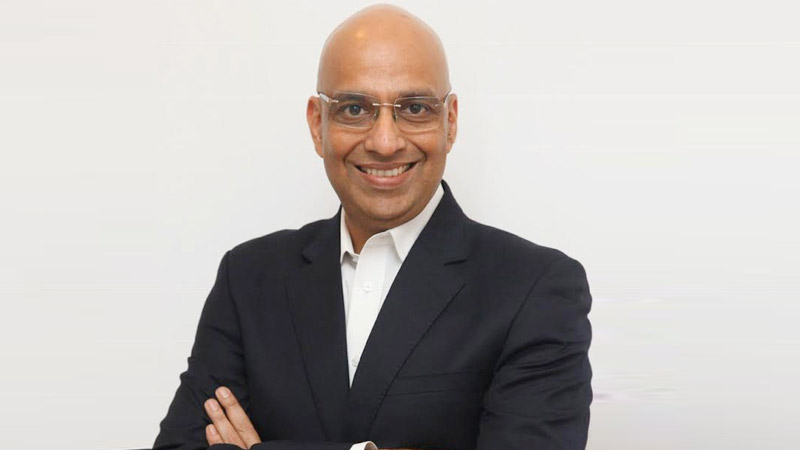
    Dabur India Head of Media & Brand Activation, VP, Rajiv Dubey said, “Publicis Media India has been our analytics partner since 2015. Every year, they bring something new to the table regarding analytics. The Markriti innovation is a great initiative and it’s great to have a partner thinking about driving our business goals. It was used for the Karnataka MMM this year.”

    Additionally, Dabur India, Head of Marketing, Oral Care, Augustus Daniel having seen the usage of Markriti in his category, shared, “We’ve been using Publicis Media India for MMM services for quite some time now, and this year they’ve introduced a new modern approach to MMM through their tool ‘Markriti’, through which the results for the Karnataka market were developed. Markriti uses the powerful Meta Open Source library Robyn and represents some of the best the industry offers in the field. We look forward to more innovations from Publicis Media India in the analytics area.” 

  • Dabur India entrusts Rajiv Dubey with expanded role as VP

    Dabur India entrusts Rajiv Dubey with expanded role as VP

    Mumbai: Dabur India has entrusted Rajiv Dubey with an expanded role as vice president, where he will now lead brand activations and experiential marketing initiatives.

    Alongside his continued leadership in media strategy and execution, Dubey will focus on creating immersive brand experiences that enhance Dabur’s connection with its customers.

    He manages media spending across a wide range of platforms, including TV, digital, print, radio, outdoor, and both consumer and trade activations, ensuring optimal ROI and growth for the company’s diverse brand portfolio.

    With over three decades at Dabur, Dubey has developed expertise across various roles, with core competencies in media planning and buying, digital transformation, mar-tech, and emerging media practices.

    Since joining Dabur in 1994 as a media manager, Dubey played a key role in establishing Adbur, the company’s in-house agency, and in fostering partnerships with prominent broadcasters such as All India Radio, Doordarshan, Zee, and Star Network, as well as major newspapers like Times of India.
     

  • Disney Star Network launches innovative contextual ads for its Hindi movie channels

    Disney Star Network launches innovative contextual ads for its Hindi movie channels

    Mumbai: Disney Star Network has announced the launch of an advanced contextual advertising solution across its Hindi movie channels, Star Gold and Star Utsav Movies. This innovative product, developed entirely in-house, offers advertisers an opportunity to deliver highly targeted and engaging ads to viewers. By strategically placing ads that are contextually relevant to the content being watched, Disney Star Network is revolutionizing the way brands connect with their audiences.

    “Contextual ads are a game-changer for advertisers, allowing them to reach their target audience with unparalleled precision and effectiveness. This cutting-edge solution will not only boost viewer engagement but also provide valuable performance insights to advertisers. This package can scale as high as 1000 spots per month, which is 2x-3x of any regular FCT campaign. This approach is unique in the television space as it combines building strong brand associations while reaching maximum audience, effectively addressing multiple brand objectives such as awareness and salience,” said Disney Star head – entertainment ad sales Dev Shenoy.

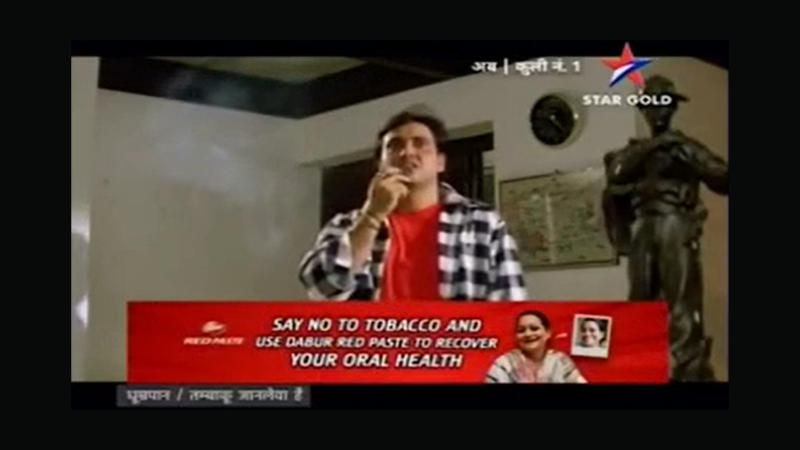
    Dabur India at Dabur senior GM head of media Rajiv Dubey commented, “At Dabur, we are known to create and spread awareness for causes that need attention! Tobacco chewing is a major Hazard and hence World NO Tobacco Day was an important day to alert our audiences of this hazard. We associated with Star Gold for the first-ever contextual messaging product, which created a pinpoint accurate impact for this messaging. This association proved to be truly effective just the way we love our association with the consumers”

    The contextual ads offer a distinctive and efficient method for advertisers to reach their target audience, thereby creating a mutually beneficial situation for all stakeholders involved. Compared to traditional contextual ad creation, this solution streamlines the process, offering a more efficient and scalable approach. Additionally, the product includes the ability to measure the exposure of each contextual ad using BARC ratings, providing valuable insights into ad performance.

  • India shifts to a new socio-economic classification system ISEC, women education is one of the key definers of social capital

    India shifts to a new socio-economic classification system ISEC, women education is one of the key definers of social capital

    Mumbai: India’s sole and autonomous market research industry body, Market Research Society of India (MRSI) announces the adoption and implementation of its latest Socio-economic Classification System, ‘ISEC’. The current Socio-economic Classification (SEC) being followed in India is based on ownership of consumer durables and vehicles. The growth in GDP and income, penetration of consumer durables, and ownership of vehicles has witnessed a significant increase, leading to the current socio-economic classification becoming less discriminatory and more volatile. The need to redefine the key variables led to the formation of a more stable, and more robust construct, ‘ISEC.’ Among the various industry stakeholders on track to adopt ISEC are The Indian Society of Advertisers (ISA), research users of various organisations such as ITC, Hindustan Unilever Limited, Marico, Dabur India, etc., research agencies including Kantar, IPSOS, as well as key media agencies.

    On rolling out the new socio-economic classification system, Market Research Society of India director general Mitali Chowhan said, “Socio-economic classification is the base of any targeted consumer understanding. At MRSI we recognise the need for an evolved SEC structure and ISEC is a system that is highly relevant. ISEC was developed by the industry, for the industry and unlike any previous classification system, it considers women’s education as a key definer of social capital, an attribute that is highly pertinent in current day. As an industry body, we are deeply invested in our stakeholders and the launch of ISEC is in line with our commitment to help our industry grow and evolve.”

    Socio-economic classification enables brands and agencies to understand their target audience’s behaviour and profiles and set price points. Updates to the current socio-economic classification is critical given the changing landscape of Indian households. ISEC addresses this with classification using household education and occupation profiles.

    In line with the roll-out of ISEC, MRSI organized a panel discussion that reaffirmed the importance of an evolved Socio-economic classification system to target consumers. Reinforcing ⁠their thoughts were senior industry leaders Amit Adarkar, CEO of IPSOS India, ⁠Jasmine Sachdeva, Managing Partner of Wavemaker India, ⁠Muralidhar Salvateeswaran, Chief Operations Office, Insights APAC at Kantar, ⁠Rajiv Dubey, Head of Media at Dabur India, ⁠Vivek Malhotra, Group CMO of India Today Group and Vinay Virwani, Head – Consumer Insights at Dabur India. The panel that was moderated by MRSI’s General Secretary, Shuvadip Banerjee, Chief Digital Marketing Officer of ITC Ltd. discussed the increased need for a deeper understanding of consumer behaviour, media targeting, and challenges the industry is faced with given the existing NCCS construct.

    Stressing on the need for a robust SEC system, IPSOS India CEO Amit Adarkar said, “Socio-economic classifications are the starting point of any planning or decision-making, impacting almost all industries. Following a SEC system that is relevant, evolved and representative is hence critical. NCCS was introduced at the time when digitisation was gaining momentum and women representation in household decisions was marginal. Our country has evolved greatly since then and it is essential that we follow a SEC that is equally evolved.”

    Concurring with Adarkar, Worldpanel Division managing director South Asia K Ramakrisnan Kantar said, “The challenges that companies are faced with these days are innumerable with the current SEC system adding to these challenges in terms of targeting and understanding behaviours. ISEC is a robust system that works well in both urban and rural India. It has more distinctiveness, a better distribution and it gives us the confidence that its structure will benefit brands and their decisions.”

    Unlike NCCS that only factored the education of the chief earner and the presence of certain consumer durable items in the household, MRSI’s ISEC takes on a more advanced approach by including the occupation of chief earner, education of highest educated male adult as well as education of highest educated female adult. Created by a team of seasoned experts and professionals from across the research and insights industry using National Council of Applied Economic Research (NCAER), the Worldpanel division, Kantar, Indian Readership Survey (IRS), and referencing data from VTION,  ICUBETM, among others.

    Speaking on the new SEC, Sunil Kataria, chief executive Officer – Raymond Lifestyle – India & International, and chairman of The Indian Society of Advertisers said, “The development and progress of our economy is at a rapid pace. At such a pace it is even more important for us as advertisers and spenders to understand our consumers and their behaviour. ISEC is representative, relevant and robust. It gives us a holistic view of our audience segment and how they are equipped to make decisions. We welcome this new socio-economic classification and will continue to work with MRSI to further strengthen this system as and when required.”

    ISEC makes way for improved distribution and sharper and refined targeting. It is considerably more stable than NCCS, hence omitting the need for frequent updates.  ISEC’s discriminating quality is visible with each of the class/tier behaving differently, thus being more relevant as the economy develops with improvements in standards of living, increased asset ownership, infrastructure development and government interventions. Moreover, social capital in India can be defined by the education of the female and this parameter helped improve ‘discrimination’.

    Speaking on the implementation, IPG Mediabrands India CEO Shashi Sinha, further added, “A better and deeper understanding of consumer cohorts is always appreciated. It equips brands the opportunity to identify and target consumers in a sharper manner and opens up avenues for sharper communications. ISEC is highly discriminatory which is also crucial in current times. The implementation was long due and we are certain that this will help the industry considerably going forward.”

    “Following a socio-economic classification system that is representative of the population ensures that the industry is marching forward with efficiency. It ensures that the money spent is being spent correctly and more effectively. ISEC gives us that confidence and we are certain that this is a step forward in the direction of economic growth and development.” added India Today group CMO Vivek Malhotra.

    Representative of India’s social-economic strata, ISEC works equally well for urban and rural, is straightforward and quick and is not intrusive to administer.  A classification system spanning 1 to 12 tiers, ISEC is an open-source system and is available for all industry stakeholders

    SEC systems are used by all research companies, advertisers, and measurement bodies to target households. 

  • The pros and cons of Barc’s ADRS for news genre

    The pros and cons of Barc’s ADRS for news genre

    Mumbai: After a gap of nearly 18 months, Broadcast Audience Research Council (Barc) India resumed the ratings for individual news channels with the release of data for Week 10 ‘2022 on 17 March. Following an industry-wide consultation process, the ratings agency developed the Augmented Data Reporting Standards (ADRS) for news and special interest genres, as per which audience estimates for these genres will be released based on a four-week rolling average, every week.

    The new system was devised to address the problem of smaller sample size, technically ‘incidence,’ which makes the news and niche genres prone to error and rigging. The four-week rolling average thus provides more robust and reliable viewership estimates with lower levels of error as compared to the earlier weekly reporting standard. 

    While the technicalities seem to be in place, stakeholders including broadcaster, advertisers and media planners though largely welcoming of the ADRS, have expressed certain reservations regarding it, ranging from downright disapproval to a ‘good for now’ and ‘wait and watch’ approach. 

    Insubstantial as it returns

    By and large, the ‘return of the ratings’ was welcomed by the industry; it was celebration for some, and vindication for others. And yet there were players who refused to accept it altogether.  Just days before the ratings resumed, a leading news broadcaster pulled out of Barc citing the changes offered as ‘alarmingly insubstantial.’ It was apparently displeased with the ratings agency’s unwillingness to work on its sample size which, it thought, was inadequate to ensure a measurement process free from manipulation.  

    A person from the authority tells IndianTelevision.com with a condition of anonymity that while the sample size of nearly 40,000-50,000 that Barc works with is fairly adequate, what really makes the data prone to both error and rigging is the “comparatively miniscule viewership of news and special interest genres.”

    “Statistically speaking because the ‘incidence’ – which is inversely proportional to the level of error – is far lower as compared to other genres, increasing the sample size will not impact the efficacy or sanctity of data/ratings in any way. The well-thought transition to the ADRS (four-week rolling average) is therefore the best approach to providing the most accurate estimates for news and niche genre viewership,” he says.

    Impact on media planning

    Sharing his thoughts at a panel discussion organised by IndianTelevision.com last month, Omnicom Media Group India managing partner and head of investment Yatin Balyan says that weekly data helps understanding how their investments on a particular programme have performed, and to develop a learning base for making a futuristic recommendation. “While we take a long-term view on a four-week, eight-week or 13-week average basis, weekly ratings are important because not every event that we buy has a longer format,” Balyan tells. 

    Patanjali Ayurved COO – media and communications Anita Nayyar too highlights that owing to high volatility in programming in the news space regular reporting of ratings is important. “Unlike GECs, there is no reason why a newcomer cannot top the charts in the news genre because it is completely dependent on the content and the pulse of the audience the channel touches upon,” she adds. 

    However, for exactly the same reasons as mentioned above, an average will give a better understanding of viewership for a news channel, the expert points out. “The ADRS ought to be welcomed by the media planners for it makes life much simpler for them by reducing the disparity in planned and actual GRPs delivered on a campaign. There’s also the fact that news programming can only be altered so much, whatever the TRPs.”

    Advertisers speak  

    Maruti Suzuki India executive director (marketing and sales) Shashank Shrivastava is quite content with the new ratings standards. “Since we usually run regular and slightly longer campaigns for both sustenance and brand launch on news channels our media planning will not be affected as much as someone’s who goes for shorter, one off investment,” he shares. 

    News is a crucial genre for Maruti, speaking of impact and affinity among its TG. The automaker employs GECs for reach. “We generally prefer only the top three channels in any vertical, be it business, English, Hindi or vernacular news, and analyse it by market. Our experience and the ratings that have now been released also shows that there has not been much fluctuation in these rankings,” remarks Shrivastava.

    Dabur India head Rajiv Dubey is happy that the ratings are back and the trend that has emerged, justifies his marketer’s instincts that assumed increased relevance during the blackout days. Dabur is prominent advertiser on news channels, particularly Hindi and regional. The genre comes second after GECs for the FMCG major. 

    Commenting on the likely impact of the new reporting standards on his media strategy, he says, “I do not see it as having a significant impact, as media plans are not made or changed on a weekly basis. We consider a four to thirteen-week average for it.” 

    That being said, Dubey expects to have more weekly and granular data from Barc going ahead. “It is important to have a common standard across genres for comparative planning and to understand the viewership trends for special events/programming on news channels where my campaign may appear,” he insists. Expressing concern over “Barc’s rather secretive approach to a particular genre,” Dubey says he will continue using other sources like Zapr, data from DTH platforms and the company’s own internal survey which became his mainstay during the blackout. 

    It may be of interest here to note that Barc has capped the ‘Customised Events Reports’ (CER) available for broadcasters “to meet their commercial needs” at 12 for a financial year. 

  • The Q unveils first brand campaign ‘Sabse Alag, Sabke Liye’

    The Q unveils first brand campaign ‘Sabse Alag, Sabke Liye’

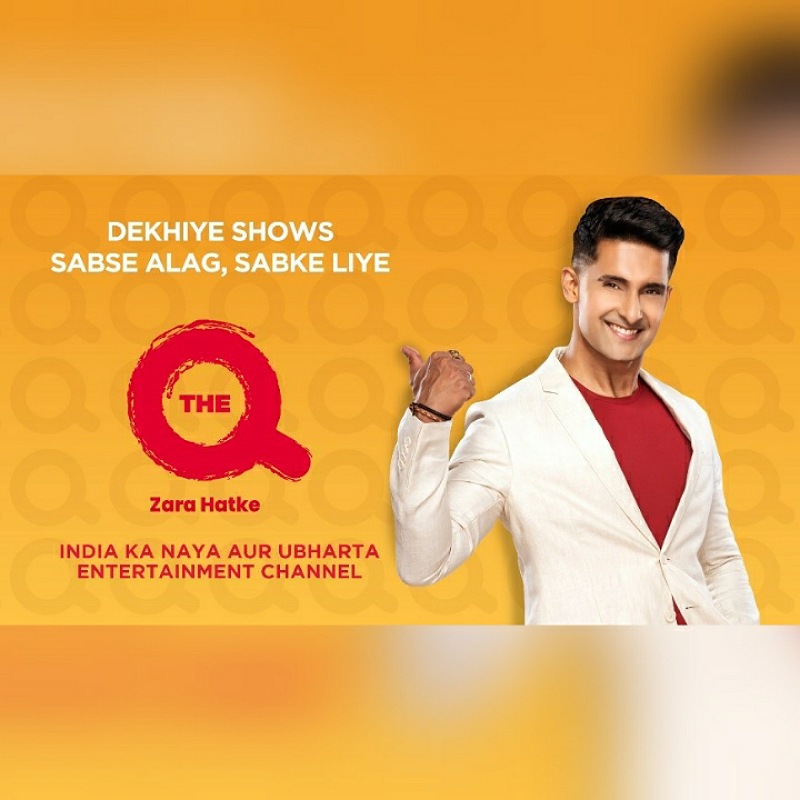
    Mumbai: Hindi General Entertainment channel The Q has launched its maiden brand campaign titled ‘Sabse Alag, Sabke Liye.’ The integrated marketing push is aimed at deepening awareness, increasing reach, and driving inclusivity for the channel while strengthening its ‘Zara Hatke’ proposition as it embarks on to the next phase of growth.

    Actor Ravi Dubey has been roped in as the face of the campaign to leverage his popularity among existing and new viewers, especially in the hinterland.

    The campaign comprises two brand films conceptualised and executed by Mumbai-based integrated communications agency Blitzkrieg. Currently on air on The Q, the ad films will be extensively promoted beyond the network as well. The films are complemented by a catchy brand song that will be promoted strongly in key markets through radio and music apps.

    Besides the on-air promotion, the campaign will be amplified on digital, social media, print, and radio. In addition to targeting consumers, it will also address stakeholders and advertisers by showcasing the channel’s promise, strength and wide variety of offerings. said the channel in a statement.

    In a bid to keep viewers engaged following the brand campaign launch, The Q will run a ‘Watch & Win’ contest titled ‘The Q Dekho Sona Jeeto.’ Specifically timed around year-end, the contest will be integrated into the channel’s prime time to give the viewers an opportunity to win gold, daily.

    “2021 has been exciting and rewarding for us at The Q. We have not simply brought the best of digital on to television, but have also given digital talent an opportunity to be on television,” said The Q CEO Simran Hoon. “We have partnered with platform and creators to offer content that keeps our viewers engaged and entertained while building a robust library of content cutting across genres. Our storytelling style has created a distinct position for us in the industry and this helps us win over not just new viewers but also advertisers. Our latest campaign ‘Sabse Alag, Sabke Liye’ reinforces our commitment to our viewers to provide differentiated content while we embark on our next phase of growth in a ‘Hatke’ style.”

    “’Sabse Alag, Sabke Liye’ is well integrated and is sure to strike a chord with viewers. It is an ode to our existing viewers, thanking them for their constant support and a warm welcome to new viewers encouraging them to be a part of our growing family,” stated The Q COO Krishna Menon. “Ravi Dubey’s popularity is equally commendable in rural and urban markets and by leveraging it we are certain of attracting a new set of viewers to The Q. Our Watch and Win contest are also designed to drive engagement while offering viewers a chance to win gold.”

  • TV Brand Fest 2021: GEC space remains unchallenged in building mass reach, say marketers

    TV Brand Fest 2021: GEC space remains unchallenged in building mass reach, say marketers

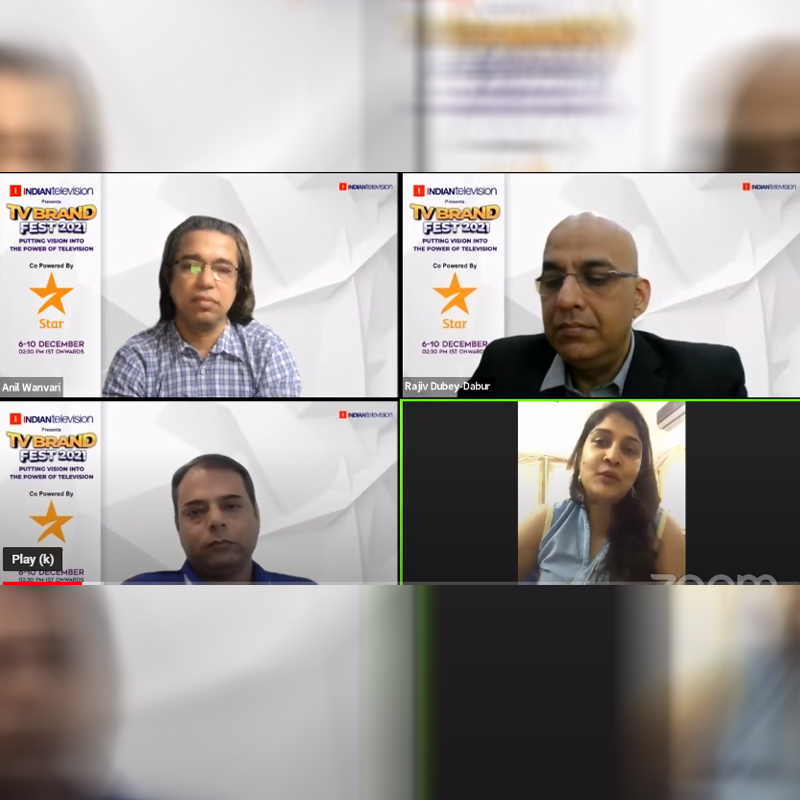
    Mumbai: On day three of the TV Brand Fest 2021, media and marketing heads of prominent organisations discussed the merits and challenges of fiction and nonfiction content as a vehicle for brand messaging. The five-day event being organised by Indiantelevision.com is co-powered by Star India.

    The panel consisted of Dabur head of media Rajiv Dubey, Yamaha Motor India head – marketing Vijay Kaul, and Dr Reddy’s Laboratories marketing head – OTC, emerging markets Prachi Mohapatra. The session was moderated by Indiantelevision.com Group founder CEO and editor-in-chief Anil Wanvari.

    The discussion began with trying to understand the relevance of GECs which remain unchallenged despite the existence of a plethora of niches. Last year they had almost 50 per cent genre share as far as weekly viewing minutes were concerned, and therefore, any brand looking for a mass reach cannot afford to miss out on them.

    “GECs are cost effective, and they give high reach for businesses like us who want to communicate to the masses repeatedly. Niche channels, on the other hand, are not consistent performers,” said Dabur’s Dubey.

    EMBED: Panel image

    Sharing her experience of using GECs, Mohapatra added, “They are a great way to build trust for your brand. GECs work extremely well when you have to change the brand imagery and also with tactical campaigns where the objective is to reach out to the right kind of consumers in a time-bound manner.”

    Even though the auto category uses quite a balanced mix of fiction and non-fiction content, GECs are a staple in the media plan for mass or unisex products such as scooters. Elaborating further, Kaul stated, “GECs are the right choice for mature brands with a country-wide footprint. That’s where we expect a lot of sales volumes. When the idea is to launch a new brand, the media plan depends on the sales target being huge as in case of unisex or mass commuter brands.”

    Mohapatra shared a similar opinion on the kind of products (based on the life cycle stage) that are best-suited for fiction content. “GEC are trust builders with a huge reach, and hence apt for mature brands as well as brand extensions. Taking a new brand/product directly to GECs is not feasible due to the high costs involved,” she observed.

    For Dabur though fiction/GECs is the medium of choice for all kinds of brands barring a few like a men’s hair removal crème. This is because of the female-centric nature of content.

    This insight from Dubey steered the conversation towards the importance of the content (message) and brand ethos being in sync with each other. While ratings and minimisation of duplication are Dabur’s primary concerns, Yamaha’s Kaul asserted that “in the automobile segment it becomes necessary to evaluate the nature of content because one is looking at a long association with a brand/product whose ticket value is huge.”

    Non-fiction content on niche channels has thus been integral to Yamaha’s media plans. Sharing the example of Yamaha YZF R15, the brand that was built on one niche sport brand – MotoGP – alone, Kaul added, “MotoGP complemented the (high) price (Rs. 1.8Lakh) and the DNA of the brand perfectly. We went for live programming as well as repeats with bundled deals on EuroSports, never using any GEC for it.”

    He cited another example, that of Yamaha Fascino Miss Diva Universe where the “fashionable scooter was embedded in the fashion property one year before its launch.” “Longevity is key here; one can’t have big-ticket integrations for six months, it needs at least four-five years for the association to build.”

    Concurring with Kaul, Mohapatra noted, “With such high-decibel programs consistency is extremely important, otherwise even as you work on creating the brand image, recall fades out very quickly.”

    As regards non-fiction on GECs such as ‘KBC’, and ‘Bigg Boss’. the panel believes that it brings in a fresh set of viewers, and a large number of eyeballs at the same time. It also offers more scope and solutions in terms of brand integrations and product placements.  “Used in combination with fiction, weekend non-fiction properties are a great source of incremental reach,” stated Dubey.

  • Content Hub 2021: Growing relevance of language personalisation in OTT advertising

    Content Hub 2021: Growing relevance of language personalisation in OTT advertising

    Mumbai: The last one and a half years have escalated the pervasiveness of the OTTs and streaming platforms in our lives like never before. Not wanting to lose out on their share of the OTT marketing pie, brands have begun exploring promotions and advertisements on these channels.

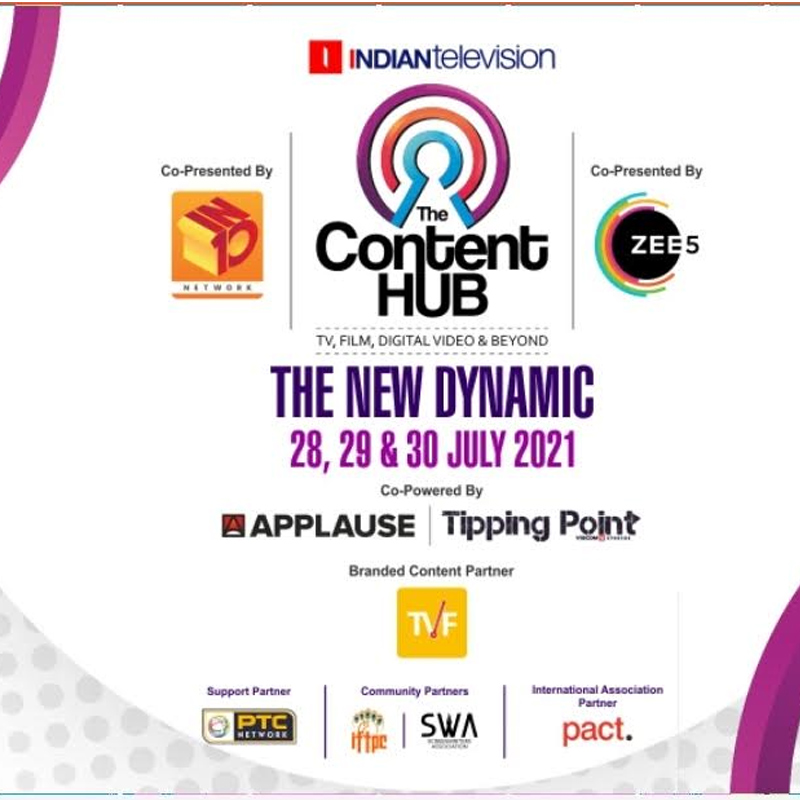
    With regional content being a major chunk of the consumer viewership on the OTT platforms, there is a growing conversation around advertising too being tuned towards regional to resonate more with their audiences. Representatives from some leading brands came together to discuss the growing relevance of this regional targeting in OTT advertising at the fifth edition of the Content Hub 2021- ‘TV, Film, Digital Video, and Beyond’ which was organised virtually by IndianTelevision.com from 28-30 July.

    The panel consisted of representatives from Lenskart, Myntra, DABUR, ESSENCE and Zee Entertainment Enterprises Ltd (ZEEL). The discussion was moderated by IndianTelevision’s founder, CEO & editor-in-chief Anil Wanvari, who began the session by seeking the panellists’ views on how brands are looking at the OTT ecosystem as a communication tool with their customers.

    “The platform (OTT) represents the best of both worlds,” remarked ESSENCE India, managing director, Sonali Malaviya, “It provides the ‘comfort & love of Television’ and the possibility of ‘an ad-free background’, which is what consumers have been wanting to have, since time immemorial. As an advertiser, it gives you the flexibility, the dynamism and the targeting dexterity which we have always wished for in TV. So definitely OTT platforms are here to stay.”

    As the OTT boom revolutionised the media industry, it also opened new avenues for advertisers who had otherwise been reviewing their ad spends on certain genres. One such example has been Lenkskart, which moved out of advertising on English genre, along with the premium audience which gradually moved to OTT.

    However, the lack of data measurability remains a concern, pointed out Lenskart, brand media head, Anupam Tripathi. “The only worrying factor is that little black-box of information about viewership, targets in terms of absolute numbers that doesn’t pass on via the OTT to the marketers. Especially during the streaming of live sports,” said Tripathi.

    While the OTTs have evolved in terms of content and consumer reach, the lack of adequate data measurement and the ability to compare that data with other platforms has proved to be an obstacle for advertisers looking to invest in OTT, according to the panellists. But they also contended that, since these are early days for digital platforms, it may take some time before the new technologies and data measurement systems are devised and made available for advertisers and brands.

    One of the many things that may be challenging for OTT is the high level of expectations that advertisers may have from it. Nevertheless, there’s one area that sets the OTTs apart as a marketing medium, is the regional reach, and the ability to target specific audiences through vernacular content.

    “From an OTT stand point, that’s where the next level of growth is going to come from,” highlighted Malaviya. “And, this is also what makes ‘measurability’ all the more critical- for brands to be able to figure out the scope of the language content, and for marketers to know where they are putting their money is the most optimal use of it.”

    Regional content is drawing advertisers’ interest across all segments. A major portion of the ad-spends of FMCG brands is also shifting towards regional, highlighted Dabur, head of media, Rajiv Dubey. The brand has also been creating regional marketing teams, producing local content & ads, getting local influencers, getting closer to the ground by creating custom made campaigns for that market.

    “This goes hand in hand with regional content on OTTs,” he added. “But, OTTs have to give people options to watch original content in their language. Then it becomes a level playing field. Right now the content is only skewed towards English & Hindi content. So there’s a huge place to grow over there. Though, reaching people behind the paywall will be a challenge.”

    Myntra vice president & head of marketing, Achint Setia concurred. “The next big growth for OTT will come from regional content and advertisers would want to be part of this journey. However, the expectations from OTTs are higher. Almost one-third of our money is deployed in sharp regional campaigns today, so I think it’s just going to get bigger as we see success in this. It’s bound to happen- if anybody has to scale in this country you just cannot not go regional,” said Setia. “It’s an industry which we all have to support because in the future, it will provide solutions which do not exist today.”

    While it took television several decades to understand the power of regional, digital platforms are plunging into vernacular content within a few years of their debut. “Regional is a dominant force in OTT content because of the sheer numbers of people consuming it. It’s just that the expectations from OTTs are also higher, in terms of addressability. The responsibility is higher,” said Zee Entertainment Enterprises Ltd (ZEEL), Revenue, COO, Rajiv Bakshi.

    The OTT platform launched three years ago has already expanded into 11 languages, including Hindi, Bhojpuri, Tamil and Telugu. It has been leading the way in regional content with the release of several original series in local languages, including Nanna Koochi (Telugu), Utsaha Ithihasam (Malayalam), Date with Saie (Marathi) and What’s up Velakkari (Tamil).

    “I don’t think any medium can invest or prepare for the future, as best as OTT,” added Bakshi, giving a sneak peek into the platform’s latest solution for brands and advertisers, which he said will differentiate why OTT is an important medium for tomorrow’s media planning. “So, when you are watching any piece of content, you can pause and see the jhumkas (or any other item), and when you press on it, you can see the price, colors, details etc and if interested, you can go to the platform and buy it. This is the new solution we are offering to our advertisers. So, at any point viewers can pause and visit the platform to purchase an item. We have the solution, now rest depends on our partnership with the client as to how to develop it so as to ensure it doesn’t affect the overall consumer experience. These are the kind of solutions we are investing in.”

    Summing up the discussion, Wanvari also drew attention towards the lower cost of advertising on digital and OTT, compared to TV. “Digital and OTT channels are offering reach at a fraction of the cost that print and TV offer, and that makes a case for allowing this new medium to develop and grow similarly too with adequate support. At the end of the day, for anyone using regional languages to target specific audiences, first movers would always stand to benefit from the platform as the medium grows because one builds a relationship early on,” he added.

    The three-day summit organised from 28-30 July, 2021 concluded on Friday. It was co-presented by IN10 Media Network and ZEE5, and co-powered by Applause Entertainment and Tipping Point, the digital content unit of Viacom18 Studios. PTC Network was the supporting partner.

    Centred on the theme – ‘The New Dynamic’, the three-day event witnessed insightful sessions with industry stakeholders deliberating on how the new forces are transforming the way content is created and stories are told. It also delved into the impact of these changes on the business models for the world of films, TV and OTT.

    For more details, visit: https://www.thecontenthub.in/

  • How Dabur realigned itself to manage Covid2019

    How Dabur realigned itself to manage Covid2019

    NEW DELHI: Covid2019 came as a big disruptor for the marketing and advertising industry. All the brands, big or small, had to rework their strategies for the year, realign their spends, and work with a different approach to reach to the consumers. In a live webinar with Indiantelevision.com, Dabur India head of media Rajiv Dubey had revealed that the brand was quite proactive in its approach to handle the situation and now in its financial review, the company has detailed the many measures it took to manage Covid2019.

    As per the report, the company worked on a multi-pronged strategy to handle the situation, keeping a tight focus on employee well-being, consumer marketing reorientation, GTM approach, streamlining manufacturing, cost and cash flow management, and community welfare.

    Elaborating more on the facet of consumer marketing reorientation, the company shared in the report that all its communications were repurposed in the Covid2019 context and a higher focus was put on healthcare and hygiene. The company also entered into newer categories and launched relevant NPDs.

    The media mix was retooled with an increased digital presence and clocking higher engagement on social media. It also decreased its presence on GECs, stopped advertising on print and outdoor, and invested highly in news channels, kids’ channels and movie channels on TV.

    To reach the consumers, a go-to-market (GTM) strategy was adopted under which incentive schemes for the salesmen and delivery personnel were announced in the early-Covid period. Automation was made a key factor in taking orders by enabling SSMs to telecall and take order on SFA, directly from home at start of Covid, piloted order taking through WhatsApp & centralized tele-agents was also introduced. It also launched a retailer app, which is now reaching to close to 40,000 retailers for self-service.

    To motivate and support the retailers, the company rolled out one lakh ‘Suraksha Stores’ with the ministry of consumer affairs, provided health insurance of one lakh to 1500+ SSM of Dabur stockists and gave digital certificates for exceptional service by sales team members.

    It also ventured out to reach the consumers directly via partnering with platforms like Swiggy and Dunzo, starting the ‘Immunity to Doorstep’ initiative, and placing Dabur's Immunity booster products in dairy and kirana stores.

    Dabur also initiated several community welfare programmes, earmarking Rs 21 crores towards support and relief activities. It also contributed Rs 11 crore to PM care fund by Dabur and other group entities.

    However, the company did not stay immune to the ripple effects of the pandemic. The month of April and part of May 2020 saw complete lockdown which led to a significant impact on the company’s revenue but with the easing of restrictions, we are seeing sequential improvement in the revenue trajectory of the company.

    While the impact on revenue from operations has been partially mitigated by higher focus on health and hygiene categories, the launch of new products, driving sales through new channels such as delivery platforms and e-commerce and aggressive monitoring of sales in GT channel, yet the impact of Covid-19 on Q1 FY21 revenue from operations (based on best judgment and normal growth scenario) is likely to be in the range of Rs 400-450 crore. Impact on PAT of Q1 FY21 is likely to be in the range of Rs 60-80 crore.  

    It revealed in its performance summary for FY’20 that it was on track to deliver six per cent revenue growth if the pandemic had not happened. With an impact of Rs 360 crore on sales, its revenue grew by only two per cent in FY’20. Even the growth in PAT before exceptional items dipped to 5.8 per cent from 14 per cent.

    The Q4 was massively hit by the ripple effects of the lockdown. Dabur’s revenue dipped by 12.3 per cent in the final quarter and the PAT before exceptional items witnessed a dip of 18.9 per cent.