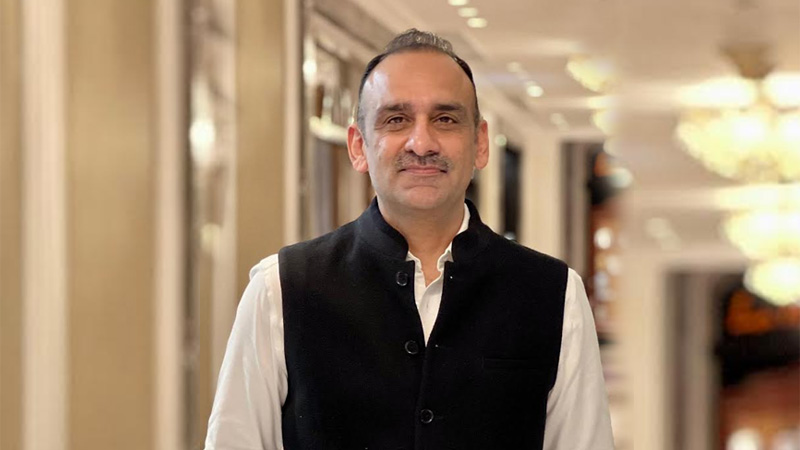
Tag: Rajesh Mishra

  • UFO Moviez promotes Siddharth Bhardwaj as CEO digital cinema

    UFO Moviez promotes Siddharth Bhardwaj as CEO digital cinema

    MUMBAI: UFO Moviez, a network for in-cinema advertising and digital cinema distribution, has announced change at the top.

    Siddharth Bhardwaj, currently the group CMO and national sales head, has been promoted to chief executive officer of the digital cinema business. A qualified mechanical engineer with an MBA in marketing, Bhardwaj brings over 28 years of experience across various industries. Since joining UFO Moviez in 2012, he has been instrumental in establishing the company’s advertising revenue and advocating for cine-media as a preferred platform for impactful advertising.

    In his new role, Bhardwaj will oversee the company’s digital cinema business, focusing on leveraging competitive advantages to drive growth. He will continue to report to UFO Moviez executive director & group CEO Rajesh Mishra.

    “Siddharth’s experience and strategic acumen have been instrumental in shaping UFO Moviez’s success over the years,” said Mishra. “His elevation to CEO of the digital cinema business reflects our confidence in his ability to lead the company into the next level of growth. I am certain that under his leadership, UFO Moviez will continue to innovate and deliver value to all our partners and stakeholders.”

  • UFO Moviez reports Q2&H1FY25 results

    UFO Moviez reports Q2&H1FY25 results

    Mumbai, October 29, 2024: UFO Moviez announced its financial results for the quarter and half year ended 30 September 2024.              

    Financial Highlights:

    Quarter ended 30 September 2024

    Q2FY25 saw an 11 per cent YoY increase in total revenue, driven by growth in theatrical and exhibitor revenue. However, advertising revenue remained subdued due to the mixed performance of film releases during the quarter.

    ·       Consolidated Revenues grew by 11 per cent from Rs 871 mn in Q2FY24 to ₹ 968 mn in Q2FY25,  

    ·       EBITDA for the quarter stood at Rs 102 mn, compared to ₹ 177 mn in Q2FY24,

    ·       Reported a pre-tax loss of Rs six mn in Q2FY25, compared to the profit of ₹ 55 mn in Q2FY24,

    ·       Reported Net loss of Rs 9 mn in Q2FY25, compared to a Net profit of ₹ 33 mn in Q2FY24.

    Half Year September 30, 2024

    ·       Consolidated Revenues grew by 11 per cent from Rs 1,913 mn versus Rs 1,725 mn in H1FY24,

    ·       EBITDA stood at Rs 168 mn versus ₹ 340 mn in H1FY24,

    ·       Reported loss of ₹ 49 mn at PBT level versus the profit of ₹ 90 mn in H1FY24,

    ·       Reported Net loss of Rs 50 mn, compared to the Net profit of ₹ 58 mn in H1FY24.

    “Q2FY25 highlighted the impact of quality content and underscored the need for consistency in successful releases across languages,” said executive director & group CEO Rajesh Mishra. “While some releases performed well, the underperformance of a few titles, along with a lack of successful Hindi films in September, contributed to muted advertising revenue. However, growth in theatrical and exhibitor revenue supported the overall performance, reaffirming the resilience of in-cinema entertainment. Looking ahead, with a strong lineup of upcoming releases such as Singham Again, Bhool Bhulaiyaa 3, Pushpa 2 etc, we are optimistic about building momentum in the upcoming quarters.” 

  • UFO Moviez reports Q3&9MFY24 results

    UFO Moviez reports Q3&9MFY24 results

    Mumbai: UFO Moviez, India’s largest in-cinema advertising platform, with the power to impact almost 1.7 billion viewers annually through 3,407 screens under the PRIME and POPULAR channels across 1,257 cities & towns, today, announced its financial results for the quarter ended December 31,2023.      

    Financial Highlights:  

    Quarter ended December 31, 2023

    During the quarter, overall business saw an improvement on the back of improved Advertising and Theatrical Revenue. This led to an improved EBITDA and profitability on Q-o-Q and Y-o-Y basis. The Caravan Advertisement also gained some traction from the government segment this quarter.

    Consolidated Revenues grew by 7 per cent from ₹ 1,109 mn in Q3FY23 to ₹ 1,184 mn in Q3FY24,  

    EBITDA margin improved by 649 bps from 9.10 per cent in Q3FY23 to 15.58 per cent in Q3FY24,

    EBITDA in Q3FY24 grew by 83 per cent at ₹ 184 mn versus ₹ 101 mn in Q3FY23,

    PBT improved from negative ₹ 10 mn in Q3FY23 to ₹ 60 mn Q3FY24,

    PAT grew to ₹ 46 mn versus Loss of ₹ 3 mn in Q3FY23.

    Nine months ended 31 December 2023

    Consolidated Revenues stood at ₹ 2,909 mn versus ₹ 3,093 mn in 9MFY24,  

    EBITDA margin improved by 1,079 bps from 7.24% in 9MFY23 to 18.03 per cent in 9MFY24,

    EBITDA in 9MFY24 grew by 134 per cent at ₹ 524 mn versus ₹ 224 mn in 9MFY23,

    PBT improved from negative ₹ 138 mn in 9MFY23 to at ₹ 165 mn in 9MFY24,

    PAT grew to ₹ 103 mn versus negative ₹ 120 mn in 9MFY23.

    “The first half of this quarter started on a muted note due to the Cricket World Cup. However, the overall business during the quarter exhibited notable improvement,” said executive director and group CEO Rajesh Mishra. ”The month of December marked a turning point with successful releases across languages, especially Hindi Releases. This upswing led to an uptick in advertising revenue, achieving the highest ever quarterly advertisement revenue since Q3FY20. This underscores the growing confidence of advertisers in cinema as a potent advertising platform. With our Advertisement Screen Network now expanded to 3,407 screens (104 added during the quarter), and exclusive advertising rights secured across another 403 screens through a tie up with TSR Films in January 2024, we hope to accelerate and continue to build on the positive momentum.” 

  • UFO Moviez Q1 FY23 revenues up to Rs 90.6 crore; loss down to Rs 2.5 crore

    UFO Moviez Q1 FY23 revenues up to Rs 90.6 crore; loss down to Rs 2.5 crore

    Mumbai: In-cinema advertising platform UFO Moviez reported its first quarter results for the financial year 2023. The company reported revenue of Rs 90.6 crore versus Rs 28.2 crore in the corresponding quarter last year. It saw a loss of Rs 2.5 crore versus Rs 26.7 crore in Q1 FY22.

    The company reported earnings before interest, tax, depreciation and amortisation (Ebitda) of Rs 9.8 crore compared to Rs 18.1 crore year-on-year.

    While theatrical revenues are increasing due to the consistent and uninterrupted release of films by both the Hindi and regional film industries, advertisement revenues are slowly recovering due to lower government advertising spending. The corporate advertising segment has, however, shown a significant recovery.

    “The steady release of movies has resulted in a fuller resumption of operations and a revival in revenues,” said UFO Moviez executive director and group CEO Rajesh Mishra. “The success of big budget movies in April’22 and May’22, provided an impetus to all revenue streams, especially the corporate advertisement revenue that has seen a substantial recovery. Whereas, the lag in government advertising spending continued to put pressure on the overall advertisement revenue. We have already turned Ebitda positive and we expect this upward trend to continue. Meanwhile, the increasing appetite of audiences to consume movies in different languages and genres will continue to benefit our theatrical revenues.

  • “OTT, TV and cinema complement each other”: UFO Moviez’ CEO Rajesh Mishra

    “OTT, TV and cinema complement each other”: UFO Moviez’ CEO Rajesh Mishra

    The movie-exhibition business in India is stuck in contradictions. On the one hand, the country produces the highest number of movies in the world, on the other, its screen-density remains one of the lowest. Various state governments provide subsidies to promote shooting in their states, yet GST rate on movie tickets in multiplexes was 28 per cent initially and has been reduced to 18 per cent only recently. And while OTT platforms stream originals directly to homes without any certification or pre-screening, movie-exhibitors need government approvals for every advertisement.

    All this leaves the film folks in a sticky situation. While there is a huge untapped potential for expansion of cinema-networks in tier-II, tier-III cities, entrepreneurs and movie-enthusiasts are often hesitant to invest for fear of getting entangled in endless government regulations.

    UFO Moviez, India’s largest digital cinema distribution network and in-cinema advertising platform, has been successfully navigating these contradictions for over a decade now. Not only has the company digitised over 5,000 screens and revolutionised movie-distribution in India, in order to salvage community movie-viewing in tier-II, tire-III cities, the company has also launched a sub-brand Nova Cinemaz under a franchise model, along with Caravan Talkies, a novel movie-on-wheels concept, wherein non-ticketed shows are played at media-dark villages at sundown for rural folks who would otherwise have been deprived of this entertainment.

    “At the heart of all our efforts,” says UFO Moviez CEO Rajesh Mishra, “is an attempt to add value to all stakeholders in the movie value chain, spanning movie producers, distributors, exhibitors and the cinema-going audience.”

    Indiantelevision.com’s Sumit Ahlawat spoke to Mishra on a range of issues involving expansion in smaller cities, how to improve ease of doing business in the movie-exhibition sector, the need for an overhaul of the regulatory framework, the benefits of adopting transparent, computerised ticketing systems, the revenue-sharing model between movie producers, exhibitors and distributors and on the future of in-cinema advertising. Edited Excerpts:

    On FY19 for UFO Moviez.

    Overall 2019 has been a stable year for us.  The digitisation part of our business is working very well. We had completed the digitisation phase broadly by 2013. Currently, we are in the maintenance and growth phase.

    On the in-cinema advertising revenue decline in FY19.

    We did see a small decline in revenue generation, owing largely to the decline in in-cinema government-sponsored advertising because of the 2019 general elections and the Model Code of Conduct that was in place during the first two quarters. We were expecting this decline and were prepared for that. Advertising revenue from private players, however, has increased by 11 per cent, partly assuaging this shortfall. Going forward in 2020, we are confident about government advertising picking up once again.

    Has India’s falling GDP also impacted in-cinema advertising revenues?

    On the contrary, advertising by private players has increased by 11 per cent. India’s growth has, indeed, seen a modest decline owing largely to global factors. But this has not impacted the movie-exhibition business in India as demonstrated by the FICCI Frames report 2019 which estimated that while in-cinema advertising revenues have increased from Rs 7.5 billion in 2018 to Rs 9 billion in 2019, domestic theatrical revenues have also increased from Rs 102 billion in 2018 to Rs 110 billion in 2019.

    On the need to look beyond metro cities.

    As far as the metro cities are concerned, we are reaching a saturation point. Most metro cities in India have 100 plus screens. Even Surat has nearly 70 screens. And smaller cities having a population of 200,000-300,000 are managing with just one-screen cinemas. This imbalance needs to be addressed. India has a multi-layered economy and for the growth of all stakeholders in the movie value chain, from movie producers, distributors, exhibitors to the cinema-going audience, expansion in smaller cities is a must. We believe the next phase of growth in the Indian movie business will come from these smaller cities.

    Cinema growth potential in tier-II, tier-III cities.

    We have seen single-screen cinemas in tier-II cities struggling for survival. On the one side, they have limited options of movie display due to limited screens. In addition, they have limited in-cinema advertising revenues. These single-screen cinemas can be converted into two to three screen multiplexes. Entrepreneurs in small towns also have disposable income and they are keen to enter the movie-exhibition business. But over-regulation in the cinema sector puts them off. Licensing is a huge obstacle. In some states, one has to get clearances from over 50 nodal authorities before starting a multiplex business.

    That’s why we started Nova Cinemaz. To support entrepreneurs in the small cities who are eager to get in but lack the required expertise and know-how. Under a Nova  Cinemaz franchise, we partner with entrepreneurs at the local level. We not only take care of their content booking but put standard operating procedures (SOPs) in place, provide our years of technical expertise in computerised ticketing systems, market research, as well as provide clients for in-cinema advertisements.

    Currently, we have around 47 screens operating under Nova Cinemaz and another 75 are under discussion.

    On Caravan Talkies.

    We have a two-pronged strategy for Caravan Talkies. It’s a non-ticketing platform and works totally on advertising. The idea was to take movies in media dark areas at the bottom of the pyramid. This provides potential for advertisers to reach an audience where no other media reaches. It also provides an outreach opportunity for government agencies. Whether it's public health messages, or the Swacch Bharat campaign, or the crop insurance scheme, Caravan Talkies is a great platform for government outreach campaigns. This medium excites us and we will continue to invest our resources in it.

    On computerised ticketing systems.

    Single-screen cinemas are also struggling on account of lack of transparency and their refusal to join a transparent computerised ticketing system. They suffer because they have to furnish huge minimum guarantees (MGs) for a movie even before its release. Multiplexes work on a revenue-sharing model but single-screen cinemas in smaller cities, which are the most vulnerable, have to shell out MGs. So, I believe, computerised ticketing should be made mandatory across the board (currently it’s mandatory only for multiplexes). It’s vital for the survival of cinemas.

    On revenue sharing.

    Historically speaking, only 10 per cent movies are a hit, another 10 per cent do average business, while the rest lose money. Given that for movie producers, cinema is the only touch-point with the audience, their survival is a must. And, thus, it’s vital for movie producers to move towards a revenue-sharing model and not insist on MGs.

    On Regulation.

    Today, the greatest bane for the movie-exhibition business is over-regulation. Over-regulation of content, over-regulation of licenses and high GST rates. A movie ticket below Rs 100 is taxed differently than a multiplex ticket. This Robin Hood-attitude must go. Cinema remains one of the most regulated sectors in the entertainment space. Print, TV, OTT, nothing is as regulated as cinema. The reason China could add 10,000 screens in one year, more than we have been able to add in the last 70 years, is because movie exhibition remains one of the most heavily regulated sectors in India. A complete overhaul of licensing and regulation is a must to realise the full growth potential of the cinema business in India.

    On single-window clearances.

    The ease of doing business should translate in the movie-exhibition business as well. Single-window clearance for cinemas is the need of the hour. This will help the cinema business tremendously.

    On the OTT challenge.

    I do not see OTT as a challenge. Rather, I believe that OTT, TV and cinema can all complement each other and help build an ecosystem conducive for the growth of quality content. However, OTT, which streams original content directly into people’s houses does not have to deal with censorship for these whereas, we have to take approvals even for advertisements. While we do not envy the freedom on OTT, we definitely believe that there should be less censorship on cinema well. There should not be a disparity between OTT and cinema.

  • UFO to monetise United Media screens’ ad inventory

    MUMBAI: UFO Moviez India Limited (UFO) has announced a strategic tie-up with United Media Works Pvt. Limited (UMW), a digital cinema technology and service provider having more than 300 digitised cinema screens on its network in India.

    UFO Moviez, one of India’s largest digital cinema distribution network and in-cinema advertising platforms in terms of number of screens, operates India’s largest satellite-based, digital cinema distribution network using its UFO-M4 platform, as well as India’s largest D-Cinema network.

    Under the new tie-up, UFO has acquired long-term exclusive rights from UMW to monetise the advertising inventory on these screens. In addition, UFO will share movie content to these screens in UFO M-4 format. However, existing commercial and service arrangement between UMW and its Channel Partners / Exhibitors /Distributors shall remain unchanged.

    Commenting on the development, UFO Moviez CEO – Indian Operations Rajesh Mishra said – “This strategic move leverages the strengths of both the companies and will be mutually beneficial.”

    UMW joint managing directors Ashish Bhandari and Sachin Bhandari said that “We are very happy to be associated with UFO, the market leader in the digital cinema space, and are confident that this co-operation will be fruitful to both the organizations”.