Tag: Rajesh Kaul

  • We will launch more channels in next one year: Rajesh Kaul

    We will launch more channels in next one year: Rajesh Kaul

    MUMBAI: It was in February that the Telecom Regulatory Authority of India (TRAI) released its regulation on the role of content aggregators and since then, several changes have taken place in the structure of the existing aggregators. While MediaPro decided to split post the regulation, good news is that aggregators IndiaCast UTV Media Distribution and TheOneAlliance are still standing strong in their respective joint ventures.


    Announcing the strong allegiance is the MSM Discovery (MSMD) joint venture TheOneAlliance which will continue to be the authorised sole and exclusive distribution agent for Multi Screen Media, Discovery Communications India and TV Today Network to various distribution platforms – Cable (both analogue and digital), DTH, HITS, IPTV and hotels and commercials establishments.


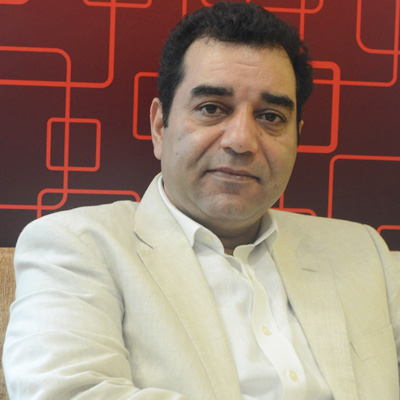
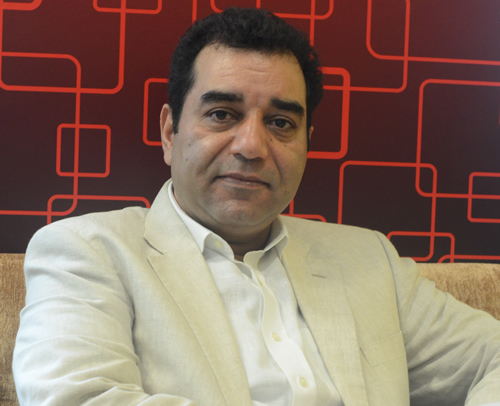
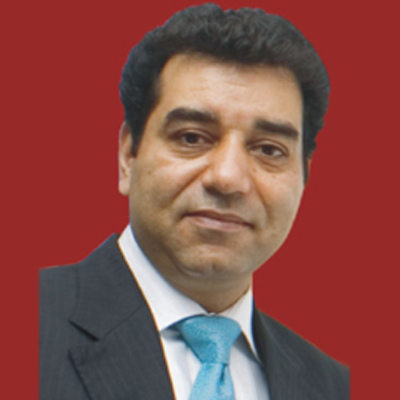
    “As per the TRAI regulation, we will now be the exclusive agents for MSM, Discovery and TV Today,” informs TheOneAlliance president Rajesh Kaul.


    While the distributor earlier had 28 channels in the bouquet, with Times Television Network (Times Now, ET Now, Movies Now and Zoom) moving out from the bouquet, to set up its independent distribution team, TheOneAlliance will now have 24 premium channels to distribute.


    “It was a mutual decision to part ways. We have a strong bouquet and we would like to concentrate on that,” adds Kaul.


    Apart from the current 24 channels distributed by MSMD, the network will be making heavy investments in the form of new channels such as Max 2 – a contemporary Hindi movie channel showcasing Indian cinema, Pix HD, AXN HD and a new entertainment channel from the MSM stable.


    “We have one of the most stable and dynamic distribution partnerships in the industry. Given the current strength and the aggressive future investment plans of our partners, TheOneAlliance will continue to excel as the powerful leader in the industry,” he says.


    TheOneAlliance’s plate seems to be very tempting with MSM acquiring premium sporting properties for its sports and entertainment channel, Sony Six. The channel currently broadcasts sporting events like NBA, UFC, TNA Wrestling and Australian Open tennis along with the Indian Premier League and is home of international football for the next five years with exclusive rights to telecasting the world’s largest sporting spectacle FIFA World Cup 2014 – Brasil & FIFA World Cup 2018 – Russia along with UEFA EURO 2016.


    It is not just MSM that is launching new channels, but Discovery Communications India too is set to increase its channel offerings with: Investigation Discovery (ID), a suspense Hindi entertainment channel, TLC HD and Animal Planet HD. 


    Over the course of the next one year, both the networks are looking forward to launching new channels in both SD and HD across different genres. “We have huge plans of launching many more channels in different genres in the next one year. Our bouquet will only grow from strength to strength,” says Kaul.


    “We believe in nurturing and fostering positive and strong relationships with our partners which is mutually beneficial to both and we are happy to extend this partnership to the future also. We are very confident that TheOneAlliance is perfectly enabled to monetise the valuable and exclusive premium content that we produce and acquire,” MSM CEO N.P Singh said through a statement.


    Added Rahul Johri, EVP and general manager – south Asia, Discovery Networks Asia-Pacific and head of revenue, pan-regional ad sales and southeast Asia, “Discovery has a very strong partnership with Sony and we are fully committed to TheOneAlliance. It is Discovery’s endeavour to provide the Indian viewers with the finest entertainment and TheOneAlliance will continue to distribute our eight current channels and our new launches across India.” 


    The 24 premium channels distributed by TheOneAlliance include: SET, Max, Max 2, Sab, Mix, Pix, Six, AXN, Animax, Aath, Discovery Channel, Discovery Channel Tamil, Animal Planet, TLC, Discovery Science, Discovery Turbo, Discovery Kids, Discovery HD World, Sony HD, Six HD, Pix HD, Headlines Today, Aaj Tak and Tez.

  • Stakeholders have until next week for TRAI consultation paper

    Stakeholders have until next week for TRAI consultation paper

    MUMBAI: It was early this month that the Telecom Regulatory Authority of India (TRAI) sent out a consultation paper which if implemented will reduce the aggregators’ importance in a digitised cable TV environment. The stakeholders: broadcasters, aggregators and MSOs, who had been asked to file their responses today, have now been granted an extension till 3 September.

    Confirming the extension, IBF secretary general Shailesh Shah says, “All our members thought that there should be a foolproof plan before going any forward. So we suggested TRAI to extend the date to have thoughtful and insightful responses.”

    The aggregators who are still working on the responses will be sending out the response first through an email. Subsequently, an Open House Discussion (OHD) on the issues dealt with in the consultation paper, will be held at Delhi on12 September. The date, time and venue for the same will be intimated separately.

    The aggregators have welcomed the extension. “We had more or less completed the responses, but the extension will only give us more time to prepare ourselves better,” says The One Alliance president Rajesh Kaul.

    The consultation paper issued on 6 August attempts to regulate the distribution of television channels from broadcaster to platform operators and discipline the distributors (aggregators). The paper involves amendments to the Tariff and Interconnection orders, and Register of Interconnect Regulations.

    The essence of the paper was to clip the immense clout that the four main aggregators MediaPro Enterprises (distributes 75 channels), IndiaCast UTV Media Distribution (distributes 35 channels), Sun Distribution Services and MSM Discovery (distributing 30 channels each) have on the TV ecosystem in India.

    The aggregators who feel that the regulator has been mislead by the MSOs have got one more week to present their case better. Though, IBF stresses on 3 September deadline being the final date with no further extensions, we wonder if this common norm will see another extension.

  • “We are hoping for a fair share of revenue in a digitised ecosystem” :The One Alliance president Rajesh Kaul

    “We are hoping for a fair share of revenue in a digitised ecosystem” :The One Alliance president Rajesh Kaul

    Cable TV digitisation has forced the entire television ecosystem to come face to face with some gut-wrenching changes. Each one of the players has come under the scathing gaze of either the ministry of information and broadcasting or the telecom regulator, the Telecom Regulatory Authority of India (TRAI). Some have even got a rap on their knuckles as the powers that be continue to work overtime on evolving a rickety old cable TV landscape into one capable of delivering top of the line world class digital services.

    Earlier this month, it was the aggregators that came under the scanner of TRAI which sent out a consultation paper which tries to reduce their importance in a digitised cable TV India. TRAI has said that aggregators tend to misuse the clout they have and need to have their wings clipped.

    The One Alliance, a  Discovery India-MSM joint venture which distributes 28 channels to the 30,000 or so cable operators nationally is one of the aggregators whose future and existence many are questioning.  But its president Rajesh Kaul, a scarred veteran of many a cable TV battle,  is hopeful things will get sorted out and work out well for him and others of his ilk such as MediaPro and IndiaCast.

    Even as The One Alliance has been celebrating the completion of 11 years of being in business, Kaul was busy preparing his responses to be presented to the regulator before the scheduled 27 August deadline. He still found some time to speak to Indiantelevision.com’s Seema Singh on trends in carriage and placement fees, the TRAI consultation paper and all things cable TV. 

    Excerpts:

    Do you see the aggregators become more relevant or less in the coming years? Why or why not?

    We will be as relevant as we are right now. We are a very important link in the chain of the entire television ecosystem. We just hope that with digitisation we will get a fair share of revenue which we haven’t got for so many years.

    What is your take on the TRAI consultation paper, which if implemented will cut down on the aggregator’s clout?

    We are evaluating the entire paper for which we need to file replies.

    TRAI in all its open houses and interaction with stakeholders has maintained that the era of regulation should go now and that they want to deregulate. So the consultation paper came as a surprise. On one hand they talk of deregulation, while on the other they put us under more regulations.

    May be the regulators need some clarification on the same and we are working on it. I am unsure of the intensity of the complaints put by the MSOs. 

    All through we have been following the TRAI and Information & Broadcasting Ministry (MIB) guidelines, with not a single case of deviation.

    There are close to 700 channels today and this has led to huge competition. The situation is such that no one channel can behave unreasonably with an MSO or with consumers. We all need eyeballs from our consumers. The competition ensures that the channels’ content and rate is good. We have to ensure that everything is as per market dynamics so that they are more liked and watched. This is the age we should be talking of forbearance rather than regulation.

    As per the TRAI regulation we are supposed to offer our channels on a la carte rate as well and this is available to the MSOs. In this country, there is a ‘must provide’ for all broadcasters, according to which not a single channel can say “No”  to an MSO for providing the channel to them.  But the MSO has the option to not subscribe to our channels. Since all the channels are on a la carte rate as well, there is no question of forcing them to subscribe to our bouquet.

    Another point that needs mentioning is that the broadcasters have not been getting a fair share of revenue in subscription. We thought with digitisation things will change. We have been a very good stakeholder in this entire process and done all that the regulator wanted us to do, be it doing quick deals to help MSOs sell the set top boxes or curbing our ambitions to make profits.  We hope that we will bear the fruit of being responsible stakeholders in this entire stretch one day.

    TRAI had even in the past come up with such consultation papers, but always heard us and I am hopeful they will listen to us even in this case. We are going to them to present our thought process. May be some wrong impression and feedback has gone to them, our duty is to explain to the regulator.

    The second phase of DAS will conclude soon. Any problems that you faced in this switch? What is the percentage growth in revenue in phase two as compared to phase one?

    We are still waiting for a transparent system. With digitisation the consumer can chose what they want, and pay for it. This transparency has not come out so far. We are still not getting reports from the MSOs and do not know who is watching what. These are the bottlenecks that we face.

    We were looking at ambitious numbers when digitisation kicked off. We didn’t get that in the first phase. Also as responsible stakeholders we curbed our ambitions then because we knew it would be difficult to expect a huge jump in the beginning. We supported the MSOs, which is what the regulator wanted us to do.

    But with the completion of phase II, we should be inching towards that fair share, which should be around 35 to 40 per cent of the on-ground subscription revenue collected. This should happen by April 2014. Channels cannot survive only on ad sales, subscription money is a very important revenue stream for broadcasters, but unfortunately it hasn’t so far happened in India.

    Another problem that the broadcasters face is the high carriage fees. In an analogue system, due to capacity constraint, broadcasters had to pay huge carriage fees. But now with digitisation there is no question of any capacity constraint, so why have carriage fees?

    How are you playing out the carriage fee market? Will the carriage fees come down? How much has this come down, pre- and post-DAS?

     In the next three years there should be no carriage fees. Though carriage fees  have come down post DAS, we still have been paying some placement fees to support the MSOs as they make their transition. But, with the completion of digitisation, even this should go down.  I expect carriage and placement fees to disappear over the next two to three years. While these were expected to go down further by phase II of digitisation, it has only been to the extent of about 25 per cent.

    Earlier the subscription revenue share we (read: broadcasters) were getting from the cable TV ecosystem was about 10-15 per cent. Now it has gone up to maybe to 20 per cent on the overall. Some broadcasters may have got 25 per cent but others may have got lower amounts of the digital dividend.  Many of the channels don’t get any subscription revenues because in the analogue environment they could not afford to have that as a part of their business model. With digitisation all this could change.

    Do you plan to add more channels in the bouquet? What was your strategy to ensure that you had Times Network in your bouquet, when other news channels were walking out of the bouquet?

    We are not market shopping for channels and we are not desperate. Only if tomorrow we come across something good, we will think of adding it to our bouquet.

    We added Times Television Network to our bouquet this year. It was a mutual decision between the two of us. They fitted in our profile and also they wanted to be a part of our network. They are a premium channel and they deserve suitable revenues considering their performance and we at The One Alliance are working to get them those revenues.

    We are in the process of concluding deals for Times with other MSOs. We have finished with Hathway, GTPL, and some other MSOs. And more are coming.

    You had a dispute with Hathway going on for some time? How is that progressing?

    There were many issues like are bound to happen in the cable TV business and yes one of these issues was the one we had with Hathway. And one of the issues – amongst the many issues – we had with Hathway was The Times network, which we have been distributing. But we amicably resolved all the issues with Hathway this evening. And the One Alliance bouquet of channels should have come back on all of Hathway networks by this evening. (26 August).

    It’s been 11 years in the business, how has the journey been so far?

    The journey has been fantastic. While we started with three or four channels now we have a bouquet of 28 channels, with extremely powerful and premium channels. We have various genres, we have a solid name and repututation. It has a journey which has had  more ups than downs.


    Unfortunately, even with the IPL being the biggest sporting property in this country, we have not been able to monetise it well due to under declaration. But, now we have aggressive plans to monetise it for the next season..

    What are the key pointers that set The One Alliance apart from other aggregators? As compared to others aggregators you have less channels, is that a limitation. How do you see things going ahead?

    We are the most stable joint venture (JV) in the industry. All the other aggregators are just a couple of years old. Our partners are very much involved and keen to ensure that the stability continues. For us the quality of the channel is important. We have never been in the race of having 50-60 channels in our bouquet. 

    We have channels from different genres in our bouquet and most of them are amongst the top two or three ranking in their respective genres. There are many more who want to be a part of One Alliance, because they trust the JV. Also our dealings are very transparent. We can add two to three channels at any given time, but our policy doesn’t allow us to do that. We have always believed in quality and so want to have premium channels in our bouquet.

    Today we are the strongest, despite having 28 channels. Also we are the only one having a sports channel in our bouquet unlike the others. Considering we have most genres covered in the bouquet, I don’t see any limitation. Our revenue is far higher than the others.

    Are you selective about the channels you take in the bouquet? What are the criteria that a channel needs to fulfill to be a part of The One Alliance bouquet?

    The channel and the company backing the channel should have similar kind of values and ambitions like ours. We also look at the channels’ performance, which we understand on the basis of the weekly television viewership ratings.

    What is the reach of the bouquet and which is the largest channel in the bouquet?  

    We currently have 28 channels from different genres in our bouquet. Sony Entertainment has the largest reach and, during IPL, Sony Max gets the largest reach.
    IPL is the biggest sporting property that we have. What is interesting is that though most sporting properties are a simulcast with Doordarshan, IPL is the one property which is exclusive on Max. This makes it the most important property in the sporting channel world and we have it.

    We are present almost across the country. We would be there in around 90 per cent of the towns, which have cable and satellite, but through DTH our reach is 100 per cent. Close to some 6,000 cable networks across the country carry our channels. 

    What is the current strength of the organisation?

    One Alliance employs 125 people with offices in Delhi, Bengaluru, Kolkata, Indore and Mumbai. Apart from this, we also have a strong distribution network with distributors in Rajkot,  Pune, Ahmedabad, Guwahati, Patna, Ranchi and Lucknow among others. Like this we have offices in 60 cities. The distributors have their own employees. So, if we take a cumulative strength, we have around 350 people working for us.

    The major revenue for The One Alliance is dependent on IPL. So till how long will IPL be with Sony Max? How do you maintain subscription post IPL and also with so many controversies surrounding IPL, how will you deal with it?

     Unfortunately, even with IPL being the biggest sporting property in this country, we have not been able to monetise it well due to under declaration. But, now we have aggressive plans to monetise it for the next season.

    What are the future plans for The One Alliance?

    We have to lead the change and ensure that everybody gets their fair share.

  • “We are hoping for a fair share of revenue in a digitised ecosystem”

    “We are hoping for a fair share of revenue in a digitised ecosystem”

    Cable TV digitisation has forced the entire television ecosystem to come face to face with some gut-wrenching changes. Each one of the players has come under the scathing gaze of either the ministry of information and broadcasting or the telecom regulator, the Telecom Regulatory Authority of India (TRAI). Some have even got a rap on their knuckles as the powers that be continue to work overtime on evolving a rickety old cable TV landscape into one capable of delivering top of the line world class digital services.

    Earlier this month, it was the aggregators that came under the scanner of TRAI which sent out a consultation paper which tries to reduce their importance in a digitised cable TV India. TRAI has said that aggregators tend to misuse the clout they have and need to have their wings clipped.

    The One Alliance, a  Discovery India-MSM joint venture which distributes 28 channels to the 30,000 or so cable operators nationally is one of the aggregators whose future and existence many are questioning.  But its president Rajesh Kaul, a scarred veteran of many a cable TV battle,  is hopeful things will get sorted out and work out well for him and others of his ilk such as MediaPro and IndiaCast.

    Even as The One Alliance has been celebrating the completion of 11 years of being in business, Kaul was busy preparing his responses to be presented to the regulator before the scheduled 27 August deadline. He still found some time to speak to Indiantelevision.com’s Seema Singh on trends in carriage and placement fees, the TRAI consultation paper and all things cable TV. Excerpts:

    Do you see the aggregators become more relevant or less in the coming years? Why or why not?

    We will be as relevant as we are right now. We are a very important link in the chain of the entire television ecosystem. We just hope that with digitisation we will get a fair share of revenue which we haven’t got for so many years.

    What is your take on the TRAI consultation paper, which if implemented will cut down on the aggregator’s clout?

    We are evaluating the entire paper for which we need to file replies.

    TRAI in all its open houses and interaction with stakeholders has maintained that the era of regulation should go now and that they want to deregulate. So the consultation paper came as a surprise. On one hand they talk of deregulation, while on the other they put us under more regulations.

    May be the regulators need some clarification on the same and we are working on it. I am unsure of the intensity of the complaints put by the MSOs. 

    All through we have been following the TRAI and Information & Broadcasting Ministry (MIB) guidelines, with not a single case of deviation.

    There are close to 700 channels today and this has led to huge competition. The situation is such that no one channel can behave unreasonably with an MSO or with consumers. We all need eyeballs from our consumers. The competition ensures that the channels’ content and rate is good. We have to ensure that everything is as per market dynamics so that they are more liked and watched. This is the age we should be talking of forbearance rather than regulation.

    As per the TRAI regulation we are supposed to offer our channels on a la carte rate as well and this is available to the MSOs. In this country, there is a ‘must provide’ for all broadcasters, according to which not a single channel can say “No”  to an MSO for providing the channel to them.  But the MSO has the option to not subscribe to our channels. Since all the channels are on a la carte rate as well, there is no question of forcing them to subscribe to our bouquet.

    Another point that needs mentioning is that the broadcasters have not been getting a fair share of revenue in subscription. We thought with digitisation things will change. We have been a very good stakeholder in this entire process and done all that the regulator wanted us to do, be it doing quick deals to help MSOs sell the set top boxes or curbing our ambitions to make profits.  We hope that we will bear the fruit of being responsible stakeholders in this entire stretch one day.

    TRAI had even in the past come up with such consultation papers, but always heard us and I am hopeful they will listen to us even in this case. We are going to them to present our thought process. May be some wrong impression and feedback has gone to them, our duty is to explain to the regulator.

    The second phase of DAS will conclude soon. Any problems that you faced in this switch? What is the percentage growth in revenue in phase two as compared to phase one?

    We are still waiting for a transparent system. With digitisation the consumer can chose what they want, and pay for it. This transparency has not come out so far. We are still not getting reports from the MSOs and do not know who is watching what. These are the bottlenecks that we face.

    We were looking at ambitious numbers when digitisation kicked off. We didn’t get that in the first phase. Also as responsible stakeholders we curbed our ambitions then because we knew it would be difficult to expect a huge jump in the beginning. We supported the MSOs, which is what the regulator wanted us to do.

    But with the completion of phase II, we should be inching towards that fair share, which should be around 35 to 40 per cent of the on-ground subscription revenue collected. This should happen by April 2014. Channels cannot survive only on ad sales, subscription money is a very important revenue stream for broadcasters, but unfortunately it hasn’t so far happened in India.

    Another problem that the broadcasters face is the high carriage fees. In an analogue system, due to capacity constraint, broadcasters had to pay huge carriage fees. But now with digitisation there is no question of any capacity constraint, so why have carriage fees?

    How are you playing out the carriage fee market? Will the carriage fees come down? How much has this come down, pre- and post-DAS?

     In the next three years there should be no carriage fees. Though carriage fees  have come down post DAS, we still have been paying some placement fees to support the MSOs as they make their transition. But, with the completion of digitisation, even this should go down.  I expect carriage and placement fees to disappear over the next two to three years. While these were expected to go down further by phase II of digitisation, it has only been to the extent of about 25 per cent.

    Earlier the subscription revenue share we (read: broadcasters) were getting from the cable TV ecosystem was about 10-15 per cent. Now it has gone up to maybe to 20 per cent on the overall. Some broadcasters may have got 25 per cent but others may have got lower amounts of the digital dividend.  Many of the channels don’t get any subscription revenues because in the analogue environment they could not afford to have that as a part of their business model. With digitisation all this could change.

    Do you plan to add more channels in the bouquet? What was your strategy to ensure that you had Times Network in your bouquet, when other news channels were walking out of the bouquet?

    We are not market shopping for channels and we are not desperate. Only if tomorrow we come across something good, we will think of adding it to our bouquet.

    We added Times Television Network to our bouquet this year. It was a mutual decision between the two of us. They fitted in our profile and also they wanted to be a part of our network. They are a premium channel and they deserve suitable revenues considering their performance and we at The One Alliance are working to get them those revenues.

    We are in the process of concluding deals for Times with other MSOs. We have finished with Hathway, GTPL, and some other MSOs. And more are coming.

    You had a dispute with Hathway going on for some time? How is that progressing?

    There were many issues like are bound to happen in the cable TV business and yes one of these issues was the one we had with Hathway. And one of the issues – amongst the many issues – we had with Hathway was The Times network, which we have been distributing. But we amicably resolved all the issues with Hathway this evening. And the One Alliance bouquet of channels should have come back on all of Hathway networks by this evening. (26 August).

    It’s been 11 years in the business, how has the journey been so far?

    The journey has been fantastic. While we started with three or four channels now we have a bouquet of 28 channels, with extremely powerful and premium channels. We have various genres, we have a solid name and repututation. It has a journey which has had  more ups than downs.


    Unfortunately, even with the IPL being the biggest sporting property in this country, we have not been able to monetise it well due to under declaration. But, now we have aggressive plans to monetise it for the next season..

    What are the key pointers that set The One Alliance apart from other aggregators? As compared to others aggregators you have less channels, is that a limitation. How do you see things going ahead?

    We are the most stable joint venture (JV) in the industry. All the other aggregators are just a couple of years old. Our partners are very much involved and keen to ensure that the stability continues. For us the quality of the channel is important. We have never been in the race of having 50-60 channels in our bouquet. 

    We have channels from different genres in our bouquet and most of them are amongst the top two or three ranking in their respective genres. There are many more who want to be a part of One Alliance, because they trust the JV. Also our dealings are very transparent. We can add two to three channels at any given time, but our policy doesn’t allow us to do that. We have always believed in quality and so want to have premium channels in our bouquet.

    Today we are the strongest, despite having 28 channels. Also we are the only one having a sports channel in our bouquet unlike the others. Considering we have most genres covered in the bouquet, I don’t see any limitation. Our revenue is far higher than the others.

    Are you selective about the channels you take in the bouquet? What are the criteria that a channel needs to fulfill to be a part of The One Alliance bouquet?

    The channel and the company backing the channel should have similar kind of values and ambitions like ours. We also look at the channels’ performance, which we understand on the basis of the weekly television viewership ratings.

    What is the reach of the bouquet and which is the largest channel in the bouquet?  

    We currently have 28 channels from different genres in our bouquet. Sony Entertainment has the largest reach and, during IPL, Sony Max gets the largest reach.
    IPL is the biggest sporting property that we have. What is interesting is that though most sporting properties are a simulcast with Doordarshan, IPL is the one property which is exclusive on Max. This makes it the most important property in the sporting channel world and we have it.

    We are present almost across the country. We would be there in around 90 per cent of the towns, which have cable and satellite, but through DTH our reach is 100 per cent. Close to some 6,000 cable networks across the country carry our channels. 

    What is the current strength of the organisation?

    One Alliance employs 125 people with offices in Delhi, Bengaluru, Kolkata, Indore and Mumbai. Apart from this, we also have a strong distribution network with distributors in Rajkot,  Pune, Ahmedabad, Guwahati, Patna, Ranchi and Lucknow among others. Like this we have offices in 60 cities. The distributors have their own employees. So, if we take a cumulative strength, we have around 350 people working for us.

    The major revenue for The One Alliance is dependent on IPL. So till how long will IPL be with Sony Max? How do you maintain subscription post IPL and also with so many controversies surrounding IPL, how will you deal with it?

     Unfortunately, even with IPL being the biggest sporting property in this country, we have not been able to monetise it well due to under declaration. But, now we have aggressive plans to monetise it for the next season.

    What are the future plans for The One Alliance?

    We have to lead the change and ensure that everybody gets their fair share.
  • Max and Six back on Reliance Big TV

    Max and Six back on Reliance Big TV

    MUMBAI: With six days left for the Indian Premier League (IPL), direct-to-home operator Reliance Big TV has sorted out its dispute with MSM Discovery, the exclusive distributor of IPL‘s official broadcasters Sony Max and Sony Six.

    MSM Discovery, the joint venture between Multi Screen Media (MSM) and Discovery Communications that manages TheOneAlliance, had earlier in the day pulled the plug on Reliance Big TV by switching off signals of Max and Six for non-payment of dues.

    However, Reliance Big TV cleared the outstanding dues that finally led to TheOneAlliance agreeing to resume signals effective tonight.

    MSM Discovery President Rajesh Kaul confirmed that the dispute with Reliance Big TV has been amicably resolved. “Yes, we have resolved our issues with Reliance Big TV. The signals of Max and Six to Reliance Big TV will resume tonight,” Kaul told Indiantelevision.com.

    Reliance Big TV spokesperson refused to comment on the issue.

    The decision to switch off signals to Reliance Big TV would have affected almost two million subscribers who would have had to miss one and a half months of IPL action that kicks off on 3 April.

    Earlier, TheOneAlliance had issued a public notice in Economic Times and Business Standard informing subscribers of an impending switch off.

  • Sony Six strengthens presence on DTH

    Sony Six strengthens presence on DTH

    MUMBAI: Sony Six, the sports entertainment channel from Multi Screen Media (MSM) stable, has signed two new deals to strengthen its presence on direct-to-home (DTH) platforms.

    The channel is now available on Tata Sky and Airtel digital TV. It was already on Videocon d2h and Dish TV. With this, Six will have a total reach of 36.7 million C&S homes.

    Six, which went on air on 7 April, has been priced at Rs 14.70 on a la carte basis in digital addressable system (DAS) areas.

    MSM COO N P Singh said, "We are happy to announce that in addition to Dish TV and Videocon, SIX is now also available on TATA SKY and Airtel. DTH platforms have achieved a strong distribution reach and with this development, we will be able to further strengthen our distribution in India.”

    It has Indian Premier League (IPL) as its tentpole property in addition to Ultimate Fighting Championship (UFC) and National Basketball Association (NBA) as it looks to woo youths with fast-paced sporting events.
    Commenting on this development, One Alliance President Rajesh Kaul said, "The One Alliance always strives to create a strong product offering of diverse television content. The sports genre has always been a strong growth driver and with Six now available on an array of DTH platforms, viewers can enjoy their favorite sports with enhanced visual and sound quality."

  • ‘Market needs to rationalise their payouts to distribution bouquets’ : MSM Discovery President Rajesh Kaul

    ‘Market needs to rationalise their payouts to distribution bouquets’ : MSM Discovery President Rajesh Kaul

    MSM Discovery is targeting Rs 10 billion in FY’11, an almost 40 per cent jump over the year-ago period, as it adds Neo Cricket into its distribution muscle.

    The rise in revenues will also be aided by stronger performance from some of the existing channels such as Sony Entertainment Television (Set) and Sab.

    Being the only distribution company that has entertainment and sports channels in its bouquet, MSM Discovery expects cable networks to rework their payouts to broadcasters and not take their decisions based on legacies.

    Shepherding MSM Discovery‘s growth drive to combine the subscription revenues of an entertainment and a sports bouquet is Rajesh Kaul. As president of the joint venture company between Multi Screen Media (formerly Sony Entertainment Television India) and Discovery, his 11-year stint at ESPN Star Sports could come into use as he hopes to play the ‘soft-and-hard‘ tactics game to ramp up revenues.

    In an interview with Indiantelevision.com‘s Sibabrata Das, Kaul talks about the need to drive up consumer ARPUs and have a regulatory policy that is fair to all stakeholders including broadcasters.

    Excerpts:

    Will the addition of Neo Cricket and Neo Sports compensate the loss of the Viacom18 channels including Colors?
    I can‘t comment on the exit of the Viacom18 channels as the matter is sub judice. But we are still the biggest distribution company in the country.

    When we had taken up the distribution of Colors, Sony Entertainment Television was around 75 GRPs and Sab 35 GRPs. Today, Sony is 197 GRPs while Sab has touched 134 GRPs.

    So a big change has happened to our existing channels. And we are the only distribution company that has entertainment and sports channels in our bouquet.

    Which is why MSM Discovery is targeting a turnover of Rs 10 billion this fiscal?
    I can‘t comment on the financials but we are looking at a 40 per cent growth. With the addition of the Neo channels, we should be getting the combined subscription revenues of an entertainment and a sports bouquet.

    Isn‘t that an ambitious target in today‘s environment when broadcasters are jostling for space in choked analogue cable networks?
    We expect a redistribution of monies to take place. We are the only bouquet in the industry which has 3 out of the top 10 channels – Sony, Max and Sab. The mother channel, Sony, may not be No. 1 at this stage but is doing well. With KBC coming in and Amitabh Bachchan hosting the game show, the channel‘s ratings can only get better. We have leaders in Discovery, Animal Planet and Aaj Tak.

    We also have the biggest sporting content in IPL (Indian Premier League) and BCCI cricket. We are, in fact, the best sports providing bouquet in the country. Let the cable networks and the DTH operators analyse the content and rationalise their payouts on the ground rather than be influenced by legacies.

    Are you hinting at subscription monies moving out of ESPN Star Sports (ESS) as sports content has got fragmented?
    I can‘t comment on whether ESS‘ content pool has weakened. What I can say is that probably people need to pay more to Neo and rework their payouts. For the next 15-20 days, we are going to carry out this campaign across the country to educate the trade.

    Sources who are familiar with the deal say Neo is guaranteed a payout of Rs 2.7 billion net over three years. Isn‘t this an expensive deal as it excludes the DTH side of the distribution business?
    Without getting into the commercial terms of the deal, let me state that we have paid the right value for the product. India cricket does not come cheap.
    ‘With the addition of the Neo channels, we should be getting the combined subscription revenues of an entertainment and a sports bouquet‘

    Market sources say Neo was making an annual subscription revenue of Rs 600 million from analogue cable. Isn‘t your payout on the higher side particularly when the BCCI cricket has to be shared with the pubcaster?
    Neo has got a guarantee of around 20 Test matches over three years that will not be simulcast on Doordarshan. That gives 100 days of Test cricket exclusive on Neo. Test matches still have a fan following and a very loyal base. We, in fact, will have 3-4 months of BCCI cricket, including ODIs and T20s, and almost 2 months of IPL in a calendar year. That puts us in a formidable position. While for all broadcasters major growth in the past has come from DTH, we also expect a healthy analogue growth this year because of Neo.
    A correction is needed in the payouts. And redistribution has to take place, both in entertainment and sports bouquets.

    Has Star Den become weaker after the exit of the Disney and Network18 group channels to Sun18 while in your case you tapped Neo?
    Yes, I think so. But it is for the trade to decide.

    The market feels that MSM Discovery has not exploited the IPL to drive its pay-TV revenues to the maximum. Is this true?
    I agree that we haven‘t collected as much money as we should have, particularly when the IPL has become bigger in value. We need to collect the IPL money (from distribution) now. And with Neo and other things (improvement in performance of some of our existing channels), we will give it a combined push to ramp up our revenues.

    Will you deploy the ‘hard‘ distribution tactics that you learnt during your 11-year stint at ESS?
    I am hoping that the hard approach will not be needed. We will give friendship a chance. If people are not being fair, we have to use different strategies. For the next one month, as we have the India-Australia and India-New Zealand series, we will educate the trade on the depth of our content.

    Are you looking at adding more channels to the bouquet?
    Both the partners (Multi Screen Media and Discovery) are looking at launching new channels over the next 18 months. They are considering different genres – regional, music, kids, infotainment. They have deep pockets and are committed to investing in this market. This gives security to the joint venture company. Besides, we are talking to distribute third party channels.

    The Telecom Regulatory Authority of India (Trai) has come out with a pricing cap for all digital addressable systems. The broadcasters have moved the court. What is your take on this?
    I can‘t run into specifics as the matter is residing in the court. But on a more generic level, we feel Trai has been fair to other stakeholders so far except the broadcasters.

    What do you think will drive the distribution business for the sector as a whole?
    There is one thing that has not happened on the distribution front. Consumer rates, which are the cheapest in the world, will have to go up. That is where the actual business is – and not carriage. The MSOs have not worked on subscription rates because of carriage revenue. All broadcasters should come together to help MSOs collect more subscription from the ground and the consumers. Consumer ARPUs (average revenue per user) have to increase. That is going to drive the industry.

    Why is that not happening?
    I think the internal trust between the MSOs and the broadcasters is not there. The MSOs and the broadcasters are also fighting amongst themselves.

    What gives you hope that this will change now?
    Frankly, I do not have too much of hope. But I think good sense is ultimately going to prevail over us because there is pressure on bottom lines for everybody. Maybe this will lead to this kind of revolution.

    But DTH has not been able to drive up ARPUs?
    My concern is that in this country ARPUs, whether analogue or cable, are low. DTH played the penetration game when they possibly could have taken a premium position. The need of the hour is for ARPUs to go up. I hope that consumer rates will rise in case of DTH.

    What do you think will drive cable digitisation?
    Cable digitisation is going to be a slow process in India. Cas (conditional access system) was not implemented properly and could not be a success. The regulator also should have come out with a policy that made all the stakeholders happy to push for digitisation. A cap at Rs 5 was, perhaps, not the right decision. Besides, digitisation would require huge capital and India is a vast country.

  • ESS announces executive appointments; Vijay Rajput made COO

    ESS announces executive appointments; Vijay Rajput made COO

    MUMBAI: ESPN Software India, today announced the appointment of Vijay Rajput as COO, Sricharan Iyengar as vice president and business head of the consumer business group and emerging technologies and Rajesh Kaul as vice president, affiliate sales.

    Commenting on the the executive changes, ESPN managing director RC Venkateish said, “These senior management appointments will help us focus our efforts on key growth areas, both for the present and the future and positions us to effectively evolve our organization to maximize new opportunities.”

    Vijay Rajput joined ESS as director finance in 1997. In his new role Rajput will be responsible for handling the finance, administration, HR and legal divisions at ESPN in addition to playing a pivotal role in the strategic management of the company. Rajput has considerable management expertise as he has an industry experience of nearly two decades.

    Iyengar, associated with ESS since 2000, was earlier overseeing the marketing & distribution functions of ESPN & STAR Sports across South Asia. While continuing to handle consumer marketing and direct to consumer services of DTH/Broadband and IPTV, Iyengar will lead the company’s thrust into the emerging technologies of mobile, wireless and internet.

    “We realise there is a big business opportunity on the emerging technologies. As a leading sports broadcaster, we will have to be omnipresent on all the delivery platforms. We will also have to plan for content on new media. This will require proper focus,” Iyengar says.

    Rajesh Kaul, who was earlier reporting to Iyengar, is given independent charge of affiliate sales. Matters relating to multi-system operators (MSOs) and cable TV operators will, thus, be handled by him.

    ESS recently tied up with mobile phone operator Airtel to offer voice-based update system during the Fifa World Cup. “Wireless can become a big platform. We tied up with Airtel during the football World Cup. We will see how this service evolves. CDMA mobile operators like Reliance Infocomm can offer video clips. We will have to create products for these new media vehicles,” Iyengar says.

    Value-added services on mobile phones is still evolving. “Sports and news will drive the mobile business. When we sort out the bandwidth issue, video-based applications will become popular,” he adds.

  • Delhi High Court restrains 92 cable operators from unauthorised telecast of World Cup

    Delhi High Court restrains 92 cable operators from unauthorised telecast of World Cup

    NEW DELHI: The Delhi Court granted stay to ESPN Star Sports, the official broadcaster of the Fifa World Cup, in favor of its application for a civil suit filed against 92 cable operators across the country for unauthorised broadcast of the Fifa World Cup restraining all the cable operators from showing Fifa through any other channel other than ESPN Star Sports.

    The channel has an exclusive deal with Fifa to telecast all the matches of the Fifa World Cup in territory of India. After this order anyone still showing FIFA World Cup through any other channel will be held in contempt of court and liable for prosecution, says an official release.

    Elaborating on this, ESPN Software India Pvt Ltd AVP Affiliate Sales Rajesh Kaul says, “No other channel, whether pay, free to air or terrestrial is authorised to provide, show or distribute the Fifa World Cup Germany 2006 in the territory of India. Also carriage, reception or distribution of the Fifa World Cup Germany 2006 by any MSO, Cable Operator, Sub-Operator without written authorization from ESPN Star Sports is a violation of copyrights and hence an illegal activity. Strict and legal action will be taken against the operators who violate the court orders. Post the order; police raids have already been started.”

    The 92 cable operators restrained from the unauthorized telecast are from Tamil Nadu, Jharkand, Maharashtra, Gujarat, Assam, Tripura, Karnataka, Kerala, West Bengal, Bihar and Punjab, adds the release.

    “The 92 cable operators across the country were broadcasting by means of wireless diffusion the services of free to air international channels like TV 5 Cambodia TV, CC5 Channel, CCTV1, Super Sports, Multi-choice and Dream Satellite, thereby infringing the copyright of ESPN Star Sports. Today after an application in the Delhi High Court, the judge has restrained these operators from carrying and distributing the World Cup by any means whatsoever, without authorized permission from ESPN Star Sports. Operators showing the Fifa World Cup through other channels should stop this to avoid legal court action,” adds Kaul.