Tag: Rajesh Kamat

  • KKR partners with CA Media; to invest $300 m in Asian M&E sector

    KKR partners with CA Media; to invest $300 m in Asian M&E sector

    MUMBAI:  Media and entertainment entrepreneurs in Asia can look forward to another potential investor in their initiatives, courtesy Emerald Media. Emerald is a new media investment vehicle which has been set up by global investment film KKR and the Chernin Group – promoted by former News Corp top boss Peter Chernin.  KKR has committed up to $300 million to the Emerald Media platform from its KKR Asian Fund II and The Chernin Group will join as a minority co-investor.

    KKR has also acquired a significant, minority stake in CA Media, the existing Asian media portfolio of The Chernin Group.

    Industry veterans Rajesh Kamat and Paul Aiello, who have so far been managing CA Media, will jointly head Emerald Media and will be joined by an experienced team of operating executives. Emerald Media will have offices in Mumbai, Hong Kong, and Singapore. CA Media, which has assets in India (Endemol Shine India, Graphic India, Fluence, and Only Much Louder) and in Indonesia in its portfolio, will continue to be headed by Kamat and Aiello.


    The duo together has more than 30 years of experience in the media and entertainment industries in Asia. They bring a unique blend of operational and investment acumen to their business approach. Mr. Aiello is the current Group CEO of CA Media, the former CEO of News Corp.’s Star TV Asia, and former Head of TMT investment banking at Morgan Stanley Asia. . Kamat is currently the Group COO of CA Media and was formerly COO of Viacom18 Group and CEO of Colors.

    Emerald Media will focus primarily on providing growth capital ranging from US$15 million-US$75 million for both control and significant minority positions to media, entertainment, and digital media businesses in Asia.


    Joseph Y. Bae, Member of KKR & Managing Partner of KKR Asia, said, “The growing middle class in the region is using its discretionary income on Internet connectivity, but the industry itself is fragmented. Investing behind proven leaders in industries with high growth potential and partnering with them to grow their business is a cornerstone of KKR’s Asia strategy. We look forward to working with experienced media leaders Rajesh and Paul in this dynamic sector.”

    Sanjay Nayar, Member of KKR & CEO of KKR India, added, “The media, entertainment and digital media segment across Asia especially in India enjoys attractive macro fundamentals, mirroring the trajectory of the region’s consumer sector. This is a fragmented industry, and we are excited to work with industry veterans to identify the next generation of media and entertainment companies we can partner with and support.”


    Peter Chernin, Chairman and CEO of The Chernin Group, noted: “This partnership provides TCG and its fellow investors in CA Media with a unique opportunity to continue to work with a best in class management team and leading global investors at KKR in Asia.”

    “The media and entertainment sector is on the cusp of a strong growth phase—driven by media convergence, an attractive investment environment, and rising discretionary spends. With the building blocks for growth in place, there is a significant opportunity to create a diversified portfolio of assets in this space, building on our accomplishments and ongoing work with CA Media and The Chernin Group,” said Rajesh Kamat.


    Paul Aiello further added, “With the Asia media industry experiencing rapid and transformational changes driven by digitization and growing internet and mobile penetration, Emerald Media will invest across mediums, demographics, and revenue models to continue driving such transformation.”


  • Graphic India raises $2.8 million to create mobile content

    Graphic India raises $2.8 million to create mobile content

    MUMBAI: Graphic India has closed a new seed-financing round of $2.8 million. 


    The financing was led by CA Media, the Asian investment arm of Peter Chernin’s The Chernin Group that had picked up a stake in Graphic India in 2013, and Michael Maher’s New York based Start Media. The other investors in the seed-financing include Backflip Studios Julian Farrior and Dale Thoms.


    The funds raised will be utilised to create content in English, Hindi, Tamil and other Indian languages for the Indian youth to consume on their mobile devices. India has more than 850 active mobile connections and 550 million people under the age of 25.


    Graphic India is looking at launching a new wave of enduring characters and mythic heroes for audiences in India and around the world.


    Graphic India CEO and co-founder Sharad Devarajan said, “The next Steven Spielberg, JK Rowling, Stan Lee or Miyazaki exists somewhere in India, ready to change the world through their stories. At Graphic, we will find these breakthrough talents and give them the resources and the digital platform to share their creativity with the world. This new financing will expand our content offering and allow us to create India’s premiere mobile platform for comics and animation – engaging and building a passionate community of superhero, sci-fi and mythology fans through Graphic’s content and characters.”


    Over the next few months, Graphic India will unveil a number of digital products and apps in India to build direct engagement with the growing community of comic book and animation fans in the country.


    “We have always believed in the immense potential of Graphic India. An amalgamation of talent and creativity, the characters, heroes and stories from Graphic India, tap into the unique ingenuity and culture of India, but appeal to audiences worldwide. With smart phones increasingly becoming the preferred medium of entertainment for the youth and the ever increasing consumer reach of mobiles in India, the move towards expanding their offering and creating content for smart phones and tablets will give them with a significant boost and enthuse the next generation of comic buffs,” added Chernin Asia Media Group COO Rajesh Kamat.


    Founded in January 2013, by Devarajan, Gotham Chopra and Suresh Seetharaman, Graphic India had previously raised $2.5 million in initial seed financing from CA Media.


  • CA Media elevates Rajesh Kamat to Asia Group COO

    CA Media elevates Rajesh Kamat to Asia Group COO

    MUMBAI: After successfully launching CA Media India, Rajesh Kamat has been elevated to Chief Operating Officer (COO) of CA Media, the Asian investment arm of The Chernin Group, LLC (TCG). In his new role, Kamat will relocate to Singapore and report to CA Media Group’s Hong Kong-based CEO Paul Aiello. Core to his new responsibilities, Kamat will provide strategic guidance to the group’s existing portfolio investments in the region. He will also support Aiello in identifying and managing growth opportunities for CA Media in Asia.


    Before joining CA Media in 2011, Kamat had launched Viacom18’s Hindi general entertainment channel Colors and made a spectacular success of it.


    Both directly and through CA Media, TCG has made significant investments in the U.S., Europe and Asia. CA Media will continue to focus on supporting the growth of its existing portfolio of investments, while seeking to expand its position in India and other important emerging markets in Asia.


    Kamat will continue to oversee CA Media operations in India while the senior management team – Vivek Raicha and Rishi Negi – will continue to lead their respective domains, as Head of India Investments and Head of India Investee Operations.


    Over the last three years, CA Media India has built a strong portfolio of growth investments in the Indian media and entertainment space, including television and film production, live music events, youth media, digital content, intellectual property and graphic novels. In each investment, CA Media has worked with strong on-the-ground partners and local management teams.


    CA Media India’s current investments include strategic stakes in Endemol India, Only Much Louder (OML), Graphic India, and a wholly owned online influencer network, FLUENCE.


    Since CA Media’s investment, Endemol India has transformed itself from being principally a non-scripted television content production company to one that is producing content across multiple screens including TV, films and digital. Today, OML is India’s premier music, live events and youth media company, with music festival brands such as NH7. While Graphic India is establishing its position as one of India’s leading character entertainment companies, FLUENCE has already become India’s leading online influencer network, connecting celebrities, consumers and brands to create exciting media properties that can be monetised across various consumer facing digital platforms.


    “Given what Rajesh has accomplished with CA Media in India, I am confident in his abilities to take on this expanded regional role for CA Media throughout Asia, we look forward to the contributions he will make,” said CEO CA Media Paul Aiello.


    Chairman of The Chernin Group Peter Chernin noted, “As we move into our next phase of growth, it is critical to have a structure that supports our operations and continued expansion plans in Asia. Rajesh’s new expanded role in the region will help the group achieve this objective.”


    “Moving from a country role to a region profile is both exciting as well as challenging given the diversity of the key Asian markets and our unique portfolio of assets. I look forward to the challenge ahead,” Kamat said.


    Kamat will assume his new role and responsibilities in Singapore starting April 2014.


    CA Media was founded in partnership with Paul Aiello in November 2010 with a mandate to build, manage and operate media, entertainment and technology businesses throughout Asia. CA Media is building a regional footprint primarily focused on the region’s dynamic growth markets including India, Indonesia and China.

  • Nokia Music Connects 5 Announces its Greatest and Most Diverse Speaker Line Up  Ever

    Nokia Music Connects 5 Announces its Greatest and Most Diverse Speaker Line Up Ever

    MUMBAI: The fifth edition of India’s leading music and digital platform Music Connects is back in Mumbai, at ITC Central, Parel, on 26 – 27 November 2013 with a speaker line up that is bursting at the seams with global and local music and digital entertainment leaders.


    The following are leading this year’s speakers table, many of whom are making a first time appearance:


    • Rajesh Kamat, CEO India, CA Media
    • Satyan Gajwani, CEO, Times Internet
    • Brian Message, Co Manager, Radiohead
    • Jyrki Rosenberg, Global Head of Media & Entertainment, Nokia
    • Bhaskar Sharma, General Manager, Red Bull India
    • Deepak Jolly, Vice-President – Public Affairs & Communications, Coca-Cola India
    • P Balaji, Managing Director, Nokia India
    • Graham Perkins, Director for Market Development – Asia, Fender
    • Kavita Seth, Artist
    • Shilpa Rao, Artist
    • Nikhil Chinapa, Founder, Submerge
    • Seymour Stein, Co founder and Chairman, Sire Records
    • Simon Wheeler, Director of Digital, The Beggars Group
    • Vince Bannon, Vice President – Entertainment Partnerships and Development, Getty Images


    Produced by Hong Kong based Music Matters producer Branded and Indiantelevision.com group’s Radioandmusic.com, Nokia Music Connects is supported by the Indian and international music industry trade bodies IMI, SIMCA, PPL, IPRS, BMI among others.


    Global Head of Media & Entertainment at Nokia, Jyrki Rosenberg, is no stranger to the Nokia Music Connects event or to India’s shores. Remarking about his Keynote interview Mr. Rosenberg said: “I am proud of the leading role that Nokia has played in the evolution of the digital music industry in India in recent years and I am looking forward to sharing our views on how the pace of change is about to explode. Indian consumers show a passion for music that, allied with increased access to legal digital content, means that there are amazing opportunities for artists, rights holders and distributors on the horizon. Nokia Music Connects is the perfect platform for people to gather and share their thoughts to help shape the future of entertainment in India.”


    On his first business trip to India, Co Manager of global rockers Radiohead, Brian Message said: “In recent years the good news coming out of the Indian music market has grown considerably, capturing the attention of many of us in the UK who have traditionally looked west. It was therefore an opportunity not to be passed up when an invite came to attend Nokia Music Connects and I’m very much looking forward to jumping on the band wagon.”


    Seymour Stein, the A&R supremo who discovered many household names including Madonna, Talking Heads and Depeche Mode has a deep-seated passion for Asian music. This will be his third visit to Nokia Music Connects on which he remarked: “I attend many music conferences around the world, and Nokia Music Connects is one I feel is exceptional and can’t miss. It’s enlightening, well organized, always up-beat and attracts the most important people in Indian Music, as well as the right people from around the world.”


    Seymour is attending the conference exclusively to mentor young Indian artists and impart invaluable knowledge from a career spanning over five decades.


    Music Matters President, Jasper Donat has been working with the Indian entertainment industry since 1995 and is excited to be returning for the fifth installment of Nokia Music Connects: “Of all the events that we are fortunate to produce around Asia Pacific this is easily one of my favorites. The passion shown by Indian music industry practitioners always makes for healthy and entertaining debate on stage that we miss in some other Asian territories. Matched with great entertainment and my favorite food on the planet I can’t wait to be back in Mumbai with my friends.”


    Says Radioandmusic.com Founder Anil Wanvari: “Entertainment is being consumed across the traditional platforms even today but the share of digital entertainment consumption is increasing quite rapidly in India with bandwidth costs falling. In the fifth year of Nokia Music Connects, we will be looking at trends in overall entertainment, with a focus on music. This apart there are focuses on live entertainment, the investor’s perspective with – Bollywood Artist crossing the divide and also mentoring sessions by some international big names. Our endeavor is to nurture relationships, leadership thought processes through NMC.”


    The organisers are also excited to announce the first ever Indian Music Matters Academy in association with Fender taking place during Nokia Music Connects. Designed to educate musicians in the business of music and giving back to the creator community, invited musicians will be given a once in a lifetime opportunity to meet and receive mentoring and guidance from some of the biggest names in the music industry including Brian Message and Seymour Stein.


    Speaking on behalf of Fender, Graham Perkins the Director for Market Development Asia; “Having supported the Music Matters Academy in Singapore, we see the tremendous value that the Academy provides for artists. Being able to get up close and personal with major industry figures, provides a great chance for new and emerging talent to learn from these mentors through their own experiences.”


    On the launch of the Academy in India, Mr. Donat remarked: “You can’t Google “how to be a rockstar” so this is some of the most useful content produced at any of our events and a great example of the industry giving back to the people who fuel its creativity. Musicians trying to survive in a digitally flat world are given the tools they need to survive by people who have already made it and willingly give their advice at no charge.”

  • “You have to reinvent and live on everyday on TV” : Colors CEO Raj Nayak

    “You have to reinvent and live on everyday on TV” : Colors CEO Raj Nayak

     At five most babies are just about going to kindergarten. But this is one baby that has been fighting it out in the big bad competitive world of Indian TV broadcasting. Colors, which completed five years on 21 July, has, in the process, become almost as seasoned a campaigner as its older rivals in the Hindi general entertainment channel space.


    The channel’s CEO Raj Nayak – though he was a little under the weather when indiantelevision.com met him, nursing a cold and a fever – was rather chirpy and happy on the occasion of the channel’s fifth birthday. Preparations were on for a small inhouse celebration and everyone had smiles on their faces.


    “It’s been quite a journey,” said Nayak leaning back with a distant look in his eyes. “I can vouch for that, though I have been leading the channel for only half of that period. We have been game changers, a hatke (different) channel, and we have innovated continuously and will continue to do so. ”


    To know more what else Nayak had to say toIndiantelevision.com’s Vishaka Chakrapani on the channel’s fifth anniversary, read on:


    To what do you attribute the success of Colors?


    One of the reasons why Colors has been successful is because it has been a risk taker. And of course the great job done by my predecessor Rajesh Kamat. When Colors was launched it was the eleventh player in the GEC space and at that time when there was no digitization it was a bold and courageous move because it was seen to be entering in a crowded market.


    So what did Colors do? In my opinion the first thing it came and said that all channels are doing the same, we need to do something different. So the first thing the team did was to put on differentiated content, story lines on social issues, which no one wanted to touch. Initially the channel even got a little flak for it saying we are becoming regressive.


    Second, I think when you are launching as the eleventh player your ability to take risks is high because you are down there and expectations are low. Thirdly, they said we have to break viewing habits, so lets get disruptive. And that is what they did: they stripped nonfiction content Khatron ka khiladi during the week.


    They also strategically used movies as tentpoles to complement the overall offering. At one time if a movie was premiered it was on Colors.


    But as you go higher in life, your ability to take risks becomes less. I think that’s what was happening when I joined here. It had come to a point where it was stagnant. We were dilly-dallying to take big risks.That in my opinion was confidence in our strategy. And it led to a very good dividend – leadership and being a trend setter.


    That’s what we have done since. I have been here for the second part of the innings and we have only taken risks. Not all have paid off, some have been successful, some have not but at the end of the day this is the only way this business runs, you have to reinvent and live on everyday. Creativity is not someone’s monopoly. You don’t know what’s going to work and what’s not and the only way is by taking trying out. Of course you use your experience, some consumer insights and finally your gut.

    How has the performance been on the financial and people front?


    We have grown over 50% CAGR in terms of overall revenue in the last five years. We may have slowed down in the last two years because of the base going high. We are a reasonably profitable channel have been growing year on year. So while you hear people say that Colors spends so much money on content, we also monetise well and the truth is we are very focused on balance sheet and profitability.


    What is the attrition rate like in Colors?


    We put people first because we are an organization of people. In terms of people we have the lowest attrition rate in our business. If at all people have left, it may not be more than 5-10 per cent and if they have then hardly anybody has left to go and join competition. They have left to make a movie or something else. But they have not gone to competition. That speaks a lot for the culture, values and environment we provide. The whole team is just 160 across country, so you can imagine cost of return per employee.


    My second line, the top management team, their average age is 30. The organization structure is such that we are very lean mean team. We are very well structured. There’s not too much of layers and there’s not too much of bureaucracy. The other thing is that for everybody in this organization, there’s accountability with authority. Everybody can make decisions. I believe in delegation. The way we work is like a restaurant. When it’s full, everybody picks up the plates. We are first among equals.


    As far as people are concerned, I am told, that when we started (my operations head was saying), she had five people and no equipment and the show had to go on air. It was a very small team and today it’s grown, still not too big for a Rs 1000 crore plus business.


    The number of people handling content too has remained the same to a large extent. The team may not be more than 30 people. Except for two heads, everybody’s been here forever.


    The sales team has been here forever. Probably if there is any attrition that has happened in that team because it is so dynamic, it’s happened at the junior level because it is a dynamic team. The sales head Simran Hoon, has been here since day one.

    Which are your big markets internationally apart from India?


    Colors is in 140 countries. UK, Canada, Middle East, Africa, Austraila, New Zealand you name it. From the revenue perspective, the UK, the US and the MENA region contribute a large chunk.


    Colors was not in UK for first two years. I think the moment we went into UK we had the same success, which was obvious due to word of mouth from relatives of Britasians in India. Our subscription and advertising revenues did not kick off so well. But that’s also because we were a new channel. Today it competes with every GEC channel. We have now launched another channel in UK Rishtey which is also doing very well.

    And what have the past two years been like ever since you took over?


    I think it has been one of the most exciting, most rewarding, most challenging part of my career simply because whilst I had mastered or crafted myself at being very good in one genre- that is sales and marketing – this job gave me an opportunity to have a holistic view of the entire business and that way it was extremely challenging. I think it was also an advantage I carried because I understood the business part of it.


    In a sales job you tend to be creative by default because you have to go and sell things to people. I think that came in handy to me because when I looked at a show I just did not look at it from a viewership point of view but also from a marketability and revenue generation point of view. The proof of it is that we have maintained our leadership position these last two years.


    We have done things which are completely different, non-expected from Colors and as a channel last year we posted an EBIDTA growth of more than 40% over the previous year.

    How would you rate Colors today and before you joined?


    Without sounding pompous or critical I would say 50:50. It is an unfair question to me. Having said that, out of 11 in my management team, nine have been here for five years, somebody for three and rest for two. I think it would be fair to ask them the question.


    Personally I think the stage at which I took the channel, we‘ve run with the ball, we‘ve maintained leadership status and we rolled the profitability of the channel. When I came in, I had three KRAs (key result areas) – you have to get Colors where it belongs – maintain leadership, grow profits and build brand extensions. The third part will happen.

    What’s your plan for the next few years?


    I want to consolidate Colors. Right now we are strong number two. We would ideally like to be No 1, but not at the cost of profitability. A few years from now I want to see the petals of Colors extend in the regional and movie space.


    Colors will have to have more brand extensions in the TV and digital space. Expansion is the natural progress. It is a strong brand and we need to leverage its equity.

    What have been your high and low points last two and a half years of the five?


    My high point was when I landed in Cape Town and my office called me saying we are number one. I remember the date. It was 24 December. The second high point for me was when we did a show in the late Jagjit Singh’s memory called Yaadon ka Safar. In five minutes we took a call. Another show was Yuvraj Singh’s Zindagi Abhi Baaki Hai and for me that was a good real life social message to inspire people.


    Both of them did not get good ratings but the messages and good will we generated was not just in India but also across the globe.


    These little things where we are able to as a media company do some good back to society gives me a lot of satisfaction.

  • 2009: Top 10 Executives

    2009: Top 10 Executives

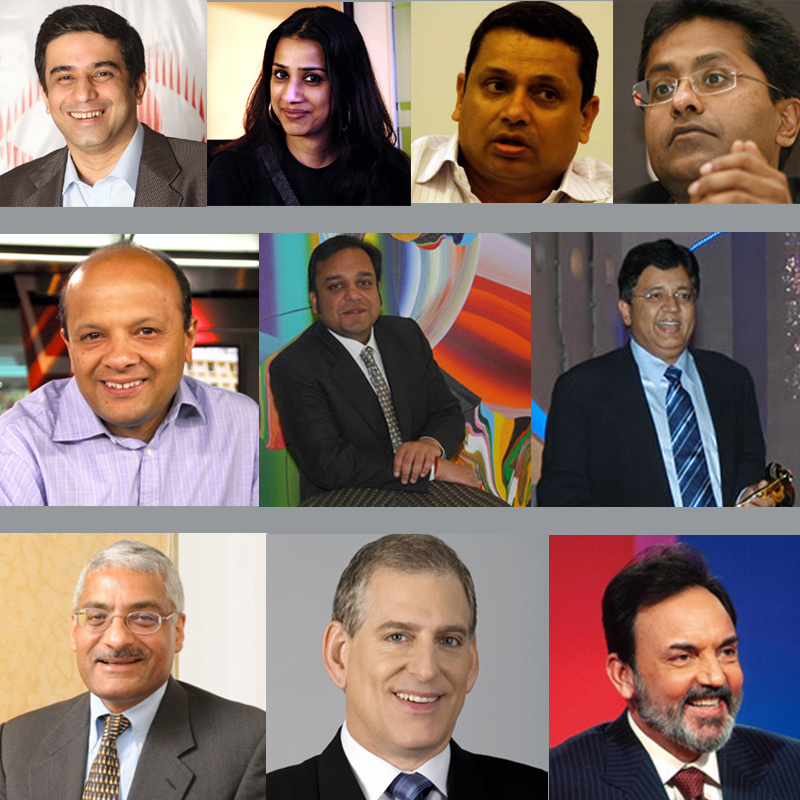
    2009. A year when most of the television industry gasped as the Indian economy slowed down and advertising and distribution revenues dried up even as costs went up. Executives burnt the midnight oil grappling with the downturn. Most of them deserve a salute for coping with the tough times. But there were some who came out triumphant and did wonders for the companies they lead. Indiantelevision.com takes a look at those who made the cut in our 2009‘s Top 10 Executives listing.

    Our list is by no means comprehensive, but these gents and ladies clearly stood above the rest. The executives have not been listed in order of importance or achievement, and sure there are many more who made a difference. We raise a toast to them.

    In the meanwhile take a dekko at our Top 10 Executives of 2009.

    Rajesh Kamat & Ashvini Yardi

    Rajesh Kamat did what was considered nigh impossible in 2009. Under his leadership, Colors, one of the late entrants in the general entertainment television sweepstakes, toppled both the leader Star Plus and the second placed Zee TV from their perches. He did not stop at that. With the help of clever engaging and disruptive programming from his programming head Ashvini Yardi, he maintained that top slot for the rest of the year.

    And Kamat achieved that in just a matter of 13 months – a feat which could well enter the Guinness Book of World Records.

    For long, rivals Sony and Zee had taken a shot at the top spot, but Star Plus appeared to be unshakeable. Kamat and his band of merry programmers however made it look fairly easy with a mix of differentiated, disruptive programming and distribution (Kamat‘s 3 Ds) on the back of savvy marketing. As the year was ending, he had actually got his company close to profitability with revenues of close to Rs 6.5 billion.

    Kamat‘s success has to be juxtaposed against what happened to other players who dared to challenge the leader: new entrants 9X (launched by former Star CEO Peter Mukerjea) and Real took a beating and almost wound up. The other player NDTV Imagine ended up at the No 5 spot, and finally found a new owner in Turner.

    During his days at Star Kamat had seen the channel rise from obscurity to leader. And he had gained amazing consumer insights during his earlier stint at Coke. He brought all of that bear in his uphill battle against the leaders. He gambled with a young enthusiastic team and the gamble paid off.

    Today, he is the most sought after TV executive in the country. And he was rewarded with additionally responsibility just as the year ended: he was given additional charge of strategy, legal distribution and finance of the Viacom 18 group bringing the channels MTV and Nickelodeon under his charge.

    2009 also saw him take an extremely calculated risk. Nine months from launch, he took the channel pay putting it as part of the One Alliance bouquet, distributed by MSM Discovery. The timing would not have been better as IPL gave the channel a good mileage. Later he got Amitabh Bachchan to don the hat of Pop Philosopher for Bigg Boss and now Big B is taking the channel to US and UK as brand ambassador. Additionally, he got his son Abishekh to host Bingo, a popular international format. At the time of writing, Bingo has done it once again for Kamat: the show has generated higher ratings than other game shows.

    A large part of that credit goes to Yardi who has been the creative driving force behind Colors. A woman with a vision to create a channel so unique and distinguished from anything ever viewed by India, she has always given priority to innovation and creativity. Her focus on fresher concepts and disruptive programming is what elevated Colors to its leadership position so quickly.

    From the word go, Yardi stressed that the shows on her channels have to have “meaningful entertainment”. The characters are not in black or white but have different shades. Yardi strongly believes that Colors offers ‘something for everyone‘ and ‘everything for some‘.

    Known for incorporating audience insights in her search for the perfect television shows, be it fiction, reality, game show or any other format, Ashvini has been responsible for making entertainment bigger than ever and effectively changed the way Indians viewed television.

    2009 saw shows with hard hitting messages such as Na Aana Is Des Laado and Uttaran climbing to the top positions on the charts while the Colors flagship show, Balika Vadhu, continued to reign over peoples‘ hearts and minds. And as far as reality shows go, 2009 was the year for the biggest ever changes in the reality television scene. With Fear Factor getting a lot more exciting and the Big B Amitabh Bachchan himself hosting the third season of Bigg Boss, reality in India touched new heights in 2009.

    Genius clearly does not go unnoticed, and in Ashvini‘s case, her talent has been recognized from time to time by peers and various industry institutions. She has been the recipient of many an honour, amongst them being the Media Personality of the Year title at India Today Woman‘s Summit, apart from being hailed as one of the top 50 powerful people of 2009 in India by Business Week.

    Perhaps defining Ashvini in one word may not be easy, but trendsetter comes rather close. And now, she is at it again, conquering newer peaks, bringing in fresher ideas and ready to set some new trends in 2010.

    Uday Shankar

    While most media observers and trade writers in India tend to think that Star India CEO Uday Shankar missed the mark in 2009 because of the toppling of Star Plus from its leadership perch, the word overseas and in corporate circles is that he did an excellent job and continues to do so; that the Murdochs are pleased as punch with him.

    During the year, the former journalist continued the network‘s spread into regional language markets and even managed to get leadership status in one of them. He kept a sharp eye on profitability in difficult economic times, returning pleasing figures for the network.

    Viewed from a different perspective he staved off an aggressive attempt from No 3 Zee TV to usurp his GEC flagship channel Star Plus from its No 2 spot, even though he conceded the leadership position to rival Colors. He gambled with risqué programming during the year, something which got him a rap on the knuckles from the government, but also got reams of media coverage and some praise for pushing the envelope with shows like Aap Ki Kacheri.

    And as the year ended, he was gearing up to do battle and regain Star Plus‘ numero uno status: he had restructured the Hindi GEC, bringing in whiz kid Gaurav Banerjee to look after the channel. Star Plus GM Keertan Adhyanthya was moved out to head Star Movies and Star World. He had also put wunderkinder Sameer Rao in charge of Star Utsav and Star Gold.

    With Rupert Murdoch‘s News Corp restructuring its broadcast business in Asia, Uday Shankar got his pat on the back when he was delegated with many more tasks during 2009. He was handed over the responsibilities of managing the sales and distribution offices of Star in West Asia, Britain and the US, besides growing the Indian market and being under the direct mentoring of James Murdoch, the group‘s head of Asian and European operations.

    Uday also gets to look at the movie business with Fox Star Studios India CEO Vijay Singh. The grandiose plans are to distribute 18 movies a year and be involved in production. Avatar has become the biggest Hollywood hit in India, grossing over Rs 1 billion.The biggest catch in the distribution net is Shah Rukh Khan‘s My Name is Khan, set for release in February.

    His big win for 2009 was the runaway success of Star Jalsha in just its first year of existence as a Bengali general entertainment channel. It created waves in east India with its programming which gelled with audiences. Then he drove his team to come up with new programming at Vijay TV and Star Pravah – initiatives which are bound to start bearing fruit over the next few months.

    If there was one area which looked a little worrisome for Uday Shankar during 2009 it was the loss of the leadership position of Star Plus, its flagship channel in the Hindi entertainment space. Star Plus conceded it near nine-year monopoly to newbie Colors mid way through 2009. But that did not deter him as he continued to focus on re-jigging the programming and on the bottomline. The network also courted controversy thanks to its dare bare all on TV show Sach Ka Samna adapted from The Moment of Truth.

    Meanwhile, keeping pace with rival MTV, Shankar also saw Channel [V] re-furbish its content with a host of new shows under his leadership as the channel shifted gears to 60 per cent music and 40 per cent reality show content.

    He has his work cut out for him in 2010, but knowing Shankar he well might deliver. Yet once again.

    Sameer Manchanda

    He could well be labeled the cable cowboy of India. He has aspirations – like his esteemed US counterpart John Malone who agglomerated cable systems all over the US into one national network – to transform the fragmented Indian cable industry and create a giant Indian cable TV network.

    And to that end he took his company DEN Networks public this year raising Rs 3.64 billion through an initial public offering. The market cap of DEN today is Rs 24.72 billion.

    It looked tough seeing it through, but he finally cobbled together investors who helped in the oversubscription of the issue.

    The man being referred to is Sameer Manchanda, chairman and promoter of DEN Networks Ltd and the joint managing director of IBN18 Broadcast Limited.

    Manchanda is a feisty fighter. He spent many years with NDTV when he broke away to set up IBN18 Broadcast, along with Rajdeep Sardesai and Raghav Bahl in 2005. Channels such as CNN-IBN, IBN7, and IBN Lokmat, followed. All three channels have become a news force to reckon with and Manchanda was appointed as the president of the News Broadcasters‘ Association.

    A fellow of the Institute of Chartered Accountants of India, he has always been credited with stitching lucrative deals for the company. He founded DEN in 2007 and he was quick to seize the opportunity in cable TV. He prepared the base for expansion by getting distrib veterans Anuj Gandhi and SN Sharma on board and then went about building the network in the North.

    He first expended DEN in Delhi and Uttar Pradesh, the two lucrative carriage revenue markets for cable networks from broadcasters. DEN also gobbled up Amogh Broadband Services, a leading MSO promoted by former Karnataka chief minister D Kumaraswamy‘s family. It is also a major force in Haryana and Rajasthan.

    In 2009 DEN paced up in Gujarat and made a breakthrough in Mumbai by entering into a joint venture with Ravi Singh‘s cable network in Ghatkopar, a suburb in central Mumbai.

    Manchanda can be credited with the success of DEN‘s IPO in 2009, but the challenges are lying ahead. The biggest of them all: to spread digitisation across the network, launch broadband services, and make market corrections.

    Punit Goenka
    “I would not like to be in his shoes as expectations of him are very high because he is my son, but he has shaped up well,” these are the words Subhash Chandra spoke about Punit Goenka recently. The son has now come of age and all indications are that he is likely to take over the reins of the entertainment conglomerate his father, the chairman of Zee TV, built.

    According to insiders, Punit‘s management initiatives and style have impressed Chandra greatly and he is looking at hanging up his corporate boots in a couple of years and focus on his social responsibilities.

    Punit was hoicked into the MD‘s role at Zee Entertainment Enterprises Ltd (Zeel), giving him total operational responsibility for the Zee Network which includes a Top 3 Hindi GEC, Zee TV, and a clutch of popular channels including Zee Cinema. And he did leave his stamp. First, he yanked the six regional general entertainment channels (R-GECs) from ZNL into the Zeel fold. Then he merged the ETC Networks channels (ETC Music and ETC Punjabi) into the company he heads. He hived off the education business, and started playing an active role in the news business by becoming a non-executive director of Zee News Ltd.

    The year also saw him buying out Ten Sports from Taj Television after some hard nosed negotiation, even as his father‘s loss making T-20 format – the Indian Cricket League – ran out of steam following a backlash from the Indian cricket board and IPL Commissioner Lalit Modi.

    His major successful play was on the Hindi GEC front. Zee TV was under attack from a hungry for leadership Colors and an extremely defensive leader Star Plus. Goenka took a decision not to splurge to buy GRPs. While the other two forked out top dollar on big movies and big ticket celebrity driven reality and formatted shows, he along with his team of Nitin Vaidya (COO -national channels and Zee TV business head) and programming head (Ajay Balwankar, now in Sony Entertainment television), focused on traditional soaps and low cost formats. Pavitra Rishta, Agle Janam Mohe Bitiya Hi Kijo, Chhotti Bahu, Dance India Dance (an adaptation of Bangla dance reality show Dance bangle Dance) were his ripostes which helped the channel generate GRPs. So much so that it took up the No 1 spot in week 34 with 281 GRPs. Zee TV began the year with 190 GRPs.

    Though No 2 or No 3 today in terms of GRPs, the channel today is No 1 in terms of monetizable GRPs, a statement with which even the top bosses at Star Plus and Colors will concur.

    His staff acknowledges the fact that Punit is very easily accessible and always encourages new ideas. With that kind of zeal, it is no wonder that his father thinks Zeel is in good hands.

    Kalanithi Maran
    Kalanithi Maran proved yet again how he could cruise along in a year of global economic storm while the other media barons were scaling back their expansion plans. Far from groaning under financial woes, he searched for new growth.

    And the architect of the Sun TV empire found them in the areas of DTH, TV broadcasting and FM radio.

    Sun Direct is the fastest growing DTH company with a subscriber base of 5 million. Built on mass pricing, the business model is to grab market share while waiting for opportunities to lift ARPUs (average revenue per user) that stayed below Rs 100 in 2009.

    Critics say Sun Direct is leaning heavily on subscribers from the four southern states and predatory pricing can‘t be sustainable. But certain facts stay formidable in Maran‘s favour. His DTH company has the lowest losses on a per subscriber ratio, possibly because of hard bargaining to stay away from minimum guarantee deals with broadcasters.

    Also, Sun Direct has 80 per cent of its customers from the south, a rock-solid base that would provide him economies of scale as he starts scratching into the other markets where he doesn‘t have a distinct advantage.

    In the TV broadcasting arena, as the industry reeled under an advertising slump, Maran posted a robust revenue growth of 35 per cent. He fortified his position and launched two kids and a comedy channel during the course of the year, blocking out possible gaps in the marketplace.

    A master strategist, Maran believes that viewer tastes change every 3-4 years. He introduced a big-ticket weekend non-fiction programming based on the international format show Deal or No Deal that not only gave him viewership but also revenue spikes. The show ran across Maran‘s flagship general entertainment channels: Sun TV (Tamil), Gemini (Telugu), Surya (Malayalam) and Udaya (Kannada).

    Sun has emerged as one of the leading FM radio broadcasters, setting up a pan India presence. In 2009, Sun brought its FM radio stations outside Tamil Nadu and Pondicherry under the Red FM umbrella, offering advertisers a wider listener base and an opportunity to capitalise on a unifying programme format across key cities.

    Since the summer of 2009, Maran also corrected a single deficiency in his rapidly-growing media empire: He widened the talent pool, making a series of senior appointments including Ajay Vidyasagar as CEO and Ravi Menon as programming head.

    So what does the roadmap look like for Sun in 2010? Maran is tapping subscription revenues more aggressively, has floated a UK subsidiary to accelerate international revenues, hiked advertising rates after a gap of two years, and is readying the release of the mega-budget movie Enthiran. Looks like another blockbuster year for the man who rules the southern media landscape.

    Man Jit Singh

    His is a radical turnaround story. When he took charge of Multi Screen Media Ltd (the company that runs Sony Entertainment Television), Man Jit Singh had several tasks to handle. CEO Kunal Dasgupta had left suddenly in the first quarter of 2009, his flagship channel Sony was doddering around in the doldrums with sinking ratings, morale was low and the organisation had few clues as to how they could deal with the rapidly changing dynamics of the GEC business. Newcomer NDTV Imagine had beaten it to the No 4 slot, a far cry from its heydays when Sony was scrapping for the No. 1 slot in the early part of this decade.

    As interim CEO, Singh took the bit in his teeth, lopped off 50 staff, letting go off channel head Albert Almeida. He initially focused on seeing through a successful IPL as the network had invested for its channel Max while acquiring the rights for the cricket extravaganza. In the reworked deal, BCCI sold the nine-year rights for Rs 82 billion, parceling out the India

    That out of the way, he began the hunt for someone who would take up the corner office as CEO, apart from launching a new prime time programming band along with COO NP Singh and programming head Gurdeep Bhangoo The search for a CEO proved futile as did the new lot of programmes. He aborted both – hoisting himself into the CEO‘s seat and started scouting for a channel head. He found one in Ajit Thakur

    The programming was rejigged and a low cost idea plumped for: telecast reruns of its long running award-winning and successful thriller and horror fictional shows, CID and Aahat. In the meantime, a new programming head was appointed: Ajay Bhalwankar was brought in from Zee TV.

    In no time at all, the ratings shot up and Sony had got back into the reckoning, toppling NDTV Imagine from the No 4 slot. From 70 gross rating points Sony was clocking 170-190 GRPs, ahead of Imagine and close enough to possibly play catch up with Zee TV and Star Plus which were generating between 240-270 GRPs. The channel garnered almost two and half times more ratings within six months of the revamp.

    Along with his team, Singh sewed an exclusive content agreement with leading film production house YRF for a programming block which would help differentiate it from the regular fare. While the initiative generated a lot of hype, it did not generate the mass TRPs that were expected.

    For Singh, 2010 will be a crucial year with IPL 3 on it way in the next two months. Also, a rejuvenated and cash loaded NDTV Imagine (following the Turner deal) is definitely going to make a serious and concerted effort to reclaim its fourth place in the Hind general entertainment space.

    Steve Marcopoto
    2009 was Turner‘s fifteenth anniversary of operating in India. And 2009 was the year when the network clearly signaled that it was no longer satisfied in having a minor league play in India. In the first part of the year, it announced that it was launching WB Channel expanding its presence in the English entertainment channel space. In the second half of the year, Turner announced that it was pitching its tent in the rough Hindi general entertainment channel space. And leading Turner‘s charge into the big stake game was Turner Broadcasting System APAC head Steve Marcopoto.

    Marcopoto winged his way into the country on several occasions before he signed on the dotted line of a deal which resulted in Turner acquiring a 92 per cent stake in NDTV Imagine for $117 million. It took months of negotiation between the NDTV management and him and his team before a deal was hammered into shape. And it surely was a moment of triumph for him, making him one of the key media executives in India.

    For years, Turner has operated in India through channels such as CNN, Cartoon Network, Pogo and through a distribution joint venture with Zee TV, labeled Zee Turner.

    It has maintained its leadership position in the kids‘ segment with Cartoon Network and Pogo, currently ranked No. 1 and 2 respectively on an all-India basis. Growth has been steady and India revenues account for 25 per cent of its regional operations, making it Turner‘s largest and fastest growing market.

    During the year, Marcopoto persisted with the Turner mission to further develop the Indian animation industry. Along with Pogo and Cartoon Network India head Monica Tata and creative director Vishnu Athreya, he made various acquisitions, co-creations and initiatives such as Snaptoons (Short New Asia Pacific Cartoons), bringing the pre-school series Sesame Street to India in a local avatar – Galli Galli Sim Sim and nurturing one of the most successful homegrown, animated heroes – Chhota Bheem, amongst others.

    2010 will come with its set of challenges: he has to ensure a smooth transition of Imagine into the Turner fold, and work closely with CEO Sameer Nair to draw up strategies to make the investment pay off in the medium-to-long term. Marcopoto will also have to create compelling content and build the Turner brands across every possible platform, including TV, online, merchandising and mobile.

    Lalit Modi
    To say that Lalit Modi had an eventful year is an understatement. This year he showed his ability to turn a challenge into an opportunity while taking steps to make the IPL a global brand. He shrewdly renegotiated the IPL TV deal with Multi Screen Media in a fresh deal valued at Rs 82 billion ($1.6 billion).

    The earlier ten-year contract, which Sony couldn‘t protect, was worth $918 million for telecast and $108 million for promotion of the tournament. Then the IPL was forced to relocate to South Africa due to the elections. Undaunted by the challenge, Modi and his team worked around the clock at short notice and pulled off a success, thus silencing naysayers. With this move, the IPL took its first steps towards becoming a global brand.

    Modi‘s clout lies in bringing in the money while expanding the reach of the IPL. A deal was done for theatrical rights with Dar Capital and is worth Rs 3.3 billion. It is a known fact that cinema receipts suffer when the IPL is on. The message from Modi is clear – If you cannot beat us, join us.
    In 2009 Modi also announced a base price of $225 million for the two new IPL franchises who will come in later this year. This is more than double what the highest franchise paid in 2008. This gives an idea of just how much the IPL has grown in value in a short space of time.

    It is this ability of Modi to run a steady ship while raking in the moolah no matter what obstacles there are which made BCCI president Sharad Pawar throw his weight behind him when the IMG contract was cancelled by N Srinivasan. The contract was eventually re-negotiated.

    While there is a faction within the BCCI that would like to see Modi out, the fact is that he will head the IPL till 2012. Even BCCI members who have issues with Modi admit that they need him. Modi is effecting changes that are rapidly changing the perception of the game by stakeholders.

    Apart from the IPL, Modi also managed to get the Champions Twenty20 League off the ground. He formed a partnership with Cricket Australia and Cricket South Africa for this. The TV deals done by ESPN Star Sports saw cricket reach more countries than ever before in Europe and other territories. While the ratings in India were not great, one can expect Modi to come up with more innovations.

    In 2009 Modi also took up the issue of piracy on a war footing. Under his guidance an association in conjunction with the cricket boards of England, South Africa and Australia was formed. This move has the backing of the ICC and is the first time that sports broadcasters and stakeholders are making a concerted effort to fight this problem.

    In 2010 Modi is showing no signs of slowing down. The deal with YouTube this year could change the face of sports broadcasting in the years to come. And with the commercial success of the IPL, Modi is thinking in terms of spreading the global reach of the game. He has already hinted that the US may be the next frontier and is in that country at the moment. The aim is to possibly do an event within the next 18 months.

    Dr Prannoy Roy

    At the beginning of 2009, Prannoy Roy looked an extremely worried man. The psephologist turned hardcore newsman had got himself into a corner. Two of his diversifications were burning up cash and how, scorching the main mother news network.

    The first was a general entertainment joint venture channel NDTV Imagine with US major studio NBC Universal. The second was his lifestyle programming forays into NDTV Lifestyle. Roy had launched these services earlier when the times were good, and revenues were in full flow, but with the economic downturn he was being battered. It was imperative that something be done.

    The economics doctorate from the Delhi School of Economics decided to take the battle to the frontlines along with his senior management team spearheaded by KVL Narayan Rao. Get rid of the diversifications and focus on your core competence – news – became the mantra. Along with the senior team and investment bankers, he spent a large part of the first part of the year scouting for buyers for his non-news verticals.

    The other focus of the team was: reduce the group‘s high interest burden which had come its way courtesy its need for cash for its diversifications. He bought back NBC Universal‘s 26 per cent indirect stake in NDTV Networks Plc. The company‘s $100 million step up coupon bonds due 2012 were bought for $72.4 million. This drastically lowered its borrowings and concomitant high interest bill. NDTV was also freed from the undertaking to provide a $40 million guarantee to the bond-holders.

    He also shut down a local news channel he had started in Metro Nation Delhi, cutting down costs.

    NDTV Lifestyle was put on the auction block and around Diwali, he managed to find a buyer for it. The US-based Scripps Networks Interactive bought up 69 per cent of the company on a fully diluted basis for $55 million, in what was seen as an extremely profitable sale.

    Then just as the year was ending he unveiled his final coup de grace: he found a buyer for the hungry for cash NDTV Imagine. Turner Asia Pacific Ventures bought out 92 per cent of NDTV‘s stake in Imagine for $67 million, while investing in fresh equity in the company to the tune of $50 million, bringing up the value of the transaction to $117 million.

    The moves were lauded by all media watchers and the company‘s bottomline started showing improvement.

    And Prannoy ended the year with a beaming smile on his face. Yes, the network still has its work cut out for it. But the comeback has begun.

    Harish Thawani
    This year this street smart maverick renewed the deal with the BCCI with his company Nimbus for another four years till 2014 in a deal worth Rs 20 billion, thus ensuring stability. Thawani has asserted in interviews that the payout per match is similar. Of course, the deal does not include new media.

    Thawani also maintains that rationalisation was bound to happen with the economic environment. He insists that everybody in a deal has to benefit and that the days of bids reaching stratospheric levels are gone. The fact that the BCCI did not bother to go through a tender for the rights, as Nimbus had the first right of negotiation, shows that Thawani got his calculations right in terms of what these rights are worth. After all, the BCCI would have conducted some talks with other sports broadcasters to find out if they were willing to pay more.

    Thawani is known for being proactive in terms of deals being done. He asserts that the company got a 10 per cent discount on the earlier deal on account of the mandatory feed sharing act being passed. Even not going for the new media rights this time around was a deliberate strategy. Highlights and clips got more traffic than live streaming under the old deal. Therefore for him it was not a cost effective proposition.

    Last year Nimbus had complained to the BCCI in a letter about the quality of facilities for broadcasting which forced cricket‘s richest body to take action. Thawani is also said to have been a strong force behind the BCCI instituting the Corporate Trophy.

    On the distribution front, it is expected that Neo would have doubled its revenue for 2009. This is creditable given that Neo had to do the distribution on its own after the deal with Star went sour a couple of years back.

    Moreover the channel‘s audience deliveries have been better than the competition‘s at times as was seen with the India versus Sri Lanka series. Neo Cricket now claims to have finished as the top sports channel for two years in a row. Overseas, Neo Cricket bolstered its presence with several deals last year and is now present in 25 countries including Japan, Korea, Singapore.

    Thawani, though, is looking beyond just cricket. He has plans for two new channels in the lifestyle and film genres. And, yes, the IPO could be round the corner.
     

  • ‘Crystal gazing in the era of Gadgets and Gadgeteers’ -Colors CEO Rajesh Kamat

    ‘Crystal gazing in the era of Gadgets and Gadgeteers’ -Colors CEO Rajesh Kamat

    MUMBAI: I have a vivid recollection of that day in 1983, when a colour TV came into our house. The entire neighbourhood knew; there was special dinner; and a list of special invitees saw the Delhi Asian Games, in colour, with the family, in the comfort of our living room.

    The years that followed are a bit of a blur. Almost like we‘ve led life in fast forward mode. The VCR seemed like freedom, the cable operators ran our lives. eight channel TV‘s got upgraded, Plasma became obsolete and DTH became a reality.

    Fast forward to January 2010. And this New Year article is dedicated to crystal gazing the challenges and opportunities that come with a new generation of television watchers and their gadgets. I forecast four significant changes in the future.

    In the short and medium term, I see two trends.
    First a viewer who‘s being exposed to world class production standards and who‘s upgrading to LCD and HD. Transmission quality and Cable woes are slowly being stomped out by digitization. It‘s time to start waking to the reality of this customer in the way we build our content. His tribe will only grow.

    Second this “High-Definition Tribe” is actually symptomatic of changes that are far deeper. Changes in the way we distribute and in the way we access TV. Digitisation will yield choice. It gives the viewer a “real” option to buy what he wants to watch. It will make niche content viable and mass content work harder.

    My third forecast lies in the slightly longer term: Convergence. TV, the computer and telephony converging onto the same device. On the face of it, this can be only but good news. It appears to roll back the years TV lost out to viewers who suddenly discovered entertainment options outside their homes. But just below the surface lies a serious set of challenges.

    TV‘s greatest friend soon is its greatest competition. Because not only will the internet constantly churn entertainment options, but it will also continuously redefine the benchmarks on interface and interactivity. Now these are challenges, we possibly haven‘t even begun to think about. After all, the internet is all but a young boy celebrating 50 million people. And broadband is a baby in comparison. We can‘t be wrong then in saying IPTV is only but a fashionable thing to write about. I urge you to reconsider.

    But the story doesn‘t end here, does it? My 4th guesstimate is already a reality waiting to hit our shores: DVR technology. A reality in the western world. American‘s are increasingly choosing to skip advertising even at the cost of differed viewing. Actually research shows, even time shifting is a real phenomenon. And sitting in India, we‘re only a few leaps in infrastructure away from this reality. 

    So what does this mean? We may well be running our lives smarter and more competitive in 2010. But not really differently. I urge you to sit up and strain your ear to that faint rumbling that‘s going to be a storm. What seems like a future possibility now will soon be a generation chasm.

    In the short term, young gadgeteers will demand better viewing experience, interactivity and “real choice”. In the medium term, these young gadgeteers will yield more mass audiences that are internet enabled. Distribution platforms and revenue sources will be rethought. And content will be even more pressured to be led by careful segmentation and preferences. In the long term, at the very least, viewers will be self generating, toggling and searching content. But that story, I will leave for my year ender in 2019 (or much sooner).

    Let 2010 be the year we acknowledge the inevitability of the future.
     

  • ‘It is better to play in the tier 1 GEC game and go out with full ammunition’ : Rajesh Kamat – Colors CEO

    ‘It is better to play in the tier 1 GEC game and go out with full ammunition’ : Rajesh Kamat – Colors CEO

    Viacom and Raghav Bahl-promoted Network18 are furiously working together to create an entertainment conglomerate in India. The central piece in their build-up plan is a Hindi general entertainment channel (GEC) that would support other blocks like a Hindi movie channel and a clutch of regional entertainment channels.


    Colors has had a dream nine-month run, ending Star Plus’ nine-year rule to become the No. 1 GEC for two consecutive weeks. Puffed with big reality format shows and movies, the channel has made a mark with “disruptive” and “differentiated” content. Family dramas like Balika Vadhu, which are contrarian to Balaji Telefilms’ “K” soaps, have been lapped up by audiences.


    Driving Colors’ growth is Rajesh Kamat, the strategist behind the big bang theory who loves to fire at his enemies from all sides. Crafting a plan built on costly but calculated bets, Kamat has shown that a direct play in the tier I GEC space is safer than a cautious, cost-conserving approach. Playing in the tier II game can extend the channel’s break even by four more years while the revenue upside for the tier I GEC is huge, he says.


    No wonder Colors is eyeing a revenue of Rs 5 billion and a fourth-quarter break even this fiscal as the channel sits on a stable GRP (gross rating points) base of over 250.


    Timing has been key to Kamat’s success as has been the ability to take risks. When Colors launched last year, TV audiences were already showing fatigue symptoms with an overdose of look alike, urban soaps. The movie syndication business had also caught on, allowing Colors to line up a formidable “second run” movie strategy within reasonable costs. Studio18, a sister company engaged in the movie production and distribution business, also churned out hits during the year.


    Having spent his previous years at Rupert Murdoch’s Star India, Kamat has learnt the art of scaling up. He is ready to stitch advertising deals that would place Colors in the big league with revenues of over Rs 5 billion, kick in pay income, and take it to the international markets.


    The distribution deal with TheOneAlliance, which has Indian Premier League (IPL) content through Max channel, will help Colors in making a smooth transition to pay. Besides, the deal guarantees the Viacom18 channels of Colors, MTV, Nick and VH1 a subscription revenue of Rs 3 billion over three years.

    In an interview with Indiantelevision.com’s Sibabrata Das, Colors CEO Kamat talks about the challenges that Hindi GECs face in a ring that has three close competitors.

    Excerpts:

    How significant a feeling is it to end Star Plus’ nine-year rule as the No. 1 Hindi GEC and yet continue to fight weekly for the top slot?
    For a challenger brand like Colors, it was important to breach the psychological barrier and feel life at the top. But we realise we are entering into a bloodbath as there would be no undisputed leader in the Hindi GEC space. From now on, it will be a weekly battle as Star Plus will not give up its nine-year rule so easily. Zee TV is also in the race. Like in the US, we are headed for a confused leadership status with dependence on spikes and seasonality.

    So you are still in an uncomfortable position?
    Not really. We have reached a stable base of 250 GRPs (gross rating points) from our programming. And we are not banking only on Balika Vadhu, which is the biggest perception driver show for us, for our ratings. We have a basket of shows that rate over 3 TVR. With movies, we are stable in the 280-300 GRP band.

    There are other healthy indicators. Our reach at 73 per cent is higher than that of Star Plus. Our prime time GRPs are also higher.

    Movies seem to be a divider between Star Plus and Colors at this stage. But isn’t this a fickle GRP base?
    Even if we fall by half, we will have around 25 GRPs from movies. And then there will be spikes. We have created a stable base for us. The idea is to grow from this.

    Are you in a position now to play first run movies on your channel?
    Absolutely. After establishing a base of over 250 GRPs, we are in a position to upgrade to a first run of movies on Colors as we can monetise our investments on such big premieres. Our plan is to have at least eight premieres in a year. Ghajani and Jaane Tu…Ya Jaane Na are steps in this direction.

    There is also the flexibility of launching the afternoon band. When will you be playing this card?
    We do 22-23 hours of weekly programming as against 33-38 hours done by Star Plus and Zee TV. Our weekends are not full blown and we have the afternoon band to create. So when the need arises, we can increase original content on our channel to drive in more GRPs.


    We were actually tempted a couple of months back to firm up our afternoon strategy. But we decided instead to replace our weaker prime time content at 9.30 pm and 10.30 pm as they were not delivering to the potential. The rejig strategy worked for us as Naa Ana Is Desh Ladoo started delivering. Since the afternoon slots are also doing well with repeats, we can launch an assault with original shows when the need arises. That part of the arsenal we are yet to use.

    After establishing a base of over 250 GRPs, we are in a position to upgrade to a first run of movies as we can monetise our investments. Our plan is to have at least eight premieres in a year

    Stable GRPs, movies, afernoon band yet to launch – are these the selling points to advertisers?
    When we launched last year, we were clear in the head that we would only do short term ad deals and at rates we were comfortable with. The channel, in any case, was growing and we believed our product offering was worth much more. We did not want a hangover of the old deals. Come 1 April and we are operating on effective rates which is clearly off old deals. It’s a free run this year and we have stitched new deals at rates which have come from a position of over 250 GRPs. Yes, we tell advertisers that we are stable on GRPs, we have 14 hours to launch, and we have these rockets in form of reality shows which are to come up each quarter.

    Is Colors targeting a revenue of Rs 5 billion and a fourth-quarter break even this fiscal?
    I can’t comment on the financials, but monetising of GRPs is our primary task now. This year will become the base and benchmark for us. For our big properties, we have already signed with Idea as title sponsor for Khataron Ke Khiladi (Fear Factor) and Maruti Suzuki for India’s Got Talent.

    Is it true that Colors’ programming budget this fiscal is Rs 4.25 billion and the running cost is at 20 per cent above rival GECs?
    When I was at Coca-Cola, I learnt how they used to pump in 70 per cent of their ad budgets in seasons. That is what we did; our annual budget is like the other big GECs while the perception we have built in the market is that we spend big monies on content. You either pump in the money upfront or spread it out. When we launched, we had Khataron Ke Khiladi and backed it with Bigg Boss 2. We fired two missiles, hoping at least one would hit. As it turned out, both became hits. And we used Akshay Kumar for our content, which also helped in marketing our channel. Obviously, non-fiction can’t sustain on weekdays. But we used Bigg Boss to build Uttaran.

    Also, our concept of cost control is reducing the number of hours of original content. Unlike conventional media thinking, we provided alternative time slots for our prime time content and introduced repeats in the afternoon band. At a time when there is so much of audience fragmentation, this worked and maximised our reach. The afternoon repeats got us good ratings.

    Considering the Hindi GEC ecosystem, is it not strategically imperative to go for a big bang theory than fiddle in the mid-rung space with low costs?
    It is better to play in the tier 1 game and go out with full ammunition than take a cost-conserving approach and prepare for gradual growth. The revenue upside is much higher if you have touched 250 GRPs. By playing in the tier II race, you are effectively pushing back your break even by four more years. You would probably save in programming costs, but distribution expenses would be the same for both the players. And if you haven’t quickly moved from a consumer push to a pull situation, you would continue to pay high on distribution. In case of Colors, we will be actually reducing our payout to cable operators in the second year. On top of that, we could turn into a pay channel.

    Were you not fortunate in that viewers were looking for a change from the ‘K’ soaps (Kyunki…, Kasauti… and Kahani…) and nobody was willing to take a risk in providing differentiated content?
    The time was favourable in that there was a fatigue built in for the kind of soaps that were running on Indian television. We made disruptive and differentiated content our main plank. We were willing to take a calculated risk; our concepts were different and on the riskier side. But they worked.

    Even the movie syndication business caught on at the time of your launch. How helpful was this?
    The strategy was to go second run on movies. We could play on that gameplan because the syndication market opened up. This made it feasible for new players like us to keep our movie slot alive within reasonable costs.

    How was the content strategy drawn?
    Broadly, between 7 to 9 pm, we placed shows that had strong appeal among non-metro masses as that is the time zone which attracts viewers from smaller towns. The 9-10 pm slot had content tailored for smaller towns as well as metros as there is an overlap of viewership. The more urban shows like Fear Factor and Sajid’s Superstars were placed at 10 pm.


    More specifically, we knew there was a vacuum, particularly among the Gujarati viewers, in the 8.30 pm slot after the exit of Kasauti. We placed Jai Shri Krishna (JSK) in that time slot. we worked out such micro details while planning our programming grid.

    When Star Plus launched Kaun Banega Crorepati, it built lead-in slots. Wasn’t your strategy different in that your showpiece programme Khataron Ka Khiladi was at 10 pm while the other main shows were before that?
    We couldn’t have launched Khataron Ke Khiladi at 9 pm; it had to be 10 pm. It was our differentiator show and Akshay Kumar gave it the scale.


    Our first task was to get noticed, invade into single TV households in prime time, and shake up the house. Outside this, we built slots through a different kind of programming slant. Balika Vadhu, for instance, was a family drama based on child marriage and carried a social message. What followed was the lead-in concept. We now own 8-9 pm and 10-10.30 pm.

    Any specific strategy for timing the launch of Colors on 21 July?
    Since IPL (Indian Premier League) was in April-May, we knew it would disrupt GEC viewership. We saw that as an opportunity to launch Colors post-IPL. It was also 2-3 months before the Diwali season, a hot time for advertisers. That gave us a window to settle in.
    The market talks of Rs 800 million as your distribution cost for the first year?
    Without getting into figures, let me tell you that we took a conscious decision to take space on cable networks next to Star Plus and Zee TV. That outlet was reasonably expensive, but it gave us strategic reach.
    Why did you decide on TheOneAlliance to distribute Colors when it turned pay?
    Besides the monetary offer (rumoured to be Rs 3 billion over three years for the Viacom18 channels of Colors, MTV, Nick and VH1), it was the IPL that swung the deal in favour of TheOneAlliance. Since we turned pay on 1 April and the IPL kicked off on 18 April, it was a good window to make the transition and yet not see impact on the ratings.
    Will there be any revenue inflow from subscription this fiscal or will it be offset against carriage fees?
    We may not see any net gain from pay revenues this fiscal, but we have a step up plan and the second and third years would be crucial. For the first six months, in fact, what we payout will be more than what we collect. If the cable operator switches us off, he will stand to lose more. This will act as a disincentive for him to switch us off. Importantly, we have done almost 80 per cent of the cable deals.
    Is Colors planning to spread its wings outside India?
    We will be launching in the US within 3-6 months. We then plan to reach Dubai before we land in the UK. International revenues fall straight into the bottomline.
    Colors has also opened up syndication revenues with JSK being licensed to Raj TV. How aggressive will you be on this?
    We are looking at syndicating our other shows like Balika Vadhu. We are getting queries from Doordarshan and other networks for some of our content. We are also eyeing the global syndication market. But we have to be careful and conscious that this doesn’t jeopardise our beam syndication plans.
    Will Viacom18 launch a Hindi movie channel and enter into regional language channels?
    Before diversifying into new products, we want to build on Colors. We want the international distribution and market to stabilise before we launch anything. We will prioritise then, based on which is the most growing pocket – a Hindi movie channel or regional channels. That is a call we will take at that stage.
  • ‘We’re not going in with a pistol, we’re going with a cannon’ : Rajesh Kamat – Colors CEO

    ‘We’re not going in with a pistol, we’re going with a cannon’ : Rajesh Kamat – Colors CEO

     Rajesh Kamat, CEO of Viacom18’s Hindi GEC Colors, has a clear mandate – to ensure his upcoming channel a position amongst the top 3 players in the category within a year of launch.


    In a genre where Colors is the 10th entrant, Kamat has his task cut out and will have to bring to bear all the experience he garnered in earlier stints as MD of Endemol India and senior VP commercial & business planning at Star India.


    Speaking to Indiantelevision.com, Kamat gives his take on the whys and wherefores of the most expensive channel launch activity ever undertaken by a Hindi GEC.


    Excerpts:

    What would you term as the core TG for Colors?
    While we propagate programming that appeals across, if I have to specify a core TG, 15 to 34 is a number I would peg ourselves on.


    In a GEC, the 15 to 34 is what gets you your first one third. The 25 + is where the loyal audience starts. What we’re doing is, we’re getting the early adaptors and the initiators in the first phase. Once we get that, we’ve made our entry into the single TV households. That’s when you start consolidating. And the consolidation phase is actually your 25+ female. Though males would come in, that consolidation phase would focus on the female.

    That aspect of your programming focus is not reflected in either Fear Factor or in Mohe Rang De, the two shows that have been showcased thus far?
    Not right now. What happens is, with these differentiated and disruptive programmes is that you lock in your first eyeballs. With big movies as well.

    So you will have a big band for movies?
    Absolutely.

    But where will they come from? Isn’t the market more or less locked in as far as movie titles are concerned?
    These will be new ones. Now the market is moving towards syndicated movies – first airing, second airing, third airing… So there are quite a few lots floating around.

    Your entry into viewer mind space will therefore be with these tent pole shows and movies?
    I would not say entry into mind space. But the invitation card to viewers, if I can put it this way, would possibly have highlights on these. Because these are the ones that will actually draw the attention of the early adaptors and initiators.


    But while doing this, we will have the conventional shows that we believe will compete in the long running rating game.

    Audience flow at an earlier point used to be from a Kasautti… to a Kahaani… and then on to a Kyunki. Because they (the majority) liked the same kind of shows. Those days are gone

    Will you be putting out your big movie titles in this six month window?
    Absolutely. Be it big ticket reality shows, be it events, be it movies; that’s where you’ll get the sampling. As for differentiated content, it would be a Mohe Rang De, typically.


    We see it that 300 GRPs is the target. But it is all this activity in the initial six months that will give us the 100 GRPs (base to build on).

    How will you crack the balance 200?
    Once you cross 100, it is all about adding 3, 5, 10 GRPs week on week That is what will take time. This is not a T20 game.

    Isn’t that something that all the channels in the chasing pack (to Star Plus and Zee TV) have failed to crack? How to cross the 100 GRP barrier?
    Imagine is three-four months old. I take it as a compliment (to them) when somebody tells them that they can’t go beyond a 90 or a 100. To get to a 90 was not simple. A Star One with all the clout of the Star network behind it opened with a 19 GRP, 9X was 20. Imagine opened at 55, and went to 89 in a short time. But from now on, the growth will be slow.

    Which raises the question for you? These past three months has seen Imagine make a fast take-off and 9X slowly and surely build its story. That means among the new entrants two have already succeeded and are fighting it out for the third position. And way above them we have the strong number 1 and 2. Is that how you’re looking at it in terms of the distance you have to cover?
    Not quite. It is not necessarily going to be a 2 + 2. It could well be a 1 + 3. If that becomes the game, the difference between a 300 and a 150 might grow larger. And Star might gain back whatever its premium was, if at all. That remains to be seen.


    But if we have such a scenario, the balance three, 150 and 300, or 150 and 100 or 150 and 120 there’s a game. Two players at 120 each and one player at 80, is better than one player at 150.


    Again, this whole game is about sustenance. It’s financial investors versus strategic investors. What is the mindset? Are you looking at ‘first year I have to extract this much money’?

    You’ve identified six months as the time frame to embed yourself in viewer mind space. That all three new entrants might succeed is not a scenario that most experts have even considered, let alone thought possible?
    If you take the US as an example, three networks used to account for 90 per cent eyeballs. Today the same three networks get 35 per cent eyeballs.


    Even in India, where people used to talk about 70 per cent of the audiences flowing from one show to another, is a thing of the past. Now, there is nothing like saying I go from this show to this show on the same channel. It doesn’t go vertical. You actually migrate between channels based on the shows you like. That’s how the viewership pattern is going.


    And it’s not also as if the same person in the same household is watching. You’re aggregating different types of eyeballs. There is no linearity in terms of audience flow.


    Audience flow at an earlier point used to be from a Kasautti… to a Kahaani… and then on to a Kyunki. Because they (the majority) liked the same kind of shows. Those days are gone.

    So if we were to draw a one liner on why players like yourself believe you are not too late getting into this game, it would be because linearity in terms of watching schedules are a thing of the past?
    Absolutely. People will watch shows and come in and go out. That’s what it is and that’s what we’re moving into as a market.

  • Star Plus partners HLL for kids talent hunt show; Endemol to produce

    Star Plus partners HLL for kids talent hunt show; Endemol to produce

    MUMBAI: Star Plus is kicking off its programming series with high advertiser participation with the kids talent hunt show Rin Mera Star Super Star. The channel has teamed up with the FMCG major Hindustan Lever Limited (HLL) for the initiative. Endemol India has been roped in as the producer of the show.

    Rin Mera Star Super Star is a nationwide talent hunt dedicated to unearthing talent in children aged 5-14. The programme promises to offer a national platform for talented children to showcase their potential in three categories – singing, acting and dancing. The winning contestant will get a scholarship of Rs 5,00,000 to help him/her pursue the dream of becoming an artist or to take up future education, states an official release.

    Rin Mera Star Super will be aired every Friday on Star Plus at 7:30 pm beginning September 2006.

    With Rin Mera Star Super Star, HLL’s brand promotion, Rin Advanced White Star Hunt, is being taken to national television. Since June, over 1,00,000 children across 22 cities have already auditioned and the entries are still coming in. Around 2,000 schools are also participating in the audition process. The top 50 kids from across the country will compete for the coveted crown on Star Plus, the release adds.

    Speaking on the initiative, says Star India ad sales & distribution president Paritosh Joshi said, “This is our first show of this scale, which has focused on strategic brand solutions. And for the first time an advertiser, with the brand, Rin, is a strategic content partner. To enliven brands in the minds of consumers through content takes our partnership with advertisers to a new level, making us a partner of our advertisers.”

    HLL marketing manager Priya Nair adds, “Rin is all about making an impression and a talent hunt among kids is the perfect arena. Many children are blessed with amazing talent and Rin provides them with a great platform to make an impression.”

    Says HLL media services GM Rahul Welde, “This marks a new approach to brand building with a much higher level of engagement than the more traditional forms of commercial advertising. The launch of this show is a true win-win association for Rin and Star, providing Rin a nationwide platform from which to communicate with consumers and Star, an excellent format show to entertain its audiences”.

    Endemol India MD Rajesh Kamat offers, “Rin Mera Star Super Star is a combination of entertainment and branding, a concept which will be brought alive on TV in a fun and exciting show. This is one of the first local formats that we have developed and we look forward to creating many such shows for Indian television”.