Tag: Rajeev Suri

  • Nokia acquires Alcatel-Lucent for EUR 15.6 billion

    Nokia acquires Alcatel-Lucent for EUR 15.6 billion

    NEW DELHI: In a major announcement, Nokia and Alcatel-Lucent have decided to merge capabilities for enabling the next wave of technological change including the Internet and transition to the cloud. Nokia coughed up EUR 15.6 billion ($16.6 billion) to acquire Alcatel-Lucent.


    The new company, to be known as Nokia Corporation, will have more than 40,000 R&D employees.


    Alcatel-Lucent shareholders will own 33.5 per cent while Nokia shareholders would own 66.5 per cent in the new corporation.


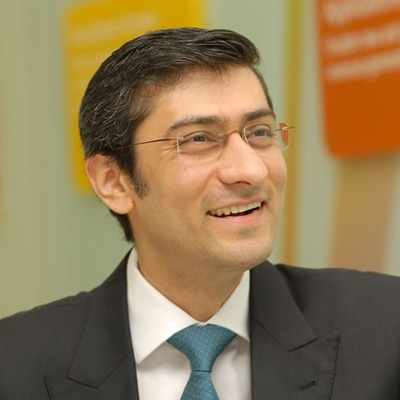
    Risto Siilasmaa will be chairman and Rajeev Suri will be CEO of the new corporation. It will be headquartered in Finland.


    The combined company expects to target approximately EUR 900 million of operating cost synergies. The proposed company would have had net sales of EUR 25.9 billion on a FY 2014 combined basis, a non-IFRS operating profit of EUR 2.3 billion, a reported operating profit of EUR 0.3 billion, and R&D investments of approximately EUR 4.7 billion.


    However, Alcatel-Lucent’s Bell Labs and Nokia’s FutureWorks, as well as Nokia Technologies, which will stay as a separate entity with clear focus on licensing and the incubation of new technologies.


    The new company will be in a position to accelerate development of future technologies including 5G, IP and software-defined networking, cloud, analytics as well as sensors and imaging.


    Alcatel-Lucent and Nokia have strength in the United States, China, Europe and Asia-Pacific. They will also bring together the best of fixed and mobile broadband, IP routing, core networks, cloud applications and services.


    Consumers are looking to access data, voice and video across networks of all kinds. In this environment technology that used to operate independently now needs to work well together. Nokia and Alcatel-Lucent are uniquely suited to helping telecom operators, internet players and large enterprises address this challenge.


    The combined company’s Board of Directors will have nine or ten members, including three members from Alcatel-Lucent, one of whom would serve as vice chairman.


    The combined company would target approximately EUR 900 million of operating cost synergies to be achieved on a full year basis in 2019, if the deal is finalized by the middle of 2016.


    The combined company would target approximately EUR 200 million of reductions in interest expenses to be achieved on a full year basis in 2017.


    Suri said, “We have hugely complementary technologies and the comprehensive portfolio necessary to enable the internet of things and transition to the cloud.  We will have a strong presence in every part of the world, including leading positions in the United States and China.”


    Alcatel-Lucent CEO Michel Combes added, “A combination of Nokia and Alcatel-Lucent will offer a unique opportunity to create a European champion and global leader in ultra-broadband, IP networking and cloud applications.”

  • Nokia unveils predictive marketing solution for telecom operators at Barcelona

    Nokia unveils predictive marketing solution for telecom operators at Barcelona

    NEW DELHI: Nokia has launched a predictive marketing solution that allows telecom operators to tap data to offer smarter services, boost revenues and improve customer loyalty.


    Addressing the Mobile World Congress (MWC 2015) in Barcelona, Nokia president and CEO Rajeev Suri said, “We see technology evolving to a point where almost all people and billions and billions of devices – 50 billion or more by 2025 – are connected, where software holds all those connections together, where analytics bring meaning, and where automation brings simplicity and efficiency.”


    The predictive marketing solution leverages Nokia Networks’ Customer Experience Management and the Mobile Marketing Suite from mapping and location HERE. It features a contextual element to data and the opportunity to set up personalized offers for services tailored to customer needs, said Nokia.


    In addition to predictive marketing, Nokia will show how the telecom cloud can help operators keep pace with the Internet world; how ultra-dense networks can ensure performance and meet capacity demands; explain how the latest application of location information can improve driving safety; and how to connect and manage the Internet of Things.

  • Rajeev Suri to take over as Nokia CEO and president

    Rajeev Suri to take over as Nokia CEO and president

    NEW DELHI: Rajeev Suri, who is taking over as the new president and CEO of Nokia, says the company will focus on three strong businesses – Networks, HERE (location cloud) and Technologies to position itself as one of the world’s largest software companies.


    The new appointment follows the completion of the divestment of phone business to Microsoft in a $7.2 billion deal.


    Apart from Suri, the new team will include Timo Ihamuotila who joins as executive vice president and group CFO; Michael Halbherr as CEO of HERE; Henry Tirri as executive VP, and acting head of technologies and Samih Elhage as executive VP and chief financial and operating officer of Networks.


    The old team included Stephen Elop, Jo Harlow, Juha Putkiranta, Timo Toikkanen, and Chris Weber who have already stepped down. Louise Pentland, Juha Akras and Kai Oistamo will step down from Nokia next month.


    Suri had recently turned round Nokia Solutions and Networks (NSN), the telecom network business, by axing around 17,000 resources, divesting non-viable businesses and bringing clarity to its mobile broadband focus. The NSN brand will disappear as part of the new restructuring and will be known as Nokia Network business. Suri will continue to head this business.


    Nokia without the ailing phone business will focus on networks, location and technologies. Suri will draft fresh strategies for leadership position as NSN is behind Ericsson and Huawei in telecom network business.


    Suri joined Nokia in 1995 and has held a range of leadership positions in the company. Since October 2009, he has served as CEO of NSN, the former joint venture between Nokia and Siemens that is now fully owned by Nokia.


    Suri was instrumental in creating strategic clarity, driving innovation and growth, ensuring disciplined execution.


    India-born Suri is the second to be elevated to a major post in an IT company in recent weeks, as vendor Microsoft had recently picked up Satya Nadella as its CEO.


    Nokia believes that billions of connected devices will converge into intelligent and programmable systems over the next decade that will have the potential to improve lives in a vast number of areas: time and availability, transportation and resource consumption, learning and work, health, and wellness.


    This new world of technology will require connectivity capable of handling massive numbers of devices and exponential increases in data traffic; location services that seamlessly bridge between the real and virtual worlds; and innovation, including in sensing, radio and low power technologies.


    “Where it makes sense to do so, we will pursue shared opportunities between the businesses, but not at the expense of focus and discipline in each,” Suri added.


    In 2013, Nokia invested 2.5 billion euros in research and development.


    Through its networks business (formerly NSN), Nokia will invest in the innovative products and services needed by telecom operators to manage the increase in wireless data traffic which is more than doubling every year.


    Nokia will invest in mobile broadband and related services and next-generation network technologies.


    Nokia will invest to develop its location cloud to make it the leading source of location intelligence and experiences across many different operating systems, platforms and screen. The focus will be on technology for smart, connected cars; cloud-based services for personal mobility and location intelligence, including for the growing segment of wearables and special purpose devices; and location-based analytics for better business decisions.


    Nokia plans to reduce interest bearing debt by around 2 billion euros by the end of the second quarter 2016.