Tag: Rajdeep Sardesai

  • CNN-IBN shines at the prestigious RedInk Awards 2014

    CNN-IBN shines at the prestigious RedInk Awards 2014

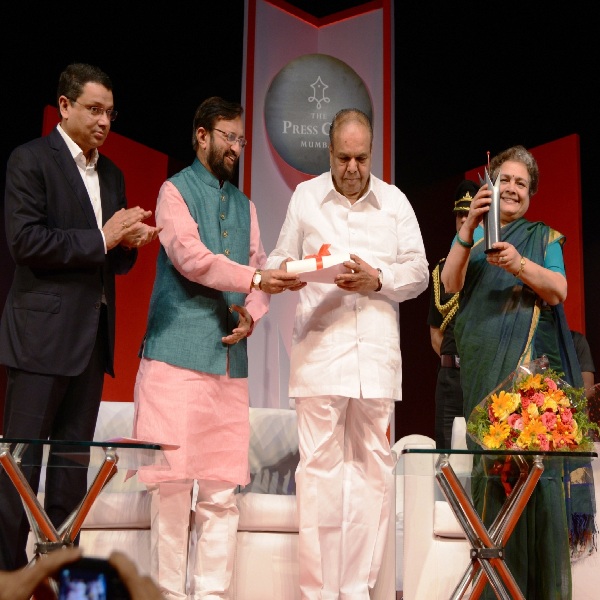
    MUMBAI: CNN-IBN, the Most Awarded English News Channel continues its legacy by adding two more awards to its kitty. The channel swept the ‘Television Story of The Year’ category by winning both the winner and runners-up trophy at the RedInk Awards 2014 on Saturday night, in Mumbai. CNN-IBN’s Special Correspondent Priyali Sur was declared the winner for her documentary ‘Girls In Bondage’, while Senior Editor and Anchor Anubha Bhonsle bagged the runners-up title in the same category for her story ‘Kashmir After Afzal’.

    Instituted by The Press Club, Mumbai, ‘Press Club Awards for Excellence in Journalism’, better known as the Press Club Mumbai ‘RedInk’ awards is an annual award ceremony to felicitate the exemplary works of journalism in India. The objective of this initiative is to recognize and promote what the organizers hold dear – quality writing, fair play and high ethical standards in Journalism.

    Rajdeep Sardesai, Editor-in-Chief, CNN-IBN, IBN7 & IBN-Lokmat, said, “It’s a matter of great pride for us to receive this award as it signifies the tireless effort put in by our entire team as we strive for excellence in Journalism. At CNN-IBN, we believe in ‘Putting Journalism First’ and by winning these awards we are setting the benchmark for ourselves.”

  • Senior journalists scrutinise media at RedInk Awards 2014

    Senior journalists scrutinise media at RedInk Awards 2014

    MUMBAI: It was an awards night, albeit not for celebrities, but for the hard working journalists aka the fourth estate of the country. The fourth edition of the RedInk Awards organised by the Press Club of Mumbai saw 30 journalists from print, broadcast and online media receiving awards in various categories for their outstanding writing and research.


    Press Club of Mumbai president Gurbir Singh opened the ceremony with a few thoughts on the state of media in the country today. “Media today is in crisis. Retrenchments are happening, companies are closing, new ones are starting. There is something wrong with the way media is conducting itself. Is it a shortage of funds or the way the business is being done,” he questioned.


    His voice was not alone. A discussion followed on ‘Elections 2014: Were we fair or did we stoke the NaMo wave’ which involved IBN18 editor-in-chief Rajdeep Sardesai, Times Now editor-in-chief Arnab Goswami and Divya Marathi chief editor Kumar Ketkar alongside O&M creative director Piyush Pandey and moderated by former journalist and current Star India CEO Uday Shankar. While Sardesai and Ketkar remained critical of the role of media today, Shankar and Goswami agree that the future is very bright.


    Maharashtra governor K Sankaranarayanan and new Information and Broadcasting Minister Prakash Javadekar were the guests of honour for the evening. While Javadekar said that he would look into establishing a law to prevent attacks on press, the governor had some personal anecdotes to share regarding the media.


    “Today, as a politician, just serving the people isn’t enough. You have to be friends with journalists,” he said in what appeared to be an answer to Goswami’s earlier comment that journalists should not be emotionally connected with politicians. “Paid news is much talked off. I ask the media why do they show it and they say they don’t have money. If you ask a thief why are you stealing he says ‘I don’t have money’,” he said.


    Sankaranarayanan said that the media world in India is so competitive that if one person isn’t there another will come in his place. “I watch Arnab’s debates sometimes. Today at 9:00 pm I don’t know what has happened. He is not there. It is a great loss to the people,” he added amidst loud applause.


    Mrinal Pande who was the first woman editor of the Hindi daily Hindustan and who retired recently as the chairperson of the Prasar Bharati was honoured with the RedInk lifetime achievement award. 

  • Rajdeep Sardesai and Arnab Goswami poles apart on future of journalism

    Rajdeep Sardesai and Arnab Goswami poles apart on future of journalism

    MUMBAI: The venue: the National Centre of Performing Arts auditorium in south Mumbai. The occasion: a panel discussion that preceded the Press Club of India’s Red Ink Awards. On stage were IBN18 editor-in-chief  Rajdeep Sardesai, Times Now editor-in-chief Arnab Goswami, and Dainik Divya Marathi chief editor Kumar Ketkar, O&M national creative director and chairman Piyush Pandey. And for a change it was they who were grilled by Star India CEO Uday Shankar, a former journalist himself. The topic: Elections 2014: were we fair or did we stoke the NaMo wave?’

    Shankar set the pace for the panel when he spoke first, stating that it is he who would be asking the questions and no one would be allowed to answer – in all probability taking a jab at Arnab. As the audience burst into laughter,  he then told Rajdeep to open the debate by speaking his mind.

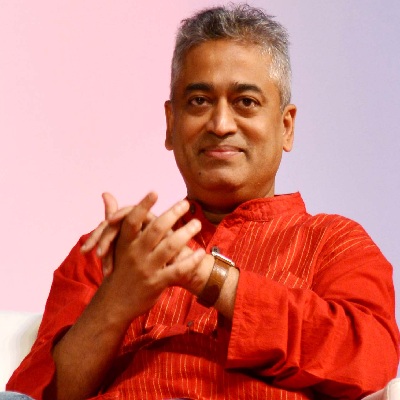
    Dressed as casually as one can get, in a red kurta, simple trousers and chappals, Sardesai delivered a hard hitting monologue on Modi and the kind of journalism that exists in India now.

    “Modi had the most  innovative and sustained campaign that we have ever seen in an Indian election,” he said, while pointing out that Congress president Rahul Gandhi was like a kid in kindergarten in front of Modi. But he also said that it was unfair to blame the media for creating the NaMo wave.

    “Some channels have abandoned the basic role of media. They are now doing cheerleading or supari journalism to get more viewers and ratings. Modi was not subject to the intense scrutiny in the last two years that the others were subject to. While he was brilliant with his social media strategy and communication he was spared the ignominy that others were subject to. Some channels elevated Narendra Modi to God. He is a good politician and communicator but not a messiah. Some journalists need to ask themselves if they want to do journalism or hagiography,” he added.

    On the other hand, Arnab instantly put himself and his channel in the spotlight by stating that one of the positives of being located in Mumbai, far away from the hub of channels (Noida) was that it keeps him disassociated with politicians.

    “I am not romantically involved with any political party so I don’t end up having a bitter break up with them. My distance with politicians is both physical and psychological. We in India are overawed by them. Modi was the focus because there was no competition. We are not dependent on politicians for ratings. There is no scientific evidence that Modi gets ratings,” he said while also stating that he wasn’t aware of this supari journalism that Rajdeep referred to.

    “The next 10 years of journalism to me are very bright,” said Arnab. A view that Shankar totally endorsed. Said he: “The future of journalism is bright because we do something that is essential to the society. We should not be cynical about the media, without them the country would not have been what it is.”

    However, Arnab’s view seemed to have irked Rajdeep who in the latter part of the discussion said, “We can state that in 10 years things will be great and things are going to change, but arrogance is the downfall of every journalist! At our time, it was never that what the anchor said would matter more than what the guests said.”

    Ketkar who comes from the print side of the media and was the senior most scribe on the panel let loose his spleen as he lambasted the electronic media for sidetracking and sideswiping print publications.

    “It is the electronic media that sets the tone for the next day’s morning headlines in the paper by these discussions. The people don’t set the agenda, the media does. The media has covered how miserable Bihar is but no mention of the Gujarat floods when Modi was campaigning at the height of his campaign trail. So, it is not just that you have to speak more about something, but by also not showing something you can stoke the fire,” he said.

    While the three editors did not refrain from taking digs and potshots at each other for the kind of journalism that is being resorted to, it was Piyush Pandey – the man behind the Narendra Modi election campaign –  who gave his insights on what led to NaMo wave. He pointed out that no matter what Modi did, he never gave the media a chance to ignore him; he made sure he was in the public eye, consistently giving out the right message that the public wanted to hear. “The media rode the Modi wave. It did not create it,” he said.

    While the very topic was sidelined, the editors were deeply engaged in pontificating on the state of journalism in the country with Goswami being the most optimistic about it.

    Having recently taken a month long break from his editorial duties, Rajdeep was the most vocal about the fact that news television needs to find its bearings quickly.

    “The idea that the television makes or breaks will not hold anymore. I really think that we have lost the capacity to go beyond the dramatic headline. We have lost our nerve. We need to introspect and ask ourselves : are we willing to do a serious interrogation of the Gujarat model, positive and negative?” he questioned. The fact that the BJP did well in places where cable TV did not reach efficiently was also brought out by Shankar and Sardesai.

    While the discussion didn’t see any real conclusion, it did end with a valuable point to ponder: whether journalists were getting too emotionally involved with politicians?

    Shankar had the last word on this. Said he:  “I think there is too much reverence even now in Indian media and on the other hand, there is too much emotional attachment. Either we are just cynical or when we go there we get sucked in. There has to be a balance in between. Overall, I think we shouldn’t be cynical about media. We have lots to capture and improve but without the media, this place, this country would be much worse.”

  • Finally, Rajdeep Sardesai too sends out email to team at Network18

    Finally, Rajdeep Sardesai too sends out email to team at Network18

    MUMBAI: The buzz has been strong. Several media outlets have reported it too. But IBN 18 editor in chief Rajdeep Sardesai has been in complete denial that he has jettisoned – nor would he be jettisoning –  from the news network.


    However, earlier  today, Sardesai sent out an email to his teams at the channels which seeks to clarify where he stands as far as his employment with IBN18 is concerned in order to end the speculation and concerns expressed by so many of his colleagues.


    Says he in the email: “…After a long and wearying (and highly enjoyable) election season, I am taking a short break from the newsroom (haven’t taken one in over a year!). I will be on a month’s leave: reading, writing travelling, watching the world cup soccer, and, hopefully recharging the mind.”


    Rajdeep adds that he aims to be back on 1 July. “Please keep the energy levels up through the next few weeks and always put journalism first! Vinay, Radha, Nikhail Sanjeev and the rest of the team  will be there to keep the flag flying.”


    However, sources within the network and close to him reveal that Rajdeep has indeed resigned and has even got an offer from Penguin to pen a book. Something which he has been keen to do.


    Whether he will come back from the short vacation is a big question mark. His wife and leading IBN18 anchor and journalist Sagarika Ghose will also be accompanying him on his time-off.  The grapevine is that they are maintaining the “leave” story so as to soften the impact on the editorial  teams at CNN-IBN and IBN7. And both are most unlikely to return.


    Only time will tell whether we have seen the last of Rajdeep as editor in chief of IBN18.


    Already senior management right from founder of the Network18 group Raghav Bahl, his wife and director Ritu Kapur, his sister and executive director Vandana Mallick, CEO B. Sai Kumar, COO Ajay Chacko, CFO RDS Bawa, legal counsel Kshipra Jatana have departed from the group. Prior to that Suhasini Haider, Karan Thapar, CEO Dilip Venkatraman too had decided to quit.


    Sources internally state that the takeover by Mukesh Ambani’s  Reliance Industries will see headcount being lowered; already last year some 300 professionals had been asked to go  as the group struggled to cope with the excess manpower that had been hired following its rapid growth and expansion.


    A new leadership team is expected to be announced very soon for the news network – CNN-IBN, IBN7, IBN Lokmat, CNBC TV18, CNBC Awaaz –  and for the Network18 group as a whole.

  • Twitterati get active post-Raghav Bahl’s departure from Network18

    Twitterati get active post-Raghav Bahl’s departure from Network18

    MUMBAI: On a day which saw Network18’s founder Raghav Bahl announce his exit from the group he founded,  netizens took to twitter to express themselves.


    Nimbus Sport promoter Harish Thawani lucidly put it in his tweet. “Sad to see Raghav Bahl leave the pitch. 1 of the original band of Indian pros turned entrepreneur. Inspired us & made all of us proud.”


    Bahl’s close associate and CNN-IBN editor in chief Rajdeep Sardesai tweeted: @Raghav_Bahl a visionary leader who built a great network. And gave the freedom to journalists to stay true to the profession. 
     

    Rajdeep’s spouse and CNN-IBN prime time anchor Sagharika Gose who hosts the show, ‘Face the People’ called Raghav both encouraging and a dreamer tweeting, “Salute @Raghav_Bahl deeply committed to excellence, always encouraging, both dreamer and doer, you built a formidable network”.


    The network which has seen many high profile exits, both at the editorial and managerial level, had former CNN-IBN anchor and deputy foreign affairs editor Suhasini Haidar tweeting, “Founders of Network18 @Raghav_Bahl and @kapur_ritu announce their exit from all channels. As their farewell note says “God Bless Network18”


    Sports journalist Gaurav Kalra who quit Network18 earlier this year to become senior editor of ESPN Cricinfo had this to say. “as he exits network 18, my sincere gratitude to @Raghav_Bahl for giving so many of us a platform to work freely, without fear or favour.”


    Rajdeep’s former colleague and NDTV group editor Barkha Dutt came out in support of Mukesh Ambani’s acqusition of the Bahl media empire. Said she in her tweet: “Globally too Big Media models built on money from State or Corporates. (Think Al Jazeera, NBC, or SKY). What’s important is disclosure.”


    Her colleague at NDTV and  Mumbai bureau head Sreenivasan Jain was not as accepting. He expressed his angst about the development. He tweeted: “Buying news channels is not like buying a shale gas field. Needs assurances – internal and public – of safeguarding of editorial freedoms.”


    He further went on to punch the following tweet to twitter: “The question is not simply of corporate ownership of media. It’s the manner and circumstances in which ownership changes hands.”


    Economist and well known columnist Ajit Ranade tweeted, “Across his Network he ran a “reform agenda” blitzkrieg in run-up to elections. Now, he’s saying goodbye.”


    Senior journalist and commentator Madhvan Narayanan decided to remind us of where it all started. His tweet read: “Raghav Bahl quits Network18 after selling the media empire he founded about 20 years ago to RIL. 18 = Number of people in his startup team.”


    But providing the icing on the cake was twitter fanatic  Ramesh Srivats – he of the shiny pate – who in his inimitable style made us smile even at a time of glum faces at Network18 following a rash of departures and exits. Tweeted he: “Raghav Bahl exits Network 18. I thoroughly empathise with the network. I also have no Bahl.”

  • CNN-IBN is the Most Watched English News Channel During Elections

    CNN-IBN is the Most Watched English News Channel During Elections

    MUMBAI: CNN-IBN emerged a clear favourite of viewers on Elections 2014 – further extending its rich & award winning legacy of leadership on Elections. The channel was the most watched English news channel throughout the key Elections period. As per the TAM data, CNN-IBN leads with a Market Share of 37%, followed by Times Now with 23%, NDTV 24×7 with a market share of 12%, Headlines Today with 10% and News X with a market share of 17% (Source: TAM, CS AB Male 25-54 Yrs, 6 Metros, Wk 15-20’14, 24 Hrs, All Days, Market Share basis 30 min TVTs).

    The channel also emerged as the clear No.1 English Channel on each and every Polling Day with a consolidated market share of 36%, followed by Times Now with 22%, News X with 19% and Headlines Today & NDTV 24×7 with a market share of 12% each. (Source: TAM, CS AB 25-54 Yrs, All India 1 Mn+ (incl Metros), 24 Hrs across (07th, 09th, 10th, 12th, 17th, 24th, 30th April, 07th May & 12th May ’14), Market Share basis 30 min TVTs).
    All through the crucial Elections Week and during the Counting Hours on May 16th, India tuned into CNN-IBN. CNN-IBN garnered 37% market share in Wk’20 as opposed to Times Now with 29%, NDTV 24×7 with 15%, Headlines Today with 10%, and News X with 9% (Source: TAM, CS AB 15-54 Yrs, All India, 0600-2400 Hrs, Market Share basis 30 min TVTs). While during Counting Hours, CNN-IBN led with a market share of 36% followed by Times Now with 32%, NDTV 24×7 with 15%, Headlines Today with 5% and News X with 11% (Source: TAM, CS AB 25-54 Yrs, All India, 0800-1200 Hrs, Market Share basis 30 min TVTs).

    The last couple of months were really critical as the entire nation got engaged in possibly the most crucial elections in recent times. With the nation facing multiple challenges, there was a huge interest in the outcome of the same. The common men and women of the country have probably never been this involved in elections, and television undoubtedly became a critical touch point for key information and updates. Given the breadth and depth of CNN-IBN’s programming line-up – extensive LIVE reporting, in-depth coverage, sharp and precise analysis, data, debates and channel packaging, it was no surprise that CNN-IBN’s coverage got maximum traction. The channel’s ratings are indeed a testimony to the credibility and its unmatched coverage of these key Elections. The relentless effort by IBN Network’s formidable team of anchors and journalists, eminent panel of experts, data-analytics through CNN-IBN-Microsoft Election Analytics Centre; all contributed significantly to this success.

    Speaking on this, Rajdeep Sardesai, Editor-in-Chief, IBN Network, said, “We are thankful to our viewers for making CNN-IBN, the No.1 English News channel on Elections. Considering the scale of the event, the biggest challenge for us was to ensure that the viewers receive the most accurate and up to date information right through the elections in order to ensure that they are well informed. Since the beginning of General Elections 2014, we have given insightful and unbiased reportage to our viewers and succeeded in reaching out to our viewers in large numbers.”

  • News channels building ammo for D-day

    News channels building ammo for D-day

    MUMBAI: As the mother of all elections draws to a close, news channels are working themselves to a frenzy to feed the hungry electorate byte-by-byte updates of the poll results.


    Speaking of Times Now, the channel has stretched itself to the limit, promising 250 hours of non-stop election coverage, starting with the poll of polls and culminating in a grand finale.


    News Nation, on the other hand, will showcase poll results using innovative graphics between 6am and 3pm on 16 May, followed by expert analyses and later, special shows around formation of the new government.


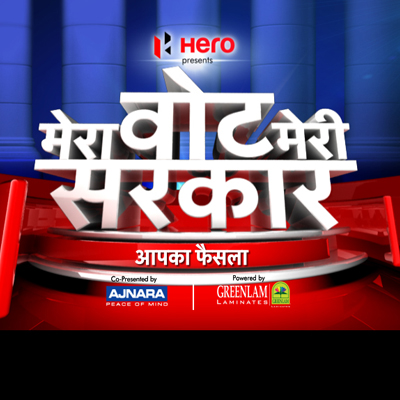
    CNN-IBN and IBN7, with their shows A Billion Votes – Post Poll Survey and Mera Vote Meri Sarkar – Post-Poll Survey, respectively, have promised 100 hours of poll coverage, beginning 12 May and ending 16 May. The last phase will be complete with insights into the world’s largest electoral exercise.


    CNN-IBN, IBN7 and IBN-Lokmat editor-in-chief Rajdeep Sardesai said in a statement, “With the results of the biggest elections of our times round the corner, the entire nation is keeping a close eye on the outcome. The IBN Network has been a front runner in election programming. Through our 100 hours of extensive coverage, we look forward to continuing our leadership and delivering on the expectations of our viewers of being the most accurate and most trusted network for elections.”


    Sardesai along with his formidable team will lead the network’s election coverage, with help from political experts including Swapan Dasgupta, Ramachandra Guha, Surjit Bhalla, Manini Chatterjee, Sandeep Shastri, Kumar Ketkar, Dipankar Gupta and Paranjoy Guha Thakurta.


    For ABP News, counting day will start at the crack of dawn at 6am with live interviews of the key faces of this election and a summary of the trends and results using state-of-the-art election software and graphics that the channel has come to be synonymous with. Helping viewers understand the poll results and their implications will be ABP News’ experienced anchors including Kishore Ajwani, Abhisar Sharma, Sumaira Khan as also Neha Pant from the National News Centre, Noida.


    Prannoy Roy will once again step into the role he started off with all those years ago. The ace journalist will anchor NDTV’s show-stopper, India Decides – The Final Countdown. The channel is hoping to ensure the fastest national projection, based on early numbers and Roy’s expertise. Counting day will see Roy and Dorab Sopariwala joined by some of the country’s finest anchors, including Barkha Dutt, Vikram Chandra and Srinivasan Jain among others.


    Similarly, prominent faces associated with various news channels will lead the channel coverage for the day. For instance, Ajay Kumar, Ramesh Bhatt and Pinaj Tyagi will be the main anchors on News Nation on 16 May.


    As for ET Now, election coverage will commence at 7:00 am. The channel will have a panel of experts comprising Swaminathan Aiyar, Bibek Debroy, Sadanand Dhume and Sanjeev Aga who will decode the election results and give comprehensive analysis of how the economy and markets will shape up post elections. ET Now also has a lineup of industry captains like Godrej Group chairman Adi Godrej, Hero MotoCorp joint MD Sunil Munjal, Ashok Leyland vice chairman R.Seshasayee, HDFC vice chairman & CEO Keki Mistry, CII president Ajay Shriram, and FICCI president Siddharth Birla to represent the industry’s viewpoint on the election results and the likely agenda for the new government.


    Realizing the kind of viewership these channels are all set to garner on the counting day, a multitude of brands have latched onto the exercise. For example, IBN network has roped in ebay.in, ACC Cement, Renault, Asian Paints and Principal Mutual Funds while Microsoft is its technology partner. News Nation has got onboard Ghadi Detergent, Pepsi, LG, SBI, Hitachi, Airtel, Spice Mobile, TVS Motors and J.K. Cement while ABP News has tied up with Hero, Luminous, Snapdeal.com and Kent Water Purifiers.


    Consequently, news channels have hiked their ad rates for a 10 second spot. According to News Nation CEO Shailesh Kumar, the channel has hiked ad rates 15 times the normal rates for prime time for a 10 second spot. However, media planners and buyers beg to differ.


    A prominent media planner on condition of anonymity revealed that many such figures are floating around. Like it is being said that Times Now, which used to charge Rs 3,000 for a 10 second spot, has now hiked ad rates to Rs 7,500 or even Rs 9,000. Or for that matter, Hindi news channel Aaj Tak has doubled its ad rate from the previous Rs 4,500 to Rs 9000 approx.


    The media planner went on to say that news channels are in fact still trying to get advertisers on board. And though the ad rate may be the same on paper for any single news channel, new brands may have to pay a steep price as compared to old timers who might even be offered a discount.


    Not to be left behind in the online space, immediate trends and results from all counting centres will be relayed to NDTV in Delhi, which will reach viewers with state-of-the-art graphics almost as soon as they are released. ABP News has deployed personnel at various counting centres across the country to digitally deliver real-time data to the servers so that viewers get the results at a fast pace. Separate teams will also work right through the day for delivering results on Twitter, Facebook, Whatsapp, BBM or SMS, wherever a viewer is, on the device of his choice. Times Now has already launched an app called Election HQ app, which is also available on i-tunes to provide information to its viewers on the go. To make the incoming information simpler for the audience to understand, IBN has created the Microsoft Election Analytics Centre. The CNN-IBN – Microsoft Election Analytics Centre uses a range of Microsoft devices and services, and leverages analysis of current and historical data to provide people with intelligent election insights.


    With almost all news channels ready to bombard viewers with wide-ranging news and analyses related to the poll results, it remains to be seen which one manages to grab the highest number of eyeballs, along with of course, the new government.

  • Counting Day: CNN-IBN & IBN7 present ‘The Verdict’

    Counting Day: CNN-IBN & IBN7 present ‘The Verdict’

    MUMBAI: After months of exhaustive campaigning and nine long phases of polling, India is all set for the verdict in the world’s biggest democratic exercise. As the nation inches closer to the Counting Day, CNN-IBN & IBN7 present an extensive day-long programming, ‘A Billion Votes – The Verdict’ & ‘Mera Vote Meri Sarkar – Aap ka Faisla’ respectively, that will bring to the viewers the most credible minute-by-minute coverage of the results of General Elections 2014.


    Commencing at 6am in the morning, this special coverage will include the latest trends, seat tally and extensive live coverage from across the country. The programming will also closely keep a track of results and analyse the implications of the same in detail. IBN Network’s formidable team of journalists led by country’s most trusted news anchor Padma Shri Rajdeep Sardesai, Editor-in-Chief CNN-IBN, IBN7 and IBN-Lokmat, along with India’s best political experts will discuss the verdict and provide the most definitive and incisive analysis of the results.


    The eminent panel of experts on IBN Network comprises of Swapan Dasgupta, Dr. Ramachandra Guha, Dr. Surjit Bhalla, Manini Chatterjee, Dr. Sandeep Shastri, Kumar Ketkar, Dipankar Gupta, T R Ramachandran, Aakar Patel, Sharat Pradhan, Dr. Shaibal Gupta, Paranjoy Guha Thakurta, Dr. Sanjaya Baru, Prof. Rajeeva Karandikar, Sanjay Kumar, Hilal Ahmed, Ajay Singh, Nilanjan Mukhopadhyay and Purushottam Agrawal.


    Commenting on this, Rajdeep Sardesai, Editor-in-Chief, CNN-IBN, IBN7 and IBN-Lokmat, said, “Considered to be the most critical elections in recent times, General Elections 2014 has witnessed voter participation in record numbers. Every Indian is now looking forward to the final results. At IBN Network, our aim is to keep our viewers abreast of the latest and provide them with the most definitive Counting Day coverage – for indeed these results will determine the future of India.”


    Do not miss this special programming on CNN-IBN & IBN7 on May 16, 2014, all day, 6 am onwards.


  • CNN-IBN gears for election result coverage

    CNN-IBN gears for election result coverage

    MUMBAI: The polling for the nine phase elections is over, and now as the country awaits the results of the 2014 general elections, CNN-IBN and IBN7 are gearing for the most comprehensive coverage of the election results. The network has created 100 hours of programming for this election season.  


    While CNN-IBN is telecasting A Billion Votes, IBN7 has launched a post poll survey show called Mera Vote Meri Sarkar. The two will be a five day long election coverage show, which will culminate in the counting day special programming on 16 May.


    Starting 12 May, 5 pm onwards, the two channels will bring the most definitive coverage on the final phase of elections complete with latest exclusives, updates and insightful analyses and the most precise projections as they track the climax of the world’s largest electoral exercise. 


    According to the network, the center piece of this programming line up will be a nationwide post-poll study conducted by the Centre for the Study of Developing Societies (CSDS). Covering 22 states and over 18,050 respondents the survey will include vote share percentages and seat projections and will flesh out in detail the likely post counting day scenarios. The finale of the channel’s elections coverage will happen on 16 May, 6 am onwards. 


    This special coverage will include up to the minute trends, seat tally, extensive live coverage from across the country and the most incisive analysis of emerging scenarios.


    IBN network’s coverage will be driven by the channel’s formidable team of journalists led by CNN-IBN, IBN7 and IBN-Lokmat editor-in-chief Rajdeep Sardesai along with country’s most notable political experts namely Swapan Dasgupta, Ramachandra Guha, Surjit Bhalla, Manini Chatterjee, Sandeep Shastri, Kumar Ketkar, Dipankar Gupta, T R Ramachandran, Aakar Patel, Sharat Pradhan, Shaibal Gupta, Paranjoy Guha Thakurta, Sanjaya Baru, Rajeeva Karandikar, Sanjay Kumar, Hilal Ahmed, Ajay Singh, Nilanjan Mukhopadhyay and Purushottam Agrawal.


    “With the results of the biggest elections of our times around the corner, the entire nation is keeping a close eye on the outcome. IBN Network has been the front runner in election programming. Through our 100 hours of extensive coverage, we look forward to continue our leadership and deliver on the expectations of our viewers of being the most accurate & most trusted network for elections,” said Sardesai.

  • Elections 2014: Live from Ground Zero

    Elections 2014: Live from Ground Zero

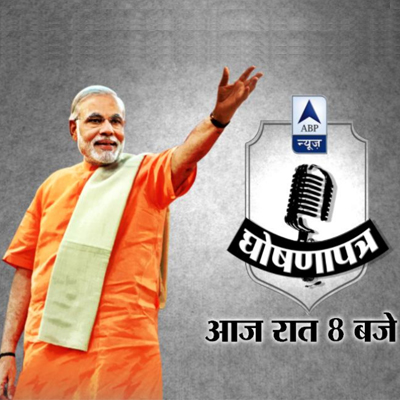
    MUMBAI: The 2014 election fever has gripped the nation and news channels in their quest to feed the hungry electorate with innovative and comprehensive news coverage, are venturing out, literally. Studio produced shows are steadily seen replacing on ground coverage ensuring that information is delivered at source. Some of these shows include Open Mike by CNN-IBN; Kaun Banega Pradhan Mantrai, Nukkad Bahas and Ghosnapatra by ABP; Campus Connect by NewsX; Janta Ka Agenda, Akhada, Pradhan Mantri Pachchisi by News Nation etc.  Well known journalists, the face of these channels including Barkha Dutt of NDTV, Sagarika Ghose of CNN-IBN, Ajay Kumar, Ramesh Bhatt from News Nation, Abhisar Sharma of ABP and Athar Khan of NewsX, have all stepped out of the four walls of the studio to reach out to the janta.


    What have been the primary reasons for news channels venturing out from the comforts of the studio? IBN Network managing editor Vinay Tewari says, “Elections have been always about people. Going out on the field and interacting with the 80 crore electorate is very important for us.”


    News Nation CEO and editor in chief Shailesh Kumar said, “Our endeavor is to give a feel that we are present at ground zero. We cannot call voters from far flung areas to our studios. But our studio can certainly move to the door steps of the voters.”  Echoing a similar thought about its show Campus Connect, NewsX says that the show has come up as a unique youth electorate engagement initiative that hopes to build the political power of young people in order to achieve progressive change in the country.


    Producing such shows in the open involves a lot more investment, manpower and planning compared to a studio produced show. According to Castle Media director Vynsley Fernandes, producing a half-an-hour show in a studio costs around Rs 45,000 which nearly triples for an hour long show produced on ground costing roughly around Rs 1, 25,000. “But news channels feel it’s worth the effort as they get to know the real pulse of the nation,” he says.


    News Nation has deployed about 100 crewmen including journalists, four OB vans and 30 bag packs for its different programmes while News   X ‘Campus Connect’ employs 20 odd personnel.  To transmit these shows a combination of 3G back packs and OB vans are being used. Some of these shows are broadcast live while others are pre-recorded.


    Bigger states like Uttar Pradesh (UP) and the Hindi speaking belt command more weightage as they send more MPs to the parliament. News Nation says that states like UP, Bihar, Karnataka and Rajasthan are more important as BJP expects maximum swing of votes in these areas while for ABP News states in the Hindi heartland are of utmost priority and its show Ghosnapatra is limited to bigger cities only. NewsX differs and says that every state is important for them.


    As the counting day draws nearer and the election mania reaches its peak, News Nation says that counting day is for results and therefore the studio will be more important to them although reporting from important constituencies will get equal importance. On the other hand, ABP News and NewsX have said that on ground reporting will see a surge on the day results will be declared. For all the effort that has gone in producing these shows and formats it is crucial that an efficient marketing plan is devised to pitch these shows to the right audience. NewsX is relying on considerable amount of word of mouth communication through the audience who take part in their shows. They are also promoting extensively through promos on the channel to build additional viewership. At the same time, each episode is uploaded on YouTube and promoted to digital subscribers.


    On the other hand according to MCCS marketing manager Vikas Singh ‘aap apni rajneetik rai kahan banate hain’ is the question that the ABP News brand campaign asks its viewers. Politics is national pastime and is perhaps the only thing after cricket where everybody has a point of view. People can be seen having animated political discussions at bus stops, cafeterias, inside trains, tea stalls, at work station in office, almost everywhere. However not all discussions are backed by sound knowledge. “The campaign tries to get the viewers watch ABP News to form the correct political opinion. It leaves behind a powerful message ‘sahi rajneetik rai banana ke liye dekhiye sirf ABP News’,” says Singh.


     According to Lowe Lintas executive vice president Syed Amjad Ali the key objective of the campaign was to take the thought further through an interesting story. “The story is so simple that anyone can connect with and understand it. People resonate with this campaign far more strongly given the timing of such a large scale election that’s going on in the country,” informs Ali. The social media space too is being used extensively to market these shows. ABP News is using interactive poll banners that run on popular sites to establish the message.


    As per IPSOS study-‘Kaun Banega Pradhan Mantri’ has the highest awareness amongst all election related shows across news genre. “Audiences specially the youth talk a lot of the Campus Connect show on social media,” says Singh. These dynamic formats have been a huge hit and have developed a big following among the ‘aam janta’ as it gives them an opportunity to share their views and thus makes the audience feels empowered.


    NewsX plans to integrate social media to a larger and greater extent to engage with their audience.  The audience response to these new shows has been positive.


    All the channels that indiantelevision.com spoke to said that this new format is here to stay even post elections, although the degree and extent to which currently these shows are produced might be low due to budget constraints.