Tag: Rajdeep Sardesai

  • Nalin Mehta’s ‘Behind a Billion Screens’ examines Indian TV industry

    Nalin Mehta’s ‘Behind a Billion Screens’ examines Indian TV industry

    MUMBAI: India is a country where television forms the most important part of one’s life. Everybody watches television, everybody has an opinion on it and everybody thinks they know exactly what is wrong with it. 


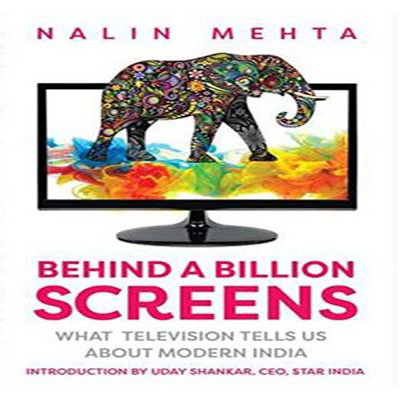
    It’s a topic that often raises a lot of heat and smoke but too little light. Throwing some light on this trend of television is author and journalist Nalin Mehta’s new book ‘Behind a Billion Screens.’


    The book closely examines how television works in India, how TV channels make their money or not, how this is changing and what this means for the cacophony that appears on our screens.


    The book, which was initially going to be a joint effort by Star India CEO Uday Shankar and Mehta, was later written independently by the latter.
    The book answers key questions like:


    • Who owns Indian television? Just how much is it controlled by politicians, corporations and real estate companies? What are the patterns of control nationally and across regional languages? How does India compare with other countries and why does this matter?


    • What explains television’s terrible crisis of content? Is there really no market for intelligence in India and is dumped down content the only thing that audiences want? Why do channels keep behaving like Bollywood producers of the 1980s who kept churning out the same old tired formula films till a new multiplex-savvy breed of film-makers started challenging old orthodoxies? Is there a talent problem or management problem or a crisis of business models?


    • What is wrong with current government controlling system on television and why this ‘terrible-backend’ needs to change? Indian television continues to be controlled by outdated regulations, even as it is mired in public battles for greater regulation, as called for by Justice Katju. Studying the role of the Ministry of Information and Broadcasting, Telecom Regulatory Authority of India (TRAI), state governments and the judiciary, this book answers just how much control the state still has on broadcasting, why its jugaad nature of regulation is now unsustainable and why a major change is needed.


    • Does self-regulation work? How did self-regulatory bodies governing television come into being and what has been their factual record? Has self-regulation made any difference to programming or is it simply a chimera only designed to keep government out?How does India compare to other countries?
    • Does public broadcasting still matter, what exactly is wrong with Prasar Bharti and how can it be fixed?


    • Is television becoming irrelevant in the digital age? How is television shape-shifting in response to mobiles and the net, how are companies changing their businesses and programming, where is India going and how different is India from the rest of the world.


    The book highlights how India’s $15 billion media and entertainment industry – including television, print, radio, digital media – is growing at roughly 14 per cent a year. This, by some accounts, is impressive, benefitting immensely from the tailwinds of GDP growth of the last decade. But the stark fact is that even at $15 billion, India’s entire media taken together is just about one fourth the size of Google ($59 billion in revenues) – a fourteen-year-old company that is younger than most major Indian TV channels.


    “Let us not even go that far. If the entire Indian media was a company, it would rank seventh or eighth in India! Media is a globally growing industry but our participation in that ecosystem is zero and India is hardly factored into the global thought process of technology or content,” the book points out.


    Mehta, in the book, highlights how India is drunk on its own volumes: the largest number of newspapers in circulation, the second largest number of television viewers and millions of digital consumers. Digital, in particular, is an indictment of our creative and strategic limitations.


    “We have over 700 million mobile screens and yet we do not have a relatively unique content proposition for the medium. So, our ability to convert that into corresponding value is disappointing. Both in business and creative terms, the Indian media and entertainment sector still remains much smaller than it should be in a country of 1.2 billion people,” the book says.


    Even at these volumes, the reach as a percentage of population is not spectacular. India has 100 million households with no television, their time spent on it is abysmally low when compared to global standards; some 350 million people read the newspaper – but that tells us how many do not read!


    Mehta points out that in television, India needs a lot more content and this will come not only by scaling up production but through a fundamental transformation of the ecosystem. Resources, talent and every related facet have to evolve dramatically. For example, the production infrastructure in Mumbai, studio space, access to talent is creaking and unable to keep pace with the demand.


    Despite all the gloom and doom, India’s media and entertainment sector has consistently delivered impressive growth rates for the past few years. But, this is not a sector whose value is measured just by the size of its financial contribution. Media and entertainment remains central to defining the direction of India’s social and economic path; its work remains key to the imagination and inspiration of a billion Indians every day; and its health will be central to the ethos and values of the society we collectively shape.


    Mehta, through the book, says that with Narendra Modi’s new government in place, since May 2014, there is a renewed focus on reassessing things and trying to improve them. 

    “We need to make the case, for example, digitisation is not just about putting boxes and laying cables. It entails a fundamental transformation of the way we look at media and there is an opportunity for Indian media and content to move from just being a provider of entertainment content to being a creative industry, like the IT sector, for example, that plays a much larger role in the overall economic vision for the country,” Mehta opines in the book.


    He further writes that the media has been more than just a silent victim. Too often, the news media has focused on what is sensational rather than what is important. Too often, the point of news seems to be to reduce the extraordinary diversity of the country to the most banal, a contest between extremes that canonly be resolved through a shouting match on live television. With singular dominant narratives, the trend seems to be to create heroes on a particular day only to label them as thugs and crooks the next.


    Until recently, for a long time the media–government equation seemed like a broken relationship, and one that has had dire consequences for both the industry as well as the government. The failure to establish credibility and importance meant the industry perennially stayed on the back foot, defending itself against every new wave of regulation aimed only at curtailing its wings further. In return, governments were not able to leverage either the impact that mass media can have in India or harness the power of media as an economic engine that can create jobs and wealth.


    The book, in order to put things in perspective, says, “As a $15 billion industry, we employ over six million people. This can be so much more significant and meaningful. According to official estimates, about fifteen million people are entering the job market every year while the country is generating only about three million new jobs a year. This means that we are adding, as filmmaker Shekhar Kapur eloquently put it, a city of unemployed people as big as Delhi every year. And yet, the lens often used to look at this industry is largely one of glamour and propaganda and the biggest debate is on how to control and contain it.”


    There are 161 million cable and satellite homes but the measured universe so far is much smaller. “I do not know how many subscribers I have with a particular MSO and the MSO doesn’t know how many households his LCO delivers the signals to. The same is true in advertising too. The country’s premier media agencies can’t even seem to agree on a fact as basic as the size of the advertising market. One leading agency recently estimated the total market size to be Rs 35,000 crore, while the other, equally illustrious, estimated it to be Rs 29,000 crore. A variance of no less than 20 per cent! The ambiguity in data for other sectors of the media and entertainment industry is no less. Numbers are supposed to be the foundations of rational business decisions but how can we make decisions when professionals in the business of numbers can’t get their numbers straight?”


    Reacting on the book, Shankar said, “Nalin is probably the best media academic in India…this book is a seminal contribution to the evolving debate about the role of the Indian media.”


    Author and India Today Group consulting editor Rajdeep Sardesai added, “Excellent… an incisive and much needed study of how television is changing in India.”
    Times Now editor in chief Arnab Goswami said, “Fantastic… Nalin has beautifully pieced together the real, untold story behind the sound bytes.
  • Supreme Court scraps ‘draconian’ Section 66A of IT Act

    Supreme Court scraps ‘draconian’ Section 66A of IT Act

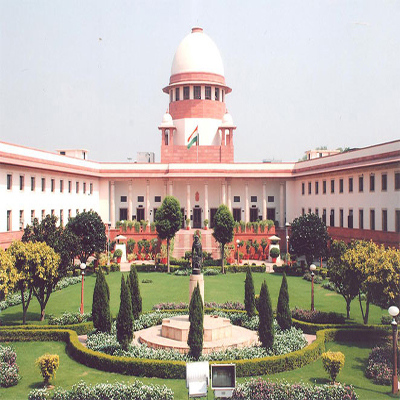
    MUMBAI: In a landmark judgement the Indian Supreme Court today scrapped the ‘draconian’ Section 66A of the IT Act, which provides the power to arrest a person for posting allegedly offensive content online.


    The court ruled that the controversial Section 66A of the Information Technology Act was unconstitutional.


    The move comes in the wake of multiple arrests that have been made over the last year of citizens for posting their personal views on social media websites like Facebook and Twitter. The latest was the arrest of a teenager from Bareilly, Uttar Pradesh last week. The Class 12 student was arrested and sent to jail for a Facebook post about senior Uttar Pradesh minister Azam Khan.


    The order was delivered by a two-judge bench of the Supreme Court on petitions filed by civil rights groups and a law student, who argued that Section 66A violated people’s fundamental right to freedom of speech and expression. In the judgment, the Supreme Court said, “There is a difference between discussion, advocacy and incitement. Discussion and advocacy, no matter how annoying, is allowed.”


    The Supreme Court’s move has been lauded by members of the film and media fraternity online, who took to Twitter to express their views on the verdict.


    Journalist turned filmmaker Pritish Nandy tweeted, “Section 66A of the IT Act, the noxious, draconian law has been struck down by the Supreme Court. Restores our faith in democracy. What an achievement! @karunanundy #66A, the black act goes.”


    Director Madhur Bhandarkar said, “Landmark judgement by Hon Supreme Court as it strikes down Sec 66A of IT Act. Freedom of thought & expression rightly upheld in a democracy.”


    Filmmaker Shekhar Kapur added, “As Supreme Court has quashed #Sec66A, its time for every1 to realise growing power of #socialmedia… a powerful tool 2 be used responsibly.”


    Actress Suchitra Krishnamurty tweeted, “Yippee #Sec66A has been scrapped. So our freedom of speech is back. Can we have a law to scrap/challenge bans imposed by Govt too?”


    Journalist Sagarika Ghosh expressed her views by tweeting this, “Now that #Sec66A gone, in same spirit will GOI apologise to Priya Pillai, allow Wendy Doniger, un-ban books, stop calling media anti-national?”


    India Today consulting editor Rajdeep Sardesai tweeted, “The only exception to free speech must remain hate speech and incitement to violence. Defamation/slander as per common law. #Sec66A”


  • Farewell Editor

    Farewell Editor

    The last time I did an India at 9 debate on CNN IBN on June 2, 2014, Vinod Mehta was on the panel. As the debate was ending, Vinod insisted on having the last word. ‘What is this I am hearing about you quitting or going on a sabbatical? Don’t stay away from the screen for long, you must return soon!’ As it turned out, that was my last appearance on CNN IBN: I did not return. Little did I know then, that neither would Vinod. He left us permanently this Sunday, leaving behind a great void.

    I never had the privilege of working under Vinod, although my wife Sagarika did and she told me wonderful stories of an editor who was passionate and committed to journalism. My interactions with Vinod were largely on the television screen though he did get me to write the occasional column for Outlook. I found him the person I had always imagined him to me: honest, straightforward, and above all, irreverent. Most editors take themselves very seriously and believe their one article or programme can change the world. Many will tell you how proximate they are to the corridors of power. Not Vinod. His almost self-deprecating attitude to being an editor was perhaps his greatest strength (he had even named his dog ‘Editor’). That coupled with a nose for news and the big, bold headline made him the ideal reporters’ editor, someone who nurtured and embraced many fine young talents. For Vinod, the story mattered, not the pomposity of the byline or the celebrityhood of being editor.

    In a sense, Vinod belonged to what I would call the grand ‘Bombay school of editors’, reared in the more genteel 1960s and 70s. Leading the pack was my first editor when I was in college: Behram Contractor or Busybee, someone also blessed with the craft of using simple language to bring a story alive. Vinod and Behram were in many ways two of a kind: they didn’t flaunt their connections or get intimate with their sources, but enjoyed the idea of bringing out a cracking good newspaper or magazine.

    Sadly, we live in an age where the editor is an endangered species, combating marketing, corporate and political pressures. Vinod is perhaps one of the last of the editors who would not compromise on journalistic independence. As he once told a colleague: “Let someone serve a legal notice, the story must go!” His views were his own, he did not wish to follow the herd or be intimidated by the cacophony of cheerleaders and naysayers. That both LK Advani and Sonia Gandhi were present at his funeral exemplified his ability to cut across the political divide. He wrote a fine book on Sanjay Gandhi and an equally well written biography of Meena Kumari: in both books, there was just enough gossip and anecdote to make them real page turners. Editor, author, journalist: we shall all miss his affable, always energetic presence. RIP.

    Post- script: Vinod made the effortless transition to being a pundit on television. ‘I don’t really like it, but it does pay well,’ he told me with a smile. That was quintessential Vinod: he liked expressing his thoughts candidly, but not without a glass of whiskey in the hand!

    (The piece has been written by veteran journalist Rajdeep Sardedsai on his blog http://www.rajdeepsardesai.net and Indiantelevision.com took his consent and uploaded it after his approval)

  • 2014: The year of big movements in the news channel space

    2014: The year of big movements in the news channel space

    MUMBAI: The year 2014 was an important year for the news channel industry, monetarily and otherwise. The bonus for the industry was the national election which not only kept them busy for the first half of the year, but also sent all the networks into profits for the first financial quarter. However, several changes took place on the people front with numerous big names moving out from their associated companies.

    The biggest shocker that hit the industry was the acquisition of Network18 by Reliance Industries’ subsidiary Independent Media Trust, putting the entire TV18 (news channels) section under the Mukesh Ambani conglomerate. Network18 founder and chairman Raghav Bahl, this year sold his baby to Ambani for a whopping Rs 4000 crore. Bahl has now set up his own new venture in the mobile space called Quintillion Media.


    What followed this was an upheaval of sorts, as one by one, the main pillars of the company began to fall. As soon as the meeting concluded between Bahl and the management of Network18, departures began which included group CEO B Sai Kumar, COO Ajay Chacko, CNN-IBN deputy editor Sagarika Ghose, IBN Network editor in chief Rajdeep Sardesai, Network18 Media CEO Sanjay Dua, Network18 digital CEO Durga Raghunath, Network 18 CFO RDS Binni Bawa and deputy foreign affairs editor Suhasini Haidar.

    Soon after, the discussion circled the possibilities of news manipulation by the conglomerate as well as editorial interference started cropping up. In order to assuage the racing thoughts of the employees, the newly formed management took a town hall meeting. A new set of executives joined the company including former Zee Media CEO Alok Agrawal who took charge as Network18 group COO, Umesh Upadhyay as news director, Rohit Bansal as non executive director, Hariharan Mahadevan as CFO and Deepak Parekh and Adil Zainulbhai as independent directors.

    The year also saw several people shifting loyalties due to various reasons. The biggest of them were Rajdeep Sardesai joining India Today as consulting editor and primetime anchor, Dilip Venkatraman and Savvy Venkatraman joining ITV Network as group COO of strategy and business development and group chief marketing officer respectively, former Indian Express editor in chief Shekhar Gupta moving to India Today as the vice chairman and editor in chief of news properties but within two months relinquishing his positions and becoming editorial advisor to the group and Sanjay Dua joining ITV Network as NewsX CEO and ITV network chief revenue officer.

    Months after Times Television Network MD and CEO Sunil Lulla was elevated to BCCL Group president of corporate development, he quit the company to join Grey group India as chairman and managing director.  Meanwhile, Times Now, ET Now and Zoom CEO Avinash Kaul went to IBN18 Network as CEO. ITV Network elevated CEO RK Arora to group CEO and soon after Arora quit to join News Nation as its CEO, which had been vacated by Shailesh Kumar, the former CEO and editor in chief of the channel. Kumar recently joined Focus Group as the managing editor for regional channels. Neeraj Sanan who headed distribution and marketing for MCCS that operates ABP news channels, quit and went to Focus Group as group CEO.

    News Xpress CEO and editor in chief Vinod Kapri decided to step down as well and was replaced by Prasoon Shukla. Early in the year, CNN-IBN managing editor Ashutosh quit to join the Aam Aadmi Party (AAP) and was replaced by Vinay Tewari who after several months shifted to Headlines Today as managing editor, a place left vacant by Nalin Mehta. Radhakrishnan Nair was appointed in place of Tewari.

    On the business side, Bloomberg TV India editor in chief Vivek Law quit to pursue entrepreneurial activities and the position was filled by Siddharth Zarabi. Zee News resident editor Sumit Awasthi joined IBN7 as deputy managing editor. News24 managing editor Ajit Anjum joined India TV in the same capacity. QW Naqvi who joined India TV as editorial director, left after a few months’ stint.

    On the international channels side, Naveen Jhunjhunwala replaced Preet Dhupar as BBC Global India COO while Ravi Agrawal was appointed as CNN International bureau chief for India. Bhupendra Chaubey who became executive editor of CNN-IBN, post takeover by Reliance, decided to shift his role to consulting editor. The year also saw the demise of veteran journalist Jehangir Pocha.

    The News Broadcasters Association (NBA) has been fighting tooth and nail for keeping news broadcasters out of the 12 minute ad cap. The case is still being heard in the High Court for more than a year. NDTV executive vice chairperson KVL Narayan Rao, after four years of heading the NBA as president was succeeded by India TV chairman and editor in chief Rajat Sharma. A new entity called the All India News Broadcasters Association (AINBA) was formed for the regional news channels with Azad News chairman MS Walia as its chairman.

    The other big takeover rumour that was making rounds was about the Adani group trying to stake claim in NDTV (which completed 25 years) which the company vehemently stated as a false one.

    The year also saw a few channel launches such as CNBC Bajar, News Nation UP/Uttarakhand, several regional news channels under the ETV group (now under Network18), Zee Purvaiya and Zee Kalinga which have now been converted into fully entertainment as against the earlier format of 50 per cent news and 50 per cent entertainment.

    2014 was also the year of revamps, with India TV, IBN7, NewsX, News Xpress and Zee News changing the look and feel of the channel. NDTV Profit converted into a dual channel NDTV Profit/Prime, with Prime operating as a fully sponsored channel, aimed at easing out the losses being made by Profit over the years.

    The 16th Lok Sabha general election added the much needed boost to the balance sheets of news channels that have been cribbing about high carriage fees, low subscription fees and advertising rates. CNN-IBN and Times Now came up with their election apps. The latter also tied up with north east channel News Live for poll coverage. Network18 tied up with Microsoft to set up an analytics centre for the elections while BBC used WhatsApp and WeChat for getting more traction from Indian audiences. This election season saw a new trend: that of editors moving out of the comfort zone of their studio and reporting from ground zero.

    As we approach the new year, burning issues are yet to be resolved such as the ad cap, carriage fees, paid news as well as foreign direct investment in news channels which is still stuck at 26 per cent and does not seem to have a better future any time soon.

  • ‘Junior MasterChef Swaad Ke Ustaad’ wins at the 19th ATA

    ‘Junior MasterChef Swaad Ke Ustaad’ wins at the 19th ATA

    NEW DELHI: The 19th Asian Television Awards (ATA) ceremony took place on 11 December 2014 at Marina Bay Sands, Singapore. With 1,371 entries from 14 countries across Asia-Pacific, this year’s ATA was attended by over 500 industry professionals in broadcasting, entertainment and the media. In all, 199 channels from 119 broadcasters, as well as 64 independent production companies, vied for accolades across 38 award categories.
    A total of 43 trophies were awarded at the ceremony, including the “Outstanding Contribution to Asian Television” which was presented to Metan Global Entertainment Group president and CEO Larry Namer.
    “We’ve seen tremendous interest for our Awards over the years. Not only have the number of entries increased, we’re also seeing greater participation from more Asian broadcasters and production companies, making this Awards truly representative of Asia,” said Asian Television Awards chairman Raymond Wong.
    He added, “To enhance the standing of the Awards and build its brand amongst the viewers of our industry, the proceedings of the Asian Television Awards last year were carried by FOX International Channels (FIC) and MediaCorp TV. This year we will continue to do the same and I am pleased to announce that Bangkok TV and Astro will be joining us as a Broadcast Partner, carrying the Awards’ proceedings on its Channel 7HD, Astro Ria and Astro Maya HD respectively. Together with FIC’s Star World, MediaCorp’s Channel 5, Bangkok TV’s Channel 7HD, Astro’s Ria and Maya HD, the Asian Television Awards will reach out to more than 40 million households across Asia Pacific.”
     Here is the list of winners of significant categories –


  • “Mr Modi, when are you giving me the big interview you promised?”: Rajdeep Sardesai

    “Mr Modi, when are you giving me the big interview you promised?”: Rajdeep Sardesai

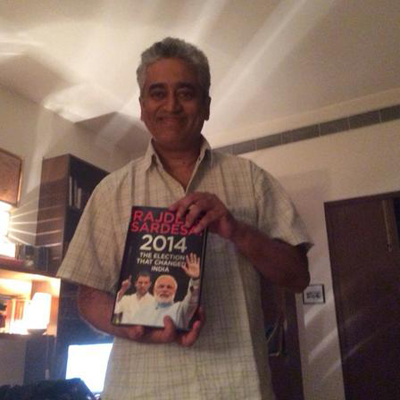
    He is one of Indian television’s most recognisable face as a news presenter and now the author of the best seller ‘2014: The Election That Changed India’. Rajdeep Sardesai may have quit Network18 as IBN18 editor in chief and later on joining the India Today Group as consulting editor, but the man with over 26 years of experience in the field continues to be recognised for his work.


    Sardesai was honoured with the Asian TV Award on 11 December for ‘The Best News Presenter’ for his coverage on the counting day of the general elections.


     The award is a special one for him as he becomes the first Indian to receive the recognition. On the occasion, in a quick chat with Indiantelevision.com’s Herman Gomes, Sardesai speaks about the recognition and upcoming plans for the New Year.


    Your feelings on receiving the award? Do you see Indian journalism receiving its due credit?

    When I was with NDTV, The Big Fight had won the Asian TV Award, three times in a row. At CNN-IBN, India at 9 and our election coverage had won awards for the best news coverage and best current affairs, but to win an individual award as the ‘Best News Presenter’ feels special. Being nominated with icons from CNN, Discovery, Nat Geo and CNBC, along with Chinese and Korean TV, makes it special. I feel honoured to be honoured as the only Indian.


    Are awards and recognition important for journalism?

    Being the first Indian to receive an award like this, feels nice, but only for a moment. Journalism is not about winning awards but about work or the interview you do.  Elections after all is a team game. The award is also for all those who worked with me as a team at my old organisation, CNN IBN.


    Any celebrations planned?

    I am going to have a quiet dinner when my son returns from his hostel. I am planning to take him out for dinner next weekend.  I owe a lot to the family.


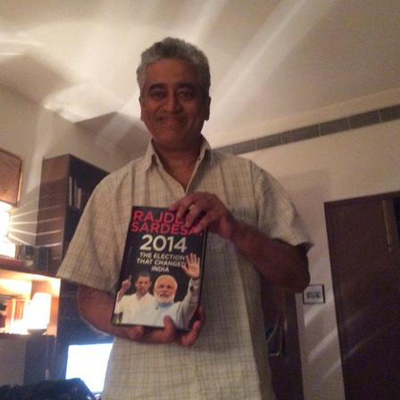
    How well is your book ‘2014:The Election That Changed India’ been performing on the shelves?

    The book as of last week was placed at number two in the non-fiction category, behind Sachin Tendulkar’s autobiography: ‘Playing It My way’.  It has been on the best seller list for six weeks. I am told that in one month it has sold more than any other nonfiction political book of 2014. I am taking the book across the country for various promotions and lit fests.  On the weekends I promote the book while on weekdays I am caught up anchoring my show. It’s a packed week!


    Are politicians affected by the revelations in the book?

    Interestingly I find the Congress politicians having more problems with the book than BJP. The BJP politicians had feared the book, but Congress seems to be unhappy now.


    How has the state of journalism changed over the last one year?

    One of the continuing fears I have is the tendency to sensationalise. That continues to remain a trend and has not stopped. This is what I call window journalism, where you have eight people in a window, talking at each other rather than talking to each other.

    But at the same time there is some good work being done. But the sad part is it does not get the due recognition, because some of the less important work dominates the more worthy work.


    We are destroying our credibility in the long run.


    How do you view the growth for online journalism?

    My belief is that digital is going to see a big revolution in the next few years. It will not happen overnight but will take two to three years.


    Are there chances of you joining back CNN-IBN?

    There are no such plans. 2014 has been a roller coaster year for me. Our election coverage is being recognised at the Asian level. The book was a high point while my departure from CNN IBN was an unfortunate one. 


    It has been six months since the new government came to power. Do you think Aache Din Aa Gaye?

    Ache Sitare Aa Gaye, ache din we don’t know. Maybe next year. It’s too early to judge.


    One question you would want to ask the Prime Minister Narendra Modi?

    Mr Modi, when are you giving me the big interview you promised?


    How do you see the year ahead for the Indian media and how are you planning to welcome the New Year?

    I view the year 2015 as the year of introspection for the media including myself. 2014 has been a year of excitement. I am welcoming 2015 by going to Goa and resting by the beach.


    For this year do you want to be known as Rajdeep Sardesai: the journalist or the author?

    I want to be known as a journalist who has written a bestselling book!

  • Bhupendra Chaubey is now CNN-IBN consulting editor

    Bhupendra Chaubey is now CNN-IBN consulting editor

    MUMBAI: After being elevated to executive editor of CNN-IBN a few months ago, Bhupendra Chaubey has now shifted his role to consulting editor.


    He will now do only one show a week and appear on screen for big days such as elections but will not be looking at hourly/daily management of news. He will also be focusing a lot on the digital space.


    In a series of tweets, Chaubey said that ’24 hour management doesn’t leave you any space to unlearn and learn again.’ He also tweeted ‘Journalism without passion and processes of enquiry isn’t journalism. I believe new age media platforms do provide you with that space.’


    While several media reports suggested that Chaubey would be leaving the organisation, following the footsteps of Rajdeep Sardesai, Sagarika Ghose, Vinay Tewari etc, it seems like he is still committed to Network18.


    Chaubey has been in the field from the past 17 years, starting his career with NDTV post which he joined TV18 in 2005 as chief political correspondent. 

  • World TV Day: Industry barons go down the memory lane

    World TV Day: Industry barons go down the memory lane

    It was on 15 September 1959 when India officially experimented her tryst with the box that has been loved, loathed and equally criticized over the years.  But today, in its current avatar, the television set has seen a paramount shift, right from colour television being introduced in 1982 as India geared up for the Asian games to today’s 4K technology.

    Production values of various shows as well as the viewership experience have changed phenomenally.  As the world today celebrates World Television Day which was declared by the U.N in December 1996, indiantelevision.com speaks to some of India’s most notable names from the TV industry recalling some of their fondest memories of viewing television programmes.


    Prasar Bharati CEO Jawhar Sircar

    Television needs to look beyond its traditional ecosystem to embrace the opportunities offered by digital technology. The medium will die if it continues to grow in a linear fashion. TV began over electro-magnetic waves in 1959 and has grown through satellite to cover the entire country.

    While terrestrial TV has its own relevance, it will be quickly overtaken by new technologies including satellite and digital addressable systems.


    India Today Group consulting editor Rajdeep Sardesai

    For me my fondest memory was the coverage of the live elections in the years of 1995-1996. At that time, everyone would watch the national broadcaster Doordarshan as there were no private news channels. Covering the elections as a reporter along with journalist like Vinod Dua and Dr Pranoy Roy is a big part of those memories for me.


    NDTV executive vice chairperson KVL Narayan Rao

    Television today is more contemporary. Society has changed a little and what you have on air is reflective of that. The world has become a smaller place. There is more access now as compared to 25 years ago when the only window to international news was The Week That Was, produced by NDTV as one of the earliest private players. I remember serials like Buniyad, Humlog, Mahabharat and Ramayan. Some of the old ones were core of the heart serials and dealt with issues that were the reality of so many people of the country at that time such as post partition. The serials now have different production values.


    Sony Six business head Prasana Krishnan  

    Sports on television is growing rapidly and the Indian sports fan today has more access to viewing multiple properties than any other fan in the world and that too at an affordable cost. My fondest memory has to be this year’s FIFA World Cup Brazil as not only was it personally satisfying for me as a football fan but  a matter of pride to be carried on the channel. Every minute of the game on TV was engaging.


    Ten Sports CEO Rajesh Sethi

    Viewing television programmes is an enriching experience and is all about entertainment, entertainment and entertainment! Watching television especially sports is a great stress buster and allows me to relax. In fact watching sports on TV for me is all about celebration.


    Gasoline, founder and chief creative officer Anil Kakar
    From just two Doordarshan channels to over 800 channels today, television has come a long way. The good thing is, content continues to get more defined to suit niche audiences.  With the recent changes announced by the Star Network, viewers now have the choice of subscribing to specific channels on an a la carte basis. It will be interesting to see how this will go on to alter viewing patterns. In the long run, this might even lead to a shift of focus, largely from GECs to more diversified, niche content, as television gets more fragmented. Ultimately, as audiences, we will have even greater choice than we have today. Even with so many channels today, I would say the finest moments in television belong to the 90s. MTV and Channel V brought in a cultural change and attitudinal shift of sorts. Programmes such as Different Strokes, The Wonder Years, Mind Your Language and Star Trek were had to miss and are still hard to forget.

  • Wanted to name my book ‘TsuNaMo’, says Rajdeep Sardesai

    Wanted to name my book ‘TsuNaMo’, says Rajdeep Sardesai

    MUMBAI: “I had initially thought of naming it ‘TsuNaMo: The Election That Changed India’,” says one of India’s most recognised journalistic faces on television.

    Rajdeep Sardesai, who quit Network18 as IBN18 editor in chief in July this year and later on joined the India Today Group as consulting editor, recently launched his book ‘2014 : The Election That Changed India’.  The book tracks the story of the 16th Lok Sabha elections with a media insider’s view.

    The man with over 26 years of experience in the field first thought of writing a book last year but it was only in July, this year that he thought of penning his expertise. Sardesai was initially approached by Penguin Publishers to write a biography on Prime Minister Narendra Modi but he says he felt that he was more qualified as a journalist to write about the elections than just a biography.

    When asked why he chose 2014 elections to write the book on, he informs “I have been covering elections since 1989, but this was a historic election. For the first time, we had a non-Congress single political party winning by a huge and thumping majority. It was an election that saw the emergence of a larger than life Modi image, extensive media coverage along with new styles of campaigning that were very different from the past. The book while focuses on the 2014 elections has slices of elections from the previous years as well,” says the veteran.

    He provides three reasons why journalists and media students should pick up the book. “First, this was the biggest election we have seen so far. It documents a slice of history that people would want to be a part of. Secondly, people love to read good stories. With my 26 years of journalism experience, I have compiled interesting anecdotes of many years that bring to life many personalities from the political field. Thirdly, TV programmes today are like fast food while a book is like good wine that people will enjoy indulging in,” he says.

    Sardesai who singlehandedly wrote the book of 135,000 words without a team, informs that he was helped by Centre For The Study of Developing Societies (CSDS) for valuable statistics and insights. CSDS along with CNN-IBN together kept audiences abreast about election trends. He mentions that his wife Sagarika Ghose was the one who helped boost his confidence and pushed him to write the book. “She really energised me. She, in fact, is the book writer in the family. My daughter helped me out on the computer and printouts while my son set the deadline for me that was before his holidays began,” adds Sardesai.

    He is extremely happy with the response that the book has garnered, so far, as audiences have already termed it as a page turner. “One does not have to be politically obsessed to read the book. It is accessible for all to read,” he says.

    He is glad that even politicians have taken a liking to the book which goes for its second print next week.

    Talking about the marketing aspect for the book he says that while films by actors like Shah Rukh Khan need marketing to promote a film, for a book it boils down to the quality of prose and content.

    When asked if he plans to write another book on the elections or his autobiography, he chuckles and says “No, not for now. I will take a break of at least one year from book writing,” he concludes.


  • The line between supporters and fanatics has blurred, says Dilip Cherian

    The line between supporters and fanatics has blurred, says Dilip Cherian

    To quell the raging Rajdeep reaction, it seems PM Modi moved swiftly by getting a story out that emissary Adani called to say sorry! While its right or wrong, true or false arguments prevail, Rajdeep became a symbol of something, a fabulous place for any TV journo to be, brand enhancing and truly a victory for Image Managers on either side.


    But then, it’s still sad, that it’s not only Hong Kong’s protestors, who are not the ones taking to the streets. The Modi lovers at Madison Square Garden sadly had closet protestors amidst them too! Clearly, this is also the season for violent expressions of distaste and distrust, and Rajdeep Sardesai was just unlucky to be a kind of lightning rod. Provocations and partisan videos aside, clearly something was very wrong amongst those gathered to greet and preen for Modi in New York City that fateful day. And its best, it’s now put to rest!


    But a basic malaise seems to have spread even further and Modi may not quite know yet. On a live television channel in New Delhi a former diplomat commenting on the excitement over Modi’s US visit lapsed into the totally unparliamentary word of “tuttoo” to describe Manmohan Singh’s relationship with the United States. A shocked anchor groaned visibly on screen, other guests were similarly aghast, but apologies were not quite forthcoming! The regrettable Rajdeep incident, too, had several up in arms against the treatment meted out to Rajdeep, but, significantly, many others who have been defending the mob’s actions as well. And it’s good that Modi’s minders put their word out too – in a manner of speaking. Clearly, the line between supporters and fanatics has blurred considerably even as the line between the “us” versus “them” perception has deepened and widened.


    Clearly, between the protestors in Hong Kong facing the wrath of an obdurate Chinese administration and the voices that seem to assume that Modi would support them in a similarly enthusiastic manner, the message that comes through visibly on television screens in a variety of ways is of a new aggression, a new violence, and that unholy suspicion that silencing the enemy is probably what the New Age mantra seems to have become.


    (These are purely personal views of India’s image guru, Dilip Cherian who is also the consulting partner at Perfect Relations and a former editor of Business India and of the Observer newspapers. He is a columnist and business analyst and indiantelevision.com does not subscribe to these views.)