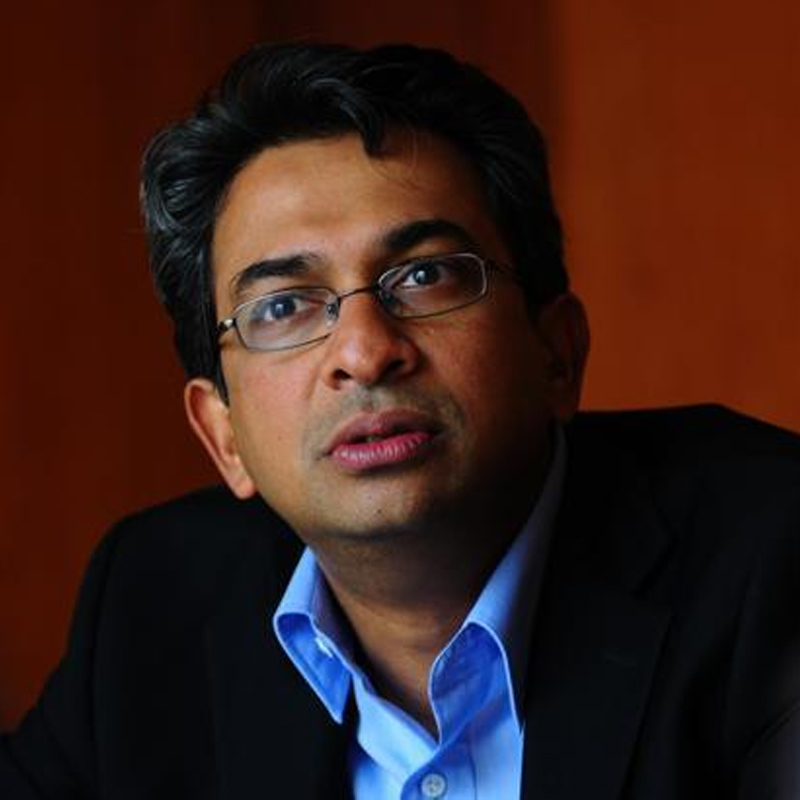
Tag: Rajan Anandan

  • In partnership with AAAI, SGF has hosted the lecture series, featuring top speakers for years.

    In partnership with AAAI, SGF has hosted the lecture series, featuring top speakers for years.

    Mumbai: The Advertising Agencies Association of India (AAAI) and the Subhas Ghosal Foundation (SGF) have announced that award-winning independent digital journalist Faye D’Souza will deliver the AAAI Subhas Ghosal memorial lecture 2025 on 5 March at St. Regis, Mumbai.

    Established in memory of Subhas Ghosal, a towering figure in the advertising industry, the Subhas Ghosal Foundation promotes the professional values he upheld. In collaboration with AAAI, the Foundation has hosted the lecture series for several years, featuring distinguished speakers such as Rajan Anandan, Uday Shankar, Ronnie Screwvala, Aroon Purie, and Sudhir Sitapati.

    Speaking on behalf of SGF, Sam Balsara stated, “We live in an era where news and views shape our daily lives. Faye D’Souza, with her fearless journalism, will discuss the challenges and opportunities for independent journalists and the implications for democracy and public discourse. It promises to be an insightful session.”

    This year’s event also welcomes a new sponsor, Amazon MX Player.

  • Moneycontrol and CNBC-TV18’s AI alliance comes to the National Capital Region on 17 May

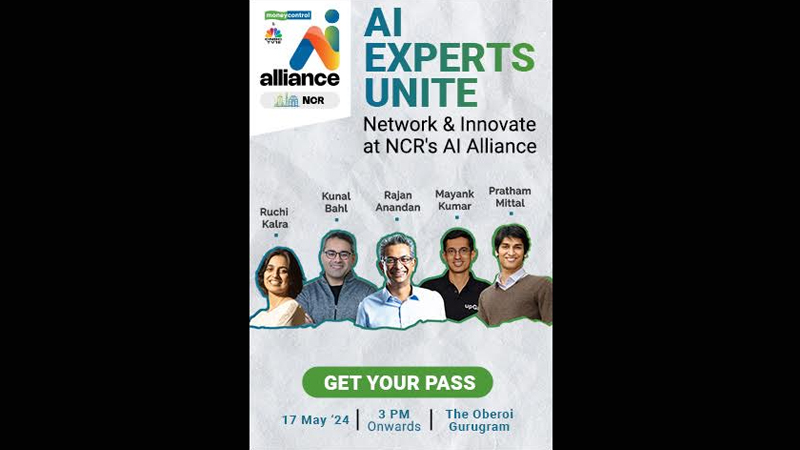
    Moneycontrol and CNBC-TV18’s AI alliance comes to the National Capital Region on 17 May

    Mumbai: Following the resounding success of its Bengaluru and Pune edition, Moneycontrol and CNBC-TV18’s AI Alliance is set to host its next chapter, themed ‘AI: Shaping the Future of NCR’ on 17 May 2024, at The Oberoi, Gurgaon. The summit promises to highlight the transformative potential of AI across various industries and its pivotal role in shaping the future of the National Capital Region (NCR).

    Known for its diverse array of IT/BPM firms, multinational corporations, and a thriving startup ecosystem, NCR has been a key contributor to India’s prominence in the technology sector. With its inherent advantages, tech talent and potential in AI innovation, NCR was a natural choice for the AI alliance.

    The AI Alliance in NCR will serve as a platform for industry leaders, policymakers, and innovators, fostering collaboration and charting a path for NCR’s AI-driven future.

    The event will be graced by distinguished speakers such as S Krishnan (Secretary, Ministry of Electronics and Information Technology), Abhishek Singh (Additional Secretary, Ministry of Electronics and Information Technology), Rajan Anandan (Managing Director, Peak XV Partners) Kunal Bahl (Co-Founder, Snapdeal and Titan Capital), Rafee Tarafdar (CTO, Infosys), Prateek Maheshwari (co-founder PhysicsWallah) Varun Alagh (co-founder and CEO, Honasa Consumer) Mayank Kumar (Co-founder & MD, upGrad), Pratham Mittal (Founder, Masters’ Union) and Ruchi Kalra (Co-Founder, OfBusiness and Oxyzo).

    The event will also have top executives from Nandan Nilekani’s people+ai to take the audience through why India can emerge as the AI use case capital of the world.

    Attendees can expect to gain valuable insights as the discussions touch upon themes ranging from India’s AI mission, AI regulation and policy, impact of AI on the IT sector, building population scale AI, its implications on education, to the essentials of building a thriving AI startup ecosystem in the region. The audience will also get a chance to interact with founders, policymakers, and thought leaders, and explore networking opportunities and potential collaborations.

    Moneycontrol deputy executive editor Chandra R Srikanth said, “With the NCR city chapter of AI Alliance, we are deepening our commitment towards fostering and building an AI community in India and shining a light on its impact across sectors. Just as our Pune edition highlighted the city’s vibrant auto, Saas and deep tech ecosystem, this event will delve into NCR’s tech DNA and the opportunities it can leverage in the AI era. It will serve as a platform to boost collaboration and innovation.”

  • Star India’s Sanjay Gupta: The King maker who is now King

    Star India’s Sanjay Gupta: The King maker who is now King

    MUMBAI: For years, the spotlight has been on former journalist-turned-media executive Uday Shankar at Star India (now Disney Star India). Reams of copy have been written about how Uday has supercharged the formerly Rupert Murdoch-now-Disney owned media organisation with his dash of entrepreneurship. However, much less has been written about his maanging director Sanjay Gupta who has been relatively in the shadows.

    Yes, he has addressed public gatherings such as Ficci Frames, and has represented Star India in forums, but on most occasions, Uday’s larger than life personality has overshadowed Sanjay’s.

    Enough conversations had happened between keen Star India observers on whether something would give in the top management of the company now that Disney was the owner and processes very different from what executives had been used to were being put in place. So when news broke that Sanjay had put in his papers and was joining Google India as country manager and VP, sales and operations – stepping in the big shoes of Rajan Anandan – for most it was surprising and not a rude shock.

    Ten years at the top in an organisation is a long time, and Sanjay rightfully earned his stripes. A former Hindustan Lever and Bharti Airtel professional he brought in a sharp rigour as far as  brand and consumer focus is concerned into a media company. He helped in the transformation of Star India from being just a broadcaster to one which thought consumer – in almost every situation. Similar to what Pradeep Guha did at the The Times of India in the eighties and nineties. 

    Sanjay also showed he has the ability to take an idea, make it a reality and scale it up into a money making machine. He proved the perfect foil to Uday who thought big, bigger than any one in the India media firmament had hitherto done. Uday could do so because Rupert and James had the utmost confidence in him and backed him at every stage.

    No one knows this about Sanjay more than Uday. In an email to the Star India team on his deputy’s announcement to leave the organisation, Uday has labeled him “his friend and partner” saying he helped him build Star India for over a decade.

    He further confesses in the email:  “I have never had to share the news of a departure that would have so much impact on our lives. Sanjay has been the person who has taken charge of my craziest ideas and audacious ambitions of this company and has made them real and successful…every time. He leaves a void in my life that would be impossible to fill.…”

    Theories are manifold why Sanjay chose to part ways. Among them: there is not enough room at the top for two fabulous executives in the new Disney-Star India structure. Yes Uday has a larger remit of all of Asia. And Sanjay was in charge of the India operations. However, India is too close to Uday’s heart, hence it was difficult for him to let Sanjay run the ship independently.

    Both Uday and Sanjay will rubbish this as sheer balderdash. Which it probably is.

    More likely is the conjecture that Sanjay got an opportunity that he could not let go. Leading the Indian operations of one of the world’s largest media and technology companies is something that is extremely appealing to a professional. And that too at Google India – which is part of Alphabet. Google India is a leader in the digital space accounting more than a billion dollars in revenue in the country and its operations encompass almost every part of Indians’ lives. The company has been helping – and has further  plans to help –  in the digitisation of India in every way possible which immediately expands the kind of exciting opportunities and challenges that Sanjay will have to deal with. And being a consumer focused executive who honed his skills at Hindustan Lever, the Google assignment got him smacking his chops.

    If one goes by the praise that Uday has heaped upon Sanjay, then he appears to be perfect for the job. Says he in the email: “…there is no one quite gifted as Sanjay in the entire Indian M&E sector. Based on my experience, I can say that there are few like him in the Indian corporate sector as a whole.”

    For Star India, however, Uday says it is time to step up because  “the great company that Sanjay built must continue to scale greater heights."

    One will have to wait and watch whether Uday will continue to pilot  Star India along with his Asian responsibilities or whether he will bring in another executive to replace Sanjay from outside or promote from within. Whatever direction it takes, Sanjay’s act will be a challenging one to follow.

  • Rajan Anandan resigns as Google Southeast Asia and India VP

    Rajan Anandan resigns as Google Southeast Asia and India VP

    MUMBAI: Google Southeast Asia and India VP Rajan Anandan has resigned from the company. Currently, in notice period, Anandan will be working with the company till the end of April.

    Country director-sales Vikas Agnihotri will take on the responsibility in the interim for Google India, till Google India finds a new MD.

    Hailing from Sri Lanka, Anandan leaves Google after spending a little over eight years at the company. He was previously MD of Microsoft India till August 2010. Prior to that, he was vice president and country general manager at Dell India. Anandan is also an active angel investor and a member of the Indian Angel Network.

    Google Asia Pacific president Scott Beaumont said in a statement, “We are grateful to Rajan for his huge contribution to Google over the past eight years. His entrepreneurial zeal and leadership have helped grow the overall internet ecosystem in India and Southeast Asia, and we wish him all the best in his new adventures.”

  • India’s internet market is no longer male, metro, millennial: Rajan Anandan

    India’s internet market is no longer male, metro, millennial: Rajan Anandan

    MUMBAI: Lightning speed – that’s how India’s internet adoption can be described. With an abundance of growth opportunities, India’s rural areas are leading the way for every company wanting to make a mark in the digital space.
    When the online space is turning into more class agnostic nature, the gender divide is also abolishing. Google (http://www.indiantelevision.com/mam/marketing/brands/how-google-views-indias-internet-landscape-180531) vice president India and South Asia Rajan Anandan was speaking about new age internet users, notable trends and changes at the Subhash Ghosal Memorial Lecture recently. The veteran said that Indian internet users are no longer restricted to the metro, male, millennial phenomenon.
    Rajan highlights a gender disparity in internet usage that was prevalent in India three years ago, which wasn’t the case even in places like Africa or the Middle East. Just one in ten internet users was female. Several factors like lack of awareness and access worked in favour of the divide. Today, 37 per cent of India’s internet users are women which is expected to rise to 45 per cent by 2020.
    “If you go back even 8-10 months, you characterise India’s internet as male, metro and millennial. So millennial males in metro India was really what the internet was about. That has changed pretty dramatically. We see more women coming online. In fact, in terms of new internet users, there are many women than men actually and a lot of them are from rural India, small towns,” he commented.
    Speaking about megatrends in the Indian internet market, he said that voice, video, vernacular are grabbing high attention. Over the last 12-18 months, voice has shown the most surprising growth. There has been a 270 per cent growth in voice searches. “So, they (new users) are more comfortable speaking to internet than typing, tapping. India is going to be the world’s first voice driven internet market,” he said.
    Commenting on the vernacular(http://www.indiantelevision.com/iworld/social-media/google-assistant-becomes-bilingual-180901)growth, he said that almost 100 per cent of new Indian internet users access internet in local languages, not in English. The man with the statistics said over 200 million users access internet in regional languages. Moreover, there has been a 400 per cent growth in Hindi voice searches.

    Indian market went from a messaging first internet market to video first internet market over the time thanks to affordable data prices. “The journey of new age internet users has been pretty straightforward. They started with messaging, generally WhatsApp, then started using social networks, watched a little bit of video because data was expensive. That has actually changed. Almost every new internet user today actually starts his internet journey with video because they all understand video,” Anandan said. He also said 75 per cent of all traffic in mobile data in Indian internet actually comes from video, among which 95 per cent of total video consumption is happening in local languages.
    Indians are consuming higher amount of data, 8 GB per month, compared to developed markets like South Korea, the US and the UK. India is consuming more mobile data than the US and China combined. Even the smartphone quality has improved in India as 70 per cent of phones used here have a 2 GB RAM or more.
    The Google head said that the company is concerned with solving the problems of the common man. He said that the internet can even solve problems related to agriculture, financial institutions and health and education systems.

  • “To make in India, but to benchmark it in the world:” Fareed Zakaria

    “To make in India, but to benchmark it in the world:” Fareed Zakaria

    MUMBAI: With PM Narendra Modi inaugurating the Make in India Week 2016 on 13 February, the second day of the week started with the CNN Asia Business Forum 2016. With seven sessions lined back to back, the forum enthralled delegates with a series of dynamic dialogues. The interactive discussion briefly explored new ideas, growing technology, secrets of leadership and the challenges Asia faces plus the tactics.

    Gracing the forum with their presence were eminent personalities like Finance Minister of India Arun Jaitley, Cisco executive chairman John Chambers, GE president and CEO South Asia Banmali Agrawala, Mahindra Group chairman Anand Mahindra, Aditya Birla Group chairman Kumar Managalam Birla, Emerson Electric Co. president Edward Monser, Google India and South East Asia MD Rajan Anandan, Snapdeal co-founder and CEO Kunal Bhal, Vinnova director general Charlotte Brogren, DJI director of strategic partnerships Michael Perry, AirAsia group CEO Tony Fernandes, Kerry Logistic Network chairman George Yeo and US Ambassador to India Richard Verma.

    The sessions were moderated by CNN’s business anchors Fareed Zakaria, Richard Quest and CNN Asia Pacific editor Andrew Stevens.

    With a mission to make the viewers understand about the world around us, Zakaria addressed the ‘State of the World’ by providing a snapshot of the global geopolitics.

    “The world is in a mess almost everywhere you look but you certainly have to start with the Middle East to understand how the people are anxious and uncertain about things,” Zakaria said.

    With countries like Lybia or Syria facing crisis in the current scenario against to what it was 40 years back, Zakaria strongly believes that the states system, which was built back during the World War I is essentially collapsing. “The states at that time were ruled by highly repressive dictators who knew law and order very well. But what has happened 10 years back is that these dictatorships have one by one have proved to be more and more fragile,” he says.

    The one characteristic that remains common and extremely important is that in these nations, the dictator left and what was noticed later on is the fact that there was no state or administrative institution to maintain political order. Going further, he explains that underneath the state it was noticed that there was no civic society or organisation to maintain social order and underneath that what you discover is that there is no nation.

    Zakaria points out, “People have retreated to identities that make them unavoidably hostile to one another. When order collapses you look for something that gives you security and stability and that security does not come in the Middle East from your national identity. These nations were created recently. It’s coming from much older identities like Siaa, Sunni, Arabians, etc, who are 1000 – 2000 year old identities. They have created an inbuilt sectoring of religious conflicts that persist and is going to take some time to be sorted out.”

    US engine has become the largest engine for producing liquid hydrocarbon in the world. The unbalanced supply and demand are the two engines that rightly explain the crisis. Zakaria explains, “The one engine in the US, which saw a growth from $1 million – $10 million in 10 years and the other engine being the declining demand in China.”

    Zakaria sheds light on how Europe faced crisis and how in the past 25 years the European Union has solved every economical challenge. “Every time the people thought the European Union is going to collapse, it endured, deepened and strengthened itself. Those were economic challenges but now they are facing political challenges about national identity and that proves to be harder to solve,” adds the CNN anchor.

    “If you look at the western hemisphere, the US is still probably the most powerful economy today. It’s growing fast at a pace twice as Europe and four times faster than Japan and is growing past many emerging markets like Brazil or South Africa. What is happening in Asia is an export dominated growth and a move that is shifting more to domestic consumption. For these countries, the decline of all has been an avoid depressing,” he says.

    The challenge that India has to face is how it deals with the issues and the opportunities from the global perspective. One of the discussions shed light on how India is doing compared to China, Turkey, Vietnam or Indonesia and that comparison is the key issue for India to recognise that there is a global competition for investment, for tropical, for talent and how does India solves this key issue.

    “When Manmohan Singh announced reforms for India in early 1990s, he compared it with South Korea. At that time, the GDP for the two countries were same but later South Korea became bigger by contributing 13 times more to the GDP than India. But India has potential to grow and has done well from then to now. Today South Korea’s per capita GDP is 20 times that of India’s. So the world moves on and India is doing extremely well but it needs to look around and make sure it does as well as what the rest nations are doing,” concluded Zakaria.

  • “To make in India, but to benchmark it in the world:” Fareed Zakaria

    “To make in India, but to benchmark it in the world:” Fareed Zakaria

    MUMBAI: With PM Narendra Modi inaugurating the Make in India Week 2016 on 13 February, the second day of the week started with the CNN Asia Business Forum 2016. With seven sessions lined back to back, the forum enthralled delegates with a series of dynamic dialogues. The interactive discussion briefly explored new ideas, growing technology, secrets of leadership and the challenges Asia faces plus the tactics.

    Gracing the forum with their presence were eminent personalities like Finance Minister of India Arun Jaitley, Cisco executive chairman John Chambers, GE president and CEO South Asia Banmali Agrawala, Mahindra Group chairman Anand Mahindra, Aditya Birla Group chairman Kumar Managalam Birla, Emerson Electric Co. president Edward Monser, Google India and South East Asia MD Rajan Anandan, Snapdeal co-founder and CEO Kunal Bhal, Vinnova director general Charlotte Brogren, DJI director of strategic partnerships Michael Perry, AirAsia group CEO Tony Fernandes, Kerry Logistic Network chairman George Yeo and US Ambassador to India Richard Verma.

    The sessions were moderated by CNN’s business anchors Fareed Zakaria, Richard Quest and CNN Asia Pacific editor Andrew Stevens.

    With a mission to make the viewers understand about the world around us, Zakaria addressed the ‘State of the World’ by providing a snapshot of the global geopolitics.

    “The world is in a mess almost everywhere you look but you certainly have to start with the Middle East to understand how the people are anxious and uncertain about things,” Zakaria said.

    With countries like Lybia or Syria facing crisis in the current scenario against to what it was 40 years back, Zakaria strongly believes that the states system, which was built back during the World War I is essentially collapsing. “The states at that time were ruled by highly repressive dictators who knew law and order very well. But what has happened 10 years back is that these dictatorships have one by one have proved to be more and more fragile,” he says.

    The one characteristic that remains common and extremely important is that in these nations, the dictator left and what was noticed later on is the fact that there was no state or administrative institution to maintain political order. Going further, he explains that underneath the state it was noticed that there was no civic society or organisation to maintain social order and underneath that what you discover is that there is no nation.

    Zakaria points out, “People have retreated to identities that make them unavoidably hostile to one another. When order collapses you look for something that gives you security and stability and that security does not come in the Middle East from your national identity. These nations were created recently. It’s coming from much older identities like Siaa, Sunni, Arabians, etc, who are 1000 – 2000 year old identities. They have created an inbuilt sectoring of religious conflicts that persist and is going to take some time to be sorted out.”

    US engine has become the largest engine for producing liquid hydrocarbon in the world. The unbalanced supply and demand are the two engines that rightly explain the crisis. Zakaria explains, “The one engine in the US, which saw a growth from $1 million – $10 million in 10 years and the other engine being the declining demand in China.”

    Zakaria sheds light on how Europe faced crisis and how in the past 25 years the European Union has solved every economical challenge. “Every time the people thought the European Union is going to collapse, it endured, deepened and strengthened itself. Those were economic challenges but now they are facing political challenges about national identity and that proves to be harder to solve,” adds the CNN anchor.

    “If you look at the western hemisphere, the US is still probably the most powerful economy today. It’s growing fast at a pace twice as Europe and four times faster than Japan and is growing past many emerging markets like Brazil or South Africa. What is happening in Asia is an export dominated growth and a move that is shifting more to domestic consumption. For these countries, the decline of all has been an avoid depressing,” he says.

    The challenge that India has to face is how it deals with the issues and the opportunities from the global perspective. One of the discussions shed light on how India is doing compared to China, Turkey, Vietnam or Indonesia and that comparison is the key issue for India to recognise that there is a global competition for investment, for tropical, for talent and how does India solves this key issue.

    “When Manmohan Singh announced reforms for India in early 1990s, he compared it with South Korea. At that time, the GDP for the two countries were same but later South Korea became bigger by contributing 13 times more to the GDP than India. But India has potential to grow and has done well from then to now. Today South Korea’s per capita GDP is 20 times that of India’s. So the world moves on and India is doing extremely well but it needs to look around and make sure it does as well as what the rest nations are doing,” concluded Zakaria.

  • Q3-2016: NDTV’s YoY revenue flat, operating loss lower

    Q3-2016: NDTV’s YoY revenue flat, operating loss lower

    BENGALURU: New Delhi Television Limited (NDTV) reported flat (down one per cent) year-on year (YoY) Total Income from Operations (TIO) for the quarter ended 31 December, 2015 (Q3-2016, current quarter). NDTV reported TIO of Rs 148.41 crore for Q3-2016 as compared to Rs 149.93 crore and 16.3 per cent higher QoQ growth as compared to Rs 127.60 crore.

    Note: 100,00,000 = 100 lakh = 10 million = 1 crore

    All numbers In this report are consolidated unless stated otherwise.

    The company reported a lower operating loss (EBIDTA) of Rs 4.45 crore in Q3-2016 as compared to an operating profit of Rs 13.44 crore (nine per cent margin) in Q3-2015 and an operating loss of Rs 10.91 crore in Q2-2016.

    The company reported a net loss of Rs 12.54 crore as compared to a profit after tax of Rs 1.58 crore (1.1 per cent margin) in Q3-2015 and a higher net loss of Rs 17.19 crore in the immediate trailing quarter.

    Television Media and related operations segment:

    Television Media and related operations (Television segment) also include numbers from the company’s Digital business. Television segment reported 2.2 per cent YoY revenue growth at Rs 147.96 crore as compared to Rs 144.74 crore and 18.1 per cent QoQ revenue growth and that of Rs 125.25 crore in the immediate trailing quarter.

    The segment reported operating loss of Rs 3.44 crore in the current quarter as compared to an operating profit of Rs 13.41 crore in Q3-2015 and a higher loss of Rs 8.41 crore in the immediate trailing quarter.

    Retail/E-Commerce segment:

    NDTV’s Retail/E-commerce segment reported lower revenue of Rs 3.85 crore in the current quarter as compared to Rs 6.06 crore in Q3-2015 and revenue of Rs 3.95 crore in Q2-2016. The segment reported a higher operating loss of Rs 6.50 crore in Q3-2016 as compared to an operating loss of Rs 6.02 crore in Q3-2015 and a higher operating loss of Rs 10.89 crore in Q2-2016.

    Let us look at the other numbers reported by NDTV:

    Total Expenditure (TE) in the current quarter increased 9.6 per cent YoY to Rs 159.89 crore (107.7 per cent of TIO) as compared to Rs 145.94 crore (97.3 per cent of TIO) and increased 7.5 per cent as compared to Rs 148.77 crore (116.6 per cent of TIO) in Q2-2016.

    NDTV’s consolidated Production Expense increased 6.3 per cent YoY to Rs 30.42 crore (20.5 percent of TIO) as compared to Rs 28.63 crore (19.1 per cent of TIO) and increased 7.5 per cent as compared  Rs 27.41 crore in Q2-2016.

    The company’s marketing, distribution and promotional expense (Marketing expense) in the current quarter increased 18.1 per cent YoY to Rs 36.50 crore (24.6 per cent of TIO) and increased 20.5 per cent as compared to Rs 30.28 crore (23.7 per cent of TIO) in the immediate trailing quarter. 

    NDTV’s Employee Benefit Expense increased 9.7 per cent YoY in the current quarter to Rs 50.72 crore (34.2 per cent of TIO) as compared to Rs 46.24 crore (30.8 per cent of TIO) and increased 6.5 per cent as compared to Rs 47.63 crore (37.3 per cent of TIO).

    Operating and administration expenses in Q3-2016 increased 24.8 per cent YoY to Rs 34.60 crore (23.3 per cent of TIO) as compared to Rs 27.73 crore (18.5 per cent of TIO) and grew 10.1 per cent QoQ as compared to Rs 31.42 crore (24.6 per cent of TIO).

    Finance Costs in the current quarter increased 4.8 per cent YoY to Rs 5.49 crore (3.6 per cent of TIO) as compared to Rs 5.05 crore (3.4 per cent of TIO) and increased 1.1 per cent QoQ as compared to Rs 5.23 crore (3.6 per cent of TIO).

    Company speak:

    The company says that two start-ups have been funded:

    BandBaajaa.com – designed to launch NDTV into the online wedding and festival planning market was funded by leading US venture capital firm CerraCap Ventures at a valuation of $20 million.

    SmartCooky.com – NDTV’s foray into creating an online marketplace for health foods & personal care products raised funding from VLCC founder Vandana Luthra and others at a valuation of $12 million.

    Gadgets360.com – NDTV’s Gadget Portal

    NDTV says Gadgets360’s e-commerce business clocked product sales of Rs 21 crore till January 2016 within two months of the launch while maintaining a positive contribution margin. NDTV says that Gadget360 shipped more than 20,000 gadgets during the aforesaid period.

  • Q3-2016: NDTV’s YoY revenue flat, operating loss lower

    Q3-2016: NDTV’s YoY revenue flat, operating loss lower

    BENGALURU: New Delhi Television Limited (NDTV) reported flat (down one per cent) year-on year (YoY) Total Income from Operations (TIO) for the quarter ended 31 December, 2015 (Q3-2016, current quarter). NDTV reported TIO of Rs 148.41 crore for Q3-2016 as compared to Rs 149.93 crore and 16.3 per cent higher QoQ growth as compared to Rs 127.60 crore.

    Note: 100,00,000 = 100 lakh = 10 million = 1 crore

    All numbers In this report are consolidated unless stated otherwise.

    The company reported a lower operating loss (EBIDTA) of Rs 4.45 crore in Q3-2016 as compared to an operating profit of Rs 13.44 crore (nine per cent margin) in Q3-2015 and an operating loss of Rs 10.91 crore in Q2-2016.

    The company reported a net loss of Rs 12.54 crore as compared to a profit after tax of Rs 1.58 crore (1.1 per cent margin) in Q3-2015 and a higher net loss of Rs 17.19 crore in the immediate trailing quarter.

    Television Media and related operations segment:

    Television Media and related operations (Television segment) also include numbers from the company’s Digital business. Television segment reported 2.2 per cent YoY revenue growth at Rs 147.96 crore as compared to Rs 144.74 crore and 18.1 per cent QoQ revenue growth and that of Rs 125.25 crore in the immediate trailing quarter.

    The segment reported operating loss of Rs 3.44 crore in the current quarter as compared to an operating profit of Rs 13.41 crore in Q3-2015 and a higher loss of Rs 8.41 crore in the immediate trailing quarter.

    Retail/E-Commerce segment:

    NDTV’s Retail/E-commerce segment reported lower revenue of Rs 3.85 crore in the current quarter as compared to Rs 6.06 crore in Q3-2015 and revenue of Rs 3.95 crore in Q2-2016. The segment reported a higher operating loss of Rs 6.50 crore in Q3-2016 as compared to an operating loss of Rs 6.02 crore in Q3-2015 and a higher operating loss of Rs 10.89 crore in Q2-2016.

    Let us look at the other numbers reported by NDTV:

    Total Expenditure (TE) in the current quarter increased 9.6 per cent YoY to Rs 159.89 crore (107.7 per cent of TIO) as compared to Rs 145.94 crore (97.3 per cent of TIO) and increased 7.5 per cent as compared to Rs 148.77 crore (116.6 per cent of TIO) in Q2-2016.

    NDTV’s consolidated Production Expense increased 6.3 per cent YoY to Rs 30.42 crore (20.5 percent of TIO) as compared to Rs 28.63 crore (19.1 per cent of TIO) and increased 7.5 per cent as compared  Rs 27.41 crore in Q2-2016.

    The company’s marketing, distribution and promotional expense (Marketing expense) in the current quarter increased 18.1 per cent YoY to Rs 36.50 crore (24.6 per cent of TIO) and increased 20.5 per cent as compared to Rs 30.28 crore (23.7 per cent of TIO) in the immediate trailing quarter. 

    NDTV’s Employee Benefit Expense increased 9.7 per cent YoY in the current quarter to Rs 50.72 crore (34.2 per cent of TIO) as compared to Rs 46.24 crore (30.8 per cent of TIO) and increased 6.5 per cent as compared to Rs 47.63 crore (37.3 per cent of TIO).

    Operating and administration expenses in Q3-2016 increased 24.8 per cent YoY to Rs 34.60 crore (23.3 per cent of TIO) as compared to Rs 27.73 crore (18.5 per cent of TIO) and grew 10.1 per cent QoQ as compared to Rs 31.42 crore (24.6 per cent of TIO).

    Finance Costs in the current quarter increased 4.8 per cent YoY to Rs 5.49 crore (3.6 per cent of TIO) as compared to Rs 5.05 crore (3.4 per cent of TIO) and increased 1.1 per cent QoQ as compared to Rs 5.23 crore (3.6 per cent of TIO).

    Company speak:

    The company says that two start-ups have been funded:

    BandBaajaa.com – designed to launch NDTV into the online wedding and festival planning market was funded by leading US venture capital firm CerraCap Ventures at a valuation of $20 million.

    SmartCooky.com – NDTV’s foray into creating an online marketplace for health foods & personal care products raised funding from VLCC founder Vandana Luthra and others at a valuation of $12 million.

    Gadgets360.com – NDTV’s Gadget Portal

    NDTV says Gadgets360’s e-commerce business clocked product sales of Rs 21 crore till January 2016 within two months of the launch while maintaining a positive contribution margin. NDTV says that Gadget360 shipped more than 20,000 gadgets during the aforesaid period.

  • ASCIonline gets 15% complaints registrations via new mobile app

    ASCIonline gets 15% complaints registrations via new mobile app

    MUMBAI: The ASCIonline mobile app, in just two months of launch, has seen a boost in the number of complaints received. Complaints through the mobile app, now contribute to almost 15 per cent of the total number of complaints received by the Advertising Standards Council of India (ASCI).


    The app has surpassed 1000 downloads within just two months since its launch on 17 June, 2015. 


    ASCIonline mobile app facilitates convenient filing of complaints against misleading advertisements. The app has received a 4.0 /5 star rating by users and some positive feedback.


    ASCI chairman Narendra Ambwani said, “ASCI’s priority for the year was improving its reach to    provide a super-fast and convenient access for consumers to lodge complaints and to increase ASCI’s reach across India trickling down to smaller towns.”   


    While the web-based online complaint registration system has been functional for over three years, the mobile app has broken the “reach” barrier. With the dramatic and ever growing increase in smartphone penetration and its use for various transactions, the mobile app has been a great enabler for end consumers. Analysis of complaints received via mobile app is the real “proof of the pudding.”


    “We have received complaints from more than 15 different states and cities like Darjeeling, Thiruwallur, Almora, Bikaner, Jalandhar, Hingoli etc. Not only that, consumers have complained against advertisements from a wide range of sectors such as education, FMCG, healthcare, telecom, e-commerce, durables, automotive, food and beverages, and across media beyond  print and TV, such as website, radio, SMS, emailers, promotional materials, product packaging and app ads,” informed Ambwani.


    For promoting the mobile app, ASCI coined the “SnapItandAppIt” tagline as the app allows one to take a picture of the objectionable ad and send it through the app to ASCI. Social media is being leveraged to create awareness. Prasar Bharati also took note of this mobile app and actively supported this by tweeting about the app. Even industry stalwarts and twitteratis like Google MD Rajan Anandan, RK Swamy BBDO MD SK Swamy, Intradia head catalyst Sanjeev Kotnala, Provacateur director Paritosh Joshi created a buzz, causing a ripple effect.


    With ASCIonline app, the body has engaged thousands of ASCI ambassadors who are ASCI’s eyes and ears and would put a check on erring advertisers and push for “Responsible Advertising.”