Tag: Raja Harishchandra

  • Lesser-known facts about Indian cinema in new series on EPIC

    NEW DELHI: A total of 24 lesser-known milestones and creatives of Hindi as well as regional cinema will be the highlight of a new series on Indian cinema on the Epic TV channel.

    Silsila Cinema Ka, an eight-part mini-series, showcases the illustrious history of Indian cinema by laying emphasis on our diverse film industries and many milestones that do not find their space in the sun.

    It lists path breaking stories such as Baburao Patel’s Film India magazine, the heroes of silent cinema besides Dadasaheb Phalke, the early poster painters of Indian cinema, the transition of monochromatic movies to technicolour films and much more.

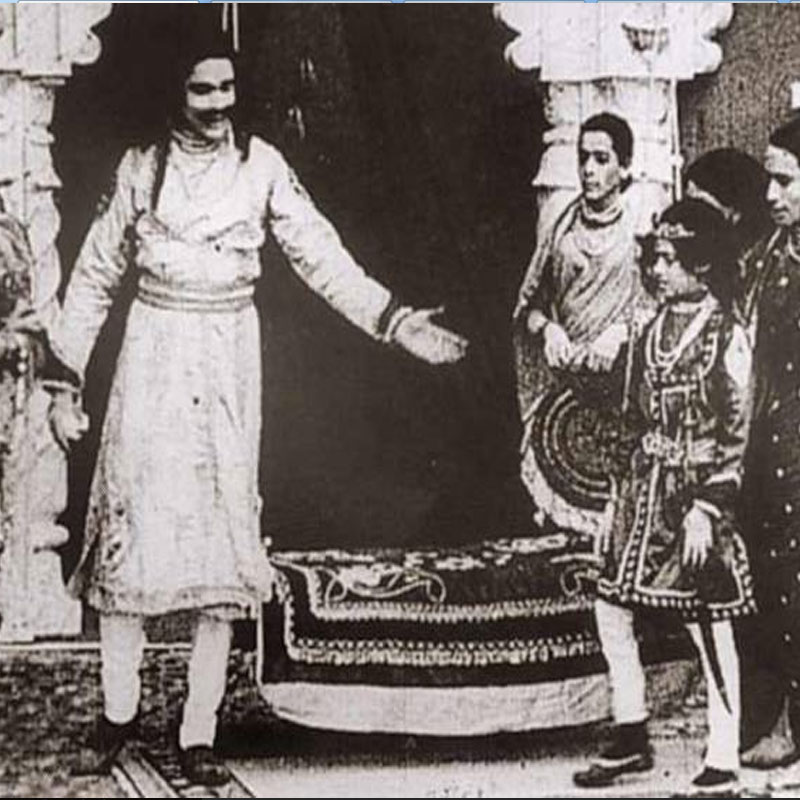
    In its inaugural week on 23 June, the first series will chronicle The Glorious Silent Era, India’s first feature film Raja Harishchandra and Early Talkie Gems that introduced music, dialogues and sound effects to films.

    This 30-minute series will be telecast every Friday at 9:30 pm with repeat telecast at 11:30 pm.

  • NFAI founder director P K Nair is no more

    NFAI founder director P K Nair is no more

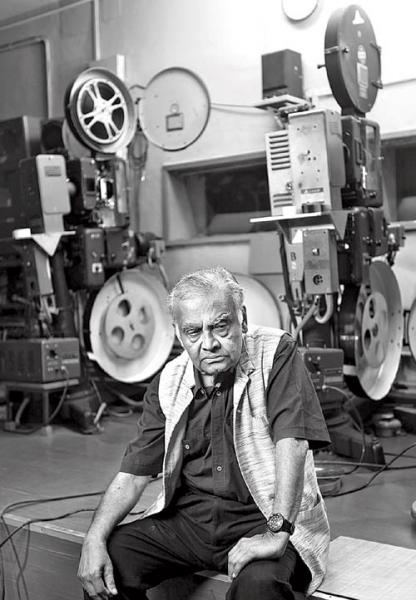
    New Delhi, 4 March: Veteran archivist P K Nair, founder director of the National Film Archive of India (NFAI), Pune, died today. He was 86. After prolonged illness he breathed his last this morning at Sahyadri Nursing Home in Pune. He is survived by a daughter who lives in Thiruvananthapuram and a son who lives in Canada.


    Paramesh Krishnan Nair, who had dedicated his life to preservation of films and building the collection of films at the NFAI, was instrumental in archiving several landmark Indian films like Dadasaheb Phalke’s Raja Harishchandra and Kaliya Mardan, Bombay Talkies films such as Jeevan NaiyaBandhanKanganAchhut Kanya and Kismet, S.S. Vasan’s Chandralekha and Uday Shankar’s Kalpana.


    Nair joined the Film and Television Institute of India (FTII), Pune, as a research assistant in 1961 and went on to play a key role in the setting up of the NFAI in 1964. He was appointed assistant curator in 1965, and continued with the NFAI till 1991 and later became Director. He had helped acquire over 12,000 films for the archive. Of these, 8,000 were Indian and the rest foreign films.


    His life and work was immortalised in the documentary Celluloid Man, made by Shivendra Singh Dungarpur, which went on to win a national award.


    Born on 6 April 1933 in Thuravanthapuram in Kerala, Nair developed an early interest in cinema. His initiation into films began with Tamil mythological films in the early 1940s such as K. Subramaniam’s Ananthasayanam and Bhakta Prahlada. His fascination for cinema began here, though his family did not support his interest in films.


    He graduated in science from the University of Kerala in 1953. Soon after, he went to Bombay (now Mumbai) to pursue a career in filmmaking.


    Though he got some practical training in branches of film making from some of the leading film makers of Bombay, particularly Mehboob Khan, Bimal Roy and Hrishikesh Mukherjee, he realised that he did not have the ideal qualities to become a filmmaker himself. His interest lay more in the field of academics. As advised by Jean Bhownagary of Films Division, he appeared for an interview at the Film and Television Institute of India (FTII), was selected and joined the institute in March 1961 in the position of research assistant.


    While at FTII, he assisted Marie Seton and Professor Satish Bahadur in initiating and conducting the film appreciation classes of FTII. He also did the spade work in establishing the film archive set up as a separate wing of FTII. He corresponded with the curators and directors of established film archives in the UK, USA, France, Italy, Poland, Soviet Union and other countries. All of them advised an independent autonomous entity for NFAI and not as a wing of FTII.


    The National Film Archive of India was born in 1964 and Nair was appointed to the post of assistant curator in November 1965. He has, since then, established the archive from scratch by collecting films from all over India and the world.


    He was promoted as Director of the archive in 1982. He spearheaded the NFAI, Pune for nearly three decades and built up the archive which now enjoys a vibrant international reckoning.


    Landmark acquisitions include the Dadasaheb Phalke films and films of New Theatres, Bombay Talkies, Minerva Movietone, Wadia Movietone, Gemini Studios and AVM Productions.


    He was instrumental in introducing the works of world masters of cinema like Ingmar Bergman, Akira Kurosawa, Andrzej Wajda, Miklós Jancsó, Krzysztof Zanussi,Vittorio De Sica, Federico Fellini, apart from the Indian stalwarts like Satyajit Ray, Ritwik Ghatak, Mrinal Sen, V. Shantaram, Raj Kapoor and Guru Dutt to FTII students, film society members, and other film study groups in the country.


    He was also instrumental in setting up the International Film Festival of Kerala.

    After his retirement, he lived in Pune not very far away from the NFAI and the FTII. 


    Awards and recognition.


    Nair was awarded the Satyajit Ray Memorial Award in 2008. Celluloid Man, the documentary on Nair was made by Shivendra Singh Dungarpur was premiered at the Il Cinema Ritrovato in Bologna, Italy in June 2012. 


    Later it won two National Awards at the 60th National Film Awards, including Best Biographical Film and Best Editing. The film was released in India on 3 May 2013 to coincide with the centenary of Indian cinema.


    The international federation of film critics, FIPRESCI, condoled the passing away of Nair. FIPRESCI India President H N Narahari Rao said in a statement: “It is with deep regret that we are recording here the sad demise of one of our most respected members of FIPRESCI-India P K Nair, former Director of National Film Archive of India and more popularly known as ‘The Celluloid Man’. He passed away today at Pune, the city where he built the Film Archive. He used to attend all the annual general meetings of FIPRESCI India at Goa IFFI without fail and guide us in our activities. We missed him last year but we received his message promptly that he was admitted to the hospital.  As a crusader who was deeply concerned with promoting good cinema in the country he made immense contribution to the growth of the Film Society movement in India during last five decades.”

  • NFAI founder director P K Nair is no more

    NFAI founder director P K Nair is no more

    New Delhi, 4 March: Veteran archivist P K Nair, founder director of the National Film Archive of India (NFAI), Pune, died today. He was 86. After prolonged illness he breathed his last this morning at Sahyadri Nursing Home in Pune. He is survived by a daughter who lives in Thiruvananthapuram and a son who lives in Canada.


    Paramesh Krishnan Nair, who had dedicated his life to preservation of films and building the collection of films at the NFAI, was instrumental in archiving several landmark Indian films like Dadasaheb Phalke’s Raja Harishchandra and Kaliya Mardan, Bombay Talkies films such as Jeevan NaiyaBandhanKanganAchhut Kanya and Kismet, S.S. Vasan’s Chandralekha and Uday Shankar’s Kalpana.


    Nair joined the Film and Television Institute of India (FTII), Pune, as a research assistant in 1961 and went on to play a key role in the setting up of the NFAI in 1964. He was appointed assistant curator in 1965, and continued with the NFAI till 1991 and later became Director. He had helped acquire over 12,000 films for the archive. Of these, 8,000 were Indian and the rest foreign films.


    His life and work was immortalised in the documentary Celluloid Man, made by Shivendra Singh Dungarpur, which went on to win a national award.


    Born on 6 April 1933 in Thuravanthapuram in Kerala, Nair developed an early interest in cinema. His initiation into films began with Tamil mythological films in the early 1940s such as K. Subramaniam’s Ananthasayanam and Bhakta Prahlada. His fascination for cinema began here, though his family did not support his interest in films.


    He graduated in science from the University of Kerala in 1953. Soon after, he went to Bombay (now Mumbai) to pursue a career in filmmaking.


    Though he got some practical training in branches of film making from some of the leading film makers of Bombay, particularly Mehboob Khan, Bimal Roy and Hrishikesh Mukherjee, he realised that he did not have the ideal qualities to become a filmmaker himself. His interest lay more in the field of academics. As advised by Jean Bhownagary of Films Division, he appeared for an interview at the Film and Television Institute of India (FTII), was selected and joined the institute in March 1961 in the position of research assistant.


    While at FTII, he assisted Marie Seton and Professor Satish Bahadur in initiating and conducting the film appreciation classes of FTII. He also did the spade work in establishing the film archive set up as a separate wing of FTII. He corresponded with the curators and directors of established film archives in the UK, USA, France, Italy, Poland, Soviet Union and other countries. All of them advised an independent autonomous entity for NFAI and not as a wing of FTII.


    The National Film Archive of India was born in 1964 and Nair was appointed to the post of assistant curator in November 1965. He has, since then, established the archive from scratch by collecting films from all over India and the world.


    He was promoted as Director of the archive in 1982. He spearheaded the NFAI, Pune for nearly three decades and built up the archive which now enjoys a vibrant international reckoning.


    Landmark acquisitions include the Dadasaheb Phalke films and films of New Theatres, Bombay Talkies, Minerva Movietone, Wadia Movietone, Gemini Studios and AVM Productions.


    He was instrumental in introducing the works of world masters of cinema like Ingmar Bergman, Akira Kurosawa, Andrzej Wajda, Miklós Jancsó, Krzysztof Zanussi,Vittorio De Sica, Federico Fellini, apart from the Indian stalwarts like Satyajit Ray, Ritwik Ghatak, Mrinal Sen, V. Shantaram, Raj Kapoor and Guru Dutt to FTII students, film society members, and other film study groups in the country.


    He was also instrumental in setting up the International Film Festival of Kerala.

    After his retirement, he lived in Pune not very far away from the NFAI and the FTII. 


    Awards and recognition.


    Nair was awarded the Satyajit Ray Memorial Award in 2008. Celluloid Man, the documentary on Nair was made by Shivendra Singh Dungarpur was premiered at the Il Cinema Ritrovato in Bologna, Italy in June 2012. 


    Later it won two National Awards at the 60th National Film Awards, including Best Biographical Film and Best Editing. The film was released in India on 3 May 2013 to coincide with the centenary of Indian cinema.


    The international federation of film critics, FIPRESCI, condoled the passing away of Nair. FIPRESCI India President H N Narahari Rao said in a statement: “It is with deep regret that we are recording here the sad demise of one of our most respected members of FIPRESCI-India P K Nair, former Director of National Film Archive of India and more popularly known as ‘The Celluloid Man’. He passed away today at Pune, the city where he built the Film Archive. He used to attend all the annual general meetings of FIPRESCI India at Goa IFFI without fail and guide us in our activities. We missed him last year but we received his message promptly that he was admitted to the hospital.  As a crusader who was deeply concerned with promoting good cinema in the country he made immense contribution to the growth of the Film Society movement in India during last five decades.”

  • AIR, DD to give live coverage National Film Awards ceremony

    AIR, DD to give live coverage National Film Awards ceremony

    NEW DELHI: The 61st National Film Awards for 2013 will be presented by President Pranab Mukherjee on 3 May, the date on which India’s first feature film ‘Raja Harishchandra’ by D G Phalke was released commercially in 1913.


    The Dadasaheb Phalke Award to the eminent poet, lyricist, and filmmaker Gulzar will also be presented the same day.


    Both Doordarshan and All India Radio will have live broadcast of the awards ceremony from the stately Vigyan Bhavan from 5.45 pm on that day on their national channels.


    Prior to that, All India Radio will carry an interview of Directorate of Film Festivals director Shankar Mohan at 8.15 pm on 1 May on its national hook-up.


    It will have a featurised programme as the curtain-raiser to the awards on 2 May at 8.15 pm with an interview with Information and Broadcasting Ministry secretary Bimal Julka.


    Later on 3 May at 9.30 pm, AIR will broadcast a report on the award ceremony on its national hook-up.

  • Films form important component of Festival of India in Peru

    Films form important component of Festival of India in Peru

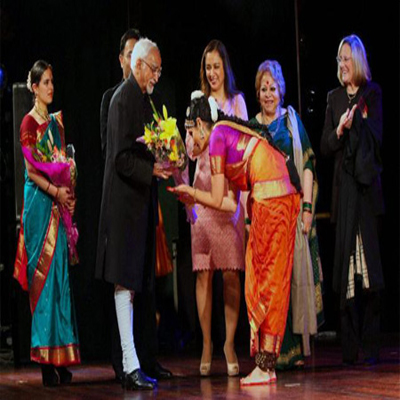
    NEW DELHI: Indian films are making a global presence it seems. At the Festival of India in Peru that was recently inaugurated by vice president Hamid Ansari, few new Indian films and old classics including Raja Harishchandra (silent), Taare Zameen Par (Hindi), Ghare Bhaire (Bengali), Ardh Satya (Hindi), Bobby (Hindi), A Wednesday (Hindi) and Kabhi Haan Kabhi Naa (Hindi) are being screened. The Indian Film Festival is being coordinated by the Information and Broadcasting Ministry.


    An India-Peru Literature Festival and an Indian Classical Dance Festival is also being held as part of the fest.


    Ansari’s visit is the highest ranking bilateral visit since year 1998 from India to Peru. The Festival would manifest many elements of long, rich and diverse Indian cultural heritage and would be the largest Indian cultural festival ever held in Latin America and the Caribbean. This reflects the special place that Peru enjoys among Indians.


    The inaugural function was attended by the Peruvian First Vice President Marisol Espinoza and a number of senior dignitaries from the Indian and Peruvian side.


    Indian Culture Secretary Ravindra Singh who is in Peru to mark the occasion said the Festival is expected to bring the Indian and Peruvian people closer to each other and will enhance people to people contact.


    Highly reputed Indian writers like Arun Kamal, H S Shivaprakash, K Satchidanandan, Purshottam Agarwal, Shyama Prasad Ganguly, and Ms Karabi Deka Hazarika participated in the symposium on India-Latin America: Literary Exchanges and Influences and Contemporary Literary Trends and their Challenges in a Multilingual Society in addition to a session on poetry reading.


    Several noted Peruvian Writers including Jose Leon Herrera, Pablo Carreno Cabrejos, Jose Ignacio Lopez Gaston, Marcel Velaquez Castro, and leading poets Carlos German Belli, Mario Montalbetti, and Marcos Martos would be participating in the Literature Festival. The Literature Festival is being coordinated by the Sahitya Academy.

    The Indian Dance Festival in Peru is titled ‘Nrityarupa’, the mosaic of Indian dance which encapsulates the experience of Indian dance as it has evolved in various parts of the India. It offers a glimpse of the great mosaic of cultures that constitutes the Indian Nation, and demonstrates in a creative, kinetic form their dynamics in relation to each other. Six dance forms representing the diversity of India’s culture have been chosen for this presentation to audiences in Latin America: Bharatanatyam of Tamil Nadu, Kathank which is pre-eminently the dance of northern India; Odissi from Odisha in eastern India; Manipuri from north-eastern State of India; Kathakali of Kerala at Southern tip of the Indian peninsula; and Chhau which covers a wide swathe of territory in eastern States of the Union.


    One seamless presentation of these dances has been visualized by leading to a jubiliant finish. The Indian Dance Festival is being coordinated by the Sangeet Natak Academy.


    The Festival of India in Peru is being coordinated by the Culture Ministry in association with the Sahitya Academy, the Sangeet Natak Academy and the I&B Ministry.


    Meanwhile, India and Peru have signed a Letter of Intent for enhancing cooperation in the fields of dissemination and promotion of cultural heritage of each other´s countries.


    The two sides underscored the importance of further deepening bilateral cultural relations through cultural exchanges and cooperation in diverse art forms such as painting, dance, theatre, literature, craft, etc. as well as holding of cultural festivals in each other´s countries from time to time. 

  • Indian Film Festival of Melbourne next month to feature gems of Indian cinema

    Indian Film Festival of Melbourne next month to feature gems of Indian cinema

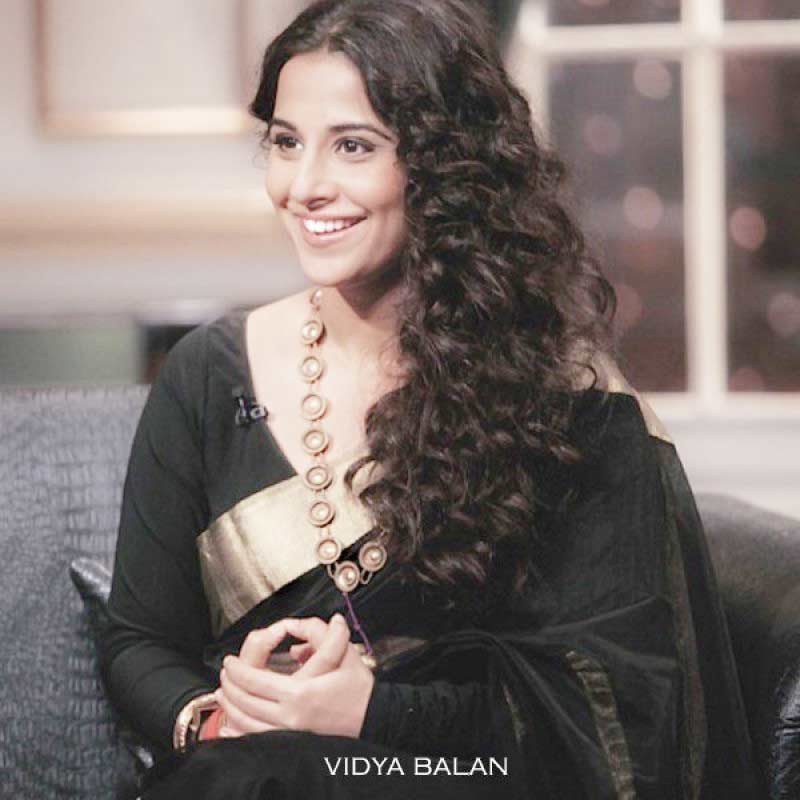
    MUMBAI: The 2013 Festival programme of the Indian Film Festival of Melbourne has been launched here by Australian Minister for Innovation, Services and Small Business Louise Asher and actor Vidya Balan, ambassador of the Festival.

    “The Indian Film Festival of Melbourne is a wonderful demonstration of our growing cultural links and shows the creativity and innovations that Melbourne and Mumbai are both famous for.” Ms Asher said.

    Speaking at the event, Balan said she was delighted to be the ambassador for such a vibrant and exciting festival showcasing the best that Indian Cinema has to offer. “Kolkata is my first home and Melbourne is like a second home to me and I look forward to being back, and watch some interesting cinema. I certainly do not want to miss Raja Harishchandra (1913) on the big screen.”

    On a lighter note, she pointed out that she would be more than willing to accept if she were to be made lifetime Ambassador for the festival in Melbourne. “This would provide me even more opportunities to visit Melbourne,” the actress quipped.

    To be held in April 2013, the Indian Film Festival of Melbourne will showcase the diversity of Indian film culture to Victorian audiences through some choice films.

    The industry event also remembered legendary filmmaker Yash Chopra, with the Minister announcing that the Festival will pay a rich tribute to the veteran filmmaker next year.

    “Mr Chopra had a deep relationship with Victoria as he was a Patron of the Festival and he shot two of his blockbusters — Salaam Namaste and Chak De India – in Victoria. The Festival is honoured to be showcasing Mr Chopra’s masterpieces,” Ms Asher added.

  • Raja Harishchandra now available on DVD

    Raja Harishchandra now available on DVD

    MUMBAI: Film buffs fond of old classics can now watch the country‘s first silent film Raja Harishchandra on DVD.

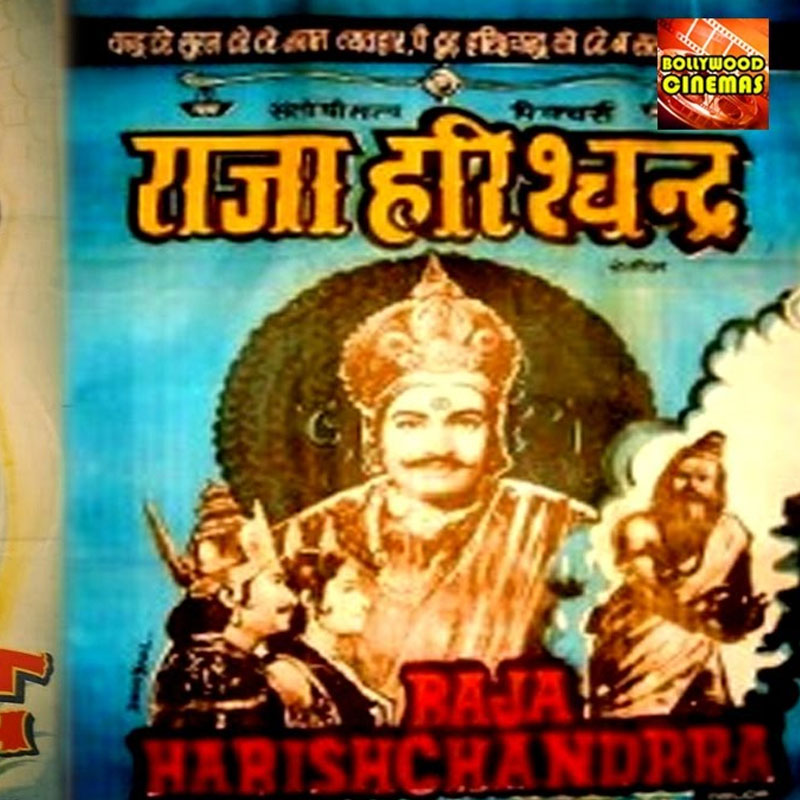
    Produced by Dadasaheb Phalke, the film was first exhibited on 3 May 1913, is now being distributed in the DVD format by the city-based National Film Archives of India (NFAI), according to its director Prashant Pathrabe.

    “The decision to make DVDs of the silent movies was taken in view of a long felt need to reach the general masses, who are interested in having an access to the historically significant work of pioneers of Indian cinema,” Pathrabe said in a statement.

    Along with the Phalke film, five other silent films, that marked the beginning of the Indian film industry, would also be now available in DVD format.

    Elaborating on the significance of the first film, produced by the father of Indian cinema, Pathrabe said, “Raja Harishchandra was made by Phalke overcoming all odds and financial difficulties and also social stigma attached to films a century ago. He was almost ex-communicated (in Maharashtra). He was unable to seek a heroine for his film and the female characters were enacted by men. One Salunke played the female role of Taramati in this mythological film.”

  • National film awards to be held on 3 May every year to commemorate ‘Raja Harishchandra’

    National film awards to be held on 3 May every year to commemorate ‘Raja Harishchandra’

    NEW DELHI: The National Film Awards would be presented on 3 May every year since it was on that day in 1913 that the country‘s first indigenous feature film ‘Raja Harishchandra‘ by DG Phalke was released.

    According to Information and Broadcasting Ministry sources, there would be a special tableau on Indian cinema at the Republic Day parade on 26 January next year to mark one hundred years of cinema. The government would appreciate if some film personalities took part in this tableau.

    The Ministry has signed a memorandum of understanding with the Tourism Ministry to promote India as a film tourism destination and these two ministries will work with the Home and Culture Ministries towards creating a single window clearance for those wanting to shoot films in various parts of the country.

    Cinema is a cultural artifact and therefore has to be preserved. The country had made around 40,000 feature films till 2010 but many had been lost to posterity. The National Film Heritage Mission had been given a sum of Rs 50 billion to help restore and preserve these films and at least 2,500 films were being restored in the first phase.

    While video and internet piracy is a major issue, the main need is to create public awareness about this in a multimedia campaign in which the industry must also take part. Plans had been drawn up in the 12th Plan towards this, and sensitisation of police officers would be the first step in this direction.

  • Delhi book fair marks centenary of Indian cinema

    Delhi book fair marks centenary of Indian cinema

    NEW DELHI: Discussions on subjects like “Converting Books to Films” and book releases by a large number of personalities from the film world marked the 20th Delhi Book Fair which had the centenary of Indian cinema as its theme.

    Three books were released in Braille on cinema for the visually challenged. The Fair also saw the launch of the popular comic ‘Champak‘ as an audio-CD by Vishv Books.

    The Fair, spread over four different halls, had one theme pavilion with over 300 publications on Indian cinema, and saw the presence of several film personalities for various events and book releases, including actor Farooq Sheikh, lyricist Javed Akhtar, Deepti Naval, and Nandita Das.

    The theme pavilion was also notable for screening some black and white films of masters like Satyajit Ray and others, apart from displaying the gramophone player and records, film reels and spools and how they gave way to newer technologies.

    The fair had a theme-based exhibition – Point of View: One Hundred Years of Indian Cinema – to celebrate the relationship between literature and cinema. Dual special volumes on art of behaving and a change of Urdu on Hindi cinema – “Johare Adakari” and “Urdu and Bollywood” – were released on 29 February.

    A book by wellknown critic-turned filmmaker Khalid Mohammed, ‘Two mothers and other stories’ published by Om Books was released by actor Anil Kapoor to coincide with the Fair.

    Held every two years in Pragati Maidan, the fair focused on the role and contribution of the cinematic medium towards popular culture on the centenary year celebrations of the Cinema.

    “The world book fair featured several film celebrities and authors. The aim was to highlight and portray the works on Indian Cinema,” said National Book Trust Director M A Sikandar.

    Earlier at the beginning of this year, the NBT came out with a calendar showcasing the cinema based on literature. The main idea behind such an initiative is to portray the mutual relationship between books and cinema.

    Though cinema came to India in July 1896, the first indigenous feature film – ‘Raja Harishchandra’ by D G Phalke after whom the Dadasaheb Phalke awards are named – was made in 1913. It was decided to mark the centenary this year as the next fair would be in 2014.

    A total of 27 countries and several international organisations took part and some ministerial delegations of foreign countries also visited the fair, including those of France and UAE.

    The event saw around 1,300 publishers with 2,500 book stalls. A rare exhibition of books authored by Rabindranath Tagore marked the 150th centenary of his birth, and the Delhi pavilion marked 100 years of the capital.