Tag: Raj Nayak

  • Leadership secrets & wisdom from Viacom18

    Leadership secrets & wisdom from Viacom18

    MUMBAI: A few months ago,  during the thick of the lockdown due to the pandemic, Viacom18 CEO Sudhanshu Vats announced that he was moving on from the organisation he led for around eight years. Earlier, in 2019, his deputy COO Raj Nayak too departed from a company he was associated with for seven years. Both  the leaders have left a long-lasting impact on Viacom18. And especially the senior team which is currently being led by the new CEO Rahul Joshi, who also heads the news operations under TV18.

    In a fireside chat with Indiantelevision.com founder, CEO & editor-in-chief Anil Wanvari last week, Viacom18 network head of ad sales Mahesh Shetty recalled the days when he had an opportunity to work with both  Raj Nayak and Sudhanshu Vats and his bond with his current CEO Rahul Joshi. And he shared the leadership and management styles of the two senior execs. 

    Watch the virtual fireside chat with Mahesh Shetty

    “I have huge respect for Raj Nayak. He is a maverick sales guy, and an amazing person. It was big shoes to fill in. I have done deals with him in the past when I worked at Radio Mirchi for Mirchi Music Award that used to come on Colors. He is someone who enjoys huge respect in media and entertainment industry,” Shetty shared during his conversation…

    Shetty was hired by Vats to look after ad sales and revenue for the whole network – both regional and Hindi channels. “Raj was COO and he looked after direct sales for Colors,” said Shetty. “He built and left behind a fabulous sales team. There is not much of a change that has happened in it. It is not like that the new leaders have come in and they have changed the entire team, most of the team leaders are the same.”

    He further highlighted that Raj had this attitude to think scale, to think big in sales efforts. “It is a great legacy that Nayak has left behind. The team is aware of the fact that they are selling big impact properties. So, I don’t have to go out and tell the teams how to sell.”

    Read more news on Raj Nayak

    Recently, long-timer Simran Hoon stepped down from her role as Viacom18 EVP and ad sales head after nearly 13 years with the organisation.

     “I don't have control over things which are above me,” said Shetty referring to Vats’ exit a few months ago. “But it’s to his credit that he handled my hiring the way he did. And how he kept the morale at the company high, during the tough times. The fact is that if you look at the past 18 months there are not too many exits. All the key people are there in the company.  it is a journey that all of us as a team have gone through. We all have tough times,” he shared.

    He has been focused on building and strengthening the sales team, getting their trust, and bringing in processes and data mining and management into the sales efforts. Said he: “I think I have a job and a challenge at hand. My boss (Rahul Joshi) is a person who helps me in this journey, Rahul is also great person, he has a different kind of experience than what Sudhanshu Vats had. The last six months with him have s been good.”

    He further added, “Both Sudhanshu Vats and Rahul Joshi are managers who let you build and drive your own strategies. Because then the onus is on you to deliver and it’s not like you can put your monkey on your boss’ back.”

  • Raj Nayak Joins Vistas Media Capital on the Board of Advisors

    Raj Nayak Joins Vistas Media Capital on the Board of Advisors

    MUMBAI: Vistas Media Capital, a renowned Singapore-based Fully integrated content media and entertainment investment holding company, announces the addition of Raj Nayak to its board of advisors.

    He will be a sounding board & will advise the co-founders Abhayanand Singh and India Partner, Piiyush Singh, to grow the business units in India. He would also assist in strategy which will put Vistas Media and its existing businesses on the growth path in India and will play a critical role in launching a few of their upcoming initiatives in the market. Golden Ratio Films, a fully owned subsidiary of Vistas Media Capital, has been very active in the content space in India with releases like “Bhonsle’ recently on Sony Liv as well as their upcoming slate in Hindi, Tamil, and Marathi. 

    “We are thrilled to have Raj on board this exciting journey which started in 2014. The vast experience which he brings with him will help us gear operations in India as he is known to be an innovation catalyst in the media sector. We welcome the fresh thinking which is forward-looking and has an ability to disrupt the market,” said Vistas Media Capital Pte Ltd CEO Abhayanand Singh.

    Raj Nayak said, “The media & entertainment space is growing at an exponential pace in India, & this role gives me the opportunity to be a part of the exciting journey of Vistas Capital who have very ambitious plans. The good thing about this role is that it does not in any way restrict or disrupt my other plans in this space.” 

  • Raj Nayak’s House of Cheer launches Happyness.me to measure happiness

    Raj Nayak’s House of Cheer launches Happyness.me to measure happiness

    MUMBAI: House of Cheer Pvt Ltd, founded by former Viacom18 COO and prominent media personality Raj Nayak, announced the launch of its new division, Happyness.me, a proprietary tool that measures the happiness quotient of corporates and its people.

    House of Cheer managing partner Namrata Tata said, “With over three decades of experience working in business and industry, we have learned that emotion drives us. Emotions motivate us, they inspire, and they energise us to be productive and to take control of our professional lives. We believe that happiness is the primary emotion that can maximise potential and that has not yet been truly leveraged in the Indian workspace."

    Using behavioural psychology, neuroscience, and data-analytics, with inputs from experts in the field, combined with the team’s extensive experience leading large-scale operations, it has developed a unique proprietary service to measure the happiness quotient within an organisation and to provide customised solutions that empower leaders and inspire teams. 

    Having partnered with one of the world’s leading human insights company’s, The Happiness Index, for its technology platform, it is hoping to usher in a new era in Indian business, focusing first and foremost on the backbone of any organisation, it’s people. It is a two-year program with regular happiness audits that will help the CEO and the leadership team to prioritise on the mental and emotional well-being of their people. The goal is to help organisations create a happiness journey and enable them with the happyness.me tool to visualise their company culture and implement strategies to create a happy flourishing working environment.

    House of Cheer has also partnered with the UK government in India for helping it identify the right partner from the United Kingdom in its happiness journey project.

    Her Majesty’s Trade Commission for South Asia, Alan Gemmell said:
    “I’m delighted that Raj Nayak, House of Cheer and The Happiness Index UK are launching Happyness.me, a critical solution for businesses and corporate leaders to explore engaging ways to connect with their employees in the new world. India and the UK are tech powerhouses. This perfect partnership reflects the continuing global attraction of the UK’s creative and tech sectors, bringing together innovative tech with commercial expertise and creative brilliance.”

    The Happiness Index UK co-founder and head of innovations Tony Latter comments: “The future of work will look very different in terms of when, where and how people are working. Whether it is more employees working remotely, flexibly or in a globally distributed model, the challenges of effectively engaging and communicating with your people are increasing and mean that leaders require a new set of emotional skills and insight.

    "We are tremendously excited to partner with the House of Cheer and the team at Happyness.me. At the Happiness Index, we gather feedback from over 80 countries in 23 different languages and have built our own neuroscience based platform using the best artificial intelligence and machine learning. We all know that happy people create happy organisations and we are incredibly proud of the model built by happyness.me that will allow corporates in India to visualise their company culture. Organisations that understand the happiness of their people will thrive. With thriving comes growth and it’s this growth of a company’s people, culture and performance that makes happiness such a powerful force.”

  • Ex-Viacom18 COO Raj Nayak launches online chat show ‘Fridays with Raj Nayak’

    Ex-Viacom18 COO Raj Nayak launches online chat show ‘Fridays with Raj Nayak’

    MUMBAI: From off-screen to on-screen – that’s how former Viacom18 COO Raj Nayak envisions his future. The man behind the popularity of one of TV’s top reality shows, Bigg Boss, is now stepping into the shoes of a host with his new chat show: Fridays with Raj Nayak.

    Follow Tellychakkar for the consumer facing news & entertainment

    The hour-long live show will see Nayak speaking to people from a wide range of backgrounds including, but not restricted to, Bollywood, politics, sports, media, etc. The only criterion is that the person has to be interesting or eclectic in his/her field. It will be streamed live on YouTube and Facebook for the first episode on 24 April while viewers can catch Nayak getting up close and personal with his guests on multiple platforms simultaneously in the upcoming episodes.

    “I anyway had the intention of doing a show someday. On my show, I will converse and address aspects of people that aren’t known which is beyond just their professional lives,” Nayak says to Indiantelevision.com.

    His plan is to get 52 guests for a full year edition.

    This show is akin to testing the waters. Eventually, his aim is to try to get a show of his own on TV. “If I feel I am capable to do that and if there is an opportunity and good feedback then I think my relationship with the broadcast industry may help me achieve my aim,” he says.

    Although the launch timing coincides with the COVID-19 pandemic-induced lockdown, Nayak doesn’t want to harp on that but rather make it more positive. While the initial timing of the show is from 5 pm to 6 pm every Friday, that may change depending on factors such as traffic, guest availability and audience research.

    Nayak’s challenge is to research about his guests on an almost stalker-ish level. “I don’t just want to know about their work. I want to know about things like does my guest have a dog and what’s the name of her dog. I want to know the person’s views on politics and many other things. That is the level of research that will go into my shows,” he says.

    Right now, it’s a one-man-army show with Nayak handling all aspects including advertising, marketing, media, guest selection, etc. However, the show is produced by House of Cheer, the media and entertainment company he launched late last year.

    Until lockdown persists, the show will be conducted virtually via Zoom app. A makeshift set in a corner of his home is ready for the live stream. The first episode will feature transformational life coach (PCC) and energy psychology practitioner Jill Majeski. Nayak says he is in the process of identifying other guests for future episodes.

  • Applause Entertainment’s Sameer Nair on digital content creation, self-regulation and creative freedom

    Applause Entertainment’s Sameer Nair on digital content creation, self-regulation and creative freedom

    MUMBAI: Creativity, freedom of expression, self-regulation and content quality are some of the factors that come into play for digital platforms. These topics were addressed in a fireside chat between House of Cheer founder and CEO Raj Nayak and Applause Entertainment CEO Sameer Nair, at Indiantelevision.com’s The Content Hub 2020.

    Nayak started off by stating that even though just 30 per cent of Indians have access to the theatre, films like Thappad and Badhaai Ho are growing in production and acceptance. Does this signal a diamond era for content creators? Nair agreed that the screen density in India is less in comparison to the US or China. However, he feels that television has played a big role in the distribution and dissemination of cinema. Even if just 30 per cent watch movies in the theatre, eventually more people watch it on TV.

    “From a consumption point of view, everyone is seeing. The big challenge is the lack of screens. Of late, there seems to be a push that all content needs to go to digital which, in my opinion, is not the best thing. The US has figured out this window where they first go to theatres and then to TV and DVD. So, there’s more monetisation. It’s a pity when they go directly to digital because you can’t extract revenue out of it when people are willing to go to theatres and buy tickers. Theatre screens need to be an opportunity taken. It’s a good time where different kinds of stories are being told. Smaller movies have also done well. But it’s always been in the history of Indian cinema where we have space for all kinds of things. In the year when Naseeb launched, we also had something like Jaane Bhi Do Yaaron,” he said.

    Nair has delved in various types of content creation from production houses to TV to digital, making him one of the most prominent faces of the industry. With Applause, his aim is on producing content for digital. “The digital medium makes consumers behave in a particular way and that creates a difference in the content,” he said. “TV has always been a one-way talk. You program a channel and give it to the consumer. The consumer can’t control the schedule. OTT and digital have given the consumer the power to choose what they want to see or read – when, where and how they like it.”

    Even though TV is dictatorial and one-way, it has been and is still successful, according to Nair. But the choice that digital provides is creating niches. “That’s why so much of international content is being consumed with subtitles. That wouldn’t have been possible in the pre-OTT era.”

    Nayak questioned Nair on the differentiation between the content found on digital and TV. Nair replied, “We missed a revolutionary step of doing premium subscription television. For digital series, we’re talking of what the US has done successfully for 25 years with shows like The Sopranos. That’s what we are doing now with OTT. All broadcasters have found one more place to show their content.”

    With his experience, Nair highlighted that TV is driven by ratings and that limits the kind of stories that can be told. But on OTT, you can tell those stories that are restricted by TV and this is driving the change in content.

    Nayak brought up the topic of creative freedom in times of growing censorship. Nair said, “If you’re a genuinely creative person, you will look to be subversive in any environment. There’s no such thing as freedom. You have to tell your story and get it out. During the Emergency, the government banned Aandhi which returned after the government changed. But because of the new medium, we can tell stories. TV didn’t allow it, not because there wasn’t any freedom but rather because the medium wasn’t conducive. The medium requires ratings and ratings require the lowest common denominator. Stories on mothers-in-law and daughters-in-law worked very well as a formula for TV.” However, even in this new freedom, Nair said, there are bad shows.

    Even though India is only just warming up to the series format, Nair feels we are already late. With India’s propensity to leapfrog technology, it is likely we may do so in content too. “Will India watch 60-minute episodes on 4G connection? There is a lot of talk about short-form content and other disruptors but right now, we have to look at making money. Going forward, we are looking at series and short-form content.”

    Nayak, who has decades of experience in the TV industry, quizzed Nair on the need for self-regulation. “On TV, since it was family viewing, we had restrictions. But, now with digital, we have great creative freedom. Both international and local are pushing the envelope. So do you think self-regulation is necessary and does it kill creative freedom?” he asked.

    “Self-regulation is a slippery slope. It puts you in a place where you accept that if you don’t regulate in that manner there will be repercussions,” Nair pointed out. “If you want to speak, there will always be someone who will be unhappy. Someone will protest to your freedom of speech. Different countries operate differently. The US is the freest. They are also a 200-year-old democracy and they have been at freedom longer. But people are pushing boundaries and finding new ways of expression and getting away with things. Most often the establishment finds it hard to figure out what you’re saying. That’s the sort of thing to do.”

    It’s a fact that known faces work well in promoting films and shows but a show like Jamtara performed well on Netflix with new faces too. “It always starts with the story and writing. We’ve done shows with stars and without. I don’t think you can knock down faces. They are faces for a reason, for marketing and have value. There are audiences out there who like them and want to see their work. The series format does allow us to take different stars and these tend to be an ensemble cast and not focussed on a single hero. So, the script is the hero,” explained Nair.

    The area to be cautious is that since the power lies with the viewer, they can choose to skip or stop watching. That’s where the story must be interesting. “Faces will get an audience but not keep them there,” he said.

    Applause Entertainment is in the process of creating the Indian adaptation of the popular Israeli series Fauda. Giving insights into its creation, Nair said, “From an adaptation point of view, it operates at two levels. One level is the socio-political issue of the place being set in Israel and Palestine. The other one is the thriller. We’ve separated the two. With what’s going on in India, we’re using that as fodder for dialogue and context. This environment lends itself to that.”

    Comparing filmmaking and writing in the US with India, Nair mentioned, “The US takes greater care to mitigate failure. They are more disciplined in their writing and production process. They tick a lot more boxes and we have also been doing that, even if not at the same level. Even in the series business, we are looking at international businesses and learning.”

    On his prediction for content creators in 2020, Nair said that there can’t be anything truer than stories being well-written. “Everyone feels not everyone gets an opportunity. But there’s a lot of work happening out there. It’s the nature of the business that not everything gets made and even great ideas get left behind. It’s nothing to be despondent about. You’ve got to keep at it and keep trying to tell your story,” he concluded.

  • Industry leaders provide valuable insights on content creation at The Content Hub 2020

    Industry leaders provide valuable insights on content creation at The Content Hub 2020

    MUMBAI: The fourth edition of The Content Hub 2020, presented by Indiantelevision.com, saw a gala turnout with scores of people eager to hear industry leaders speak about content and the way forward. While the first part of the day saw discussions on digital content and the second half went into understanding storytelling, research and OTT format, the last part saw a mix of audio content, movies and digital transformation.

    Before we venture into day two, here’s a wrap of what happened yesterday.

    The audio content business

    Rainshine Entertainment co-founder and COO Anuraag Srivastava in a fireside chat with Monisha Singh Katial explored the opportunity of the podcast business. The audio and podcast side is a new venture for the company where it dedicatedly has two verticals looking after AVOD and SVOD services.

    Srivastava believes the potential gap between the audience belonging to rural and urban space is increasing because the content on television is not heard on the radio anymore. So, podcast is a way by which small towns can plug in through radios. "One of the things that we see here, unlike the US, is that India entirely skipped the satellite radio market where we went from short wave to FM. There was never a serious radio or anything equivalent of radio where you paid to hear good content" he mentioned.

    A new wave is taking over big screens

    Rather than relying on big B-Town stars, new-age directors, writers, scriptwriters are focusing on delivering messages through stories. At the panel ‘The role of writers and directors in developing the magic script’ at The Content Hub 2020, the panellists agreed that the audience wants new stories in a familiar way.

    Screenwriter, script consultant and advisor Anjum Rajabalia, film director, writer and producer Hansal Mehta, screenwriter and director Hitesh Kewalya, film director, writer and producer Om Raut, dialogue writer and director Sumit Arora participated in the panel.

    The panellists opined that not only we have opened up to social issues but the crucial thing is that it is being led by good writing. He also added that people have begun realising the importance of a good script. The panellists also agreed that storytelling needs to be relooked at and constantly evolve. According to them, if the most politically, socially relevant and taboo topics can be told in a manner that can touch hearts, then stories will travel far. 

    Decoding new-age content

    The last couple of years have seen a huge evolution of content with the shifting paradigm. At The Content Hub 2020, the creators who are at the forefront of the change discussed the way forward and what are the new initiatives they are taking.

    Actor and creator Mallika Dua said she is looking at long-format content as well. She has been more into short format content. She also added that spending quality time online should be the focus rather than random scrolling. Pocket Aces founder Anirudh Pandita, who in a lighter note said that their mission is to solve boredom in India, mentioned that he is looking at two new segments.

    OML Entertainment chief executive officer Gunjan Arya said that working with creators and growing platforms have opened up more opportunities. OML is looking at making Comicstaan in Tamil. It is also working with OTT platforms to get content outside India.

    YouTube partnerships director Satya Raghavan said that while there is the platform’s traditional advertising-driven business, now it is also looking at subscription business including YouTube Premium, YouTube Music, etc. He also added that some partners can sell their own inventory on the platform which is another revenue stream. TVF content and business global head Rahul Sarangi spoke about the creator’s new focus in vernacular languages and output deals with major OTT platforms.

    Fireworks India CEO Sunil Nair said that it would not depend on influencers-based content. He also added that it’s not necessary for short-format apps to do cringy content.

    Digital content, self-censorship and more 

    Applause Entertainment CEO Sameer Nair took the stage with House of Cheer founder Raj Nayak to discuss the realm of TV and OTT content. Nair said that this trend of pushing everything to digital-first will not allow enough revenue to come through. Instead, we must follow the US approach of first releasing movies in the theatre and then giving them out on DVD or digital.

    When it comes to series-based content, Nair said that digital benefits in giving the user the power to decide rather than the broadcaster deciding for them. That's why international content is being consumed with subtitles. TV, though it was successful, it was a one-way street.

    Nayak posed a question on the need for self-censorship and whether it will kill creativity. To that Nair responded that self-regulation is a tricky area and people are finding innovative ways to tackle that. He also added that people realise that if they don't self-censor, they will face repercussions.

    Movies and their success

    The success of a film is never planned, it happens. This was the unanimous response of the panel moderated by Talkietive Content Creators co-founder Priyanka Sinha Jha, with panellists Reliance Entertainment group chief executive officer Shibasish Sarkar, Azure Entertainment chief executive officer Sunir Kheterpal and Zee Studios chief executive officer Shariq Patel.

    The panellists were of the view that the emotions embodied in the story of the film resonate with the audience then it definitely creates a market for itself. And, this is the biggest reason why Dangal and Bahubali both part one and two received huge success in the foreign markets like China.

    Moreover, the panellists also echoed the same view that the cost of talent is never sustainable. However, there is also value related to the face and that eventually ends up generating more revenue.

    There’s a market for everything and the business of films and content is here to stay no matter what platform it is released on.

    Stay tuned with us for more updates from day 2 of The Content Hub 2020.

    Day 1 Highlights

    The Content Hub 2020: An enriching and engaging first day

    The Content Hub 2020: Creators emphasise on importance of content quality over formats

    Check out the gallery from Day 1 of The Content Hub 2020

  • Content creators discuss binge-worthy content at Vidnet 2019

    Content creators discuss binge-worthy content at Vidnet 2019

    MUMBAI: Binge-watching has become synonymous to over the top (OTT) platforms and content. Indiantelevision.com’s summit Vidnet 2019 had an interesting panel discussion on creating binge-worthy content. The panel was moderated by Indiantelevision.com founder CEO and editor-in-chief Anil Wanvari while MX Player CEO Karan Bedi, House of Cheer founder & CEO Raj Nayak, Vikatan Group managing director B Srinivasan and Viniyard Films founder Ashvini Yardi were the panellists.

    Wanvari started off by asking the panellists about the shows they have binge-watched on Netflix. Yardi has binge-watched The Boys, Bedi watched The Spy, Nayak binge-watched Unbelievable and Srinivasan has watched Mirzapur.

    Yardi first gave her definition to binge-watching by saying, “If we go beyond the allotted time in our head for the show, that’s binge-watching where we are hooked to the story.” On the other hand, Nayak says that you can’t categorise particular content as being binge-worthy. He said, “If we are creating content that it is good, people will watch it.”

    Yardi argued, “Content can be made for binge-watching. Every online platform has guidelines according to the viewership data they have. For OTT – the first five minutes, in-between and the last seven minutes are very important. Those times are planned accordingly to hook the viewers. On television, we plan according to the breaks. Since OTT doesn’t have breaks, everything is planned from the storyline; it’s not just simple storytelling.”

    Yardi believes that if content creators follow OTT’s format and create cliffs at regular intervals to hook the audiences, they can succeed in creating binge-worthy content.  

    However, Nayak said, “OTT players have those set rules but otherwise also I feel these are the basics that content creators do because we want our viewers to come back on the show. So, we have to create those hooks due to which they stay on television or OTT.”

    Whereas, Srinivasan said, “The character and content are behind the success. Definitely there is a science to it and data involved on how to refine the whole process. But I would say content and characters are important.”

    MX Player has delivered 5 to 6 successful shows in the last six months. Sharing his experience, Bedi said, “Creating content on any platform requires a lot of efforts. On online, there is a huge difference while creating content for AVoD or SVoD platform. SVoD people have already paid and they are watching as they have invested in it. On AVoD, customers move in and out as they have not invested money for viewing there, so the level of hook that content creators need to create is very high.”

    Wanvari also inquired whether the content creators constantly think of hooks or they line-up the story and then get into the hooks. Yardi replied, “We create the story and build the characters first and then get into hooks.”

    She also informed, “Currently, in India, everyone is learning. Most of the platforms are using what they have from parent companies and try to localise the format. It’s not necessary what works on Netflix or Amazon in America will work here because our lifestyle and mindset is different. I feel it’s a trial and error period for OTT.”

    Srinivasan also said, “We are trying to understand what kind of stories work for the OTT platform. We want to create that content. We have enough knowledge of the ecosystem but the biggest constraint would be getting the writers to write in a format that is required for OTT.”

  • Ray Nayak launches entrepreneurial venture House of Cheer

    Ray Nayak launches entrepreneurial venture House of Cheer

    MUMBAI: In his inimitable cheerful style, former Viacom18 COO Raj Nayak has launched his debut entrepreneurial venture House of Cheer. It goes with the tagline ‘Create. Curate. Consult’. However, Nayak did not reveal any more information about his venture.

    Nayak has had an illustrious career of nearly three decades. Before Viacom18, he was the founder and managing director of Aidem Ventures, a media sales and marketing company. He was also the CEO of NDTV Media. He started his career in 1993 as EVP sales and marketing at Star India. He looked after the strategy, packaging and marketing of all the channels under the Star umbrella.

    During his time at Colors as the channel CEO, he was responsible for bringing to the channel its highlight shows such as Big Boss, 24, Rising Star and several award shows.

    In February 2019, Nayak quit Viacom18 after a 7-year stint to pursue his own interests

  • Take out masses from media, and you will have no media left’, says 21st Century Fox president Uday Shankar

    Take out masses from media, and you will have no media left’, says 21st Century Fox president Uday Shankar

    MUMBAI: "You cannot take out mass from 'mass media', because then there will be no media left", said Uday Shankar, President of 21st Century Fox and former chairman and CEO of Star India at "TV Ka Dum", a daylong conclave organized by India TV in Mumbai, attended by top Bollywood and TV stars, last weekend. 

    Participating in a panel debate with Raj Nayak, COO of Viacom-18 and N. P. Singh, CEO of Sony Pictures Networks, Uday Shankar said: "Television shows are made to get ratings, because the viewers are the ultimate arbiters. TV shows are not made for private viewing. Whether TV shows, newspapers or films, unless the masses read or watch them, you cannot judge their popularity."

    Uday Shankar added: "Ratings are only the output to judge the content that is produced. Ratings is the sum of how many number of people watched a particular show. No astrologer can predict the ratings of a show. Producers are interested only in what viewers would like to watch or know, whether it is horror, comedy or love story."

    On the issue of why more and more TV shows based on superstition and horror are being produced, Uday Shankar replied: "There are serious TV shows too, like Satyamev Jayate, but to cater to a nation of 125 crore people, you cannot have a single size boot. One has to make shows according to the size of the foot of different types of people."

    "TV networks have a broad spectrum of shows that include entertainment, and shows which are serious and some light. which the viewer can enjoy. When a person returns home tired after daylong work, and sits with his family to watch TV, he or she needs entertainment.  You can't go on hectoring him or her all day with speeches.  Give some time to speeches and some to entertainment, in the language which he or she can understand and accept. 

    "If a car or bicycle manufacturer can want more and more people to buy vehicles,  then why not a TV producer can want more and more people to watch the show. There is nothing wrong in it. " 

    "Some vested interests, including some politicians, do not like to watch certain TV shows. My answer is: if the people of our country have become more conscious and they are asking questions from those in power, it is not because of consciousness spread by the political class. TV programmes, whether entertainment or news, have spread awareness among the people."

    Viacom-18 COO Raj Nayak said: "My question is why do those who raise objections watch TV programmes that are negative? If some TV shows get good numbers it is because they are in demand. But one should also know that people watch shows like Satyamev Jayate, Balika Vadhu, Shakti (on transgenders), Udaan (on bonded labour). These shows entertain and also try to bring about social changes. 

    Nayak said: "The Star Plus show Saathiya was on women empowerment, and shows like these educate people. Shows are made to care to different tastes of viewers. If more people watch the TV show Naagin, let me say, television did not create Naagin. Already there were four Bollywood films on Naagin.

    Nayak added: "Television and cinema reflect what is happening in society, they reflect what people want. Whenever we launch a new show, we never look at the TRP. No channel makes shows after watching TRPs. Shows are made only when there is good content. TRP is only a byproduct. Of course, at the end of day, the channels want TRPs because, after all, we have to run our company."

    N.P. Singh, CEO of Sony Pictures Networks, said: "I agree that television is an important medium for creating social impact.  Our shows did create a positive impact on society. Kaun Banega Crorepati is a very powerful and successful format, and its success was a given. It is a vehicle to create a positive and social change impact. 

    "We showcased stories of small town people whose work inspire others. That is why we decided that we will show the life journey of KBC participants so that it can inspire viewers."

    Asked by hosts Maniesh Paul and Charul Malik as to why TV shows are pulled off the air abruptly by GEC networks, Uday Shankar replied: " It's natural that when viewers do not like a show, it is pulled off the air. What can we do? We are not running an autocratic regime where shows will continue to run by government diktat, even if viewers like it or not. Here you have to respect the wishes of the people. For us, shows are a commercial enterprise. If viewers do not watch the show, how can we sell it (to advertisers)?

  • Future will belong to those who can create compelling content: Raj Nayak

    Future will belong to those who can create compelling content: Raj Nayak

    GOA: He’s known as the risk taker who has never been afraid to experiment. After thirty years in the media industry out of which a whopping 26 years have been dedicated to the TV broadcast sector, exiting Viacom18 COO Raj Nayak is grateful to the media business for where he finds himself in life at the moment. Speaking at Indiantelevision.com’s Video and Broadband Summit 2018 in a freewheeling chat, Nayak revisited key chapters of his journey, his best memories at Viacom18, and commented on the nature of today’s media industry and its future.

    In a fireside chat with Indiantelevision.com founder, CEO and editor-in-chief Anil Wanvari, Nayak in his usual witty and cheerful demeanour captivated the audience with insights and learning from his stellar career. The media maven described his rollercoaster ride from Star TV to NDTV and then the shift into entrepreneurship to finally settling into the corporate world of Viacom18 as exciting.

    Answering Wanvari’s question about his evolution as a professional, Nayak shared how exciting it was to join satellite television from print media back in the 90s. He considers himself lucky to be at the right place at the right time. However, joining the TV industry then was considered a wasted opportunity until the satellite boom, he added.

    He further went on to say that the future will belong to those who can create content that is compelling because the challenge on the distribution front will eventually disappear. So, everybody will find a way to get their product out but there will be a taker at the end of the pipe only if it is compelling.

    The experienced professional said broadcasters got so used to making same patterned shows at Rs 8-10 lakh budget that it took Amazon and Netflix to come to change that habit. The quality of content has to go up now, he feels.

    According to him, linear TV has to change its style of narration and content. He cited the example of how ratings and viewership for individual shows are going witnessing a decline despite the increase in overall viewership. However, he is quick to add that the change is happening faster.

    “Content cost is going up, it’s not going down, it’s going up across broadcasters. I know of a broadcaster who tried to change that by restricting producers’ budgets but they lasted for not more than six months and now they are spending money more than ever,” Nayak said.

    The admirer of “Subhash ji” (Essel Group chairman Subhash Chandra) while talking about distribution repeats what Chandra said 20 years ago that if the content is king then distribution is God.

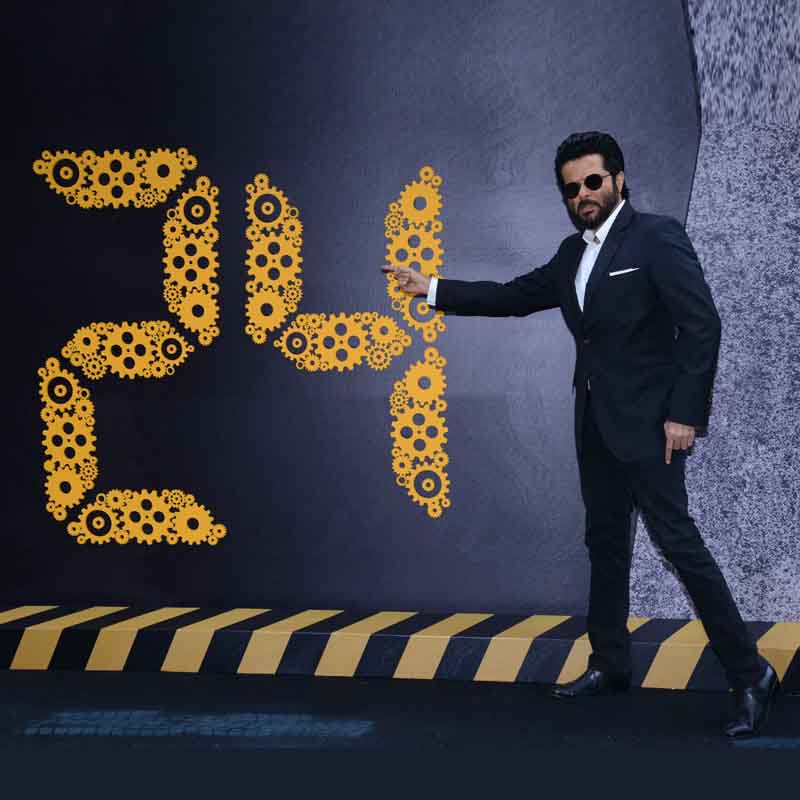
    While his seven and a half years at Viacom18 comprised of several landmark moments, he shared the ones closest to his heart with the audience. Nayak spoke about 24 which was a trendsetting show, Naagin and changing the time slot of Bigg Boss to 10.30 pm as defining moments of his tenure.

    “One of the things I was very happy to do and had the freedom and opportunity to do is a variety of content. We are the only channel in India who did so, where nobody expected to do we did the recordings of Yuvraj Singh when he was in cancer and Zindagi Abhi Baaki Hai,” he added.

    “Whatever I have achieved is because of this industry. If you don’t give back to the industry that has given you so much, I think you are doing a disservice,” the passionate veteran commented. He also named Star’s Uday Shankar and ZEEL’s Punit Goenka as leaders who he admires.

    Nayak says he draws motivation from the media industry and how it has evolved, given birth to so many entrepreneurs, created millions of jobs and helped individuals build glorious careers. The entry of Facebook and YouTube has made the system more democratic creating more opportunities, Nayak believes. Although, the absence of a common industry voice upsets him.

    “I can guarantee no one of you has watched more than three per cent of Netflix content yet you subscribe. House of Cards changed the trajectory of the game for the streaming service. Sacred Games increased the subscribers. All you need is 2-3 golden nuggets and that’s enough to change the whole dynamics of your business,” Nayak said.

    Sharing his vision for the industry in the next five years, he is certain that OTT will go big. But he also adds that from an ad sales model, monetisation will be a challenge so companies need to promote the SVoD model. Nayak also feels that TV will also continue to grow as big screen experience is never going to lose its charm. TV will turn into a box with Facebook, Google and everything available on it, Nayak predicted.